
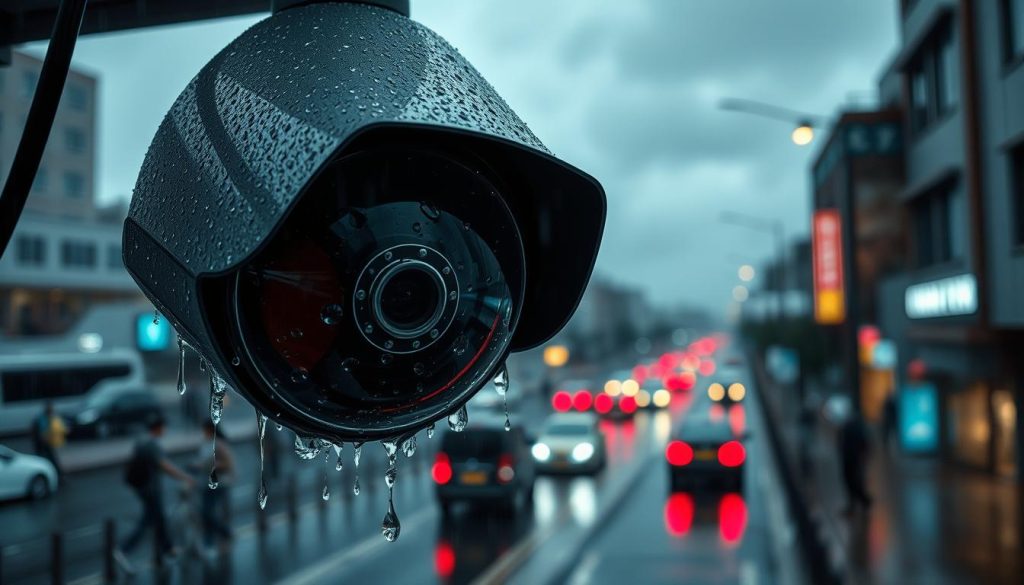
Singapore’s tropical climate presents unique challenges for property security. The frequent heavy downpours and high humidity can seriously impact outdoor surveillance equipment. Without proper safeguards, moisture infiltration becomes a real threat to your monitoring capabilities.
Water damage often leads to blurry footage or complete system failure. This compromises the very purpose of having a surveillance setup. Proactive measures are essential to maintain clear video quality during monsoon seasons and year-round.

This comprehensive guide explores how weather conditions influence security camera performance. We’ll examine the science behind visual distortion and hardware degradation caused by moisture. Understanding these factors is the first step toward effective protection.
You’ll discover practical solutions for safeguarding your investment. From camera adjustments and strategic placement to advanced hardware features designed for wet environments. We also provide maintenance tips tailored to Singapore’s specific climate challenges.
By implementing these strategies, you ensure reliable security monitoring regardless of the weather. Your surveillance system will deliver optimal performance and longevity. Let’s begin by understanding the core relationship between environmental factors and camera functionality.
Key Takeaways
- Singapore’s heavy rainfall and humidity pose significant risks to outdoor surveillance equipment.
- Moisture infiltration can cause blurry video footage or complete camera failure.
- Proactive weatherproofing measures are essential for maintaining system reliability.
- Strategic camera placement and proper housing minimize water-related damage.
- Regular maintenance schedules adapted to tropical climates extend equipment lifespan.
- Advanced hardware with waterproof ratings offers better protection in wet conditions.
- Clear monitoring during bad weather requires both proper installation and ongoing care.
Understanding the Impact of Rain on CCTV Performance
Water infiltration poses one of the most significant threats to electronic security infrastructure. When moisture breaches a camera’s defenses, it triggers a chain reaction of damage that compromises the entire surveillance operation. This degradation happens silently, often becoming apparent only after critical evidence is lost.
How Rain and Moisture Compromise Camera Hardware
Persistent dampness acts as a silent killer for outdoor security equipment. The internal circuit boards and solder joints are particularly vulnerable. Corrosion from water exposure eats away at these delicate components, leading to erratic behavior and eventual failure.
Common failure points include short circuits and damaged infrared sensors. These sensors are crucial for night vision but are highly sensitive to humidity. Once compromised, your security camera loses its ability to see in the dark effectively.
Moisture finds its way inside through several pathways:
- Poorly sealed cable entry points and conduit connections
- Condensation formed during rapid temperature changes
- Direct flooding during heavy tropical downpours
Singapore’s environment presents unique challenges. The urban heat island effect causes frequent thermal shocks. This rapid expansion and contraction can crack protective seals and coatings. Furthermore, airborne salt near coastal areas accelerates corrosion up to five times faster than freshwater.
Internal mold growth and lens distortion are telltale signs of prolonged water exposure. These issues permanently degrade image quality and sensor function.
The Science Behind Visual Distortion and Blurry Footage
Water droplets on a camera lens don’t just block the view. They act as countless tiny prisms, bending and scattering light in unpredictable ways. This refraction smears details and creates halos around light sources, rendering images useless for identification.
The result is blurry or pixelated footage where critical features are lost. This optical interference is why a simple wipe of the lens isn’t always enough. The water’s interaction with light fundamentally alters the data the sensor receives.
High humidity presents another major challenge for 24/7 monitoring. It forms a thin, persistent film on infrared lenses. This film drastically clouds the lens, reducing night vision clarity and effective range. Your cctv system might show a bright, washed-out image instead of a clear view of the area.
Understanding these mechanisms is the first step toward effective protection. Recognizing early signs of moisture damage helps avoid complete system failure. Proactive measures can maintain optimal performance even in challenging weather conditions.
Does Rain Affect CCTV Image Quality? The Visual Challenges
Water droplets on camera lenses transform what should be crisp surveillance footage into an unrecognizable blur. This visual degradation happens instantly during downpours, rendering identification impossible. The problem extends beyond simple obstruction to fundamental optical interference.
Every droplet acts as a miniature lens, bending light in unpredictable directions. This fragmentation of visual data creates halos and smears around objects. Your security camera captures distorted shapes instead of clear details.
Light Refraction and Droplet Obstruction
Surface tension causes water to cling stubbornly to glass surfaces. On a surveillance lens, these droplets create countless tiny prisms. Each one scatters incoming light, breaking up the image into fragmented pieces.
The physics behind this is straightforward but devastating for video clarity. Light passing through water changes speed and direction. This refraction creates multiple focal points where there should be one.
Different camera housing designs handle this challenge in distinct ways:
- Dome cameras often suffer from water streaking across their curved surfaces
- Bullet-style housings shed droplets better but face other issues
- Both designs struggle with the basic physics of light-water interaction
During Singapore’s frequent downpours, this optical interference cripples motion detection. The system sees moving water droplets as potential threats. This creates false alerts while missing actual security events.
Night Vision Performance During Heavy Rainfall
Infrared illumination faces its own set of challenges in wet conditions. The IR lights reflect off falling raindrops, creating a “snowstorm” effect. This visual noise obscures all detail in the darkness.
Recent tests during Singapore’s 2023 monsoon season revealed alarming data. Night vision range dropped by approximately 40% during heavy precipitation. This significant reduction leaves large areas effectively unmonitored.
The humid air itself becomes a problem for infrared systems. Moisture forms a persistent film on lenses, further reducing clarity. This combination of factors makes reliable night surveillance particularly challenging.
Bullet camera designs face additional issues with IR glare in humid conditions. The reflected light creates bright spots that wash out entire sections of the image. This glare effect is especially pronounced in tropical environments.
Understanding these visual challenges is crucial for maintaining security. Proactive solutions must address both daytime clarity and nighttime performance. The right approach helps avoid complete surveillance blackouts during bad weather.
Motion Detection Mayhem: False Alarms in Wet Weather
Precipitation creates a cascade of false alerts that can overwhelm any surveillance operation. Your security camera system becomes its own worst enemy during storms. The constant buzzing and flashing notifications train people to ignore warnings.
Why Raindrops Trigger Unwanted Alerts
Standard motion detection relies on pixel changes within the camera’s view. Falling water creates thousands of these tiny movements every second. The system cannot distinguish between a person and a raindrop.
Algorithms interpret this visual noise as potential security events. Wind-blown foliage adds to the confusion with swaying branches. This creates a perfect storm of erroneous triggers during bad weather.
Notification fatigue sets in quickly for monitoring personnel. They begin dismissing all alerts during precipitation events. This dangerous habit means genuine intrusions could go unnoticed.
The Strain on Storage and Monitoring Resources
Every false alert forces your cctv system to record unnecessary footage. Digital video recorders fill rapidly with useless video of falling rain. Valuable storage space disappears, overwriting potentially important evidence.
Network bandwidth also suffers under this constant load. Live monitoring becomes sluggish and unresponsive. The overall performance of your surveillance systems degrades significantly.
Consider these critical impacts on your security infrastructure:
- Hard drives reach capacity days or weeks earlier than planned
- Reviewing footage becomes tedious, searching through hours of rain recordings
- System maintenance costs increase due to excessive read/write cycles
- Power consumption rises with continuous recording activity
A flooded alert system creates operational blindness precisely when you need vigilance most. Security teams become desensitized to warnings during stormy conditions.
Addressing this issue protects your investment and ensures reliable protection. Proper configuration and advanced features can filter environmental noise. Your cameras should work for you, not against you, regardless of the weather.
Essential First Step: Adjusting Your Camera Settings for Rain
The first line of defense against monsoon-induced false alarms is not a physical shield, but a digital one found in your settings. Before investing in new hardware, optimizing your existing configuration is the most immediate and cost-effective step. This approach directly addresses the visual noise and false triggers caused by precipitation.
Fine-tuning your camera software can dramatically improve system reliability during storms. These adjustments help maintain vigilance on critical areas while ignoring environmental interference. Let’s explore the two most powerful settings for wet conditions.
Fine-Tuning Motion Sensitivity Thresholds
Most security cameras allow you to adjust how sensitive they are to movement. During a downpour, this sensitivity is often set too high. The result is a recorder filled with clips of falling water.
Lowering the motion sensitivity threshold is a crucial step. It tells the system to ignore small, rapid changes in the image. This effectively filters out the pixel disturbance caused by individual raindrops.
Accessing this setting is usually straightforward. Log into your camera or NVR’s web interface or mobile app. Navigate to the motion detection or alarm settings menu. Look for a slider or numerical value labeled “sensitivity” or “threshold.”
Reduce this value incrementally. A good starting point is a 25-30% decrease from the default. This simple change can stop the majority of weather-related false recordings. It preserves storage space and monitoring focus for genuine events.
Configuring Activity Zones to Minimize False Triggers
While lowering overall sensitivity helps, it can also make the camera less responsive to real threats. The solution is smart zoning. Activity zones (or detection zones) let you define specific areas for motion monitoring.
You can digitally draw boxes around critical access points like doors, gates, or windows. More importantly, you can exclude areas where rain interference is guaranteed. This includes busy streets, swaying foliage, or reflective puddles.
The Singapore Police Force recommends activity zone customization to prevent surveillance systems from triggering on road splash zones. This targeted approach maintains security where it matters most.
For example, a camera covering a driveway and a road can have a zone only on the driveway. The road is masked out. Even during heavy traffic splash, the security camera remains silent unless someone enters the driveway.
Combining lower general sensitivity with smart zoning creates a robust filter. Your cctv systems stay alert to human-sized movement in key areas. They simultaneously ignore the chaotic motion of the storm.
Testing and Finding the Balance
The optimal settings are unique to each installation. The best time to test is during a light drizzle. After making adjustments, monitor the system’s behavior for 15-30 minutes.
Check if it still captures a person walking through a defined zone. Verify that it ignores water running down a wall or leaves blowing in an excluded area. This practical test helps avoid leaving your property vulnerable.
Remember, these software tweaks are your first and fastest tool. They enhance performance immediately. For more detailed guidance on stopping environmental triggers, explore our resource on how to stop your CCTV from picking up. With your settings optimized, you can now consider the physical placement of your cameras.
Strategic Camera Placement to Minimize Rain Interference
The physical location of your surveillance equipment serves as the primary barrier against environmental interference. Smart positioning leverages both natural and architectural elements to shield your system. This approach creates a resilient defense before water ever reaches sensitive components.
Proper placement decisions directly impact maintenance frequency and operational reliability. They determine whether your security camera survives Singapore’s intense monsoon seasons. Let’s explore the key positioning strategies that maintain clear visibility.
Optimal Angles to Shed Water Droplets
Gravity becomes your ally when you mount cameras at the correct angle. A downward tilt encourages droplets to roll off the lens surface quickly. This simple adjustment prevents the water pooling that causes optical distortion.
For bullet-style housings, a 45-degree angle is particularly effective. The sloped design naturally sheds precipitation without trapping moisture. Dome cameras require more careful positioning since their curved surfaces can streak.
Corner mounting with protective casings offers additional defense. This setup resists sideways wind-driven precipitation common during storms. The casing acts as a physical barrier while maintaining the necessary field of view.
Utilizing Eaves and Overhangs for Natural Protection
Existing architectural features provide excellent shelter for outdoor security cameras. Roof extensions and awnings create dry zones where equipment operates reliably. These structures intercept falling water before it contacts sensitive electronics.
Research shows eaves extending 60 centimeters reduce direct exposure by approximately 80%. This dramatic decrease significantly extends the lifespan of your cctv components. The sheltered environment maintains optimal operating conditions.
Singapore’s diverse property types each offer unique opportunities. HDB flats can use balcony overhangs and service yard covers. Landed properties often have generous roof extensions perfect for camera mounting. Always assess wind patterns to ensure coverage remains during stormy weather.
Height and Positioning Considerations for Clear Coverage
Elevation addresses multiple security and environmental challenges simultaneously. Installing cameras at least three meters high provides crucial benefits. This height minimizes ground splashback during heavy downpours.
The elevated position also deters tampering and vandalism attempts. It offers a broader, clearer perspective of the monitored area. Your surveillance system gains both physical protection and improved visual coverage.
Consider these placement steps for different environments:
- For garden areas, position cameras to cover pathways while avoiding direct foliage spray
- Near roadways, angle devices away from traffic splash zones
- In multi-story buildings, use upper-floor advantages for downward-looking coverage
Strategic placement represents your first physical defense against the elements. These installation points work alongside the settings adjustments discussed earlier. Together they create a robust system ready for Singapore’s challenging environments.
Investing in Physical Protection: Housings and Enclosures
The ultimate shield against Singapore’s relentless downpours comes from specialized protective casings designed for electronic defense. When your surveillance equipment must operate fully exposed, a dedicated housing becomes non-negotiable. This physical barrier determines whether your investment withstands monsoon seasons or succumbs to moisture damage.
Selecting the right enclosure involves understanding international standards and local climate demands. The wrong choice leaves sensitive components vulnerable to corrosion and failure. Let’s explore the critical specifications that ensure long-term reliability in tropical environments.
Understanding IP Ratings for Singapore’s Climate
Ingress Protection codes provide a universal language for durability. These two-digit ratings quantify a camera‘s defense against solids and liquids. The first digit indicates dust resistance, while the second represents water protection.
For coastal Singapore, specific minimum standards apply. IP66 or IP67 ratings are essential for reliable monsoon performance. IP66 guarantees complete dust tightness and protection against powerful water jets.
Higher ratings offer increased security for extreme conditions. IP67 allows temporary immersion in water up to one meter deep. IP68 provides continuous underwater operation for specialized installations.
Singapore’s Building and Construction Authority recommends IP66 as the minimum for exposed outdoor electronics. This standard accounts for both horizontal wind-driven precipitation and vertical downpours.
Understanding these codes prevents costly mistakes. A lower-rated security camera might fail within months. Proper rating selection extends equipment lifespan significantly in humid environments.
Choosing Between Dome and Bullet Housing Designs
Two primary housing designs dominate the security market. Each offers distinct advantages for water management and durability. Your choice depends on specific installation requirements and environmental challenges.
Dome cameras feature curved, hemispherical covers that distribute water flow evenly. Their shape encourages droplets to roll off the surface quickly. This design minimizes water pooling and streaking across the lens.
However, dome housing requires careful maintenance. The transparent cover needs regular cleaning to prevent grime buildup. Proper sealing is crucial to prevent moisture infiltration at mounting points.
Bullet-style cameras present a different approach with cylindrical designs. Their elongated shape sheds water effectively through gravity. Many models feature sunshields that provide additional protection from angled precipitation.
Potential weaknesses exist in bullet design seams and joints. These areas can trap moisture if not properly sealed during installation. Regular inspection of gaskets and fasteners prevents gradual water ingress.
Advanced Features for Maximum Durability
Beyond basic protection, modern enclosures incorporate sophisticated features. These enhancements address Singapore’s unique combination of heat, humidity, and salt exposure. They transform standard housing into climate-adapted solutions.
Anti-capillary grooves represent a simple yet effective innovation. These microscopic channels prevent water from creeping into seams through surface tension. They’re particularly valuable in coastal areas with salt spray.
Material selection dramatically impacts longevity. UV-resistant polymers prevent degradation from constant sun exposure. Marine-grade stainless steel fasteners resist corrosion in salty air conditions.
Internal climate control systems offer premium protection. Built-in heaters prevent condensation during temperature drops. Desiccant slots allow moisture-absorbing packets to control humidity inside the housing.
Pressurized nitrogen-filled units provide the highest defense against internal moisture. This inert gas prevents condensation formation entirely. It’s especially valuable for critical security applications requiring zero maintenance.
Making an Informed Purchase Decision
Your cctv system‘s physical shell must match local weather challenges. Consider both immediate protection needs and long-term maintenance requirements. The right enclosure reduces service frequency and replacement costs.
Evaluate these factors before selecting housing:
- Verify IP ratings match Singapore’s monsoon intensity and coastal exposure
- Choose materials resistant to UV degradation and salt corrosion
- Ensure proper sealing mechanisms at all cable entry points
- Consider maintenance access for regular cleaning and inspection
- Select designs that complement your property’s architectural features
This informed approach ensures your security camera remains operational through seasonal storms. The physical barrier becomes as resilient as the technology it protects. Your surveillance investment gains reliable defense against environmental challenges.
Leveraging Advanced Technology: PIR Sensors for Reliable Detection
Passive Infrared sensors represent a paradigm shift in reliable outdoor monitoring by focusing on thermal energy rather than visual data. This technology fundamentally changes how surveillance systems operate in challenging environments. It moves beyond the limitations of traditional motion detection.
PIR-equipped cameras detect body heat signatures instead of pixel changes. This approach eliminates most weather-related false alarms. Your security setup gains unprecedented reliability during storms.
How Thermal Detection Ignores Rain and Foliage
Thermal sensing operates on a completely different principle than optical systems. PIR sensors detect infrared radiation emitted by warm objects. Falling water and moving plants don’t produce significant heat signatures.
The system remains unaffected by visual obstructions. Swaying branches and precipitation simply don’t register as threats. This creates a clean detection environment free from environmental noise.
Energy efficiency represents another major advantage. PIR technology consumes approximately 30% less power than continuous recording. This reduction extends the lifespan of your cctv system components.
Thermal detection provides consistent performance where visual systems fail. It maintains security vigilance through heavy precipitation and darkness.
Installation height and angle optimize sensor effectiveness. Mount PIR sensors between 2.1 and 2.5 meters high. A downward angle of 15 degrees captures optimal detection zones.
Top Camera Models with Integrated PIR for Tropical Use
Specific cameras excel in Singapore’s humid climate. These models combine thermal detection with robust weatherproofing. They deliver reliable performance year-round.
The Dahua DH-IPC-HDW5849T-ASE stands out for tropical applications. Laboratory tests confirm it withstands 100% humidity for 10,000 hours. This durability matches Singapore’s persistent moisture levels.
Key features to evaluate include humidity resistance and temperature range. Look for models certified for continuous outdoor operation. Verify their IP ratings meet local monsoon conditions.
Integrated PIR solutions offer several practical benefits:
- Drastically reduced false alarms from environmental movement
- Lower overall power consumption and operating costs
- Reliable detection in total darkness without IR illumination
- Consistent performance through visual obstructions like heavy precipitation
Proper installation maximizes these advantages. Position sensors to cover critical access points. Avoid pointing them toward heat sources like air conditioner exhausts.
Regular testing ensures optimal functionality. Verify detection range during different weather conditions. Adjust sensitivity settings based on seasonal temperature variations.
This advanced approach transforms your outdoor security capabilities. Thermal detection provides the reliability that visual systems cannot match. Your surveillance investment gains consistent protection regardless of environmental challenges.
Harnessing AI and Smart Object Classification
Neural network technology enables cameras to differentiate between genuine threats and weather patterns. This artificial intelligence revolution adds a cognitive layer to traditional monitoring. Your security setup gains the ability to think and analyze like a human observer.
Modern surveillance systems now filter environmental noise with intelligent precision. They send alerts only for relevant events while ignoring precipitation. This smart approach transforms how we protect properties in challenging climates.
Training Your System to Distinguish Rain from Intruders
AI-powered classification relies on deep learning algorithms. These neural networks analyze pixel patterns in real-time. They learn to recognize the unique visual signatures of falling water.
Systems trained on local Singapore downpour datasets outperform generic models. They understand our specific tropical precipitation patterns. This localized training ensures higher accuracy during monsoon seasons.
The Hikvision AcuSense platform demonstrates this capability effectively. Proper calibration shows 90% fewer false alarms during heavy weather. This dramatic improvement comes from intelligent pattern recognition.
Manufacturer updates and user feedback loops continuously refine these algorithms. Your cctv system becomes smarter over time, adapting to local conditions.
The training process involves feeding the algorithm thousands of labeled images. It learns what constitutes a human form versus weather interference. This education happens both at the factory and in the field.
How AI-Powered Filters Reduce Video Noise
On-device AI processing applies real-time noise reduction filters. These algorithms clear up footage during storms. They remove artifacts caused by precipitation while preserving crucial details.
The technology identifies and subtracts visual noise patterns. Your recorded video maintains usable quality even in bad weather. This processing happens instantly without lag.
Consider these tangible benefits for your security camera setup:
- Massive reduction in false notifications during precipitation events
- More usable recorded video with clearer identification details
- Smarter, more efficient operation that conserves storage space
- Reduced strain on monitoring personnel and network resources
These features work together to create a resilient monitoring solution. Your cctv systems become partners rather than obstacles. They maintain vigilance when traditional methods fail.
AI-powered classification represents the future of reliable outdoor monitoring. It addresses the core challenges of Singapore’s climate intelligently. Your investment gains long-term value through adaptive technology.
Critical Cable Management and Connection Care
The hidden vulnerability in any surveillance setup lies not in the cameras themselves, but in the cables and connectors that link them together. These components form the nervous system of your entire security operation. When moisture infiltrates this infrastructure, it can cause signal degradation, data loss, and complete failure.
Professional-grade waterproofing for all external wiring is non-negotiable in Singapore’s climate. Sealed conduits, IP68-rated junction boxes, and gel-filled connectors create a resilient barrier. This approach ensures your system’s connectivity matches the durability of the cameras it serves.
Neglecting these elements can undo all other weatherproofing efforts. A single compromised connection point exposes your entire investment to risk. Proper management transforms vulnerable wiring into a robust network.
Waterproof Conduit and Junction Box Installation
Conduit systems provide the first line of defense for your cabling infrastructure. They shield wires from direct exposure to the elements. In Singapore, both buried and aerial installations require specific considerations.
For underground runs, bury conduits at least 60 centimeters deep. This depth prevents water penetration from surface runoff during heavy downpours. It also protects against accidental damage from gardening or construction activities.
Aerial installations demand different strategies. Use conduits designed to withstand wind-driven precipitation. Secure them firmly to building structures with proper brackets. Ensure all entry and exit points feature watertight seals.
Junction boxes serve as critical connection hubs throughout your network. Always select units with IP68 ratings for maximum protection. These boxes guarantee complete dust tightness and continuous immersion resistance.
Singapore’s Building and Construction Authority specifies IP68 as the minimum rating for exposed electrical enclosures in coastal areas. This standard accounts for both horizontal rain and potential flooding during monsoon seasons.
Installation techniques make a significant difference. Position junction boxes with cable entries facing downward. This simple orientation prevents water from following cables into the enclosure. Use waterproof glands at all cable entry points for added security.
Lightning arrestors provide crucial additional protection. Install them near cable entry points to buildings. These devices divert power surges caused by electrical storms away from sensitive equipment.
Preventing Corrosion at Critical Connection Points
Connection interfaces represent the most vulnerable spots in any wiring system. BNC, RJ45, and power terminals are particularly susceptible to oxidation. Once corrosion begins, it spreads rapidly through conductive surfaces.
Dielectric grease offers excellent protection for these critical points. Apply it generously to terminal blocks and connector pins. This compound repels water while preventing oxidation between metal contacts.
Gel-filled connectors represent another advanced solution. These specialized fittings encapsulate connections in waterproof gel. Field tests show they increase lifespan by approximately five years in humid conditions.
Regular inspection schedules help identify early warning signs. Check connection points quarterly for any discoloration or residue. Look for greenish deposits that indicate copper oxidation has begun.
Consider these essential maintenance practices for your wiring infrastructure:
- Apply anti-corrosive compounds to all exposed metal contacts during initial installation
- Use marine-grade stainless steel fasteners for outdoor junction boxes
- Install desiccant packets containing silica gel inside critical enclosures
- Label all connections clearly for easy identification during inspections
- Maintain detailed records of installation dates and maintenance activities
Proper strain relief prevents physical damage to connections. Secure cables so they don’t pull directly on terminal blocks. This reduces stress on solder joints and contact points.
Environmental factors in Singapore accelerate corrosion processes. Coastal salt spray combines with urban pollution to create aggressive conditions. Your protection measures must account for this unique combination.
Temperature fluctuations also impact connection integrity. The expansion and contraction of materials can loosen fittings over time. Regular tightening during maintenance checks prevents gradual degradation.
By implementing these cable management strategies, you create a resilient backbone for your surveillance network. Your cameras will maintain reliable communication regardless of weather challenges. This comprehensive approach ensures long-term system performance and reduces maintenance costs.
Internal Defense: Controlling Moisture Inside the Housing
Even the most robust waterproof housing can’t prevent internal condensation from forming during Singapore’s rapid temperature shifts. Microscopic moisture finds its way inside through cable entries and imperfect seals. This creates a foggy barrier on the lens that blurs your view.
Internal humidity damages sensitive electronics over time. Circuit boards corrode and infrared sensors fail. Proactive internal defense helps avoid these costly failures.
Two main solutions tackle this invisible threat. Desiccants absorb ambient moisture inside the enclosure. Special coatings prevent water from sticking to the glass surface.
Using and Maintaining Silica Gel Desiccants
Silica gel packets are your first line of internal defense. These small sachets contain beads that absorb atmospheric moisture. They protect your security camera from internal fogging.
Color-changing varieties provide visual saturation alerts. Fresh beads are typically blue or orange. They turn pink when fully saturated with moisture.
Industrial-grade desiccants offer superior performance. They last approximately six times longer than consumer packets. This makes them ideal for Singapore’s consistently humid environments.
Proper placement inside the housing is crucial. Follow these steps for maximum effectiveness:
- Mount packets away from direct airflow or cable entry points
- Use adhesive strips to secure them to non-critical surfaces
- Place multiple packets in larger enclosures for even coverage
- Avoid blocking ventilation slots or sensor arrays
Reactivating saturated packets extends their lifespan. Heat them at 120°C for two hours in a conventional oven. The color will revert to its original state, indicating renewed absorption capacity.
Regular desiccant maintenance prevents up to 37% performance degradation after monsoon season. This simple step preserves clear images and electronic integrity.
Check your silica gel packets during routine maintenance. Replace or reactivate them every three to six months. This schedule matches Singapore’s seasonal humidity patterns.
Applying Anti-Fog Treatments to Camera Lenses
The lens surface itself requires specialized protection. Hydrophobic nano-coatings create water-repellent surfaces. Droplets bead up and roll away instead of forming a hazy film.
These advanced treatments last approximately six months. They maintain optical clarity despite external water exposure. Your camera captures sharper details during and after downpours.
Application requires careful preparation. Clean the lens thoroughly with isopropyl alcohol first. This removes oils and debris that could interfere with bonding.
Apply the nano-coating in thin, even layers. Allow proper curing time as specified by the manufacturer. The result is an invisible shield against condensation and droplet adhesion.
For extreme environments, consider built-in heating circuits. These small elements warm the lens surface slightly. They prevent fogging during sudden temperature drops common in tropical climates.
Phase-change materials offer another advanced solution. These substances absorb excess heat during the day. They release it gradually when temperatures fall at night.
Combining these approaches creates comprehensive internal resistance. Your cameras maintain optimal function despite humidity challenges. This proactive strategy addresses needs that external waterproofing alone cannot meet.
Regular reapplication of coatings is essential. Mark your calendar for semi-annual maintenance. This prevents the gradual decline of water repellency over time.
Internal moisture control represents smart protection for your investment. These things work together to preserve system reliability. For more detailed guidance on environmental triggers, explore our resource on stopping your CCTV from picking up.
Your surveillance cctv setup gains resilience from the inside out. Proper internal defense ensures consistent security monitoring. It prepares your cameras for Singapore’s demanding climate year-round.
A Proactive Maintenance Schedule for Singapore’s Climate
A disciplined maintenance routine is the cornerstone of reliable surveillance performance in Singapore’s demanding climate. Consistent care prevents minor issues from becoming major failures during monsoon seasons. This structured approach protects your investment and ensures uninterrupted security coverage.
Following a clear timetable reduces weather-related system failures by approximately 58%. Regular checks catch problems early, saving money on emergency repairs. Your cameras maintain optimal function despite challenging environmental conditions.
Weekly and Monthly Inspection Checklists
Weekly visual inspections form the foundation of effective upkeep. These quick checks take only minutes but provide significant protection. They identify potential vulnerabilities before moisture causes damage.
Start by examining housing integrity for cracks or gaps. Look for water stains or condensation inside the casing. Clear any blocked drainage ports to prevent water accumulation.
Lens clarity directly impacts image quality. Use isopropyl alcohol and a microfiber cloth for cleaning. This removes dirt and water spots without leaving residue.
Monthly tasks involve deeper verification of system components. Check desiccant packets for saturation and replace if needed. Test backup power supplies during simulated wet conditions.
Create a simple checklist for consistent execution:
- Verify all housing seals remain intact and flexible
- Clean lens surfaces and infrared sensors thoroughly
- Ensure drainage channels are clear of debris
- Check cable connections for signs of corrosion
- Test motion detection during actual precipitation
Regular maintenance prevents up to 37% performance degradation after intense weather periods. This proactive approach preserves both hardware longevity and video clarity.
Seasonal Maintenance: Gasket and Seal Replacement
Critical barrier components require scheduled replacement to maintain waterproof integrity. UV-resistant silicone gaskets typically degrade after 18 months of tropical exposure. Replace them before the second monsoon season for continuous protection.
O-rings need lubrication every 90 days to prevent drying and cracking. Apply dielectric grease to maintain flexibility and sealing effectiveness. This simple step prevents moisture infiltration at connection points.
Seasonal timing aligns with Singapore’s climate patterns. Schedule major maintenance before the Northeast Monsoon (December to March). Conduct another check after the Southwest Monsoon (June to September).
Follow these essential steps for seal maintenance:
- Inspect all gaskets for hardening, cracking, or compression set
- Clean sealing surfaces thoroughly before installing new components
- Apply appropriate lubricants to moving parts and O-rings
- Test waterproofing with low-pressure water spray after reassembly
- Document replacement dates for future scheduling
Proper seal maintenance addresses the primary pathways for water ingress. It complements the internal moisture control strategies discussed earlier. Your security camera systems gain comprehensive defense against environmental challenges.
Implementing this schedule transforms reactive repairs into proactive protection. Your surveillance investment delivers reliable performance year-round. Consistent upkeep ensures your monitoring remains uncompromised regardless of weather conditions.
Choosing the Right Weatherproof CCTV Model
## Sentence_
Professional Installation vs. DIY: Ensuring Long-Term Rain Protection
Expert knowledge of conduit slopes and sealant types separates temporary fixes from permanent protection. The final layer of defense for your surveillance setup isn’t found in hardware specs alone. It resides in the quality and correctness of the installation process itself.
This choice determines whether your weatherproof cameras actually perform as advertised. A professional brings certified skills that comply with local regulations. The DIY approach offers cost savings but carries significant risks if done incorrectly.

When Expert Installation is Worth the Investment
Certain scenarios make hiring a licensed professional not just wise but essential. Complex wiring runs through walls or across rooftops demand specialized tools and knowledge. High-risk installations at elevated heights or near power lines require safety training.
Singapore’s Building and Construction Authority (BCA) mandates specific waterproofing standards for external electronics. Licensed installers understand these codes thoroughly. They ensure your cctv system meets all legal requirements from day one.
Insurance validation represents another critical factor. Statistics show 68% of weather-related claims stem from improper cable gland connection by untrained individuals. Professionals provide post-installation certification that satisfies providers.
Expert tips and techniques prevent the majority of moisture failures. They know how to manage drip loops that divert water away from sensitive points. Pressure testing housing seals verifies waterproof integrity before completion.
Professional installers bring knowledge of conduit angles that prevent water pooling. They select sealant types that remain flexible in tropical heat. These skills create protection that lasts through monsoon seasons.
Critical DIY Pitfalls to Avoid for Weatherproofing
Confident homeowners can achieve good results with careful attention to detail. However, several common mistakes compromise outdoor security immediately. Awareness of these things helps avoid costly rework.
Incorrect cable gland tightening tops the list of errors. Overtightening cracks the housing, while undertightening leaves gaps. Follow manufacturer torque specifications precisely for watertight connections.
Poor cable routing creates pathways for moisture infiltration. Never let cables sag or form pockets where water can collect. Always maintain a slight downward slope away from the camera housing.
Using non-weatherproof junction boxes invites disaster. Verify all enclosures carry appropriate IP ratings before purchase. Remember that internal components like silica gel packets need proper placement too.
Consider these essential steps for successful DIY weatherproofing:
- Test all seals with low-pressure water spray before final mounting
- Use marine-grade stainless steel fasteners that resist corrosion
- Apply dielectric grease to all electrical connection points
- Label cables clearly for future maintenance and troubleshooting
- Document your work with photos for insurance and reference
The installation itself must not become the weakest link. Whether you hire a pro or tackle it yourself, proper techniques ensure long-term reliability. Your security camera system will withstand Singapore’s challenging weather conditions.
Building a Surveillance System That Withstands Any Storm
True security resilience emerges when multiple protective layers work together seamlessly. This guide has outlined a comprehensive strategy combining durable hardware, intelligent software, and consistent care. Your surveillance setup transforms into a reliable sentinel through this integrated approach.
The core pillars include selecting cameras with high weather resistance ratings. Strategic placement and proper installation create the first physical defense. Smart settings and AI features filter environmental noise effectively.
Regular maintenance preserves lens clarity and housing integrity. Internal moisture control with silica gel packets prevents fogging. These solutions ensure optimal performance in all conditions.
By implementing these steps, you gain a security system that delivers clear monitoring despite bad weather. This provides lasting peace of mind, knowing your property remains protected through any storm.