

Singapore’s landscape features over one million surveillance cameras. These devices enhance safety across residential neighborhoods and public areas. Growing security concerns prompt many residents to consider outdoor monitoring systems.
Recent Housing & Development Board policy updates in 2023 changed regulations. Homeowners can now position corridor-facing cameras without seeking prior approval. This simplification makes the process more straightforward for numerous families.
This comprehensive guide clarifies regulations for different property types. It covers HDB flats, condominiums, and private landed homes. Understanding privacy laws and maintaining good neighbor relations remain crucial aspects.
Non-compliance with established rules can lead to significant financial penalties. Awareness of proper procedures helps avoid these unnecessary costs. The information here balances security needs with individual privacy rights and community harmony.
Key Takeaways
- Singapore has a vast network of surveillance cameras for public and residential safety.
- Recent HDB policy changes simplify installation for corridor-facing units.
- Different property types have specific regulations governing camera placement.
- Privacy laws and consideration for neighbors are essential during setup.
- Failing to follow rules can result in substantial fines and legal issues.
- This guide provides actionable steps for legal and effective security enhancement.
- Understanding both the PDPA and CDRA frameworks is crucial for compliance.
Understanding CCTV Legality in Singapore
Singaporean law frames the use of residential cctv cameras as a balance of competing interests. On one side lies the homeowner’s legitimate need for security and property protection. On the other rests every individual’s right to privacy within their own space and the community’s harmony.
The Balance Between Security and Privacy
This equilibrium is not merely a suggestion but a foundational legal principle. The concept of “reasonable surveillance” guides what is permissible. Your monitoring efforts should be proportionate to the security risk and should not unnecessarily intrude on others.
Homeowners have clear needs to safeguard their families and belongings. Modern cameras offer powerful tools for this purpose. However, these devices must respect a neighbor’s reasonable expectation of privacy, especially in areas like their windows or private gardens.
Two primary laws establish the framework for this balance. The Personal Data Protection Act (PDPA) sets standards for handling recorded information. While it primarily regulates organizations, its principles apply when residential recordings capture public spaces or identifiable individuals.
The Community Disputes Resolution Act (CDRA) provides a direct mechanism for addressing neighbor conflicts. This act specifically handles disputes that may arise from surveillance equipment installations. It emphasizes mediation and resolution before escalating matters.
Specific rules vary significantly depending on your property type. Regulations for HDB flats, condominiums, and private landed homes each reflect this core balance differently. The legal landscape also evolves, as seen in recent policy updates for public housing.
Understanding this balance is crucial for avoiding community disputes resolution processes and potential penalties. A compliant setup effectively deters crime while maintaining positive neighborly relations. Proper planning always considers both security effectiveness and privacy compliance from the start.
Is It Legal to Install CCTV Outside My House? The Direct Answer
A straightforward “yes” answers the core question, but it comes with essential conditions. You can generally set up monitoring systems externally in Singapore. The critical factor is adhering to specific regulations that govern their use.
Your compliance path depends almost entirely on where you live. Different property categories have distinct guidelines. Navigating them correctly is the key to a lawful and effective setup.
The Core Principle: Property Type is Key
Singapore’s residential surveillance rules are not one-size-fits-all. They are carefully tailored to housing formats. Your obligations change significantly if you live in an HDB flat, a condominium, or a private landed home.
HDB flats operate under the strictest regulatory framework. This is because common corridors and spaces are considered shared property. Positioning a device to monitor these areas requires careful consideration and often, formal approval.
Condominium and private apartment residents must follow their Management Corporation Strata Title (MCST) bylaws. These house rules vary from one development to another. Always check your building’s specific policy before proceeding with any installation.
Owners of landed property enjoy the greatest flexibility. They have more control over their perimeter and external walls. However, this freedom has clear boundaries concerning a neighbor’s privacy and sightlines.
General Rule of Thumb for Homeowners
Regardless of your housing type, a universal best practice applies. Your surveillance equipment should focus solely on your own premises. The field of view must not intentionally capture your neighbors’ private spaces, such as windows, balconies, or gardens.
This principle is reinforced by the Community Disputes Resolution Act (CDRA). Even if your property type allows more leeway, this law provides a mechanism for neighbors to address perceived intrusions. Proactive planning avoids these disputes.
Recent policy updates, especially for HDB corridors, have simplified processes. The fundamental requirement for responsible use remains unchanged. Securing all necessary permits from your Town Council or MCST before work begins is non-negotiable.
Failing to obtain prior approval can lead to penalties, including fines and orders to remove the cctv system. The goal is to enhance security without creating community conflict.
With proper planning and strict compliance, adding cameras outside your residence is a fully legitimate step. It strengthens your home protection while respecting the law and your community.
The Legal Framework: PDPA and CDRA Explained
Two distinct yet interconnected laws shape how homeowners may use monitoring devices. These frameworks establish clear boundaries for residential surveillance. They balance individual security needs with community privacy rights.
The Personal Data Protection Act (PDPA) and Community Disputes Resolution Act (CDRA) work together. Understanding both ensures your setup remains compliant. This knowledge prevents conflicts with neighbors and authorities.
Personal Data Protection Act (PDPA) for Individuals
The PDPA primarily regulates organizations handling personal data. It sets national standards for information collection and use. These principles indirectly influence residential camera operations.
A key exemption exists under Section 21(3)(c). Devices used purely for personal, non-commercial purposes fall outside strict data protection rules. This household exception covers most standard home security systems.
However, distributing recorded footage publicly changes the situation. Sharing videos on social media or with third parties triggers data protection obligations. Homeowners must then comply with PDPA requirements for data handling.
The data protection act establishes important privacy principles. These include purpose limitation and notification requirements. While not directly enforceable against individuals, they guide responsible camera use.
Community Disputes Resolution Act (CDRA) and Your Neighbors
The Community Disputes Resolution Act directly addresses neighbor conflicts. It defines a “neighbor” as anyone within the same building or 100-meter radius. This broad definition covers most residential surveillance scenarios.
This law prohibits unreasonable surveillance interfering with property enjoyment. Cameras pointed directly at neighbors’ windows or private spaces may violate CDRA provisions. The act emphasizes mediation as the first resolution step.
CDRA Tribunals possess significant enforcement powers. They can order compensation up to $20,000 for privacy violations. Tribunals may also mandate camera removal or adjustment of viewing angles.
The disputes resolution process begins with a mandatory mediation session. Only unresolved cases proceed to tribunal hearings. This structure encourages neighborly communication before legal escalation.
Both frameworks operate simultaneously in practice. The PDPA establishes privacy principles for personal data handling. The CDRA provides mechanisms for resolving specific neighbor disputes about surveillance.
Town Councils enforce additional rules for HDB common areas under Section 22 of the Town Council Act. Unauthorized installations in shared corridors or stairwells may incur $5,000 fines. These regulations complement the broader legal frameworks.
Practical examples illustrate these laws’ applications. Cases have involved cameras capturing neighboring units’ balconies. Others addressed systems monitoring shared residential pathways. Understanding both frameworks prevents such conflicts.
Compliant cctv installation requires awareness of these interconnected rules. The PDPA guides ethical data practices. The CDRA manages community relationships. Together they create a balanced approach to home security.
CCTV Rules for HDB Flats and Public Housing
HDB flat owners encounter precise guidelines governing the positioning of security cameras on shared premises. These regulations ensure community harmony while addressing legitimate safety concerns. Compliance prevents disputes and potential penalties.
Public housing residents operate within Singapore’s strictest surveillance framework. This reflects the shared nature of common spaces in Housing Board estates. Understanding these specific rules is essential for lawful installation.
The 2023 Corridor-Facing Camera Policy Update
A significant policy shift occurred in 2023 for Housing & Development Board residents. The updated guidelines removed prior approval requirements for one corridor-facing device per household. This simplification made security enhancements more accessible.
Homeowners can now mount a single cctv unit facing the common corridor. The lens must focus exclusively on their own doorstep area. It should not capture neighbors’ doorways or private spaces.
“Cameras should only cover your own doorstep,” advises a HDB spokesperson.
This policy maintains balance between individual security needs and community privacy. Proper positioning avoids conflicts under the Community Disputes Resolution Act. The change reflects evolving attitudes toward residential monitoring.
What Constitutes Common Property?
HDB estates feature extensive shared areas classified as common property. These spaces fall under Town Council management and strict usage rules. Unauthorized modifications or installations trigger enforcement actions.
Common property includes several key areas:
- Corridors and walkways serving multiple units
- Stairwells and emergency exit pathways
- Lift lobbies and elevator interiors
- Shared courtyards and playgrounds
- Parking areas and bicycle stands
Mounting cameras in these spaces requires explicit permission. The Town Council Act authorizes fines up to $5,000 for violations. Different Town Councils enforce these requirements with varying strictness.
Ang Mo Kio Town Council (AMKTC) maintains particularly stringent policies. Their approach reflects high population density and shared space challenges. Residents should consult their specific Town Council before proceeding with any installation.
Temporary Permits and the Police Report Requirement
Some situations demand more extensive monitoring than standard guidelines allow. Temporary permits authorize additional surveillance for documented security threats. These permits remain valid for six months only.
Obtaining a temporary permit involves specific documentation. A formal police report detailing security incidents serves as the primary requirement. This report must describe occurrences like theft, vandalism, or harassment.
The police report substantiates the need for enhanced monitoring. It demonstrates legitimate security concerns beyond routine precautions. Town Councils review these applications case-by-case.
Statistics highlight the importance of proper compliance. In 2022 alone, authorities received 140 complaints about improperly placed devices. Most involved cameras capturing neighbors’ private areas or common spaces.
Successful applicants must adhere to permit conditions strictly. Recording must focus only on immediate security concerns. Systems should deactivate once the temporary permit expires.
Residents considering cameras outside their HDB flats should follow this process:
- Determine if standard corridor-facing installation meets your needs
- Consult your Town Council for specific rules and application forms
- For temporary permits, file a police report documenting security incidents
- Submit complete documentation and await approval before install cctv systems
- Ensure proper positioning to avoid privacy violations
Modern cctv cameras offer various features for HDB environments. Wireless models simplify installation without extensive wiring. Motion-activated recording conserves storage while capturing relevant events.
Non-compliance risks significant consequences. Beyond financial penalties, violations may require complete system removal. Proactive adherence to requirements ensures lasting security benefits.
CCTV Installation for Condominiums and Private Apartments
The governance of surveillance devices in condominiums shifts from public housing rules to private management frameworks. Residents must adhere to their specific development’s bylaws. This creates a varied landscape of requirements across different buildings.
Your property management holds the authority here. Understanding their rules is the first critical step for any installation. Non-compliance can lead to disputes and enforcement actions.
Navigating MCST Bylaws and Management Rules
Condominium and private apartment residents follow Management Corporation Strata Title (MCST) bylaws. These replace Town Council rules that govern HDB estates. Each development’s corporation strata title agreement contains specific clauses about modifications.
MCST bylaws commonly prohibit cameras from monitoring shared leisure facilities. This includes gyms, swimming pools, and common lounges. Nearly 90% of related disputes arise from devices capturing these areas.
Restrictions also protect neighbor privacy. You cannot position cctv cameras to capture adjacent windows or balconies. The field of view should be confined to your own immediate doorstep or private balcony space.
Some developments mandate specific technical features for security equipment. Infrared cameras that obscure facial details beyond a set distance are one example. These requirements aim to balance monitoring with privacy in dense living environments.
The MCST board holds enforcement power. They can conduct inspections of your installation. Boards may order adjustments or complete removal of non-compliant devices.
Approval Processes for Common Areas
Gaining permission to install cctv cameras involves a formal application. You must submit detailed plans to your MCST’s managing agent or board. This process ensures your setup meets all development guidelines.
A typical approval submission includes several key documents:
- Detailed diagrams showing camera angles and coverage zones.
- Specifications for the cctv system, including lens type and recording capabilities.
- A written justification for the surveillance, focusing on personal security.
The MCST board then reviews your application. Approval timelines typically range from two to four weeks. This period allows for proper assessment and, if needed, consultation with affected neighbors.
For cameras outside your unit that cover any common corridor, additional conditions apply. The MCST often requires visible signage notifying residents of active recording zones. This transparency is a standard requirement.
Successful navigation of MCST processes requires thorough preparation and clear communication.
To ensure a smooth approval, prepare comprehensive documentation. Clearly demonstrate how your cctv cameras will not infringe on shared spaces or neighbor privacy. Proactive engagement with management prevents most conflicts.
A Step-by-Step Guide to Legal CCTV Installation
Homeowners can achieve full compliance by methodically addressing three core phases. This process transforms complex regulations into an actionable checklist. A systematic approach prevents oversights that lead to fines or neighbor disputes.
Each step builds upon the last, creating a secure and lawful setup. You will verify rules, secure official permissions, and engage certified professionals. Following this sequence maximizes your security benefits while respecting all legal requirements.
Step 1: Verify Your Local Requirements and Property Type
Your first task is identifying the specific rules governing your residence. This foundation varies dramatically between HDB flats, condominiums, and landed property. Never assume regulations are universal.
Start by consulting the managing authority for your home type. HDB residents must contact their Town Council office. Condo and apartment owners need to review their MCST bylaws and speak with the managing agent.
Critical documents to review during this verification phase include:
- HDB’s Updated 2023 Surveillance Guidelines: Specifically for corridor-facing cameras.
- PSIA (Police Security Industry Association) Standards: Technical benchmarks for residential security systems.
- Community Disputes Resolution Act (CDRA) Provisions: Understanding neighbor privacy protections.
Security professionals strongly advise completing this step before purchasing any equipment. This prevents buying devices that are technically incompatible with your building’s requirements.
Step 2: Secure Necessary Permits and Documentation
With verified requirements in hand, you must gather and submit formal approvals. The necessary paperwork differs, but a common core exists. Preparation is key to a smooth application.
Typical documentation includes completed application forms, detailed floor plans marking proposed camera locations, and technical specifications. For HDB residents seeking temporary permits for enhanced surveillance, a formal police report documenting incidents is mandatory.
Approval processes typically take one to two weeks. Timelines can extend during peak periods or for complex cases involving multiple cameras.
Utilize digital submission portals where your Town Council or MCST offers them. This accelerates processing and provides a clear audit trail. Keep copies of all submissions and approval letters.
Always apply for permits before commencing any installation work. Proceeding without authorization risks immediate enforcement action. Be prepared for a potential inspection of the installed system to ensure it matches the approved plans.
Step 3: Engage a Licensed Security Service Provider
The final phase involves professional execution. Engaging a licensed security service provider ensures technical compliance and optimal performance. Look for providers certified by the PSIA, as they understand local compliance nuances.
Professional installation offers significant advantages over DIY attempts. Experts handle proper cable management for safety and aesthetics. They position cctv cameras at optimal angles to maximize coverage of your property while avoiding privacy-sensitive zones.
Key benefits of using a professional include:
- System Integration: Ensuring all devices and recording units work seamlessly together.
- Compliance Assurance: Correct setup that adheres to all technical and legal standards.
- Maintenance Support: Ongoing service for system health and troubleshooting.
DIY install cctv projects often violate subtle technical standards. This can void equipment warranties and create compliance issues. Professionals prevent these common pitfalls, providing peace of mind.
For reliable execution, consider engaging expert security camera installers who are familiar with Singapore’s specific regulatory landscape. Their expertise turns a complex guide into a finished, compliant security solution for your home.
Choosing the Right CCTV System for Your Home
Selecting the optimal surveillance equipment requires careful evaluation of your property’s unique characteristics and security objectives. Modern systems offer advanced features specifically designed for residential applications. The correct choice balances technical performance with full compliance to local regulations.
Homeowners should assess their layout, lighting conditions, and specific protection needs before purchasing. This proactive approach ensures your investment delivers maximum effectiveness. Professional consultations often reveal overlooked technical requirements and compatibility issues.
Indoor vs. Outdoor Camera Specifications
Exterior devices demand significantly higher durability standards than interior models. Weatherproof ratings become critical for reliable operation in Singapore’s tropical climate. An IP66+ certification guarantees protection against heavy rain and dust ingress.
Cameras designed for outdoor placement feature robust housing materials. They withstand temperature fluctuations and high humidity levels common in our region. Proper sealing prevents moisture damage to sensitive electronic components.
Different physical designs serve distinct purposes for external monitoring. Bullet-style camera units offer enhanced vandalism resistance with their visible, rugged appearance. Dome models provide more discreet monitoring with tamper-resistant casing.
Evaluate your property’s specific needs systematically. Identify all entry points, blind spots, and areas requiring constant observation. Consider how ambient lighting changes between day and night affect recording quality.
Wireless systems benefit renters or those avoiding extensive cabling work. Integrated smart home solutions connect surveillance with other automation features. Each option presents different advantages for various living situations.
Essential Features: Resolution, Night Vision, and Storage
Image clarity determines how useful recorded footage becomes for identification purposes. Modern 4K resolution enables license plate recognition at distances exceeding 25 feet. This high detail proves invaluable for investigating security incidents.
Night vision capabilities transform low-light monitoring effectiveness. Quality infrared illumination should cover minimum 30-foot distances clearly. Advanced technologies like Dark Fighter provide superior performance in near-total darkness.
Field of view dictates how much area a single device can monitor effectively. Wide-angle lenses cover expansive spaces with fewer units. Pan-Tilt-Zoom (PTZ) cameras offer flexible coverage for large properties.
Storage solutions present another critical decision point. Cloud-based systems provide convenient remote access to footage from any location. Local Network Video Recorders (NVRs) offer better data control and avoid monthly subscription fees.
Balancing performance features with budget constraints requires thoughtful prioritization of security needs.
Consider how long you need to retain recordings before automatic overwrite occurs. High-resolution video consumes substantial storage space quickly. Motion-activated recording conserves capacity while capturing relevant events.
Popular brands each specialize in different usage scenarios. Some excel in user-friendly wireless setups for apartments. Others focus on enterprise-grade reliability for landed properties. Research demonstrates which systems align with your specific requirements.
The final selection should harmonize technical capabilities, regulatory compliance, and financial considerations. A properly chosen cctv system enhances your home protection for years. It delivers peace of mind through reliable performance tailored to your environment.
Strategic Camera Placement for Security and Compliance
Strategic positioning can double the protective value of your security system while maintaining neighborly harmony. A 2023 survey revealed 91% of Singaporeans support properly positioned monitoring equipment. This approach balances effective coverage with respect for community boundaries.
Thoughtful placement transforms basic devices into powerful deterrents. It ensures your security investment delivers maximum results. Proper positioning also prevents conflicts under Singapore’s regulatory frameworks.
Maximizing Coverage on Your Property
Mounting height represents a critical factor for optimal performance. Professionals recommend approximately 10 feet above ground level. This height prevents tampering while maintaining clear sightlines across monitored areas.
Prime locations demand focused surveillance attention. Ground-floor entry points like doors and windows are obvious choices. Service areas, driveways, and external stairwells also require monitoring.
Field of view considerations impact coverage efficiency. A 130-degree angle typically covers walkways without excessive overlap. This wide perspective captures movement while minimizing blind spots.
Consider your specific property layout when planning camera positions. Each home presents unique security challenges. Entry points, perimeter boundaries, and valuable asset locations should guide your placement strategy.
Effective placement requires understanding both security needs and physical constraints of your living space.
Identifying and Avoiding Privacy-Sensitive Zones
Certain areas demand careful avoidance during installation. Neighbors’ windows, balconies, and bedrooms represent private spaces. Bathrooms and shared facilities like swimming pools also require protection.
Angling cameras slightly downward prevents unintended recording. This technique maintains security coverage of your own space. It simultaneously avoids capturing adjacent private areas.
Technical adjustments enhance privacy compliance. Privacy masks automatically blur sensitive zones within the camera‘s field of view. These digital filters protect neighbor privacy while preserving security functionality.
Motion-activated recording balances security with discretion in semi-public areas. Systems only capture footage when movement occurs. This approach respects quiet periods while monitoring potential security events.
Specific examples demonstrate effective placement strategies. For HDB corridors, focus solely on your own doorstep area. Condominium balconies should monitor only your immediate space.
Landed properties require perimeter-focused positioning. Driveway cameras should capture vehicle approaches without viewing neighboring gardens. Each scenario demands customized placement considerations.
Proper placement prevents neighbor disputes and potential legal issues. It demonstrates respect for community privacy expectations. This thoughtful approach strengthens both security and social harmony.
When you install cctv systems, consider these placement principles from the start. Strategic positioning of cctv cameras ensures optimal security coverage. It also maintains compliance with Singapore’s privacy regulations.
Review your planned camera positions before final installation. Ensure each device focuses on your property alone. This careful planning maximizes the use of your surveillance investment.
Cameras outside your residence should enhance protection without creating community tension. Thoughtful placement achieves this balance effectively. Your cctv system then serves as both security tool and good neighbor practice.
Privacy, Ethics, and Neighborly Relations
Beyond legal compliance, ethical considerations shape how residential monitoring systems impact community relationships. The rise in residential cameras has sparked important privacy discussions nationwide. While enhancing security, surveillance equipment must respect boundaries set by social norms and Singapore’s protection framework.
Respecting Your Neighbors’ Reasonable Privacy Expectations
Every resident enjoys a reasonable expectation of privacy within their home. This concept forms the ethical foundation for responsible monitoring practices. Your security devices should never intentionally capture private spaces like bedrooms or bathrooms.
A 2022 survey revealed a 33% increase in neighbor disputes involving recording devices. Most conflicts arise from cameras angled toward adjacent windows or balconies. Reasonable surveillance means your equipment focuses solely on your property boundaries.
The Personal Data Protection Act establishes principles for handling recorded information. While primarily for organizations, its guidelines influence ethical residential monitoring. Respecting personal data means considering how your footage might affect others.
Audio recording presents particular ethical challenges. Singapore’s laws protect private conversations from unauthorized interception. Disabling microphone functions demonstrates respect for neighbor privacy and avoids legal complications.
How the CDRA Mediates Surveillance Disputes
The Community Disputes Resolution Act provides structured mechanisms for addressing monitoring conflicts. This legislation defines specific procedures for neighbors experiencing surveillance-related issues. It emphasizes mediation as the primary resolution method.
Community disputes resolution begins with a mandatory cooling-off period. Affected parties must attempt direct communication before formal proceedings. This approach encourages neighborly dialogue and mutual understanding.
CDRA Tribunals handle cases where mediation proves unsuccessful. These specialized bodies require specific evidence for surveillance disputes. Photographs demonstrating camera angles and footage samples often form crucial documentation.
Tribunal outcomes can include adjustment orders for camera positioning. They may also mandate complete removal of improperly placed devices. Compensation awards for privacy violations can reach significant amounts under this disputes resolution act.
Successful mediation typically involves compromise from both security-conscious homeowners and privacy-seeking neighbors.
Best Practices for Transparency and Communication
Proactive communication prevents most monitoring-related conflicts. Informing neighbors about your security system’s coverage builds trust and understanding. Sharing simple placement diagrams clarifies what areas your cameras monitor.
Technical solutions address many privacy concerns effectively. Privacy filters automatically blur sensitive zones within the camera’s field of view. Motion zone adjustments ensure recording only activates in designated areas.
Establish written agreements with adjacent residents when possible. These documents clarify monitoring boundaries and usage policies. They provide reference points if questions arise about surveillance practices.
Consider these transparency measures for ethical monitoring:
- Display visible notices about active recording zones
- Provide neighbors with basic system information
- Establish clear rules for footage access and retention
- Regularly review camera angles to ensure continued compliance
Modern cctv systems offer features supporting ethical use. Scheduled recording limits monitoring to specific hours. Smart notifications alert only to relevant security events rather than general movement.
Ethical residential monitoring balances legitimate security needs with community harmony. It recognizes that effective protection extends beyond technology to include positive neighbor relations. This approach ensures your security investment enhances rather than disrupts your living environment.
Common Misconceptions About CCTV Installation
Common myths about residential security systems persist despite clear regulatory frameworks. A 2023 PSIA study revealed that 45% of homeowners lack knowledge about licensing requirements for professionals. This information gap leads many to believe they can freely position monitoring equipment without restrictions.
Survey data shows significant misunderstandings about surveillance device regulations. Many residents operate under false assumptions that could result in compliance issues. Understanding these common errors helps homeowners avoid penalties and neighbor disputes.
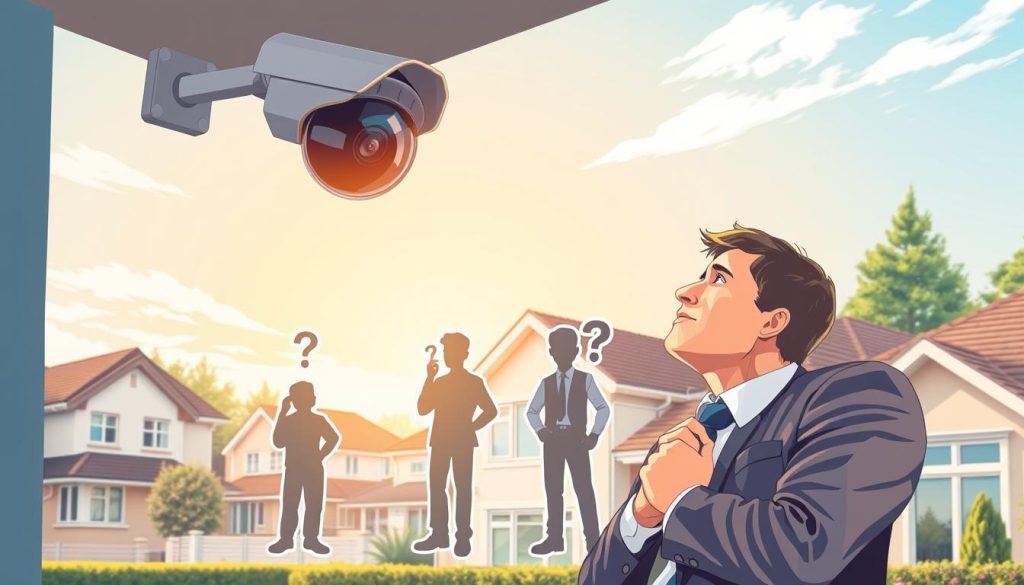
Myth: “No Permits Are Needed for My Own Property”
This belief represents one of the most widespread inaccuracies. Permission requirements vary dramatically by property type and camera placement. HDB residents absolutely need town council approval for corridor-facing devices.
Condominium owners must follow their MCST’s specific bylaws. Even landed property has restrictions concerning neighbor privacy. Property boundaries do not equal unlimited surveillance rights.
Specific limitations exist on monitoring neighbors’ private spaces. Windows, balconies, and gardens require careful avoidance. The Community Disputes Resolution Act provides mechanisms for addressing these conflicts.
Temporary or DIY setups must comply with all relevant regulations. There are no exceptions for quick installations. Unauthorized devices risk fines and removal orders.
Myth: “Audio Recording is Always Allowed”
Audio capabilities create additional legal complexities that many overlook. Singapore’s laws prohibit capturing private conversations without consent. This restriction applies even when video recording is permitted.
The Personal Data Protection Act principles influence audio surveillance practices. Recording discussions between neighbors could violate privacy expectations. Many security systems allow microphone functions to be disabled.
Social media sharing of footage containing audio amplifies these concerns. Distributing recorded conversations triggers data protection obligations. Homeowners should carefully review their equipment’s audio features.
Wireless systems sometimes include audio by default. Users must actively disable these functions for compliance. Professional installers typically configure systems without audio recording.
Myth: “Smart Doorbells Have Different Rules”
Modern doorbell cameras fall under the same regulatory framework as traditional devices. Authorities treat them as cctv cameras under existing laws. Their compact design doesn’t grant special permissions.
These devices must comply with all placement and privacy rules. Their field of view should focus solely on your doorstep area. Capturing common corridors or adjacent units remains prohibited.
Motion-activated recording features require careful configuration. Sensitivity settings should avoid capturing public pathways excessively. Notification systems must respect quiet hours in residential communities.
Technological innovation doesn’t override established legal frameworks for residential monitoring.
Additional Widespread Misunderstandings
Many believe wireless systems operate under different regulations than wired ones. Both types must follow identical compliance standards. Transmission method doesn’t affect legal obligations.
Another misconception involves evidence admissibility in legal proceedings. Illegally obtained footage may not be usable in court. Proper installation ensures recorded material maintains its evidentiary value.
Some homeowners think interior cameras face no restrictions whatsoever. HDB regulations prohibit using them for common area monitoring. Even inside your home, positioning matters for privacy compliance.
Social media sharing represents another area of confusion. Posting surveillance footage publicly changes its legal status. Once shared, the material may fall under PDPA regulations.
Unlimited camera placement rights don’t exist in any housing type. Each category has specific limitations based on community considerations. Professional advice helps navigate these boundaries effectively.
Verifying Information and Avoiding Pitfalls
Homeowners should consult authoritative sources before proceeding with any installation. Town Council offices provide specific guidelines for public housing residents. MCST managing agents clarify condominium regulations.
The Police Security Industry Association offers updated resources on technical standards. Their website contains current information about compliant equipment. Licensed professionals maintain knowledge of evolving requirements.
Consider these steps to ensure accurate understanding:
- Request written guidelines from your property management authority
- Consult with licensed security service providers about compliance
- Review the Community Disputes Resolution Act provisions
- Check PSIA standards for equipment specifications
Professional installation services typically include compliance verification. Experts understand the nuances of different property types. They ensure your system meets all regulatory requirements from the start.
When you plan to install cctv systems, begin with accurate information. Research prevents the common errors that lead to disputes. Proper understanding transforms complex regulations into actionable plans.
Misinformation circulates freely about residential monitoring. Verified facts protect your investment and community relationships. Accurate knowledge represents the foundation of effective home security.
Recent Changes in Singapore’s CCTV Laws and Policies
Singapore’s regulatory environment for residential monitoring underwent a significant transformation in May 2023. This landmark policy shift transformed how homeowners approach residential security camera installations. The update created immediate market impacts across the housing sector.
Two major developments characterize these recent changes. The Housing & Development Board revised its guidelines for corridor-facing devices. Simultaneously, enforcement patterns and industry responses evolved dramatically.
Understanding these updates helps residents make informed decisions. This guide examines the specific policy adjustments and their consequences. Both homeowners and security professionals must adapt to the new landscape.
Breaking Down the 2023 HDB Policy Shift
The May 2023 policy update removed permit requirements for one corridor-facing camera per household. This simplification represented a major departure from previous procedures. Homeowners gained faster access to basic security enhancements.
Specific conditions govern this new flexibility. Cameras must focus exclusively on the homeowner’s own doorstep area. They should avoid capturing neighbors’ doorways and private spaces completely.
Pre-2023 data reveals the scale of this administrative change. Town councils processed nearly 15,000 camera approval applications annually. Post-policy implementation, these numbers dropped by 82%.
This reduction freed substantial administrative resources. Town Councils reallocated staff from permit processing to enforcement activities. Complaint resolution timelines improved significantly as a result.
The policy shift balanced security needs with community privacy concerns effectively.
Enforcement measures intensified following the policy change. Regular patrols now monitor compliance with placement guidelines. Faster complaint resolution addresses neighbor disputes promptly.
Impact on Homeowners and the Security Industry
Homeowners experienced immediate benefits from the regulatory update. Security upgrades became faster and more accessible. The reduced administrative burden encouraged more residents to enhance their protection.
The security industry witnessed dramatic changes following the policy implementation. Equipment retailers reported a 33% sales increase within three months. Service offerings shifted toward installation and maintenance rather than permit assistance.
Property values showed interesting correlations with compliant security systems. Homes with properly installed monitoring devices potentially command premium values. Buyers appreciate the added protection without regulatory complications.
Neighbor relations experienced mixed effects from the policy change. Dispute patterns in HDB estates evolved with the new guidelines. Most conflicts now involve placement issues rather than permit violations.
Related policy areas also received attention during this period. NParks established regulations for wildlife monitoring cameras near nature corridors. These rules prevent disturbance to protected species and habitats.
Future regulatory trends may include stricter rules for AI-powered surveillance. Data protection certifications could become mandatory for certain systems. The industry prepares for these potential developments.
Consider these key impacts of the 2023 policy changes:
- Faster implementation: Homeowners can enhance security without lengthy permit waits
- Industry growth: Security equipment sales and installation services expanded rapidly
- Resource optimization: Town Councils focus on enforcement rather than administration
- Market adaptation: Service providers developed new offerings for the simplified landscape
The policy update represents a pragmatic approach to residential security. It acknowledges homeowners’ legitimate protection needs. Simultaneously, it maintains safeguards for community privacy and harmony.
Ongoing monitoring ensures the policy achieves its intended outcomes. Regular reviews assess effectiveness and identify necessary adjustments. This adaptive approach serves Singapore’s evolving security landscape well.
Consequences of Non-Compliance: Fines and Penalties
Singaporean authorities maintain a strict enforcement posture against improperly placed monitoring systems. Violators face escalating consequences that begin with warnings and can lead to substantial financial penalties. Understanding this hierarchy helps homeowners avoid costly mistakes and maintain community harmony.
First-time offenders typically receive formal notices with a 14-day correction period. This allows residents to adjust their cameras or remove unauthorized installations. Persistent non-compliance triggers the next level of enforcement.
Financial Penalties from Town Councils and Under CDRA
Repeat violations against town council rules can result in fines up to $5,000. The Town Council Act authorizes these penalties for unauthorized modifications to common property. Ang Mo Kio Town Council alone removed 17 non-compliant devices in 2022.
Privacy breaches under the Community Disputes Resolution Act carry heavier consequences. CDRA Tribunals can award compensation up to $20,000 to affected neighbors. These penalties address invasions of privacy rather than simple permit violations.
Financial penalties serve as both punishment and deterrent against irresponsible surveillance practices.
The confiscation process for unauthorized equipment follows specific procedures. Authorities issue removal notices with clear deadlines. Unclaimed devices may incur storage fees before eventual disposal.
Enforcement Actions: Removal, Blacklisting, and Legal Orders
Persistent offenders face device removal by authorized personnel. This action prevents continued recording from non-compliant positions. Homeowners bear all costs associated with this enforcement measure.
Long-term repercussions include blacklisting from future security system applications. Some town councils maintain records of residents who repeatedly violate rules. These individuals may face additional scrutiny for any future modification requests.
Mandatory privacy law workshops represent another corrective measure. Offenders must complete educational programs about responsible surveillance use. These sessions emphasize ethical security practices and neighbor relations.
CCTV non-compliance can affect your home insurance coverage. Policies may become void if unauthorized modifications cause property damage. Insurers view proper installation as part of responsible homeownership.
Disputes resolution tribunals possess broad authority to issue legal orders. They can mandate specific camera adjustments or complete system removal. Compensation awards help restore privacy for affected parties.
Criminal liabilities exist under Singapore’s privacy laws for deliberate breaches. While rare for residential cases, egregious violations could potentially lead to imprisonment. These situations involve intentional harassment or stalking using surveillance footage.
An appeals process exists for contested penalties through proper channels. Residents must submit appeals within strict deadlines with supporting evidence. Documentation proving compliance efforts strengthens these appeals significantly.
Professional security service providers prevent most compliance issues effectively. Statistics show DIY setups have error rates three times higher than professional installations. Licensed experts ensure your cctv cameras meet all regulatory requirements from day one.
How to Apply for Town Council or MCST Approval
Navigating the approval process for residential surveillance systems requires understanding specific administrative pathways based on your housing type. Each governing body maintains distinct procedures for reviewing security enhancement requests. Proper preparation of your submission significantly increases approval chances.
Successful applications demonstrate clear compliance with all relevant regulations. They show respect for community privacy and shared space considerations. This guide walks you through each step of the formal permission process.
Required Documentation and the Application Process
HDB residents must approach their specific town council office for corridor-facing device permissions. The process begins with obtaining the correct application forms. These forms request detailed information about your proposed security setup.
Condominium owners follow their management corporation strata title procedures. Each MCST maintains unique application requirements in their bylaws. Contact your managing agent for the specific forms and guidelines.
All applications share common core documentation requirements. Prepare these materials before submitting your request:
- Scaled floor plans marking exact proposed camera locations and angles
- Technical specifications for all cctv cameras and recording equipment
- Police report copies if citing specific security incidents as justification
- Neighbor consent forms for developments where this is mandatory
Digital submission options streamline the process for many applicants. Platforms like OneService accept electronic applications for town council approvals. These portals provide tracking numbers and status updates throughout review.
Complex cases demand additional documentation. Corner units with multiple exposure points need detailed coverage diagrams. Shared wall situations require structural integrity assessments from qualified professionals.
Complete applications with all supporting documents experience faster processing times and higher approval rates.
Understanding Processing Timelines and Inspection Checks
Standard permission requests take approximately 14 working days for review. This timeline allows proper assessment of your proposed installation. Complex cases or incomplete submissions experience longer processing periods.
Seasonal variations affect processing speeds significantly. Holiday periods and school vacations often create backlogs. Submit your application during quieter periods for faster turnaround.
Verification processes include potential physical inspections by authorized officers. Town council or MCST personnel may visit your property to assess proposed camera placements. They verify that actual conditions match your submitted plans.
Inspection checks focus on several key compliance areas:
- Field of view alignment with approved coverage zones
- Equipment specifications matching submitted documentation
- Proper mounting that avoids damage to common property
- Clear avoidance of neighbor privacy-sensitive areas
Application rejections typically include specific reasons for denial. Common issues involve privacy conflicts or technical non-compliance. You can appeal these decisions through established channels.
The appeals process requires addressing all cited concerns in your revised plans. Submit additional documentation demonstrating how you’ve resolved the issues. Some developments allow for reconsideration requests within 7 days of rejection.
Successful applicants receive formal approval letters with specific conditions. These documents outline permitted use parameters and any special requirements. Keep this approval accessible for any future verification needs.
When you install cctv systems, ensure the final setup matches approved plans exactly. Deviations may trigger enforcement actions or require re-application. Professional installers help maintain this crucial alignment.
Preparation remains the key to smooth approval processes. Comprehensive applications with clear documentation minimize delays. Understanding these procedures transforms complex regulations into manageable steps toward enhanced home protection.
Using CCTV Footage as Legal Evidence
Recorded surveillance material plays an increasingly vital role in Singapore’s justice system. In 2020 alone, camera footage helped solve 4,095 criminal cases nationwide. Homeowners must understand proper handling procedures to ensure their recordings remain legally admissible.
Singapore’s Evidence Act Section 35 sets strict requirements for digital evidence. Footage must maintain an unbroken chain of custody from recording to courtroom presentation. This legal framework ensures only reliable material enters judicial proceedings.
Meeting Court Standards for Admissibility
Singaporean courts require specific conditions for accepting surveillance recordings as evidence. Authenticity represents the primary concern for judicial authorities. The system must prove the footage remains unaltered from its original capture.
Technical specifications directly impact evidentiary value. Minimum storage durations typically range from 30 to 90 days depending on case requirements. Timestamp accuracy must synchronize with official time sources for verification.
Location verification establishes where the recording occurred. Systems should embed GPS data or location markers within the video file. Encryption standards protect the integrity of stored evidentiary material.
Advanced verification methods enhance reliability significantly. Some developments implement blockchain timestamps for tamper-proof verification. These digital ledgers create immutable records of when recordings were created and accessed.
Properly maintained surveillance footage has become one of the most reliable forms of evidence in modern legal proceedings.
Responsible Footage Management and Chain of Custody
The chain of custody concept tracks every handling instance of recorded material. This documentation proves who accessed the footage and when. Maintaining this chain is crucial for courtroom acceptance.
Responsible management practices include several key elements:
- Access logs recording every view, copy, or transfer of surveillance material
- Write-protected storage preventing accidental or intentional alterations
- Watermarking systems for tracking copies and maintaining original identification
- Encrypted transfer protocols when providing material to authorities
Legal restrictions govern sharing surveillance recordings with third parties. Unauthorized distribution may violate PDPA provisions regarding personal data. The data protection framework protects individuals captured in recordings.
Proper procedures for providing footage to authorities involve specific steps. First, create verified copies rather than surrendering original recordings. Use redaction tools to protect non-relevant individuals appearing in the material.
Document every transfer with formal receipts and chain-of-custody forms. These records should include timestamps, handling personnel, and transfer methods. This documentation becomes part of the evidence package.
Common pitfalls in evidence preparation undermine many otherwise strong cases. Improper editing can render entire recordings inadmissible. Chain-of-custody documentation gaps create reasonable doubt about material integrity.
Technical issues like corrupted files or incompatible formats present additional challenges. Regular system maintenance prevents these problems before they affect evidentiary value. Professional security providers often include evidence preservation features.
Consulting legal professionals ensures compliance when preparing footage for official proceedings. Evidence specialists understand specific court requirements for different case types. Their guidance transforms raw recordings into compelling legal evidence.
Modern cctv cameras include features supporting evidentiary requirements. Automatic timestamp overlays and location data embedding occur during recording. Some systems generate automatic chain-of-custody reports for accessed files.
Homeowners should establish clear protocols for handling recorded material. Designate specific individuals authorized to access evidentiary footage. Maintain detailed logs of all access instances and transfers.
Regular system audits verify continued compliance with evidence standards. Check timestamp accuracy against official time sources monthly. Verify storage integrity and backup systems protect against data loss.
Understanding these requirements transforms residential surveillance from simple monitoring to powerful legal protection. Properly managed systems provide both security deterrence and courtroom readiness. This dual function maximizes your investment in home protection technology.
Your Path to a Secure and Compliant Home
The path to compliant home surveillance integrates legal knowledge with practical security implementation. This comprehensive guide demonstrates that proper planning makes lawful cctv setup achievable for any homeowner.
Understanding property-specific requirements and securing approvals remain essential first steps. Professional installation services ensure maximum system effectiveness while maintaining full compliance. These cameras then provide enhanced protection and legal safeguards.
Responsible use of monitoring technology contributes to community safety while respecting privacy. Stay informed about evolving regulations and communicate with neighbors. You can now pursue home security solutions with confidence and peace mind.