
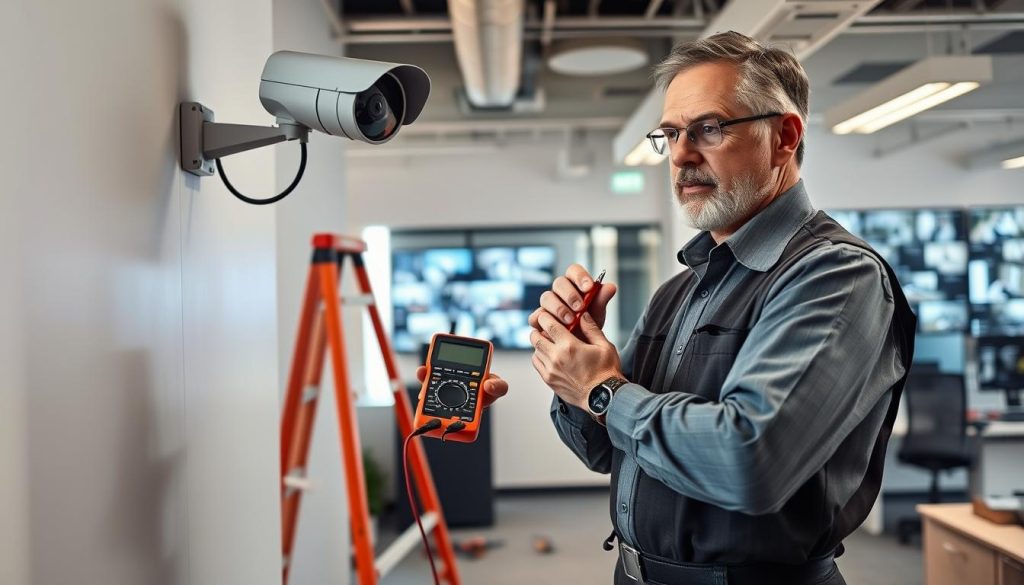
Keeping your surveillance equipment working properly requires regular attention. This ongoing process involves scheduled inspections, cleaning, and software updates for your security cameras and recording devices.
In Singapore’s tropical climate, high humidity and heat can damage electronic components. Regular care ensures your footage remains clear when you need it most. Proactive upkeep is far cheaper than emergency repairs after a failure.
Without consistent care, lenses become dirty and images blurry. Systems may fail completely during critical moments. This leaves properties vulnerable and creates security gaps.
Our guide provides practical steps to protect your investment. You’ll learn how to extend equipment life and maintain reliable protection. Following these practices brings peace of mind and ensures compliance with local standards.
Key Takeaways
- Regular upkeep keeps surveillance systems reliable and effective.
- Singapore’s humid environment makes consistent care especially important.
- Proactive measures prevent costly breakdowns and security failures.
- Clean lenses and updated software ensure high-quality video footage.
- A maintained system provides better evidence and deters criminal activity.
- Scheduled checks extend the lifespan of your security equipment.
- Proper care ensures compliance with surveillance regulations and standards.
Why Your CCTV System Demands Regular Attention
Regular oversight transforms your video monitoring from a passive installation into an active defense layer. Without disciplined care, even the most advanced setup becomes vulnerable. This ongoing commitment ensures your security measures actually work when needed most.
The High Cost of Neglect: Security Breaches and Failures
Research reveals alarming connections between poor upkeep and security failures. Studies indicate that 87% of breaches could be prevented with regular checks. Neglecting this essential care significantly boosts the chance of total system failure.
Consider a camera failing during a break-in due to corrupted storage. A power issue might leave critical areas unmonitored. These real scenarios create dangerous security gaps that criminals exploit.
In Singapore, where property crime remains a concern, such failures carry serious consequences. Your surveillance becomes useless if it cannot record crucial events. This vulnerability puts both assets and people at unnecessary risk.
Boosting Reliability and Extending Equipment Lifespan
Consistent care delivers measurable benefits for your security investment. Data shows proper upkeep can lower malfunction chances by up to 30%. This dramatic improvement directly protects your property and peace of mind.
Cameras, recorders, and other components last significantly longer with scheduled attention. You avoid premature replacement costs that strain budgets. This approach safeguards your initial financial outlay over many years.
Fewer breakdowns mean less emergency downtime. Your surveillance operates continuously without unexpected interruptions. This reliability is especially valuable for commercial properties requiring constant monitoring.
Staying Compliant with Singapore’s Surveillance Standards
Singapore’s Personal Data Protection Act (PDPA) governs how surveillance systems operate. Properly maintained equipment ensures you meet these legal requirements. Footage must be clear and reliably recorded to be admissible when needed.
Regular checks help respect privacy boundaries defined by regulations. You avoid potential legal complications from improperly functioning cameras. This compliance is not optional for responsible property owners.
Your maintenance routine should include verifying recording quality and storage integrity. These steps guarantee your system performs its fundamental security role without fail. They transform your setup from a simple installation into a trustworthy protective measure.
What is CCTV Maintenance? A Complete Definition
Proper surveillance system care encompasses far more than occasional lens wiping. It represents a structured program of actions designed to keep every component functioning optimally. This comprehensive approach ensures your protective measures remain effective over time.
Effective upkeep involves scheduled checks, thorough cleaning, timely software updates, and necessary repairs. The goal is maintaining perfect operational condition for all security equipment. Regular attention helps spot potential problems before they escalate into expensive failures.
Beyond Basic Cleaning: A Holistic System Approach
Many people mistakenly believe upkeep only involves wiping camera lenses clean. In reality, it requires attention to the entire surveillance ecosystem. Each component plays a crucial role in overall performance and reliability.
A complete program examines cameras, lenses, and protective housings. It also includes wiring, power supplies, and storage devices like DVRs or NVRs. Network infrastructure like switches and routers must function properly too.
Practical tasks include verifying cable integrity against weather damage. Technicians check storage capacity to prevent footage loss from full drives. They ensure network connections remain stable for remote viewing access.
This holistic method moves beyond superficial cleaning to address root causes. It prevents minor issues from cascading into major system failures. Your investment receives comprehensive protection through this complete approach.
Preventative vs. Corrective: The Two Core Philosophies
Security upkeep follows two distinct methodologies with different outcomes. Understanding these approaches helps you choose the right strategy for your property.
Preventative care involves proactive, scheduled actions designed to stop problems before they start. This systematic method includes regular inspections and firmware updates. It focuses on identifying weak points during routine checks.
Corrective action represents reactive fixes implemented after a failure occurs. Examples include replacing a dead camera or recovering data from a failed hard drive. This approach addresses problems only when they become apparent.
Professional services strongly advocate for the preventative philosophy. Scheduled attention proves more systematic and causes less operational disruption. It ultimately costs less by avoiding emergency call-out fees and critical security gaps.
Common preventative tasks include quarterly functional testing and annual calibration. Contrast these with corrective actions like urgent repairs after vandalism or storm damage. The former maintains continuous protection while the latter restores broken security.
Quality maintenance plans structure their services around preventative principles. This maximizes system uptime and ensures reliable surveillance coverage. Your property remains protected through planned, predictable attention rather than panic responses to failures.
The Core Pillars of an Effective Maintenance Routine
The backbone of reliable security monitoring involves a disciplined approach to essential tasks. Moving from theory to practice, we outline the three fundamental activities that form the foundation of any robust upkeep plan. These pillars work together to ensure your surveillance operates at peak performance.
Regular Physical Inspections and Functional Testing
Hands-on checks are your first line of defense against physical degradation. A thorough inspection verifies camera mounts remain tight and secure. Loose fittings can lead to a shifted field of view, compromising coverage.
In Singapore’s humid climate, pay close attention to metal connectors and cables. Look for early signs of corrosion or green oxidation. Inspect protective housing for any cracks or seals that might allow water ingress.
Functional testing completes the picture. Manually test each unit’s pan, tilt, and zoom capabilities if available. Verify infrared night vision is activating correctly and producing a clear image after dark.
Software and Firmware Updates: Your Digital Shield
Outdated software is a major vulnerability in any security setup. Regular updates patch critical security holes that hackers could exploit. They also add new features and improve compatibility with other devices.
This digital upkeep is especially crucial in tropical environments. Humidity can accelerate electronic wear, making stable firmware even more important. A failed update can sometimes “brick” a device, rendering it useless.
For safety, consider having a professional manage this process. They ensure updates are applied correctly and in the right sequence. This proactive step prevents unexpected downtime and keeps your digital defenses strong.
Essential Cleaning and Precise Camera Adjustments
Dust, spider webs, and pollution quickly accumulate on lenses. This buildup directly impacts footage quality. Experts recommend cleaning lenses at least every three months for optimal clarity.
Use a soft microfiber cloth and a lens-safe cleaning solution. Avoid harsh chemicals that can damage coatings. Also, clear debris from housing vents to prevent overheating, a common cause of premature failure.
Finally, readjust camera angles that may have shifted. Wind, vibration, or accidental bumps can misalign a unit over time. A small tweak ensures your field of view covers the intended area without blind spots.
Together, these three pillars—inspection, updates, and cleaning—create a comprehensive defense. They address both physical and digital threats to your system’s integrity.
Common CCTV Problems and How to Troubleshoot Them
Understanding common surveillance system failures empowers you to restore protection quickly. This section serves as your diagnostic guide for identifying and resolving frequent issues. Acting promptly on these signs prevents extended security gaps.
Look for obvious symptoms like fuzzy video feeds or cameras dropping offline. Recording failures and connectivity drops also signal underlying trouble. Systematic troubleshooting helps isolate the root cause efficiently.
Identifying and Fixing Image Quality Issues
Blurry or distorted footage undermines your entire security setup. Several factors typically cause poor image performance. Identifying the specific issue is your first step toward a clear solution.
Dirty or fogged lenses are primary culprits. Singapore’s humid climate accelerates condensation inside housings. Regular cleaning with a microfiber cloth restores clarity quickly.
Incorrect focus settings create persistently fuzzy images. Access your camera’s configuration menu to adjust this. Night vision problems often stem from IR reflector issues causing whiteout.
Simple fixes include cleaning the lens exterior and checking housing seals. Verify camera settings through your monitoring software. Ensure adequate lighting exists in the monitored area.
Solving Power and Connectivity Failures
Power and connection problems represent the most frequent failure points. Data shows 72% of downtime incidents relate to power supply issues. These failures leave areas completely unmonitored.
Begin by checking power adapters and transformers. Use a multimeter to verify voltage output. Loose connections or corroded terminals often disrupt electricity flow.
Cable damage accounts for 65% of maintenance costs according to industry studies. Inspect wiring for cuts, chew marks, or weather degradation. Test continuity with a cable tester when possible.
For IP-based systems, network connectivity adds complexity. Verify cameras have correct IP addresses assigned. Check router settings and ensure network switches function properly.
Physical inspection of all connectors prevents many problems. Tighten loose terminals and replace corroded parts. This proactive approach reduces unexpected downtime significantly.
Addressing Storage and Recording Problems
When your system fails to capture events, the security value disappears entirely. “No recording” alerts or missing footage indicate storage issues. These problems require immediate attention to preserve evidence.
First, check hard drive health through your DVR or NVR interface. Most devices display storage health statistics. Replace drives showing warning signs or bad sectors.
Verify your recording device is set to overwrite old footage. Incorrect settings can halt recording when storage fills. Ensure sufficient capacity exists for your retention period.
Reboot the recording unit to clear software glitches. This simple step resolves many temporary malfunctions. Update firmware to the latest stable version for improved reliability.
Monitor storage consumption patterns over time. Sudden changes may indicate settings issues or camera problems. Regular checks prevent complete recording failures during critical moments.
These troubleshooting steps empower you to address common issues confidently. When problems persist, professional services provide expert diagnosis and lasting repairs.
Your Step-by-Step CCTV Maintenance Checklist
A practical checklist transforms routine upkeep from a vague concept into a series of clear, manageable actions. This organized approach ensures no critical task is forgotten. Follow this segmented guide to keep your protection operational and effective.
Weekly and Monthly Quick-Check Items
These fast visual reviews help you catch problems early. Dedicate just a few minutes each week and a bit more time monthly.
Weekly Tasks:
- Verify all cameras show a live feed on your monitor or mobile app.
- Check for new physical obstructions like spider webs or overgrown plants.
- Quickly review system logs for any error or warning messages.
Monthly Tasks:
- Gently clean external camera lenses with a soft, dry microfiber cloth.
- Inspect visible cables and power adapters for any obvious damage.
- Test the system’s power by ensuring no units have unexpectedly shut down.
- Confirm your recording schedule is active and footage is being saved.
Quarterly Deep-Clean and System Review Tasks
Every three months, perform a more thorough evaluation. This frequency is especially advised for businesses in Singapore to combat environmental wear.
- Perform a deep-cleaning of all camera housings and lenses using appropriate solutions.
- Conduct a detailed inspection of all cables, connectors, and mounts for signs of wear or corrosion.
- Verify each camera’s field of view has not shifted and still covers the intended area.
- Test any backup power supplies (UPS) to ensure they function during an outage.
- Check storage device health indicators for early warnings of potential failure.
Annual Professional Audit and Calibration
Once a year, engage a certified technician for a comprehensive audit. This expert intervention catches subtle issues beyond DIY checks.
A professional service should include:
- Precise recalibration of each camera for optimal focus and image quality.
- Comprehensive hard drive integrity testing and performance analysis.
- Centralized updating of all device firmware to the latest stable versions.
- A detailed system health report outlining current performance and any recommended repairs.
This annual check-up, performed by qualified professional CCTV maintenance services, ensures your entire setup operates at peak performance. It safeguards your long-term investment.
Building Your Custom CCTV Maintenance Schedule
Moving beyond generic checklists, a tailored maintenance schedule aligns care routines with your property’s unique risks. This personalized approach ensures resources focus where protection matters most. Your specific environment and usage patterns dictate the ideal inspection rhythm.
Standard intervals often fail to address distinct operational demands. A coastal warehouse faces different challenges than a suburban home. Creating your own calendar transforms reactive fixes into proactive security management.
Determining the Right Inspection Frequency for Your Site
Several key factors influence how often your surveillance equipment needs professional attention. High-activity zones like retail entrances or building lobbies experience more wear. These areas benefit from monthly or quarterly professional checks to ensure continuous operation.
Environmental conditions dramatically impact upkeep requirements. Coastal properties battle salt corrosion while industrial sites combat dust accumulation. Singapore’s tropical humidity alone justifies more frequent inspections for many installations.
System age represents another critical consideration. Older equipment typically demands more consistent monitoring for potential failures. Newer installations with advanced features might follow standard intervals initially.
Site criticality should guide your final decision. A warehouse storing valuable goods needs different protection than a residential backyard. Higher stakes justify more frequent, comprehensive professional services.
- Monthly/Quarterly: Recommended for high-traffic commercial areas, harsh environments, or critical security zones.
- Six-Monthly: Suitable for moderate-use residential properties or low-risk commercial locations.
- Annual: Minimum baseline for all systems, allowing for calibration and major software updates.
This flexible framework lets you allocate resources efficiently. Regular checks prevent minor issues from escalating into major security gaps. Your personalized plan evolves as your property’s needs change over time.
Key Milestones for Residential vs. Commercial Systems
Residential and commercial surveillance setups follow different maintenance trajectories. Home systems typically involve fewer cameras and less complex network configurations. This simplicity allows for more homeowner-managed care between professional visits.
For residential properties:
- Quarterly self-checks covering basic lens cleaning and feed verification
- Annual professional service for comprehensive calibration and system testing
- Immediate professional attention following severe weather events
Homeowners can handle many routine tasks themselves. Professional annual visits ensure deeper technical aspects receive proper attention. This balanced approach maintains protection without excessive cost.
Commercial installations demand more rigorous protocols. Larger camera counts, complex networking, and regulatory compliance create additional complexity. These systems often support business operations and legal requirements.
Recommended commercial maintenance includes:
- Quarterly professional inspections covering all hardware and software components
- Comprehensive annual audits with detailed performance reporting
- 24/7 monitoring services for mission-critical security operations
Commercial contracts frequently include Service Level Agreements (SLAs). These guarantee specific response times for identified issues. Such agreements provide businesses with predictable support and minimized downtime.
Professional services for commercial clients often encompass advanced features. Network diagnostics, storage optimization, and cybersecurity assessments become standard inclusions. This comprehensive approach safeguards both physical assets and digital infrastructure.
Tailoring your schedule to property type ensures appropriate resource allocation. Residential systems gain reliability through consistent basic care. Commercial operations achieve compliance and continuity through structured professional management.
Navigating CCTV Maintenance Services in Singapore
Navigating the landscape of professional upkeep providers requires a clear understanding of key differentiators. The right partner ensures your surveillance investment delivers continuous, reliable protection. This guide helps you evaluate companies and understand service agreements common in Singapore.
What to Look for in a Reputable Service Provider
Not all security companies offer the same level of expertise or reliability. Your selection criteria should focus on proven performance and local knowledge.
A strong track record with specific client types is invaluable. Look for providers with experience in environments similar to yours. For instance, companies like Prowler have managed surveillance for over 60 schools across Singapore, demonstrating scale and trust.
Always check for positive client testimonials and ask for references. Certified technicians with manufacturer training are non-negotiable for quality repairs. Knowledge of Singapore’s Personal Data Protection Act (PDPA) is also essential for compliant operation.
Ensure the provider offers 24/7 emergency support. Security failures don’t keep business hours. A reliable partner should be available to resolve critical issues anytime.
Understanding Service Plans and Maintenance Contracts
Service offerings typically fall into three categories: ad-hoc, scheduled plans, and full comprehensive contracts. Each suits different operational needs and budgets.
Ad-hoc services are pay-per-visit solutions for unexpected problems. Scheduled plans provide regular inspections and software updates for a fixed annual fee. Comprehensive contracts often include unlimited on-site and remote support, like those offered by some leading providers.
Scrutinize the contract’s scope of work. It must detail all inspections, cleaning procedures, and reporting standards. Defined emergency response times are crucial for minimizing security gaps.
Clarity on parts and labor inclusion prevents surprise bills. The agreement should specify who manages firmware updates and network health checks. Transparent, upfront pricing aids budgeting and avoids hidden fees.
The ideal contract aligns with the custom schedule you built for your site. It should address the specific frequency of checks your property requires. This ensures the provider’s services meet your unique operational demands perfectly.
For a detailed breakdown of what to expect financially, reviewing information on typical maintenance costs in Singapore is highly recommended before signing any agreement.
Smart Budgeting for CCTV Upkeep and Long-Term Savings
Viewing your security system’s ongoing care through a financial lens reveals significant long-term value. Proper budgeting transforms these essential tasks from unpredictable expenses into planned operational costs. This approach protects your initial capital outlay while ensuring continuous protection.
A strategic financial plan for your surveillance setup provides clarity and control. You avoid surprise bills from unexpected breakdowns that strain resources. Allocating funds for regular attention is a savvy investment in property security.
Breaking Down Typical Maintenance Costs in Singapore
Understanding cost structures helps you create an accurate budget for surveillance care. In Singapore, annual professional service contracts typically range from SGD 300 to SGD 600. This covers scheduled inspections, cleaning, and basic software updates.
Complex installations with many cameras or advanced features cost more. Simple residential systems fall toward the lower end of this scale. Commercial operations with extensive networks require more comprehensive service plans.
Several key factors influence your final expense. The number of cameras directly impacts the time required for thorough checks. System complexity involving network configurations adds to the technician’s workload.
Site accessibility also plays a major role in pricing. Hard-to-reach cameras require special equipment or additional labor. The comprehensiveness of your chosen service plan determines its final cost.
For comparison, emergency one-off service calls often carry premium fees. These reactive visits lack the efficiency of scheduled appointments. Consistent planned care proves more economical over time.
How Proactive Care Reduces Major Repair Expenses
Regular professional attention prevents minor issues from becoming costly disasters. Consider the contrast between predictable annual contracts and emergency repair bills. A flooded DVR replacement or complete cable rewiring can cost thousands.
This proactive philosophy directly addresses common failure points. Remember that 72% of surveillance downtime relates to power and connection problems. Scheduled inspections identify these vulnerabilities before they cause total failure.
A small, consistent investment safeguards your larger capital expenditure. The typical surveillance installation represents a SGD 500 to SGD 1,500 initial investment. Protecting this asset through regular care makes clear financial sense.
Unexpected equipment failure creates operational disruption and security gaps. These situations often require urgent, expensive solutions. Budgeting for maintenance eliminates these fiscal surprises.
Extended equipment lifespan delivers additional savings. Well-maintained cameras and recorders operate reliably for years longer. You delay expensive replacement cycles through disciplined upkeep.
Strategic budgeting for professional services ensures long-term savings and continuity. It transforms upkeep from a cost center into a value-protection measure. Your security remains robust without straining financial resources.
Pro Tips for Maintaining Different Types of CCTV Systems
Each surveillance system type presents unique maintenance challenges that require targeted solutions. Your approach must adapt to the specific technology protecting your property.
Wired, wireless, and IP-based setups each have distinct vulnerabilities. Understanding these differences helps you implement effective care routines.
Singapore’s climate adds another layer of complexity to equipment longevity. Local conditions demand specialized protective measures.
Caring for Wired, Wireless, and IP-Based Cameras
Traditional wired systems rely on physical cable connections for power and video transmission. Regular inspections should focus on cable integrity and connection points.
Check for weather damage, rodent chewing, or loose terminations. Verify all connectors remain secure and corrosion-free. These physical checks prevent signal loss and power failures.
Wireless camera systems eliminate cables but introduce new concerns. Battery-powered units need consistent power level monitoring. Replace batteries before they deplete completely.
Wi-Fi signal strength requires regular verification. Interference from other devices can degrade performance. Reposition access points if signal quality drops below reliable levels.
IP-based network cameras demand digital vigilance alongside physical care. Network security settings must remain current and properly configured. Regular firmware updates patch vulnerabilities and improve functionality.
Monitor network switch health and bandwidth usage. Ensure your network infrastructure supports video streaming demands. These digital checks complement traditional physical inspections.
Analog systems offer simplicity but still need attention. Coaxial cables and power supplies require periodic verification. Image quality checks ensure clear footage capture.
Special Considerations for Singapore’s Humid Climate
Singapore’s tropical environment accelerates equipment wear through constant high humidity. Moisture infiltration causes several specific problems for surveillance gear.
Metal connectors and terminals suffer from rapid corrosion. This green oxidation disrupts electrical connectivity. Signal degradation and complete system failures often result.
Condensation forms inside camera domes and housings. This fogging obscures lenses and creates blurry video. Mold growth can develop in poorly ventilated enclosures.
Electronic components experience accelerated aging in humid conditions. Circuit boards may develop microscopic shorts. Protective coatings break down faster than in drier climates.
Effective countermeasures protect your investment:
- Use weatherproof housings with proper IP ratings (IP66 or higher recommended)
- Apply dielectric grease to all external connectors to prevent corrosion
- Ensure housing seals remain intact and replace worn gaskets immediately
- Increase inspection frequency during prolonged rainy periods
- Install silica gel packs inside enclosures to absorb excess moisture
Professional services in Singapore understand these local challenges. They implement climate-specific solutions during routine maintenance visits.
Regular checks for humidity damage should become part of your schedule. Early detection prevents costly repair or replacement of affected parts.
Both residential and commercial businesses benefit from these precautions. Your security equipment maintains reliability despite environmental pressures.
Leveraging Technology for Smarter System Monitoring
Smart digital tools are revolutionizing how we ensure security systems remain operational. Moving beyond manual checks, modern software provides powerful automation and insights.
This approach transforms reactive fixes into proactive management. It enhances reliability and provides peace of mind for property owners.
Utilizing Remote Access for Real-Time Health Checks
Smartphone apps and cloud platforms are game-changers for oversight. They allow you or a managed service provider to perform virtual inspections from anywhere.
This capability enables frequent, low-effort monitoring between scheduled physical visits. You maintain constant visibility without being on-site.
Key features of remote monitoring solutions include:
- Instant verification that all cameras are online and streaming.
- Quick review of live or recorded footage for clarity and issues.
- Automatic alerts sent to your phone if a unit goes offline.
- Remote checks on storage device status and remaining capacity.
- Ability to reboot devices or adjust basic settings via the app.
For businesses, this means facility managers can oversee multiple locations from one dashboard. It turns a smartphone into a powerful security command center.
This tool is invaluable for catching connectivity drops or power failures immediately. You can dispatch a service technician with precise information about the problem.
The Role of AI and Predictive Maintenance Alerts
Artificial Intelligence and machine learning represent the next frontier in surveillance care. These advanced systems analyze video and operational data to spot anomalies early.
Instead of waiting for a component to fail, predictive analytics forecast when maintenance is needed. This shifts the entire plan from a fixed schedule to a need-based model.
How predictive technology enhances protection:
- Detects gradual image quality degradation, signaling a dirty lens or focus issue.
- Analyzes hard drive health data to warn of potential storage failures weeks in advance.
- Monitors network bandwidth usage to identify unusual patterns that may indicate problems.
- Tracks camera performance metrics to flag units operating outside normal parameters.
This data-driven approach allows for better resource management. Technicians are dispatched with the right parts and a clear diagnosis.
The core benefit is a significant reduction in unplanned system downtime. Security gaps are minimized because issues are addressed before they cause a total breakdown.
While more common in large commercial deployments, this technology points to the future. The goal is a surveillance setup that can almost self-diagnose, ensuring your protection is always at its peak.
Maximizing Camera Performance and Footage Clarity
Clear video evidence stands as the primary objective behind all surveillance system upkeep efforts. Every check, cleaning, and adjustment aims for this result. Your protection relies on identifiable faces, readable license plates, and detailed activity recording.
Two key areas demand your consistent attention for optimal results. Proper lens care ensures daytime clarity while strategic placement maintains coverage effectiveness. Together, they form the foundation of reliable security monitoring.
Best Practices for Lens Care and Housing Maintenance
A clean lens represents the single most important factor for daytime image quality. Dust, fingerprints, and environmental grime quickly degrade performance. Regular attention keeps your video sharp and usable.
Use a soft microfiber cloth for routine cleaning. Avoid paper towels or rough materials that can scratch delicate coatings. For stubborn spots, apply a small amount of lens-safe solution to the cloth first.
Never spray liquid directly onto the camera surface. Moisture can seep into housing seams and damage internal electronics. This precaution prevents costly component failures.
Housing maintenance protects your investment from environmental threats. Check seals and gaskets regularly for cracks or deterioration. Compromised seals allow humidity and insects inside the enclosure.
Clean ventilation slots to prevent overheating issues. Dust buildup inside these openings restricts airflow. Use a soft brush to gently remove debris without pushing it deeper.
Inspect mounting brackets and joints during each service visit. Tighten any loose screws that could cause camera drift. Stable mounting ensures consistent field of view coverage.
“A minute spent cleaning a lens properly can save hours reviewing blurry footage later.”
Optimizing Camera Placement and Lighting Over Time
Surveillance needs evolve as properties change. New construction, plant growth, or added structures can create blind spots. Periodic reviews ensure your coverage remains comprehensive.
Evaluate each camera’s view every six months. Look for new obstructions like tree branches or signage. Adjust angles slightly to restore complete monitoring of critical areas.
Lighting conditions significantly impact nighttime footage quality. Ensure cameras aren’t pointed directly at bright light sources. Glare and lens flare can render video useless during dark hours.
Consider adding IR illuminators for low-light zones. These devices provide invisible infrared light that security cameras can detect. They dramatically improve after-dark performance without creating light pollution.
Check that existing infrared LEDs on cameras remain functional. Dirty covers or failed emitters compromise night vision capabilities. Test this feature during routine inspections.
Monitor how seasonal changes affect your surveillance. Longer shadows in winter or brighter summer sun may require adjustments. Proactive tweaks maintain consistent year-round performance.
Record storage devices also need environmental protection. Keep DVRs and NVRs in clean, climate-controlled spaces when possible. Dust inside these units causes overheating and premature failure.
Regular system reviews transform static installations into dynamic security solutions. Your protection adapts to changing conditions while maintaining evidentiary quality. This proactive approach delivers peace of mind.
The Future of CCTV Maintenance: Trends to Watch
Emerging technologies are reshaping how surveillance equipment receives ongoing care and support. Traditional manual checks are giving way to intelligent, predictive approaches.
This evolution promises greater reliability and efficiency for property owners. Staying informed about these developments helps you make smarter investment decisions.
Two major trends dominate the forward-looking landscape of security upkeep.
Increased Automation and Cloud-Based Management
Routine tasks once requiring technician visits now happen automatically. Cloud platforms handle firmware updates across entire installations remotely.
Health reporting occurs in real-time, alerting managers to potential issues. Backup management systems ensure data protection without manual intervention.
This shift reduces labor costs and minimizes human error. Reliability improves as automated processes follow consistent protocols.

For businesses, this means predictable operational expenses. The potential for lower long-term costs makes advanced solutions attractive.
Singapore’s tech-savvy market readily adopts these cloud-based features. They provide peace of mind through continuous, unattended monitoring.
Integration with Broader Smart Security Ecosystems
Modern surveillance setups no longer operate in isolation. They connect seamlessly with access control and alarm systems.
Building management platforms incorporate video feeds for comprehensive oversight. This interconnected approach creates unified protection networks.
Maintenance must evolve alongside this integration. Technicians need understanding of how components interact across the ecosystem.
Software updates must maintain compatibility with partner systems. A failure in one area can affect multiple security layers.
“The most effective protection comes from systems working together, not separately.”
This forward-looking perspective shows that a well-maintained installation is also future-proof. It remains ready to connect with emerging technologies as they develop.
Your investment stays relevant and capable within evolving smart environments.
Securing Your Investment: The Path Forward
The ultimate safeguard for your premises isn’t just the equipment you install, but the routine care you provide. Consistent upkeep transforms a simple purchase into a durable, high-performing security asset.
This proactive strategy prevents catastrophic failures and ensures legal compliance. It extends your system’s lifespan and delivers true peace of mind.
Your path forward is clear. Create a personalized plan using our checklist. Schedule professional inspections with reputable local companies. This informed approach is the most effective way to protect your property, assets, and people.
Take the next step today to ensure your surveillance solution’s long-term reliability and performance.