

Singapore’s urban landscape demands robust protection for commercial properties and assets. This comprehensive guide helps you navigate the market for durable surveillance systems specifically designed for local needs.
With property crimes remaining a concern in busy cities, investing in reliable monitoring equipment is essential. These specialized devices offer more than just video recording—they provide a complete security solution.
The right system combines physical durability with environmental resilience. Singapore’s tropical climate requires equipment that withstands heavy rain and humidity while maintaining clear visibility.
This guide walks you through technical specifications, installation considerations, and brand comparisons. We’ll cover everything from legal compliance to calculating your return on investment.
Choosing protective equipment isn’t just about purchasing hardware. It’s about creating a holistic strategy that deters criminal activity and provides valuable evidence when needed.
Key Takeaways
- This guide is tailored for Singapore’s unique urban environment and commercial security challenges
- Durable surveillance systems offer dual protection against vandalism and harsh weather conditions
- Proper selection involves considering technical specs, installation requirements, and local regulations
- Effective monitoring can potentially reduce insurance costs while enhancing property protection
- The guide serves both security professionals and business owners making commercial investments
- A complete security strategy includes deterrence, evidence collection, and operational safety
- Return on investment calculations should factor in long-term durability and maintenance costs
Why Singapore Businesses Can’t Afford to Overlook Security Cameras
A silent drain on profitability is escalating across Singapore’s commercial sectors, driven by increasing incidents of property damage and theft. For owners and managers, this isn’t just a nuisance—it’s a direct attack on operational continuity and financial health. Implementing a visible monitoring system is no longer a luxury but a critical component of risk management.
The right equipment acts as both a shield and a smart investment. It protects assets while providing a measurable return by preventing losses.
The Rising Tide of Vandalism and Theft in Commercial Spaces
Recent police data reveals a sharp 22% year-on-year increase in property damage. This trend highlights a growing challenge for local enterprises. Commercial locations are prime targets.
Construction sites, warehouses, and retail stores are especially vulnerable. These spots often contain high-value goods and materials. They may also have less frequent human oversight.
Construction sites alone suffer estimated annual losses of $1 billion from theft and vandalism. This figure includes stolen equipment, damaged materials, and project delays. The financial impact extends far beyond the initial incident.
Warehouses face similar threats to inventory and logistics operations. Retail stores experience break-ins, shoplifting, and intentional property damage. Each event carries a significant cost.
- Immediate loss of stock or assets.
- Costly repairs to fixtures, walls, or windows.
- Business interruption and lost sales.
- Higher insurance premiums over time.
- Damage to brand reputation and customer trust.
How Visible Deterrence Drives Down Crime Rates and Costs
The most powerful feature of a surveillance system is its ability to stop crime before it happens. Studies show that 70% of burglars actively avoid properties with obvious monitoring equipment. The mere presence of a dome or bullet camera creates a powerful psychological barrier.
Potential offenders perceive a much higher risk of being caught and identified. This makes them reconsider targeting a protected property. Visible security can reduce criminal activity by up to 75% in some areas.
This isn’t just theory. A Singapore retail chain reported a 68% reduction in break-ins after installing dome cameras. The units were placed at entrances and high-risk zones. The business saved thousands in potential losses and repair costs.
Many believe CCTV is only for reviewing footage after an incident. This is a costly misconception. Modern systems play a proactive role. They are a constant, visible warning that discourages malicious intent.
Calculating the return on investment is straightforward. Compare the cost of a vandal-proof system against the average loss from a single major incident. For many businesses, preventing one break-in or act of vandalism covers the initial investment.
When you factor in avoided repairs, lower insurance costs, and uninterrupted operations, the value becomes clear. Protecting your property with durable surveillance is a smart financial decision. It safeguards your assets and your peace of mind in Singapore’s dynamic commercial environment.
Defining True Protection: What Makes Security Cameras Tamper Proof
The difference between marketing hype and certified protection lies in specific international ratings that measure a device’s ability to withstand attacks. For commercial properties, this distinction is critical. You need equipment that delivers on its promises of durability.
Many products claim to be “vandal-proof” without supporting evidence. True protection comes from meeting published standards. These standards provide measurable benchmarks for performance.
Certified ratings offer peace of mind. They tell you exactly what level of abuse your equipment can handle. This knowledge helps you make informed purchasing decisions.
Before exploring technical specifications, understand one key point. No device is completely invulnerable to determined attacks. The goal is to provide sufficient resistance to discourage typical interference.
Quality equipment makes tampering difficult, time-consuming, and obvious. This often deters would-be vandals who seek quick, discreet damage. The right system turns your property into a less appealing target.
Beyond the Label: Understanding IK Impact Ratings (IK10 Explained)
The IK Code, or International Protection Marking, classifies protection against mechanical impacts. It’s part of the broader IEC 62262 standard. This system gives you clear, comparable data.
Ratings range from IK00 (no protection) to IK10 (maximum protection). Each level corresponds to a specific impact energy measured in joules. Higher numbers mean better resistance to physical force.
The IK10 rating represents the highest tier. Equipment with this classification can withstand significant abuse. It’s tested to handle impacts of 20 joules.
What does this mean in practical terms? An IK10 rating means the unit can survive a strike from a 5kg mass dropped from 400mm height. This simulates many real-world vandalism attempts with tools or thrown objects.
This level of durability is crucial for vulnerable areas. Entrances, parking lots, and perimeter lines face higher risks. Equipment in these spots needs maximum protection.
Remember that the IK Code often works with IP (Ingress Protection) ratings. The first number in an IK rating indicates solid object protection. The second number addresses water resistance when combined with IP codes.
Together, they provide comprehensive defense. They guard against both physical attacks and environmental challenges like rain and dust.
The First Line of Defense: Vandal-Resistant Housings and Materials
Superior construction begins with the housing. Vandal-resistant models use reinforced materials that standard units lack. This difference is visible and tangible.
High-quality domes feature impact-resistant polycarbonate. This material offers clarity for a 360° view while absorbing shocks. It’s far more durable than standard acrylic or thin plastic.
The main body often uses die-cast metal instead of plastic. This metal construction reduces the chance of breakage during an attack. It also provides better heat dissipation for consistent performance.
Additional features enhance protection. Tamper-proof screws prevent easy disassembly. Recessed cables make cutting or pulling more difficult. These design elements create multiple barriers.
When comparing models, examine material thickness and weight. Heavier, solid construction typically indicates better durability. Lightweight plastic housings may save cost but compromise protection.
Proper installation complements these built-in advantages. Mounting at optimal height (typically 9-12 feet) makes units less accessible. Positioning them out of easy reach adds another layer of security.
Angle the device to cover both the area of interest and its own mounting point. This creates a recording of any interference attempt. It turns the equipment into its own witness.
Investing in truly vandal proof equipment requires looking past surface claims. Seek certified ratings like IK10. Examine construction materials and design details.
This approach ensures you get equipment that can handle tough conditions. It provides reliable monitoring when you need it most. Your commercial property deserves nothing less.
Conquering Singapore’s Climate: The Non-Negotiable Need for Weatherproofing
Singapore’s tropical environment presents a relentless test for any electronic equipment installed outdoors. Monsoon rains and persistent humidity threaten to compromise even the most durable surveillance systems. This makes weatherproofing not just an optional feature, but an absolute requirement.
While physical attacks from vandals demand robust construction, the natural elements create constant challenges. Equipment must work well through heavy downpours, intense sunlight, and high moisture levels. Choosing the right protection ensures your investment lasts for years.
Decoding IP Ratings: What IP66 and IP67 Mean for Rain and Humidity
The IP (Ingress Protection) rating system provides clear standards for environmental durability. This two-digit code tells you exactly what a device can withstand. The first digit indicates protection against solid particles like dust.
The second digit measures liquid ingress protection. Higher numbers mean better resistance to water exposure. For Singapore’s climate, you need ratings that match local weather conditions.
IP66 rating equipment is dust-tight and protected against powerful water jets. This means it can handle heavy rainstorms and direct spray. It’s suitable for most outdoor use where complete immersion isn’t expected.
IP67 rated units offer even greater protection. They’re also dust-tight but can survive temporary immersion. These devices withstand being submerged in up to 1 meter of water for 30 minutes.
Why do these ratings matter so much in Singapore? The answer lies in our unique climate patterns. Northeast monsoon seasons bring torrential rains that can overwhelm inferior equipment.
High humidity levels create condensation inside poorly sealed units. This moisture leads to lens fogging, electrical shorts, and premature failure. Proper IP ratings prevent these common issues.
For comprehensive protection against both physical attacks and environmental challenges, consider IK10-rated equipment with high IP ratings. This combination delivers maximum durability for demanding installations.
Ensuring Year-Round Performance in Tropical Conditions
Beyond IP ratings, several additional factors determine how equipment handles Singapore’s harsh weather. Each element contributes to reliable performance through all seasons.
UV resistance protects against intense sunlight that degrades plastic components. Corrosion resistance is vital for coastal areas with salty air. Thermal management systems prevent overheating during our hottest months.
Proper installation complements these built-in features. Consider these guidelines for different locations:
- Fully exposed outdoor areas: Choose IP67-rated units with wide temperature operating ranges. These spots face the most severe weather challenges.
- Partially protected eaves: IP66 ratings often suffice here, but verify drainage paths don’t direct water toward the unit.
- Indoor-outdoor transition zones: Even covered walkways need protection from blowing rain and humidity.
Cable management deserves special attention. Use waterproof connectors and conduit where cables enter buildings. Ensure proper drip loops prevent water from tracking along wires into the unit.
Regular maintenance extends equipment lifespan in tough conditions. Schedule quarterly inspections during seasonal transitions. Check seals, clean lenses, and verify mounting integrity.
Selecting truly vandal resistant equipment means considering both human and environmental threats. The right combination of IK impact ratings and IP weather ratings creates comprehensive protection.
Your surveillance system should handle tough situations without compromise. This ensures continuous monitoring through Singapore’s wettest months and hottest days. Reliable performance year-round protects your property investment.
Seeing Clearly Day and Night: Essential Video and Imaging Features
A durable housing is meaningless if the video feed inside is blurry, dark, or unclear when you need it most. The core function of any monitoring system is to deliver identifiable details. This requires a deep look at the imaging technologies inside the shell.
Modern units offer a suite of features designed for clarity in all conditions. From bright midday sun to pitch-black corridors, the right combination ensures reliable evidence. Let’s break down the three pillars of superior visual intelligence.
Resolution Rundown: From 5MP to 4K for Identification Clarity
Megapixels (MP) define the level of detail a device can capture. Higher resolution means you can zoom into footage without losing critical information. This is vital for facial recognition or reading a license plate.
Common standards serve different purposes:
- 2MP (1080p): Good for general monitoring where detecting movement is the primary goal.
- 5MP: Offers a significant clarity boost, suitable for identifying individuals at medium range. Models like the Reolink RLC-542WA use this resolution effectively.
- 4K/8MP Ultra HD: Provides exceptional detail for high-risk zones. The Reolink RLC-842A delivers 4K, enabling clear identification even at longer distances.
Select resolution based on need: use higher megapixel counts for entrances, cash points, and parking perimeters where identification is critical.
Remember that higher resolution increases storage and bandwidth needs. Balance is key. A 4K unit recording 24/7 requires more robust network and recorder support than a 5MP model.
Low-Light Champions: Infrared Illumination and Night Vision Range
When the sun sets, standard devices struggle. Effective night vision technology takes over. Most systems use infrared (IR) LEDs to illuminate scenes invisibly to the human eye.
The number and power of these LEDs affect performance. A unit with 24 IR LEDs, like the RLC-842A, typically provides brighter, more even illumination than one with fewer. This results in better image quality in total darkness.
Quality night vision ranges from 30 to 50 meters. Always match this specification to your property’s dimensions. A device with a 30-meter range won’t effectively cover a 50-meter-long warehouse aisle.
Advanced sensors, often called starlight sensors, go further. They capture more ambient light, providing usable color images in very low light. This can be crucial for identifying clothing colors or vehicle details after dark.
The Value of Wide Dynamic Range (WDR) for Challenging Light
Singapore’s architecture creates tough lighting scenes. A bright window can wash out a room’s interior. A shaded doorway next to a sunlit pavement creates extreme contrast.
Wide Dynamic Range (WDR) technology solves this. It processes bright and dark areas of a scene separately, then combines them into one balanced image. This prevents faces from being silhouetted or details lost in glare.
Without WDR, crucial evidence might be hidden in shadows or blown-out highlights. For commercial spaces with glass doors, atrium lighting, or mixed indoor-outdoor coverage, WDR is non-negotiable. It ensures details are visible everywhere in the frame simultaneously.
When choosing your system, prioritize imaging features based on your specific needs. For 24/7 outdoor lots, prioritize high-definition video resolution and strong WDR. For back-of-house corridors, excellent low-light performance is paramount.
This strategic approach ensures your investment captures usable intelligence, making your property truly secure.
Choosing Your Form Factor: Dome, Bullet, or PTZ Cameras?
Three distinct housing designs dominate commercial surveillance, each offering unique advantages for different protection scenarios. Your choice shapes how you monitor spaces and influences psychological deterrence.
The right form factor maximizes coverage while fitting your property’s layout. It also affects installation complexity and long-term maintenance needs.
Understanding these options helps create a layered defense system. You can match each unit’s strengths to specific risk zones.
Vandal-Resistant Dome Cameras: Discreet and Versatile for Indoors
These units feature a solid metal base with a tough polycarbonate cover. The dome shape provides a 360° viewing angle for comprehensive coverage.
Their discreet appearance makes them ideal for indoor commercial spaces. Retail stores, offices, and lobbies benefit from their unobtrusive design.
Vandal-resistant domes have impact-resistant covers that absorb shocks. This protects the lens and internal components from direct attacks.
Installation height matters for optimal performance. Mount them at 8-10 feet for the best balance of coverage and detail capture.
Many believe these devices work only indoors. Quality dome cameras with proper IP ratings excel outdoors too. They handle weather while maintaining a low-profile look.
Bullet Cameras: Long-Range and Deterrent-Focused for Perimeters
These cylindrical units project an obvious monitoring presence. Their visible design acts as a powerful psychological barrier against intrusion.
Bullet cameras excel at long-range viewing of perimeter lines. They’re perfect for watching over expansive areas like parking lots and building exteriors.
Their housing typically offers superior weather resistance. Many models feature built-in sunshades and robust seals for harsh environments.
Install them on walls or poles facing outward. This creates a clear sightline along fence lines and property boundaries.
A common misconception suggests these units are easily compromised. Properly specified models with vandal proof construction resist tampering effectively.
PTZ Cameras: Flexible Panoramic Coverage for Large Areas
Pan-Tilt-Zoom units offer the ultimate flexibility for dynamic monitoring. Operators can remotely control direction, tilt, and zoom functions.
These devices provide comprehensive coverage of large areas with fewer units. A single PTZ can monitor what would require multiple fixed devices.
Their 30x optical zoom allows detailed inspection of distant activity. This is invaluable for warehouses, ports, and campus-style properties.
Place them in central locations with broad visibility. Rooftop mounts or high poles maximize their panoramic capabilities.
While upfront costs are higher, they may reduce total device count. This can lower installation and maintenance expenses for large properties.
For perimeter protection, combine bullet units for constant coverage with PTZ devices for incident response. This creates both a persistent watch and investigative capability.
Mixing form factors addresses different needs across one property. Use domes for indoor detail, bullets for perimeter lines, and PTZ units for open spaces.
This layered approach creates comprehensive surveillance without blind spots. Each device type plays a specific role in your overall strategy.
Consider your property’s unique layout and risk zones. High-traffic entrances might need discreet domes, while remote storage areas benefit from obvious bullet units.
Budget planning should account for both initial purchase and long-term value. PTZ devices offer operational flexibility that can justify their premium cost.
Your choice of form factor establishes the foundation of your monitoring system. Select designs that match your property’s specific protection requirements.
Key Specifications Checklist for Your Commercial Purchase
A comprehensive checklist of specifications ensures your investment delivers reliable performance across Singapore’s diverse commercial environments. Moving beyond housing durability, internal components determine how well equipment captures and processes critical information.
This technical evaluation separates adequate devices from superior systems. The right combination creates a solution that withstands both environmental and operational challenges.
Use this guide to compare models systematically. Focus on specifications that match your property’s specific monitoring needs.
Sensor and Lens Quality for Optimal Image Capture
The imaging sensor acts as the electronic eye of your equipment. Its quality directly affects clarity, especially in challenging lighting.
Most modern units use CMOS sensors. Larger sensor sizes typically capture more light, improving low-light performance.
Check sensitivity ratings measured in lux. Lower lux numbers indicate better performance in darkness. A rating of 0.01 lux or lower is excellent for commercial applications.
Lens specifications determine what the device sees. Focal length controls the field of view and magnification level.
Wider lenses (2.8mm) cover broad areas like warehouses. Narrower lenses (12mm) provide detailed views of entrances or license plates.
Aperture (f-number) affects light gathering ability. Lower f-numbers like f/1.6 perform better at night. They allow more light to reach the sensor.
Fixed lenses offer consistent performance. Varifocal lenses provide adjustable viewing angles during installation. This flexibility helps optimize coverage.
Onboard Storage vs. Network Video Recorder (NVR) Compatibility
Storage decisions impact data reliability and retrieval speed. Two primary options serve different deployment scales.
Onboard SD card storage offers simplicity for single-unit installations. It keeps footage locally within the device itself.
This approach works well for small retail shops or remote locations. It eliminates dependence on network infrastructure.
SD cards have capacity limitations. They also present physical vulnerability if the unit is compromised. Regular manual retrieval may be necessary.
Network Video Recorder (NVR) systems provide centralized management for multiple units. They offer greater storage capacity and enhanced security.
NVRs enable continuous recording across all connected devices. They facilitate quick search and playback from a single interface.
For commercial properties with extensive coverage, NVRs deliver superior reliability. They protect footage even if individual units experience issues.
Hybrid approaches offer flexibility. Some businesses use SD cards for backup while primary footage goes to an NVR. This creates redundancy for critical evidence.
Consider storage duration requirements. Higher resolution footage consumes more space. Calculate needed capacity based on retention policies.
Power Options: PoE (Power over Ethernet) for Simplified Installation
Power over Ethernet revolutionizes installation for modern security systems. It delivers both data and electrical power through a single cable.
This technology simplifies wiring dramatically. It reduces installation time and material costs for commercial properties.
PoE switches provide centralized power management. They enable remote reboot of individual units when needed.
Traditional power supplies require separate electrical cables. These installations become more complex and expensive.
Alternative options serve specific situations. Solar power supports remote locations without electrical infrastructure.
Battery backups ensure continuity during power outages. This is critical for high-security applications.
Network specifications affect overall performance. Bandwidth requirements increase with higher resolution and frame rates.
Compression standards like H.265 reduce bandwidth needs by 50% compared to H.264. This efficiency matters for large deployments.
Wired connections offer maximum reliability for fixed installations. Wireless options provide flexibility for temporary setups.
Compatibility specifications ensure future integration. ONVIF conformity allows mixing equipment from different manufacturers.
API availability enables custom software integration. Mobile app support provides remote access and real-time alerts.
Evaluate these features against your operational needs. The right specifications create a robust foundation for property protection.
Vandal resistant construction combined with superior imaging delivers reliable monitoring. Your checklist should balance durability with technical performance.
Consider both current requirements and future expansion. Scalable systems adapt as your business grows and needs evolve.
Strategic Placement: Maximizing Coverage and Minimizing Blind Spots
The effectiveness of your monitoring system hinges not just on hardware quality but on the precise positioning of each unit. A well-placed device deters crime and captures critical evidence. Poor placement creates vulnerabilities that render even the best equipment useless.
Strategic deployment follows a methodical process. It starts with identifying high-risk zones and ends with creating overlapping fields of view. This systematic approach eliminates gaps in your property’s protective coverage.
High-Risk Zones: Entrances, Parking Lots, and Perimeter Lines
Priority coverage must focus on locations where incidents are most likely to occur. These are typically points of entry, exit, and areas with valuable assets.
Key locations include main entrances and exits, parking lots, loading docks, and perimeter fences. Also cover cash handling spots and storage rooms where valuable items are kept.
Each zone requires a tailored approach. Entrances need clear facial identification. Parking lots demand wide-angle coverage for vehicles and license plates.
Perimeter lines benefit from long-range viewing to detect approach. Loading docks require monitoring for both safety and inventory control.
Studies indicate that 70% of blind spots occur near structural columns or alcoves. A thorough site survey must account for these common obstructions.
Optimal Mounting Height to Deter Tampering
Mounting height balances two critical goals: preventing interference and maintaining identification clarity. Too low invites tampering. Too high loses facial detail.
For basic deterrence, place units at least 1.8 meters (approximately 6 feet) high. This prevents casual reach and interference.
For optimal commercial performance, the recommended range is 2.8 to 3.2 meters (9 to 10 feet). This height provides a superior vantage point.
It also keeps the device safely out of reach while maintaining effective facial recognition capabilities. The angle from this height captures a clear view of individuals and activities.
Using Camera Angles and Overlap for Comprehensive Surveillance
Angle strategy is as important as location. Different angles serve different purposes across your property.
Use a slight downward angle at entry points. This captures faces as people walk through doors. Maintain a level angle in long corridors for identification.
The most critical strategy is creating overlapping fields of view. One device should cover the blind spot of another. This ensures continuous monitoring without gaps.
Common mistakes include positioning units too close to walls or overlooking alcoves. Always account for structural obstructions during planning.
Recommendations vary by property type in Singapore:
- Retail stores: Focus on entrances, cash counters, and high-value display areas.
- Warehouses: Cover all access points, aisles, and loading bays with overlapping coverage.
- Office buildings: Monitor lobbies, stairwells, and server rooms with discreet placement.
- Mixed-use developments: Layer coverage for common areas, parking, and retail frontages.
Conduct a formal site survey using coverage calculators or field-of-view simulations. This identifies needs before installation.
Regular placement reviews are essential. Business operations change. Seasonal vegetation grows. New obstructions can appear, affecting your system’s effectiveness.
A proactive review schedule ensures your monitoring network adapts to your evolving property. This maintains a robust defense against threats.
Smart Features That Enhance Your Security System’s IQ
Advanced analytics transform basic video feeds into proactive security assets that anticipate and prevent incidents. Modern monitoring equipment incorporates intelligent capabilities that go far beyond simple recording. These smart features elevate your entire protection strategy.
They analyze scenes, distinguish threats from normal activity, and enable immediate response. This intelligence turns surveillance into an active partner for your business. It helps protect assets more effectively.
AI-Powered Motion Detection and Intrusion Zones
Traditional motion sensors trigger alerts for any movement, including shadows or animals. This creates numerous false alarms that waste time and resources. AI-powered detection solves this problem intelligently.
Advanced algorithms reduce false alerts by up to 65%. They differentiate between people, vehicles, and environmental changes. This precision ensures staff respond only to genuine threats.
Intrusion zones allow you to define virtual boundaries on the video feed. You can mark restricted areas like storage rooms or equipment compounds. The system triggers alerts only when movement occurs within these specific zones.
This customization prevents unnecessary notifications from public spaces. It focuses attention where protection matters most. Intelligent tracking follows movement patterns across multiple units.
Configuration is straightforward through modern interfaces. Draw boxes around critical areas on a digital map. Set sensitivity levels for different times of day or week.
These smart features like AI detection transform reactive monitoring into proactive protection. They help identify suspicious behavior before incidents escalate. Your team gains valuable time to intervene.
Audio Capabilities: The Advantage of Two-Way Communication
Built-in microphones add a critical layer of situational awareness. Operators can hear sounds alongside seeing activities. This provides context that video alone cannot capture.
Sound detection recognizes specific audio patterns. It can identify glass breaking, alarms sounding, or aggressive voices. These triggers generate immediate alerts for rapid response.
Two-way communication enables remote interaction through speakers. Security personnel can issue warnings to intruders from a control room. Managers can provide instructions to staff in different locations.
Audio recording serves as valuable evidence alongside video footage. It captures verbal threats, negotiations, or admissions that strengthen legal cases.
Privacy considerations are essential in Singapore’s PDPA-regulated environment. Clearly notify individuals about audio monitoring in commercial spaces. Restrict recording to areas where legitimate security needs exist.
Proper implementation balances protection with privacy rights. It ensures compliance while enhancing your monitoring capabilities.
Remote Access and Real-Time Mobile Alerts
Modern systems connect to the internet for anywhere access. Property managers can view live feeds from smartphones or tablets. This mobility transforms how you monitor multiple locations.
Real-time alert systems push notifications when predefined events occur. You receive immediate updates about suspicious activity. This enables swift response regardless of your physical location.
Mobile applications offer full control over your surveillance network. Review recordings, adjust settings, or manage users remotely. This flexibility supports efficient operations across Singapore’s commercial landscape.
Integration capabilities connect monitoring equipment with other building systems. Sync with access control to log entry events alongside video. Link with alarm panels for coordinated response during incidents.
Connect lighting systems to illuminate areas when motion is detected. Interface with building management for comprehensive oversight. These connections create a unified protection ecosystem.
Smart features represent the future of commercial surveillance. They provide intelligence that basic recording cannot match. Your investment gains enhanced value through these advanced capabilities.
Choose equipment with these intelligent functions for superior protection. They help safeguard assets while optimizing security operations.
Navigating the Market: Top Brands for Vandal-Proof Cameras in Singapore
Selecting the right brand for your surveillance needs involves more than comparing technical specifications on a datasheet. It requires understanding each manufacturer’s market position, support ecosystem, and long-term value proposition.
Singapore’s commercial landscape features three dominant players. Each offers distinct advantages for different business scenarios.
Your choice should align with operational requirements, budget constraints, and future expansion plans. This comparison examines Hikvision, Dahua, and Reolink through a practical lens.
Hikvision: Market Leader with Extensive Feature Sets
Hikvision commands approximately 34% of the local market. This leadership stems from a comprehensive product portfolio and consistent innovation.
The brand balances advanced capabilities with competitive pricing. Their equipment suits various commercial installations.
Models like the DS-2CD2143G0-I demonstrate this approach. It delivers 4MP resolution and Wide Dynamic Range (WDR) for challenging lighting.
Hikvision provides a three-year warranty on commercial units. This reflects confidence in product durability and performance.
Their software platforms offer deep customization. Integration with third-party systems is generally straightforward.
Local support networks in Singapore are well-established. This ensures timely assistance for installation and maintenance.
Dahua: High-Performance and Robust Cybersecurity
Dahua holds about 28% market share with a focus on high-performance imaging. Their equipment excels in demanding environments.
Construction sites and industrial facilities benefit from Dahua’s rugged designs. These units withstand harsh conditions effectively.
A key differentiator is cybersecurity certification. Dahua products feature FIPS 140-2 validation for data protection.
This certification is crucial for sensitive applications. It ensures encrypted communications and secure storage.
The brand offers a five-year warranty on select commercial models. This extended coverage reduces long-term ownership costs.
Dahua’s imaging technology often leads in low-light performance. Their starlight sensors capture usable color footage at night.
Reolink: User-Friendly and Cost-Effective Solutions
Reolink positions itself as a value-oriented alternative. It delivers essential features without premium pricing.
Small to medium businesses find Reolink’s approach appealing. Installation is typically straightforward with user-friendly interfaces.
The RLC-542WA model illustrates this value proposition. It features 5MP resolution and dual-band WiFi connectivity.
A local food court chain reported an 80% reduction in maintenance costs after switching to Reolink. This case highlights the brand’s reliability.
Reolink focuses on core functionality that most businesses need. Their mobile app receives positive reviews for simplicity.
While the product range is narrower, it covers common commercial scenarios effectively. This streamlined approach keeps costs manageable.
Beyond basic specifications, several factors influence your brand selection. Warranty periods typically range from three to five years for commercial models.
Local support availability varies by brand. Consider response times for technical assistance and parts replacement.
Firmware update policies affect long-term security. Regular updates patch vulnerabilities and add features.
Integration capabilities determine how well new equipment works with existing systems. ONVIF compliance facilitates multi-vendor compatibility.
Software platform quality often distinguishes premium brands from budget options. Evaluate the management interface’s intuitiveness and reporting tools.
Mobile app functionality enables remote monitoring and alerts. Technical support responsiveness matters during critical incidents.
Long-term product roadmap visibility indicates a brand’s commitment to innovation. This affects your system’s upgrade potential.
Matching brand strengths to specific business needs creates optimal outcomes. Hikvision suits organizations seeking feature-comprehensive systems with strong local support.
Dahua fits high-security requirements where data protection and durability are paramount. Reolink works well for budget-conscious deployments needing reliable core functionality.
Evaluating total cost of ownership requires looking beyond initial purchase price. Consider installation complexity, maintenance frequency, and potential expansion costs.
Premium brands may have higher upfront costs but lower long-term expenses. Value brands offer immediate savings but may require more frequent replacements.
Your business’s growth trajectory should influence this decision. Scalable systems adapt as your operations expand and needs evolve.
The right brand choice balances current requirements with future flexibility. This ensures your investment delivers lasting value for Singapore’s commercial environment.
Professional Installation vs. DIY: Weighing the Costs and Benefits
Implementation choices can determine whether your investment delivers maximum protection or becomes a costly liability. The setup process transforms quality equipment into a reliable defense network. Your approach affects everything from initial performance to long-term maintenance.
Singapore businesses face two primary paths: hiring certified professionals or undertaking the work themselves. Each option carries distinct financial implications and risk profiles. Understanding these differences helps you make an informed decision that matches your specific situation.
When to Hire a Professional for Complex or High-Stakes Setups
Professional services typically range from SGD 1,500 to SGD 5,000 for commercial properties. This investment brings substantial returns through optimized performance and regulatory compliance. Certified installers achieve approximately 70% better compliance with local regulations compared to DIY attempts.
Expert placement ensures each unit covers its intended zone effectively. Professionals understand sightline calculations and blind spot elimination. They position equipment at optimal heights to deter interference while maintaining identification clarity.
Proper cable management protects against environmental damage and electromagnetic interference. Installers conduct EMI resistance testing to ensure stable operation. They apply correct torque specifications to tamper-resistant fasteners, maintaining housing integrity.
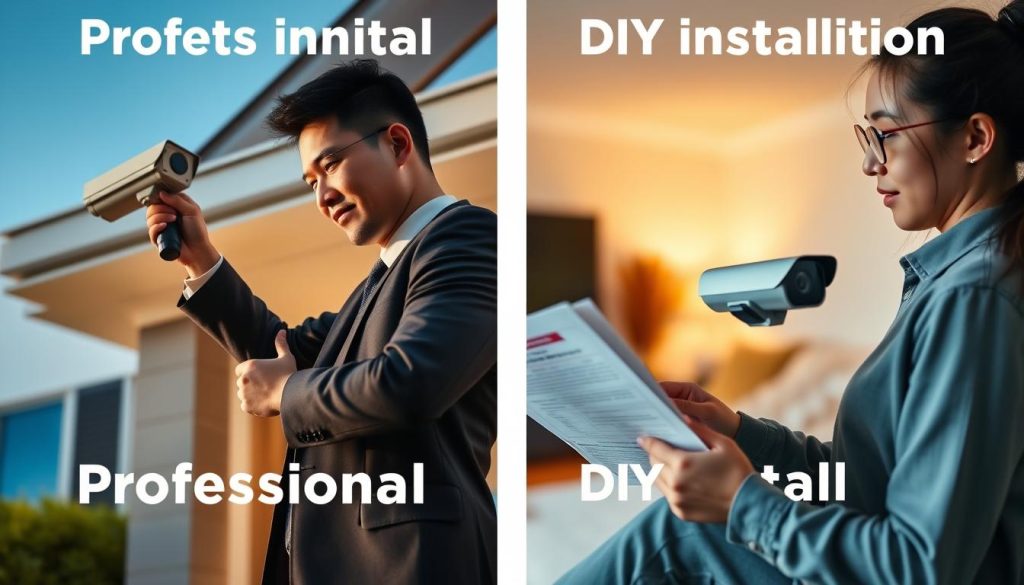
System optimization integrates all components into a cohesive network. Professionals configure recording schedules, motion zones, and alert protocols. This expertise typically delivers a 30% efficiency increase in monitoring coverage and response times.
Warranty protection often requires professional installation for validation. Manufacturers may void coverage for self-installed equipment that malfunctions. Certified setup preserves your investment protection.
Consider professional services for these scenarios:
- Multi-unit networks covering large properties or multiple buildings
- High-risk environments like jewelry stores, banks, or pharmaceutical warehouses
- Integrated setups connecting monitoring with access control or alarm panels
- Situations requiring regulatory certifications or insurance documentation
- Properties with complex architectural features or challenging installations
Professional installation ensures proper grounding, surge protection, and power distribution. These technical details prevent equipment failure during Singapore’s frequent electrical storms.
Essential Considerations for a Successful DIY Installation
Self-installation costs range from SGD 150 to SGD 1,000 for basic tools and materials. This approach offers potential savings for technically capable implementers. Success requires specific knowledge and careful planning.
Required skills include network configuration, power calculations, and basic construction techniques. You’ll need comfort with ladders, drilling, and cable routing. Understanding IP addressing and video management software is equally important.
Essential tools include quality drills, cable testers, and network crimpers. Safety equipment like harnesses and gloves protects during elevated work. Don’t underestimate the time investment—complex setups may require multiple full days.
Regulatory compliance becomes your responsibility with DIY approaches. Singapore’s electrical safety standards (SS 638) govern wiring methods. Data privacy requirements under the PDPA affect recording and storage practices.
Follow this structured approach for DIY success:
- Conduct a thorough site survey documenting all mounting locations and cable paths
- Select equipment compatible with your technical capabilities and existing infrastructure
- Plan cable pathways avoiding electrical interference and physical damage risks
- Calculate power requirements ensuring adequate supply for all units
- Implement comprehensive testing verifying video quality, network stability, and recording functions
Hidden costs emerge in both approaches. Professional services may charge extra for complex configurations or premium materials. DIY projects often require tool purchases, permit fees, or future corrections of installation errors.
Regulatory considerations extend beyond basic wiring. Property-specific rules may govern exterior modifications in condominiums or heritage buildings. Always verify requirements with building management before beginning work.
Use this decision framework to evaluate your situation:
- Technical capability: Honestly assess your skills with networking, construction, and system configuration
- System complexity: Simple single-unit setups differ dramatically from multi-building networks
- Risk tolerance: Higher-stakes environments justify professional expertise
- Budget constraints: Consider both immediate costs and long-term value
- Maintenance considerations: Professional installations often include service agreements
The right choice balances immediate savings against long-term reliability. For most commercial properties in Singapore, professional installation delivers superior value through optimized performance and compliance assurance.
Integrating Your New Cameras with Existing Security Systems
The true power of modern monitoring emerges when individual components communicate seamlessly within a unified defense network. Isolated devices provide limited protection compared to coordinated systems that share intelligence and trigger automated responses.
This integration creates comprehensive solutions rather than separate surveillance components. Your commercial property gains layered protection that adapts to evolving threats.
Successful connection requires planning and technical understanding. Let’s explore the standards and methods that enable this cohesive approach.
Ensuring ONVIF Compliance for Multi-Vendor Compatibility
The Open Network Video Interface Forum (ONVIF) establishes global standards for video equipment interoperability. These protocols allow different manufacturers’ devices to work together smoothly.
ONVIF compliance ensures your new units integrate with existing recorders and management software. This avoids proprietary lock-in that limits future options.
Vendor flexibility becomes a significant advantage. You can select the best equipment for each application without compatibility concerns. Future upgrades proceed smoothly as technology evolves.
A Singapore logistics company improved overall system performance by 25% after integrating surveillance with access control. This case demonstrates the practical value of standardized integration.
RTSP (Real Time Streaming Protocol) serves as another common integration method. Together with ONVIF, these standards create flexible connection options.
Long-term costs decrease when you avoid single-vendor dependencies. Your investment maintains value across technology refresh cycles.
Connecting to Access Control and Alarm Systems
Integration with access control creates powerful audit trails. Video footage correlates directly with door access events for complete visibility.
Visual verification occurs when someone attempts entry. The system matches card swipes or keypad entries with live video feeds.
Alarm system connection enables automatic positioning to triggered locations. Units pan to alarm points when sensors activate.
Video verification of alarm triggers reduces false responses. Security personnel see actual conditions before dispatching teams.
Coordinated protocols between different subsystems enhance response effectiveness. Each component plays its designated role during incidents.
Technical planning ensures successful integration. Network architecture must support increased data flow between connected devices.
Bandwidth management becomes crucial with multiple streaming feeds. Plan Power over Ethernet switch capacity to avoid overloading.
Storage allocation requires adjustment for integrated systems. Correlated events from different sources need organized retention.
Cybersecurity implications increase with interconnected devices. Each connection point represents a potential vulnerability requiring protection.
Advanced integration possibilities extend to building management systems. Lighting can activate based on motion detection from monitoring units.
Environmental monitoring correlates with visual data for comprehensive oversight. Automated response sequences trigger when specific conditions occur.
Implementation guidance begins with pre-purchase compatibility verification. Confirm that new equipment supports your existing infrastructure.
System design considerations include network segmentation for security. Isolate monitoring traffic from general business data when possible.
Testing procedures validate all integration points before full deployment. Verify that alerts, recordings, and controls function as intended.
Ongoing maintenance of integrated systems requires coordinated updates. Firmware upgrades across different vendors need careful scheduling.
Successful integration transforms individual components into intelligent networks. Your property gains adaptive protection that responds to real-time conditions.
The cohesive approach delivers greater value than standalone solutions. Each subsystem enhances the others’ effectiveness through shared intelligence.
The Ongoing Commitment: Maintaining Your Surveillance Investment
The longevity and reliability of your monitoring network depend not just on initial quality but on consistent, proactive care. A structured maintenance program preserves system effectiveness and extends equipment lifespan. This ongoing commitment ensures your property remains protected through Singapore’s challenging climate.
Regular upkeep prevents minor issues from escalating into major failures. It maintains image clarity for identification and keeps all components functioning optimally. Think of maintenance as insurance for your initial investment.
Routine Inspection and Cleaning Schedules
Establish a tiered inspection approach for comprehensive oversight. This includes daily remote checks, weekly system verifications, and monthly physical inspections. Quarterly sessions should address all 23 recommended inspection points.
Monthly physical inspections are crucial. Check mounting brackets for stability and housing seals for integrity. Verify that cables remain secure and protected from environmental exposure.
Lens cleaning dramatically improves identification accuracy. Studies show proper cleaning can enhance clarity by 50%. Dust, rain spots, and tropical humidity all degrade image quality over time.
Use appropriate cleaning solutions and microfiber cloths. Avoid abrasive materials that scratch lens coatings. Frequency depends on your location’s environmental conditions.
Coastal areas with salty air require more frequent cleaning. Urban environments with pollution need regular attention. Indoor locations typically need less frequent maintenance.
Humidity indicator cards help monitor environmental conditions inside housings. These simple tools alert you to moisture buildup before it causes damage. Replace desiccant packs during quarterly maintenance if needed.
Document all inspections in a service log. Record dates, findings, and actions taken. This creates a valuable history for troubleshooting and warranty claims.
Firmware Updates and System Health Checks
Regular firmware updates enhance performance and protect against vulnerabilities. Manufacturers release patches that fix bugs and add new features. Staying current ensures your systems works well with the latest technology.
Establish a firmware update procedure. First, check manufacturer websites for release notes. Understand what each update addresses before proceeding.
Test updates in a staged environment when possible. This identifies compatibility issues before full deployment. Schedule updates during low-activity periods to minimize disruption.
Maintain detailed update records. Note version numbers, installation dates, and any issues encountered. This documentation helps technical support diagnose problems.
System health monitoring should include several key checks:
- Network connectivity verification for all devices
- Storage integrity testing on recorders and memory cards
- Power supply voltage measurements at key points
- Temperature monitoring for overheating components
- Bandwidth usage analysis to prevent network congestion
Create performance baselines during initial installation. Compare current readings against these benchmarks during maintenance. Significant deviations indicate potential problems.
Troubleshooting Common Issues Like Connectivity Loss
Connectivity problems rank among the most frequent issues. Begin diagnosis by checking physical connections and power supplies. Verify network settings and IP address assignments.
Image quality issues often stem from dirty lenses or incorrect settings. First clean the lens thoroughly. Then check focus, exposure, and white balance configurations.
Motion detection failures typically involve sensitivity settings or zone definitions. Review your motion zone configurations. Adjust sensitivity based on time of day and activity patterns.
Predictive maintenance using AI diagnostics identifies potential issues before escalation. These systems analyze performance trends and predict component failure. This enables proactive replacement rather than reactive repairs.
Storage problems manifest as recording gaps or corrupted files. Check drive health using manufacturer tools. Verify that storage capacity meets your retention requirements.
For vandal resistant equipment, pay special attention to housing integrity. Check for impact damage or attempted tampering. Ensure tamper-proof screws remain secure.
Develop a systematic troubleshooting approach:
- Identify the specific symptom and affected components
- Check the most common causes based on symptom patterns
- Test individual components to isolate the fault
- Implement the appropriate fix based on diagnosis
- Document the issue and solution for future reference
Proper maintenance helps your equipment last longer and perform reliably. It protects your commercial investment and ensures continuous property monitoring. A well-maintained system provides peace of mind throughout Singapore’s changing seasons.
Calculating the Return on Investment for Commercial Security
Calculating return on investment transforms protective monitoring from a cost center into a strategic asset. It delivers tangible value across multiple business dimensions. This analysis moves beyond simple price comparisons to reveal true financial impact.
Singapore businesses achieve measurable returns through loss prevention and operational improvements. The right approach quantifies both direct savings and indirect benefits. Let’s explore how modern equipment pays for itself while creating additional value.
Reducing Losses from Theft, Vandalism, and Fraud
Visible monitoring creates a powerful deterrent against criminal activity. Studies show it can reduce crime rates by up to 75%. This prevention directly protects your bottom line.
Each prevented incident represents saved costs. These include stolen inventory, repair expenses, and business interruption. The cumulative effect significantly impacts profitability.
A local retail chain reported a 68% reduction in break-ins after installing protective domes. This single improvement saved thousands in potential losses. The equipment paid for itself within months.
Advanced analytics further enhance loss prevention. They detect suspicious patterns before incidents occur. This proactive approach stops problems at their source.
Fraud detection represents another financial benefit. Monitoring cash handling spots reduces internal shrinkage. It also provides evidence for insurance claims and investigations.
Inventory management improves with constant oversight. You identify discrepancies faster and maintain accurate stock levels. This optimization reduces waste and improves cash flow.
Calculate potential savings by analyzing historical loss data. Estimate the value of prevented incidents over your equipment’s lifespan. This reveals the true financial impact of your investment.
Potential for Lower Insurance Premiums
Insurance providers recognize the value of comprehensive monitoring. They often offer premium discounts for protected properties. These savings directly improve your cost structure.
Businesses frequently receive 30% reductions after installing advanced solutions. This discount applies year after year. It creates ongoing financial benefits beyond initial installation.
Video evidence streamlines claims processing during incidents. It provides clear documentation for adjusters. This accelerates settlements and reduces disputes.
Liability protection improves with documented safety measures. You demonstrate proactive risk management to insurers. This strengthens your position during policy negotiations.
Singapore insurers increasingly require monitored properties for certain coverage types. They view protective equipment as essential risk mitigation. This trend makes investment almost mandatory for comprehensive protection.
Property valuation may improve with documented security measures. This affects both insurance assessments and potential resale value. Your investment protects multiple financial aspects simultaneously.
Review your current policy before installation. Discuss potential discounts with your provider. Document all protective features for maximum recognition.
Enhancing Operational Efficiency and Employee Safety
Modern monitoring delivers benefits beyond crime prevention. It optimizes daily operations and creates safer work environments. These improvements contribute to overall business success.
Traffic pattern analysis reveals opportunities for space utilization. You identify bottlenecks and underused areas. This intelligence informs layout improvements and workflow adjustments.
Safety compliance monitoring ensures adherence to regulations. It documents proper procedures and identifies training needs. This reduces violation risks and associated penalties.
Staff requirements may decrease with automated surveillance. Fewer personnel needed for manual oversight frees resources for other tasks. This improves labor allocation and reduces payroll costs.
Employee safety improves through constant environmental monitoring. You detect hazards faster and respond more effectively. This reduces workplace accidents and associated costs.
Emergency response accelerates with real-time visibility. Staff can assess situations immediately from any location. This minimizes damage and protects people during critical events.
Personal security for staff enhances morale and retention. Employees feel valued and protected in their work environment. This positive atmosphere improves productivity and reduces turnover.
Consider these operational benefits in your ROI calculation:
- Reduced accident-related downtime and compensation claims
- Improved workflow efficiency through traffic analysis
- Lower training costs through documented procedure compliance
- Enhanced employee retention reducing recruitment expenses
- Better resource allocation through automated monitoring
Singapore’s competitive business environment demands efficiency. Protective monitoring contributes directly to this goal. It creates measurable improvements across multiple operational areas.
Intangible benefits further enhance your investment value. Customer confidence increases when they see visible protection. Brand reputation improves through demonstrated commitment to safety.
Partnership opportunities expand with security-conscious clients. They prefer working with businesses that prioritize protection. This opens doors to valuable commercial relationships.
Business owners gain valuable peace of mind knowing their assets are protected. This psychological benefit supports better decision-making and reduced stress. It represents a significant but often overlooked return.
Implementation follows clear calculation methodologies. Simple payback period analysis shows how quickly equipment pays for itself. Net present value calculations reveal long-term financial impact.
Total cost of ownership comparisons balance investment against potential losses. This comprehensive approach ensures accurate financial assessment. It supports informed decision-making for Singapore businesses.
Local considerations affect your specific ROI calculation. Singapore’s crime statistics inform loss probability estimates. Insurance market practices determine potential premium reductions.
Regulatory compliance benefits vary by industry. Specific requirements may mandate certain protective measures. These factors all influence your final investment decision.
The right protective system delivers value far beyond its initial cost. It transforms expense into strategic advantage. Your business gains financial protection and operational improvements simultaneously.
Future-Proofing Your Security: Planning for Upgrades and Expansion
The most valuable commercial monitoring solutions are those designed to evolve alongside your business and emerging technologies. A static installation becomes obsolete as threats change and operations expand. Strategic planning ensures your investment remains effective for years.
This forward-looking approach considers multiple dimensions. It addresses both technological advancements and organizational growth. The goal is creating adaptable infrastructure that protects tomorrow’s assets.
Singapore’s dynamic commercial landscape demands this flexibility. Businesses face evolving regulatory requirements and sophisticated threats. Your monitoring network must keep pace with these changes.
Choosing Scalable Systems That Grow with Your Business
Scalability begins with modular architecture. Look for systems that allow incremental additions without complete overhauls. This approach preserves your initial investment while accommodating growth.
Expandable storage capacity is essential for long-term operation. Network Video Recorders should support additional hard drives. Cloud storage options provide virtually unlimited expansion potential.
Additional camera channel support prevents bottlenecks during expansion. Choose recorders with unused ports for future devices. This planning avoids costly equipment replacement later.
Network bandwidth headroom ensures smooth performance as you add units. Calculate current usage and project future needs. Leave capacity for higher-resolution feeds and advanced analytics.
Backward compatibility maintains system integrity during upgrades. New devices should work with existing infrastructure. This reduces disruption and preserves operational continuity.
Centralized management becomes crucial for multi-site operations. Look for platforms that oversee distributed locations from one interface. This efficiency supports business expansion across Singapore.
Embracing Technological Advancements in AI and Analytics
Artificial intelligence transforms basic video feeds into intelligent alerts. Enhanced analytics detect patterns humans might miss. These capabilities improve threat identification and response times.
Edge computing processes data locally within each device. This reduces network load and enables faster decision-making. It’s particularly valuable for real-time applications in large facilities.
Cloud integration offers complementary benefits. It provides centralized storage, remote access, and scalable processing power. Many businesses use hybrid approaches combining both methods.
Improved compression technologies like H.265+ enhance efficiency. They reduce bandwidth and storage requirements by up to 50% compared to older standards. Firmware update roadmaps should include compatibility with these advancements.
Predictive maintenance using AI diagnostics identifies potential issues before failure. These systems analyze performance trends and component health. This proactive approach minimizes downtime and extends equipment lifespan.
Manufacturer product lifecycle information guides upgrade timing. Understand when current models will reach end-of-support. Plan replacements during natural refresh cycles to minimize disruption.
Migration strategies preserve system integrity during component replacement. Phase upgrades to maintain continuous coverage. Test new equipment alongside existing infrastructure before full deployment.
Business growth alignment ensures monitoring scales with operations. Match expansion plans with security system capabilities. Consider these factors for Singapore enterprises:
- Multi-site management for businesses opening additional locations
- Centralized monitoring for distributed operations across the island
- Regulatory compliance tracking as requirements evolve
- Integration capabilities with new building management technologies
Create a 3-5 year technology roadmap for your monitoring infrastructure. This document outlines planned upgrades and budget allocations. It ensures strategic rather than reactive investments.
Evaluation criteria help incorporate new technologies as they mature. Assess reliability, cost-benefit ratios, and integration complexity. Pilot promising innovations in controlled environments before full deployment.
Singapore-specific considerations include anticipating regulatory changes. Monitor Personal Data Protection Act (PDPA) updates affecting video data handling. Stay informed about local infrastructure developments impacting network connectivity.
Industry-specific trend monitoring identifies relevant advancements. Retail businesses might focus on people counting analytics. Logistics companies may prioritize license plate recognition improvements.
Future-proofing transforms your monitoring network from a fixed expense into a flexible asset. It ensures continuous protection as your business evolves. This strategic approach delivers lasting value in Singapore’s competitive commercial environment.
Legal and Ethical Considerations for Surveillance in Singapore
Beyond technical specifications, commercial monitoring systems must align with Singapore’s stringent privacy regulations and ethical standards. The Personal Data Protection Act (PDPA) establishes clear rules for video data collection and use. Understanding these requirements protects your business from legal complications.
Ethical monitoring balances protection needs with individual privacy rights. This approach builds trust with employees and customers. It also ensures your surveillance practices remain legitimate and sustainable.
Understanding PDPA Compliance for Video Data
The PDPA governs how organizations handle personal data, including video footage. This law applies to all commercial entities operating in Singapore. Compliance is not optional for businesses using monitoring equipment.
Purpose limitation requires collecting footage only for legitimate business reasons. You must clearly define why you need surveillance. Common purposes include crime prevention, safety monitoring, and asset protection.
Notification obligations mandate informing individuals about recording. Clear signage should appear at entry points to monitored zones. Notices must state the purpose of data collection.
Access and correction rights allow individuals to request their footage. You must provide copies within specified timeframes. Reasonable fees may apply for this service.
Protection and retention policies safeguard collected video data. Implement encryption for stored footage. Establish clear timelines for data deletion based on business needs.
Transfer limitations restrict sending footage outside Singapore without safeguards. Cross-border data transfers require adequate protection measures. Multinational businesses should note GDPR similarities for European operations.
Implementation guidance begins with privacy impact assessments. Document your data handling procedures in clear policies. Train staff on proper footage management and access controls.
Respecting Privacy in Workplace and Public Area Monitoring
Workplace monitoring requires careful consideration of employee privacy. Identify appropriate zones for equipment placement based on security needs. Common areas like production floors and entry points typically justify monitoring.
Restricted zones include restrooms, changing rooms, and prayer spaces. These locations should never contain recording devices. Employee notification must occur before implementing any monitoring system.
Balance protection requirements with reasonable privacy expectations. Excessive surveillance can damage workplace morale and trust. Focus monitoring on areas with legitimate security concerns.
Public area monitoring in commercial properties follows specific guidelines. Customer-facing spaces require visible signage about recording. Consider reasonable expectations of privacy in different settings.
Ethical surveillance practices extend beyond legal minimums. They involve proportional monitoring, data minimization, and transparency with all stakeholders. Responsible use of technology builds community trust.
Incident response protocols ensure proper evidence handling. Establish chain of custody procedures for footage used in investigations. Document all access to recorded material for accountability.
Appropriate disclosure practices govern when to share footage. Legal requests from authorities require proper verification. Internal investigations should follow documented approval processes.
Implementation guidance includes regular compliance reviews. Update policies as regulations evolve in Singapore. Conduct annual audits of your monitoring practices and data handling.
Recent developments show increasing regulatory attention to surveillance technologies. Singapore continues refining its data protection framework. Businesses should monitor PDPA amendments and enforcement trends.
Ethical considerations include data minimization principles. Collect only what you need for defined purposes. Regularly review whether continued recording remains justified.
Transparency with stakeholders demonstrates responsible governance. Explain your monitoring purposes clearly to employees and visitors. Address privacy concerns through open communication channels.
Responsible technology use considers societal impacts beyond legal compliance. Evaluate how monitoring affects community perceptions of your business. Strive for practices that protect assets while respecting individuals.
Taking the Next Step Toward a More Secure Property
Your journey toward comprehensive property protection begins with decisive action informed by careful planning. This guide has equipped you with a systematic approach to selecting, installing, and maintaining robust monitoring equipment.
Now translate this knowledge into tangible protection. Start with a professional assessment of your specific security needs. Define clear requirements for coverage areas and system features.
Consult with local experts like ED Viston (+65 8313 4578) or Wen Hong (+65 6013 5960) for tailored solutions. Their understanding of Singapore’s unique environment ensures your investment delivers lasting value and peace of mind.
View this implementation as a strategic business decision. Proper surveillance systems protect assets, reduce losses, and support sustainable operations. Take the next step toward a more secure future today.