
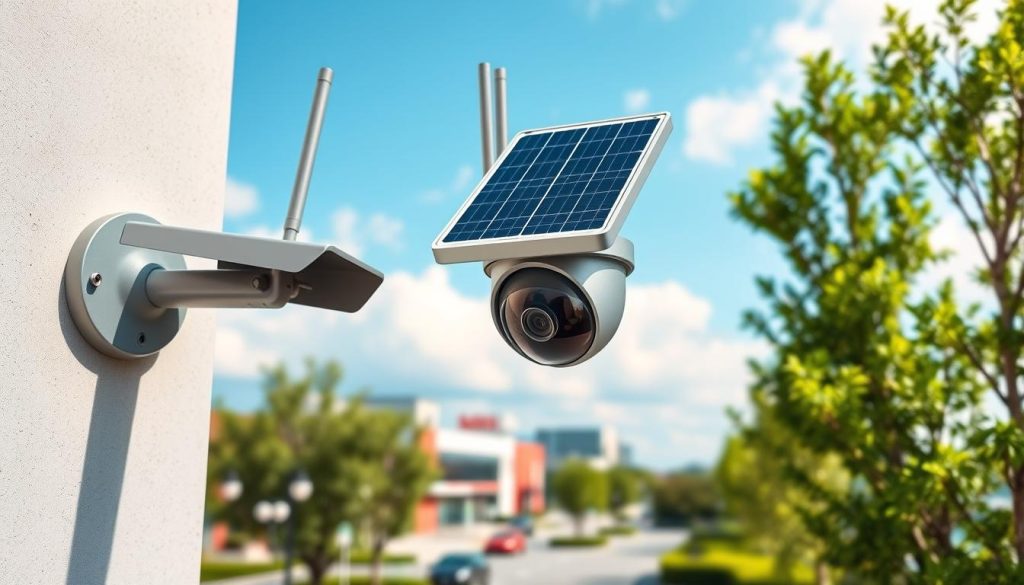
Choosing the right surveillance system is a critical decision for any business. In Singapore’s tropical climate, with over 2,500 hours of sunlight each year, there’s a powerful and efficient option available.
This environment is perfect for devices that run on renewable energy. A modern, wire-free unit can provide high-quality monitoring without the need for constant grid power.
This comprehensive guide is designed for commercial property managers and business owners. We will explore how this technology delivers significant cost savings and operational flexibility.
The trend is clear. A growing majority of new commercial security installations now leverage sustainable power. This shift eliminates complex electrical work and provides reliable, 24/7 coverage.
Understanding the upfront investment and the long-term return is key. This guide will help you make an informed decision for a durable and effective security solution.
From construction sites to retail perimeters, a robust pan-tilt-zoom system can be a game-changer. Let’s dive into the details you need to select the ideal setup for your specific commercial needs.
Key Takeaways
- Singapore’s sunny climate is ideal for efficiently powering security devices with renewable energy.
- Modern commercial surveillance systems offer significant long-term cost savings and installation flexibility.
- Understanding both the initial cost and the long-term ROI is crucial for a smart security investment.
- These wire-free units provide reliable, high-resolution monitoring around the clock.
- This guide covers essential features, technology comparisons, site assessment, and installation tips.
- The solution is versatile and effective for various commercial settings, from perimeters to remote sites.
Why Solar-Powered Security is a Game-Changer for Singapore Businesses
Forward-thinking companies in Singapore are discovering a powerful combination of reliability and efficiency in modern surveillance. This approach transforms how commercial properties manage protection. It delivers consistent monitoring while addressing both economic and environmental concerns.
The shift toward sustainable solutions represents more than just a trend. It’s a strategic advantage for businesses operating in Singapore’s unique climate. These innovative systems offer tangible benefits that directly impact the bottom line.
Harnessing Singapore’s Abundant Sunlight for Reliable Power
Singapore enjoys over 2,500 hours of bright sunshine each year. This creates ideal conditions for photovoltaic-powered surveillance equipment. The consistent sunlight ensures uninterrupted operation throughout all seasons.
Traditional wired units depend completely on grid electricity. They face risks during power fluctuations or outages. Sustainable alternatives operate independently from these constraints.
Reliable power generation means continuous protection without interruptions. The technology captures and stores energy during daylight hours. This provides 24/7 coverage even after sunset.
Modern designs include efficient battery storage systems. They maintain full functionality through multiple cloudy days. This reliability is crucial for commercial applications where security cannot be compromised.
Significant Operational Cost Savings vs. Traditional Wired Systems
Financial benefits represent one of the strongest arguments for sustainable surveillance. Studies show these setups can reduce energy expenses by up to 75%. The savings accumulate significantly over the system’s lifespan.
Conventional installations require extensive electrical work. This includes trenching for cables and connection to main power lines. These processes involve substantial labor and material costs.
Renewable energy systems eliminate these initial expenses. They also remove ongoing electricity bills from the operational budget. The total cost of ownership becomes remarkably lower.
Consider these financial advantages:
- Zero monthly electricity costs for surveillance operations
- Elimination of expensive trenching and electrical contractor fees
- Reduced maintenance expenses compared to wired infrastructure
- Quick installation that minimizes business disruption
Case studies demonstrate installation time reductions of approximately 50%. Businesses achieve faster deployment while maintaining high-definition monitoring capabilities. This efficiency translates directly to cost savings.
The Flexibility of Wireless Deployment in Commercial Settings
Wireless technology provides unprecedented deployment options. Commercial properties no longer face infrastructure limitations. Units can be placed exactly where they’re needed most.
This flexibility proves invaluable for various business scenarios. Construction sites benefit from temporary, movable protection. Agricultural operations secure vast areas without complex wiring.
Event venues like festival grounds implement temporary surveillance quickly. Retail establishments adjust coverage as their needs evolve. The system grows and adapts with the business.
Key advantages of wireless deployment include:
- Placement in remote or challenging locations without power access
- Quick relocation as security priorities change
- Scalable systems that expand with business growth
- Minimal physical disruption during installation
Environmental benefits complement the economic advantages. These setups operate on 100% renewable energy. They produce zero emissions and function silently.
The business case becomes compelling when combining all factors. Lower total ownership costs meet reduced carbon footprints. Operational flexibility joins reliable performance.
Singapore businesses gain a competitive edge through this technology. They protect assets efficiently while demonstrating environmental responsibility. The combination represents a win-win scenario for commercial operations.
Key Advantages of a Solar PTZ WiFi Camera for Commercial Properties
The deployment of a commercial monitoring system often faces three major hurdles: complex installation, vulnerability to power loss, and limited site accessibility. Modern sustainable technology directly overcomes these obstacles, delivering a robust solution tailored for demanding business environments.
Eliminating Trenching and Complex Electrical Work
Traditional wired setups require extensive and costly groundwork. This includes digging trenches, laying protective conduit, and hiring licensed electricians for connections.
Photovoltaic-powered units completely bypass this need. They operate independently, using a built-in panel and battery. This wireless design translates to dramatic savings.
Consider the financial and operational benefits:
- Slash installation costs: Eliminate fees for trenching, conduit, and complex electrical labor.
- Reduce deployment time: Studies show sustainable setups can cut installation time by approximately 50%.
- Minimize business disruption: Setup is quick and clean, with no major construction required on-site.
The simplicity is a game-changer. You can position a unit exactly where coverage is needed most, without being tethered to existing power lines.
Ensuring Uninterrupted Surveillance During Power Fluctuations
Grid reliability is a concern for any operation. Power fluctuations or outages can create critical blind spots in your protection.
Renewable energy systems provide inherent resilience. They generate and store their own power, creating an autonomous micro-grid for your surveillance.
The heart of this reliability is a high-capacity battery backup. For instance, professional-grade models feature robust 15,000mAh batteries. This allows them to deliver full functionality for up to seven days without direct sunlight.
This is vital for maintaining operations during Singapore’s monsoon seasons or any unexpected grid issues. Your monitoring continues seamlessly, ensuring asset protection is never compromised.
Enhancing Security in Remote or Temporary Sites
Many commercial ventures operate in locations where traditional infrastructure is impractical or non-existent. This is where the flexibility of this technology shines.
These standalone units are perfect for challenging environments. They provide high-definition monitoring where it was previously too difficult or expensive to install.
Primary use cases include:
- Construction Sites & Remote Yards: Secure equipment and materials without temporary power setups.
- Agricultural Land & Farmlands: Monitor vast perimeters and assets across open terrain.
- Temporary Venues: Provide instant coverage for festival grounds, pop-up retail, or event spaces.
The portability is a key strategic advantage. As your project phases change or sites evolve, you can easily relocate the entire setup. This adaptability ensures your security investment remains optimal and effective over time, meeting the dynamic needs of modern business.
Essential Features to Look for in a Commercial Solar PTZ Camera
When evaluating monitoring solutions for business properties, certain core capabilities separate adequate systems from exceptional ones. The right combination of technical specifications ensures your investment delivers clear evidence and reliable protection.
These features determine what you can see, how long the system operates, and how effectively it alerts you to genuine threats. Understanding each component helps you select equipment that meets Singapore’s specific commercial demands.
High-Resolution Imaging: From 4MP to 4K UHD
Image clarity is fundamental for identification and evidence. Higher resolution provides sharper details like license plates or facial features.
Entry-level 4MP (2560 x 1440) units offer good basic coverage. For critical areas, 8MP (3840 x 2160) or true 4K UHD delivers superior detail.
Models like the Defender 4K Everwatch PTZ capture 8MP footage at 15 frames per second. This smooth, high-definition main stream is essential for reviewing fast-moving events.
The choice between 4MP and 8MP often comes down to monitoring priorities. High-traffic zones like entrances benefit from the maximum resolution available.
Advanced Night Vision: Color and Infrared Capabilities
Around-the-clock operation requires excellent low-light performance. Modern systems employ multiple technologies for clear night vision.
Traditional infrared (IR) illumination provides black-and-white imagery in complete darkness. The Reolink Argus 3 Pro, for example, offers 25-meter IR vision.
More advanced color night vision uses Starlight sensors or supplemental lighting. This maintains color information during day night transitions, which is crucial for identifying clothing or vehicle colors.
Hikvision’s technology exemplifies this capability. Their systems can deliver usable color imagery in very low ambient light conditions.
Robust Weatherproofing: IP Ratings for Tropical Climates
Singapore’s environment demands equipment that withstands heavy rain, high humidity, and intense heat. The Ingress Protection (IP) rating certifies this durability.
Look for a minimum IP65 rating for dust protection and water jets. For complete peace of mind, IP67 ensures survival during temporary immersion and constant humidity.
Hikvision’s IP67-rated units are tested to function at 90% humidity and 50°C temperatures. This rigorous standard guarantees operation through monsoon seasons and heatwaves.
Proper sealing protects internal electronics from Singapore’s challenging conditions. It prevents corrosion and ensures long-term reliability for your commercial security.
Smart Motion Detection with AI-Powered Analytics
Basic motion sensors create countless false alerts. Intelligent analytics filter out irrelevant movement like swaying trees or small animals.
Advanced algorithms achieve over 95% accuracy in distinguishing humans from vehicles. This precision reduces notification fatigue and focuses attention on genuine threats.
Hikvision’s AcuSense technology is a leading example. It precisely detects human-shaped targets, minimizing false triggers while ensuring critical events are captured.
You receive instant mobile alerts only for suspicious activity. This enables a proactive response rather than reviewing hours of irrelevant footage.
Beyond core detection, consider how the system manages recorded data. Flexible storage options include local SD cards (up to 256GB), built-in SSD, or secure cloud services.
Additional features enhance functionality. Two-way audio allows for remote communication or deterrence. Custom activity zones let you define specific areas for heightened monitoring.
For comprehensive solutions that include robust connectivity, explore professional 4G PTZ solar camera systems designed for uninterrupted commercial use.
Each feature contributes to a complete protection ecosystem. Prioritize based on your site’s specific risks and operational requirements.
Understanding Solar PTZ WiFi Camera Technology
The technological foundation of modern commercial surveillance lies in three integrated systems. These are energy harvesting, data transmission, and remote positioning. Each component must work flawlessly for reliable, around-the-clock protection.
This section breaks down how these elements function together. We explore the photovoltaic energy cycle, compare connectivity options, and explain mechanical controls. Understanding this technology helps you select the right equipment for your Singapore business.
How the Solar Panel and Battery System Work Together
Commercial-grade units achieve energy independence through sophisticated engineering. The heart of this system is high-efficiency photovoltaic technology.
Most professional models use monocrystalline silicon cells. These offer conversion rates of 19.5% or higher. A standard 6W panel can generate sufficient electricity even on moderately cloudy days.
The generated electricity flows directly to a high-capacity storage unit. Lithium-ion batteries have become the industry standard. They outperform older NiMH technology in every critical aspect.
Premium models feature robust 9000mAh 21700 cells. These provide extended backup power during prolonged periods without sunlight. Lithium options typically last over ten years with proper maintenance.
The complete energy cycle follows a simple yet effective pattern:
- Photovoltaic cells convert sunlight into direct current electricity
- This energy charges the integrated lithium-ion battery pack
- The monitoring unit draws power from the battery as needed
- Excess energy is stored for nighttime or low-light operation
Advanced power management systems optimize this process. They regulate energy flow to maximize operational duration. This intelligent control is crucial for Singapore’s variable weather patterns.
Full battery recharge typically requires four to six hours of direct sunlight. Well-designed systems can provide up to seven days of backup without any solar input. This resilience ensures uninterrupted surveillance during monsoon seasons.
Wi-Fi vs. 4G Connectivity: Choosing the Right Data Link
Data transmission is the second critical technology pillar. Your choice between wireless networks directly impacts reliability and coverage.
Wi-Fi connectivity works well for properties with existing network infrastructure. It provides cost-effective data transmission within router range. Most commercial establishments already have this network access.
4G cellular connectivity offers superior flexibility for remote locations. It bypasses Wi-Fi entirely, using Singapore’s extensive mobile networks. This is ideal for sites without established internet infrastructure.
Independent testing reveals significant performance differences. 4G systems respond approximately 30% faster in rural zones. They maintain lower latency when transmitting high-definition footage.
Data consumption varies based on recording settings. A unit streaming 1080p video with motion-triggered recording uses about 2GB monthly. Continuous recording naturally requires more substantial data plans.
Many professional systems now offer hybrid connectivity options. These can automatically switch between Wi-Fi and 4G based on signal strength. This redundancy creates a more resilient surveillance system.
Consider these factors when selecting your data link:
- Site location: Urban properties with strong Wi-Fi versus remote areas needing cellular
- Network reliability: Consistent signal strength for uninterrupted video feeds
- Data costs: Monthly cellular plans versus existing internet service
- Redundancy needs: Critical applications requiring backup transmission paths
PTZ Mechanics: Pan, Tilt, and Digital Zoom Functions
The third technological pillar enables dynamic viewing capabilities. Pan-tilt-zoom mechanics transform static monitoring into active surveillance.
Pan functionality allows horizontal rotation across a wide arc. Professional models typically offer 0-355° coverage. This creates nearly complete panoramic viewing from a single position.
Tilt capability provides vertical adjustment. Standard ranges extend from 0-90°, covering ground level to overhead areas. Combined with pan, this creates comprehensive spherical coverage.
Digital zoom magnifies distant details within the camera’s field of view. The Defender model, for instance, provides 6x digital enhancement. This allows identification of license plates or facial features from considerable distances.
Remote control of these functions happens through intuitive mobile applications. Security personnel can adjust viewing angles in real-time from any location. This responsive control is particularly valuable for large commercial properties.
These mechanical capabilities deliver several operational advantages:
- Reduced equipment needs: One PTZ unit can monitor areas requiring multiple fixed devices
- Active threat response: Operators can follow suspicious movement across a property
- Detailed investigation: Zoom functions provide evidentiary-quality footage of specific incidents
- Flexible coverage: Viewing angles can be adjusted as security priorities evolve
The integration of these three technological systems creates a complete solution. Renewable energy harvesting provides operational independence. Robust connectivity ensures reliable data transmission. Mechanical controls deliver comprehensive visual coverage.
This technological foundation explains why modern systems outperform traditional alternatives. They offer Singapore businesses a resilient, flexible, and cost-effective approach to commercial security.
Evaluating Top Solar PTZ Camera Brands Available in Singapore
With multiple options available locally, comparing key manufacturers helps identify the best fit for your property. Each brand brings distinct advantages to commercial surveillance.
Understanding these differences ensures your investment matches operational requirements. We’ll examine leading providers and their standout features.
Hikvision: Integrated Kits and Professional-Grade Reliability
Hikvision stands as a top choice for demanding commercial applications. Their photovoltaic-powered security kits feature customizable battery systems.
The modular 15,000mAh setup adapts to varied energy needs. This flexibility supports operations during extended low-light periods.
Durability receives exceptional emphasis with an IP67 rating. Equipment withstands Singapore’s intense humidity and heavy rainfall.
A comprehensive 5-year warranty underscores product confidence. Local support includes 12 service centers across the island.
Advanced AcuSense technology delivers precise motion detection. It distinguishes human movement from environmental triggers with over 95% accuracy.
Color imaging operates continuously, day and night. The integrated designs simplify deployment for large-scale installations.
Professional-grade solutions prioritize resilience and intelligent analytics. They transform raw footage into actionable security intelligence.
Reolink: Budget-Friendly Models with Strong Performance
Reolink offers compelling value for cost-conscious businesses. Their Argus 3 Pro model delivers at just SGD 149.99.
This unit captures crisp 1080p resolution footage. It provides reliable monitoring without premium pricing.
Extended standby operation reaches approximately six months on a single charge. This efficiency reduces maintenance frequency for remote sites.
The brand maintains a solid 3-year warranty on most products. Users appreciate the straightforward setup and user-friendly mobile application.
While featuring fewer customization options than professional kits, performance remains robust. It represents an excellent entry point for smaller commercial properties.
Comparing Key Specs: Battery Life, Warranty, and Local Support
Direct comparison highlights critical decision factors. Battery capacity varies significantly between manufacturers.
Hikvision’s modular system offers 15,000mAh capacity. Reolink’s models typically feature smaller, integrated batteries with impressive standby efficiency.
Other noteworthy options include Defender’s 4K Everwatch PTZ. Priced around $145, it provides 8MP resolution with a 9000mAh battery.
Dahua presents models like the DH-SD6C3432XB. This unit features powerful 32x zoom for monitoring expansive areas.
Warranty terms reveal manufacturer confidence:
- Hikvision: 5-year comprehensive coverage
- Reolink & Defender: Standard 3-year protection
- Dahua: Typically 3-year with extended options available
Local Singapore support proves invaluable for commercial users. Quick access to technical assistance minimizes downtime.
Many suppliers offer free shipping for orders above certain values. This reduces the total cost of acquiring new systems.
When selecting among available ptz cameras, consider these priorities:
- Budget constraints versus required feature sets
- Site complexity and need for professional installation
- Long-term support requirements for warranty claims
- Integration needs with existing security infrastructure
The right solar-powered security cameras balance performance with practical business considerations. Evaluate not just the initial price, but the total cost of ownership.
Local expertise ensures proper configuration and optimal placement. This maximizes the value of your commercial surveillance investment.
Critical Specifications to Decode Before You Buy
Beyond brand names and marketing claims, the true performance of security equipment lies in its detailed specifications. These technical parameters determine how well a system will function in Singapore’s unique environment.
Understanding these metrics ensures your investment delivers reliable protection. Let’s examine the most critical specifications that impact daily operation.
Battery Capacity (mAh) and Days of Backup Power
Milliampere-hours (mAh) measure a battery’s energy storage. Higher mAh values translate to longer operation without sunlight.
Hikvision’s 15,000mAh unit provides approximately seven days of backup. This resilience is crucial during monsoon seasons or extended cloudy periods.
Defender employs a dual 21700 lithium-ion system with 9000mAh total capacity. Lithium-ion technology offers superior lifespan and performance compared to older battery types.
When evaluating capacity, consider your site’s specific sunlight patterns. Areas with partial shading may require larger battery reserves.
Solar Panel Wattage and Charging Efficiency
Panel wattage indicates power generation potential. Common ratings include 3W, 6W, and higher for commercial applications.
Defender’s 3W panel delivers consistent output with ±5% tolerance. The key factor is conversion efficiency, which determines how much sunlight becomes usable electricity.
Premium monocrystalline cells achieve ≥19.5% efficiency rates. This high conversion speed ensures rapid battery replenishment during daylight hours.
Efficient panels maintain system reliability in varying light conditions. They capture sufficient energy even on moderately overcast days common in Singapore.
Video Resolution, Frame Rate, and Compression
Image clarity depends on resolution measured in megapixels (MP). Options range from 4MP for basic coverage to 8MP or 4K for critical areas.
Defender captures 8MP footage at 3840 x 2160 resolution. The 15 frames-per-second rate ensures smooth playback of fast-moving events.
Compression technology manages file sizes without sacrificing quality. H.265 encoding reduces storage needs by approximately 50% compared to older H.264 standards.
This efficient compression is vital for systems recording continuously. It extends storage duration while maintaining evidential quality.
Storage Options: SD Card, Built-in SSD, and Cloud
Recording retention depends on available storage solutions. Each option offers distinct advantages for commercial users.
Micro SD cards support up to 256GB capacity. They provide affordable local storage with easy physical access to recordings.
Built-in SSD or eMMC storage offers enhanced durability and faster write speeds. These integrated solutions withstand constant read-write cycles better than removable media.
Cloud services enable remote access and backup protection. They safeguard footage even if physical equipment is compromised.
Many systems support hybrid approaches. Local storage handles continuous recording while cloud services archive critical events.
Environmental specifications ensure durability in tropical climates. IP65 rating guarantees protection against dust and water jets from any direction.
Operating temperature ranges from -20°C to 60°C accommodate Singapore’s heat. Proper sealing prevents humidity damage to internal electronics.
Motion detection capabilities include PIR sensing up to 8 meters. Advanced analytics distinguish human movement from environmental triggers with over 95% accuracy.
Connectivity standards include 802.11b/g/n for wireless networks. 4G compatibility provides alternative data transmission for locations without established internet infrastructure.
Professional systems typically support multiple device connections. This scalability allows expansion as security needs grow.
When comparing models, examine these specifications alongside warranty terms and local support availability. The right combination ensures lasting performance for your commercial property.
Assessing Your Commercial Site’s Suitability for Solar Security
The success of any surveillance deployment begins with understanding your property’s unique environmental and security characteristics. A proper assessment ensures your investment delivers maximum coverage and uninterrupted operation.
This evaluation process examines two critical factors. First, it analyzes sunlight availability for energy generation. Second, it maps protection needs across your entire commercial space.
Both elements must align for optimal performance. Let’s explore how to conduct this essential pre-installation analysis.
Conducting a Sunlight Exposure Audit for Optimal Placement
Energy efficiency starts with analyzing sun exposure patterns. Your photovoltaic panel needs direct, unobstructed light throughout the day.
Begin by observing sun paths across your property. Note how shadows from buildings or trees move during different hours. Seasonal variations in Singapore affect these patterns slightly.
Professional tools like Solar Pathfinder provide precise assessments. They calculate solar potential at specific locations with high accuracy.
This analysis helps avoid shaded zones that reduce power generation. Even partial shading can significantly impact energy harvest.
Optimal panel orientation faces true north in Singapore. A tilt angle between 10-15° captures the most light year-round.
This positioning maximizes energy capture during all seasons. It ensures consistent power for your monitoring equipment.
Identifying Security Priorities and Camera Coverage Zones
Next, map your protection requirements across the property. Identify critical entry points and high-value assets first.
Common priority zones include main gates, loading docks, and storage areas. Also note potential blind spots where visibility is limited.
Perimeter zones require consistent monitoring for unauthorized access. Internal areas might need coverage for specific operational hours.
Consider the capabilities of your chosen surveillance equipment. Pan-tilt-zoom functionality provides wider coverage than fixed units.
Higher resolution allows identification at greater distances. Field of view specifications determine how much area one device can monitor.
Create a visual map marking all priority locations. This becomes your coverage blueprint for the entire installation.
Calculating the Number of Cameras Needed for Your Property
Determining the right quantity depends on several factors. Property size and layout are the primary considerations.
Complex layouts with multiple buildings need more units. Open spaces might require fewer but strategically placed devices.
Follow this methodology for accurate calculation:
- Measure total perimeter length and divide by each unit’s effective coverage range
- Count all entry points requiring individual monitoring
- Identify interior zones needing dedicated surveillance
- Account for overlapping coverage to eliminate blind spots
Different commercial settings have unique requirements. Construction sites benefit from temporary, movable protection.
Warehouses need coverage for both exterior and high-value storage areas. Retail perimeters require monitoring for customer and employee safety.
Structural requirements are crucial for heavier systems. Professional-grade units like Hikvision’s 14kg models need sturdy mounting brackets.
These brackets must withstand Singapore’s weather conditions. They should be anchored to solid structural elements.
Professional site assessment is essential before purchasing any equipment. Experts can identify issues you might overlook.
They ensure your system delivers reliable, around-the-clock protection. This upfront investment prevents costly mistakes and ensures optimal performance.
A Realistic Cost Analysis: Upfront Investment vs. Long-Term Value
Evaluating surveillance investments means balancing upfront capital with operational efficiency gains. The true economics extend well beyond the initial purchase price.
This analysis provides clarity for Singapore businesses. It compares immediate expenses against multi-year savings.
Breaking Down the Price Range for Commercial-Grade Systems
Commercial photovoltaic-powered units range from SGD 200 to SGD 800. The final price depends on resolution, storage, and brand reputation.
Entry-level models like Reolink’s Argus 3 Pro start around SGD 149.99. They offer solid 1080p performance for basic monitoring needs.
Mid-range options provide enhanced capabilities. Defender’s 4K Everwatch regularly sells for $159, with promotional rates at $145.
Premium professional kits from brands like Hikvision reach the upper range. They include advanced analytics and modular battery systems.
Compare these costs against traditional wired installations. Electrical work alone adds SGD 500-2000 for trenching and conduit.

Photovoltaic alternatives eliminate those infrastructure expenses completely. This creates immediate savings during deployment.
Projecting Your ROI Through Energy and Installation Savings
The return on investment becomes clear when examining operational costs. Sustainable setups reduce electricity expenses by up to 75%.
Consider a standard commercial installation. Traditional units might consume SGD 300 annually in grid power.
A photovoltaic equivalent operates at zero ongoing energy cost. Over five years, this saves approximately SGD 1,500.
Installation efficiency provides additional value. Wireless deployment cuts setup time by approximately 50%.
This reduces labor costs and minimizes business disruption. Faster deployment means quicker security activation.
Long-term components enhance the value proposition. Lithium-ion batteries typically last over ten years with proper care.
Warranty coverage adds protection. Most brands offer 3-5 years of comprehensive support.
Calculate total ownership costs using this formula:
- Initial equipment purchase price
- Plus installation labor (if applicable)
- Minus traditional electrical work savings
- Minus annual energy savings multiplied by years
- Plus any ongoing subscription fees
Case studies show payback periods of 18-24 months for many businesses. The long-term financial advantage becomes substantial.
Understanding Ongoing Costs: Data Plans and Maintenance
Beyond the initial purchase, consider recurring expenses. These are typically minimal compared to wired alternatives.
4G cellular data plans represent the most common ongoing cost. A unit streaming 1080p footage with motion activation uses about 2GB monthly.
Local Singapore providers offer suitable plans starting under SGD 15 per month. This ensures reliable remote access without Wi-Fi dependency.
Cloud storage subscriptions provide optional backup services. These range from SGD 5-20 monthly depending on retention needs.
Most systems include local storage via SD card or built-in SSD. This eliminates cloud fees for businesses preferring physical media.
Maintenance requirements are surprisingly low. Routine cleaning of panels and lenses ensures optimal performance.
Battery health monitoring occurs through mobile applications. Users receive alerts when attention is needed.
Software updates maintain system security and add features. These are typically provided at no additional charge.
Shipping and return policies affect overall value. Many suppliers offer free shipping for orders above certain values.
Thirty-day return windows allow proper testing. Price matching guarantees competitive price points.
The most sophisticated commercial security systems deliver value through operational independence. Their true cost advantage emerges over years, not days.
While upfront costs may exceed basic wired camera options, the long-term economics favor sustainable solutions. Businesses gain flexibility, resilience, and significant savings.
Free shipping policies further reduce acquisition expenses. They make professional equipment more accessible across Singapore.
Smart financial planning considers all these factors. It recognizes that quality protection represents an investment, not just an expense.
Professional Installation Tips for Maximum Performance and Durability
Proper installation transforms advanced surveillance technology into reliable, long-term protection for your commercial property. The difference between adequate and exceptional performance often lies in deployment details.
Following expert guidelines ensures your investment withstands Singapore’s climate while delivering maximum coverage. This section covers critical steps from site selection to final configuration.
Selecting the Perfect, Unobstructed Sunlit Spot
Energy harvesting begins with optimal photovoltaic placement. Analyze sun exposure patterns across your property throughout the day.
Identify locations with at least six hours of direct sunlight. Avoid areas shaded by buildings, trees, or other structures during peak hours.
In Singapore, orient the panel toward true north. A tilt angle between 10-15° captures the most light year-round.
This positioning maximizes power generation during all seasons. Consistent energy flow ensures uninterrupted operation of your monitoring equipment.
Securing the Mount and Weatherproofing All Connections
Sturdy mounting is essential for professional-grade units. Heavier models require robust brackets anchored to solid structural elements.
Consider these mounting techniques for different surfaces:
- Poles: Use U-bolt clamps with vibration-dampening pads
- Walls: Install with concrete anchors or heavy-duty masonry screws
- Roofs: Employ angled brackets that maintain proper panel orientation
Position equipment high enough to deter tampering. Anti-theft brackets provide additional security for vulnerable commercial locations.
Weatherproofing protects against Singapore’s intense humidity and rainfall. Seal all cable junctions with silicone compound to block moisture ingress.
Check gasket integrity regularly and use conduit protection for exposed wiring. These measures prevent corrosion and ensure long-term reliability.
Configuring Network Settings and Mobile App Access
Reliable connectivity completes your surveillance system. For wireless models, test signal strength at the installation point before final mounting.
Optimal router placement minimizes interference. Consider installing signal boosters to maintain connectivity during adverse weather conditions.
4G systems require proper SIM card installation and antenna positioning. Orient external antennas for maximum signal strength in remote areas.
Mobile application setup begins with downloading the manufacturer’s software. Popular options include the Defender Empower App, Reolink application, and Hikvision platform.
Follow these configuration steps for comprehensive access:
- Create administrator accounts with secure credentials
- Pair each unit with the application using QR codes or device IDs
- Configure multi-user access for team monitoring (up to 20 users on some systems)
- Set accurate date/time stamps for evidential records
- Define custom motion zones to reduce false alerts
- Establish notification preferences for immediate threat awareness
- Select storage preferences between local media and cloud services
Professional installation services provide significant value for complex commercial setups. Experts guarantee weather-resistant deployments and optimal performance.
They ensure warranty compliance while saving valuable time. This investment pays dividends through reliable, around-the-clock protection for your business assets.
Ensuring 24/7 Reliability: Maintenance and Monitoring Best Practices
Reliable 24/7 operation is not automatic—it requires scheduled maintenance, careful monitoring, and strategic planning for component lifecycles. A disciplined approach transforms your surveillance investment from a temporary installation into a lasting protective asset.
Singapore’s tropical environment presents unique challenges. High humidity, intense rainfall, and constant dust accumulation can impact performance. Proactive care ensures your system delivers consistent protection through all seasons.
This section outlines essential practices for commercial properties. We cover routine cleaning, performance monitoring, and responsible end-of-life management.
Routine Cleaning Schedules for Solar Panels and Camera Lenses
Dust, pollen, and rain streaks gradually reduce system efficiency. They block sunlight from photovoltaic panels and blur recorded footage. Establishing regular cleaning prevents these issues.
Perform visual inspections monthly. Use a soft microfiber cloth with appropriate cleaners for optical surfaces. Avoid abrasive materials that could scratch delicate components.
Singapore’s monsoon seasons demand extra precautions. Check all weather seals before heavy rainfall periods. Verify drainage paths are clear to prevent water accumulation.
Conduct post-storm inspections for any moisture damage. Look for condensation inside housings or compromised seals. Address issues immediately to maintain optimal conditions.
Vegetation management around installation sites is crucial. Trim growing plants and trees that could create shading. Even partial shade significantly reduces energy harvest during peak hours.
Maintain a clear perimeter of at least two meters around each photovoltaic panel. This prevents leaves and debris from accumulating. It also discourages pest activity near your equipment.
Monitoring Battery Health and Software/Firmware Updates
Your system’s energy storage requires regular attention. High-capacity lithium-ion cells need annual health checks for commercial reliability. Manufacturer applications provide valuable performance data.
Track charge cycles and capacity degradation through dedicated apps. Look for patterns indicating reduced storage capability. Most professional tools display remaining lifespan estimates.
Schedule annual professional inspections for critical installations. Experts can identify early warning signs of battery failure. This preventive approach avoids unexpected downtime.
Software and firmware updates address security vulnerabilities and performance bugs. Research indicates regular updates prevent approximately 80% of potential breaches. They also add new features and improve system stability.
Establish quarterly update checks for all connected devices. Use secure methods provided by manufacturers. Always test basic functions after applying updates to ensure compatibility.
Maintain detailed maintenance logs for your entire surveillance network. Record cleaning dates, inspection results, and update histories. This documentation supports warranty claims and helps identify recurring issues.
Consider professional monitoring services for large commercial installations. Experts provide scheduled maintenance and immediate response to alerts. This ensures maximum uptime for critical security applications.
Planning for End-of-Life Component Recycling
All electronic equipment eventually reaches its operational limit. Strategic planning for component replacement ensures continuous protection. It also demonstrates environmental responsibility.
Lithium-ion batteries typically require replacement every 5-10 years. Monitor performance indicators like reduced runtime between charges. Plan replacements before complete failure occurs.
Surveillance technology evolves rapidly. Consider upgrading monitoring units every 5-7 years to benefit from improved features. Enhanced night vision and analytics represent significant advancements.
Manufacturer recycling programs provide responsible disposal options. Many brands offer take-back services for old components. These initiatives keep electronic waste out of landfills.
Proper disposal methods are essential for lithium-based power storage. Never discard these items with regular trash. Follow local Singapore regulations for hazardous electronic waste.
When decommissioning equipment, remove all configuration data first. Factory reset each device to protect your business information. Document the recycling process for corporate sustainability reports.
A well-maintained surveillance system delivers consistent value throughout its lifecycle. From daily cleaning to responsible retirement, each practice contributes to reliable 24/7 protection.
Implementing these best practices ensures your investment continues protecting assets year after year. It maintains optimal performance through Singapore’s challenging climate conditions.
Leveraging Smart Features for Proactive Commercial Security
Modern surveillance technology evolves from passive recording to active threat prevention through intelligent features. This transformation represents the next evolution in commercial protection. Businesses gain real-time awareness and response capabilities.
Advanced systems now deliver more than just video evidence. They provide actionable intelligence that prevents incidents before they escalate. This proactive approach changes security management fundamentally.
Setting Up Custom Motion Alerts and Activity Zones
Intelligent analytics form the foundation of proactive monitoring. Advanced algorithms achieve over 95% accuracy in threat detection. This precision reduces false alarms dramatically.
Configuration begins with drawing custom activity zones on your mobile application. Define specific areas requiring heightened monitoring. Set sensitivity levels appropriate for each location.
Schedule alert timing to match operational hours. Ignore routine movements during business operations. Focus attention on suspicious after-hours activity.
AI-powered analytics distinguish between humans, vehicles, and animals. Environmental triggers like swaying trees no longer create unnecessary alerts. The system learns what constitutes normal activity patterns.
Alert delivery occurs through multiple channels simultaneously. Mobile push notifications provide immediate awareness. Email summaries offer detailed incident reports.
Integration with professional monitoring services creates seamless response workflows. Security personnel receive prioritized notifications based on threat level.
Using Two-Way Audio for Remote Deterrence and Communication
Built-in microphones and speakers enable real-time communication. This functionality transforms monitoring devices into interactive security tools. Remote management becomes more effective.
Deter potential intruders before incidents occur. Issue verbal warnings through integrated speakers. The mere presence of audio capability often prevents unauthorized entry.
Communicate with delivery personnel or visitors remotely. Provide instructions without physical presence. Verify identities through direct conversation.
Coordinate with on-site security teams during incidents. Provide real-time guidance based on live footage. This coordination improves response effectiveness significantly.
The audio system works alongside visual monitoring. It creates a comprehensive security presence across your property. Both elements reinforce each other’s effectiveness.
Integrating with Existing Security or Smart Business Systems
Modern devices connect seamlessly with established infrastructure. Integration capabilities expand their utility beyond standalone operation. They become part of a unified protection ecosystem.
Connect with existing NVRs and DVRs for centralized recording. Maintain compatibility with current storage solutions. Avoid complete system overhauls during upgrades.
Interface with alarm panels and access control systems. Trigger automated responses based on specific detection events. Create coordinated security protocols across all systems.
Smart business integration enables advanced automation. Connect with lighting control systems to illuminate suspicious areas. Interface with gate automation for controlled access management.
Building management systems can receive security data. Environmental controls might adjust based on occupancy detection. This creates intelligent, responsive commercial spaces.
Remote access features provide comprehensive control. Live viewing from mobile applications keeps managers connected. Playback of recorded footage supports investigations.
Multi-user access allows team monitoring. Assign different permission levels to staff members. Maintain security while enabling operational oversight.
Cloud storage options offer significant advantages. Off-site backup protects footage even if local equipment is compromised. Easy sharing facilitates collaboration with authorities.
Scalable storage grows with your needs. Eliminate physical media limitations entirely. Access recordings from any internet-connected device.
Advanced features serve specific commercial applications. People counting helps manage retail occupancy levels. License plate recognition (ANPR) automates vehicle monitoring.
Thermal detection identifies heat signatures in complete darkness. This enhances night vision capabilities beyond traditional methods. Color night vision maintains visual detail during low-light conditions.
Intelligent features transform basic recording devices into proactive security partners. They anticipate threats rather than simply documenting them.
This evolution represents the future of commercial protection. Businesses move from reactive documentation to preventive management. The technology supports more effective asset protection strategies.
Common Commercial Use Cases and Application Scenarios
From bustling construction sites to sprawling agricultural fields, innovative monitoring solutions adapt to meet unique operational demands. These environments share a common need for reliable protection without traditional infrastructure constraints.
Each scenario presents distinct challenges that sustainable surveillance addresses effectively. The technology’s versatility becomes its greatest strength across diverse commercial settings.
Construction Sites and Remote Industrial Yards
Construction zones face constant threats of equipment theft and unauthorized access. Traditional wired installations prove impractical in these dynamic, temporary environments.
Photovoltaic-powered units eliminate complex electrical work at remote locations. They provide immediate coverage where power infrastructure doesn’t exist yet.
Key applications include theft prevention for valuable machinery and materials. Safety monitoring ensures compliance with site regulations and protocols.
Progress tracking becomes more efficient with recorded visual documentation. Remote site management improves through real-time access to live feeds.
A case study demonstrated significant theft reduction after implementation. One project reported 40% fewer incidents within the first quarter.
The mobility of these setups allows relocation as construction phases evolve. This adaptability ensures continuous protection throughout project timelines.
Agricultural Land, Farmlands, and Warehouses
Agricultural operations span vast territories with limited infrastructure. Sustainable monitoring systems provide comprehensive coverage across expansive properties.
Livestock monitoring prevents loss and ensures animal welfare. Farmers receive instant alerts when animals wander beyond designated areas.
Equipment security protects valuable machinery stored in remote locations. Perimeter protection deters trespassers and potential vandalism.
Remote farm management becomes possible through mobile application access. Managers monitor multiple locations simultaneously from any device.
Warehouse applications focus on perimeter monitoring and loading dock surveillance. Inventory protection prevents shrinkage and unauthorized removal.
After-hours security maintains constant vigilance when facilities are unoccupied. The systems operate independently from grid power fluctuations.
Hikvision’s setup helps agricultural businesses maintain oversight efficiently. Their technology provides reliable alerts for critical events across large properties.
Retail Perimeters, Parking Lots, and Festival Grounds
Retail environments require flexible security that adapts to changing needs. Parking lot surveillance prevents vehicle-related incidents and enhances customer safety.
Perimeter monitoring creates a protective barrier around commercial properties. After-hours surveillance deters break-ins and vandalism during closed periods.
Loss prevention benefits from high-quality recorded evidence. The footage supports investigations and insurance claims when incidents occur.
Festival and event security presents unique temporary installation challenges. These gatherings may last days but occur only once per year.
Conventional installations prove uneconomical for such occasional use. Sustainable alternatives offer fast deployment with unparalleled mobility.
Crowd monitoring ensures public safety during large gatherings. Asset protection secures valuable equipment and infrastructure.
Emergency response improves with real-time situational awareness. Organizers can coordinate security personnel more effectively.
Industrial yard applications include equipment monitoring and access control. Safety compliance verification happens through recorded documentation.
Remote site oversight becomes manageable without physical presence. Managers maintain visibility across multiple locations simultaneously.
The versatility of sustainable pan-tilt-zoom systems addresses diverse commercial needs. From temporary events to permanent installations, the technology adapts to varying power and connectivity requirements.
Each scenario benefits from the system’s inherent mobility and quick deployment. Remote access capabilities provide management flexibility regardless of location.
Case studies demonstrate practical success across industries. Festival organizers utilize temporary rigs for seamless, movable coverage.
Farmers significantly reduce livestock loss through proactive monitoring. Construction sites experience measurable theft reduction after implementation.
The technology’s true value emerges in challenging environments. It provides reliable protection where traditional solutions fail or prove impractical.
Businesses gain operational flexibility alongside enhanced security. The systems grow and adapt with changing commercial needs over time.
Making Your Informed Purchase Decision for Lasting Protection
Securing your commercial property requires equipment that delivers consistent performance through Singapore’s climate. Your final choice should balance technical specifications with practical business needs.
Prioritize high resolution for clear identification and reliable night vision for 24/7 monitoring. Ensure robust weatherproofing and evaluate battery capacity alongside photovoltaic panel efficiency.
Compare connectivity options between wireless and 4G networks. Consider both local and cloud storage solutions for your recorded footage.
Intelligent motion detection reduces false alerts while maintaining vigilant protection. Assess the total price against long-term operational savings.
Consult with local experts to conduct proper site assessments. Professional installation ensures your security systems provide comprehensive commercial protection for years to come.