
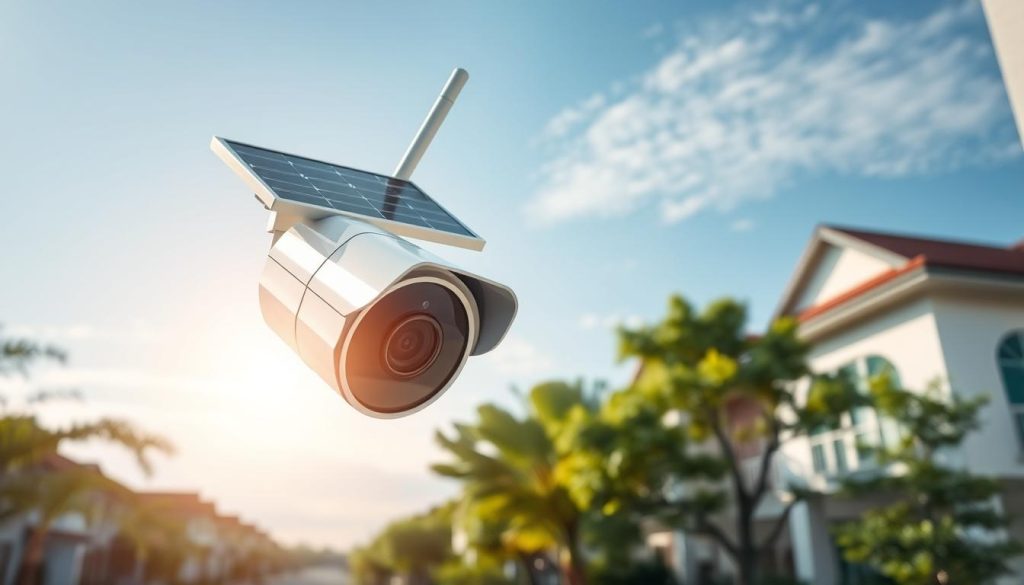
Protecting your property has never been more important. With package theft affecting many households, having reliable surveillance is crucial for peace of mind.
Traditional monitoring setups often come with hidden costs. They can significantly increase your electricity bills and require monthly subscriptions for cloud storage.
Sun-powered wireless units offer a smart alternative. These innovative devices harness renewable energy to operate independently.
This guide reviews the top sun-powered surveillance devices available in Singapore. We focus on models suitable for 2023 and 2024.
These products combine eco-friendly technology with advanced features. They provide effective protection without ongoing utility expenses.
We’ll examine key specifications, installation advice, and performance comparisons. Our goal is to help you choose the ideal solution for your needs.
Key Takeaways
- Sun-powered surveillance eliminates electricity costs and subscription fees
- Wireless installation offers flexibility for optimal placement around your property
- Singapore’s climate provides excellent conditions for photovoltaic devices
- Modern units feature high-quality video recording and smart alerts
- Choosing the right equipment depends on your specific monitoring requirements
- Proper installation maximizes both performance and energy efficiency
- Regular maintenance ensures long-term reliability of your setup
Why Singapore Homes Are Ideal for Solar Security Cameras
A combination of environmental factors and housing policies makes Singapore particularly suited for this technology. The island nation offers unique advantages that maximize the effectiveness of photovoltaic monitoring equipment.
High Sunlight Hours and Home Ownership Rates
Singapore receives abundant sunshine throughout the year. The average of 5.2 hours daily provides consistent energy for photovoltaic panels.
This reliable exposure means devices can operate independently. They harness clean power without depending on the electrical grid.
The country’s solar irradiance measures 1,580 kWh/m² annually. This high rating confirms excellent conditions for energy harvesting.
Home ownership here stands at an impressive 87%. This creates a substantial market of property owners seeking reliable monitoring options.
Both HDB flats and landed houses can benefit from wireless installations. The flexibility allows optimal placement for surveillance and energy collection.
Singapore’s climate and urban density create a perfect environment for renewable energy adoption in residential applications.
Aligning with Singapore’s Sustainability Goals
These innovative units support national initiatives like the Green Plan 2030. They help reduce carbon emissions while providing essential protection.
Homeowners contribute to environmental targets by choosing eco-friendly devices. This aligns with building standards such as the BCA Green Mark certification.
The economic and environmental benefits work together seamlessly. Using renewable power for monitoring cuts utility costs and lessens ecological impact.
Key advantages include:
- Grid independence during power fluctuations or outages
- Lower operational expenses compared to traditional wired setups
- Positive environmental contribution through reduced fossil fuel use
This technology represents a practical step toward sustainable living. It merges modern convenience with ecological responsibility.
The local context transforms photovoltaic surveillance from a novelty into a highly advantageous solution. Singapore’s specific conditions ensure these devices perform reliably year-round.
Understanding Solar-Powered Wireless Security: How It Works
The magic behind these self-sufficient monitoring devices lies in their three-part harmony of components. They operate on a simple yet reliable cycle that harnesses natural energy.
This technology eliminates dependence on external power sources. It creates a sustainable loop of energy capture and usage.
Understanding this process helps homeowners appreciate the reliability of modern surveillance solutions. Let’s explore the core mechanics.
The Core Technology: Solar Panel, Battery, and Camera
Every autonomous protection unit consists of three essential parts working together. These components form a complete energy ecosystem.
The photovoltaic solar panel acts as the energy harvester. It converts sunlight into electrical current throughout daylight hours.
This electricity flows to a rechargeable battery for storage. The battery serves as the unit’s power reservoir.
The wireless camera draws energy from this battery to function. It captures video footage and connects to your home network.
Energy moves in a continuous cycle from sunlight to surveillance. During bright periods, the panel generates more electricity than the device consumes.
This surplus charges the battery for later use. The setup maintains operation even when sunlight is unavailable.
Most modern units use lithium-ion batteries for efficient storage. These batteries offer excellent lifespan and charging characteristics.
Dispelling Myths: Performance on Cloudy Days and at Night
Many homeowners worry about reliability during Singapore’s occasional cloudy weather. These concerns are understandable but largely unfounded.
The integrated battery system provides substantial backup power. A few overcast days typically won’t interrupt your feed.
Units are engineered to store enough energy for extended operation. They accumulate reserves during sunny periods for use during less ideal conditions.
Modern photovoltaic surveillance devices are designed with Singapore’s weather patterns in mind, ensuring consistent performance year-round.
Nighttime operation relies completely on stored solar energy. The battery powers both the device’s electronics and its infrared illumination.
Advanced night vision technology activates automatically at dusk. It provides clear black-and-white footage in total darkness.
Typical battery lifespan extends for several months on a full charge. The photovoltaic panel continuously tops up this charge during daylight.
Manufacturers optimize these devices for efficiency rather than constant streaming. Most use motion-triggered recording to conserve power.
This approach significantly extends operational duration between charges. It also reduces unnecessary video storage.
The wireless design offers installation flexibility without electrical wiring. You can position units wherever they receive optimal sunlight.
Even with intermittent sunlight, engineering safeguards maintain reliable operation. Smart power management systems prioritize essential functions.
These technological advancements make sun-powered monitoring a practical choice for Singapore homes. They deliver consistent protection through intelligent energy use.
Top Benefits of Choosing a Solar Wifi Security Camera System
The decision to adopt sun-powered surveillance technology delivers measurable benefits across financial, environmental, and practical dimensions. These innovative units transform how homeowners approach property monitoring.
They offer advantages that extend far beyond basic protection. The combination of renewable energy and modern technology creates a smart investment.
Slashing Electricity Bills and Monthly Costs
Photovoltaic monitoring devices significantly reduce household energy consumption. They can cut electricity usage for protection by 40-60% compared to traditional wired setups.
This translates to monthly savings of S$15 to S$30 for most Singapore homes. The elimination of ongoing power costs adds up quickly.
Traditional wired equipment often increases utility bills substantially. Sun-powered alternatives operate independently from the grid.
Maintenance expenses show even greater contrast. Photovoltaic units typically require S$0 in annual upkeep.
Wired systems may need S$120 or more for professional servicing each year. This difference makes renewable options more economical over time.
“The upfront investment in solar technology pays for itself through continuous utility savings and minimal maintenance requirements.”
Installation costs drop dramatically with wireless designs. Homeowners save up to 60% compared to complex wired installations.
There’s no need for electrician fees or structural modifications. This makes advanced monitoring accessible to more households.
Eco-Friendly Protection and Reduced Carbon Footprint
Each photovoltaic unit contributes positively to environmental goals. Over five years, one device can reduce CO₂ emissions by 1.2 tons.
This impact equals planting 12 trees annually. The renewable energy source creates clean operation without fossil fuels.
Singapore’s Green Plan 2030 initiatives align perfectly with this technology. Homeowners support national sustainability targets through their equipment choice.
Some setups may even qualify for Renewable Energy Certificates (RECs). These certificates recognize clean energy generation and usage.
The environmental benefit extends throughout the device lifecycle. Manufacturers increasingly use recyclable materials and efficient designs.
This approach minimizes waste while maximizing performance. It represents responsible technology adoption for modern living.
Wireless Freedom and Flexible Installation
The absence of electrical wiring creates unprecedented placement options. Homeowners can position units wherever sunlight is available.
This flexibility is ideal for Singapore’s diverse housing types. Both HDB corridors and landed property gardens accommodate these devices well.
Renters particularly appreciate the non-permanent nature of wireless setups. They can reconfigure their monitoring as needs change.
Moving devices requires only simple remounting. There’s no electrical work or permanent alterations to the property.
For comprehensive coverage, consider multiple outdoor solar wireless security cameras around your perimeter. This approach maximizes both surveillance and energy harvesting.
The wireless design also simplifies expansion. Adding more units to your network involves minimal effort.
You’re not limited by electrical outlet locations or wiring capacity. This scalability makes the system adaptable to changing security requirements.
Maintenance becomes straightforward with self-sufficient operation. Regular cleaning of lenses and panels ensures optimal performance.
Battery health checks and software updates maintain reliability. These simple tasks replace complex professional servicing.
The benefits clearly extend beyond basic surveillance. Economic savings, environmental responsibility, and practical flexibility combine powerfully.
This technology represents smart home innovation with tangible returns. It protects both your property and your wallet while supporting sustainability goals.
Key Features to Look for in a Solar Wifi Security Camera System
When evaluating autonomous surveillance devices, several critical features determine their effectiveness in Singapore’s environment. The right specifications ensure clear footage, reliable operation, and long-term durability.
Understanding these technical aspects helps you make an informed purchase. It separates basic models from high-performance units that deliver true peace of mind.
Video Resolution: 1080p vs. 2K Clarity
Image quality is paramount for identifying details. Standard 1080p resolution provides decent clarity for general monitoring purposes.
However, 2K video resolution offers four times sharper detail. This enhanced clarity becomes crucial when you need to recognize faces or read license plates.
The difference is especially noticeable when zooming into recorded footage. Higher resolution ensures important details remain visible rather than becoming pixelated blurs.
Battery Life and Solar Panel Efficiency
Autonomous operation depends on consistent energy harvesting. The photovoltaic component’s wattage directly impacts performance.
Models with 20W panels may struggle during Singapore’s occasional cloudy periods. Units featuring 40W or higher panels maintain consistent charging even in variable weather.
This efficiency directly supports longer battery life. Look for lithium-ion batteries with smart power management systems.
These systems prioritize essential functions to extend operation between charges. They ensure your device remains active through multiple overcast days.
Advanced Night Vision: Infrared vs. Color
Effective monitoring continues after sunset. Traditional infrared technology provides clear black-and-white images in complete darkness.
Color night vision represents a significant advancement. This feature typically uses a built-in spotlight to illuminate the area.
The result is full-color footage during low-light conditions. This makes identifying clothing colors or vehicle details possible at night.
For comprehensive 24-hour surveillance, color night vision offers superior evidential value compared to standard infrared modes.
Smart Motion Detection and AI Recognition
Basic motion sensors trigger alerts for any movement. This includes leaves blowing or shadows shifting, creating notification fatigue.
Advanced motion detection uses artificial intelligence to distinguish between objects. Top models achieve 98% accuracy for human detection and 82% for animals.
This intelligent filtering reduces false alarms dramatically. You receive alerts only when people or vehicles enter designated zones.
Some systems even recognize specific individuals or package deliveries. This customization enhances both security and convenience.
Durability for Singapore’s Tropical Climate
Singapore’s heat, humidity, and heavy rains demand robust construction. Weatherproof ratings indicate how well equipment withstands these elements.
An IP66 rating ensures complete protection against dust and powerful water jets. This is essential for units exposed to monsoon rains.
Additional features like heat dissipation design prevent overheating. Corrosion-resistant materials maintain appearance and function over years of exposure.
Beyond these core specifications, consider several valuable extras:
- Two-way audio allows communication through the device
- A wide field of view (130° or more) covers larger areas with fewer units
- Integration with smart home platforms creates a connected ecosystem
- Local storage options provide an alternative to monthly cloud fees
- Robust mobile applications enable live viewing and alert management
Finally, verify local warranty coverage and support services. Singapore’s specific climate conditions make this consideration particularly important.
Manufacturers familiar with tropical environments design their products accordingly. They understand the unique challenges posed by consistent heat and humidity.
Choosing devices with these features ensures reliable, clear, and intelligent protection. Your investment will deliver consistent performance through Singapore’s diverse weather patterns.
Arlo Essential 2nd Gen with Solar Panel: The All-Rounder
For homeowners seeking a reliable all-in-one solution, the Arlo Essential 2nd Gen with its dedicated solar panel offers impressive capabilities. This device earns its reputation as a top-rated, feature-rich option that balances performance with affordability.
Expert reviews consistently crown it as a versatile performer. It delivers comprehensive monitoring without complex installation requirements.
Pros and Cons for Singaporean Users
The Arlo Essential 2nd Gen brings several advantages to local households. Its durable outdoor build withstands Singapore’s tropical conditions effectively.
Heat and humidity present minimal challenges for this robust unit. The compact design suits various installation points around your property.
HDB corridors and landed property gates accommodate it well. Setup requires minimal effort thanks to the wireless approach.
However, one significant consideration affects long-term value. The device requires an Arlo Secure subscription for full feature access.
This costs approximately S$4.99 monthly. Without it, you lose advanced capabilities like AI detection and cloud storage.
The subscription model transforms this affordable upfront purchase into a recurring expense that Singaporean buyers should factor into their budget calculations.
The bundled photovoltaic accessory enhances flexibility. Its 8-foot cable allows optimal placement to catch sunlight.
You can position the panel separately from the main unit. This ensures consistent energy harvesting throughout the day.
Smart home integration works with Amazon Alexa and Google Home. Unfortunately, Apple HomeKit support remains absent from this model.
Key Specifications: Resolution, Field of View, and Smart Features
Visual clarity represents a major strength for this surveillance device. The 2K video resolution provides exceptional detail for identification purposes.
You can recognize faces and read license plates with confidence. This high resolution ensures footage remains useful for review.
The 130-degree field of view covers substantial area. Fewer units can monitor larger spaces effectively.
After sunset, the color night vision feature activates automatically. An integrated spotlight illuminates the scene for full-color footage.
This represents a significant upgrade over standard infrared modes. Identifying clothing colors or vehicle details becomes possible at night.
Two-way audio enables communication through the device. You can speak to visitors or deter unwanted individuals remotely.
Advanced motion detection relies on artificial intelligence. It distinguishes between people, animals, and vehicles with impressive accuracy.
This intelligent filtering reduces false alerts dramatically. You receive notifications only for relevant activity.
The mobile application provides convenient control and live viewing. You can manage settings and review recordings from anywhere.
Local storage options offer an alternative to monthly cloud fees. This provides greater control over your recorded footage.
Overall, the Arlo Essential 2nd Gen stands as an excellent choice for comprehensive protection. It unlocks its full potential through the subscription service.
Homeowners willing to pay for ongoing access gain a powerful monitoring solution. The combination of premium features and sustainable operation makes it a compelling option.
Eufy SoloCam S230 (S40): The Subscription-Free Champion
Privacy-conscious users in Singapore have a standout option that eliminates recurring costs while delivering premium performance. The Eufy SoloCam S230 represents a different philosophy in home monitoring.
This device prioritizes complete ownership and data control. It removes the need for ongoing financial commitments that burden many modern solutions.
Built-in capabilities and local storage define its value proposition. Homeowners gain full access to advanced features without monthly fees.
Pros and Cons for Singaporean Users
The Eufy model brings significant advantages to local households. Its integrated photovoltaic component creates a clean, unified appearance.
Free AI person and animal detection works exceptionally well. This intelligent filtering reduces false alerts from passing wildlife or moving vegetation.
Singaporeans appreciate the financial predictability of a one-time purchase. There are no hidden expenses that accumulate over years of use.
However, the design presents some practical considerations. The unit has a slightly bulkier profile compared to sleeker competitors.
Placement requires careful planning due to the fixed panel position. You must ensure the top receives consistent, direct sunlight throughout the day.
“For buyers wanting to control long-term expenses, this model offers true cost transparency without sacrificing premium functionality.”
The appeal extends particularly to those concerned about data privacy. Local storage keeps your footage secure and private on the device itself.
Key Specifications: Local Storage and Integrated Solar
Several technical aspects make this a compelling choice for Singapore homes. The 8GB of built-in storage represents its most significant advantage.
This capacity eliminates reliance on cloud subscriptions entirely. Your recorded video remains on the device, accessible through the responsive mobile app.
Video resolution reaches sharp 2K clarity for detailed identification. The color night vision feature provides full-color footage after sunset.
An integrated spotlight activates automatically in low-light conditions. This allows for recognizing clothing colors or vehicle details at night.
The photovoltaic panel sits seamlessly on top of the unit. This integrated approach maintains aesthetic appeal while harvesting energy.
Battery life extends impressively to approximately nine months on a full charge. Smart power management contributes to this longevity.
Key performance features include:
- Facial recognition that performs well even in challenging lighting
- Real-time alerts delivered instantly to your smartphone
- Effective motion detection with 98% accuracy for human identification
- Durable construction suitable for tropical heat and humidity
The app experience receives positive feedback for its speed and reliability. Users can view live feeds and manage settings without lag.
This model stands as an ideal solution for those prioritizing privacy and cost control. It delivers premium protection without ongoing financial obligations.
TP-Link Tapo C420S1 Plus Solar Panel: The Versatile Performer
Engineered for optimal sunlight capture regardless of mounting location, this system offers unparalleled placement freedom. The TP-Link Tapo C420S1 stands out with its uniquely adjustable photovoltaic accessory.
This model addresses common challenges in sustainable monitoring setups. Its design prioritizes flexibility in both energy harvesting and surveillance coverage.
The bundled component features a 360-degree pan/tilt mechanism. You can position it perfectly toward available sunlight throughout the day.
Pros and Cons for Singaporean Users
Singapore homeowners gain several advantages from this versatile unit. The adjustable panel solves placement issues in shaded or awkward locations.
Visual quality impresses with sharp 2K video resolution. Dual spotlights enable full color night vision for detailed after-dark identification.
Advanced motion detection comes at no extra cost. The free AI recognition accurately distinguishes people from other moving objects.
Storage options provide genuine choice. You can insert a microSD card for local storage or subscribe to Tapo Care for cloud backup.
However, the view angle measures 113 degrees. This is narrower than some competing devices on the market.
The price point sits around S$160. This positions it as a premium choice among sustainable monitoring solutions.
“The 360-degree adjustable panel transforms challenging installation sites into viable locations for continuous power harvesting.”
Key Specifications: 360-Degree Panel and Pan/Tilt
Energy efficiency represents a major strength for this setup. TP-Link claims just 30 minutes of direct sunlight daily maintains continuous operation.
This remarkable performance suits Singapore’s urban environment perfectly. Even partially shaded areas can provide sufficient charging.
The pan/tilt camera functionality adds another layer of versatility. You can remotely control the viewing angle through the mobile app.
This proves ideal for monitoring HDB corridors or driveway entrances. You can adjust the perspective as needed without physical access.
Durability meets Singapore’s demanding climate conditions. An IP66 rating ensures complete protection against monsoon rains and dust.
The construction withstands tropical heat and humidity effectively. This reliability makes it suitable for long-term outdoor use.
Key features include:
- Remote pan/tilt control via the responsive Tapo app
- Activity zone customization for focused motion detection
- Two-way audio for communication through the device
- Smart power management extending operational duration
The wireless design simplifies installation significantly. You avoid complex wiring while maintaining surveillance coverage.
This unit delivers exceptional flexibility for precise panel placement needs. It performs reliably across Singapore’s diverse residential settings.
Blink Outdoor 3 with Solar Charging Mount: The Budget King
Cost-conscious Singaporeans can achieve reliable property monitoring without breaking the bank using this economical setup. The Blink Outdoor 3 represents the most accessible entry point into sun-powered protection available today.
This model strips away premium extras to focus on core functionality. It delivers essential surveillance capabilities at a remarkably low price point.
Pros and Cons for Singaporean Users
The Blink Outdoor 3 brings significant advantages for budget-focused homeowners. Its upfront cost of approximately S$70 makes it the most affordable photovoltaic option on the market.
Installation completes in just 23 minutes for most users. The straightforward process requires minimal technical knowledge.
The detachable photovoltaic panel offers flexible placement. You can position it several feet away from the main unit to catch optimal sunlight.
The mobile app provides intuitive controls for live viewing and settings. Singapore’s major internet providers work seamlessly with this wireless device.
However, several limitations affect long-term value. The video resolution maxes out at 1080p HD rather than sharper 2K.
Advanced features like person detection require a Blink Subscription. This adds recurring costs that budget buyers may want to avoid.
Local storage only functions with the recommended Sync Module 2 unit. Without it, you’re pushed toward cloud options.
“For homeowners wanting basic protection with minimal investment, this model eliminates financial barriers while providing reliable monitoring fundamentals.”
Key Specifications: Affordability and Simple Setup
Operation relies on straightforward technology that gets the job done. Infrared night vision provides clear black-and-white footage after dark.
Basic motion detection triggers alerts for movement within its field of view. Two-way audio enables communication through the device.
The photovoltaic accessory ensures continuous charging during daylight hours. This maintains the battery life for consistent operation.
Compact dimensions make it ideal for Singapore’s smaller spaces. HDB doorways and modest garden areas accommodate it perfectly.
Key considerations for local users include:
- Wireless design simplifies placement without electrical work
- Standard security functions meet basic monitoring needs
- Subscription model may increase costs over time
- Limited advanced intelligence compared to premium devices
This unit serves as an excellent choice for first-time buyers or those with limited budgets. It provides a solid foundation that can be expanded later.
The Blink Outdoor 3 stands as a capable “starter” system for Singapore homes. It prioritizes simplicity and affordability over cutting-edge technology.
Head-to-Head Comparison: Arlo vs. Eufy for Singapore
For Singapore residents, selecting the right monitoring brand involves weighing upfront costs against recurring subscriptions. Arlo and Eufy represent two dominant philosophies in the market.
This direct comparison cuts through the marketing to highlight what matters most for local conditions. We focus on total ownership cost and practical performance.
Your priority will determine the ideal choice. Some value a robust ecosystem, while others prefer privacy and long-term savings.
Cost Analysis: Upfront Price vs. Subscription Models
The financial models of these two brands differ dramatically. Arlo typically has a lower initial purchase price for its devices.
However, accessing its advanced features requires an Arlo Secure subscription. This costs approximately S$4.99 per month.
Eufy adopts a different approach with a higher upfront cost. Its premium includes all intelligent features without any monthly fees.
Over three years, the Arlo model can become more expensive. The recurring fees add up, impacting your long-term budget.
“Eufy’s one-time purchase model offers true cost transparency, while Arlo’s subscription unlocks a continuously updated ecosystem.”
Consider your comfort with ongoing payments. This is a key factor for Singaporean buyers planning their home security investment.
Feature Showdown: Storage, AI, and App Experience
Both brands deliver excellent 2K video resolution for clear footage. Their performance in Singapore’s light conditions is strong.
Storage solutions reveal a major philosophical split. Eufy provides 8GB of built-in local storage on the device itself.
This keeps your recorded video private and eliminates cloud fees. Arlo primarily relies on cloud storage, which is tied to its subscription plan.
For AI and smart detection, Eufy offers free person and animal motion detection. Its facial recognition works well even in challenging low-light scenarios.
Arlo’s advanced AI detection is typically locked behind its paid service. This includes more nuanced alert filtering and activity zones.
Battery life is another critical differentiator. Eufy’s units often last up to nine months on a single charge with efficient power management.
Arlo’s battery performance is good but generally requires more frequent charging. This depends on usage and the efficiency of its photovoltaic accessory.
App experience and alerts are fast and reliable for both. Integration with other smart home platforms is comparable.
Key considerations for your decision:
- Choose Arlo if you prefer a lower initial cost and don’t mind a subscription for advanced features and cloud backup.
- Choose Eufy if you prioritize data privacy, want to avoid monthly fees, and value exceptional battery life.
Both are durable choices for the local climate. Your personal preference for financial models and data control will guide the best choice.
Budget Face-Off: TP-Link Tapo vs. Blink Outdoor 3
When budget constraints meet surveillance needs, two economical models emerge as top contenders for cost-conscious Singapore residents. The TP-Link Tapo C420S1 and Blink Outdoor 3 represent different philosophies in affordable protection.
One prioritizes advanced hardware at a moderate price. The other focuses on rock-bottom cost with essential functions.
This comparison examines which approach delivers better value for local conditions. We analyze both immediate expenses and long-term ownership costs.
Singapore’s unique climate adds another layer to the evaluation. Heat tolerance and weather resistance become critical factors.
Let’s explore how these two budget-friendly options stack up against each other. Your specific needs will determine the ideal choice.
Value for Money and Long-Term Costs
The upfront price difference is immediately apparent. The Blink Outdoor 3 costs approximately S$70, making it the most affordable photovoltaic option available.
TP-Link’s Tapo model carries a S$160 price tag. This significant gap reflects their different hardware capabilities.
Blink delivers basic 1080p HD video resolution. Tapo provides sharper 2K clarity for detailed identification.
Night capabilities also differ substantially. Blink uses standard infrared night vision for black-and-white footage.
Tapo features dual spotlights for full-color after-dark recording. This represents a major advantage for nighttime monitoring.
Long-term expenses reveal another important distinction. Blink may push users toward cloud subscriptions for advanced features.
These include person detection and extended storage. Without them, you get basic motion alerts only.
Tapo offers free AI recognition and local storage options. You can insert a microSD card without monthly fees.
The photovoltaic panel designs showcase different approaches. Tapo’s 360-degree adjustable unit ensures optimal sunlight capture.
Blink uses a simpler detachable mount. Both maintain consistent charging during Singapore’s sunny days.
“For budget buyers, the decision often comes down to paying more upfront for better features or accepting limitations for the lowest possible entry price.”
Performance in Heat and Humidity
Both models perform well in heat tolerance tests. Singapore’s tropical weather presents minimal challenges for their construction.
The Tapo unit carries an IP66 rating. This ensures complete protection against monsoon rains and dust ingress.
Blink’s weather resistance is also suitable for local conditions. Both withstand consistent heat and humidity effectively.
Ease of use favors both models for Singaporean homeowners. Their wireless design simplifies installation significantly.
You avoid complex electrical work with either choice. Placement flexibility accommodates various property types.
Mobile app functionality receives positive feedback for both. Singapore’s major internet providers work seamlessly with these devices.
Battery life depends on efficient power management. Both maintain operation through Singapore’s variable weather patterns.
Regular maintenance involves simple cleaning of lenses and panels. This ensures optimal performance year-round.
For absolute minimalists on a tight budget, the Blink Outdoor 3 makes sense. It provides basic protection at the lowest possible cost.
The Tapo C420S1 suits buyers wanting better features without a high-end price. Its 2K video and adjustable panel offer superior versatility.
Both represent capable security cameras for Singapore homes. Your priority between cost and capability guides the final decision.
Installation Guide: Optimal Placement for Singapore Homes
Installation planning is the critical first step toward ensuring your photovoltaic monitoring system operates at peak efficiency. Where you position both the viewing unit and its energy collector directly impacts performance.
Strategic placement balances surveillance coverage with consistent power harvesting. This guide helps Singapore homeowners make informed decisions for their specific property type.
Finding the Sunniest Spot: HDB Corridors and Landed Properties
Different housing types present unique challenges for optimal positioning. Each requires a tailored approach to maximize sunlight exposure.
For HDB corridors, the common area outside your door offers potential. However, overhead structures may create shadows at certain times.
Assess the sun’s path throughout the day before mounting. Observe where direct light falls during morning, noon, and afternoon hours.
Landed properties provide more flexibility for garden or wall mounting. Position units where they receive at least six hours of uninterrupted sunlight.
This duration ensures zero-charge operation for most modern devices. The photovoltaic component can fully replenish the battery each day.
Use simple tools to analyze light patterns. A smartphone compass helps identify true north for optimal panel orientation.
Consider seasonal variations in sun angle. What works in June may need adjustment by December for consistent performance.
Maximizing Your Solar Panel’s Efficiency
Technical adjustments significantly boost energy harvesting capability. Small changes in angle and orientation yield substantial improvements.
In Singapore, position the energy collector at a 10-15° tilt facing true north. This angle optimizes year-round absorption across all seasons.
The slight incline helps rainwater runoff during monsoon periods. It also reduces dust accumulation on the surface.
For units with separate cables, implement tidy wire management. Secure connections against weather damage and potential tampering.
Use waterproof cable channels or conduits for exposed wiring. This protects against Singapore’s heavy rains and high humidity.
Digital tools provide precise planning assistance. Applications like Sun Surveyor analyze shadow patterns throughout the day.
These apps use augmented reality to visualize sunlight paths. They help identify ideal spots before permanent installation.
“Thirty minutes of smartphone analysis can prevent months of suboptimal performance from poor placement decisions.”
Avoid common positioning mistakes that reduce efficiency. Never place units in permanently shaded areas or near reflective glass surfaces.
Monsoon rain should not directly batter the viewing lens. Position with slight overhead protection while maintaining clear sightlines.
Ensure no vegetation will grow to block sunlight within months. Regular trimming maintains consistent energy flow to your system.
Compliance with HDB and BCA Regulations
Singapore’s building regulations ensure safety and aesthetic harmony. Following these rules prevents future complications.
For HDB corridors, mounting solutions must be non-invasive. They cannot damage common property or obstruct emergency access.
Check for BCA-approved equipment where relevant. Certified products meet Singapore’s specific quality and safety standards.
Mounting brackets should secure firmly without permanent alteration. Many modern units use adhesive or clamp-based installation methods.
These approaches satisfy regulatory requirements while providing stable positioning. They allow for future relocation if needed.
Consider your neighbors’ privacy when selecting viewing angles. Position units to monitor your property without intruding on others’ spaces.
For comprehensive coverage, multiple devices often work better than one. This approach maintains regulatory compliance while maximizing surveillance.
Best practices combine efficiency with responsibility:
- Test locations temporarily before permanent mounting
- Document sunlight exposure across different weather conditions
- Verify sightlines provide the intended coverage area
- Ensure easy access for occasional cleaning and maintenance
- Check wireless signal strength at the chosen position
Proper installation creates a foundation for reliable, long-term protection. It maximizes both energy independence and surveillance effectiveness for your Singapore home.
Maintaining Your System for Peak Performance
Consistent upkeep transforms your renewable energy monitoring setup from a purchase into a lasting investment. A simple routine ensures your autonomous protection devices deliver reliable performance year after year.
Regular attention prevents performance degradation. It extends the operational lifespan of your photovoltaic surveillance equipment significantly.
This maintenance guide covers essential tasks for Singapore homeowners. Follow these steps to keep your equipment at peak efficiency.
Regular Cleaning Schedules for Lens and Panel
Dust and grime accumulate quickly in Singapore’s urban environment. This buildup reduces both visual clarity and energy harvesting capability.
Monthly cleaning can boost efficiency by 25%. Wipe the viewing lens with a microfiber cloth for clear video.
Clean the energy collector to prevent dirt from reducing charge. Use a soft brush and mild detergent for stubborn spots.
Check physical mounts and connections every three months. This is especially important after severe weather events.
Monsoon rains can loosen brackets over time. Ensure all components remain securely fastened.
Singapore’s humidity accelerates wear on outdoor equipment. Regular inspection catches minor issues before they become problems.
Look for corrosion on metal parts. Check weather seals for cracks or deterioration.
Trim vegetation that might block sunlight to the panel. Overgrown plants can create shadows that reduce charging efficiency.
Keep the area around your devices clear. This ensures optimal performance throughout the year.
Software Updates and Battery Health Checks
Digital maintenance is as crucial as physical care. Most brands release quarterly patches to address vulnerabilities.
These updates also improve performance and add new features. Over-the-air installations have a 95% success rate across major brands.
Enable automatic updates in your device settings. This ensures you receive the latest security enhancements promptly.
Regular firmware updates patch known vulnerabilities. They protect your home network from potential threats.
“Scheduled software maintenance is non-negotiable for modern smart home devices. It ensures both optimal performance and robust security protection.”
Monitor battery health through your mobile application. Understanding indicators helps you know when replacement might be needed.
Most apps show charging status and estimated remaining life. Watch for unusual discharge patterns that suggest issues.
Troubleshoot common problems in Singapore’s humid environment. False motion alerts often come from spider webs or moving vegetation.
Adjust sensitivity settings during rainy seasons. Connectivity drops may require router adjustments or device repositioning.
For those preferring professional assistance, local services cost S$50 to S$80 per session. Technicians perform comprehensive checks and optimizations.
They test all components and update software. Professional maintenance ensures everything functions correctly.
Follow this simple routine for reliable operation:
- Monthly: Clean lenses and panels with appropriate materials
- Quarterly: Check physical mounts and install software updates
- Seasonally: Adjust settings for changing weather conditions
- Annually: Consider professional inspection for complex setups
Minimal, regular upkeep extends device lifespan significantly. It ensures reliable home protection without unexpected interruptions.
Your investment continues delivering value through proper care. Consistent maintenance keeps your setup performing at its best.
Ideal Use Cases: From HDB Flats to Construction Sites
From residential corridors to remote worksites, self-powered monitoring devices adapt to nearly any environment with access to sunlight. Their versatility makes them suitable for diverse Singapore settings.
These autonomous units provide protection across residential, commercial, and community spaces. Each application showcases unique advantages of the technology.
Residential Security: Corridors, Gates, and Common Areas
Singapore homes benefit significantly from this approach to monitoring. HDB corridor entrances represent a prime location for placement.
Units can monitor package deliveries and visitor activity. They comply with HDB regulations regarding common property usage.
Landed property gateways gain enhanced oversight with these devices. Homeowners can watch driveways and perimeter access points.
Condo common areas like swimming pools and gyms also utilize this technology. A case study showed a 40% reduction in unauthorized access after deployment.
Backyard spaces and garden areas maintain surveillance without electrical wiring. The wireless nature simplifies setup in these locations.
Package theft at doorsteps decreases dramatically with visible monitoring equipment. Residents receive instant alerts through their mobile applications.
Two-way audio allows communication with delivery personnel. This feature prevents missed packages and potential theft.
“The reduction in unauthorized condo access demonstrates how visible monitoring creates effective deterrence while providing evidential footage when needed.”
Commercial Monitoring: Shopfronts and Remote Sites
Business applications extend the value of autonomous protection devices. Retail shopfronts along Orchard Road utilize them for after-hours surveillance.
Warehouse perimeters benefit from continuous monitoring without grid dependency. Large facilities can cover extensive areas with multiple units.
Remote construction sites represent an ideal use case. At Tengah development areas, theft incidents dropped by 92% after deploying these devices.
The absence of electrical infrastructure makes them perfect for temporary locations. Contractors avoid costly wiring installations at worksites.
Cellular LTE options provide connectivity where Wi-Fi is unavailable. This ensures continuous operation even in undeveloped areas.
Equipment theft prevention becomes significantly more effective. Construction managers monitor valuable machinery and materials remotely.
Community spaces like park connectors also employ this technology. Neighborhood watch programs enhance safety with shared monitoring access.
Rental properties gain temporary protection without permanent alterations. Tenants can install and remove units as needed.
The scalable nature allows expansion as requirements change. Businesses can add more devices to cover growing facilities.
These applications demonstrate the technology’s adaptability. Virtually any indoor or outdoor space with sunlight can utilize autonomous monitoring.
The combination of renewable energy and wireless design creates unprecedented flexibility. Singapore’s diverse environments all benefit from this approach.
The Green Advantage: Environmental Impact in Singapore
Every sun-powered unit installed in Singapore creates measurable positive impacts on the local and global environment. This approach to property monitoring represents more than just technological convenience.
It embodies a commitment to sustainable living that aligns with national priorities. Homeowners contribute directly to ecological goals through their equipment selection.
The benefits extend from reduced carbon emissions to responsible resource management. Let’s explore how these photovoltaic devices make a difference.
Calculating Your Carbon Savings
The environmental math behind renewable energy monitoring is compelling. Each device significantly reduces dependence on fossil fuel-generated electricity.
Over five years, one unit can prevent 1.2 tons of CO₂ emissions. This equals the carbon absorption capacity of 12 trees planted annually.
Your choice directly supports Singapore’s Green Plan 2030 initiatives. The national sustainability framework encourages such clean technology adoption.
These photovoltaic devices often generate Renewable Energy Certificates. An average unit produces 0.5 RECs each year through its clean power generation.
Businesses deploying multiple units can accumulate carbon credits. This creates financial incentives alongside environmental benefits.
“The cumulative effect of widespread adoption could transform residential areas into micro-generators of clean energy, contributing to Singapore’s renewable targets.”
Compare this to traditional grid-powered surveillance. Wired equipment relies entirely on Singapore’s energy mix, which includes natural gas.
Photovoltaic alternatives eliminate this fossil fuel dependence completely. They operate independently from the national electrical infrastructure.
The carbon footprint difference becomes substantial over the equipment’s lifespan. This makes renewable options the clear ecological choice.
Lifecycle and Recycling of Security Camera Components
Environmental responsibility extends throughout the product’s entire existence. From manufacturing to disposal, each phase offers opportunities for sustainability.
Photovoltaic monitoring devices typically have lower long-term ecological costs. Their reduced energy consumption during operation balances initial manufacturing impacts.
Most units use lithium-ion batteries for energy storage. These components have specific recycling requirements at end-of-life.
Singapore offers several responsible disposal options. Electronic waste collection points accept these devices for proper processing.
Manufacturers increasingly design for disassembly and material recovery. This circular approach minimizes waste and conserves resources.
Key environmental considerations include:
- Material selection using recyclable plastics and metals
- Energy-efficient manufacturing processes that reduce factory emissions
- Extended product lifespan through durable construction and software updates
- Take-back programs where manufacturers responsibly handle end-of-life units
The photovoltaic panel itself represents another recyclable component. Silicon-based cells can be processed to recover valuable materials.
Proper maintenance and care extend operational years significantly. This delays the need for replacement and reduces waste.
Even packaging receives environmental attention today. Many brands use minimal, recycled materials for shipping.
Selecting renewable energy monitoring represents active environmental stewardship. It’s a practical decision that protects both your home and the planet.
The technology demonstrates how innovation can serve ecological goals. Singapore residents can contribute to sustainability through everyday choices.
This approach aligns perfectly with the nation’s vision for a greener future. It transforms property protection into a positive environmental action.
Weathering the Storm: Performance in Singapore’s Climate
The true test of any outdoor surveillance device in Singapore comes during the monsoon season. Heavy downpours and reduced sunlight put systems to the ultimate test.
Modern photovoltaic monitoring equipment is engineered specifically for these demanding conditions. Understanding how they perform ensures you choose reliable protection.
Two critical factors determine success in our tropical environment. Water resistance and heat management work together for consistent operation.
Monsoon Season Reliability and IP Ratings
Singapore’s December monsoon brings intense rainfall that challenges outdoor electronics. Your equipment must withstand continuous exposure to moisture.
Ingress Protection ratings indicate how well a device resists environmental elements. The first digit shows protection against solid objects like dust.
The second digit reveals liquid resistance capabilities. For our climate, IP66 represents the minimum recommended standard.
This rating ensures complete protection against powerful water jets. It’s suitable for most residential installations around Singapore.
Models with IP68 ratings offer superior protection for extreme conditions. They can withstand temporary immersion in water.
This higher rating is ideal for coastal areas or exposed locations. It provides extra confidence during the heaviest monsoon downpours.
During prolonged rainy periods, photovoltaic charging efficiency can drop by up to 30%. This reduction in sunlight hours affects energy harvesting.
Advanced units compensate with substantial battery reserves. Some feature a 7-day backup that ensures continuous operation.
This extended capacity maintains your monitoring through multiple consecutive cloudy days. You won’t experience interruptions during the wettest weeks.
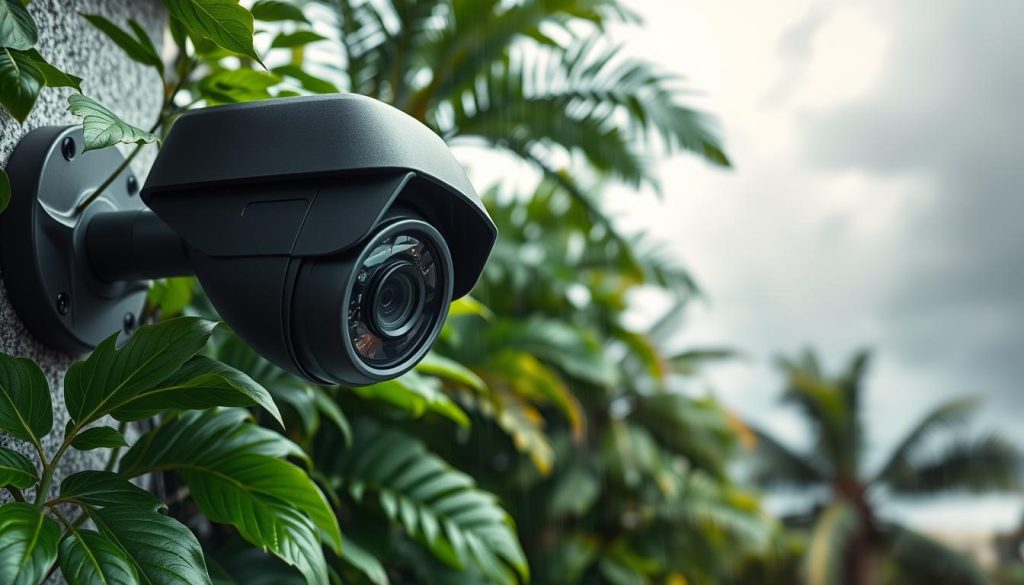
“Choosing equipment with appropriate IP ratings and sufficient battery reserves transforms monsoon season from a concern into a non-issue for reliable home monitoring.”
Weather-proofing your installation adds another layer of protection. Ensure all cable connections use waterproof seals and conduits.
Position the energy collector at a slight angle to encourage water runoff. This prevents pooling and maintains optimal charging surface.
Regularly check mounting brackets after severe storms. Singapore’s intense winds can loosen fixtures over time.
Heat Dissipation and Long-Term Durability
Consistent heat presents different challenges for outdoor electronics. Singapore’s average temperatures hover around 31°C year-round.
High humidity often reaches 90% in our tropical climate. These conditions test equipment durability and performance.
Laboratory tests at 35°C and 90% humidity show well-designed devices maintain optimal function. They continue recording clear footage without overheating issues.
Heat dissipation design prevents internal component damage. Look for units with ventilation channels and heat-resistant materials.
Corrosion resistance becomes crucial for long-term reliability. Coastal areas expose equipment to salt spray that accelerates wear.
Stainless steel screws and aluminum alloy bodies withstand these conditions best. They maintain structural integrity through years of exposure.
Lens fogging can obscure video quality in humid environments. Anti-fog coatings and sealed compartments prevent this common problem.
Your recorded footage remains clear regardless of weather conditions. This ensures reliable evidence if needed for review.
Singapore user reviews provide valuable insights into real-world performance. Look for feedback mentioning specific weather events.
Comments about December monsoon performance or extended heat waves offer practical guidance. They reveal how equipment handles our unique climate.
Advanced features like motion detection maintain accuracy despite environmental factors. Smart algorithms distinguish between rain movement and actual security concerns.
This reduces false alerts during stormy weather. You receive notifications only for relevant activity around your property.
Regular maintenance preserves optimal performance through all seasons. Clean lenses monthly to prevent dirt buildup from affecting video clarity.
Check battery health through your mobile app quarterly. Modern interfaces display estimated remaining capacity and charging status.
These simple steps extend equipment lifespan significantly. Your investment continues protecting your home through Singapore’s diverse weather patterns.
Modern monitoring devices are specifically engineered for tropical conditions. They deliver reliable performance regardless of heat, humidity, or heavy rainfall.
Securing Your Singapore Home with Sustainable Technology
Your journey toward eco-conscious home monitoring concludes with selecting the right technology for Singapore’s unique environment. These innovative devices offer powerful protection while reducing both costs and environmental impact.
From the versatile Arlo to the subscription-free Eufy and budget-friendly Blink, you have excellent options. Each model brings distinct advantages for different residential needs.
Consider key features like video resolution, night vision capabilities, and battery life. Durability against Singapore’s tropical weather ensures long-term reliability.
Match your specific requirements—whether HDB corridor or landed property—to the right solution. Straightforward installation and minimal maintenance deliver lasting peace of mind.
This investment represents a smart step toward a safer residence and a greener future. Choose sustainable protection that brings confidence through responsible innovation.