
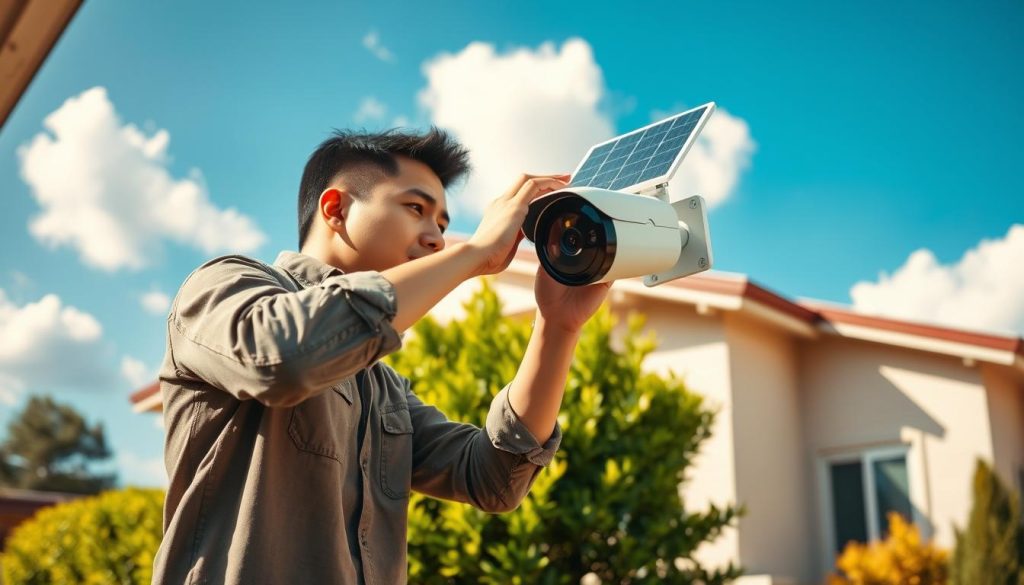
Home safety is a major concern for many Singapore residents. Recent data shows over 70% worry about their property’s protection. This has led to growing interest in modern surveillance solutions.
Singapore’s climate offers a unique advantage for sustainable technology. The country enjoys more than 2,500 hours of sunlight each year. This makes it ideal for sun-powered devices that operate independently.
These innovative systems provide remarkable reliability. They can function for up to seven days without direct sunlight. Brands like Reolink and EufyCam offer robust photovoltaic solutions trusted by homeowners.
The financial benefits are equally impressive. Switching to renewable energy can cut operating expenses by up to 75%. This eco-friendly approach aligns perfectly with sustainable living trends in Singapore.
This guide will help you choose the best wireless surveillance device for your needs. We’ll review top models, compare features, and provide practical installation advice.
Key Takeaways
- Most Singapore residents prioritize home protection, creating strong demand for modern solutions.
- The country’s abundant sunlight makes it perfectly suited for photovoltaic technology.
- Quality systems offer extended operation, lasting nearly a week without sunshine.
- Leading brands provide reliable performance with weather-resistant construction.
- Significant cost savings are possible when using renewable energy sources.
- These devices support sustainable living while delivering robust surveillance capabilities.
- Smart connectivity allows for remote monitoring and real-time alerts.
Why Outdoor Solar Security Cameras Are a Game-Changer in Singapore
With consistent year-round sunlight, Singapore offers the perfect setting for energy-independent monitoring solutions. The island nation enjoys more than 2,500 hours of sunshine annually. This creates a natural environment where photovoltaic technology thrives.
Traditional surveillance setups often require complex electrical work. They need professional installation and access to power outlets. Sun-powered systems eliminate this hassle completely.
You can place these devices anywhere with good sun exposure. There’s no need to drill through walls or run lengthy cables. This freedom simplifies setup and reduces initial expenses significantly.
A standard 40W photovoltaic unit can charge in roughly 7.5 hours. It then provides enough energy for up to 15 hours of continuous operation. Most models need just six to eight hours of daily light to function perfectly.
Many households worry about property safety and unauthorized access. Constant surveillance helps address these concerns effectively. Modern devices deliver real-time alerts and remote viewing capabilities.
Reliability remains strong even during brief cloudy periods. High-quality batteries store surplus energy for later use. This ensures your monitoring continues without interruption.
Singapore’s occasional tropical showers pose little challenge. Weather-resistant construction protects internal components. The systems are designed to handle local humidity and rainfall.
Compare this approach to conventional wired alternatives. Traditional options limit placement to areas near electrical sources. They also involve higher ongoing electricity costs.
Sun-powered solutions offer superior scalability. You can add more units without worrying about circuit capacity. Each device operates independently from the main power grid.
The Singapore government actively promotes renewable energy adoption. Various initiatives support residents who choose sustainable technology. This aligns with national goals for a greener future.
Urban homes frequently face practical constraints. Limited exterior outlets make conventional installation difficult. Energy-independent systems bypass this common obstacle entirely.
Imagine a device that maintains full operation through rainy weather. It draws from stored reserves while continuing to capture footage. This level of dependability transforms home protection.
These innovative units represent a smart upgrade for any residence. They combine modern technology with environmental consciousness. Homeowners gain robust surveillance without compromising on sustainability.
The combination of local climate advantages and advanced engineering creates a powerful solution. It addresses both practical needs and broader ecological values. This makes photovoltaic monitoring a truly transformative choice for Singaporean households.
The Compelling Benefits of Solar-Powered Security
The decision to adopt sun-powered monitoring is driven by a powerful trio of benefits: financial, environmental, and practical. This approach to home security isn’t just about watching your property; it’s about making a smart, forward-thinking choice.
These systems deliver value that grows over time. Let’s explore why they represent such a compelling upgrade for any household.
Significant Cost Savings on Energy and Installation
Your wallet feels the immediate impact. Data shows photovoltaic units cut energy costs by 50% compared to wired systems. Overall expenses can be 30% lower.
Imagine a typical household setup. Over one year, the savings on electricity bills are noticeable. Over five years, the reduction becomes substantial.
Installation is another area where you save. There’s no need for complex electrical work or hiring expensive contractors.
“The simplicity of a wire-free setup translates directly into lower upfront costs and the satisfaction of a DIY project.”
You avoid the hassle of drilling through walls and running cables. Placement is limited only by sunlight, not by proximity to an outlet. This freedom alone makes the project more viable and affordable.
Eco-Friendly Operation and Reduced Carbon Footprint
Choosing this technology is a positive step for the environment. These solar security solutions can reduce greenhouse gas emissions by an impressive 60%.
They operate on clean, renewable energy drawn directly from the sun. This aligns perfectly with Singapore’s national sustainability goals.
There’s personal satisfaction in knowing your surveillance isn’t contributing to carbon output. Every alert and recorded clip comes from a green source.
It’s a practical way to contribute to a healthier planet. You gain robust protection without the ecological guilt associated with constant grid power draw.
Uninterrupted Protection, Even During Power Outages
Reliability is paramount. A key advantage is continuous operation when the grid fails. Built-in battery reserves take over instantly.
This ensures your surveillance never blinks. Your property remains monitored during storms or electrical faults.
The battery life in these units is designed for endurance. Quality systems use batteries that last 3 to 5 years with minimal upkeep.
They store enough surplus energy to function for days without needing direct sunlight. A brief period of cloudy weather won’t interrupt your peace of mind.
This operational independence is a game-changer. It means your home is guarded by a truly resilient system.
Some believe sun-powered means less capable. This is a misconception. Modern units offer robust features like high video quality and accurate motion detection.
They work well day and night. The combined benefits—financial savings, environmental care, and steadfast reliability—create an undeniable case for making the switch.
Key Features to Look for in a Solar WiFi Security Camera
Selecting the right photovoltaic surveillance device requires understanding its core technical specifications. Not all models offer the same performance or reliability.
Focusing on these critical attributes ensures you get a system that delivers consistent protection. This guide breaks down what truly matters when comparing different units.
Video Resolution and Image Quality: From HD to 4K
Clarity is non-negotiable for identifying people and events. Modern units offer resolutions ranging from 1080p Full HD to ultra-sharp 4K.
Higher resolution means you can see finer details like facial features or license plates. This is crucial for providing useful evidence if needed.
Look for video quality that remains stable in various lighting conditions. Some advanced models use HDR technology to balance bright and dark areas.
A wide field of view, often 130 degrees or more, helps monitor larger areas with fewer devices. This reduces blind spots around your property.
Battery Life and Solar Charging Efficiency
Energy independence defines these systems. The best models can operate for up to seven days without any direct sun exposure.
This impressive battery life comes from high-capacity lithium-ion batteries. They store surplus energy generated during sunny periods.
Charging efficiency depends on the photovoltaic panel wattage. A standard 5W unit typically needs 6-8 hours of good sunlight for a full charge.
Some systems include power management software. This optimizes energy use based on activity levels and recording frequency.
Night Vision Capabilities for 24/7 Surveillance
Protection doesn’t stop when the sun sets. Effective night vision is essential for round-the-clock monitoring.
Infrared (IR) technology is common, providing clear black-and-white footage in total darkness. The best IR vision can reach up to 150 feet.
Some premium units offer color night vision. They use built-in spotlights to illuminate areas, capturing footage in full color.
This feature helps distinguish clothing colors and vehicle details even in low light. It adds another layer of identification capability.
Weatherproof Durability and IP Ratings
Singapore’s tropical climate demands robust construction. An IP67 rating is the gold standard for weather resistance.
The “IP” stands for Ingress Protection. The first digit (6) means complete protection against dust. The second digit (7) allows immersion in up to 1 meter of water for 30 minutes.
This rating ensures the unit withstands heavy rain, high humidity, and intense heat. Your investment remains protected through monsoon seasons and sunny days alike.
Look for units with UV-resistant housing. This prevents plastic components from becoming brittle and discolored over time.
Smart Features: Motion Detection, Alerts, and Two-Way Audio
Intelligence transforms a simple recorder into an active guardian. Modern motion detection uses AI to distinguish between people, vehicles, and animals.
This reduces false alarms from passing shadows or pets. You only get notified about relevant activity.
Customizable activity zones let you focus on specific areas. You might monitor a driveway while ignoring a busy public sidewalk.
Instant mobile alerts keep you informed wherever you are. Many apps allow live viewing and playback of recorded clips.
Two-way audio enables communication through the device. You can speak to visitors or deter unwanted individuals remotely.
Other valuable features include:
- Dual-band Wi-Fi connectivity for stable video feeds without interference
- Local microSD card storage as an alternative to cloud subscriptions
- Smart home integration with platforms like Google Assistant and Amazon Alexa
- Built-in sirens or spotlights for active deterrence when motion is detected
- 4G LTE cellular backup for areas with unreliable internet connections
Considering these attributes helps you choose a unit that matches your specific needs. The right combination delivers peace of mind through reliable, intelligent monitoring.
How Solar-Powered Outdoor Cameras Work: A Simple Explanation
The magic behind self-sustaining surveillance lies in a clever energy conversion process. These devices create their own power through a continuous cycle that requires minimal human intervention.
It begins with the photovoltaic panel. Tiny cells within this component capture photons from the sun. They transform this light into direct current electricity.
This electrical flow travels to a built-in rechargeable unit. Most models use lithium-ion technology for its efficiency and longevity. The energy charges this storage device throughout daylight hours.
A smart charge controller manages the entire process. It prevents overcharging during intense sunlight. This protection extends the overall lifespan of the power system.
The stored electricity then runs the monitoring device. It provides energy for recording, processing data, and maintaining a network connection. This happens whether the sun is shining or not.
Think of it like charging a smartphone with a portable sun-powered bank. You gather energy when available. You use it whenever needed, day or night.
This setup delivers remarkable independence. Quality systems can operate for up to seven consecutive days without new sunlight. The battery buffer handles Singapore’s occasional overcast weather with ease.
Motion-activated recording is key to conserving power. Instead of running continuously, the device sleeps until it detects movement. This smart approach significantly extends operational time between charges.
When activity occurs, the unit springs to life. It captures footage, processes the data, and transmits it via your home network. You receive instant alerts on your mobile device.
Interaction happens through a dedicated smartphone application. This portal lets you view live feeds from anywhere. You can review recorded history and adjust settings remotely.
The entire loop is elegantly simple. Sunlight becomes electricity, which charges a battery, which powers the device. Your property enjoys constant vigilance without ongoing costs or complex wiring.
This technology represents a perfect marriage of sustainability and practical protection. It offers reliable monitoring that adapts to your local environment. The system works quietly in the background, providing peace of mind through intelligent, self-sufficient operation.
Top Picks: The Best Wifi Security Camera Outdoor Solar Models
Choosing the right device depends on your specific needs and property layout. We evaluated performance, value, and local suitability.
Our selection includes five outstanding options. Each offers reliable protection without grid dependency.
Arlo Essential (2nd Gen) with Solar Panel: Best Overall
This device strikes an excellent balance between features and affordability. It delivers sharp 2K resolution for clear identification.
The integrated spotlight provides color night vision. This helps distinguish details even in darkness.
Smart home integration works seamlessly with Amazon Alexa and Google Assistant. You get reliable alerts and remote access.
“The Arlo Essential offers premium capabilities at a mid-range price point, making it accessible for most households.”
Its dedicated photovoltaic accessory ensures consistent operation. The unit withstands Singapore’s humid climate with an IP65 rating.
Eufy SoloCam S230 (S40): Best with Integrated Solar Panel
This model eliminates separate panel mounting entirely. The photovoltaic surface is built directly into the housing.
You get 2K resolution with free AI detection. The system distinguishes between people, pets, and vehicles accurately.
Local storage via microSD card avoids monthly cloud fees. This provides cost-effective data retention.
The battery can last up to 120 days on a single charge. This reduces maintenance frequency significantly.
TP-Link Tapo C420S1 Plus Solar Panel: Best Flexible Panel
This system features a fully adjustable 360-degree photovoltaic accessory. You can position it for optimal sun capture in tricky locations.
Dual spotlights enhance low-light recording. The 2K resolution ensures crisp footage day and night.
The device includes accurate motion sensing. It minimizes false alarms from non-threatening movement.
Two-way audio enables clear communication. You can speak to visitors or deter unwanted individuals remotely.
Blink Outdoor 3 with Solar Charging Mount: Best Budget Option
This option delivers core functionality without a high price tag. It’s perfect for cost-conscious homeowners.
The 1080p resolution provides adequate clarity for most situations. The app controls are intuitive and user-friendly.
Its dedicated charging mount extends operational time. You get reliable performance with minimal investment.
This model works well for covering secondary areas. It complements more advanced primary systems effectively.
Reolink Argus 3 Pro: A High-Performance Standout
This unit prioritizes extended operation and superior image clarity. The 1440p resolution captures finer details than standard HD.
The battery can last up to six months under optimal conditions. This reduces charging frequency dramatically.
Strong night vision reaches impressive distances. The starlight sensor performs well in near-total darkness.
This model suits properties requiring maximum endurance. It handles large areas with fewer maintenance intervals.
Quick Comparison Guide
- Arlo Essential (2nd Gen): Balanced choice for tech-savvy users wanting smart home compatibility
- Eufy SoloCam S230: Ideal for those preferring integrated design and local storage
- TP-Link Tapo C420S1: Perfect for challenging installations needing adjustable panel positioning
- Blink Outdoor 3: Best for budget-focused buyers covering multiple entry points
- Reolink Argus 3 Pro: Excellent for large property owners prioritizing longevity
These models are readily available through major Singapore retailers. Check popular online platforms and electronics stores.
Your final choice should match your primary need. Consider resolution requirements, installation flexibility, and budget constraints.
Head-to-Head: Solar Security Camera Comparison Table
A detailed table clarifies which model delivers the best performance for your specific situation. Side-by-side evaluation reveals trade-offs between cost and capability.
This analysis helps you make an informed choice. You can see exactly what each unit offers at different price points.
Below is our comprehensive comparison of five leading photovoltaic surveillance devices. All data reflects current specifications and typical Singapore market pricing.
| Model | Price (SGD) | Video Resolution | Battery Life | Night Vision Type | Motion Detection | Two-Way Audio | Weatherproof Rating | Special Features |
|---|---|---|---|---|---|---|---|---|
| Arlo Essential (2nd Gen) | $280-$320 | 2K (1440p) | 3-6 months | Color with Spotlight | AI Person Detection | Yes | IP65 | Smart home integration, Arlo Secure subscription available |
| Eufy SoloCam S230 | $250-$290 | 2K (1440p) | Up to 120 days | Infrared (33ft) | AI Human Detection | Yes | IP67 | Integrated photovoltaic surface, local storage, no monthly fees |
| TP-Link Tapo C420S1 Plus | $220-$260 | 2K (1440p) | Continuous with panel | Dual Spotlights | Advanced Motion Sensing | Yes | IP66 | 360° adjustable panel, Tapo Care optional |
| Blink Outdoor 3 | $130-$160 | 1080p Full HD | Up to 2 years | Infrared (night) | Basic Motion | No | IP65 | Budget-friendly, Blink Subscription Plan optional |
| Reolink Argus 3 Pro | $200-$240 | 1440p | Up to 6 months | Starlight Sensor | Person/Vehicle Detection | Yes | IP65 | Long endurance, Reolink Cloud optional |
Category Winners and Key Insights
Each model excels in different areas. Understanding these strengths helps match devices to your priorities.
Best Resolution: The Arlo Essential and Eufy S230 both deliver sharp 2K clarity. This provides excellent detail for identification purposes.
Longest Battery Life: The Reolink Argus 3 Pro leads with up to six months of operation. The Blink Outdoor 3 claims up to two years with minimal activity.
Most Advanced Night Vision: Arlo’s color night vision stands out. It uses integrated spotlights to capture footage in full color after dark.
Best Weather Resistance: Eufy’s IP67 rating offers superior protection against dust and water immersion. This is valuable for Singapore’s humid environment.
Most Innovative Design: TP-Link’s 360-degree adjustable panel solves tricky installation challenges. You can position it for optimal sun exposure from any angle.
“The table reveals no single perfect device. Instead, each model makes different compromises between features, cost, and convenience.”
The Hidden Cost: Subscription Services
Many cloud features require ongoing payments. This significantly affects long-term ownership expenses.
Arlo and Blink offer enhanced capabilities through monthly plans. These include extended video history and advanced detection.
Eufy and Reolink provide more local storage options. You can use microSD cards to avoid recurring fees entirely.
TP-Link’s Tapo Care is optional for cloud backup. The basic system functions well without any subscription.
Always factor these ongoing costs into your budget. A cheaper initial price might lead to higher yearly expenses.
Best For Recommendations
- Arlo Essential: Tech-savvy users wanting seamless smart home integration and color night recording.
- Eufy SoloCam S230: Homeowners preferring all-in-one design and avoiding monthly cloud fees.
- TP-Link Tapo C420S1: Installations with challenging sunlight angles needing flexible panel positioning.
- Blink Outdoor 3: Budget-conscious buyers covering multiple entry points with basic reliable monitoring.
- Reolink Argus 3 Pro: Large property owners prioritizing maximum endurance between charges.
Singapore Market Considerations
Local pricing often differs from global listings. Import taxes and distributor margins affect final costs.
Popular retailers like Challenger, Harvey Norman, and Courts carry selected models. Online platforms Lazada and Shopee offer competitive pricing.
Availability fluctuates based on stock shipments. Popular units may experience temporary shortages during peak seasons.
Warranty support varies by brand. Some offer local service centers while others provide mail-in repair services.
Consider purchasing from authorized dealers. This ensures valid warranties and access to firmware updates.
Current Market Trends Analysis
The photovoltaic surveillance market shows clear development patterns. Several trends emerge from our comparison.
Resolution is standardizing around 2K quality. Most new models now offer this enhanced clarity over traditional 1080p.
AI-powered detection is becoming commonplace. Systems increasingly distinguish between people, vehicles, and animals.
Battery technology continues improving. New lithium-ion cells offer longer life with faster charging cycles.
Integrated designs are gaining popularity. Combining the photovoltaic surface with the main unit reduces installation complexity.
Local storage options provide subscription alternatives. This addresses privacy concerns and reduces ongoing costs.
How to Prioritize Table Features
Start by identifying your non-negotiable requirements. These are features you absolutely need for effective property monitoring.
Consider your property’s specific characteristics. Sun exposure, coverage area, and priority zones influence your choice.
Balance initial investment against long-term expenses. A higher upfront cost might save money over several years.
Evaluate ease of installation and maintenance. Some systems require more technical skill for optimal setup.
Think about future expansion possibilities. You might want to add more units later for complete coverage.
Your personal technical comfort matters too. Choose a system with an interface you find intuitive and manageable.
Transition to Detailed Reviews
This table provides a high-level overview of available options. The following sections explore each leading model in greater depth.
We’ll examine what makes the Arlo Essential our top overall recommendation. Subsequent analysis covers Eufy’s integrated design and TP-Link’s flexible panel.
Budget considerations lead us to the Blink Outdoor 3 review. Each evaluation focuses on real-world performance in Singapore conditions.
These detailed assessments help you move from general comparison to specific selection. You’ll gain deeper insight into how each device functions daily.
Understanding both the broad market and individual units creates confidence. You can choose the photovoltaic surveillance solution that truly fits your home.
What Makes the Arlo Essential Our Top Overall Choice
When evaluating top-rated models for property monitoring, the Arlo Essential consistently earns praise from experts and users alike. This device strikes an ideal balance between advanced capabilities and practical affordability.
Its combination of reliable performance and smart features makes it suitable for most households. The unit delivers robust protection without demanding a premium budget.
Let’s examine what sets this model apart from competitors. Each component contributes to its standout reputation.
Superior Image Clarity with 2K Resolution
The video quality immediately impresses. The device captures footage in sharp 2K resolution, which is 1440p.
This provides significantly clearer details than standard 1080p Full HD. You can distinguish facial features, clothing patterns, and license plates with greater accuracy.
Such clarity is invaluable for identification purposes. It transforms vague recordings into useful evidence when needed.
Color Night Vision for Enhanced Low-Light Monitoring
After sunset, the system continues to perform exceptionally. Its color night vision capability is a major advantage.
Unlike traditional monochrome infrared, this feature uses an integrated spotlight. It illuminates the area and captures footage in full color.
This helps identify clothing colors and vehicle details even in darkness. The difference in useful information is substantial.
“The color night vision provides more identifiable footage compared to black-and-white alternatives. It’s like having daytime clarity after dark.”
Integrated Spotlight for Illumination and Deterrence
The built-in spotlight serves dual purposes. First, it enables the color night vision function discussed above.
Second, it acts as an active deterrent. When motion detection triggers, the light can activate automatically.
This sudden illumination often startles unwanted visitors. It makes them aware they’re being watched and recorded.
Practical Separate Solar Panel Design
The photovoltaic accessory deserves special attention. This compact solar panel connects via an 8-foot cable.
This length provides valuable placement flexibility. You can position the main unit in the optimal surveillance spot.
Meanwhile, the panel can be angled toward the best sun exposure. This separation solves common installation challenges.
Weather-Resistant Construction for Singapore’s Climate
Durability is crucial in tropical conditions. The Arlo Essential carries an IP65 weatherproof rating.
This means it’s protected against dust ingress and low-pressure water jets. Singapore’s heavy rains and high humidity pose no threat.
The housing materials resist UV degradation. They won’t become brittle or discolored under intense sunlight.
Seamless Smart Home Integration
Modern home security should connect effortlessly with your existing ecosystem. This device works with Amazon Alexa, Google Home, and IFTTT.
You can view live feeds on smart displays or control settings via voice commands. This integration creates a unified smart home experience.
Alerts appear alongside other notifications on your devices. The system feels like a natural extension of your digital life.
Understanding the Subscription Model
Arlo offers an optional Arlo Secure subscription plan. This provides cloud storage, advanced AI detection, and extended video history.
However, the device remains highly functional without any monthly payment. You still get live viewing, basic alerts, and local storage options.
This flexibility lets you choose based on your needs and budget. You’re not forced into ongoing costs for core functionality.
Positive User Feedback in Singapore
Local owners report consistently favorable experiences. Many highlight the reliable battery life supported by the photovoltaic accessory.
Users appreciate how the cameras work through rainy seasons without interruption. The setup process receives praise for its simplicity.
Overall satisfaction ratings remain high across major Singapore retail platforms. This real-world validation reinforces our recommendation.
Value Comparison with the Arlo Pro Series
How does this model compare to its more expensive sibling? The Arlo Pro series offers additional features like wider field of view and better audio.
Yet the Essential delivers about 80% of that performance at roughly half the price. For most users, those premium extras aren’t worth the significant cost increase.
This makes the Essential the smarter value proposition. You get excellent core features without paying for capabilities you might never use.
Definitive Recommendation Justification
The Arlo Essential earns our top overall choice for clear reasons. It combines high video quality, effective low-light performance, and durable construction.
The separate photovoltaic accessory ensures continuous power. Smart home compatibility adds modern convenience.
All these features like two-way audio and accurate detection come at a reasonable price point. The device simply work well in real-world Singapore conditions.
For households seeking reliable, self-powered surveillance without premium costs, this model represents the optimal balance. It delivers comprehensive protection that adapts to your lifestyle and local environment.
Eufy’s Integrated Solar Design: Convenience and Performance
The SoloCam S230 represents a significant design evolution by eliminating separate components for sun-powered operation. This model consolidates everything into one sleek unit.
Its photovoltaic surface sits directly on top of the housing. You get a single, clean device instead of multiple pieces.
Installation becomes remarkably straightforward. Just mount the unit in a location with good sun exposure. There’s no cable connecting a separate panel to the main body.
This simplicity saves time and reduces visual clutter. Your property maintains a neat appearance while gaining robust protection.
Local storage is another standout feature. The device includes 8GB of built-in memory. This eliminates mandatory cloud fees entirely.
Your recordings stay private and accessible. You maintain continuous access even without internet connectivity.
“The integrated design and local storage create a truly self-contained system. It respects both your budget and your privacy.”
Free AI detection adds intelligent filtering. The system distinguishes between people and animals accurately. This reduces false alerts from pets or wildlife.
You only receive notifications about relevant activity. This keeps your attention focused on genuine concerns.
Visual performance impresses with 2K resolution. The video quality captures fine details for clear identification. This resolution provides excellent clarity day and night.
Battery performance benefits from constant photovoltaic charging. The integrated panel keeps the unit powered during daylight hours. Stored energy ensures operation continues after sunset.
One consideration involves placement strategy. The all-in-one design requires the entire device to receive direct sunlight. Position it carefully to maximize daily exposure.
Compare this approach to systems with separate panels. Those offer more flexibility for challenging locations. The integrated model excels in straightforward installations.
Smaller properties benefit particularly well. The convenience factor outweighs the placement limitation. You get reliable monitoring with minimal setup effort.
Eufy’s ecosystem compatibility expands your options. The device works with home base units for expanded systems. You can create a comprehensive network as your needs grow.
Optimal placement tips ensure maximum performance:
- Choose south-facing positions when possible
- Avoid shadows from trees or structures
- Angle the unit slightly for better light capture
- Clean the photovoltaic surface monthly
- Monitor battery levels through the app
This model suits homeowners prioritizing simplicity. Its clutter-free setup appeals to those wanting quick deployment.
Privacy-conscious users appreciate the local storage approach. You control your data without monthly subscriptions.
The integrated design represents smart engineering. It delivers reliable performance through thoughtful consolidation.
For straightforward installations with ample sunlight, this system offers compelling advantages. It combines convenience with capable monitoring in one elegant package.
Maximizing Your Investment: The TP-Link Tapo 360-Degree Panel
The TP-Link Tapo system addresses a common frustration with fixed-position photovoltaic accessories. Many homeowners struggle when the perfect surveillance spot doesn’t receive optimal daily light.
This bundle provides an elegant solution through innovative engineering. The C420S1 includes a monitoring device with sharp 2K QHD resolution.
Its standout component is the fully adjustable energy collector. This unique solar panel offers complete pan and tilt movement.
You can position it independently to capture the best sun angle throughout the day. This flexibility proves invaluable for tricky installations.
“The 360-degree adjustment transforms challenging locations into viable monitoring points. It solves the alignment problem that plagues fixed-panel designs.”
Consider properties with north-facing walls or shifting shade patterns. Traditional units might struggle with inconsistent energy harvest.
The Tapo system adapts to these conditions seamlessly. You can fine-tune the panel’s orientation as seasons change.
Visual performance remains impressive day and night. The dual spotlight design enhances after-dark recording.
This creates usable color footage when illumination is low. The night vision capability provides clear identification.
Efficiency claims from the manufacturer are noteworthy. TP-Link states just 30 minutes of direct sunlight can power the device.
This high performance benefits areas with less consistent sunshine. The system maintains operation with minimal daily exposure.
Storage options offer welcome flexibility. Users can choose local microSD card retention or an optional cloud plan.
The Tapo Care subscription provides extended backup if desired. This choice lets you balance convenience with budget.
Intelligent features come at no extra cost. Free AI-based detection distinguishes between people, pets, and vehicles.
This smart filtering reduces unnecessary alerts. Your attention focuses on relevant property activity.
Value analysis reveals a compelling proposition. The system offers high-end panel flexibility at a mid-range price point.
You get premium adjustment capabilities without premium costs. This represents smart value for discerning buyers.
Ideal use cases highlight the design’s strengths:
- Properties with architectural constraints limiting sun exposure
- Locations where shadows move throughout the day
- Users wanting precise control over energy harvest optimization
- Installations where the best view and sunniest spot don’t align
Comparison with fixed-panel alternatives shows clear advantages. Static designs force compromise between surveillance position and energy collection.
The Tapo approach eliminates this trade-off entirely. Each component can occupy its ideal location independently.
This problem-solving nature makes the system particularly valuable. It turns installation challenges into manageable tasks.
For comprehensive guidance on selecting the right self-powered monitoring solution, explore our detailed resource on sustainable home protection systems.
The recommendation suits savvy users who want maximum energy harvest. If your property has specific sunlight challenges, this flexible design provides the answer.
Precise panel control ensures consistent operation year-round. You maintain reliable protection regardless of seasonal light variations.
The combination of sharp video quality, intelligent detection, and adaptable energy collection creates a robust solution. These cameras work effectively in diverse Singapore conditions.
Long-term battery life benefits from optimized sun capture. The adjustable panels extend operational duration significantly.
This system represents intelligent investment in property monitoring. It delivers reliable performance through thoughtful, adaptable design.
Affordable Security: Why the Blink Outdoor 3 is a Smart Buy
Budget-conscious buyers in Singapore have found an ideal entry point into self-powered surveillance with this accessible system. The Blink Outdoor 3 represents the most approachable option for property monitoring.
Its price point removes financial barriers that might otherwise delay protection upgrades. You gain reliable functionality without premium expenses.
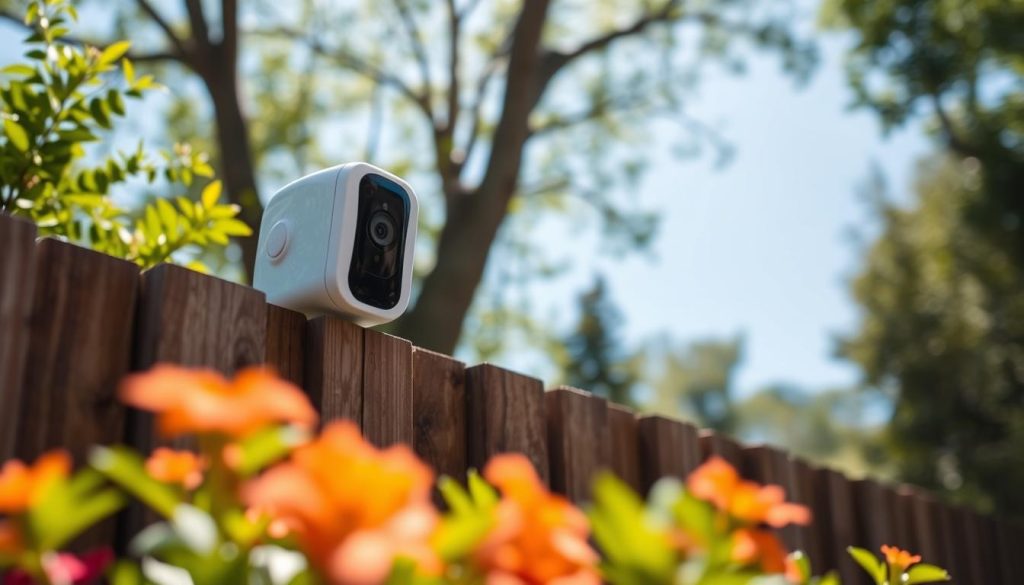
Core capabilities meet essential needs effectively. The device records in 1080p HD resolution for clear identification.
Infrared technology provides usable footage after dark. You can see activity happening around your property at night.
Two-way audio enables communication through the unit. Motion alerts notify you instantly when something triggers the sensors.
“For basic, dependable monitoring on a limited budget, this package delivers everything most households need without unnecessary complexity.”
The photovoltaic charging accessory deserves special attention. This mount can detach from the main device body.
You can position it several feet away to capture optimal sunlight. This flexibility solves placement challenges common in urban homes.
System requirements include a Blink Sync Module 2. This small hub enables local USB drive storage and central control.
It connects all your devices into one coordinated network. The module serves as the system’s communication center.
Installation simplicity appeals to non-technical users. The process involves minimal tools and straightforward steps.
Mount the unit, connect components, and follow app instructions. Most setups complete within thirty minutes.
The user-friendly application guides you through configuration. You customize settings like sensitivity zones and alert schedules.
Seamless integration with Amazon Alexa adds smart home convenience. Voice commands let you check live feeds on compatible displays.
You can create routines that activate lights when motion occurs. This automation enhances your overall protection strategy.
Limitations exist compared to higher-end alternatives. The resolution stays at 1080p rather than 2K or 4K.
Advanced AI detection requires a subscription plan. Without it, the system uses basic motion sensing without person identification.
These compromises reflect the budget-friendly positioning. The device focuses on core reliability over premium extras.
Value analysis reveals impressive economics. Consider the total system investment:
- Blink Outdoor 3 device: approximately SGD 100-130
- Photovoltaic charging mount: SGD 40-60
- Sync Module 2: SGD 40-50
- Total package: SGD 180-240
This complete cost remains below many single high-end units. You get a functioning network rather than just one device.
The system works perfectly for covering secondary areas. Think side gates, backyard sheds, or garage approaches.
These locations benefit from monitoring but don’t demand top-tier specifications. The Blink Outdoor 3 handles them reliably.
It also serves as an excellent first step into self-powered protection. You can test the technology without major commitment.
Later expansion remains possible as needs evolve. The modular design supports adding more units over time.
Singaporean homeowners appreciate the straightforward approach. Many share positive experiences about consistent performance.
The combination of affordability and reliability creates strong appeal. You receive essential protection that operates independently.
For those prioritizing practical solutions over premium features, this model makes perfect sense. It delivers peace of mind through simple, effective design.
Installation Guide: Setting Up Your Solar Camera in 6 Steps
Most homeowners complete the setup in under an hour with basic household tools. This straightforward process transforms your purchase into active property protection. Follow each step carefully for optimal results.
You don’t need professional help. The easy install design empowers you to handle everything. Let’s begin with the most critical decision.
Step 1: Choosing the Optimal Sunny Location
Survey your property during different times of day. Look for spots receiving at least six hours of direct sunlight. Morning light is particularly valuable in Singapore.
Avoid areas shaded by trees or neighboring structures. Even partial shading reduces energy harvest significantly. South-facing walls typically offer the best exposure.
Consider both surveillance coverage and sun access. You need a clear view of entry points and pathways. The position must also catch ample rays for the photovoltaic collector.
Test potential locations for a full day if possible. Note when shadows fall across the area. Choose the spot with the longest uninterrupted light period.
Step 2: Mounting the Solar Panel and Camera
Gather your tools: drill, screwdriver, level, ladder, and appropriate wall anchors. Weatherproof sealant is optional but recommended for extra protection.
Position the monitoring device 8 to 10 feet high. This height provides a broad viewing angle while remaining out of easy reach. Use your level to ensure it sits straight.
For separate photovoltaic collectors, mount them at a 30 to 45-degree angle. This tilt maximizes light capture throughout the year. Face them toward the equator for Singapore’s latitude.
Secure all components firmly against the surface. Loose mounting leads to shaky footage and poor energy collection. Double-check each fastener before proceeding.
Step 3: Connecting Components and Syncing to WiFi
If your system has separate parts, connect the wiring now. Most use simple weather-resistant cables that snap together. Follow the manufacturer’s diagram for correct polarity.
Power on the main unit using its internal reserve. The indicator light should activate, showing it’s ready for configuration.
Open the companion mobile application on your smartphone. Create your account or log into an existing profile. The app will guide you through adding a new device.
Select your home network from the available list. Enter your password when prompted. Ensure you’re close to the router during this step for strong signal strength.
“Successful network connection is the gateway to remote access and real-time alerts. Take your time here to avoid frustration later.”
Step 4: Configuring Your App Settings
Now personalize how your system operates. Set up motion detection zones to focus on critical areas. You might monitor the driveway while ignoring the public sidewalk.
Adjust sensitivity levels to match your environment. High traffic areas may need lower settings to reduce false alerts. Quiet locations can use higher sensitivity for maximum vigilance.
Configure notification preferences. Choose which events trigger mobile alerts and how they’re delivered. Some users prefer silent notifications during nighttime hours.
Establish user access permissions if multiple family members will use the system. You can grant different viewing privileges to each person. This keeps control while allowing shared monitoring.
Step 5: Testing All System Functions
Conduct a comprehensive check before considering the job complete. Access the live view feed from your mobile device. Verify the image is clear and the angle covers intended areas.
Test motion detection by walking through monitored zones. Confirm you receive instant alerts on your phone. Check that the notification includes a snapshot of the activity.
Evaluate night vision capabilities after sunset. Ensure infrared illumination provides usable footage in darkness. Some models with spotlights should activate them automatically.
If your device includes audio features, test two-way communication. Speak through the app and listen for clear sound from the unit. This confirms the microphone and speaker work properly.
Step 6: Finalizing Weatherproof Installation
Now address any remaining exposure concerns. Use cable management clips to secure loose wiring against walls. This prevents damage from wind or accidental tugging.
Apply weatherproof sealant around mounting points if desired. This extra barrier protects against Singapore’s heavy rains. It prevents moisture from seeping behind the components.
Check that all protective covers are securely fastened. Ensure the photovoltaic surface remains clean and unobstructed. Even small debris can reduce charging efficiency.
Document your installation details for future reference. Note the positions, angles, and any custom settings. This helps if you need to troubleshoot or add more units later.
Common Installation Pitfalls and Solutions
Poor network signal causes frustrating disconnections. Position your router closer to the installation site or use a WiFi extender. Dual-band systems often perform better in crowded urban areas.
Shaded panel placement leads to insufficient power. If your chosen spot doesn’t get enough light, consider a model with adjustable collectors. These let you position the energy harvester separately from the main unit.
Incorrect mounting height limits surveillance effectiveness. Too low makes the device vulnerable to tampering. Too high may miss important facial details. The 8-10 foot range is optimal for most properties.
Forgotten app configuration reduces system intelligence. Without proper motion zones and alerts, you’ll miss benefits. Complete all software steps even after hardware installation finishes.
Tools You’ll Likely Need
- Power drill with appropriate drill bits for your wall material
- Phillips and flathead screwdrivers
- Spirit level for straight mounting
- Stepladder or safe climbing platform
- Measuring tape for precise placement
- Pencil for marking drill points
- Weatherproof silicone sealant (optional but recommended)
- Cable clips or ties for wire management
Remember: professional installation is rarely necessary. Modern systems are designed for homeowner setup. You save money and gain valuable understanding of your own protection system.
When solar cameras work correctly, they provide continuous vigilance. Proper installation ensures they operate at peak efficiency. Your effort today guarantees reliable monitoring for years to come.
Quality security cameras last when installed with care. They withstand tropical conditions while delivering clear footage. The right setup makes all the difference in performance.
These cameras good for property protection become excellent with optimal placement. Take time with each step for the best results. Your home deserves nothing less than perfect surveillance coverage.
Essential Maintenance Tips for Long-Term Performance
Proper maintenance transforms your monitoring device from a purchase into a long-term guardian of your property. A small, consistent effort protects your investment and ensures reliable operation.
These systems are designed for durability. Yet they benefit from periodic attention like any sophisticated technology.
Establishing simple routines extends component lifespan dramatically. You avoid unexpected failures and maintain clear surveillance coverage.
Follow these guidelines to keep your unit performing at its best. The process requires minimal time and basic household items.
Keeping Your Solar Panel Clean for Maximum Charge
Dust and grime accumulate on the energy collector over time. This layer blocks sunlight and reduces charging efficiency significantly.
Clean the surface every two to three months. Singapore’s urban environment accelerates dirt buildup.
Use a soft cloth with mild soapy water. Avoid abrasive materials that could scratch the protective coating.
Gently wipe the panel during cooler morning hours. This prevents rapid drying and streaking.
Check for bird droppings or tree sap regularly. These substances require prompt removal to prevent permanent damage.
Your solar panel should gleam after cleaning. Maximum light absorption translates directly to better battery life.
Monitoring Battery Health and System Alerts
Modern units provide detailed power status through their mobile applications. Check this dashboard monthly for optimal performance.
Look for these key indicators:
- Current charge percentage and estimated days remaining
- Charging rate from the photovoltaic collector
- Historical energy consumption patterns
- Low battery warnings or performance alerts
Rechargeable batteries typically last three to five years. Replacement becomes necessary when runtime drops below acceptable levels.
Most models allow user-swappable power cells. The process involves simple steps anyone can complete.
“Regular battery monitoring prevents sudden failures. You maintain continuous protection without unexpected gaps in coverage.”
Set notification preferences for power-related alerts. This keeps you informed about your system’s energy status.
Regular Firmware Updates and Functional Checks
Manufacturers release software improvements periodically. These updates patch vulnerabilities and add new capabilities.
Enable automatic updates when possible. Otherwise, check manually every quarter.
Schedule comprehensive system tests every three months. This brief verification ensures all components function correctly.
Your quarterly checklist should include:
- Review recorded clips for image clarity and proper timestamping
- Test motion detection by walking through monitored zones
- Verify alert delivery speed and notification accuracy
- Check housing integrity for cracks or sealant deterioration
- Confirm network connection stability and remote access
Perform seasonal inspections before and after monsoon periods. Look for physical wear from heavy rain and humidity.
Expected component lifespans provide planning guidance:
- Photovoltaic collectors: 20+ years with proper care
- Rechargeable power cells: 3-5 years with normal use
- Main surveillance unit: 5-7 years of reliable service
Keep a simple maintenance log. Record cleaning dates, update installations, and any performance observations.
Quality security cameras last when maintained properly. Your small routine effort ensures the system remains a dependable guardian for your home.
Choosing the Right System for Your Home’s Specific Needs
Effective property surveillance begins with a careful assessment of your home’s physical and environmental factors. The perfect match depends on more than just technical specifications.
Your living space has unique characteristics that influence which solution performs best. Consider these elements before making your final selection.
A thoughtful approach ensures your investment delivers reliable protection. Let’s explore the key considerations for personalized monitoring.
Assessing Your Property’s Layout and Sun Exposure
Start by analyzing your space thoroughly. Walk around your property and identify all entry points.
Note potential blind spots near fences or landscaping. Determine how many units you need for complete coverage.
Large areas may require multiple devices or wide-angle lenses. Sketch a simple map showing vulnerable locations.
Next, evaluate sunlight patterns throughout the day. Observe which walls receive direct rays during morning and afternoon hours.
South-facing positions typically offer the best exposure in Singapore. Avoid spots shaded by trees or neighboring structures.
Even partial shading reduces energy harvest significantly. Your photovoltaic collector needs consistent illumination.
Consider both surveillance coverage and sun access. The ideal location provides a clear view while catching ample rays.
Test potential spots for a full day if possible. Note when shadows fall across the area.
Choose positions with the longest uninterrupted light period. This planning prevents power issues later.
Balancing Your Budget with Desired Features
Financial planning requires looking beyond initial hardware costs. Prices range from SGD 80 for basic models to SGD 550+ for multi-unit kits.
Establish a realistic spending limit that includes potential subscription fees. Cloud services often add monthly expenses for extended storage.
Some systems offer local storage alternatives to avoid recurring charges. Factor these ongoing costs into your long-term budget.
Prioritize features based on your actual needs. Create a simple ranking system for different capabilities.
Must-have elements might include 4K resolution, advanced AI detection, or specific smart home links. Nice-to-have features could be color night vision or two-way audio.
Consider how each feature enhances your protection. Higher video quality helps with identification but requires more storage.
Advanced motion detection reduces false alerts but may need subscription support. Balance these trade-offs against your available funds.
“A well-planned budget considers both immediate costs and long-term expenses. The cheapest initial price might lead to higher yearly charges.”
Evaluate technical comfort when selecting your system. User-friendly interfaces benefit those less familiar with technology.
Complex setups offer more customization but require greater expertise. Choose an option matching your comfort level.
The Importance of Smart Home Integration
Modern protection should connect seamlessly with your existing devices. Check compatibility with platforms like Google Assistant, Amazon Alexa, or Apple HomeKit.
This integration creates a unified home ecosystem. You can view feeds on smart displays or control settings via voice commands.
Alerts appear alongside other notifications on your devices. The system feels like a natural extension of your digital life.
Consider future expansion possibilities from the beginning. Select a platform that allows easy addition of more units later.
Some brands offer modular systems that grow with your needs. Others have limitations on maximum device connections.
Think about your long-term monitoring goals. You might start with one device and expand coverage over time.
Technical compatibility ensures smooth operation. Verify that your chosen system works with your router and network setup.
Your Personal Decision-Making Worksheet
Use this checklist to systematically evaluate options. Answer each question before making your purchase.
- Property Analysis: How many entry points need monitoring? Where are the blind spots?
- Sun Mapping: Which locations receive 6+ hours of direct daily light? When do shadows appear?
- Budget Planning: What’s my total spending limit including potential subscription fees?
- Feature Priority: Which capabilities are essential versus optional for my situation?
- Expansion Consideration: Might I add more units later? Does the system support growth?
- Technical Comfort: How user-friendly does the interface need to be for my household?
- Smart Home Links: Which existing platforms (Google, Alexa, Apple) require compatibility?
Complete this assessment before reviewing specific models. Your answers create a personalized requirements list.
This focused approach prevents overwhelm from too many options. You can quickly eliminate systems that don’t match your criteria.
When to Consult Professional Experts
Complex properties sometimes benefit from specialist advice. Unusual architectural features or challenging sunlight patterns may need custom solutions.
Local professionals understand Singapore’s unique climate conditions. They can recommend placement strategies for optimal performance.
Consider consulting experts if your assessment reveals significant challenges. Multiple shading issues or extensive coverage areas might require professional planning.
For comprehensive guidance on sustainable protection systems, explore detailed resources from local surveillance specialists.
Their experience with Singapore installations provides valuable insights. You gain confidence in your system’s design and placement.
Remember that personalized protection requires matching technology to environment. Your home deserves a solution crafted for its specific characteristics.
Thoughtful selection ensures reliable monitoring for years to come. The right choice brings peace of mind through customized vigilance.
Solar Security in Singapore’s Climate: What to Expect
Singapore’s weather patterns—abundant sunshine interspersed with heavy showers—shape how effectively photovoltaic systems perform. The island’s tropical environment presents a unique testing ground for any exterior monitoring equipment.
You experience intense ultraviolet rays alongside high humidity levels. Frequent downpours during monsoon seasons add another challenge. Quality devices are engineered specifically for these conditions.
Look for units with IP67 or higher ingress protection ratings. This certification guarantees complete dust protection and water immersion resistance. Your investment remains safe during the heaviest tropical rains.
Singapore’s near-equatorial position offers a significant advantage. Day length stays remarkably consistent throughout the year. Strong sun intensity provides excellent energy harvesting potential.
The Northeast Monsoon period brings reduced daylight hours. Efficient battery reserves ensure continuous operation during these cloudy days. Most systems can function for several days without a full charge.
“Singapore’s climate is actually ideal for photovoltaic technology. The consistent sun exposure far outweighs the seasonal rainfall challenges.”
Heat tolerance is built into premium components. Internal circuits withstand Singapore’s hottest temperatures. Overheating protection prevents performance degradation.
Occasional soiling from rain splash or urban dust requires attention. Regular cleaning maintains optimal solar panel efficiency. This simple maintenance keeps your system at peak performance.
Data reveals Singapore enjoys over 2,500 annual sunlight hours. This abundance makes photovoltaic generation highly reliable. Your security cameras receive ample power throughout the year.
Contrast this with temperate climates experiencing short winter days. Those regions struggle with insufficient direct sunlight for months. Singapore’s consistent exposure represents a clear advantage.
During monsoon season, take extra precautions. Ensure mounting hardware remains securely fastened. Check for water pooling near equipment bases.
Quality solar cameras work well in this environment. Their night vision capabilities provide clear after-dark monitoring. These cameras work reliably despite humidity challenges.
Your security camera system benefits from local conditions. The consistent climate helps cameras last longer with proper care. You gain dependable protection year-round.
Singapore’s environment proves to be an asset for solar security. The abundant sunshine supports continuous operation. Thoughtful engineering handles the tropical challenges effectively.
You can expect reliable performance from well-chosen equipment. The climate supports rather than hinders photovoltaic monitoring. This makes Singapore particularly suitable for sustainable protection solutions.
Making the Smart Switch to Solar-Powered Peace of Mind
Embracing sun-powered surveillance represents a smart step toward sustainable home protection in Singapore. These systems deliver energy independence, cost savings, and a smaller environmental footprint.
Singapore’s climate and supportive policies create ideal conditions. Models like Arlo, Eufy, and TP-Link offer reliable solutions for different needs and budgets.
This technology provides robust, wire-free vigilance. It’s a future-proof upgrade that enhances property safety while supporting greener living.
Review our comparison table to find your perfect match. Then take the next step toward a secure, sustainable home powered by renewable energy.