
Your property’s security is only as strong as its weakest link. For many in Singapore, a surveillance system is a critical layer of protection. It watches over homes and businesses day and night.
Many assume these electronic sentinels will work flawlessly forever. The truth is, they face constant wear from our tropical environment. Humidity, heat, and occasional heavy rain can take a toll on any equipment.
This guide is your roadmap to ensuring that your investment delivers clear, reliable footage for years. We will show you how to protect your system’s performance and longevity. A little proactive care prevents major headaches later.
From simple cleaning routines to understanding professional service plans, we cover everything. The goal is unwavering security that stands the test of time. Let’s build a maintenance strategy that fits the Singapore context.
Key Takeaways
- Regular upkeep is the cornerstone of a dependable security infrastructure.
- Both preventive and corrective actions are vital for system health.
- A proactive regimen includes lens cleaning, cable checks, and software updates.
- Common issues like poor image quality can be minimized with proper care.
- Professional service plans offer cost-effective, long-term benefits.
- Tailoring your approach to Singapore’s climate ensures better durability.
- A detailed checklist helps you implement a consistent maintenance schedule.
Introduction: The Cornerstone of Reliable Security
In the digital age, a robust security infrastructure is no longer a luxury but a fundamental necessity. For homes and businesses, it forms the essential shield against modern threats.
A modern surveillance system is a core part of this shield. It acts as both a powerful deterrent and a critical tool for investigation.
Simply installing this equipment is not enough. Its long-term reliability depends entirely on consistent cctv maintenance. This proactive care is the true cornerstone of a trustworthy security system.
Without a structured regular maintenance plan, even advanced setups can fail. This creates dangerous vulnerabilities when you can least afford them. The integrity of your recorded footage is then at risk.
This makes proactive maintenance an essential investment, not an optional task. In Singapore, this is especially true. Our local humidity and frequent rain pose unique challenges to electronic gear.
The goal is to move from a mindset of reactive fixes to one of preventive strategy. This approach directly safeguards your financial investment. More importantly, it protects the vital data your cctv system collects.
Clear, uninterrupted surveillance records are crucial for reviewing incidents. They can also serve as vital legal evidence. Let’s explore why this foundational care is non-negotiable for lasting safety.
Do CCTV Cameras Need Maintenance? The Resounding Answer
The question isn’t whether upkeep is necessary, but what the consequences are for skipping it. The answer is a definitive yes. A surveillance setup is a complex piece of electronic equipment exposed to the elements.
Without a plan, its performance will inevitably decline. This section explores the tangible risks of neglect and the specific legal drivers in Singapore.
The High Cost of Neglect: More Than Just Broken Equipment
Ignoring a regular maintenance schedule creates multiple points of failure. The cost extends far beyond a simple repair bill.
It directly compromises the security the system was installed to provide. A single faulty unit during an incident can void your entire investment.
- Degraded Image Quality: Dirty lenses or faulty sensors produce blurry, useless footage.
- Power and Connectivity Failures: Loose cables or water damage can shut down critical cameras.
- Corrupted Data Storage: Unchecked hard drives or network issues can lead to lost recordings.
- Total System Failure: A minor, unchecked problem can cascade, taking the whole network offline.
This neglect opens a security gap and destroys vital evidence. Proactive checks protect your return on investment by preventing small issues from becoming major expenses.
Legal and Compliance Imperatives in Singapore
In Singapore, responsible management of a security system isn’t just good practice—it’s often a legal requirement. The Personal Data Protection Act (PDPA) sets clear guidelines.
These rules govern where you place your cctv cameras and how you handle recorded data. They ensure public safety while respecting individual privacy.
Proper cctv maintenance is key to compliance. A well-maintained cctv system ensures recordings are clear, continuous, and admissible as evidence if needed.
Conversely, a poorly kept setup might violate PDPA rules on data security. This could result in significant fines. Make sure your upkeep regimen keeps you within legal boundaries.
Understanding these imperatives makes one thing clear. A structured care plan is a critical responsibility for every system owner in Singapore.
Key Benefits of a Proactive Maintenance Regimen
Proactive stewardship of your electronic sentinels yields a triple reward: sharper deterrence, smarter savings, and sustained reliability. A structured upkeep plan moves your setup from a simple recording device to a resilient security asset.
This approach directly addresses the core reasons for having a surveillance system. It ensures operational readiness and protects your financial outlay. Let’s examine the concrete advantages a diligent regimen provides.
Enhanced Security and Crime Deterrence
The foremost benefit is unwavering protective capability. A well-kept system delivers clear, continuous surveillance without gaps. This consistent visibility is a powerful deterrent to potential intruders.
Studies suggest a significant majority of security breaches could be prevented with proper maintenance. Clean lenses and correctly aligned units are crucial. They produce the high-quality footage needed for identifying individuals and resolving incidents.
When your cameras are visibly operational and well-maintained, they signal that a property is monitored and secure. This psychological barrier is as important as the physical recording itself.
Long-Term Cost Efficiency and ROI Protection
Routine care is an investment that pays for itself many times over. The cost of scheduled camera maintenance is minimal compared to emergency repairs or total replacements.
By preventing minor issues from escalating, you avoid catastrophic failures. This can reduce overall equipment failure rates substantially. Protecting your return on investment is a key financial benefit.
Implementing a regular maintenance schedule is far more economical than reacting to a system-wide breakdown. It safeguards your initial capital outlay.
This cost-effective strategy also helps you plan budgets better. You avoid unexpected, large expenses that strain finances. For optimal planning, establishing a professional service schedule is highly recommended.
Maximizing System Lifespan and Performance
Every piece of electronic equipment has a finite lifespan. Consistent cctv maintenance extends this lifespan significantly. It ensures your technology investment delivers peak performance for years.
This means optimal motion detection, reliable night vision, and uninterrupted recording. Data integrity is preserved, so crucial footage is stored securely and retrievable.
- Delayed Upgrades: Proper care postpones the need for costly system refreshes.
- Consistent Output: The cctv system operates as intended, without degraded functions over time.
- Reduced Downtime: Proactive checks minimize unexpected outages, ensuring constant coverage.
Ultimately, maximizing performance and longevity provides peace of mind. You gain confidence that your property remains under vigilant watch, day after day.
Understanding the Types of CCTV Maintenance
Mastering the categories of upkeep transforms random checks into a powerful, systematic defense. Not all care is the same. A comprehensive strategy uses three distinct methodologies.
Each one serves a unique purpose in safeguarding your surveillance investment. Knowing when and how to apply them is key to performance.
This knowledge helps you allocate resources wisely. It prevents small problems from becoming big issues. Let’s explore the core approaches.
Preventive Maintenance: Stopping Problems Before They Start
This is the scheduled, routine work designed to stop failures before they occur. Think of it as the regular health check-up for your cctv system.
It involves planned tasks performed at set intervals. The goal is to preserve equipment function and extend its lifespan.
Common preventive actions include cleaning external lenses to ensure clear camera views. It also involves checking all cable connections for tightness and signs of wear.
Another critical task is applying software updates and firmware patches. These digital shields protect against security vulnerabilities and add new features.
Visual inspections of housing for weather damage are also vital. A consistent schedule is the backbone of this approach.
A proactive regimen of cleaning and updates is far cheaper than emergency repairs. It keeps your security infrastructure consistently reliable.
This type of cctv maintenance minimizes unexpected downtime. It ensures your setup is always ready to perform its primary duty.
Corrective Maintenance: Fixing Issues After They Occur
This is the reactive process of resolving issues after a system component has already failed. It’s about restoration and repair.
Examples include replacing a vandalized or water-damaged unit. Fixing a cut or frayed power cable also falls under this category.
While necessary, relying solely on this method is risky and costly. It means your security has already been compromised.
The cctv systems have stopped functioning correctly at a critical moment. This can lead to lost footage and legal complications.
Corrective actions should be a last resort, not the core of your plan. A robust strategy aims to reduce their frequency through preventive care.
Predictive Maintenance: Using Data for Proactive Care
This advanced approach uses system data and analytics to forecast potential failures. It moves from scheduled care to need-based intervention.
It involves monitoring performance logs, network traffic trends, and component health metrics. The data can signal when a hard drive might fail or a lens is fogging internally.
For instance, a gradual increase in a camera’s operating temperature could predict a power supply issue. Analyzing these trends allows for precise scheduling of part replacements.
This method requires more sophisticated tools and often professional support. However, it maximizes time and resource efficiency.
You address problems just before they impact operations. This is the pinnacle of a modern, intelligent upkeep strategy.
Each type has its place in a balanced regimen. Emphasize preventive care as your foundation.
Use predictive insights where technology allows. Employ corrective actions only when unavoidable.
This triage approach ensures your cctv systems remain a vigilant and dependable shield. It protects both your property and your peace of mind.
CCTV Maintenance Best Practices for Optimal Performance
Optimal performance is not an accident. It’s the result of deliberate, systematic care. A robust security setup requires moving from theory to daily practice.
This involves adopting a clear set of proven methods. These routines protect your investment and ensure reliable surveillance. We will focus on three core areas of physical and digital upkeep.
Implementing these steps transforms your system into a consistently vigilant asset. Let’s explore the essential tasks that form the backbone of any effective structured plan.
Regular Visual Inspections and Lens Cleaning
A simple walk-around can prevent major issues. Schedule a visual check of each unit every month. Look for new obstructions like growing plants or new structures.
These can block the camera view and create blind spots. Also, inspect the housing for signs of physical damage or water ingress. Proper alignment is crucial for intended coverage.
Lens cleaning is a non-negotiable task. Dust, grime, and tropical moisture cling to the glass. This drastically reduces image clarity, making video useless for identification.
- Use a soft, microfiber cloth to gently wipe the camera lens.
- For stubborn spots, apply a small amount of lens cleaner designed for electronics.
- Aim to clean lenses at least every three months, or more often in dusty areas.
- Always check the enclosure seals for leaks during your inspection.
This routine ensures your units capture crisp, usable footage at all times.
Securing and Protecting Cables and Connections
The lifeline of your system runs through its wires. Loose or damaged cables cause signal loss and power failures. Pests and weather can also compromise these vital links.
Proper management is key to preventing such issues. Start with a physical inspection of all wiring runs. Look for any fraying, cracking, or chew marks.
Verify that all waterproof seals at connections are intact, especially for outdoor units. Ensure each connector is tight and free from corrosion. A loose connection can mimic a major hardware fault.
Consistently monitoring your power supply and cable health prevents unexpected blackouts. It’s a fundamental step in safeguarding your surveillance integrity.
Make sure to also look for outdoor obstructions that might have shifted. Adjust unit positions if needed to restore optimal coverage. Securing these physical elements guarantees uninterrupted operation.
Firmware and Software Updates: Your Digital Shield
Your security setup has a digital nervous system. Software and firmware govern its intelligence and defenses. Regular updates are critical for cybersecurity and feature performance.
Manufacturers release patches to fix vulnerabilities and improve stability. Neglecting these updates leaves your network open to potential cyberattacks. This risk grows as cctv systems become more interconnected.
Schedule a quarterly check for available software upgrades. Visit the manufacturer’s website or use the system’s admin portal. Apply updates during periods of low activity to minimize disruption.
These digital patches ensure compatibility with other devices and protect recorded data. They are an essential part of modern cctv maintenance.
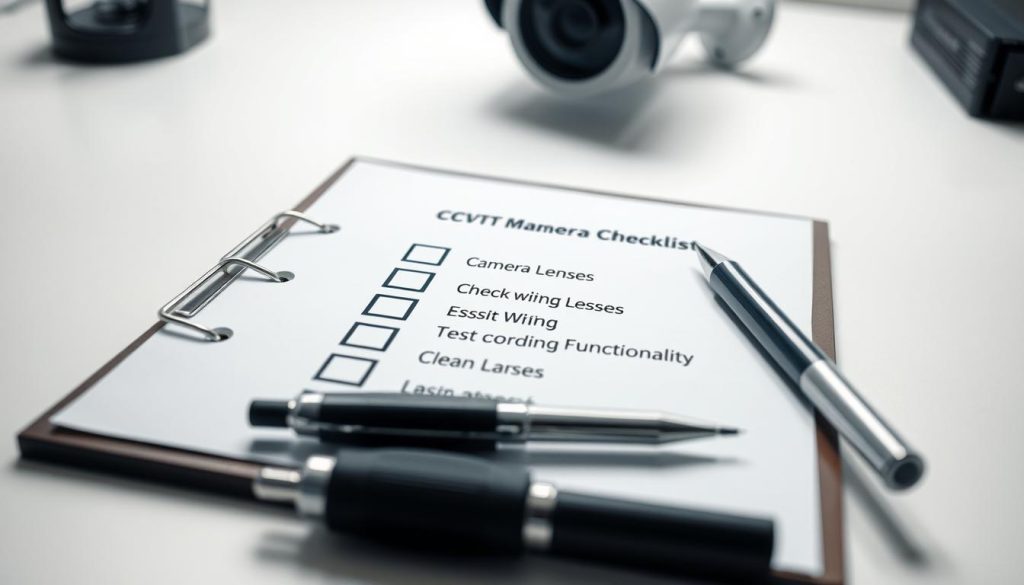
Combining these physical and digital practices creates a comprehensive shield. It maximizes the lifespan and reliability of every cctv camera. For a complete action plan, refer to a detailed cctv maintenance checklist.
Creating Your CCTV Maintenance Schedule
Reliable protection isn’t a one-time event but the result of a recurring cycle of checks and reviews. A structured maintenance schedule transforms good intentions into consistent action.
It ensures no critical task is forgotten and balances effort across different timeframes. This tiered approach combines quick remote verifications with hands-on inspections and professional review.
Your plan should have three clear tiers: frequent light checks, periodic in-depth tasks, and a comprehensive annual audit. This method keeps your security system running smoothly without overwhelming you.
Daily and Weekly Quick Checks
These are your first line of defense against immediate failures. Daily and weekly checks are lightweight and can often be done remotely using your monitoring software.
The goal is to confirm basic operational health in under five minutes. Start by verifying that all units are online and actively recording. A quick glance at your live video feed can confirm this.
Next, check your storage capacity to ensure you have enough space for new recordings. Running out of storage can halt recording without warning. Also, confirm the system date and time are accurate.
Incorrect timestamps can render footage useless for evidence. These frequent checks are crucial for catching problems early.
Monthly and Quarterly In-Depth Tasks
This tier involves more hands-on work to preserve physical and functional integrity. Monthly tasks focus on core upkeep, while quarterly review sessions are more detailed.
Each month, perform a physical cleaning of external lenses to remove dust and grime. Inspect all visible cables and connections for signs of wear or damage. Also, watch a sample of recorded footage.
Look for any odd signs of trouble, like intermittent signal loss. Every quarter, conduct a deeper analysis. Test the playback of recordings from different time periods.
Check for new blind spots caused by plant growth or new structures. Verify that motion detection zones are still correctly configured. Inspect the power supply units for any warning lights or unusual sounds.
A quarterly performance check ensures your setup adapts to environmental changes. It maintains the high-quality output you depend on.
This consistent hands-on care prevents the slow degradation of your system’s capabilities.
The Essential Annual Professional Audit
Once a year, schedule a comprehensive evaluation by a certified technician. This professional audit is a deep dive that goes beyond routine checks.
The technician will test every component, from individual sensors to network switches. They assess overall system performance against manufacturer benchmarks. This audit should also check for compliance with the latest security and data standards.
Professionals can identify issues invisible to the untrained eye. These include subtle lens focus drift, internal moisture buildup, or early signs of hard drive failures.
Based on their findings, they can recommend necessary upgrades or part replacements. This proactive approach with expert services safeguards your long-term investment.
It provides peace of mind that your entire surveillance infrastructure is operating at its peak.
Here is a simple template to structure your regular maintenance:
- Daily/Weekly: Verify cameras online; check storage levels; confirm date/time.
- Monthly: Clean lenses; inspect cables; review sample footage.
- Quarterly: Test playback; check for blind spots; verify motion settings; inspect power.
- Annually: Schedule a full professional system audit and performance review.
Following this balanced maintenance checklist makes your regimen both effective and sustainable for the long haul.
Your Comprehensive CCTV Maintenance Checklist
Consistency in surveillance protection is achieved through a methodical, step-by-step verification process. A detailed, actionable maintenance checklist is the most practical tool for this job.
It transforms good intentions into reliable results, whether you’re handling the work yourself or using a professional service. This guide provides a structured cctv maintenance checklist you can follow.
Using it systematically ensures no critical component is overlooked. This leads to a highly reliable system that performs as intended. We’ve organized the tasks into three core areas of focus.
Camera and Lens Integrity
This section focuses on ensuring each unit captures clear, usable video. Physical inspection and cleaning are paramount for image quality.
Start by checking each camera housing for signs of physical damage or water ingress. Verify that the field of view remains unobstructed by new growth or objects.
Lens cleaning is essential. Use a soft cloth to remove dust and grime from the camera lens and housing. For night vision, confirm the infrared (IR) cut filter switches correctly.
- Inspect housing for cracks, corrosion, or loose fittings.
- Clean the external lenses and dome covers thoroughly.
- Test day/night functionality to ensure the IR filter operates.
- Pan, tilt, and zoom (if applicable) to confirm full range of motion.
These steps guarantee every cctv camera delivers the sharp footage you depend on.
Wiring, Power, and Connectivity
Most system failures originate from power or connection issues. This part of your checklist is critical for stability.
Inspect all cables along their runs for wear, fraying, or chew marks from pests. Ensure every waterproof gland and connector is sealed tightly against moisture.
A stable power supply and secure connections are the backbone of uninterrupted surveillance. Neglecting them invites unexpected blackouts.
Use a multimeter to test voltage at the camera end if possible. Also, verify network connections and switch ports are active and functioning. Make sure to document any exposed wires for immediate remediation.
- Visually check all cable conduits for integrity.
- Test voltage at key points to ensure consistent power.
- Confirm network link status and data transmission rates.
- Secure any loose cables and replace damaged ones.
Storage, Recording, and Data Management
This final segment guarantees captured footage is stored securely and retrievable. It’s about protecting the data itself.
First, verify that recording schedules are active and aligned with your security needs. Check camera recording triggers like motion detection.
Next, assess hard drive health and available storage capacity. Running out of space halts recording. Test any configured backup systems or cloud sync functions.
Finally, a crucial but often missed step: ensure the system time and date stamps are accurate. Incorrect timestamps can render video evidence useless.
- Review and validate active recording schedules.
- Monitor hard drive health indicators and free storage.
- Perform a test restore from backup to confirm data integrity.
- Sync equipment time with a reliable network time server.
Following this comprehensive cctv maintenance list during each service cycle builds confidence. Your surveillance investment remains a vigilant and dependable shield.
Troubleshooting Common CCTV System Issues
When your security system falters, knowing how to diagnose the problem is half the battle. Even with excellent care, electronic equipment can develop issues.
A quick, methodical approach minimizes downtime and restores your surveillance coverage. This guide helps you identify and fix frequent failures.
We cover three major trouble areas: visual quality, connectivity, and data management. For each, we provide a clear diagnostic flow.
You will learn when a fix is within your reach and when to call a professional cctv maintenance service. Let’s get your cctv system back to peak performance.
Addressing Poor Image Quality and Blind Spots
Blurry or obscured video is a top complaint. About 35% of cctv systems experience poor quality.
Often, the cause is simple. Start by inspecting the camera lens. Dust, spider webs, or internal fogging in Singapore’s humidity can ruin the view.
Gently clean the exterior with a microfiber cloth. If the image remains poor, check camera positioning. Has a plant grown into the frame? Has a new sign created a blind spot?
Lighting problems affect nearly a third of setups. Too little light causes grainy night footage. Harsh glare from the sun or a nearby lamp washes out the image.
- Adjust camera angles to avoid direct light sources.
- Consider adding infrared illuminators for dark areas.
- Use cameras with wide dynamic range (WDR) for high-contrast scenes.
If these steps don’t work, the camera sensor may be failing. This is a sign to contact a technician.
Resolving Power and Connectivity Failures
A camera that’s offline often has a power or network issue. These failures account for a significant portion of service calls.
First, verify the power supply. Is the LED light on? If not, check the outlet, fuse, or transformer. A multimeter can test voltage at the camera end.
Loose or corroded cables are a frequent culprit. A visual inspection of all cable runs can reveal damage from weather or pests.
For network cctv cameras, connectivity problems are common. An IP address conflict or bandwidth overload can drop the feed.
Reboot your network switch and router. Ensure each camera has a unique IP. Also, make sure your network can handle the total video data stream.
Ground loops and electrical interference cause flickering or distorted images. These issues require professional diagnosis to isolate and fix.
Managing Storage and Playback Problems
Your system records, but you can’t find the footage. Or playback is choppy and unwatchable. These are storage and software issues.
Start by checking the hard drive health. Most recorders have a menu showing drive status and free space. If it’s full or failing, recordings will stop or corrupt.
Verify that your recording schedule is active. Motion detection settings might be too sensitive or not sensitive enough, missing events.
Playback problems often stem from file corruption or incompatible codecs. Try playing the file on a different computer or VLC media player.
- Ensure your recording software is updated to the latest version.
- Check that the system time and date are accurate for proper file indexing.
- Test your backup process to confirm data can be restored.
If the hard drive is making unusual sounds or the system logs show repeated read/write errors, replace the drive immediately. This is a critical component of your cctv maintenance plan.
For complex network video recorder (NVR) issues, professional services have the tools for deep diagnostics. Don’t hesitate to call them when your own troubleshooting hits a wall.
Navigating CCTV Maintenance Costs and Service Plans
The financial commitment to your security system extends well beyond the initial purchase. A sustainable upkeep strategy requires a clear understanding of ongoing expenses.
Budgeting for this care is essential for long-term reliability. It ensures your surveillance investment remains effective without surprise bills.

This section breaks down the key factors that influence prices. We will compare different service models to help you choose wisely.
You will learn how to evaluate contracts and find true value. The goal is to protect your property without overspending.
Factors Influencing CCTV Maintenance Costs
Several elements determine the price of keeping your setup in top shape. The scale and complexity of your cctv systems are primary drivers.
A large network with dozens of units costs more to review than a simple home setup. The types of cameras installed also matter.
Advanced models like Pan-Tilt-Zoom (PTZ) units require more intricate checks than fixed units. The physical accessibility of your installation sites affects labor time.
Hard-to-reach spots may need special equipment, adding to the service fee. The required frequency of maintenance is another major factor.
Monthly contracts are naturally more expensive than quarterly or semi-annual plans. The range of services included also shapes the final quote.
A basic visual inspection costs less than a full diagnostic with software updates and performance reports. In Singapore, our humid climate adds a unique cost layer.
Frequent checks for corrosion and moisture damage are often necessary. This environmental factor can increase the needed service frequency.
Initial setup quality plays a role too. A poorly installed system with weak connections will likely need more corrective work later.
Comparing DIY vs. Professional Service Plans
Choosing between handling upkeep yourself or hiring experts is a key decision. Each path has distinct advantages and trade-offs.
A do-it-yourself approach can save on upfront labor costs. It requires a significant investment of your own time and a certain level of technical skill.
You must be comfortable with tasks like camera lens cleaning and basic cable inspections. You also need to source any replacement parts yourself.
While DIY offers initial savings, it carries the risk of missing subtle problems. A professional eye can spot early signs of failures you might overlook.
Professional cctv maintenance plans provide guaranteed expertise and experience. Technicians are trained to diagnose complex issues efficiently.
These plans often include priority emergency response, which is crucial for security systems. They also typically offer discounted rates on parts and labor.
For complex or large-scale cctv systems, a professional contract is usually more cost-effective in the long run. It prevents minor glitches from escalating into major, expensive repairs.
The comprehensive coverage brings peace of mind. You know your surveillance infrastructure is being managed by specialists.
What to Look for in a Maintenance Contract
A well-written service agreement is your blueprint for reliable care. It should leave no room for ambiguity about responsibilities.
First, ensure the scope of work is clearly defined. Does it cover all physical equipment, including cables and recorders?
It should also specify the frequency of scheduled visits. Look for defined response times for different priority levels, especially emergencies.
Transparent pricing is non-negotiable. The contract should state fixed rates for routine visits and an hourly rate or fee schedule for extra work.
Make sure it includes policies for software and firmware updates. Digital protection is a core part of modern cctv maintenance.
- Detailed Reporting: Each service visit should conclude with a written report on findings and actions taken.
- Parts and Labor Warranty: Clarify the warranty period for any repairs or replacements performed.
- Upgrade Recommendations: The contract should outline a process for the provider to suggest system improvements.
- Renewal Terms: Understand the notice period and any price adjustment clauses for contract renewal.
Evaluating providers in Singapore involves checking their certifications and client reviews. Request sample reports to assess their thoroughness.
A good contract balances cost, convenience, and the critical need for security reliability. It turns a necessary expense into a valuable investment in continuous protection.
Ensuring Your Surveillance System Stands the Test of Time
A vigilant security posture is built not just on installation, but on ongoing, dedicated upkeep. Consistent care ensures your surveillance infrastructure remains effective and reliable for many years.
This approach allows your system to adapt to evolving threats without complete overhauls. By following the guidelines outlined, you protect your financial investment and ensure legal compliance.
The true test of any monitoring solution is its performance during a critical incident. Proactive maintenance guarantees it will not fail at that crucial moment.
Adopt a long-term view where upkeep is an integral part of security management. Partnering with a reputable service provider simplifies this process, offering expertise and peace of mind.
Ultimately, the goal is a resilient, trustworthy guardian for your property. Take the next step by implementing the checklist and schedule. Consider reaching out to professional services for an initial audit.
Your vigilance today secures the safety of your tomorrow.