
That small glowing dot on a device sparks immediate questions about privacy and security. People often wonder if it signals that a lens is actively capturing footage. This curiosity is especially relevant in places like Singapore, where surveillance systems are widespread.
The answer is not a simple yes or no. A red light can have different meanings. It depends on the specific type of device, its brand, and its intended function. Manufacturers use these visual indicators in various ways.
Technological advancements have made these signals more complex. Modern systems use multi-color LEDs and different blinking patterns to convey status information beyond just recording.
Often, a steady glow does mean active recording. A blinking pattern, however, might show the system is on standby, booting up, or experiencing an error. It is crucial to check the user manual for precise meanings.
Some covert models operate with no visible light at all. This raises important privacy considerations, as the absence of an indicator does not guarantee the device is off.
The familiar red recording indicator has evolved from professional studio equipment to common consumer electronics. Its purpose remains to inform users about the device’s operational state.
This guide will decode the truth behind these lights. We will explore various security cameras, explain what different colors and patterns mean, and cover relevant legal points. You will learn to distinguish between functional and dummy units.
Key Takeaways
- Red lights on cameras often signal recording, but their meaning varies by device.
- Not all security systems use red indicators; some have no visible lights.
- Technological advances have made camera status signals more complex.
- In Singapore, understanding these signs is crucial due to prevalent surveillance.
- A steady red light typically denotes active recording.
- Blinking lights may indicate system status, errors, or other functions.
- Some covert cameras record without any visible indicator.
Understanding Camera Status Indicators
Those small lights on your security devices are more than just decoration. They convey critical information about function and activity.
Learning this visual language is key for anyone managing a security system. It helps you confirm your equipment is working correctly.
What Are Recording Indicators?
A recording indicator is a visual signal showing a device is capturing video. It’s often a small LED or an on-screen icon.
Its primary function is to inform the user of the device’s operational status. This provides transparency during use.
These indicators also serve as a powerful deterrent. A visible light can discourage unauthorized activity by signaling active surveillance.
In many IP cameras, a steady glow means the unit is connected and camera working. A solid red light in a dark room often confirms the system is on and may be saving footage.
Common Types of Visual Signals on Devices
Manufacturers use various signals to communicate. The most common are steady or blinking lights.
On-screen icons and even soft audible alerts are other ways devices convey their status. For home security cameras, checking the LED is a quick verification method.
Many models use small red lights around the lens in low light. This typically means night vision is active and camera recording is likely.
Some devices have no visible indicators at all. This type of design is common for hidden cameras intended for covert operations.
Other systems use multiple colors. Green might mean a stable network connection, while amber could signal a boot-up sequence.
For a definitive check, users can log into their camera software. Viewing a live stream confirms the device is operational beyond just its lights.
Understanding these signs helps distinguish real cameras from dummy units. Fake models often have a simple blinking red light as their only feature.
Brands like Reolink design specific LED patterns for different events. These can indicate recording, connectivity issues, or system errors.
Knowing this meaning behind the signals empowers you. You can properly monitor your CCTV or surveillance setup and troubleshoot problems quickly.
How Red Lights Function in Security and Surveillance Systems
Understanding how red lights operate within security setups demystifies much of their perceived ambiguity. These visual cues are engineered components, not random decorations.
Their primary function is to communicate power, activity, and recording status. This provides instant feedback for system owners and acts as a safety and deterrent feature.
The Role of Infrared (IR) LEDs and Night Vision
Many modern security cameras use Infrared LEDs. These components emit light invisible to the human eye but essential for night vision.
In darkness, this infrared light can appear as a soft red glow around the lens. This glow confirms the camera is on and its low-light mode is active.
For numerous infrared IP cameras, these small red lights in the dark serve a dual purpose. They enable clear video capture and simultaneously act as a visual recording indicator.
This integration is common in home and commercial surveillance. It ensures the system functions optimally regardless of lighting conditions.
Steady Light vs. Blinking Light: A Key Distinction
Interpreting the pattern is crucial. A steady red light typically signifies the camera is actively camera recording or monitoring.
It means the device is fully operational and likely saving footage. This constant glow is a hallmark of real, functioning security equipment.
In contrast, a blinking red indicator can signal various states. These include boot-up sequences, network connectivity processes, data transmission, or system errors.
A rapidly flashing light often points to a connection issue needing troubleshooting. Understanding these signs helps maintain system health.
This distinction aids in identifying legitimate gear. Dummy cameras frequently use a simple blinking light to simulate activity cheaply.
Real surveillance invests in consistent operation, not just a convincing flash.
Specific brand models, like the Reolink Argus series, utilize defined patterns. These patterns communicate specific events clearly to the user.
In Singapore’s context, recognizing these signals is vital. For system owners, it ensures their CCTV is camera working. For the public, it informs awareness of active surveillance in the environment.
Mastering this meaning behind the lights transforms a simple glow into a powerful diagnostic and identification tool.
Does a Red Light Mean a Camera is Recording? It Depends.
A camera’s light serves as a language, but its dialect changes across models and brands. There is no universal answer to what a glowing dot signifies.
The meaning depends entirely on the specific device and its intended function. Interpreting it correctly requires looking at the broader context.
Device-Specific Meanings: Security Cams, Webcams, and More
For dedicated security cameras, a steady red light often signifies active recording or monitoring. This is a common feature in many CCTV and IP camera systems.
It provides a clear visual cue that footage is being captured. This is crucial for both home security and commercial surveillance.
Consumer webcams on laptops use these indicators differently. A lit LED typically shows the camera is active for a video call or local recording.
It signals that the lens is in use, which is a key safety and privacy feature. Users should be aware when this light camera is on.
Other smart devices have their own ways. Baby monitors may use a red light to show two-way audio is active.
Doorbell cameras might illuminate an LED during motion alerts or night vision. The signals are tailored to the product’s primary function.
Brand Variations and Manufacturer Designs
Manufacturer philosophy greatly influences light design. Brands like Reolink or Wyze create unique LED colors and patterns for different status updates.
Some may use a blue light to denote camera recording, while others reserve blue for network activity. This is a prime example of brand variation.
Design choices also balance discretion and deterrence. Hidden cameras for covert surveillance often have no visible lights at all.
Conversely, prominent indicators on a security device act as a psychological deterrent. They broadcast the presence of active monitoring.
This leads to a useful rule of thumb. Older fake cameras frequently use a simple blinking red light as their only convincing feature.
Authentic models from reputable companies are more sophisticated. They may have a steady glow, multi-color signs, or no external indicators.
A manufacturer’s design intent defines the light’s language. Assuming it always says the same thing is where misunderstandings begin.
The only way to know for sure is to consult your device’s manual. This document decodes the exact meaning of all visual signals for your specific model.
Assuming a red glow always means camera working and saving footage can lead to errors. You might misjudge a security threat or a privacy situation.
Understanding these nuances is essential everywhere. It is especially key in settings like Singapore, where diverse types of surveillance are common.
Accurate interpretation relies on knowing the device and its brand‘s design laws. This knowledge turns a simple glow into reliable information.
A Brief History of the Red Recording Light
Today’s red indicator lights are direct descendants of a century-old studio tradition. This visual cue did not originate with modern electronics. Its roots are firmly planted in the professional worlds of radio and television broadcasting.
The familiar glow carries a legacy of authority and function. Understanding this past explains why the symbol feels so intuitive now.
From Studio “On-Air” Signs to Consumer Electronics
The story begins behind heavy studio doors. A bright red light outside meant “On-Air” or “Recording in Progress.”
This was a universal “Do Not Disturb” signal. It ensured silence and prevented interruptions during live broadcasts or sensitive recording sessions.
That practice established the red light as an authoritative symbol. It conveyed importance, privacy, and active operation.
With the rise of consumer video technology, this symbol migrated. Early camcorders adopted a small LED or a “REC” indicator.
It served the same core function: to show the device was capturing footage. This gave users clear status feedback, just like the studio engineers had.
The transition was natural. People already associated the color with active capture.
The Evolution of a Universal Symbol
The symbol expanded into security and surveillance. Security cameras and CCTV systems adopted red lights to indicate operation.
This provided an intuitive visual cue. A steady glow often meant the camera was camera recording or monitoring.
Standardization happened across devices. From dash cams to baby monitors, the red light became a trusted indicator.
Technology advanced, but the symbol persisted. Smart devices now use these lights for various signs, like network activity.
Despite new features, the red glow remains a powerful psychological deterrent. It leverages deep historical association with being watched.
Modern equipment still pays homage to this history. Reputable brands use red LEDs on everything from home security units to webcams.
The journey from studio door to camera lens shows how tradition shapes technology.
Understanding this evolution helps users appreciate its prevalence. It is not a random color choice but a designed feature with clear meaning.
This knowledge is useful everywhere. In places like Singapore, where many cameras are present, recognizing this symbol’s history adds context.
The red recording light‘s story is one of adaptation. It blended old studio ways with new consumer systems to create a universal language.
Red Light Cameras: A Special Case for Traffic Enforcement
While many cameras use red lights as status indicators, a ‘red light camera’ refers to an entire system built around traffic signals. These are specialized surveillance devices with a single, clear function: enforcing traffic laws at intersections.
They are distinct from general home or commercial security cameras. Their sole purpose is to detect and document vehicles that proceed against a red traffic signal.
How Traffic Enforcement Cameras Actually Work
These systems operate automatically. Sensors are embedded in the road surface, just before the intersection stop line.
When the traffic signal turns red, the system activates. If a vehicle crosses the sensors after this point, it triggers the camera.
The device then captures footage or a series of photographs. This video evidence clearly shows the vehicle’s license plate, the red signal, and the vehicle’s position in the intersection.
Critical data like time, date, and location is stamped onto the recording. This creates a solid evidence package for authorities to issue a citation.
Legal Implications and Fines in Places Like Singapore
Getting caught by one of these cameras has direct legal consequences. Violations typically result in a monetary fine and demerit points on a driver’s license.
Singapore is a prime example of strict enforcement. Red light cameras are widespread across the island, and fines are substantial to act as a strong deterrent.
The local authorities are continuously enhancing these systems. There are active plans to integrate speed detection capabilities.
This will create combined red-light and speed cameras. The goal is to maximize road safety through advanced surveillance technology.
Interestingly, the rise of personal dashcams has created a counterpoint. Drivers sometimes use their own footage to contest tickets issued by official systems.
This highlights the modern interplay between personal and official monitoring devices.
A crucial point of clarification is needed. The “red light” in the name refers to the traffic signal, not a visible indicator on the camera itself.
These enforcement cameras usually do not have a glowing red light visible to drivers. Their operation is designed to be unobtrusive and automatic.
Understanding how these automated sentinels work is vital for any driver. It helps avoid violations and clarifies the rights and processes involved if a citation is received.
For broader context on camera signals, resources like this guide on understanding camera indicators can be helpful.
In summary, red light cameras represent a critical, focused application of surveillance for public safety. They operate within clear legal frameworks, especially in jurisdictions like Singapore, where their role in maintaining order is well-established.
Decoding the Blink: What a Flashing Red Light Really Signals
Many people assume a blinking red indicator confirms a camera is actively capturing video, but this is a common misconception. In genuine security systems, a flashing light rarely means active camera recording.
It typically signals an internal process or status update. Correctly interpreting these signals is crucial for proper surveillance management.
Common Reasons for a Blinking Red Indicator
A pulsating red glow can point to several operational states. Understanding these helps avoid false alarms about your security setup.
Common triggers include the device being in standby or power-saving mode. It may also be processing or uploading saved footage to the cloud.
Another frequent reason is a boot-up sequence. Many cameras will flash temporarily when powering on before settling into a steady state.
Network connectivity attempts are a major cause. A slow, periodic blink often shows the camera is trying to connect to your WiFi.
This contrasts sharply with dummy cameras. Fake models frequently use a simple blinking red light as their only convincing feature to mimic activity.
Error Codes, Boot-Up Sequences, and Network Status
Specific blink patterns can serve as diagnostic error codes. A rapid, continuous flash might signal a failed network connection or an SD card error.
During initial boot-up, the LED often flashes red. This indicates the system is loading its firmware and performing self-checks.
Once this process finishes, the light will typically turn off or become solid. A steady glow then confirms the camera is camera working and ready.
For network status, a slow blink usually means the device is in pairing or setup mode. It is searching for or attempting to join a wireless network.
Brands design specific patterns. For example, a flashing red light on a Blink Mini camera indicates it is in setup mode or has a connection problem.
Your device’s manual is the ultimate decoder ring for these visual signs. Manufacturer brands use unique ways to communicate.
Consulting this guide is the only sure method to understand your specific model’s language. This knowledge is a powerful troubleshooting tool.
Understanding these indicators prevents unnecessary concern. It also ensures you can maintain your home security or CCTV system effectively.
Correctly decoding blinking lights transforms them from a mystery into a useful maintenance feature. You can quickly identify when a device needs attention.
Privacy Concerns and the Psychology of the Red Light
A visible red light on a camera taps into deep-seated human instincts about observation and control. This small glow triggers immediate privacy concerns for many people.
It often creates a feeling of being watched and monitored. This psychological impact is powerful, even if the device is meant for security.
The presence of these indicators raises important questions. Users wonder who is watching and what happens to the video footage.
Online forums are filled with user experiences expressing this anxiety. People report unease when they see a red light on a device in a home or public space.
They fear unauthorized surveillance or being spied on without consent. This highlights the deep connection between visual signals and personal privacy.
Feeling Watched: The Deterrent Effect
The same psychology that causes anxiety also creates a powerful security benefit. Visible lights act as a strong deterrent against unwanted behavior.
Knowing a camera is active can prevent crime or misconduct. The glowing dot signals that actions are being recorded and observed.
This deterrent effect is a key feature of overt surveillance systems. Businesses and public spaces use it to promote safety.
For instance, a prominent CCTV unit with a steady red light can discourage theft. Potential offenders see the sign and often choose to avoid the area.
The meaning is clear: you are on camera. This psychological lever is a cornerstone of modern security design.
It balances the need for monitoring with a transparent warning. People are aware they are in a recorded zone.
Ethical Considerations of Overt and Covert Surveillance
Ethics become central when choosing between overt and covert monitoring. Overt cameras with clear indicators respect individual awareness.
People know they are being recorded and can adjust their behavior accordingly. This transparency is generally seen as more acceptable.
Covert surveillance, using hidden cameras with no visible lights, raises significant issues. It removes consent and can feel like a violation of privacy.
Local laws often reflect this ethical line. In places like Singapore, regulations may mandate visible signs or indicators when recording in certain areas.
This protects individuals by notifying them of active monitoring. The legal framework shapes how these devices are used.
Privacy-conscious users should follow best practices. Always change default passwords on your security cameras.
Enable two-factor authentication for account access. Most importantly, understand your camera‘s indicator functions.
Some brands allow users to disable LED lights. This can reduce personal anxiety about the device.
However, it also removes the transparency that the camera is camera recording. This creates an ethical dilemma for businesses and homeowners.
Is security more effective with a visible warning, or with discreet monitoring that catches people unaware?
Brands like Wyze have faced user concerns over random red lights activating. These incidents sparked discussions about trust, control, and device status.
Users need to feel confident about their equipment’s behavior. Navigating these concerns requires a careful balance.
Effective security measures must be weighed against respect for personal privacy rights. The goal is a setup that deters crime without creating a climate of fear.
Understanding the psychology and ethics behind the glow is the first step. It leads to more informed choices about home and commercial security systems.
Beyond Red: Interpreting Other Camera Light Colors
Beyond the familiar red glow, camera indicators utilize a full spectrum of colors to communicate detailed status updates. Modern security cameras speak a visual language where green, blue, and amber lights are just as important.
Learning this language is essential for proper device operation. It helps you confirm your security system is functioning as intended.
Green, Blue, and Amber: What These Indicators Mean
A steady green light is typically good news. It often means the camera is powered on, operational, and in a ready state.
This color can also signal a full battery charge or a stable network connection. It’s a universal sign of normal function.
Blue LEDs have become common in many IP cameras. They are frequently associated with active camera recording, live view access, or Bluetooth pairing.
However, blue is not a universal standard. One brand might use a solid blue light for recording, while another uses it for data transmission.
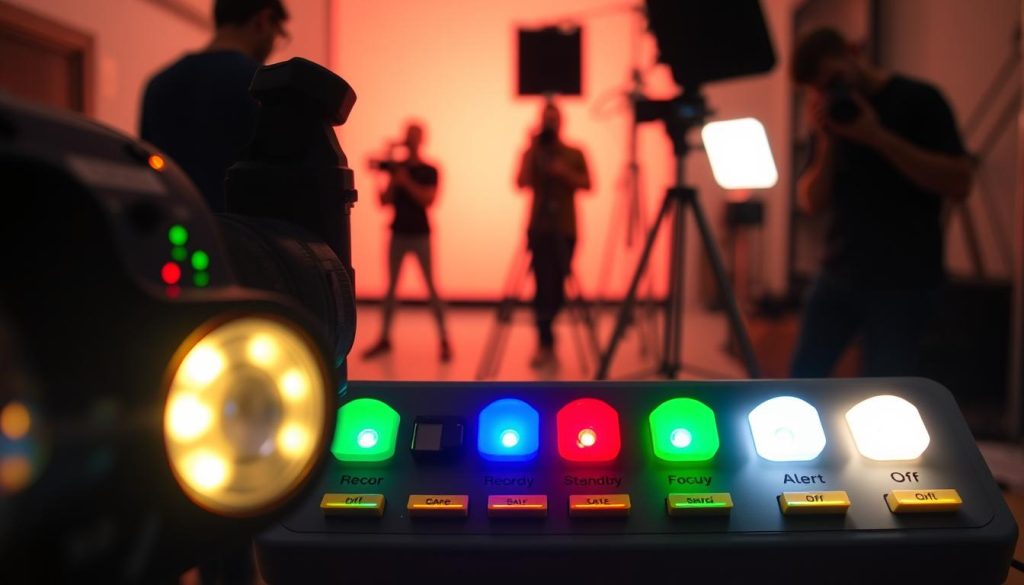
Amber, yellow, or orange lights usually serve as warning indicators. They can signal a low battery, marginal WiFi signal, SD card issues, or pending firmware updates.
These colors alert you to potential problems before they affect your surveillance. They prompt timely troubleshooting to keep your system healthy.
Understanding Your Device’s Full Light Language
Some devices use combinations or sequences of colors. A blinking green-and-amber pattern might represent a boot-up progress bar.
Specific flash sequences can act as detailed error codes. This allows for more complex status communication than a single solid glow.
The meaning behind these signals can vary significantly between brands and models. A Reolink camera might use solid blue for recording.
A different manufacturer could use blue solely for network activity. This is a key example of why consulting your device manual is non-negotiable.
The user manual is your definitive guide to your specific camera‘s light language. Assuming all brands use the same colors the same ways leads to confusion.
Understanding these indicators lets you quickly assess camera health. You can troubleshoot problems and confirm desired operations, like night vision or video saving.
In multi-camera systems, color-coded LEDs help identify specific units at a glance. This is a useful feature for managing several devices.
Mastering the full light language of your equipment enhances user control. It ensures optimal performance of your home security or CCTV setup.
This knowledge is practical everywhere. In Singapore, where diverse surveillance systems are prevalent, it aids in proper safety management.
Can a Camera Record Without Any Visible Light?
Modern surveillance technology has mastered the art of invisible operation, capturing footage without any telltale signs. The answer is a definitive yes. Many advanced security cameras are engineered specifically for this purpose.
This capability is central to covert operations and discreet monitoring. It allows for recording in sensitive environments where a visible light would defeat the objective.
Understanding this function is crucial for both implementing effective security and protecting personal privacy. The absence of a glow does not mean a device is off.
The Reality of Covert and Hidden Cameras
Covert and hidden cameras are intentionally designed to be unobtrusive. They are often disguised as everyday objects like clocks, smoke detectors, or pens.
These devices are used in legitimate scenarios like nanny cams or sensitive corporate security. Their design eliminates visual signals that would reveal their true function.
This raises significant privacy concerns. The ability to record without visible signs challenges the concept of consent.
Individuals may be monitored without any awareness. This creates an ethical gray area between safety and intrusion.
In jurisdictions like Singapore, using such equipment in private areas without consent may violate privacy laws. Legal consequences can be severe, acting as a deterrent against misuse.
Technical Capabilities of Modern Surveillance Equipment
The engineering behind invisible recording is sophisticated. A key technology is infrared illumination.
Many units use Infrared LEDs that emit light invisible to the human eye. This allows for clear night vision video without the familiar red glow.
Advanced sensors and IR cut-filters further enhance low-light performance. They capture high-quality footage in near darkness, leaving no visual trace.
Furthermore, numerous professional and consumer-grade models offer a critical feature. Users can often disable status LEDs entirely via settings.
This allows for completely silent, indicator-free operation. The camera works, but its lights do not.
The most powerful surveillance is often the one you never see coming. Technology has made this not just possible, but commonplace.
For those concerned about privacy, detection methods exist. Electronic bug detectors can scan for radio frequencies or magnetic fields emitted by hidden systems.
When purchasing such equipment, choosing a reputable brand is vital. Legitimate security suppliers provide devices for authorized purposes, not for spying.
This highlights the dual-use nature of the technology. Covert cameras are tools for legitimate investigation and home security.
They can also be misused for unethical surveillance. Understanding their capabilities is the first step in safeguarding against invasion.
For a broader look at visual indicators, resources like this guide on understanding recording indicators are helpful.
In summary, the technical answer is clear. Modern CCTV and surveillance systems can indeed record without any visible light.
This knowledge is essential for anyone managing security or valuing their privacy. It reminds us to look beyond the glow for the true meaning of camera operation.
Legal and Regulatory Frameworks for Recording Indicators
Legal frameworks establish the rules of engagement for surveillance technology, dictating when and how recording indicators must be used. These rules aim to balance security needs with individual privacy rights.
Transparency is a core principle. Many laws require that monitoring be overt and notified.
Notification Requirements and Privacy Laws
A common legal requirement is the use of clear signs or indicators. Many regions mandate that recording devices must have visible lights or posted notices.
This informs people they are under surveillance. A steady red light on a security camera often fulfills this legal duty to notify.
Audio recording often has stricter rules. Many places operate under “one-party” or “all-party” consent laws.
This means knowing if a device captures sound is especially important. The legal meaning of an indicator can change if audio is involved.
How Local Regulations, Including Singapore’s, Shape Usage
Singapore’s regulatory environment is a prime example. The Personal Data Protection Act (PDPA) strictly governs data collection.
This affects all camera usage. Recording in public for security is generally permitted.
Covert recording in private spaces is not. Placing a hidden camera in a bathroom or bedroom violates privacy laws.
For traffic enforcement, Singapore’s systems are well-established. Red light cameras are legally sanctioned tools for public safety.
Fines are publicly communicated. This shows how one type of camera recording is fully integrated into the legal framework.
Homeowners and businesses must check local rules. Pointing a home security camera at a public street or a neighbor’s property can cause legal issues.
Failure to comply has real consequences. Penalties include fines, lawsuits, and forced removal of equipment.
Regulations also shape camera design. Manufacturers may build in non-disableable lights for markets with strict notification laws.
Compliant design is a key feature for brands selling CCTV and security cameras globally.
Staying informed about these frameworks is essential. It ensures responsible use of surveillance technology.
This protects both the operator and the public. Understanding the signals and ways devices operate within the law is the final piece of the puzzle.
It turns simple video footage into a legitimate tool for safety and protection.
The Future of Camera Indicators in Smart Devices
The future of camera indicators is not set in stone. It evolves with each smart device update. Traditional colored lights are becoming one part of a broader communication system.
Smart technology is reshaping how we understand device status. This shift moves beyond simple visual signals.
It integrates with our digital lives. The familiar glow may soon be a secondary feature.
How Software Updates Can Change Indicator Functions
Over-the-air software updates can redefine what a red light means. Manufacturers can remotely alter LED behavior. They add new color patterns or repurpose indicators for different alerts.
This flexibility allows a camera to gain new features after purchase. A firmware update might change a steady glow’s meaning. It could signal “motion detected” instead of active recording.
Such updates keep security cameras current. They adapt to new user needs and security protocols. This dynamic function is a key trend.
For example, a brand like Arlo can push an update that modifies blink patterns. This informs users about battery health or network strength. The physical light becomes a configurable tool.
This evolution has a downside. The universal simplicity of the red light symbol may dilute. Users must stay informed about their device’s current status language.
Moving Beyond Simple Lights: App Alerts and AI Notifications
The trend is shifting toward app-based notifications. Users receive push alerts on smartphones for motion detection or camera recording status. This reduces reliance on physical lights.
Advanced systems integrate artificial intelligence. AI can analyze video scenes in real-time. It sends specific alerts like “person detected” rather than a generic recording light.
This provides richer context than a simple glow. User awareness and control improve significantly. You know exactly what triggered your home security camera.
Current smart devices from companies like Google Nest exemplify this. They use a combination of lights, chimes, and detailed app alerts. This multi-layered approach enhances safety.
The most intelligent surveillance doesn’t just flash; it explains.
Customizable indicators are another possibility. Users could set colors or patterns based on personal preference. Different events could trigger unique signs.
This evolution introduces new challenges. Reliance on apps and networks creates potential points of failure. Users may miss critical alerts if their phone is off.
The classic red recording light will likely remain a familiar fallback. It serves as a universal, low-tech signal that requires no internet. In places like Singapore, where CCTV is widespread, this duality is practical.
Networked devices offer detailed footage and instant notifications. Simple lights provide at-a-glance verification. The future points toward an interconnected, intelligent notification system.
It balances advanced tech with straightforward ways of communicating. This ensures both innovation and reliability in modern surveillance.
Navigating a World of Watching Eyes
Knowledge transforms a simple light into a tool for security and privacy protection. A glowing dot on security cameras often suggests activity, but it is not a universal guarantee of recording. Context from the specific device, brand, and light pattern defines its true meaning.
Understanding these visual signals is crucial. Steady versus blinking lights convey different status updates about your camera. This knowledge helps you verify your security systems are working correctly.
These indicators serve a dual function. They provide operational feedback and act as a psychological deterrent in surveillance environments. This balance is key for effective monitoring.
Always consider local laws and privacy norms. In regulated places like Singapore, proper notification through lights or signs is often required. Responsible use of monitoring devices protects everyone.
Apply what you’ve learned. Check your camera manual, be mindful of installation rules, and stay informed. With this understanding, you can confidently navigate a world of watching eyes, balancing safety with personal space.