
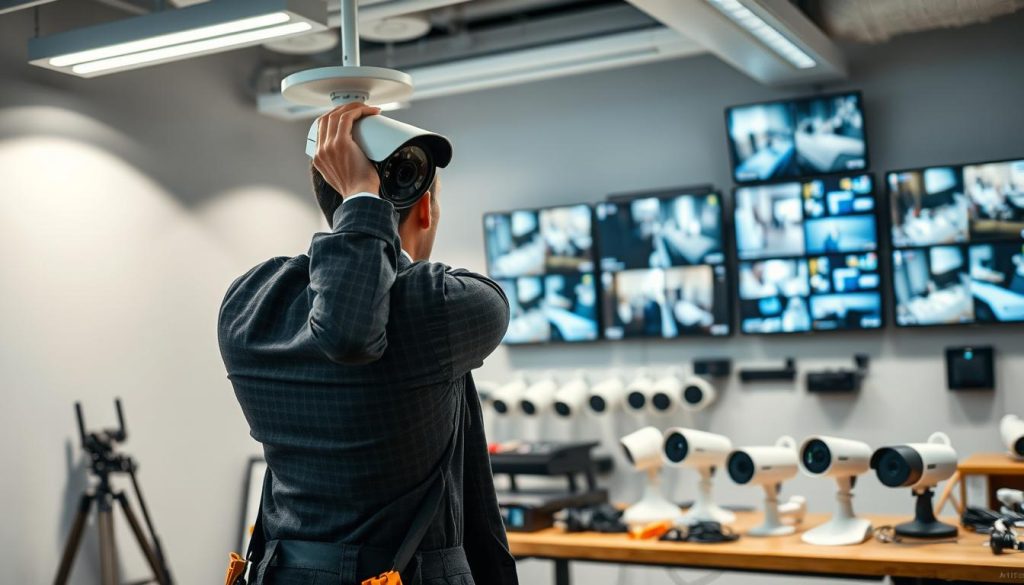
Modern safety for your home or business often depends on electronic surveillance systems. These devices offer vital eyes on your property, giving you peace of mind.
Their core operation is completely tied to a steady electricity supply. Without it, the entire monitoring process can come to a sudden stop.
A major concern for property owners is what happens during a blackout. You might worry if your security is still active when the lights go out.
This is especially true during Singapore’s frequent tropical storms. Knowing how your system behaves without mains power is essential for true protection.
This guide provides clear facts. We’ll look at why most standard setups cannot record without electricity. You will also learn about reliable backup solutions.
Key Takeaways
- Most traditional surveillance systems require constant electrical power to function.
- An interruption in your power source creates an immediate gap in security coverage.
- Understanding your specific system’s power needs is the first step to ensuring uninterrupted monitoring.
- Several modern solutions, like battery backups and cellular systems, can maintain operation during an outage.
- Planning for power independence is a critical part of any robust security strategy.
- Regularly checking your equipment’s status remotely can help verify it’s working correctly.
Can CCTV Cameras Record When They Are Switched Off? The Direct Answer
In the vast majority of cases, a surveillance device that is completely without electricity cannot capture video. The direct answer is no.
A standard unit is considered “off” when disconnected from its primary power source. This happens during a manual switch-off or a mains failure.
Think of it like a lamp. Without an electrical current, it cannot produce light. Similarly, a monitoring device needs energy to process and save video.
There is a key exception. Modern IP security camera models with built-in battery reserves or onboard storage can operate for a limited period. They offer a temporary backup solution.
This distinction is crucial for your property’s safety. Any incident during a total blackout will not be documented by a conventional setup. Wired devices halt instantly.
Wireless models may use residual battery life, but this is finite. It’s also important to distinguish a device being “off” from one merely disconnected from its DVR or NVR.
A standalone unit still plugged into an outlet might have power, even if not communicating with its recorder. This is different from a total loss of energy.
Some believe these systems have a hidden recording function. This is a myth. The mechanism is integral to operation; without power, it simply won’t work.
For continuous observation, a constant energy supply is fundamental. Planning for this is the first step in guaranteeing your security coverage. Exploring uninterrupted surveillance systems is the logical next move.
Ensuring a reliable source is the foundation of any effective monitoring system.
The Fundamental Link: Why CCTV Cameras Rely on Power
The heartbeat of any security camera system is its connection to a reliable energy source. These electronic devices are not passive observers.
They are active machines that consume electricity to perform every single task. This fundamental link defines their entire operation.
Understanding this power dependency is crucial. It explains why a loss of energy creates an immediate security gap.
Whether for a home in Bukit Timah or a warehouse in Jurong, the principle is identical. No electrical current means no monitoring capability.
Core Functions That Cease Without Electricity
Several essential operations halt instantly without power. The image sensor, the eye of the camera, needs energy to activate and capture light.
This captured light is then processed into a digital video signal. That signal must be transmitted over a network to a recorder or live feed.
Finally, the data is saved for later viewing. Each step—capture, process, transmit, store—requires a steady voltage and amperage.
When the source is cut, the device becomes inert hardware. It cannot detect motion, stream footage, or save recording.
Think of it like a smartphone with a dead battery. The advanced technology is present, but without power, it is completely non-functional.
Wired vs. Wireless: Two Paths, One Dependency
All surveillance equipment shares this energy need, but the connection differs. Wired setups typically use Power over Ethernet (PoE) or separate cables.
This provides very stable power directly from your building’s grid. The trade-off is instant failure during a mains blackout.
Imagine a retail store’s system during a tropical storm outage. Every wired unit goes dark simultaneously.
Wireless models offer placement flexibility. They often rely on rechargeable batteries or small solar panels.
This type of setup isn’t immune. Batteries deplete, and solar panels may underperform during prolonged cloudy weather.
A wireless unit’s battery could die precisely when you need it most. Both paths lead to the same ultimate dependency on available electricity.
Choosing the right camera involves understanding this link. A deliberate power strategy is non-negotiable for effective, uninterrupted security.
Cameras Designed for Power Independence
Property owners no longer need to accept security gaps during power interruptions. A dedicated category of surveillance equipment is built for resilience.
These systems use alternative power sources or integrated backup solutions. They ensure continuous monitoring even when the main grid fails.
This is vital for areas with unreliable electricity or for enhancing any property’s defense. Selecting the right option depends on your specific location and needs.
Battery-Powered CCTV Cameras
These models operate using rechargeable or replaceable cells. They are ideal for spots without easy wiring access.
Typical battery life ranges from several hours to many months. This depends on usage, like how often motion triggers recording.
A key advantage is completely wireless installation. You can place a security camera almost anywhere on your home.
The limitation is the need for periodic recharging or replacement. Advanced features help conserve energy for longer operation.
Popular models like the Arlo Pro 4 offer high-resolution video and smart motion detection. Their ease of placement makes them a flexible choice.
Solar-Powered Security Systems
These setups use photovoltaic panels to convert sunlight into electricity. The energy charges an internal battery for 24/7 operation.
This design is perfect for remote, off-grid locations. It provides a sustainable power source for continuous surveillance.
Internal batteries store energy for use at night or during cloudy days. Advanced systems manage this energy efficiently to maintain operation.
Solar efficiency can be affected by weather and available daylight hours. In Singapore’s tropical climate, frequent storms may reduce charging time.
Choosing a model with a large battery capacity is wise. It ensures your camera remains active through prolonged periods of low light.
Hybrid and UPS-Backed Setups
Hybrid configurations combine grid power with immediate backup. An Uninterruptible Power Supply (UPS) is a common solution.
A UPS provides temporary electricity for wired cameras during short outages. It keeps the entire system running seamlessly.
Capacity is usually limited to a few hours. For extended coverage, a backup generator can be integrated into the plan.
Power-over-Ethernet (PoE) cctv camera setups simplify wiring. These can be connected to a network switch that itself is supported by a UPS.
This creates a robust layer of protection for your data. Footage continues to save to local or cloud storage without interruption.
Each power-independent type has pros and cons. Consider cost, maintenance, and local climate when deciding.
For reliable recording in all conditions, planning for power independence is a critical step. The next section explains how to verify your security camera is active.
How to Verify If Your Security Camera is Active and Recording
Verifying the operational status of your security equipment is a critical routine. A system that appears functional might have hidden issues. Regular checks prevent false confidence and ensure your property’s security is real.
These simple steps form a comprehensive verification protocol. They help confirm your devices are live and capturing footage.
Checking Indicator Lights and Live Feeds
Most security camera models have physical indicator LEDs. A steady or blinking light often shows the unit has power and is connected to the network.
Some models allow disabling these lights for stealth operation. If disabled, you must use other methods to confirm activity.
Accessing the live feed provides immediate visual confirmation. Use the dedicated mobile app or software for your system.
A clear, real-time video stream means the camera is active. Error messages like “No Signal” or “Device Offline” indicate a problem with the connection or power source.
Testing Motion Detection and Listening for Operation
Modern surveillance systems have smart motion detection features. You can test this by deliberately walking within the camera’s view.
Check your phone or email for instant alerts. The system should also save a short recording of the event.
Listen carefully near motorized cameras. A subtle hum from pan, tilt, or zoom functions confirms mechanical operation.
This auditory check is useful for PTZ models. Silent operation might require a visual inspection of the live feed instead.
Using System Diagnostics and Checking Power Connections
Advanced security platforms include built-in diagnostic tools. Access these through the management interface on your app or computer.
These tools generate health reports. They can flag issues like poor network strength, storage errors, or failed recording schedules.
Physically inspect all power connections at regular times. Ensure plugs are secure in outlets and adapters show no damage.
For wired setups, examine cables for cuts or fraying. A loose wire can interrupt the power supply without a full blackout.
Battery-powered cameras need special attention. Check the battery status percentage via the app. Establish a recharging or replacement schedule to avoid unexpected shutdowns.
Routine maintenance is another vital part of reliability. Clean the lens for a clear video image. Update device firmware to fix bugs.
Occasionally reboot the entire monitoring setup. This clears minor glitches and refreshes all connections.
Following this verification checklist ensures continuous, reliable surveillance. It transforms your security camera from a passive device into an active guardian for your home.
Understanding Recording and Storage During a Power Loss
During a blackout, the fate of your security data depends entirely on your storage configuration. The system may capture video, but without a place to save it, the footage is lost. This part of your setup is often overlooked until a crisis hits.
Two primary paradigms exist for preserving evidence: local and cloud-based. Local storage keeps data on-premises, while cloud storage sends it to remote servers. Each method reacts differently when the power source fails.
Local Storage: DVRs, NVRs, and Onboard SD Cards
Local devices like DVRs (Digital Video Recorders) and NVRs (Network Video Recorders) are the traditional hubs. A DVR connects to analog cameras, while an NVR works with IP camera models.
These units often have internal battery backup for short outages. They can maintain recording for a limited time after a blackout begins. Without this feature, a DVR or NVR stops saving footage instantly.
Onboard microSD cards offer a decentralized option. Inserted directly into a security camera, they store video locally on the device itself.
If the camera has its own power reserve, the SD card continues to record. This makes certain cameras record independently of the main network.
Capacity limits are a key consideration. A standard 64GB card can hold several days of footage. This depends on resolution and motion-triggered recording settings.
Physical vulnerability is a trade-off. Local storage is independent of internet connection issues. Yet, the hardware itself could be damaged or stolen during an incident.
The Cloud Storage Dilemma During an Outage
Cloud-based storage uploads video over the internet to secure servers. This process requires a stable network and continuous power for your router and modem.
During an outage, this connection often fails. Your security camera might be active, but the footage cannot reach the cloud. This creates a critical gap in your evidence chain.
Advanced CCTV system designs include a buffer solution. They temporarily save data locally on the camera or a nearby hub.
Once power and internet are restored, this backup footage syncs to the cloud. This feature is common in modern smart home CCTV camera models.
Reliability during extended blackouts favors local methods. Cloud storage is excellent for remote access and off-site safety. However, it adds another point of failure—your home internet infrastructure.
Best practices involve using redundant storage. Combine a local DVR or SD card with a cloud subscription. Ensure your router and modem are on a backup power supply too.
Understanding these mechanics is key to preventing data loss. Your security is only as strong as your ability to preserve the recording.
Ensuring Uninterrupted Surveillance: Backup Power Solutions
Investing in auxiliary power sources is the definitive step toward uninterrupted protection. A robust security plan must account for grid failures, especially in Singapore where tropical storms are frequent.
These backup systems keep your monitoring active during an outage. They are the critical bridge between a blackout and the restoration of mains electricity.
Three primary solutions form the backbone of a resilient setup. Each offers a different level of coverage, cost, and complexity for your home or business.
Uninterruptible Power Supply (UPS) Systems
An Uninterruptible Power Supply provides instant, short-term power. It switches on the moment a blackout hits, with zero delay.
The unit uses an internal battery to keep connected devices running. Typical runtime ranges from thirty minutes to a few hours.
Sizing a UPS correctly is essential. You must calculate the total wattage of your security camera system, including the recorder and network router.
Installation is straightforward. Plug your cctv DVR, NVR, and internet modem into the UPS outlets.
A quality UPS does more than prevent footage loss. It protects sensitive electronics from damaging power surges when electricity returns.
This option is perfect for short, common outages. It maintains the entire network and data flow without interruption.
Backup Generators for Extended Coverage
For prolonged blackouts, a backup generator is the only reliable source. These units supply electricity for days, depending on fuel capacity.
Two main models exist: portable and standby. Portable generators require manual startup and connection.
Standby units are permanently installed and activate automatically. They are ideal for businesses where any surveillance gap is unacceptable.
Fuel type is a key consideration. Diesel, petrol, and propane are common choices. An automatic transfer switch is a crucial part of a standby system.
This switch seamlessly reroutes power from the grid to the generator. Your security cameras and recorders never lose connection.
Generators represent a higher investment and need regular maintenance. For properties in areas with unstable grids, they are often a necessary solution.
Portable Power Banks for Wireless Cameras
Wireless camera models offer great flexibility. A high-capacity portable power bank can extend their operational time significantly.
These banks store energy measured in milliamp-hours (mAh). They connect via USB to recharge or directly power a device.
This is a simple, mobile backup for critical units like doorbell cameras. During an outage, plugging in a power bank can keep a single security camera online for many extra hours.
Check compatibility with your cctv camera‘s charging port. Some advanced features, like continuous streaming, will drain the bank faster.
It’s a cost-effective option for supplementing other systems. Keep a charged power bank in a known location for emergency use.
Comparing these three solutions helps you make an informed decision. A UPS is excellent for short-term, whole-system protection. A generator guarantees long-term coverage but at a higher cost and complexity.
Portable banks add a layer of flexibility for specific wireless devices. Many property owners use a combination for layered resilience.
Regular testing is non-negotiable. Schedule a monthly check of your UPS battery status. Run your generator for fifteen minutes every few months to ensure it starts.
Verify that power banks hold their charge. This proactive habit ensures your backup power functions the moment it’s needed.
Ultimately, these solutions are the cornerstone of a truly resilient surveillance operation. They ensure your security continues through any adverse condition.
Choosing the Right Security Solution for Your Needs
A robust security system is not one-size-fits-all. It demands a customized approach based on power reliability, location, and budget.
For renters or spots without wiring, battery-powered security cameras offer flexibility. Solar models suit eco-conscious users or remote properties. Permanent installations benefit from hybrid setups with backup power for continuous monitoring.
Your storage choice—local for control or cloud for remote access—protects your home data. Consider advanced features like AI person detection and smart network integration.
Consult professionals for complex commercial surveillance. An informed decision, grounded in your specific needs, builds a dependable shield that delivers true peace of mind.