
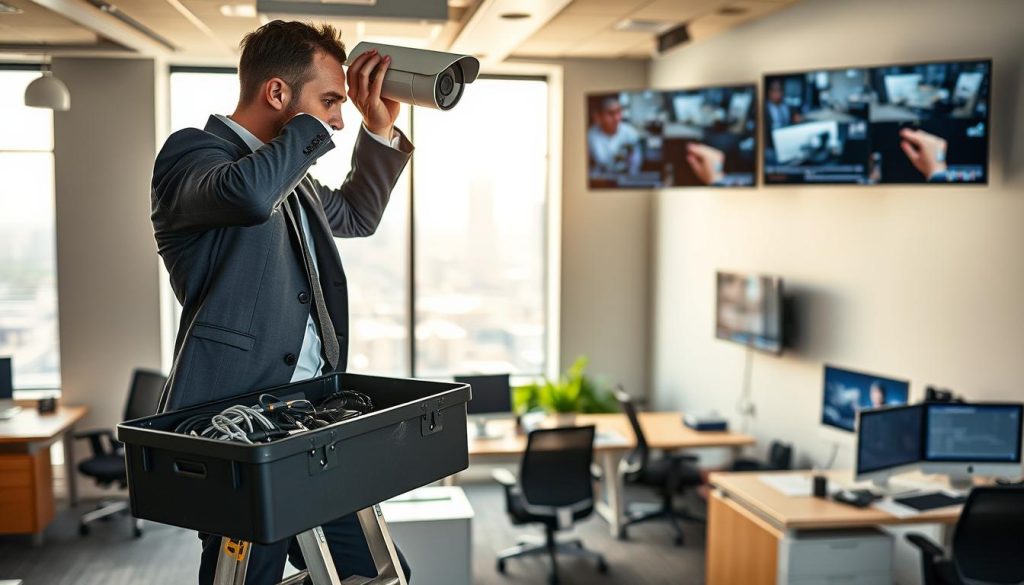
Embarking on a path in the security sector often begins with one core question: What qualifications do I need to be a CCTV installer? This guide provides a definitive answer.
Singapore’s robust security industry has a growing demand for skilled professionals. This article serves as your practical, how-to manual for entering this technical field.
The pathway blends formal education with hands-on technical skills. Understanding local licensing requirements and obtaining industry-recognized certifications are crucial steps.
Mastering Singapore’s regulations, like those from IMDA and the PDPA, sets competent cctv installation experts apart. Government initiatives like SkillsFuture funding make professional training highly accessible.
This career offers stability and clear progression for dedicated individuals. For a detailed roadmap to becoming a qualified CCTV, our comprehensive guide lays out every step.
Key Takeaways
- Singapore’s security industry is actively seeking skilled CCTV installation professionals.
- Success requires a mix of formal education and practical, hands-on technical skills.
- Mandatory licensing and industry certifications are non-negotiable requirements.
- Local regulations, including IMDA and PDPA rules, are critical knowledge areas.
- SkillsFuture funding can significantly reduce the cost of professional training.
- A career in this field is viewed as stable with well-defined advancement routes.
Understanding the Vital Role of a CCTV Installation Technician
Contrary to popular belief, the role of a surveillance systems expert involves intricate planning and technical integration. This position is a cornerstone of modern physical security.
A professional in this job ensures people and property remain safe. Their work requires a deep understanding of both technology and client needs.
More Than Just Mounting Cameras: A Systems Approach
The role cctv professionals play is fundamentally consultative. It begins with a detailed site survey to identify security gaps.
Technicians then design a complete security systems blueprint. This plan optimizes camera placement for maximum coverage and deterrence.
Integration is a key part of the systems approach. Modern surveillance systems often link with access control and alarm panels.
This creates a unified defense network. The installer acts as an integrator, making different technologies work together seamlessly.
“A great technician doesn’t just sell cameras; they sell peace of mind through a reliable, integrated solution.”
Core Responsibilities: From Assessment to Aftercare
The workflow for a security installation project follows a clear, professional sequence. It starts with a client consultation to define specific needs and budget.
Next comes the physical installation of hardware. This includes running cables, mounting devices, and managing power sources.
Network setup and software configuration bring the system to life. The technician programs recording schedules, sets up remote viewing, and performs rigorous testing.
Client training is a critical final step. A competent cctv installer ensures users know how to operate their new surveillance systems effectively.
Aftercare support cements the ongoing relationship. Nearly half of all positions require scheduled maintenance and system updates.
This turns the technician into a trusted, long-term advisor in the security industry. Their role is truly from assessment to aftercare.
What Qualifications Do I Need to Be a CCTV Installer? Breaking Down the Essentials
The journey to becoming a skilled surveillance systems expert is built upon a clear set of foundational qualifications. These are the essential building blocks every aspiring technician must secure.
This path combines mandatory baseline education with targeted, specialized training. Together, they create the knowledge base required for competent work in the security field.
The Non-Negotiable Foundation: High School Diploma or Equivalent
A high school diploma or its recognized equivalent is the absolute minimum entry requirement. In Singapore, this typically means GCE ‘N’ or ‘O’ Level certificates.
Employers and reputable training providers will not consider candidates without this baseline. It demonstrates fundamental literacy, numeracy, and the ability to complete a structured program.
Subjects like mathematics and physics are particularly valuable. They provide the crucial foundation for understanding electrical circuits, power calculations, and basic system design logic.
This school diploma equivalent is more than just a piece of paper. It signals readiness to absorb the complex technical knowledge involved in modern cctv installation.
Specialized Education: Vocational Training and College Courses
After meeting the basic requirement, specialized post-secondary education separates prepared candidates from the rest. This is where practical skills and deeper theory merge.
Vocational training pathways are highly effective. Institutes of Technical Education (ITE) offer certifications specifically in security technology.
Polytechnic diplomas in electronics or electrical engineering provide a strong, broad foundation. Private academies offer focused courses on surveillance systems.
One highly regarded program is the Level 3 Diploma in Electronic Fire and Security Systems. This qualification covers integrated security principles, including comprehensive cctv modules.
College courses in electronic engineering or information technology offer significant advantages. They deliver deeper theoretical knowledge beneficial for complex system integration and network configuration.
The value of this specialized education extends far beyond a certificate. It builds a robust understanding of the core principles behind the technology.
This knowledge is critical for troubleshooting, adapting to new products, and designing effective solutions. It directly fuels the technical competencies needed for superior on-the-job performance.
“A strong educational foundation turns a technician from a follower of instructions into a solver of problems.”
Whether through hands-on vocational training or theory-rich college courses, this stage prepares you for the next step: mastering the practical skill set.
Building Your Skill Set: Technical Competencies for Success
While education provides the theory, real-world competency is forged through a dedicated set of hands-on technical skills. This segment details the core proficiencies that transform knowledge into reliable, functioning security systems.
Mastery here separates a novice from a trusted expert. It directly answers the need for proficient cctv professionals in the market.
Electrical Wiring and Power Management Fundamentals
Every reliable surveillance system starts with safe and stable power. Installers must understand voltage requirements, cable selection, and proper routing.
Choosing between coaxial and network cables is a fundamental decision. Correct termination prevents signal loss and equipment damage.
Using tools like multimeters for diagnostics is a core practical skill. Compliance with Singapore’s PSB standards for all electrical work is non-negotiable for safety and legality.
Networking and IP Configuration for Modern Systems
The industry has decisively shifted to IP-based surveillance. This demands networking knowledge beyond basic connectivity.
Technicians calculate bandwidth needs and configure Power over Ethernet (PoE) switches. Setting static IP addresses and configuring for remote access are daily tasks.
Implementing basic cybersecurity measures, like changing default passwords, is now part of the installation process. Troubleshooting IP conflicts or network downtime quickly is a highly valued ability.
Expertise with Cameras, DVRs, NVRs, and System Integration
Choosing the right camera for the job is an art. Dome, bullet, and PTZ models each serve specific applications.
Understanding lens specifications and infrared illumination ensures clear footage day and night. This knowledge is critical for effective cctv installation.
Recording hardware, like DVRs and NVRs, must be set up for optimal storage and retrieval. Configuring motion detection and retention schedules maximizes efficiency.
True expertise lies in system integration. A modern security system often combines CCTV with access control and alarm panels.
“The best installers don’t see cameras and alarms as separate items. They design a single, intelligent surveillance ecosystem.”
This creates a unified environment, a principle shared with advanced fire security systems. These skills are not static.
Continuous learning is required to handle 4K resolution, AI analytics, and cloud solutions. The ability to troubleshoot poor image quality or signal loss remains a key outcome of this mastery.
Advancing to specialist certifications often builds directly upon this foundational technical skillset.
The Critical Importance of Hands-On Experience
Beyond classrooms and certifications, the mastery of CCTV installation is ultimately proven on the job site through direct, practical application. Real-world hands-on experience is the irreplaceable component that transforms theoretical knowledge into professional capability.
This practical immersion builds the confidence and judgment that theory alone cannot provide. For professionals in this field, it is the final and most critical phase of training.
Apprenticeships: Earning While You Learn
Structured apprenticeship programs offer a powerful launchpad. In Singapore, these are often facilitated by trade associations or established security companies.
They combine paid work with guided learning. This model allows you to earn a salary while building your skills under the watchful eye of a mentor.
The benefits are substantial. Apprentices gain direct mentorship from seasoned installers.
They learn daily workflows, client interactions, and on-site problem-solving. Early networking within the industry is another key advantage.
These programs provide a safe environment to make mistakes and learn. They are a proven route to become cctv technicians who are job-ready from day one.
Entry-Level Roles: Getting Your Foot in the Door
Starting positions like Assistant Installation Technician or Junior Technician offer immediate practical exposure. These roles are the gateway to the job market.
Typical tasks include cable pulling, basic device mounting, and assisting with system configuration. It’s foundational work that builds essential muscle memory.
Salary expectations for these entry-level roles provide realistic context. In Singapore, starting monthly pay often begins around S$2,400.
This compensation reflects the value of the experience gained. Every site visit adds to your practical knowledge base.
“Starting as an assistant teaches you the rhythm and realities of the job. It’s where textbook diagrams meet actual walls and conduits.”
Developing Sharp Troubleshooting and Problem-Solving Abilities
Hands-on work uniquely cultivates a diagnostic mindset. Technicians learn to quickly identify and resolve system faults under time pressure.
Common issues include connectivity problems, camera malfunctions, and WiFi interference. Solving these on site sharpens critical thinking.
Exposure to diverse sites—residential, commercial, industrial—builds remarkable adaptability. Each environment presents unique challenges and client needs.
This variety is invaluable. It prepares professionals for almost any installation scenario they may encounter.
Data underscores this value. Over 90% of employers in the security sector prioritize hands-on skills when hiring.
Graduates from intensive practical courses, like the CCISS program, see high job placement rates. Their experience makes them immediately productive.
This practical competence is also vital for related fields like fire security systems integration. The problem-solving skills are directly transferable.
Ultimately, this experience defines a competent cctv installer. It turns knowledge into reliable, on-demand performance for clients.
Navigating Licensing and Legal Requirements in Singapore
Operating legally as a surveillance technician in Singapore demands strict adherence to a defined regulatory landscape. This framework protects client privacy and ensures all work meets national standards. For professionals, it is the bedrock of trustworthy operation in the security industry.
Mastering these rules is non-negotiable. It transforms a skilled technician into a compliant and reputable service provider.
Overview of IMDA Standards and Regional Licensing Protocols
The Infocomm Media Development Authority (IMDA) sets the technical standards for cctv installation. Their guidelines ensure equipment reliability and system interoperability across Singapore.
Compliance means using approved devices and following proper installation methods. This guarantees surveillance networks function correctly and integrate with other security technologies.
Licensing requirements for installers can vary. They often involve a formal registration process with relevant trade bodies.
- Background checks are common to ensure the integrity of personnel handling sensitive security systems.
- Proof of adequate insurance coverage is typically mandatory for legal operation and client protection.
Always verify the current regulations directly with authorities. Rules in the security field can be updated to address new technologies.
Ensuring Compliance with the PDPA (Personal Data Protection Act)
Singapore’s Personal Data Protection Act (PDPA) critically governs all surveillance activities. It dictates how footage is collected, stored, accessed, and used.
Installers have a direct responsibility under this law. They must design systems that respect privacy boundaries from the start.
Key PDPA principles for cctv installation include purpose limitation and data security. Cameras should only monitor necessary areas, not private spaces.
Secure data handling is essential. This involves encrypting stored footage and implementing strict access controls.
Where required, individuals must be informed about the presence of surveillance. Clear signage is a standard practice for compliance.
“An installer’s design choices can either create a privacy liability or a compliant solution. Understanding the PDPA is not just legal—it’s ethical craftsmanship.”
Adhering to these laws is a core component of professional ethics. It directly manages an installer’s legal liability.
Failure to comply carries serious penalties. Both the technician and their client can face significant fines and legal action.
In this industry, knowledge of IMDA standards and the PDPA is as vital as any technical skill. It defines a truly professional service.
Gaining Credibility: Key Certification Programs for Career Advancement
Earning the right credentials is a strategic move for any surveillance technician aiming to stand out. In a crowded industry, these certifications validate your skills and signal a serious commitment to excellence.
They are the definitive proof of competency that employers and clients look for. Pursuing them is a direct investment in your long-term career cctv trajectory.
Industry-Recognized Credentials: From CAT to Advanced CCTV Certifications
Globally recognized programs set a high benchmark for technical knowledge. The Certified Alarm Technician (CAT) Level I is a foundational credential for security systems.
It covers essential installation practices, circuit theory, and basic troubleshooting. Another key program is the Electronic Security Technician Certification.
This focuses on the integration of various electronic security systems. For specialists in video surveillance, advanced certifications are available.
These delve into network video systems, advanced analytics, and system design. They are designed for professionals ready to tackle complex projects.
The examination process for these credentials is rigorous. It typically combines a written test with a practical skills assessment.
“A global certification tells a client you adhere to international best practices, not just local habits.”
Earning such a credential demonstrates a mastery of core principles. It prepares installers for work on sophisticated, integrated surveillance systems.
Local Specialization: The Value of Singapore-Specific Programs
While global certifications are valuable, local programs offer unmatched relevance. In Singapore, the Certificate in CCTV Installation (CCISS) from Eversafe Academy is prominent.
This intensive 16-hour program boasts a high pass rate. Its curriculum is specifically tailored to the Singaporean operational environment.
The training incorporates crucial local regulations from the start. Professionals learn how to design systems that comply with IMDA technical standards.
They also gain a practical understanding of PDPA requirements for data handling. This ensures every installation is legally compliant from day one.
Such local specialization is a powerful advantage. It means a certified technician requires less on-the-job supervision regarding legal matters.
How Certification Boosts Your Job Prospects and Earning Potential
The tangible benefits of certification are clear and significant. Certified cctv installer technicians are often prioritized during hiring.
Employers view the credential as a reduced risk. It validates the individual’s skills independently of their resume.
This validation directly translates into better job prospects. Certified individuals frequently command a salary premium over their non-certified peers.
They also gain access to more complex or sensitive projects. Many government and large-scale commercial tenders explicitly require certified personnel.
Furthermore, most certifications require periodic renewal. This mandates ongoing training and continuing education.
It forces professionals to stay current with evolving technology and standards. This cycle of renewal ensures skills never become obsolete.
View certification not as a final goal, but as a key milestone. It is part of a continuous journey of professional development in a dynamic industry.
Finding the Right Training Program for Your Goals
With numerous courses available, identifying the right fit requires careful evaluation of content, delivery, and value. The ideal program aligns with your career timeline, budget, and preferred learning style.
This choice is a pivotal investment in your future as a security systems technician. A high-quality training course accelerates your readiness for the field.
Evaluating Course Content: Theory, Practical Labs, and Local Regulations
A robust curriculum is your first checkpoint. Look for a balanced mix of foundational theory and intensive hands-on application.
The syllabus should cover core electronics, networking principles, hardware cctv installation, and software configuration. Crucially, it must include Singapore’s legal requirements, like IMDA standards and PDPA rules.
This regulatory knowledge is as vital as any technical skill. It ensures your work is compliant from day one.
The reputation of the provider and instructor qualifications are key metrics. Graduate success rates offer concrete proof of program effectiveness.
For example, Eversafe Academy’s Certificate in CCTV Installation (CCISS) reports an 89% pass rate. This indicates a well-structured course that prepares professionals thoroughly.
Hands-on labs with real equipment are non-negotiable. They transform theory into the practical skills employers demand.
“Time in a lab configuring real cameras and NVRs is worth hours of lecture. It’s where confidence is built.”
Whether through focused vocational training or broader college courses, ensure the program delivers this essential hands-on component. This experience is also valuable for related security work, like integrating fire security systems.
Leveraging SkillsFuture and UTAP Funding to Reduce Costs
Singapore’s strong support for skills development makes professional training highly accessible. Government and union subsidies can dramatically lower your out-of-pocket expense.
The SkillsFuture scheme is available to eligible Singaporeans and Permanent Residents. You can use your credits to offset a significant portion of course fees.
For a typical cctv installation course, this subsidy can reduce the net fee to approximately S$97.50. This turns a major investment into a very manageable cost.
NTUC union members have an additional avenue for support. The Union Training Assistance Programme (UTAP) provides top-up funding.
UTAP can further minimize your expenses on approved courses. It’s designed to encourage continuous learning among workers.
View these subsidies as a direct investment in your capabilities. They lower the barrier to acquiring the skills needed to advance as a security professional.
Always check the latest eligibility criteria and claim procedures directly. Taking full advantage of this support is a smart financial step in your career planning.
Essential Tools and Equipment for Professional Installation
The quality of a surveillance installation is directly tied to the tools and software used to implement it. A well-equipped technician works efficiently, safely, and delivers results that meet industry standards.
This inventory covers both physical hardware and digital utilities. Mastery of both domains is a core part of the required technical skills.
Hardware Toolkit: Drills, Testers, and Crimping Tools
A professional’s hardware kit is built for reliability and speed. Each tool serves a specific purpose in the security installation process.
Essential power tools include a cordless drill with assorted bits for mounting brackets and conduits. A sturdy ladder is non-negotiable for accessing installation points.
For cable work, you need fish tapes for routing, wire strippers, and precision crimping tools. These are used for terminating both BNC and RJ45 connectors.
Diagnostic equipment is critical for quality assurance. A reliable multimeter checks voltage and continuity.
A dedicated cable tester verifies network or coaxial connections before system power-up. This prevents frustrating callbacks.
- Cordless Drill & Bits: For secure mounting on various surfaces.
- Ladder & Safety Gear: Ensures safe access at height.
- Fish Tapes & Rods: Essential for routing cables through walls and ceilings.
- Wire Strippers & Crimpers: For perfect cable terminations every time.
- Multimeter & Cable Tester: Diagnose power and signal issues on the spot.
Tool quality and organization directly impact on-site efficiency. A well-maintained kit reflects a prepared and professional technician.
It also enhances safety, ensuring the right tool is used for the job. This prevents damage to property and equipment.
Software and Configuration Utilities
Modern systems require digital tools to configure and optimize them. This software turns hardware into an intelligent security network.
Most IP cameras are configured via a web browser or manufacturer-specific applications. These utilities set resolution, frame rate, and motion detection zones.
Network discovery tools help locate all connected devices on a client’s network. They are vital for assigning correct IP addresses and troubleshooting connectivity.
Setting up DVRs and NVRs involves their proprietary software. Here, you configure recording schedules, storage allocation, and user permissions.
“The software is where the installation becomes intelligent. It’s the difference between a camera that records and a system that informs.”
Basic familiarity with Video Management Software (VMS) platforms is a valuable skillset. For larger cctv installation projects, VMS unifies feeds from hundreds of cameras.
An installer must also intimately understand the equipment itself. This includes different camera housings for indoor or outdoor use.
Knowledge of lenses, Power over Ethernet (PoE) injectors, switches, and storage devices is crucial. Selecting the right components is part of the design skills.
Investing in reliable tools and learning key software is an investment in your own productivity. For professionals, it builds a reputation for thorough, competent work.
The ability to select the perfect tool for each task marks an experienced technician. It ensures every cctv installation project meets the highest standards of performance.
Analyzing the Market Demand for CCTV Installers in Singapore
The market outlook for CCTV installation professionals in Singapore is exceptionally positive, driven by multiple economic and social factors. A heightened focus on safety and asset protection fuels consistent demand across all sectors.
This growth is not a temporary spike. It is built on technological evolution and regulatory requirements that ensure long-term career security for skilled technicians.
Opportunities for installers are widespread. They span private homes, bustling retail spaces, corporate towers, and large industrial complexes.
Each environment presents unique challenges and system requirements. This variety ensures a dynamic and engaging job landscape for professionals in this field.
Strong Job Prospects Across Residential, Commercial, and Industrial Sectors
Several powerful forces are driving job prospects upward. Rising public awareness about security is a primary catalyst.
Homeowners and businesses are more invested in proactive protection. Rapid technological advancement is another key driver.
The shift to IP-based systems, AI analytics, and cloud storage requires new skills. Older analog systems across the island need upgrading to modern standards.
Certain businesses also face stricter regulatory mandates for surveillance. This creates a steady stream of compliance-driven projects.
The residential sector is a major source of work. Condominiums and landed properties seek integrated solutions for perimeter and common area monitoring.
Commercial demand is equally robust. Offices, banks, and retail stores require systems for loss prevention and operational oversight.
Industrial and logistics hubs represent high-growth areas. Warehouses, factories, and ports need extensive coverage for safety and inventory control.
Government initiatives amplify this demand. Singapore’s Smart Nation projects and infrastructure developments incorporate advanced surveillance.
These public-sector contracts often require technically adept installers. They contribute significantly to the overall health of the security industry.
Realistic Salary Expectations for Entry-Level to Experienced Technicians
Financial rewards in this career are transparent and tied directly to skill and experience. Salary bands provide a clear roadmap for progression.
Entry-level technicians can expect a starting monthly salary between S$2,000 and S$2,500. This role focuses on assisting with installations and learning core technical skills.
With two to five years of experience, mid-level professionals see earnings rise. Salaries typically range from S$2,500 to S$4,000 per month.
At this stage, technicians often lead standard installations independently. They may also handle basic professional CCTV installation and repair services.
Experienced technicians with specialized skills command higher compensation. Those with expertise in network security, analytics, or complex system design can earn over S$4,000 monthly.
Several factors can boost earning potential beyond these averages. Obtaining advanced certifications is one of the most effective methods.
Building a strong portfolio of completed projects also adds value. Specializing in a high-demand niche, like integrating surveillance with other building systems, creates further advantage.
“This isn’t just a job; it’s a trade. The demand for skilled hands and smart design ensures it remains a stable, well-compensated career cctv path for years to come.”
The progression from junior to senior roles is well-defined. Each step brings increased responsibility and corresponding financial reward.
For dedicated individuals, the security industry in Singapore offers a viable and financially rewarding career. The combination of strong market demand and clear salary progression makes it a compelling choice.
The Necessity of Soft Skills in Security Installation
The blueprint for a successful career in this field includes a vital component often overlooked: a robust set of soft skills. Technical knowledge gets the system on the wall, but interpersonal abilities ensure it meets the client’s true needs and functions smoothly within their environment.
These human-centric skills complete the understanding role of a modern technician. They transform a service call into a trusted partnership.
Client Communication and Needs Assessment
Every project begins with a conversation. A technician’s ability to listen actively and ask probing questions is paramount. This initial dialogue defines the entire security installation scope.
Clients often explain problems in non-technical terms. The installer must translate these concerns into a functional surveillance system design. This requires explaining complex options in clear, benefit-focused language.
Managing expectations about cost, timeline, and system capabilities prevents frustration later. Professionalism, punctuality, and respect for the client’s property are non-negotiable. These behaviors build immediate trust and set the tone for the entire job.
“The best professionals don’t just install cameras; they install confidence. That starts with how they communicate.”
Clear documentation of the agreed plan is another key practical skill. It serves as a reference point for both parties and for future maintenance. This thorough approach is what clients remember and recommend.
Team Collaboration and Adaptability on Site
Installers rarely work in isolation. A typical site involves coordination with electricians, builders, and IT personnel. Effective collaboration keeps the project on schedule and meets all safety protocols.
The role cctv technicians play on-site is dynamic. Unforeseen obstacles like hidden conduits or structural issues are common. Adaptability and creative problem-solving under pressure are essential skills.
Patience and a positive attitude turn challenges into opportunities to demonstrate expertise. They also foster good relationships with other trades, which can lead to future referrals.
Finally, the ability to become cctv experts who clients rely on hinges on this service mindset. Combining technical prowess with excellent teamwork and communication leads directly to repeat business.
It builds a strong professional reputation that is invaluable for long-term growth in the security field. For dedicated professionals, mastering these soft skills is the ultimate career investment.
Staying Ahead: Continuing Education and Technology Trends
Technological innovation relentlessly reshapes the capabilities and expectations of modern security systems. Formal training provides the launchpad, but a successful career demands a commitment to lifelong learning.
The rapid evolution of video surveillance means skills can become outdated quickly. For dedicated professionals, staying current is the key to maintaining relevance and value in this dynamic industry.
Keeping Pace with AI, Analytics, and Cloud-Based Solutions
Modern surveillance is defined by intelligent software and remote management. Artificial intelligence now powers advanced object detection, distinguishing people from vehicles with high accuracy.
Behavioral analytics software can identify unusual loitering or crowd formation. These tools transform cameras from passive recording devices into proactive security sentinels.
Cloud-based Video Surveillance as a Service (VSaaS) is another major shift. It moves storage and management off-site, offering scalability and remote access from any device.
This evolution changes what clients expect from their security systems. They now seek solutions that provide actionable insights, not just video archives.
These advanced systems also demand stronger cybersecurity knowledge. Protecting networked cameras and data streams from intrusion is now a core technical skill.
Installers must understand network segmentation and encryption. This knowledge ensures the surveillance systems they install are both powerful and secure.
Workshops, Seminars, and Advanced Coursework
Engaging in continuous learning requires a practical strategy. Industry trade shows, like Security Asia in Singapore, are excellent for seeing new technology firsthand.
Manufacturer training sessions provide deep dives into specific product lines. Online webinars offer flexible ways to learn about emerging trends from experts.
Pursuing advanced certifications provides a structured path forward. Specialized credentials in network security for IoT devices or video analytics are highly valuable.
This proactive approach to education is a direct investment in your career. It prevents your technical skills from becoming obsolete.
“In this field, your education is never complete. The day you stop learning is the day you start becoming irrelevant.”
This commitment also opens doors to higher-value roles. Consultants and system designers are always those who understand the latest surveillance technologies.
Many training providers and industry associations in Singapore offer regular update courses. These sessions are tailored for working professionals who need to stay sharp.
Adopting the mindset of a perpetual student is essential. It is the only way to ensure a long and prosperous career in the fast-moving security industry.
Pathways to Career Progression and Specialization
The security industry in Singapore provides multiple specialization routes for experienced CCTV installers. Entry-level installation is just the first step on a ladder with many rungs.
Long-term growth requires deliberate planning and skill expansion. For dedicated professionals, this field offers diverse and rewarding endpoints.
From Technician to Supervisor or Project Manager
Advancement often follows a natural progression into leadership. Technicians with proven reliability and deep technical knowledge are prime candidates.
Supervisory roles involve managing a team of installers. This includes scheduling daily tasks, ensuring quality control, and liaising directly with clients.
Project management takes this further. It requires budgeting for materials, coordinating timelines with other trades, and overseeing multiple installations simultaneously.

The skills needed for this transition go beyond wiring and configuration. Strong organizational and communication abilities become critical.
People management and basic business acumen are also essential. Some companies may require additional qualifications in leadership or administration.
“Moving up means shifting from managing cables to managing people and projects. Your technical expertise becomes the foundation for your team’s success.”
This path significantly enhances job prospects and earning potential. It represents a core career security milestone within the industry.
Exploring Roles in Security Consulting and System Design
Another rewarding pathway moves away from hands-on work. Experienced professionals can transition into consulting or design.
Security consultants assess client risks and vulnerabilities. They recommend comprehensive solutions that may integrate video surveillance with other systems.
System designers create the technical blueprints for these solutions. They specify camera types, network architecture, and storage for complex surveillance systems.
This work demands a high-level understanding of integration and emerging tech. It often involves creating proposals for large commercial or government tenders.
Alternative progression routes include sales engineering or technical training. Some seasoned technicians even start their own installation businesses.
Progression is never automatic. It requires seeking mentorship and voluntarily taking on more responsibility.
Viewing initial years as a foundational period is key. Building a reputation for excellence opens these advanced doors.
The ultimate message is clear. A career cctv path offers structured growth for those who are proactive in their development.
Taking the First Step: Launching Your CCTV Installation Career
To secure your first role, you must effectively translate your training and skills into a tangible value proposition for employers. This final section provides your concrete, immediate action plan. It turns knowledge into a successful job search within Singapore’s dynamic security field.
Crafting a Winning Resume and Portfolio
Your resume is your professional introduction. Start by clearly listing your foundational high school diploma or recognized school diploma equivalent.
Next, detail your specialized education. Include relevant college courses or vocational training programs in electronics or security technology. List every industry certification you have earned.
For the experience section, be creative. Highlight any hands-on experience, even from training labs or personal projects. Describe specific technical skills like cable termination or network configuration.
Do not forget soft skills. Emphasize client communication, problem-solving, and teamwork. These are critical requirements for any cctv installer role.
A professional portfolio makes your application stand out. With client permission, include photos of neat cable management and clean device installations.
You can also add system design diagrams or brief case studies. Describe a time you successfully troubleshooted a complex security system issue.
Always respect client confidentiality. Anonymize any sensitive information in your portfolio. This demonstrates professional ethics alongside your technical ability.
Effective Networking within Singapore’s Security Industry
Strong professional connections are invaluable. They provide insider job leads and practical career advice. Active networking accelerates your goal to become cctv installation expert.
Join the Security Association Singapore (SAS). Attend their seminars, workshops, and annual trade shows like Security Asia. These events are hubs for meeting established professionals and hiring managers.
Optimize your LinkedIn profile. Treat it as a dynamic online resume. Showcase your certifications, skills, and completed projects.
Engage with content posted by security companies and industry leaders. Proactively reach out to experienced installers for brief informational interviews.
“Your network is your net worth in this industry. The person you meet at an event today could be your team leader or client tomorrow.”
Seek out mentorship opportunities. Many seasoned professionals are willing to offer guidance. Ask about shadowing experiences to gain deeper hands-on experience.
Prepare thoroughly for interviews. Be ready to discuss technical scenarios. Explain how you would design a basic security system or resolve a camera connectivity issue.
Demonstrate your problem-solving thinking process. Employers want to see how you approach challenges, not just recite textbook answers.
Your networking action list should include:
- Join and actively participate in the Security Association Singapore (SAS).
- Create and maintain a polished, keyword-rich LinkedIn profile.
- Attend at least two industry events or trade shows per quarter.
- Request one informational interview per month with an established technician.
- Follow up with new contacts promptly and professionally.
These steps create momentum. They move you from learning about the requirements to meeting the people who can offer you a job. This proactive approach is your final, essential training module.
Charting Your Path to a Successful CCTV Installation Career
A successful career in CCTV installation is built on a foundation of verified skills, legal compliance, and continuous adaptation. Start with your high school diploma and build through specialized training and hands-on experience.
Mastering local standards and earning key certifications solidifies your credibility. This prepares you for strong job prospects in Singapore’s growing security industry.
Your path forward is clear. Research accredited training programs, leverage SkillsFuture funding, and begin networking today. Take that first step to secure your future in this dynamic field.