
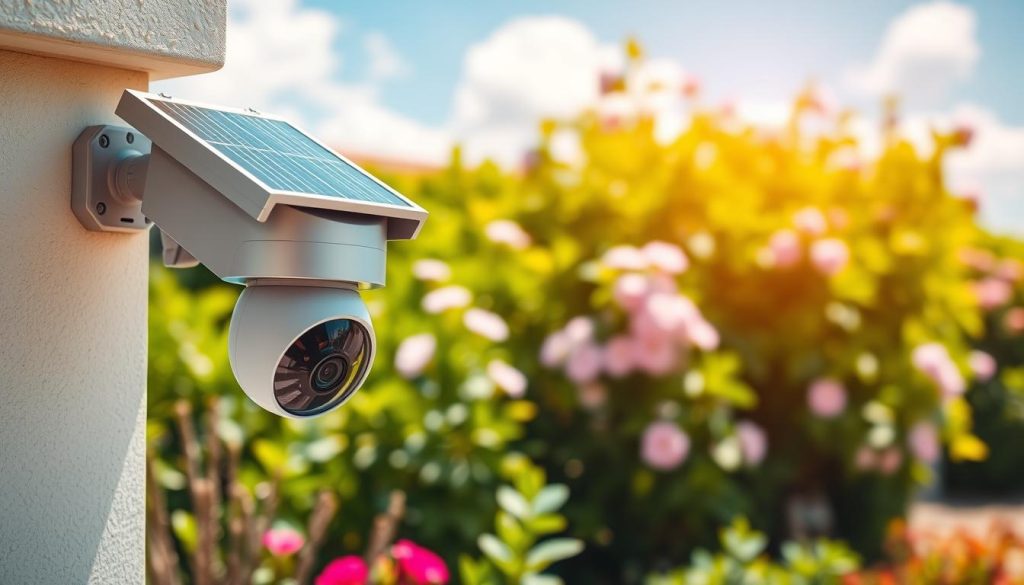
Homeowners in Singapore are increasingly looking for smart ways to protect their property. A popular trend is using wireless systems powered by the sun for constant outdoor monitoring. This approach offers a sustainable and efficient security solution.
These innovative devices combine renewable energy with cutting-edge technology. The result is a reliable, wire-free monitoring setup that is easy to install. You get strong protection without the hassle of complicated wiring or high electricity bills.
The market offers options for every budget, with prices ranging from under $60 to around $800. Premium models like the Reolink Argus 3 Pro and EufyCam 3 are highly rated. They have an average score of 4.5 out of 5 from hundreds of verified buyers.
This guide explores the best units available for the Singapore market in 2024. We consider their suitability for our tropical weather and diverse housing, from HDB flats to landed homes. Our goal is to help you make a confident, informed purchase decision.
Key Takeaways
- Demand for sustainable, wire-free home security is growing rapidly in Singapore.
- These systems merge renewable solar power with advanced wireless technology for reliable operation.
- A wide price range makes this technology accessible for different budgets.
- Top-rated models receive excellent feedback for performance and reliability.
- Products are designed to perform well in Singapore’s humid, rainy climate.
- This comparison will help you identify the best features and value for your needs.
- The ultimate benefit is achieving robust outdoor surveillance with minimal maintenance.
Why Solar-Powered Security is Ideal for Singaporean Homes
For property owners across the island, from bustling HDB estates to serene landed homes, a self-sufficient approach to safety is now a practical reality.
Singapore’s tropical climate provides a consistent, powerful energy source. This abundant sunlight directly fuels the panels, maximizing their efficiency for reliable, day-to-day operation.
The financial benefits are compelling. You eliminate expensive electrical wiring and reduce monthly utility costs. This makes the initial investment highly valuable over time.
Simple upkeep, like wiping the panel clean, can improve performance by up to 25%. With an average maintenance cycle of about three years, it’s a hassle-free security system.
Choosing this technology supports sustainable living goals. It reduces your carbon footprint by using clean, renewable power. You contribute to a greener environment while protecting your home.
Installation is straightforward and versatile. The lack of complex wiring makes it perfect for various locations.
- HDB exterior walls and condo corridors where drilling is restricted.
- Expansive gardens and gates of landed properties.
Reliability during a power outage is a major advantage. The unit continues monitoring without interruption. This ensures your home security is always active, a key concern for many.
There are also aesthetic and practical perks. No unsightly cables mean a cleaner look and more discreet placement. You can easily reposition the device as your needs evolve.
This combination of environmental, economic, and practical benefits makes solar-powered security a uniquely suitable choice. It delivers robust, wireless outdoor security tailored for life in Singapore.
Key Features to Look for in a Solar CCTV Camera
With numerous options available, knowing which capabilities matter most ensures your investment delivers maximum security. Not all devices are created equal. The right combination of specs turns a simple monitor into a powerful guardian.
Focus on these core areas to find a model that performs reliably in Singapore’s unique environment.
High-Resolution Video and Night Vision Capabilities
Clarity is everything. For identifying critical details like a face or a license plate, 2K or 4K resolution is essential. Standard 1080p video can miss fine particulars.
After dark, night vision takes over. Standard infrared vision provides monochrome images. Advanced color night vision uses different technology to deliver identifiable details in low light.
This feature provides more useful information for security camera footage. You can distinguish clothing colors or vehicle paint.
Weatherproof Durability for Tropical Climates
Singapore’s heavy rain and high humidity demand a rugged build. Look for a high IP rating like IP66 or IP67. This certifies protection against powerful water jets and dust ingress.
The unit should operate in temperatures from -10°C to 55°C. Military-grade corrosion resistance is crucial for longevity. A well-sealed design also prevents internal condensation.
This ensures your outdoor security camera survives the elements year-round.
Battery Life and Solar Charging Efficiency
A large battery capacity, often around 10,000mAh, translates to weeks of operation. The efficiency of the solar panel determines how quickly it recharges.
An efficient panel can top up the battery in a few hours of good sunlight. Low-power components inside the device are key for extending time between charges.
This synergy creates a truly wireless system that rarely needs manual intervention.
Smart Detection and Alert Systems
Basic motion detection triggers alerts for any movement, including leaves or shadows. This leads to false alarms.
Advanced AI-powered detection is smarter. It can distinguish between people, vehicles, and animals. Human detection significantly reduces unnecessary notifications.
Instant alerts are sent via app notifications or email. Many models also include two-way audio. This allows for real-time communication through the security camera.
Balancing these features with your specific needs and budget is the final step. A device excelling in color night vision and AI detection might be perfect for a high-traffic area. For a simpler setup, robust weatherproofing and reliable wifi connectivity may be the priority.
The goal is a seamless, wireless outdoor solution that provides peace of mind with minimal fuss.
How Solar-Powered Wireless CCTV Systems Work
Understanding the mechanics behind these autonomous sentinels reveals a clever dance between renewable energy and digital communication. The entire setup forms a closed-loop, self-sustaining ecosystem.
Four primary components work together seamlessly:
- The Solar Panel: This is the energy harvester, typically equipped with photovoltaic cells.
- The Rechargeable Battery Pack: Acts as the power bank, storing electricity for day and night use.
- The Camera Unit: The brain and eyes of the operation, containing lenses, sensors, and a processor.
- The Base Station or Hub (often included): A central indoor device that manages data storage and strengthens network connections.
Energy flow begins with sunlight. Photovoltaic cells in the solar panel convert rays into direct current (DC) electricity. This current then feeds into the integrated battery for storage.
An efficient panel can achieve a full charge in roughly eight hours of good sunlight. High-capacity batteries, like those in Hikvision’s systems, can then support up to seven days of continuous operation without any sun.
The security camera draws its needed power from this battery. Modern units use efficient chipsets and sensors designed for minimal consumption. This smart power management is key for longevity.
For data transmission, most devices connect to your home Wi-Fi network. Some professional models offer a 4G SIM card option for areas with poor internet. This wireless security link sends live video, recorded clips, and instant alerts to your smartphone.
If a system includes a base station, it plays a dual role. It provides local storage for footage, often without monthly fees. It also acts as a signal booster, ensuring a strong connection between outdoor units and your home network.
The cycle is beautifully simple: sun charges the battery, the battery powers the camera, and the device sends data wirelessly. This creates a reliable, solar wireless monitoring loop with minimal upkeep. For a detailed look at specific models that use this technology, explore our guide to solar wireless security cameras for outdoor.
Top 5 Solar-Powered CCTV Cameras for Singapore in 2024
To simplify your decision, we’ve evaluated and ranked the five best-performing units available locally. Each model brings a unique set of strengths to the table.
Whether you prioritize AI smarts, ecosystem integration, or pure value, one of these devices will fit your home security plan.
Reolink Argus 3 Pro: The All-Rounder
This model is a fantastic starting point for most homeowners. It delivers reliable 1080p HD video that captures clear details.
The robust build handles Singapore’s weather well. Its solar charging is consistent, keeping the unit powered with minimal fuss.
Users praise the intuitive mobile app for live viewing and managing alerts. It’s a versatile, dependable choice for general wireless outdoor monitoring.
Standout Feature: Excellent balance of video quality, durability, and user-friendly app.
EufyCam 3: AI-Powered and Subscription-Free
Eufy’s flagship eliminates the annoyance of false alarms. Its local AI processor distinguishes people, pets, and vehicles directly on the device.
This means you only get notified about what truly matters. The system includes a base station with built-in storage, so there are no monthly fees.
You get complete control over your footage and privacy. It’s ideal for those seeking a smart, self-contained security camera system.
Standout Feature: Advanced local AI detection and full local storage with zero ongoing costs.
Ring Stick Up Cam Solar: Amazon Ecosystem Favorite
Priced at an accessible point, this device is perfect for users deep in the Amazon ecosystem. It connects seamlessly with Alexa for voice commands and displays.
You can view feeds on Echo Show devices or through the robust Ring app. The price makes it an easy addition to expand existing Ring security cameras.
Installation is straightforward, offering reliable wireless outdoor coverage for decks, driveways, or gates.
Standout Feature: Deep integration with Amazon Alexa and the Ring platform at a competitive cost.
Hikvision Solar-Powered Series: For Professional-Grade Needs
Designed for demanding applications, this series suits larger landed properties or small businesses. Its modular design and IP67 rating ensure rugged durability.
A key advantage is its exceptional battery performance, offering up to seven days of operation without sun. The net weight of 14kg indicates a substantial, secure build.
For areas with poor wifi, optional 4G connectivity provides a reliable link. This is a professional surveillance camera solution for critical sites.
Standout Feature: Industrial-grade build quality, long battery backup, and optional 4G for remote locations.
Xiaomi Solar Outdoor Camera BW400 Pro: Budget-Friendly Smart Choice
This model is the value champion. It packs a 10,000mAh battery for an estimated five-month life and features a sharp 2.5K resolution.
With an IP66 weatherproof rating, it stands up to heavy rain. Smart features like person detection and two-way audio are included.
You get high-end specs at a very attractive price. It’s the best outdoor camera for budget-conscious buyers who don’t want to compromise on quality.
Standout Feature: Exceptional battery life and high-resolution video at a remarkably low cost.
Here’s a quick guide to match a model with your primary need:
- Reolink Argus 3 Pro: Best for a reliable, no-fuss first-time setup.
- EufyCam 3: Best for AI intelligence and avoiding subscription fees.
- Ring Stick Up Cam: Best for existing Amazon/Alexa smart home users.
- Hikvision Series: Best for large properties, businesses, or remote areas.
- Xiaomi BW400 Pro: Best for maximizing features on a tight budget.
Comparing the Top Models: Specifications at a Glance
Specifications form the backbone of any reliable outdoor monitoring solution. This detailed breakdown puts the top five contenders side-by-side.
You can see how they stack up in critical areas like clarity, endurance, and intelligence.
Video Quality and Resolution Comparison
Image clarity is paramount for useful footage. Resolutions among these leading security cameras range from sharp 1080p to ultra-clear 4K.
The field of view also varies, from a standard 130° to a very wide 180° angle. This determines how much area a single unit can cover.
Night vision technology is a key differentiator. Most models use standard infrared for black-and-white images in the dark.
Advanced color night vision is a premium feature. It uses different light technology to deliver identifiable color details after sunset.
- Reolink Argus 3 Pro: 1080p HD, standard infrared night vision.
- EufyCam 3: 4K resolution, color night vision capability.
- Ring Stick Up Cam: 1080p HD, standard infrared vision.
- Hikvision Series: Options up to 4K, with advanced low-light vision.
- Xiaomi BW400 Pro: 2.5K resolution (2560×1440), infrared night vision.
Battery Performance and Solar Charging
Real-world endurance depends on the battery capacity and the efficiency of the solar panel. Estimates range from months to a full year of use.
The Xiaomi model boasts a large 10,000mAh battery. Hikvision’s systems are known for reliable power storage with very low energy consumption.
Several factors affect actual battery life. Frequent motion detection triggers and recording high-quality video drain power faster.
An efficient solar panel can counteract this drain on sunny days. Proper placement of the panel is crucial for consistent charging.
Smart Features and App Integration
Basic motion detection can flood you with false alerts. The best models use AI for smarter detection.
This includes distinguishing between people, vehicles, and animals. Human detection is a common and valuable feature.
Storage options are vital. Eufy offers subscription-free local storage via its hub. Ring and others may have optional cloud plans.
App quality defines the user experience. Smooth live streaming, customizable alerts, and reliable wifi connectivity are essential.
- Top AI Features: EufyCam 3 (local AI for person/vehicle), some Hikvision models (advanced analytics).
- Storage Models: Eufy (local, no fee), Ring (cloud optional), Reolink (supports local microSD).
- App Ecosystems: Ring (Alexa integration), Xiaomi (Mi Home app), Reolink/Eufy (dedicated apps).
Price and Value for Money
The price spectrum is wide, reflecting different feature sets and build quality. You get what you pay for in durability and advanced tech.
The Ring Stick Up Cam starts around $139.99, offering great value for Amazon ecosystem users. Xiaomi’s BW400 Pro is a budget champion with high-end specs.
EufyCam 3 and Reolink Argus 3 Pro sit in a mid-range, offering excellent balance. Hikvision commands a premium price for its professional-grade, rugged surveillance camera systems.
When assessing value, consider your long-term costs. A higher initial price with no monthly fees can beat a cheap device with ongoing subscriptions.
How to prioritize: Focus on video quality and night vision if identification is critical. Prioritize battery and the panel for remote spots. Value smart detection and app alerts for busy areas. Let your security cameras budget guide the final choice among the top-tier cameras.
Choosing the Right Solar CCTV for Your Specific Needs
Beyond general specs, the best choice hinges on your specific property type, connectivity, and coverage needs. A compact unit perfect for a condo corridor might fail on a large, leafy estate.
The ideal setup solves your unique challenges. It provides robust home security without unnecessary complexity or cost.
Best for Urban HDBs and Condos
Space is limited and neighbors are close. Your primary concerns are discreet monitoring and minimizing false alarms from common areas.
Choose a compact, low-profile device. It should blend in and not obstruct walkways. Strong, reliable wifi connectivity is crucial, as the router is usually nearby.
Advanced human-only detection is a must-have feature. This filters out alerts from passing delivery personnel or pets in public corridors.
For these settings, consider models like the Reolink Argus 3 Pro for its balance. The Xiaomi BW400 Pro offers great value in a small form factor.
- Focus on Precision: Prioritize security cameras with AI that distinguishes people from other motion.
- Placement Strategy: Mount the unit high on a wall or door frame to maximize its field of view in a tight space.
- Connectivity Check: Ensure your wifi signal is strong at the intended mount point before final installation.
Best for Landed Properties and Large Gardens
Here, the challenge is covering a wide perimeter. You need to monitor gates, driveways, and garden sheds effectively.
Look for devices with a wide field of view, ideally 140° or more. Pan-and-tilt capabilities (360° pan) allow you to scan a large area remotely with a single unit.
A scalable system that lets you sync multiple security cameras is ideal. This creates a unified surveillance net around your entire property.
Superior weatherproofing (IP66/IP67) is non-negotiable for units placed in gardens. The EufyCam 3 system excels here with its multi-camera setup and local AI.
Hikvision’s professional series is also suited for scalable, perimeter-wide outdoor security.
- Coverage is Key: Opt for wide-angle lenses or motorized units to reduce the total number of devices needed.
- Durability First: The build must withstand constant exposure to tropical sun and heavy rain.
- System Synergy: Choose a brand that allows easy management of several wireless outdoor units from one app.
Best for Remote or Rural Areas
These locations present the toughest tests: weak or no internet, harsh weather, and no easy access for frequent maintenance.
Your top priority is maximum energy independence. Seek the largest battery capacity and most efficient solar powered panel available.
Forget relying solely on wifi. A powered outdoor unit with optional 4G cellular backup, like Hikvision’s models with a SIM card slot, is perfect. It operates completely off-grid.
Rugged, industrial-grade construction is essential to survive in an unsupervised environment for long periods.
Hikvision’s solar-powered series is the standout choice for this scenario, thanks to its 4G option and proven durability.
- Energy Autonomy: Prioritize specs boasting weeks of battery life on a single charge.
- Off-Grid Connectivity: 4G capability is not just an add-on; it’s a core requirement for reliable surveillance.
- Set-and-Forget Design: The system should require minimal interaction, with robust seals against dust and moisture.
Match your property to the solution. Urban dwellers need smart, discreet sentinels. Landed homeowners require wide-coverage systems. For remote sites, off-grid endurance is everything. Review the top models with your specific scenario in mind to find your perfect home security partner.
Professional Installation Tips for Maximum Effectiveness
A successful outdoor surveillance setup depends heavily on proper installation techniques. The right placement and configuration unlock the full potential of your investment.
Following a few professional guidelines ensures your system operates reliably from day one. This saves you time and prevents common performance issues.
These steps help you achieve robust, wireless monitoring with minimal maintenance. They are crucial for maximizing your home security coverage.
Optimal Placement for Solar Panel and Camera
Strategic positioning is the foundation of an effective system. You must consider both energy harvesting and visual coverage.
First, find a spot for the solar panel that receives at least four to six hours of direct sunlight daily. Ensure the panel is completely free from shadows cast by trees or eaves.
For the best angle, position the panel at roughly a 75-degree downward tilt. This optimizes sun exposure throughout the day for maximum charging efficiency.
Mount the main security camera unit at a height of about 2.4 to 2.5 meters. This level deters tampering while effectively capturing facial details.
Keep the lens clean and the panel unobstructed by dirt or leaves. A simple wipe can significantly boost performance.
Ensuring Strong Wi-Fi or 4G Connectivity
A wireless device is only as good as its connection. Weak signals lead to failed recordings and delayed alerts.
Before mounting anything, perform a Wi-Fi signal strength test at the intended location. Use your smartphone or a dedicated app to check the network bars.
If the signal is weak, consider using a Wi-Fi extender or a mesh network system. These devices boost your network’s reach to cover the entire property.
For areas with consistently poor internet, a powered outdoor unit with 4G cellular backup is the ideal solution. Models with a SIM card slot operate completely independently of your home Wi-Fi.
This wifi solar alternative is perfect for remote gates or garden sheds.
Avoiding Common Blind Spots
Effective surveillance means seeing everything that matters. Blind spots create vulnerabilities in your security net.
Start by mapping your property’s key entry points and valuable items. Think about doors, windows, gates, and cars.
Position your devices to cover these zones with overlapping fields of view. A good rule is to use a 3:1 coverage ratio for important areas.
Never point a lens directly at a bright light source, like the sun or a porch lamp. This can wash out the video and damage the vision sensor over time.
Use the motion detection zone settings in the app. Focus the detection area on pathways, not swaying bushes, to reduce false alerts.
For a smooth DIY installation, always use the included mounting hardware correctly. Secure any cables with clips to prevent wear and tear.
Allocate about two and a half hours for the full setup process. Test the live feed, audio, and alerts thoroughly before finalizing the mount’s position.
This proactive approach guarantees your wireless outdoor system performs as intended, providing reliable peace of mind.
Maintaining Your Solar CCTV System for Longevity
The longevity and reliability of your outdoor sentinel hinge on regular, straightforward upkeep. A consistent maintenance routine protects your investment and ensures peak performance.
This proactive approach prevents minor issues from becoming major problems. It keeps your property monitoring sharp and dependable through Singapore’s seasons.
Cleaning and Caring for the Solar Panel
Your unit’s energy source needs occasional attention. Dust, pollen, and bird droppings can block sunlight.
Gently wipe the solar panel with a soft, damp cloth every few months. Avoid abrasive cleaners that could scratch the surface.
This simple act can boost energy harvesting efficiency by up to 25%. It ensures the battery stays fully charged.
Periodically check the panel and housing for any physical damage. Look for cracks or signs of water ingress. Secure any loose mounts to maintain the optimal angle for sun exposure.
Managing Software Updates and Storage
Digital upkeep is just as important as physical care. Manufacturers release firmware updates to patch vulnerabilities and add features.
Install these updates promptly when notified through the app. They often improve system stability and security.
Enable automatic updates if your model supports it. This ensures your wireless security setup always has the latest protections.
Also, manage your storage regularly. Delete old footage you no longer need from the cloud or local hub. This prevents the security system from failing to record new events due to a full drive.
Troubleshooting Common Issues
Even well-maintained systems can encounter hiccups. Knowing how to quickly diagnose problems saves time and frustration.
False Alerts: If you get too many motion alerts, adjust the detection zone and sensitivity in the app. Focus the zone on entry points, not foliage.
Offline Unit: First, check your home Wi-Fi connection. Then, verify the power status via the app. A depleted battery might need a day of direct sun on the panel to recover.
Poor Night Vision: Often, a smudged lens is the culprit. Clean it carefully with a microfiber cloth. Also, ensure no bright light is shining directly into the lens at night.
Most models have diagnostic LED indicators. Refer to the manual—these lights can signal connection or battery issues. For hardware faults, check the warranty. Brands like Hikvision offer strong coverage, like a 5-year weatherproof warranty.
Remember, rechargeable batteries have a lifespan, typically 500+ charge cycles. Performance will gradually decline after several years.
Conduct seasonal checks, especially before and after the monsoon. Ensure all mounts are tight and seals are intact. This final habit guarantees your security remains vigilant, year after year.
Cost Analysis: Investment vs. Long-Term Savings
For savvy homeowners, calculating the total cost of ownership is the key to unlocking genuine savings on security. The initial price is just one part of the financial picture.
A robust solar powered setup requires an upfront investment. Understanding this breakdown helps you budget wisely and see the full value.
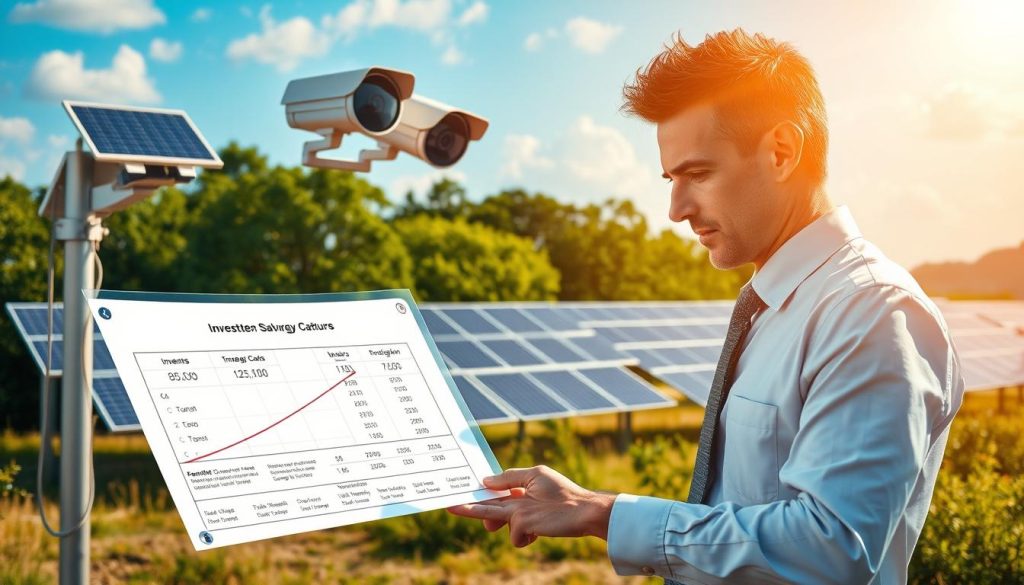
Unit costs for a quality outdoor device start around $60. Premium models with advanced features can reach $800. This price typically covers the security camera and its panel.
Your initial investment often includes a few other potential costs:
- The camera unit itself, which is the core of your surveillance.
- A base station or hub for local storage and stronger connectivity.
- Optional cloud subscription plans for video history backups.
- Professional installation fees, if you choose not to do it yourself.
Contrast this with traditional wired systems. Their hidden ongoing expenses add up quickly.
You face higher monthly electricity consumption. There are also potential costs for an electrician’s services. Repairs, relocation, or initial complex wiring all incur extra charges.
A wireless, sun-powered approach turns this model on its head. The long-term savings become its strongest financial argument.
Your monthly electricity cost for the unit drops to zero. There are no wiring infrastructure costs to install. Maintenance expenses over a 3 to 5 year period are minimal.
Simple upkeep, like cleaning the panel, can boost efficiency by 25%. This directly increases your energy savings. The average maintenance cycle is about three years, making it very hassle-free.
Durability and strong warranties protect your investment further. A rugged, weatherproof build made for outdoor use lasts longer.
Good warranties reduce the likelihood of premature replacement costs. This adds more value to the initial purchase price.
Think of this technology as a strategic upfront investment. It pays off consistently through operational savings.
You gain increased property security and continuous monitoring. There are also potential benefits from home insurance providers for having a reliable system.
The math is clear for home protection. A higher initial cost leads to much lower ongoing expenses. This creates significant net savings over the lifespan of your surveillance setup.
Choosing a wireless, solar powered security camera is an investment in future peace of mind. It delivers robust outdoor monitoring while keeping your long-term costs firmly under control.
The Future of Solar-Powered Home Security in Singapore
Looking ahead, the trajectory for residential surveillance points toward greater autonomy and smarter environmental integration. These systems will connect seamlessly with platforms like Google Home and Amazon Alexa. This creates unified, automated routines for total home security.
Artificial intelligence is becoming incredibly precise. Future detection will distinguish familiar faces from strangers with near-perfect accuracy. Predictive analytics may even alert you to unusual behavior before an incident occurs.
Hardware will also evolve. Better batteries and more efficient panels mean smaller, more powerful devices. Enhanced local processing boosts speed and privacy for your wireless security network.
This technology is no longer just an alternative. It is the forward-looking, sustainable standard for reliable outdoor security in Singapore. Investing in a smart, solar-powered system today prepares your home security for tomorrow.