Keeping your property safe in Singapore’s unique environment requires a smart approach. The tropical climate and dense urban landscape demand a security solution that is both resilient and adaptable.
This guide explores a sustainable path forward. We focus on security camera systems that harness renewable energy. This aligns perfectly with the nation’s push for green initiatives and smart living.
The advantages of these modern systems are clear. You gain incredible installation flexibility, as there’s no need for complex wiring. Energy independence means your surveillance stays active, even during power fluctuations.
Our roundup will help you find a reliable security camera for your home. We cover critical features like battery life, night vision, and weatherproof ratings. You’ll also get practical tips on setup and long-term maintenance for Singapore’s conditions.
Key Takeaways
- Solar-powered systems offer a wire-free, flexible installation perfect for various outdoor spaces.
- They provide energy independence and continue operating during power outages.
- Key features to evaluate include battery capacity, video resolution, and weatherproof certification.
- Proper positioning of the panel is crucial for optimal charging in Singapore’s weather.
- These cameras support Singapore’s sustainability goals while delivering robust surveillance.
- A long-term cost-benefit analysis often shows significant savings over traditional wired systems.
- Choosing the right connectivity (Wi-Fi or 4G) depends on your specific location and needs.
Introduction to Sustainable Security in Singapore
A quiet revolution in home security is underway, fueled by Singapore’s abundant natural resources. The nation’s drive toward a smarter, greener future now extends to how we protect our properties.
This shift aligns with a global trend. More homeowners are seeking solutions that are both effective and environmentally conscious.
Singapore’s climate offers a unique advantage. With consistent sunlight throughout the year, it is an ideal location to harness renewable energy.
This natural resource can be directly converted to power outdoor monitoring systems. The basic idea is simple yet powerful.
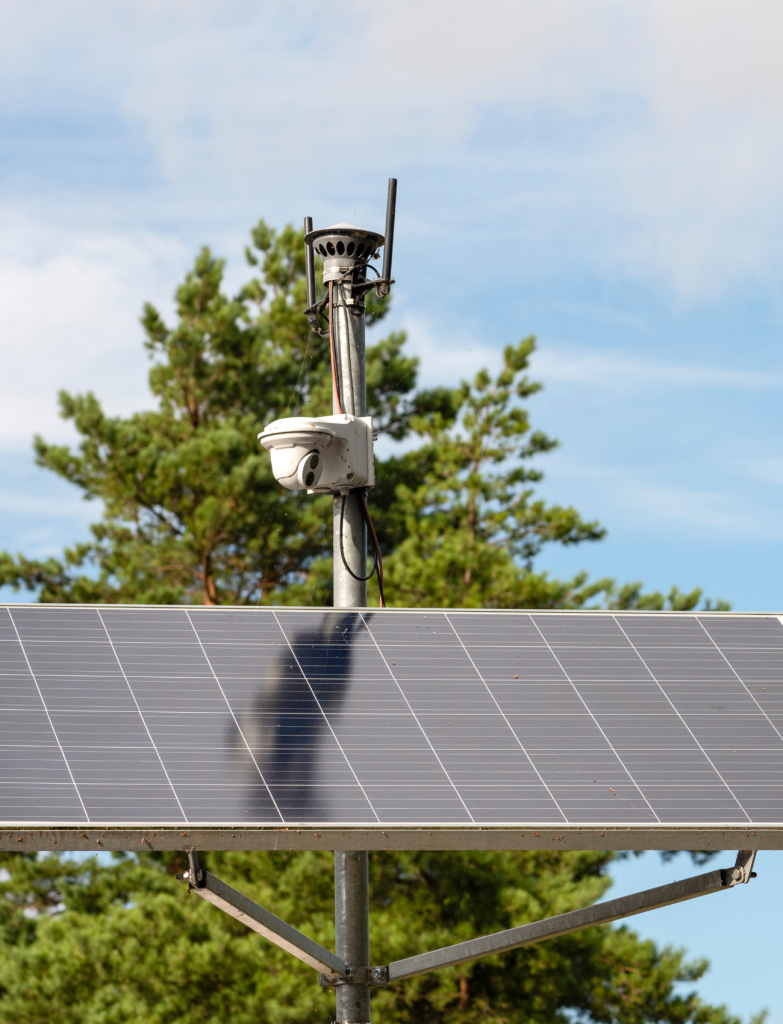
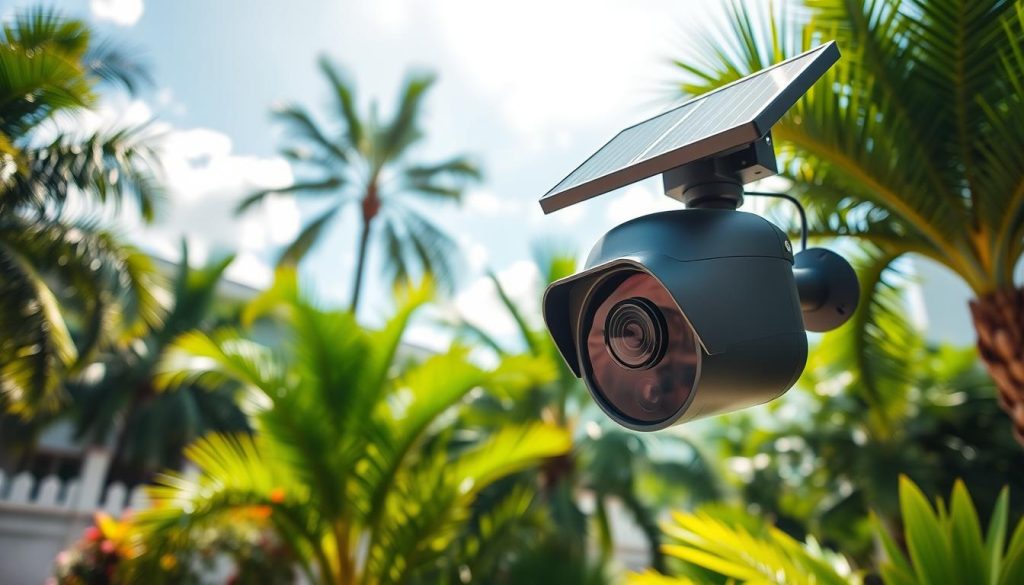
A small panel captures light and converts it into electricity. This energy charges an integrated battery, which runs the camera day and night.
This approach to surveillance represents a practical step forward. Residents can enhance their property’s security while actively reducing their carbon footprint.
It dovetails perfectly with national visions like the Green Plan 2030. Adopting solar-powered security technology supports Singapore’s renewable energy goals.
One major benefit is the elimination of complex electrical wiring. This makes installation far simpler for landed properties, gardens, and remote areas.
Some wonder about performance during rainy periods. Modern systems are designed with this in mind.
High-capacity batteries store enough charge to maintain operation through several cloudy days. This ensures reliable monitoring, regardless of the weather.
Choosing a solar security system is more than an eco-friendly gesture. It is a reliable and cost-effective security solution built for the local context.
By opting for this technology, you contribute to national sustainability targets. You also gain a resilient camera system that operates independently from the grid.
This independence is a key advantage for any home. It provides peace of mind that your security cameras will remain active, offering continuous protection.
The Advantages of Solar-Powered Security Cameras
Choosing a surveillance system that operates independently from the grid unlocks several key advantages. These modern devices are built for performance and convenience.
They offer a significant upgrade over traditional wired setups. Let’s explore the core benefits that make them a smart choice.
True wireless freedom is a major perk. You are not tied to an electrical outlet or complex cabling.
This makes installation simple in gardens, gates, and remote corners. Your placement options become nearly limitless.
Flexible connectivity ensures your feed stays live. Use Wi-Fi for typical homes or 4G LTE for areas with weak signals.
This connectivity choice guarantees reliable video transmission. It works no matter where you place the security camera.
A huge financial benefit is the lack of mandatory monthly fees. Many solar security cameras store footage locally on a microSD card or hub.
This local storage reduces long-term costs. You avoid recurring cloud subscription charges.
Advanced smart detection minimizes annoying false alerts. Algorithms distinguish between people, vehicles, and animals.
You get instant, accurate notifications on your phone. This feature saves time and enhances your peace mind.
These cameras designed for outdoors are built tough. They withstand rain, dust, and Singapore’s heat and humidity.
Their weatherproof construction ensures dependable performance year-round. You get a resilient system.
The eco-friendly nature of using the sun’s energy is clear. It cuts your household’s electricity use and carbon footprint.
This aligns perfectly with sustainable living practices. It’s a responsible choice for the environment.
A properly sized solar panel and high-capacity battery provide continuous power. Your surveillance runs 24/7 without interruption.
Even during several cloudy days, the stored energy keeps the unit running for many hours. Reliable charging is key.
Remote monitoring via a mobile app offers great convenience. Access live video and recordings from anywhere.
This real-time access gives you control and awareness. It truly enhances your sense of security.
Finally, these solar-powered security cameras are scalable. You can add more units over time with ease.
There’s no worry about increased electrical load or new wiring. Expanding your solar security setup is straightforward.
Each of these features combines to create a powerful, autonomous monitoring solution. They deliver reliability, savings, and peace of mind.
Key Features to Evaluate Before You Buy
To ensure your investment delivers reliable protection, prioritize these essential technical features. A detailed comparison here prevents future disappointment and ensures your system meets local demands.
Look beyond the basic promise of wireless operation. The real value lies in how well each component performs in everyday use.
Solar Panel Efficiency and Battery Capacity
These two features work as a single power unit. The panel’s wattage determines how quickly it can recharge the battery.
A higher wattage is beneficial for areas with partial shade. It compensates for less-than-ideal sunlight conditions.
The battery’s capacity, measured in milliamp-hours (mAh), dictates how long the cam can run without direct sun. For Singapore’s occasional cloudy spells, a high-capacity battery is non-negotiable.
It provides the energy buffer needed for continuous surveillance. Always check the estimated operational days on a full charge.
Video Resolution and Night Vision Capability
Clarity is paramount for identifying details. A minimum of 2K resolution is recommended for crisp images.
4K options offer even finer detail, useful for monitoring wide properties. This resolution allows you to zoom in digitally without losing critical information.
Effective night vision transforms low-light areas into visible zones. Look for models with color night vision or powerful infrared LEDs.
Some systems use a built-in spotlight to illuminate scenes in full color. This can act as a powerful deterrent after dark.
Weatherproofing and Durability for Tropical Climates
Singapore’s heat, humidity, and heavy rain test any outdoor device. A strong Ingress Protection (IP) rating is your best guarantee.
An IP65 or IP66 rating confirms protection against dust and powerful water jets. This means the unit can withstand our intense tropical downpours.
The housing material should also resist UV degradation. Prolonged sun exposure can cause plastics to become brittle over time.
Choosing a device built for these conditions ensures years of service. It avoids premature failure and maintenance headaches.
Connectivity Options: Wi-Fi vs. Cellular (4G LTE)
Your choice here depends entirely on your installation site. Wi-Fi is perfect for locations within strong range of your home router.
It offers fast data transfer for high-resolution video streams. Ensure your Wi-Fi signal is strong at the camera’s mounting point.
For remote spots like a garden shed, gate, or undeveloped land, 4G LTE is the answer. It uses a mobile data SIM card to transmit video.
This provides complete location independence. Remember to factor in the cost of a local data plan with your provider.
Smart Detection and Alert Systems
Modern intelligence separates useful warnings from constant noise. Advanced algorithms analyze the scene to understand what triggers motion.
AI-powered detection distinguishes between people, vehicles, and animals. This drastically cuts down false alerts from pets or blowing leaves.
You can often define specific zones within the camera’s view. This lets you monitor a driveway while ignoring activity on the public sidewalk.
When an event occurs, instant push notifications are sent to your smartphone app. These typically include a snapshot or short clip for immediate assessment.
Two-way audio is another valuable tool. It allows you to listen and speak directly through the device via the app.
This can be used to greet a delivery person or issue a verbal warning. Integration with smart home platforms adds another layer of automation.
You can set routines, like turning on porch lights when a person is detected. For recording, look for systems that save video triggered by events to local or cloud storage.
This ensures all important activity is captured without gaps. It provides a reliable record for review.
Top Solar CCTV Camera Picks for Singaporean Homes
For homeowners seeking a reliable, wire-free security solution, several top-performing cameras have proven their worth in local conditions. Our curated selection focuses on the best solar-powered security cameras available in Singapore.
We prioritize models from trusted brands like Reolink, Night Owl, and Aosu. These companies offer reliable technology and solid support channels in the region.
Each pick balances critical factors for effective outdoor surveillance. Key considerations include solar charging efficiency, battery life, and video quality.
Durability and smart features are also paramount. This ensures comprehensive protection for your home.
The list includes options for various budgets and specific use cases. You’ll find compact units perfect for apartment balconies.
Robust systems for large landed properties are also featured. We account for Singapore’s specific environmental needs.
All recommended products have appropriate weatherproof ratings. This guarantees resilience against high humidity and heavy rain.
Connectivity options are varied to suit different locations. We have recommendations for Wi-Fi-dependent homes.
Properties requiring full autonomy will find cameras designed for 4G LTE. This provides a reliable feed without a local network.
Ease of installation and setup is a key criterion. Many Singaporean homeowners prefer DIY solutions without professional help.
The upcoming in-depth reviews in the next sections will provide detailed specifications. You’ll get clear pros and cons for each leading model.
Pricing guidance will help you compare these top contenders effectively. Our goal is to simplify your decision-making process.
We highlight security cameras that deliver consistent performance. Expect clear day and night footage from these devices.
Long-term value and peace mind are the ultimate outcomes. Choosing the right solar security device makes all the difference.
Reolink Solar Cameras: In-Depth Review of Leading Models
Our detailed review focuses on three standout Reolink models, each engineered for distinct monitoring scenarios. This brand is renowned for robust build quality and innovative features.
Their products are designed to deliver reliable surveillance in Singapore’s climate. We examine their performance, connectivity, and unique capabilities.
Reolink Argus 4 Pro: For High-Resolution 4K Monitoring
The Argus 4 Pro is built for users who prioritize exceptional image clarity. Its 4K video sensor captures incredibly detailed footage.
This high resolution is crucial for identifying faces or license plates at a distance. You get a comprehensive view of your property.
Its integrated spotlight enables full-color night vision. This transforms dark areas into clearly visible zones after sunset.
The device operates on a rechargeable battery paired with an efficient panel. This setup provides consistent power for continuous operation.
It’s an excellent choice for monitoring front yards or entryways. You need clear evidence, and this security camera delivers.
Reolink Go PT Ultra: 4G LTE Connectivity for Off-Grid Areas
For locations beyond the reach of a Wi-Fi signal, the Go PT Ultra is the solution. It uses a 4G LTE mobile data connection for complete independence.
This makes it perfect for construction sites, remote sheds, or large gardens. Your security feed is transmitted via the cellular network.
You simply insert a local data SIM card into the device. There’s no dependency on your home internet router.
The motorized PTZ function allows you to pan, tilt, and zoom remotely. You can survey a wide area from a single camera position.
Smart person/vehicle detection sends accurate push alerts to your phone. It ensures you only get notified about relevant motion.
Reolink TrackMix Series: Advanced Tracking for Wide Areas
The TrackMix series represents a leap in intelligent monitoring technology. Its unique dual-lens system provides two perspectives at once.
A wide-angle lens gives you the full contextual view. A second telephoto lens automatically zooms in on any detected subject.
This means you never miss the broader scene or crucial details. The auto-zoom tracking locks onto people or vehicles across its 355° pan range.
The subject remains centered and magnified in the frame for easy identification. It’s ideal for monitoring driveways, car parks, or perimeter fences.
You have a choice between two models to match your location’s needs. The standard TrackMix (Battery) version connects via Wi-Fi and is solar-powered.
It is currently priced at US $179.99. The TrackMix LTE variant uses a 4G LTE network for total off-grid operation.
This model is priced at US $209.99. Both offer the same advanced tracking and high-quality video.
Key features of the TrackMix series include:
- Dual-View Display: See the wide shot and zoomed-in detail simultaneously on your app.
- Superior Video Quality: Up to 4K resolution from the wide lens and 1080p from the zoom lens.
- Smart Detection: Accurately distinguishes between people, vehicles, and pets to reduce false alerts.
- Robust Construction: Features an IP65 weatherproof rating and a durable motorized PTZ mechanism.
- Flexible Power: The battery version ensures wireless operation for many hours on a single charge.
For large, open spaces where active tracking is beneficial, this series is a top contender. It combines intelligent automation with reliable, wire-free security.
These Reolink cameras demonstrate the practical application of modern solar-powered security cameras. Next, we’ll explore alternative solar security solutions from other trusted brands.
Night Owl and Aosu: Alternative Solar Security Solutions
For those seeking different approaches to autonomous security, Night Owl and Aosu present robust solutions. These brands offer unique features that address specific monitoring challenges.
They are excellent choices for homeowners who value innovative design. Their products provide reliable performance without complex setup.
Night Owl Solar Powered 2K Camera with Spotlight
This model is built for clear identification in any light. Its 2K resolution delivers sharp video quality for detailed footage.
A built-in spotlight activates with motion detection. This provides full-color night vision and can deter unwanted activity.
The system runs on a high-capacity battery paired with an efficient panel. This ensures continuous power for day and night operation.
It is a solid choice for monitoring a specific entry point or driveway. You get a clear view and reliable alerts directly to your phone app.
Aosu Solar-Powered Cameras with 360° Tracking
Aosu devices are known for their advanced surveillance capabilities. A key feature is the 360° auto-tracking technology.
The camera physically rotates to follow movement across a wide area. This eliminates blind spots in open spaces like yards or patios.
Models such as the SolarCam D1 Lite offer 4K resolution. This guarantees high-definition video clarity for identifying fine details.
Color night vision is another standard feature. It ensures your security camera provides usable footage after dark.
Some Aosu cameras use a dual-lens design for wider coverage. Others incorporate facial recognition technology.
This smart tech can identify familiar faces. It then sends personalized alerts to your mobile device.
These solar-powered security cameras are powered by efficient panels and large batteries. According to the brand’s FAQ, a fully charged unit can record for extended hours, even at night.
Connectivity is via Wi-Fi, requiring a stable home network. Remote access and controls are managed through the dedicated Aosu app.
The app offers user-friendly controls like customizable activity zones. You can also set scheduled recording for specific times.
Key features of Aosu solar security cameras include:
- Complete Area Coverage: 360° rotation tracks subjects across the entire view.
- Superior Image Detail: 4K resolution and color night vision for round-the-clock clarity.
- Smart Identification: Facial recognition technology helps filter alerts and enhance security.
- Sustained Operation: High-efficiency solar panels and batteries provide consistent energy for continuous charging.
- Easy Management: Intuitive mobile app allows for zone setup, live viewing, and playback.
For comprehensive home surveillance, Aosu offers multi-camera system bundles. Prices range from accessible single units to whole-property kits.
Choosing these cameras designed for smart tracking adds a powerful layer of protection. They offer great peace mind for Singaporean homeowners.
Comparing Connectivity: Wi-Fi vs. 4G LTE for Your Location
Your camera’s location dictates its ideal connection method. Two primary paths offer distinct advantages and trade-offs.
This choice is fundamental to your system’s reliability. It affects video quality, ongoing costs, and your remote access.
Manufacturers like Reolink highlight this flexibility. Their FAQ notes:
Whether you choose a Wi-Fi model for typical home use or a 4G LTE option for rural or off-grid locations, Reolink solar cameras adapt to your connectivity needs.
Let’s break down what each network type means for your setup.
Wi-Fi: The Home Network Standard
Wi-Fi-dependent solar security cameras are perfect for urban and suburban homes. They require a strong, stable signal from your router.
This is the most common choice for properties with reliable internet coverage. The features are compelling.
Advantages include:
- No extra monthly fees: You only pay your existing internet bill.
- High bandwidth: Supports smooth streaming of high-resolution video.
- Smart home integration: Easily connects with other Wi-Fi devices.
However, Wi-Fi has clear limitations. Physical barriers like walls and distance weaken the signal.
Interference from other electronics can also cause dropouts. Most critically, your surveillance goes down if your home internet fails.
4G LTE: Complete Location Independence
For spots beyond your router’s reach, 4G LTE is the answer. It uses a mobile data SIM card from a local provider.
This system is ideal for remote sheds, construction sites, or large gardens. It provides total location freedom.
The main benefit is unwavering operation anywhere with cellular coverage. Singapore’s robust mobile networks make this a viable option.
Trade-offs exist, of course. An ongoing data plan cost is required.
Speeds can be lower than fibre Wi-Fi, potentially affecting video quality in weak signal areas. It’s wise to check your phone’s signal strength at the exact mounting spot before buying.
For a dedicated solar-powered security solution in off-grid areas, exploring 4G solar CCTV products is a logical step.
Making the Smart Choice for Singapore
Your decision should be practical. Assess your property’s network infrastructure honestly.
Consider your budget for ongoing costs and how critical uninterrupted monitoring is for you. Some advanced options offer hybrid setups.
These models use Wi-Fi as the primary connection. They switch to 4G LTE as a backup if the home internet fails.
This failover feature ensures you never lose access to your live feed. It’s the best of both worlds for mission-critical setup.
Ultimately, matching the connectivity to your environment guarantees a reliable, high-performing surveillance system.
Installation Tips for Optimal Performance in Singapore
Getting the most from your autonomous security system starts with strategic placement and careful mounting. Two core elements demand your attention: capturing maximum energy and securing the perfect viewing angle.
Each decision directly impacts your device’s reliability and the quality of evidence it gathers. Let’s break down the best practices for Singaporean homes.
Positioning Your Solar Panel for Maximum Sunlight
Your panel’s job is to keep the battery charged. Aim for a southern-facing orientation to catch the most light throughout the day.
Avoid placing it under shade from trees or building overhangs. Even partial shadow can drastically reduce its power output.
For models with a separate panel, plan the cable route neatly. Use clips or conduit to secure wires against walls.
This prevents tripping hazards and protects the connection from weather damage. A tidy setup also deters tampering.
Interestingly, you should protect the main camera unit from intense afternoon sun. A slight overhang can provide necessary shade.
This prevents sensor overheating, which can affect video quality and battery life. The panel itself, however, needs full exposure.
Mounting Considerations for Security and Camera Angle
Where you place the device defines its field of view and vulnerability. Height is your first consideration.
Mount your security camera 2.5 to 3 meters high. This elevation offers several key features:
- Deters easy tampering or theft of the unit.
- Provides a broad surveillance view covering doors, gates, and walkways.
- Improves the angle for capturing clear facial details.
Angle the unit slightly downward. Focus on key areas like faces or license plates.
This also minimizes backlight from the bright sky. Backlight can cause silhouetting and ruin night vision footage.
Always secure the mount to a solid surface. Brick, concrete, or sturdy wood are ideal.
Use appropriate screws and anchors to withstand wind and potential interference. For public areas, consider an anti-theft cage.
Before drilling any holes, test your system. Confirm the Wi-Fi signal strength at the spot with your smartphone.
If the signal is weak, a Wi-Fi extender is a wise investment. A stable connection is non-negotiable for reliable alerts and live access.
Finally, use the companion app to test the live view and motion zones. Ensure the angle covers all critical zones without blind spots.
Only finalize the position once you’re satisfied with the camera’s perspective. This careful approach guarantees your solar security setup works flawlessly for many hours.
Maintaining Your Solar CCTV System
The longevity and clarity of your security feed depend on a simple routine of checks. Consistent upkeep ensures your autonomous guardian operates flawlessly through Singapore’s seasons.
It transforms your initial investment into a durable shield. A few minutes each month can prevent major issues.
According to Aosu’s FAQ, their solar-powered units are built to last. With proper care, the core system can function for years.
The charging time for the battery via the panel varies. It depends heavily on available sunlight.
On a bright day, a full charge might take just a few hours. Once charged, the cam can record for an extended period, even at night.
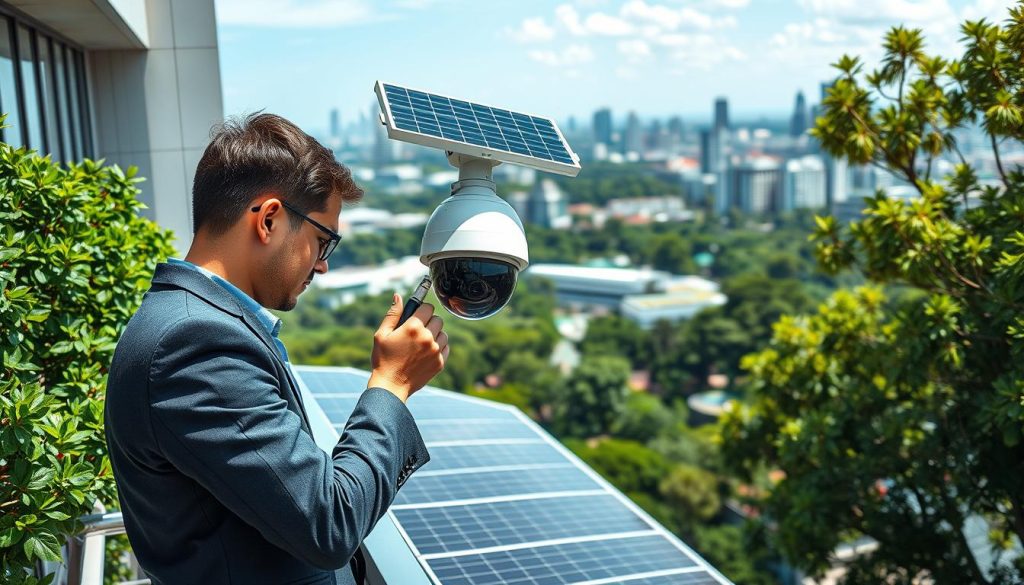
Start with a monthly visual inspection. Check that the solar panel is clean and free from leaves or dust.
Gently wipe the surface with a damp cloth. This maintains optimal energy capture for power.
Use the companion mobile app to monitor the battery level regularly. A consistently low reading could signal a problem.
It might mean the panel is shaded or the battery itself is aging. Most products have features for this in their setup.
Every three months, check all mounting hardware. Tighten any screws loosened by wind or rain.
This keeps your cameras and panels secure. It’s a quick task for reliable connectivity and vision.
Don’t forget about software health. Update the device’s firmware through the app when prompted.
These updates bring security patches and new features. They often improve video quality and alert accuracy.
Manage your storage solutions proactively. If using a microSD card, format it periodically to prevent file corruption.
Archive important footage elsewhere to free up space. This ensures continuous recording of new events.
Test the motion detection weekly. Walk through the camera’s field of view to confirm you get phone notifications.
This verifies the alerts and detection zones work. It’s a key part of your system’s reliability.
For models using 4G LTE, keep an eye on data usage. Ensure your SIM card plan isn’t exceeded and has good signal strength.
During long cloudy periods, be ready with a backup plan. You may need to charge the battery via USB temporarily.
Finally, keep a simple log. Note the purchase dates for batteries and panels.
These components have finite lifespans, typically 2-5 years. Proactive replacement avoids sudden system failure.
This straightforward maintenance routine maximizes performance. It guarantees your property stays monitored with clear vision day and night.
Cost Analysis: Understanding Value and Long-Term Savings
Evaluating the financial aspect of your security upgrade reveals a compelling long-term story. The upfront price is just one part of the equation.
A complete view of expenses shows where real value lies. This analysis helps you make a smart choice for your property.
The initial investment for a quality autonomous setup has a wide range. A basic single security camera can start around SGD $200.
Multi-unit systems with advanced features can exceed SGD $1,000. This cost often seems higher than traditional wired cameras.
The premium covers integrated technology like the high-capacity battery and efficient panel. However, it eliminates other significant expenses right away.
You completely avoid fees for professional electrical wiring. There is no need to drill through walls or hire an electrician.
Long-term operational savings are where these systems shine. Your security camera runs on renewable energy, incurring zero electricity costs.
Many brands also offer free local storage on a microSD card. This avoids the monthly cloud subscription fees common with other setups.
To see the benefit, calculate a simple payback period. Compare the cost of running traditional cameras over several years.
Add their electricity use to any initial installation fees. Then, stack that total against your one-time autonomous system cost.
In Singapore, there may be indirect financial perks. Sustainable features can potentially increase property value.
Eligibility for green rebates might also become more widespread in the future. These factors add to the overall value proposition.
Maintenance costs for your home security are relatively low. The primary need is an occasional battery replacement every few years.
This is far more economical than repairing damaged wires. It also beats paying for continuous grid power year after year.
An intangible saving comes from uninterrupted surveillance. Battery-backed systems keep running during power outages.
This continuous protection can prevent potential theft or property damage. That peace mind is a valuable, though hard to quantify, benefit.
When comparing models, always consider the total cost of ownership. A slightly more expensive unit might have a higher-efficiency panel.
It could also feature a larger battery. These features may save money over its lifespan by reducing maintenance needs.
Ultimately, autonomous security cameras offer a strong value proposition. They provide reliable, eco-friendly protection for Singaporean homeowners.
The long-term costs are predictable and often significantly lower. This makes them a financially sound investment in your home’s safety.
Selecting the Right Solar Camera for Your Specific Needs
A one-size-fits-all approach rarely works when it comes to safeguarding your home. The best security camera for you depends on your property type and personal goals.
Start by defining your primary need. Is it to deter intruders, watch over a garden, or monitor a remote shed?
For urban apartments, compact models with strong Wi-Fi work well. Landed properties may need 4G connectivity for reliable feeds away from your router.
Consider the area you need to cover. Large spaces benefit from units with tracking features.
Always check the battery life and panel efficiency. This ensures your surveillance runs non-stop, even on cloudy days.
Prioritize weatherproof ratings for Singapore’s climate. Match the system to your budget, including any ongoing costs.
Reading local user reviews provides real-world insights. This careful selection leads to effective, sustainable protection and true peace of mind.