
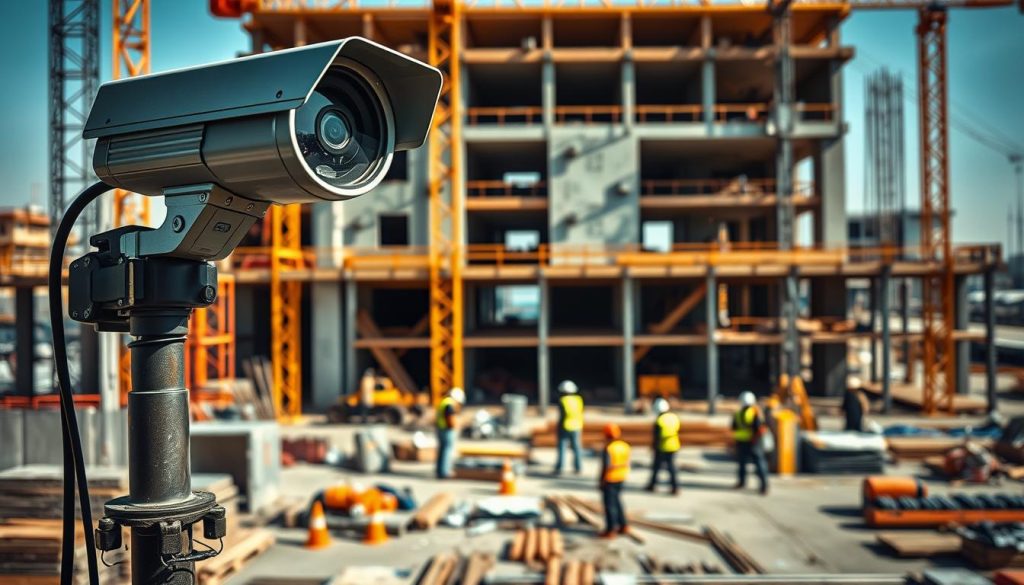
Construction zones in Singapore are dynamic places. They face complicated challenges with moving personnel and complex vehicle management. Effective security is not just an option; it’s crucial for safety and project success.
Theft, vandalism, and safety incidents can lead to major financial loss and project delays. A robust video system has become a non-negotiable standard for modern project areas.
This 2023 guide provides a comprehensive, data-driven overview. It covers the latest equipment, features, and regulations for construction site security. You will learn about technological trends like AI analytics and wireless solutions.
Informed decision-making leads to improved management, cost savings, and enhanced protection for people and assets. This resource empowers you to make a confident purchase decision.
Key Takeaways
- Selecting the right monitoring system is critical for safety and operational efficiency on dynamic construction sites.
- This guide offers a comprehensive overview of the latest cameras, features, and 2023 regulations in Singapore.
- Construction zones are high-risk environments where security incidents cause significant financial and scheduling impacts.
- New technological trends, including AI-powered analytics and wireless CCTV, are transforming project security.
- Staying informed on regulatory mandates is essential for compliance and effective protection.
- A well-chosen system improves site management, deters theft, and can lead to substantial cost savings.
- This buyer’s guide is designed to help you choose the optimal security solution for your specific project needs.
Why Construction Site Security is Non-Negotiable in Singapore
In the heart of Singapore’s development boom, project areas are hubs of immense activity and even greater risk. These zones are a complex synthesis of moving personnel, valuable machinery, and sensitive materials. The pressure to meet tight deadlines only amplifies the inherent challenges.
Effective security here is far more than a simple precaution. It is a fundamental pillar of responsible project management and risk mitigation.
The High-Stakes Environment of Modern Construction
Modern construction involves multiple, simultaneous operations. Cranes swing, deliveries arrive, and teams work across various stages. This constant motion creates a high-stakes environment.
Worker safety, expensive equipment, and project integrity intersect every minute. A single lapse can trigger a cascade of problems. The financial and reputational costs are extraordinarily high.
Protecting People, Assets, and Project Timelines
A robust protection strategy serves as a holistic shield. Its primary goal is to safeguard human lives from unauthorized access and potential harm. It also secures critical assets from theft or vandalism.
There is a direct link between strong site security and timeline adherence. Incidents like stolen materials cause immediate, costly delays. They can also lead to severe contractual penalties.
The local context makes this imperative. Singapore’s dense urban landscape and high-value projects magnify every consequence. Recent data shows a troubling 25% rise in theft, with average annual losses nearing $500,000 per location.
Viewing security as an optional add-on is a significant liability in today’s climate.
Modern solutions provide more than just video recording. Advanced cameras with analytics offer active deterrence and vital operational insights. This proactive approach is a core investment in project success.
The Rising Tide of Theft and Vandalism: A Costly Reality
Data reveals a pervasive threat landscape for construction projects. Losses from crime run into hundreds of millions annually. This is not a minor nuisance but a core business challenge.
Approximately 80% of firms in this sector experience theft. The financial drain is immense and continuous.
Staggering Financial Losses in the Industry
The direct costs are alarming. The industry loses between $300 million and $1 billion each year to these crimes.
Stolen equipment, materials, and tools cripple project budgets. Recovery rates are often below 25%. This means most stolen assets are never returned.
These are not just numbers. They represent real impacts on profitability and operational flow.
- High-value machinery disappears overnight.
- Bulk materials like copper and steel are prime targets.
- Portable tools vanish, halting work for entire teams.
Every incident directly hits the bottom line. It forces managers to divert funds for replacements.
Beyond Stolen Tools: Impacts on Project Viability and Insurance
The true damage extends far beyond immediate replacement costs. Cascading indirect effects threaten the entire project.
Delays from missing resources cause missed deadlines. This can trigger heavy contractual penalties. Client relationships become strained.
A company’s reputation for security suffers. This can affect future bidding success.
Insurance is a critical factor. A lack of proper monitoring leads to higher premiums. Insurers view unsecured sites as high-risk.
Without clear video evidence, claims become disputed. Legal liabilities from unresolved incidents can increase by 20% or more.
The cost of a comprehensive monitoring system is typically a fraction of a single major loss event.
This is where evidence-based accountability becomes vital. High-definition footage from modern cameras is crucial.
It supports police investigations. It streamlines insurance claims. It provides proof in legal proceedings.
The financial argument for robust site security is clear-cut. It is a proactive measure to protect your investment. It safeguards construction site viability from these pervasive challenges.
2023 Trends Shaping Construction Site Surveillance
This year marks a pivotal shift from reactive monitoring to intelligent, predictive security systems. The focus is now on preventing incidents before they occur.
Modern technology provides tools for smarter protection. These trends offer greater flexibility and deeper operational insights.
They address the unique challenges of dynamic project environments. Managers gain real-time visibility and control like never before.
AI and Analytics: From Recording to Predicting Threats
Artificial Intelligence is revolutionizing project security. Advanced video analytics move beyond simple recording.
On-device AI processes footage instantly. It can identify specific behaviors and potential risks.
This includes detecting unauthorized intrusions or individuals loitering in sensitive zones. It can also spot missing personal protective equipment (PPE).
The system sends instant alerts directly to managers’ mobile devices. This enables a proactive response to stop issues early.
This predictive capability transforms monitoring. It turns passive cameras into active guardians of your construction site.
Wireless and Mobile Solutions for Dynamic Sites
Traditional wired setups struggle with temporary projects. Wireless and mobile units solve this problem completely.
Solar-powered trailers and towers provide full coverage without fixed infrastructure. They operate independently of grid power and network cables.
These solutions can be deployed in hours, not weeks. They are perfect for remote locations or fast-changing construction sites.
When a project phase ends, the entire security setup can be relocated. This flexibility protects your investment and adapts to project needs.
It directly tackles the classic challenges of temporary work areas. You get robust protection without permanent installation costs.
Integrated Systems: Drones, Access Control, and Centralized Management
The most powerful trend is the unification of different technologies. A centralized platform brings everything together.
It combines live feeds from fixed cameras, aerial drone views, and access control logs. Sensor data creates a complete security posture.
Drones perform automated aerial perimeter checks. They monitor hard-to-reach spots that ground-based equipment might miss.
Managers use a single dashboard for total oversight. This integration offers significant operational benefits beyond theft prevention.
- Remote Project Management: Live streams and time-lapse footage let you track progress from anywhere.
- Enhanced Safety Compliance: Analytics can verify protocol adherence, improving overall safety.
- Streamlined Operations: Unified data supports better decision-making and resource management.
These 2023 trends are creating a more proactive, intelligent, and connected model. It is a vast improvement over old, static CCTV.
Key Features Your Building Site Surveillance Camera Must Have
A checklist of fundamental features separates a basic recorder from a powerful asset protection tool. The right specifications directly determine your system’s ability to capture crucial evidence, provide timely warnings, and survive harsh conditions.
Focusing on these core capabilities ensures your investment delivers tangible security and operational benefits. Let’s break down the non-negotiable specifications for any modern project.
High-Definition Video and Optical Clarity for Evidence
Clear, detailed footage is the cornerstone of any protection strategy. You must mandate high-definition resolution—1080p Full HD as an absolute minimum.
This level of video quality is essential for identifying individuals, reading license plates, and discerning small tool details. Grainy or pixelated recordings are often useless for investigators or insurance claims.
Advanced features like Wide Dynamic Range (WDR) are equally vital. They balance extreme lighting contrasts, such as a dark shadow against a bright sky. This ensures clear imagery in challenging daytime conditions across your project areas.
Superior Night Vision and Low-Light Performance
Darkness is a prime time for criminal activity. Your equipment must perform flawlessly when the sun goes down.
Traditional infrared (IR) illuminators provide monochrome imagery in total darkness. Look for models with long-range IR capabilities to cover large perimeters.
Newer “full-color” night vision technology is a game-changer. It uses advanced sensors to capture color footage in very low light without harsh IR glare.
Color footage at night preserves critical evidentiary details like clothing color or vehicle paint, which black-and-white video often loses.
This technological leap offers a significant investigative advantage. It turns the entire night into a viable period for clear monitoring.
On-Device AI for Real-Time Alerts and PPE Detection
Modern security is proactive, not just reactive. On-device Artificial Intelligence processes video locally within the unit itself.
This enables instant, intelligent detection of specific events. The system can identify unauthorized perimeter intrusions, loitering vehicles, or even safety protocol violations.
A critical application is Personal Protective Equipment (PPE) detection. AI can flag workers not wearing hard hats or safety vests in designated zones.
When a rule is broken, the technology sends instant push alerts to a manager’s phone. This allows for real-time intervention, potentially boosting incident prevention rates by up to 40%.
You move from reviewing hours of footage to responding to immediate, verified notifications.
Rugged, Weatherproof, and Vandal-Resistant Design
The physical durability of your equipment is as important as its digital smarts. Project environments are punishing.
Look for two key ratings: IP67 for weatherproofing and IK10 for vandal resistance. An IP67 rating guarantees complete protection against dust ingress and immersion in water.
This is essential for Singapore’s tropical downpours and pervasive dust. An IK10 rating means the housing can withstand significant impacts, like strikes from a hammer or other tools.
This rugged design ensures your protection solution survives the environment it is meant to secure. It deters tampering and guarantees continuous operation.
Additional valuable features include varifocal lenses for adjustable fields of view. Power over Ethernet (PoE) simplifies wiring by delivering both data and power through a single cable.
These core features work in powerful synergy. High-definition imagery provides court-admissible evidence. AI analytics enable proactive alerts and enhance safety compliance. The rugged build ensures the system itself endures.
Evaluate every option against this fundamental checklist. Your project’s security, management efficiency, and financial protection depend on it.
Understanding Singapore’s Video Surveillance Regulations
Singapore’s authorities have established clear mandates to enhance safety and accountability on construction sites. Operating within this legal framework is now a fundamental part of project management.
New regulations provide specific technical and operational standards. They ensure video monitoring serves its critical role effectively and responsibly.
This section details the 2024 mandates from the Ministry of Manpower. It explains how to align your security plan with both safety goals and privacy laws.
Mandatory VSS for Projects Over $5 Million (From June 2024)
A significant regulatory change takes effect on June 1, 2024. The Ministry of Manpower mandates a Video Surveillance System (VSS) for all projects valued at $5 million and above.
This is not a suggestion. It is a compulsory requirement for larger developments.
The rule aims to bolster safety oversight and provide irrefutable evidence for incident investigations. It formalizes the use of technology as a standard protective measure.
Compliant systems must meet strict technical specifications. Minimum requirements include HD 1080p resolution and a 12 frames-per-second recording rate.
This ensures footage is clear and detailed enough for official review. Recorded video must be retained for a minimum of 30 days.
For any reportable safety incident, the retention period extends to 180 days. This allows ample time for thorough investigation and reporting.
Coverage is strategically mandated for high-risk zones. These are areas where accidents are more likely to occur.
Your VSS must monitor work-at-height locations, scaffold areas, and major excavations. It must also cover active vehicular traffic routes and material laydown yards.
This targeted approach ensures the system focuses on the most critical safety hotspots. It provides a clear view of operations where risk is highest.
Data Retention, Privacy, and Compliance with the PDPA
Handling recorded footage involves significant legal responsibility. Video data often contains the personal information of workers and visitors.
This brings the Personal Data Protection Act (PDPA) directly into play. Compliance with the PDPA is just as crucial as meeting the technical VSS specs.
The PDPA governs how you collect, use, and disclose personal data. In this context, personal data includes identifiable images of individuals captured on video.
Best practices for PDPA compliance are straightforward but essential. First, you must notify individuals that recording is taking place.
Place clear signage at all entrances and within monitored zones. The signs should state the purpose of the monitoring.
Second, you must secure the storage of all recorded data. Limit access to authorized personnel only.
Use encrypted storage solutions and secure networks. This prevents unauthorized viewing or copying of footage.
Third, establish a clear data disposal policy. Delete footage securely once the mandated retention period expires.
Treating video data with the same care as financial records is a cornerstone of responsible project management.
Non-compliance carries serious operational implications. Fines from regulatory bodies can be substantial.
More severely, authorities can issue work stoppage orders. This halts all activity until violations are corrected.
Legal complications can also arise from privacy breaches. These issues extend far beyond a simple security lapse.
To ensure full compliance, evaluate both your technology and deployment plan. Your chosen cctv equipment must meet the resolution and retention specs.
Your operational procedures must address PDPA requirements for signage and data handling. Consult with a professional familiar with Singapore’s construction regulations.
Ultimately, view these regulations as a helpful framework. They guide you toward implementing effective, responsible, and legally sound site security.
This protects your project’s viability. It also safeguards the people working on it.
Adherence turns your video system from a potential liability into a proven asset for management and safety.
How Surveillance Systems Act as a Powerful Deterrent
Deterrence is a powerful psychological tool, and modern monitoring technology is its most effective delivery system. The ultimate goal shifts from merely documenting a crime to preventing it from occurring altogether.
This proactive approach safeguards assets and maintains project continuity. It creates a formidable first line of protection for any project area.
The Psychology of Visible Security: Reducing Crime by Up to 65%
The mere presence of visible equipment creates a powerful mental barrier. Potential intruders perceive a significantly higher risk of being caught and identified.
This perception alone discourages most attempts at theft or vandalism. Industry studies consistently back this effect with hard data.
Research indicates that visible security units can reduce criminal incidents on project areas by up to 65%. This statistic highlights the immense value of a conspicuous presence.
This is known as passive deterrence. The system acts as a silent, watchful guardian that records events.
While crucial for gathering evidence, its primary power lies in its visibility. It makes illegal activity feel too risky to attempt.
Active Deterrence Features: Audio, Lights, and Real-Time Intervention
Modern technology takes this concept a dramatic step further with active deterrence. These systems don’t just watch—they can respond in real time.
When a verified threat is detection, the equipment can automatically initiate a multi-sensory response. This is designed to startle and drive away intruders immediately.
Key components of this active response include:
- Warning Strobes: Bright, flashing lights that draw attention to the intrusion.
- Audible Sirens: Loud alarms or pre-recorded messages announcing that security has been activated.
- Two-Way Audio: Allows remote personnel to directly challenge an intruder through a built-in speaker.
Intelligent monitoring is the brain behind this operation. AI-based analytics differentiate between a stray animal and a human.
It can verify a vehicle or person crossing a virtual boundary. This precision ensures deterrents activate only for genuine threats, slashing false alerts.
This capability transforms your security posture from reactive to proactively interventionist.
The operational benefit is clear: it can stop a crime during the act. Damage or loss is prevented before it happens.
A strong deterrent effect also contributes directly to worker safety. It helps keep unauthorized and potentially dangerous individuals off the premises.
Maximize this psychological impact through strategic placement. Ensure units and deterrent devices are highly visible at all entry points.
Also position them overlooking high-value asset locations and storage yards. This strategic visibility reinforces the message of comprehensive protection across the entire project area.
Beyond Security: Operational Benefits of Site Cameras
The true value of a modern monitoring system extends far beyond its primary role in theft prevention. When deployed strategically, this technology becomes a powerful multi-tool for project leadership.
It drives operational efficiency, enforces safety standards, and provides critical data for cost management. Companies leveraging these tools report up to 60% better operational efficiency.
This section explores how visual oversight transforms daily management and delivers a compelling return on investment.
Remote Project Management and Progress Oversight
Live and recorded video feeds are game-changers for project oversight. Managers gain real-time visibility into multiple construction sites without constant physical presence.
They can verify subcontractor activities, monitor work progress, and document milestones remotely. This capability is invaluable for managing complex or geographically dispersed projects.
Time-lapse photography compiled from daily footage creates a powerful visual record. It showcases project evolution for client updates, marketing purposes, and even dispute resolution.
Centralized video management platforms allow key stakeholders to access relevant views. Site supervisors and head office executives can foster transparency and make informed decisions from anywhere.
Additional efficiencies are gained by overseeing material delivery and storage. Optimizing logistics and having visual evidence readily available streamlines operations and resolves disputes quickly.
Enhancing Worker Safety and Protocol Compliance
Visual monitoring directly strengthens workplace safety. It provides an objective means to verify compliance with critical protocols.
Modern analytics can automatically detect if workers are wearing required personal protective equipment (PPE). They can also monitor the proper use of fall protection systems in designated areas.
This constant oversight encourages adherence to safety procedures. It creates a culture of accountability where best practices are the norm.
A clear visual record is indispensable for investigating any accident. It helps determine root causes and improve future practices to prevent recurrence.
The knowledge that work zones are observed has an indirect benefit. It can encourage better adherence to schedules and established procedures, boosting overall productivity.
Potential for Reduced Insurance Premiums
Implementing robust site security measures has a direct financial upside. It can positively influence insurance underwriting and associated costs.
Insurers assess risk when determining premiums. A demonstrable reduction in risk through professional security and safety monitoring is a powerful negotiating point.
You can present your comprehensive system as evidence of proactive risk management. This documented effort can lead to negotiations for lower premium costs.
Furthermore, high-definition footage streamlines the claims process. It provides indisputable evidence, reducing disputes and accelerating settlements.
This visual evidence is also valuable for resolving conflicts with suppliers or neighboring properties. It turns subjective claims into objective, fact-based discussions.
View your visual oversight framework as a multi-purpose operational asset. Its return on investment is measured not just in loss prevention, but in smoother management, a safer workforce, and controlled operational costs.
Exploring Your Options: Types of Security Cameras for Construction
Navigating the array of visual monitoring options is the first step toward building a robust security framework. The right equipment mix depends on your project’s size, layout, and specific risk profile.
Understanding the three main categories—mobile deployable units, traditional fixed devices, and specialized technology models—is essential. Each group offers distinct advantages for different scenarios.
A strategic combination often delivers the best results. This section breaks down each type to guide your selection.
Mobile Surveillance Units: Trailers, Towers, and All-in-One Kits
Mobile units provide unmatched flexibility for temporary or evolving project areas. They are complete, self-contained systems ready for rapid deployment.
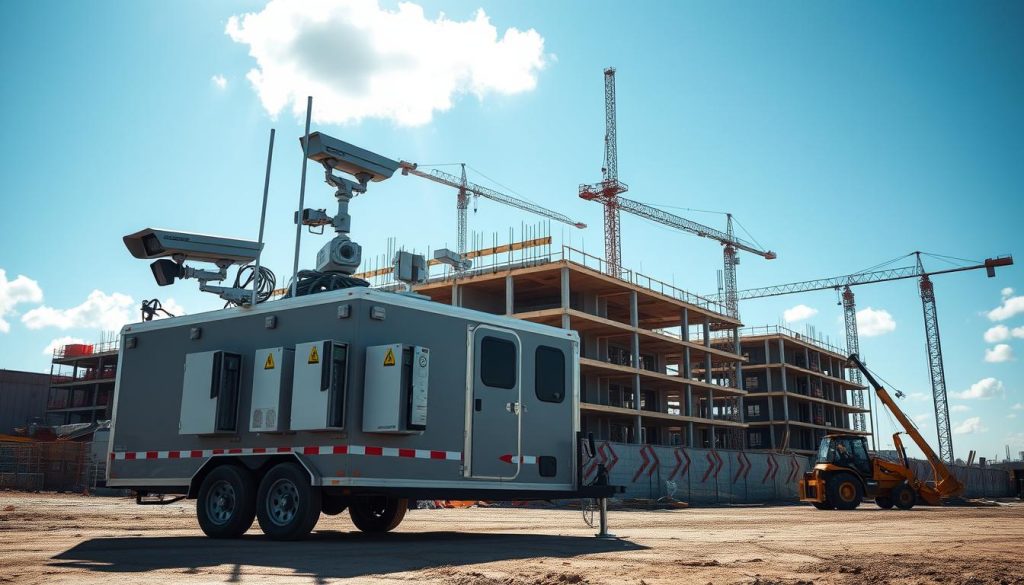
Surveillance trailers are integrated solutions. They house multiple AI-powered cameras, power supplies, and communication gear in a single, towable unit.
These trailers act as a highly visible, fortress-like deterrent. Their prominent presence alone discourages unauthorized access. They can be relocated easily as work zones shift.
Tower-based systems are often solar-powered. They elevate cameras for wide perimeter views, eliminating blind spots.
Many towers incorporate PIR (Passive Infrared) sensors. These create virtual tripwires for intrusion detection. They trigger instant alerts when movement crosses a defined boundary.
All-in-one kits and enclosures are compact and pre-configured. They are perfect for quick deployment at specific high-risk points.
Think of entry gates or material laydown yards. These packages offer a plug-and-play solution without complex installation.
Fixed Camera Styles: Bullet, Dome, PTZ, and 180° Panoramic
Fixed devices provide consistent, reliable coverage for critical stationary assets. Each style serves a unique purpose in a comprehensive system.
Bullet cameras are designed for long-range, focused monitoring. Their cylindrical shape is ideal for overseeing perimeters, fences, or remote storage areas.
They often feature powerful zoom lenses. This allows for detailed identification of subjects at a distance.
Dome cameras offer discreet, wide-area coverage. Their compact, dome-shaped housing makes it difficult for subjects to tell which direction the lens is pointing.
This uncertainty enhances their deterrent effect. They are commonly used indoors or under eaves for general area oversight.
PTZ (Pan-Tilt-Zoom) cameras provide remote-controlled, detailed inspection. Operators can pan 360 degrees, tilt up and down, and zoom in on any activity.
This flexibility makes one PTZ unit effective for monitoring large, open spaces. It can focus on incidents as they develop.
180° or 360° panoramic cameras eliminate blind spots with ultra-wide views. A single device can cover an entire warehouse or compound entrance.
They provide a complete picture of an area without the need for multiple units. This simplifies installation and reduces hardware costs.
Specialized Cameras: Thermal Imaging and Solar-Powered Kits
For unique challenges, specialized technology offers powerful solutions. These models address specific environmental or operational constraints.
Thermal imaging cameras detect heat signatures, not visible light. They create a clear image based on temperature differences.
This makes them excellent for night-time perimeter security in total darkness. They can see through light fog, smoke, and foliage where standard models fail.
Thermal technology detects intruders based on their body heat, providing reliable detection regardless of lighting conditions.
Solar-powered camera kits enable truly wireless operation in remote areas. They combine high-efficiency solar panels with battery storage.
This setup is perfect for off-grid locations or projects where running power lines is impractical. It ensures continuous operation without reliance on the electrical grid.
Both thermal and solar options represent significant advancements. They extend protection capabilities to the most challenging environments.
Most project areas will benefit from a hybrid system. Combining mobile units for flexibility with fixed devices for consistent coverage creates a resilient security posture.
Mobile trailers can secure the ever-changing perimeter. Fixed bullet and dome units guard high-value asset storage. A central PTZ provides operator-controlled inspection.
Assess your layout, project duration, and specific threats. Then, select the mix that delivers complete visibility and deterrence. For expert guidance on implementing a tailored professional construction CCTV solution, consult with specialists who understand local requirements.
Strategic Installation: Maximizing Camera Effectiveness
A methodical approach to positioning and power ensures your investment delivers maximum value. The best equipment underperforms if deployed haphazardly.
Strategic installation is the critical link between hardware capability and real-world security results. It turns specifications into a functional shield.
Identifying High-Risk Zones: Entrances, Laydown Areas, and Perimeters
Begin with a thorough walkthrough of your project areas. Your goal is to map every location where loss or incident is most likely.
Priority one is all points of access. This includes main gates, pedestrian entrances, and any gaps in perimeter fencing. These are primary entry and exit routes.
Next, focus on material storage and laydown yards. These zones hold high-value assets like copper, steel, and machinery. They are top targets for theft.
Don’t overlook equipment parking lots and fuel storage. Also, monitor high-value work-in-progress locations, like intricate formwork or installed fixtures.
Complete perimeter coverage is non-negotiable. Fence lines should have overlapping views to prevent blind spots where intruders could slip through.
Ensuring Optimal Coverage and Eliminating Blind Spots
Placement principles are key for forensic-quality video. The first rule is overlapping fields of view.
Position units so each one’s sightline is covered by another. This eliminates hidden areas and creates a continuous visual record.
Mounting height is crucial. A position about 9 feet high is often ideal. It is high enough to deter tampering yet low enough to capture identifiable facial details.
The angle should point slightly downward. This improves facial recognition and avoids capturing only the tops of heads.
Always consider lighting. Avoid pointing lenses directly at bright lights or the rising or setting sun. This backlighting can render subjects as silhouettes.
Use Wide Dynamic Range (WDR) technology in high-contrast day or night scenes. It balances light and shadow for clear evidence.
Power and Connectivity Solutions for Off-Grid Sites
Temporary or remote locations present unique challenges. Modern solutions provide reliable operation without permanent infrastructure.
For wired setups, Power over Ethernet (PoE) is efficient. It sends both data and power through a single cable. Use long-range PoE extenders for distant placements.
Wireless connectivity is often essential. 4G/LTE cellular routers provide internet backhaul for remote monitoring and alerts. Wireless mesh networks can link multiple units over a large site.
Off-grid power relies on solar technology. High-efficiency solar panels coupled with lithium battery packs can guarantee weeks of operation.
Select low-power consumption designs for cameras and sensors. This dramatically extends battery life during periods of limited sunlight.
These options ensure continuous coverage and visibility, even in the most challenging environments. They protect your security framework from failure.
For complex systems, professional installation is a wise investment. Experts ensure proper cable management, network configuration, and integration with central software.
They also use protective housings and strategic placement. This makes units obvious for deterrence while securing them against vandalism or weather damage.
Remember, a perfectly specified security solution can fail if installed poorly. Strategic deployment is what translates technical needs into effective, day-to-day protection for your people and assets.
Temporary vs. Permanent: Choosing Your Security Framework
Project managers face a fundamental choice: invest in flexible, mobile security or commit to a fixed, integrated system. This decision shapes your budget, deployment speed, and long-term operational strategy.
The project timeline and physical stability of the location are the primary factors. A short-term project with shifting work zones demands a different approach than a multi-year development.
Selecting the correct framework ensures your investment matches your specific security and operational needs. It avoids costly over-engineering or inadequate protection.
Flexible, Redeployable Systems for Short-Term Projects
Temporary solutions excel on dynamic construction sites. They are mobile, wireless, and designed for easy relocation.
Their biggest advantage is rapid deployment. You can have a fully operational system in place within hours, not weeks.
They require zero reliance on fixed infrastructure. This eliminates the need for complex wiring or permanent power sources during the early phases.
As work zones evolve, the entire security setup can move with them. This adaptability protects your investment throughout the project’s life.
Upfront capital costs are typically lower. You pay for functionality and flexibility without major civil works.
Typical components include mobile surveillance trailers and solar-powered towers. Wireless all-in-one kits that use cellular data for connectivity are also popular.
These options provide complete coverage where and when you need it most. They are perfect for projects under 18 months.
Permanent, Infrastructure-Heavy Systems for Long-Term Developments
For long-term developments or buildings under construction, a permanent framework is often justified. This involves fixed wiring, robust mounting, and integration with the structure itself.
Installation requires running conduit, installing network switches, and mounting cameras on permanent walls or columns. It is a more involved process from the start.
The benefits are substantial for multi-year projects. Wired power and data connections offer higher reliability and stability.
Permanent systems support a greater number of cctv cameras and higher data bandwidth. This allows for more detailed video and analytics.
They seamlessly integrate with other building systems. This includes access control, fire alarms, and building management software.
A permanent installation becomes a capital asset, adding value to the property and providing decades of service.
This approach is ideal for projects exceeding two years. It is also suited for securing fixed assets and high-value storage areas from the outset.
Comparing the total cost of ownership (TCO) is crucial. Temporary systems have lower initial costs but may involve recurring rental or cellular fees.
Permanent systems require a larger upfront investment. For projects spanning several years, they often offer better long-term value and lower lifetime costs.
A hybrid approach is frequently the smartest strategy. A core permanent site cctv system can cover the building shell and main entrances.
Temporary mobile units then secure the evolving interior or exterior work areas. This balances reliability with needed flexibility.
Use this simple decision matrix to evaluate your options:
- Project Duration: Under 18 months favors temporary; over 24 months favors permanent.
- Site Accessibility: Difficult or remote sites benefit from wireless, solar-powered temporary units.
- Budget: Consider both capital expenditure (CapEx) and operating expenses (OpEx) over the full timeline.
- Security Criticality: High-risk projects for theft or requiring stringent safety monitoring may justify a permanent, robust system.
Your choice directly impacts daily management and loss prevention. Align your security cameras framework with your project’s reality for optimal results.
Selecting the Right System for Your Specific Site Needs
Effective protection begins with a deep understanding of your location’s physical and operational DNA. No two projects share identical risks, layouts, or timelines.
The optimal security framework is not found in a catalog. It is engineered through a deliberate selection process that aligns technology with your unique challenges.
This final planning phase transforms generic options into a targeted shield. It ensures every dollar spent directly addresses a verified vulnerability.
Assessing Your Site Size, Layout, and Project Duration
Start with a thorough, on-the-ground evaluation. Walk the entire perimeter and interior to map the terrain.
Note the physical size and any complex topography. Identify all entry points, both official and potential gaps.
Pinpoint areas where high-value assets are concentrated. This includes material yards, equipment parking, and fuel storage.
Next, define your clear security and operational objectives. Is the primary goal to prevent tool theft? To monitor safety compliance in work-at-height zones?
Perhaps you need robust remote oversight for management. These goals directly guide technology choices.
Your project’s timeline is a decisive factor. A short-term project demands a flexible, mobile solution.
A multi-year development often justifies a permanent, infrastructure-heavy system. This initial assessment creates your selection blueprint.
Balancing Budget with Feature Requirements and Total Cost of Ownership
The purchase price of cameras is just the beginning. A realistic budget must account for the complete ecosystem.
Factor in expenses for video storage (NVRs or cloud plans), connectivity (cellular data plans), and power infrastructure.
Installation labor and ongoing maintenance are critical, often overlooked costs. This holistic view is called Total Cost of Ownership (TCO).
Investing in advanced features like AI analytics or rugged design can reduce long-term TCO. They prevent losses and minimize costly downtime.
A purely price-driven purchase carries significant hidden risks.
Incompatible components, poor durability, or a lack of technical support can lead to system failure when it is needed most.
Consider these essential cost components:
- Hardware: Units, recorders, mounts, and enclosures.
- Infrastructure: Cabling, wireless networks, and power supplies.
- Data & Storage: Ongoing cloud fees or local storage hardware.
- Labor: Professional installation and configuration.
- Lifecycle: Software updates, repairs, and potential scaling.
The Importance of Professional Consultation and Support
Engaging a specialist is a strategic move, not an extra expense. Professional consultants or system integrators bring invaluable expertise.
They conduct formal risk assessments and design compliant, integrated systems. They handle complex technical integration that in-house teams may struggle with.
After-sales support is where a provider’s value is proven. Look for comprehensive warranty coverage and reliable remote troubleshooting.
Regular software updates and the ability to scale the system as the project grows are crucial. Your provider becomes a long-term partner in project protection.
The right solution is one that is reliably effective for your specific risks. It must be manageable within your operational framework and supported by a trustworthy expert.
This tailored approach ensures your investment delivers maximum visibility, detection, and peace of mind from day one.
Securing Your Project: The Final Verdict on Surveillance Solutions
The decision to invest in advanced monitoring technology directly impacts a project’s financial health and operational continuity.
In 2023, a modern, AI-enhanced security system is fundamental for responsible construction management. It protects against multi-million dollar losses from theft and vandalism.
Essential features like HD video, superior night vision, and rugged design ensure reliable evidence capture. Compliance with upcoming security regulations and the PDPA is non-negotiable.
This technology offers a dual value proposition. It acts as a powerful crime deterrent while enabling remote project management and safety oversight.
Select your solution based on specific site needs, duration, and budget. Professional consultation is highly recommended.
Prioritize this critical investment to safeguard your people, assets, and timelines. With the right protection in place, your team can build with confidence, focused on progress.