
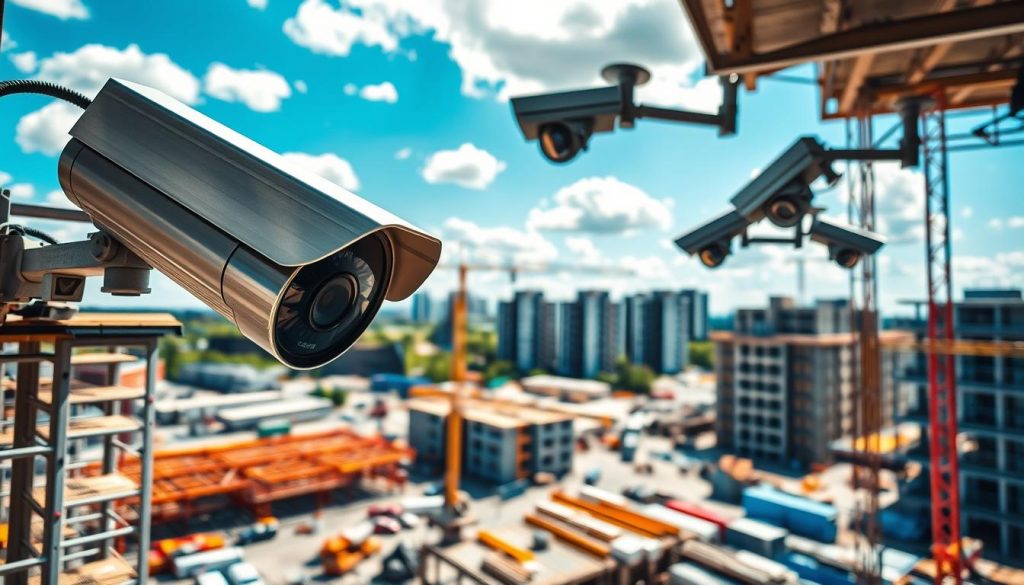
In Singapore’s fast-paced building environment, protecting your investment is paramount. The dynamic nature of these projects demands robust solutions to guard valuable assets and ensure worker safety.
Recent data reveals a troubling trend: theft and vandalism incidents have surged by 25%. Annual losses for a single location can approach $500,000. This highlights a critical need for proactive measures.
Modern video surveillance is far more than a simple theft deterrent. It serves as a fundamental tool for operational oversight and project management. Effective monitoring protects equipment and materials from significant financial risk.
Today’s integrated systems deliver a clear return on investment. They enhance overall site safety, streamline management tasks, and provide real-time visibility. This allows for quicker response to potential issues and better protection of your project’s assets.
For responsible management, a proactive strategy is non-negotiable. Advanced systems go beyond basic prevention. They improve productivity and offer comprehensive oversight, forming the backbone of a secure and efficient operation. Explore our solutions for comprehensive construction site CCTV security systems in.
Key Takeaways
- Singapore’s active building sector faces increasing threats of theft and vandalism.
- Annual losses from site crimes can reach nearly half a million dollars.
- Modern video systems are essential operational tools, not just deterrents.
- These solutions enhance safety, streamline management, and provide a strong ROI.
- A proactive surveillance strategy is critical for protecting assets and managing risk.
- Integrated monitoring improves overall site productivity and oversight.
The Critical Role of Security Surveillance in Modern Construction
Effective oversight has become a cornerstone for successful project management in today’s industrial landscape. In the building sector, this means integrating advanced video systems that offer more than just basic observation.
These tools are vital for managing complex operations and protecting valuable resources. They provide a layer of intelligence that helps managers respond to issues swiftly.
Understanding the High Stakes of Site Security
Work areas in development projects present unique vulnerabilities. They are often open, contain high-value assets, and operate around the clock.
This environment creates a perfect storm for challenges. Unauthorized access, theft of machinery and materials, and deliberate vandalism are constant threats.
The exposure of expensive tools and supplies increases the potential for loss. Without proper oversight, these locations become prime targets for criminal activity.
Quantifying the Impact: Theft and Vandalism Statistics in Singapore
Hard data reveals the severity of the problem. Work zones are 400% more likely to be stolen from compared to other commercial properties.
Approximately 80% of building firms in Singapore report experiencing theft. This highlights the pervasive nature of the issue across the industry.
Financially, the consequences are staggering. Theft and vandalism can inflate project expenses by up to 25% of the total budget.
This represents a massive drain on profitability and operational funds. For sites lacking adequate measures, theft incidence rates can approach 60%.
The fallout from these incidents extends beyond immediate loss. Project delays, increased insurance premiums, and potential legal liabilities often follow.
This cascade of effects underscores why investing in surveillance is a critical business decision. It is not merely an expense but a fundamental strategy for risk management.
Modern video solutions provide the evidence needed to address these challenges. They help control costs and protect against significant financial damage.
Current Trends Shaping Construction Site Surveillance
A new wave of smart tools is transforming passive video recording into an active, predictive asset. This evolution is critical for managing today’s complex and high-value work zones.
Modern solutions now focus on intelligence and integration. They provide not just footage, but actionable insights for better protection and oversight.
The Shift to AI-Powered Analytics and Real-Time Alerts
Artificial intelligence is at the forefront of this change. Advanced software now analyzes live feeds to understand what it sees.
It can differentiate between routine worker activity and genuine threats. This includes spotting intruders after hours or identifying unsafe behaviors that could lead to accidents.
The system doesn’t just record; it thinks. When it detects an anomaly, it sends instant notifications to site managers or a central command.
This intelligent approach leads to a much faster and more accurate response. Studies show AI analytics can improve incident detection rates by up to 40% compared to traditional manual monitoring.
Integration of Live-Streaming and Remote Access Platforms
Constant oversight is now possible from anywhere. Modern platforms stream high-definition video directly to smartphones, tablets, or computers.
Project managers and supervisors can view real-time conditions with a single tap. This grants them instant visibility into daily operations.
They can verify deliveries, check on progress, and coordinate teams without being physically present. This access empowers management to make informed decisions on the fly.
It turns a simple security feed into a powerful project management tool. Real-time time data helps optimize staffing and resource allocation across the site.
The Rising Use of Aerial and Thermal Surveillance
For large or difficult-to-reach areas, drones are becoming essential. They offer comprehensive, top-down coverage for both safety sweeps and progress tracking.
This aerial view identifies potential issues that ground-level cameras might miss. It provides a complete picture of the entire operation.
Thermal imaging is another game-changer. These specialized cameras detect heat signatures instead of visible light.
They can see people and vehicles in total darkness, through light smoke, or in heavy rain. This capability overcomes the visual obstacles that often plague outdoor sites.
Together, drones and thermal systems eliminate blind spots. They ensure surveillance is effective 24/7, regardless of lighting or weather conditions.
These technological trends combine to create a smarter, more integrated ecosystem. The result is enhanced threat identification, superior operational visibility, and a stronger deterrent against loss.
How Construction Site Theft and Vandalism Impact Your Bottom Line
Every incident of theft or damage on a project site triggers a cascade of hidden expenses that erode profitability. Understanding these financial impacts is crucial for effective risk management and protecting your investment.
The true price of crime in this sector extends well beyond the initial loss. It includes delayed timelines, higher operational costs, and potential legal headaches.
Direct Financial Losses from Stolen Equipment and Materials
Criminals often target high-value items that are easy to move and sell. Common losses include portable generators, expensive power tools, and bulk materials like copper wiring and lumber.
Replacing these assets isn’t just about the purchase price. It involves significant downtime while you source new items and file police and insurance reports.
The scale of this problem is staggering. Industry estimates suggest theft and vandalism cost the building sector an estimated $1 billion annually. This massive figure directly hits the profitability of firms across Singapore.
These direct costs create an immediate drain on a project’s budget. Without proper protection, work zones remain vulnerable to repeated incidents.
Indirect Costs: Project Delays, Insurance Premiums, and Legal Claims
A single security breach can set off a chain reaction of expensive consequences. Work often halts for investigation and replacement, causing costly project delays.
Frequent insurance claims label a location as high-risk. Insurers may respond by raising premiums, adding a recurring financial burden long after the initial event.
The potential for legal disputes also increases. Without clear video evidence, a company’s liability in accidents or property damage cases becomes harder to challenge.
Studies indicate that without a surveillance system, legal claim expenses can rise by up to 20%.
This underscores the importance of documented proof. Conversely, consistent use of monitoring systems has a proven mitigating effect.
Data shows these tools can reduce vandalism by as much as 70% over time. This directly safeguards your operational funds and enhances overall site safety.
By deterring criminal activity, you control both direct and indirect risks. This proactive approach is key to maintaining a healthy bottom line for all your sites.
Key Features to Demand in a Construction Security Camera System
Not all video systems are created equal, especially when tasked with protecting a dynamic and demanding work zone. The right combination of technical capabilities forms a comprehensive defense, addressing both obvious and hidden risks.
Focusing on core functionalities ensures your investment delivers reliable protection and clear oversight. These features work together to create a resilient monitoring solution.
High-Definition Video Quality for Clear Identification
Blurry footage is useless when details matter. High-definition resolution, with 1080p as a solid standard, is essential.
This clarity allows for the identification of individuals, reading of license plates, and collection of court-admissible evidence. It turns a recording into a powerful legal tool.
Clear imaging also enhances real-time monitoring. Operators get unambiguous visual information, enabling faster and more accurate assessment of ongoing situations.
Advanced Night Vision and Low-Light Performance
Work zones don’t become safe when the sun goes down. Effective 24/7 surveillance requires superior after-dark capability.
Units equipped with powerful infrared (IR) illuminators or advanced low-light sensors are non-negotiable. They produce clear, detailed images even in pitch-black conditions.
This ensures continuous coverage and eliminates the blind spot of darkness. It is a fundamental feature for complete site oversight.
AI Analytics for Proactive Threat and Hazard Detection
Modern analytics transform passive recording into an active security tool. Artificial intelligence software analyzes the live feed in real time.
It can set up virtual tripwires, detect removed objects, and identify loitering behavior. When an anomaly is spotted, it sends instant alerts directly to managers.
This shift enables a proactive response to potential threats before they escalate. The improvement in incident detection is significant.
AI-powered analytics can improve incident detection rates by up to 40% compared to traditional systems relying on human operators.
Vandal-Resistant and Weatherproof Durability
Outdoor industrial environments are harsh. Your monitoring equipment must be built to withstand them.
Look for high Ingress Protection (IP) ratings, like IP66 or higher. This certifies resistance to dust and powerful water jets from any direction.
Physical toughness is equally important. Vandal-resistant (IK-rated) housings prevent tampering and ensure the system remains operational.
This rugged durability guarantees reliable performance through rain, intense heat, and attempted interference. It is the foundation of a trustworthy setup.
Navigating Singapore’s Regulatory Landscape for Video Surveillance
For contractors managing high-value projects, understanding the latest government mandates is as crucial as the build itself. Operating within the law is a fundamental aspect of risk management and asset protection.
New rules establish clear standards for visual oversight. Compliance ensures your operation avoids penalties and functions with full legal backing.
Mandatory Video Surveillance System (VSS) Requirements for Major Projects
A significant regulatory change took effect on June 1, 2024. It mandates that all development projects valued at S$5 million and above must install a compliant Video Surveillance System.
The technical specifications are precise. The system must record in high-definition 1080p resolution at a minimum of 12 frames per second.
Strategic placement is also required. Units must monitor all high-risk work areas, including access points and material storage zones. This ensures comprehensive oversight of site activity.
Compliance with the Personal Data Protection Act (PDPA)
Your surveillance setup must also respect privacy laws. The PDPA obligates you to protect the personal data of individuals captured on film.
This starts with clear, visible signage notifying everyone that video monitoring is in operation. Secure handling of all recorded footage is a non-negotiable part of this compliance.
Data must be stored securely with access controls. This balances effective site security with the legal rights of workers and visitors.
Data Retention and Evidence Handling Protocols
The law sets specific timelines for keeping footage. General recordings must be retained for a minimum of 30 days.
This period extends to 180 days for video related to any reportable workplace safety and health incidents. Proper evidence handling is critical for investigations.
Maintaining a clear, unbroken chain of custody for footage is essential for its admissibility in legal or insurance proceedings.
When exporting clips to share with authorities, use approved formats like .mp4 or .avi. Following these protocols turns your system into a reliable source of factual evidence.
Adhering to these regulations transforms your visual monitoring from a simple tool into a legally sound component of your project‘s safety and protection strategy.
Deterring Crime: The Proven Effectiveness of Visible Security Cameras
Statistics reveal a powerful truth: a visible monitoring presence is one of the most effective ways to prevent loss. Its value lies not just in recording events, but in actively stopping them from happening in the first place.
This proactive approach protects your investment and maintains smooth operations. It shifts the focus from reaction to powerful prevention.
Reducing Theft Incidents by Up to 80%
Research provides compelling evidence for this strategy. Studies show that prominent security cameras can reduce criminal activity on project sites by up to 65%.
The impact on theft is even more dramatic. Comprehensive video surveillance systems have been proven to cut theft incidents by as much as 80%.
This offers a dramatic reduction in financial risk. It is a crucial finding, given that industry surveys indicate up to 92% of locations deal with theft regularly.
A proactive visual deterrent alters the cost-benefit calculation for a potential criminal. The preventive value of these systems often outweighs their use for investigation.
By stopping crimes before they occur, you avoid all associated losses, delays, and disruptions.
This directly safeguards your project’s valuable assets and operational funds.
Acting as a Powerful Psychological Deterrent to Intruders
The mere presence of cameras sends a clear signal. It communicates that the area is watched and that illegal actions will likely be recorded.
This psychological effect is a key component of crime prevention. It makes unauthorized individuals feel the increased risk of being caught and prosecuted.
To maximize this effect, strategic placement is essential. Install units prominently at all main entry points, material storage yards, and equipment parking areas.
This broad visibility broadcasts a consistent message of oversight across the entire site. It makes the system’s presence unmistakable to any potential intruders.
This visible strategy is designed to deter theft and vandalism proactively. It creates a powerful first line of defense for your operation.
How Remote Jobsite Cameras and 24/7 Monitoring Work
Gaining instant oversight of a distant worksite is now a reality, thanks to modern remote monitoring technology. This approach connects physical locations with digital command centers, enabling constant vigilance without requiring a manager on-site.
It transforms how teams handle daily operations and mitigate risks. The core of this capability lies in a integrated network of hardware and software.
The Technology Behind Real-Time Site Access from Anywhere
A robust remote setup relies on three key components. High-definition recording units capture clear video, often with infrared for night vision and motion detection for smart alerts.
These devices connect to a network video recorder (NVR) or use built-in storage. Secure internet connectivity is the vital link, transmitting data off-site.
This connection can be wired, use Wi-Fi, or employ cellular networks like 4G LTE. Finally, a cloud-based or on-premise software platform serves as the command center.
Authorized personnel log into a secure portal or mobile app from any smartphone, tablet, or computer. They gain immediate access to live streams and recorded footage.
This infrastructure provides real-time visibility into site conditions. Managers can verify deliveries, track progress, and oversee team activity from their office or home.
Live viewing enables immediate verification of alarms, allowing for a swift assessment and dispatch of a response if needed.
This proactive capability is powerful. Studies indicate that live monitoring can potentially cut theft rates by up to 40%.
Mobile Surveillance Units and Wireless Connectivity Solutions
Not every project has a fixed infrastructure. For short-term or evolving sites, mobile systems offer perfect flexibility.
These are often trailer-mounted or installed on temporary poles. They can be deployed quickly and relocated as the work zone changes.
This ensures adaptable coverage that matches the project‘s phases. A major challenge for greenfield locations is the lack of established internet.
Wireless solutions, particularly 4G LTE modems, solve this problem. Providers like Pelco design surveillance setups with built-in cellular connectivity.
This guarantees constant uptime and reliable data transmission from areas with scarce network access. The operational benefit is non-stop protection.
Round-the-clock monitoring, whether by an in-house team or a third-party operations center, is crucial. Sites are most vulnerable during nights and weekends.
Continuous surveillance ensures any unauthorized access triggers an instant notification. This allows management to act before a situation escalates.
Together, these technologies create a seamless shield. They provide unwavering oversight and deterrence, keeping assets safe around the clock.
Operational Benefits Beyond Security: Improved Site Management
Forward-thinking managers are leveraging visual data not just for loss prevention, but as a core component of efficient site management. Modern systems deliver a powerful dual benefit, transforming raw footage into actionable intelligence for smarter decision-making.
This shift turns surveillance into a strategic management tool. Companies utilizing remote visual tools report operational efficiency improvements of up to 60%.
Enhancing Productivity and Oversight with Live Feeds
Live video streams provide teams with a crystal-clear view of the entire operation. Project leaders can conduct virtual walks from their desk.
They inspect work quality and monitor subcontractor activity in real time. This saves significant time and travel costs for supervisors.
Constant visibility allows for immediate intervention if work deviates from plan. It ensures all teams are aligned and productive.
Verifying Deliveries, Tracking Progress, and Optimizing Staffing
Visual systems create an indisputable record for logistics. Managers can verify material deliveries against purchase orders using timestamped footage.
This prevents disputes with suppliers and ensures accountability. For tracking, regular video audits or time-lapse features provide visual proof of advancement.
These updates keep stakeholders informed and projects on schedule. Cameras also help optimize labor resources.
By showing which site areas are busy or idle, managers can dynamically allocate staff. This maximizes workforce productivity across the location.
This dual-purpose approach means your investment pays off daily, not just during an incident.
Strengthening Worker Safety and PPE Compliance Monitoring
Advanced analytics now play a critical role in hazard prevention. AI software can be configured to detect unsafe activity.
This includes unauthorized entry into exclusion zones. More crucially, it can identify workers not wearing required personal protective equipment (PPE).
The system sends immediate alerts to supervisors for a swift response. This proactive monitoring helps prevent accidents before they happen.
It reinforces a strong culture of safety on the project. It also provides documented evidence of compliance with workplace regulations.
This capability turns your visual system into a guardian for your team. It protects people while safeguarding your assets and timeline.
Exploring Your Options: Types of Construction Security Cameras
Modern project sites benefit from a tailored mix of visual monitoring technologies. Each device is designed for specific tasks and vulnerabilities.
Understanding these options allows you to build a robust and intelligent oversight network. The right combination creates a layered defense.
Fixed Cameras: Dome, Bullet, and Turret for Strategic Coverage
Fixed units provide constant vigilance over key zones. Dome models are often chosen for their discreet profile and wide-angle view.
They are excellent for monitoring entrances or indoor areas. Their design makes it hard for people to see which way the lens is pointing.
Bullet-style devices are built for long-distance viewing. Their directional, cylindrical shape is ideal for watching perimeters or storage yards from afar.
Turret units offer a flexible middle ground. They feature a three-axis adjustment for precise aiming without a bulky housing.
This balance makes them a versatile choice for many locations. Together, these fixed systems form the backbone of your site’s coverage.
PTZ (Pan-Tilt-Zoom) Cameras for Dynamic, Wide-Area Monitoring
For large, open sites, a PTZ unit is a powerful tool. Operators can control it remotely to pan a full 360 degrees and tilt up and down.
The motorized zoom function lets you focus on fine details from a distance. This allows a single device to survey a vast area effectively.
It can follow movement, track individuals, and inspect incidents closely. This dynamic capability makes PTZ technology very cost-effective for expansive projects.
You get the equivalent coverage of several fixed devices with one intelligent unit. It brings flexibility to your monitoring strategy.
Specialized Cameras: Thermal, Fisheye, and ANPR Systems
Some challenges require advanced tools. Thermal imaging devices detect heat signatures instead of visible light.
They can spot people and vehicles in total darkness, fog, or light rain. This makes them critical for reliable perimeter surveillance after nightfall.
Fisheye or 360-degree models provide a single, panoramic view. They eliminate blind spots in large indoor spaces like warehouses.
For managing vehicle flow, Automatic Number Plate Recognition (ANPR) systems are key. They automate gate access control and log all arrivals and departures.
ANPR technology can cross-reference license plates against a database. This tracks deliveries and flags unauthorized vehicles instantly.
The best strategy combines these types. Use fixed units for constant views, PTZ for active patrols, and specialized devices for unique threats.
This layered approach addresses specific site vulnerabilities with precision. It turns your video feed into a comprehensive intelligence asset.
Temporary vs. Permanent Surveillance Solutions: Choosing Your Fit
Worksite managers face a critical choice: deploy a flexible, temporary system or invest in a permanent, integrated network. The best path depends on your project’s timeline, budget, and physical layout.
Each approach offers distinct advantages for asset protection and operational oversight. Understanding these differences ensures your investment matches your specific needs.
Flexible, Mobile Systems for Short-Term or Evolving Projects
Temporary monitoring solutions are defined by their mobility and rapid deployment. They often use trailer-based setups, pole mounts, or wireless devices.
These units can be relocated as the work zone’s footprint changes. This adaptability is perfect for short-duration builds.
They are ideal for early-phase site works before permanent infrastructure is built. They also serve as a supplemental protection boost for high-risk periods.
The effectiveness of these mobile units is significant. Data indicates they can reduce crime rates by over 90% when deployed strategically.
This makes them a powerful tool for controlling loss on dynamic locations. They provide immediate visibility without a long-term commitment.
Fixed, Integrated Systems for Long-Term Site Security
Permanent solutions involve hardwired, fixed-installation networks. Devices are mounted on buildings or dedicated poles.
They integrate directly into the location’s power and network infrastructure. This ensures reliable, long-term operation with minimal maintenance.
These systems are recommended for large, multi-year projects. Corporate headquarters with ongoing activity also benefit from this approach.
Any site where oversight is a permanent concern should consider this option. It provides a stable foundation for comprehensive coverage.
The choice between temporary and permanent setups is not always binary. Many locations benefit from a hybrid strategy.
Consider your project timeline, budget (capex vs. opex), and layout stability. Also, think about the desired level of system integration.
A hybrid approach uses permanent devices for core areas. Temporary units then cover dynamic work zones that change frequently.
This combination offers both stability and flexibility. It tailors your management strategy to the real-world conditions of your sites.
Best Practices for Installing Construction Security Cameras
Optimal performance from your oversight equipment depends heavily on two critical factors: strategic positioning and expert setup. Following proven guidelines transforms your investment into a reliable shield for assets and people.
Correct implementation ensures every dollar spent works for you. It maximizes deterrence and delivers the clear evidence needed for management.
Strategic Placement for Maximum Coverage and Deterrence
Think of your layout as a map of vulnerabilities. Your goal is to eliminate blind spots where activity can go unseen.
Start by covering all points of entry and exit. This includes gates, fence lines, and any temporary openings.
Next, focus on zones with high-value assets. Material storage yards, equipment parking, and tool cribs are prime targets.
Mounting height is a key detail. An optimal position is around nine feet above ground.
This balances a wide field of view with protection from casual tampering. It also keeps the units highly visible as a psychological deterrent.
Pay close attention to lighting. Avoid pointing lenses directly at the sun or bright lights to prevent glare.
Ensure infrared night vision sensors have a clear line of sight. Obstructions can severely limit their detection capability after dark.
This thoughtful approach guarantees comprehensive coverage of all critical areas. It leaves potential intruders with nowhere to hide.
Professional Installation vs. DIY: Ensuring Optimal Performance
The complexity of a modern surveillance network makes expert setup highly advisable. Professional installers handle challenges you might not anticipate.
They safely run cables and configure network settings in harsh environments. They also precisely align each device for the perfect angle.
Proper weatherproofing of connections is critical for long-term reliability. A DIY attempt often leads to poor image composition and network security gaps.
Non-compliance with electrical or data regulations can render a system ineffective or even unsafe.
There is also a significant legal imperative. Approximately 80% of CCTV systems must adhere strictly to privacy laws like Singapore’s PDPA.
Professionals ensure proper signage is posted and data handling protocols are compliant from day one. This safeguards your project from legal risk while providing protection.
After setup, conduct a thorough test. Verify these key functions work correctly:
- Night vision and low-light performance across the site.
- Motion detection zones and alert accuracy.
- Remote access from mobile devices and computers.
- Recording quality and playback for evidence.
This final check confirms your security cameras are fully operational. It ensures your sites have the vigilant oversight they need.
Selecting the Right Construction Security Camera System for Your Project
Choosing the optimal visual monitoring setup requires a methodical approach tailored to your project’s unique landscape. This decision impacts daily operations, financial health, and long-term asset safety.
A strategic selection process balances immediate needs with future growth. It ensures your investment delivers maximum value and robust protection.
Assessing Your Site’s Specific Risk Profile and Coverage Needs
Begin with a thorough risk assessment. Walk the perimeter and identify high-value targets like tool storage, fuel depots, and material yards.
Review historical data for previous theft or vandalism hotspots. Understanding operational patterns helps dictate surveillance priorities.
Next, map out your coverage requirements. Calculate the number and type of units needed to eliminate blind spots.
Aim for overlapping fields of view in critical zones. This creates a seamless web of oversight across the entire location.
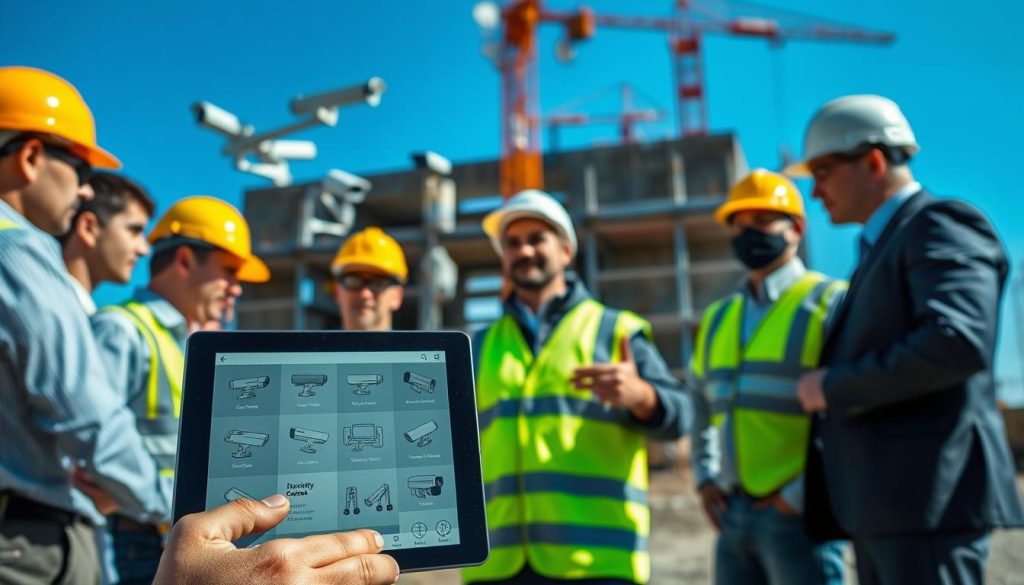
Consider the project’s size and phase. A large, multi-year development needs a different plan than a short-term renovation.
The right mix of fixed, PTZ, and specialized devices addresses specific vulnerabilities. This tailored approach forms a solid foundation for your management strategy.
Balancing Initial Investment with Long-Term Cost Savings
Look beyond the upfront price tag. A quality system is an investment that pays for itself through avoided losses.
Calculate the long-term savings from reduced theft and vandalism. Lower insurance premiums are a direct financial benefit of having a monitored site.
Avoided project delays from criminal incidents protect your timeline and budget. You also save on personnel costs with efficient remote monitoring.
Data shows the return on investment for a robust setup can be realized within the first year, primarily through these avoided losses and operational efficiencies.
High-quality cameras and analytics act as a powerful deterrent. This proactive stance significantly lowers your overall risks and financial exposure.
Future-Proofing with Scalable, Open-Platform Technology
Your technology should grow with your project. Advocate for setups built on open-platform standards like ONVIF.
This allows for easy integration with other tools like access control and alarm systems. It prevents costly vendor lock-in and gives you flexibility.
Scalability is crucial. Ensure the chosen solution can start small and expand by adding more units or advanced software modules.
As needs change, your oversight network can adapt without a complete overhaul. This protects your initial investment for years to come.
Choose technology partners with a proven track record in the industry. Brands like Pelco design rugged, reliable products for challenging environments.
Their solutions often feature built-in cellular connectivity for areas with scarce network access. This guarantees constant uptime and reliable data storage.
An informed choice today builds a safer, more efficient tomorrow. It equips your team with the intelligence needed for superior oversight and project success.
Building a Safer, Smarter, and More Secure Construction Future
The evolution from simple recording to intelligent analysis marks a new era for project oversight. Modern video systems are now a cornerstone of responsible and efficient management.
Integrating AI analytics with remote access creates a powerful platform. This goes beyond basic safety to offer real-time operational insights. Providers like Hikvision deliver easy-to-deploy solutions for effective protection.
Pelco’s smart devices detect hazards and highlight inefficiencies. This data will soon merge with Building Information Modeling (BIM) software. That integration promises unprecedented control.
Investing in robust technology safeguards assets and ensures worker well-being. It also protects timelines and a company’s reputation. Partner with experienced solution providers who understand Singapore’s unique landscape.