
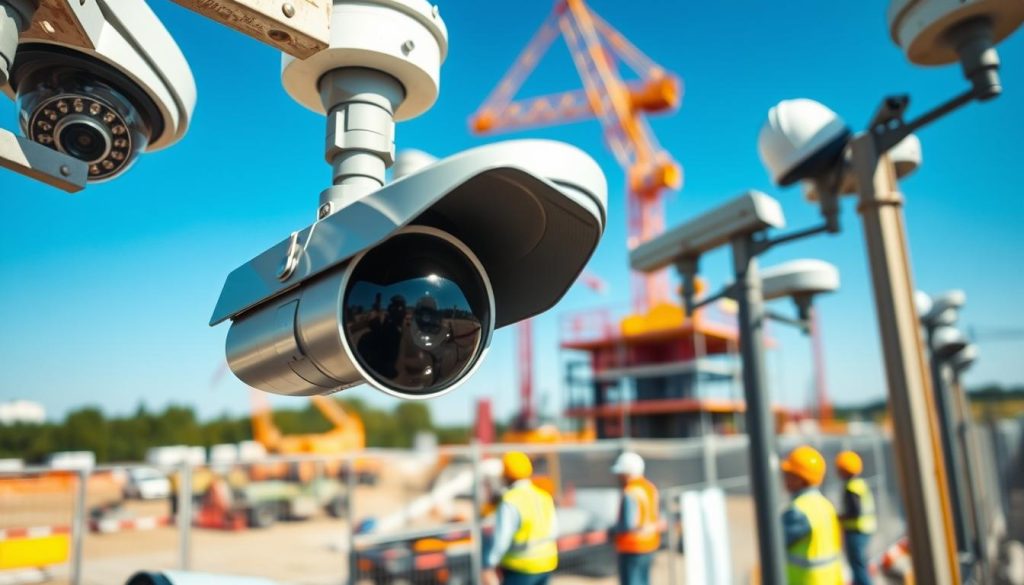
Dynamic worksites present unique security challenges. High-value equipment and materials are often exposed across large, changing areas. Protecting these assets requires a dedicated and robust approach to monitoring and access control.
Modern video surveillance is far more than simple recording. It has evolved into an integrated tool for comprehensive security, worker safety, and efficient project management. Advanced systems help prevent theft, ensure safety protocol compliance, and maintain accurate progress records.
In Singapore, new regulations like the mandatory Video Surveillance System (VSS) for major projects make choosing the right solution critical. This guide will help you navigate essential features, advanced technology, and strategic deployment for a resilient plan.
Key Takeaways
- A tailored surveillance system is vital for the unique, high-risk environment of a worksite.
- Modern technology serves a triple purpose: deterring theft, enhancing safety, and aiding management.
- Compliance with local regulations, such as Singapore’s VSS mandate, is a key driver for adoption.
- Essential features like high-definition imaging, night vision, and rugged design are non-negotiable.
- Strategic camera placement and system integration are crucial for overall effectiveness.
- This guide provides the insights needed to make a confident and informed investment.
The High Cost of Insecurity: Why Construction Sites Are Prime Targets
The temporary nature of these locations creates a perfect storm for criminal activity and safety incidents. These areas are inherently open and store valuable machinery, tools, and supplies. This combination presents major challenges for any project manager.
Without a strong protective plan, your operation is exposed. The consequences extend far beyond a simple stolen tool.
Staggering Financial Losses from Theft and Vandalism
Industry reports paint a grim picture. Contractors face annual losses between $300 million and $1 billion from theft and vandalism alone. This isn’t just about missing lumber or a few power tools.
The direct hit involves high-value equipment like excavators and generators. The financial impact cripples budgets and profit margins.
Indirect costs pile up quickly. Projects get delayed waiting for replacements. Insurance premiums can skyrocket after a claim. The downtime while sourcing new materials is incredibly costly.
A robust security presence changes the game. Studies show visible monitoring can reduce criminal incidents by up to 65%. This acts as a powerful deterrent, directly safeguarding your bottom line.
Implementing a comprehensive system is not merely an expense. It is a strategic investment in risk management.
Initial setup can range from $2,000 to over $50,000. The scale and technology dictate the price. The return on investment, however, is measured in prevented losses and maintained efficiency.
Beyond Assets: Protecting Worker Safety and Project Timelines
The human cost is equally critical. Surveillance plays a vital role in protecting people. It helps monitor for hazardous behaviors and ensures compliance with safety protocols.
This oversight provides valuable information to prevent accidents before they happen. It creates a culture of accountability and care on the project.
Unchecked issues can derail entire schedules. Missed deadlines lead to contractual penalties. Reputational damage for the firm can be long-lasting.
A proactive approach to site security is fundamental. It safeguards physical assets and human capital. This dual protection is key to successful project management.
Navigating Singapore’s Mandatory Video Surveillance System (VSS) Regulations
A new regulatory landscape in Singapore is reshaping how major projects approach on-site monitoring and safety oversight. The Ministry of Manpower (MOM) has instituted a mandatory Video Surveillance System (VSS) regulation. This rule marks a significant shift for the industry.
Understanding and implementing this mandate is crucial for any contractor operating at scale. It moves advanced video monitoring from an optional tool to a core compliance requirement.
Understanding the June 2024 Mandate for Projects Over $5M
The mandate took effect on June 1, 2024. It applies to all worksites with a contract value of $5 million and above. This threshold ensures major projects adhere to the highest standards.
This regulation was driven by a pressing need to enhance workplace safety. Concerning statistics, including 46 workplace fatalities in 2022, prompted this stricter government oversight. The VSS is a direct response to improve accountability.
Technical Requirements: HD Recording and 30-Day Storage
The technical specifications are precise and non-negotiable. Systems must deliver evidential-quality footage to be effective for investigations and audits.
Key operational requirements include:
- High-Definition Recording: All cameras must capture video in HD 1080p resolution with clear, unambiguous timestamps.
- Minimum Storage Period: Recorded footage must be securely retained for at least 30 days. This allows ample time for incident review.
- Secure Data Management: The system must ensure video records are intact and accessible for the full retention period.
These standards ensure the collected video data is reliable for safety audits and any necessary legal proceedings.
Compliance as an Investment, Not Just a Cost
Viewing this mandate as a mere expense is a strategic mistake. A properly implemented VSS is a powerful investment in risk management and operational control.
A robust video surveillance system transforms a regulatory checkbox into a tool for proactive management and loss prevention.
The consequences of non-compliance are severe. Companies face fines of up to $50,000. Firms with poor safety records may also be barred from future government tenders.
However, the benefits extend beyond avoiding penalties. Enhanced monitoring improves overall site safety and reduces liability. It provides valuable data for project management and dispute resolution.
Financial support is available. Small and medium-sized enterprises (SMEs) can offset costs through the Productivity Solutions Grant (PSG). This makes the initial investment more accessible while building a culture of safety and accountability.
How Video Surveillance Does More Than Just Record
Today’s video monitoring solutions are powerful operational hubs, not just silent observers. They transform raw footage into actionable intelligence for daily decision-making.
This shift turns a basic security measure into a core management tool. It delivers value far beyond theft prevention.
A modern setup provides a live window into every corner of your operation. Managers gain real-time visibility to oversee activities, coordinate logistics, and ensure smooth workflows from a single location.
Proactive Deterrence and Real-Time Incident Response
The psychological impact of visible cameras cannot be overstated. Their presence acts as a strong deterrent against unauthorized entry and malicious acts.
This visual warning significantly lowers the risk of theft and vandalism. It creates a perception of constant oversight that discourages misconduct.
When an event occurs, live feeds enable immediate action. Supervisors can dispatch help or intervene directly before a situation escalates.
This capability is crucial for managing safety incidents or perimeter breaches. It turns passive recording into an active response mechanism.
Enhancing Safety Protocols and PPE Compliance
Video technology is a vital partner in building a culture of safety. It provides an unbiased record of daily operations and protocol adherence.
Advanced analytics can now automatically detect safety violations. This includes identifying workers not wearing mandatory hard hats or high-visibility vests.
This proactive compliance monitoring helps enforce standards consistently. It reduces accident risks and associated liability for project leaders.
The footage also serves as a training tool. Managers can review incidents to improve future safety briefings and operational procedures.
Project Management and Progress Documentation
The recorded timeline becomes a valuable asset for project oversight. It provides a continuous visual log of work completed, material deliveries, and contractor performance.
This objective record is indispensable for resolving disputes. It clarifies what work was done and when, protecting all parties.
Key management applications include:
- Progress Verification: Creating detailed reports for clients using actual footage as proof of milestones reached.
- Time-Lapse Creation: Compiling footage into compelling videos for stakeholder updates and marketing materials.
- Process Optimization: Analyzing video data to identify workflow bottlenecks or equipment utilization patterns.
Integrating this visual data with other management software unlocks deeper insights. It supports smarter decisions about logistics, scheduling, and resource allocation.
The most effective surveillance systems are those fully embraced by project managers, not just security personnel. They become the eyes for operational excellence.
Ultimately, a multifunctional video system contributes to transparency, accountability, and efficiency. It safeguards people, property, and the project timeline simultaneously.
Essential Features of a Top-Tier CCTV Construction Site System
Not all video cameras are created equal, especially when tasked with securing a challenging outdoor environment. The effectiveness of your entire monitoring plan hinges on selecting hardware with features engineered for harsh, demanding conditions.
This checklist details the non-negotiable technical specifications. Understanding these specs empowers you to compare products accurately and build a reliable security solution.
High-Definition Resolution and Clarity for Identification
Blurry footage is useless for identification and evidence. High-definition imaging is the absolute baseline.
Look for a minimum of 1080p Full HD. Many modern systems offer 4MP or higher resolution. This clarity is crucial for recognizing individuals, reading vehicle plates, and documenting details.
It also ensures compliance with regulations like Singapore’s VSS mandate, which requires evidential-quality video.
Superior Low-Light and Night Vision Performance
Projects don’t stop at sunset, and perimeter lighting is often minimal. Your cameras must see clearly in near-total darkness.
Superior low-light performance relies on large image sensors and true Wide Dynamic Range (WDR). WDR balances extreme light and dark areas in a single frame.
For complete darkness, powerful infrared (IR) illuminators are essential. They provide invisible light for clear black-and-white night surveillance, enabling true 24/7 monitoring.
Rugged, Weatherproof, and Vandal-Resistant Housing
The physical housing is as important as the electronics inside. Equipment must endure dust, monsoonal rain, and potential impacts.
An IP67 rating certifies protection against dust ingress and immersion in water. This is vital for tropical climates.
An IK10 rating indicates maximum resistance to vandalism and physical force. This durability deters tampering and ensures continuous operation.
Wide-Angle and Pan-Tilt-Zoom (PTZ) Capabilities
Strategic lens selection maximizes coverage and operational flexibility. Different views serve different purposes.
Wide-angle or panoramic lenses are ideal for monitoring large, open zones like material storage yards. They reduce the total number of units needed.
Pan-Tilt-Zoom (PTZ) cameras offer unmatched control. Operators can remotely direct the view, zoom in on details, and actively track movement across a vast area.
For cameras on mobile units or in windy spots, Digital Image Stabilization (DIS) is a valuable feature. It keeps the footage steady and usable.
Choosing cameras without these rugged features is a costly mistake. They are an investment in uninterrupted visibility and long-term reliability.
By prioritizing these core features, you build a system that doesn’t just record events. It captures usable evidence, deters wrongdoing, and withstands the project’s entire lifecycle.
The Power of Remote Access and Live Monitoring
A leap in operational control comes from the power to see your worksite from anywhere, at any time. Modern surveillance transcends physical boundaries, delivering live visual information directly to decision-makers.
This capability transforms a static recording system into a dynamic management tool. It ensures constant oversight and enables rapid response.
Managing Site Security from Anywhere via Mobile Apps
Secure mobile applications and web interfaces are the gateways to this new level of control. Authorized personnel use smartphones or tablets to view live feeds and review recorded footage.
This remote access frees project leaders from the need to be physically present. They can oversee multiple locations simultaneously from a single dashboard.
Real-time visibility is the key benefit. Managers can verify alarm triggers instantly and assess incidents as they unfold.
They can then provide immediate remote guidance to on-site staff. This proactive approach drastically cuts response time.
Instant push notifications alert teams to motion events or perimeter breaches. Collaboration is also streamlined.
Clients, safety officers, and other stakeholders can be granted secure, view-only access. This fosters transparency and shared accountability for the project.
The Role of 4G/Wireless Connectivity in Off-Grid Sites
Many project locations lack fixed internet infrastructure, especially during initial phases. Reliable wireless connectivity solves this challenge.
4G LTE and emerging 5G networks provide the backbone for video transmission in these areas. Cellular routers create a stable data link for the entire monitoring setup.
This technology enables rapid deployment. Wireless systems require no extensive cabling for data transmission.
They offer unmatched flexibility for temporary or changing layouts. Providers like Milesight offer mobile surveillance trailers and towers.
These integrated solutions combine 4G connectivity with solar power, creating self-sufficient security posts for truly off-grid sites.
For urban projects in Singapore, wireless options simplify installation where running cables is difficult. In more rural construction sites, they are often the only viable option.
Embracing this technology ensures your security and monitoring capabilities are active from day one. It turns remote oversight from an ideal into a practical reality.
Understanding Different Types of Construction Site Cameras
Modern surveillance technology offers a diverse toolkit, with each camera type engineered for a specific role. A strategic mix of designs is key to building a resilient visual network.
This portfolio approach addresses everything from broad perimeter views to detailed identification. It ensures no critical zone is left unprotected.
Bullet Cameras: For Long-Range, Fixed Monitoring
Recognizable by their cylindrical shape, bullet cameras are the sharpshooters of your security plan. They excel at providing a fixed, focused view over long distances.
Their design often houses powerful lenses. This makes them perfect for watching specific, high-value points.
Ideal applications include monitoring main gates, perimeter fences, and storage areas for equipment. They deliver clear, detailed recording of activity in these critical areas.
Dome Cameras: For Discreet, Vandal-Resistant Coverage
These units feature a compact design housed under a durable, often smoked dome. Their profile is more discreet compared to bullet models.
The housing is typically built to withstand tampering, with high IK ratings for impact resistance. This makes them a robust choice for both indoor and outdoor use.
They are well-suited for site offices, entryways, and interior spaces. Their presence acts as a deterrent without an overly obtrusive look.
PTZ Cameras: For Actively Tracking Suspicious Activity
Pan-Tilt-Zoom (PTZ) cameras provide unmatched operational flexibility. Operators can remotely control the unit to pan left/right, tilt up/down, and zoom in optically.
This allows one camera to survey a very large, open area. It can also actively follow movement or zoom in on details for closer inspection.
They are excellent for guarding material laydown yards or parking lots. During an incident, security personnel can actively track the situation in real-time.
Specialized Cameras: Thermal, Panoramic, and AI-Powered
Beyond standard models, advanced units bring unique capabilities to your project.
- Thermal Imaging Cameras: These detect heat signatures instead of visible light. They provide reliable detection in total darkness, light fog, or smoke, making them ideal for critical perimeter security.
- Panoramic Cameras: Using multiple sensors, these can capture a 180° or 360° field of view from a single point. They drastically reduce blind spots in complex zones like intersections or crowded storage areas.
- AI-Powered Cameras: With processing built into the device (edge AI), these smart cameras analyze video on the spot. They can perform real-time analytics like unauthorized intrusion detection, vehicle identification, and safety gear compliance checks.
The most effective monitoring strategy combines these types. A layered system uses fixed bullet cameras for choke points, discreet dome units for buildings, PTZ for wide-area patrol, and specialized models for unique challenges.
Think of your camera selection as building a team. Each member has a specialized skill that, when combined, creates a formidable defense.
This balanced portfolio ensures comprehensive coverage, detailed evidence collection, and proactive threat management for your entire project lifecycle.
Mobile and Rapid-Deployment Solutions: Trailers, Towers, and Kits
When fixed infrastructure is absent or impractical, mobile surveillance units step in to fill the gap. Traditional wired setups often struggle with the evolving nature of temporary work zones.
Innovative rapid-deployment options solve this problem. They provide immediate visual oversight without lengthy installation.
These agile systems keep pace with shifting project phases. They ensure protection from the very first day on location.
When to Choose a Solar-Powered CCTV Tower
A solar-powered tower is a standalone sentinel. It uses a tall mast to elevate cameras for a commanding view.
This design is perfect for monitoring large perimeters. It covers material yards and access roads with wide-area visibility.
The solar-powered operation is a key advantage. It functions completely independent of the electrical grid.
This makes it ideal for projects in early phases. Remote locations with limited power infrastructure benefit greatly.
Companies like Milesight offer robust tower solutions. They emphasize fast setup and ruggedness for harsh environments.
The Advantages of All-in-One Mobile Surveillance Trailers
Think of a mobile trailer as a complete security station on wheels. It houses multiple high-resolution cameras, a recording unit, and communication gear.
Power often comes from a hybrid solar and battery system. This ensures continuous operation.
These trailers offer active deterrence through their highly visible presence. They can be easily towed and repositioned as the project’s focus shifts.
This provides continuous coverage without investing in permanent infrastructure. It’s a flexible answer to dynamic security challenges.
Mobile trailers transform security from a static fixture into an asset that moves with your project’s heartbeat.
Flexible Standalone Kits for Temporary Points of Interest
For pinpoint monitoring, all-in-one portable kits are the most flexible option. They consist of a single camera, solar panel, and battery pack in a compact form.
These kits are designed for quick installation at a specific hotspot. Examples include a temporary storage container or a remote excavation point.
Their wireless design allows for deployment in mere hours. This is perfect for addressing sudden security needs or monitoring high-value assets in isolated areas.
Adopting these agile solutions ensures your protective measures are always relevant. They adapt to the project’s changing landscape seamlessly.
Artificial Intelligence (AI) on the Edge: Smarter Site Security
Imagine a security system that not only watches but also understands what it sees. This is the promise of edge AI, where powerful analytics run directly on the camera. It transforms passive recording into an intelligent, proactive guardian.
This technology processes video data locally, at the source. It enables instant decision-making without relying on a distant server. The result is faster alerts, reduced bandwidth use, and enhanced privacy for your operation.
AI-Powered Intrusion Detection and Virtual Tripwires
Forget about motion sensors that alarm for every passing cat. Advanced detection now uses artificial intelligence to recognize specific objects. Administrators can draw virtual boundaries on a live feed.
These digital lines act as smart tripwires. The system triggers an alert only when a person or vehicle crosses them. This targets unauthorized entry with precision.
It drastically cuts down on false alarms from animals or weather. Immediate notifications enable a real-time response. Integrated strobe lights or sirens can activate automatically to deter intruders.
This creates a dynamic perimeter security layer. It protects high-value storage zones and remote area perimeters effectively. Your team can focus on genuine threats.
Automated PPE (Hard Hat, Vest) Compliance Monitoring
Ensuring everyone wears their safety gear is a constant challenge. AI-powered monitoring provides an unbiased solution. Computer vision scans the feed for mandatory personal protective equipment.
It can identify workers not wearing hard hats or high-visibility vests. Supervisors receive instant alerts for these violations. This allows for immediate on-the-spot correction.
This technology reinforces a culture of safety and accountability. It provides objective records for safety audits and training. Over time, it helps reduce accident risks and associated liability.
Automated compliance checks turn video surveillance into a continuous safety partner, not just a security tool.
License Plate Recognition (LPR) for Gate and Vehicle Management
Managing vehicle traffic is crucial for logistics and access control. License Plate Recognition (LPR) cameras automate this process. They read plate numbers in real-time as vehicles approach the gate.
This data is compared against pre-approved white lists or black lists. Authorized vehicles gain automatic entry, streamlining flow. Unauthorized ones are flagged for review.
Every entry and exit is logged with a timestamp and image. This creates an accurate log for management and security investigations. It helps prevent theft and monitors subcontractor arrivals.
Integrating LPR with your gate control system enhances perimeter defense. It adds a powerful layer of automated recognition to your overall plan.
Adopting these AI features represents a forward-thinking investment. It elevates your camera network from a recording device to an intelligent analyst. This smarter approach mitigates risks more effectively and provides valuable business intelligence.
Storage Solutions: On-Site NVR vs. Cloud vs. Edge Recording
The integrity of your entire surveillance operation hinges on one critical component: where and how the video data is stored. This decision shapes your ability to access evidence, comply with regulations, and protect your investment.
Choosing the right architecture is a balance of security, accessibility, and budget. Each method offers distinct advantages for different project needs.
Balancing Data Security, Accessibility, and Cost
Three primary methods exist for managing your visual records. Understanding their core trade-offs is essential.
- On-Site Network Video Recorder (NVR): This is a centralized hardware unit placed in a secure office. It gives you full physical control over all records. It offers high-capacity local storage without ongoing fees. The risk is physical damage to the device from theft or environmental hazards.
- Cloud Storage: Footage is encrypted and sent to remote servers via the internet. It provides excellent off-site backup and access from any location. This comes with monthly subscription costs and requires a stable, high-bandwidth connection.
- Edge Recording: Video is saved directly on a microSD card inside the camera or a small local server. This is perfect for wireless or mobile units where running cables to an NVR is tough. It is highly decentralized but may have limited capacity.
Your choice impacts how quickly you can retrieve footage for an investigation. It also affects long-term operational costs.
Ensuring Redundancy and Meeting 30-Day Retention Rules
Relying on a single method is risky. A hybrid strategy often provides the best protection for your assets.
For example, use an on-site NVR for primary recording and daily management. Then, back up critical event footage to the cloud. This ensures business continuity if the local hardware is compromised.
Meeting Singapore’s mandatory 30-day retention rule requires careful calculation. Your total storage capacity must account for several factors.
These include the number of cameras, their resolution, frame rate, and the efficiency of the compression codec. Modern codecs like H.265+ use less space while maintaining video quality.
A well-planned storage strategy turns raw footage into a reliable legal and managerial asset. It ensures vital evidence is always available.
Proper planning safeguards your records for insurance claims and regulatory audits. It is a fundamental part of a robust secure your site strategy. This foresight protects your project over time.
Powering Your Security: Electrical and Solar Options
Before a single camera can capture footage, a fundamental question must be answered: how will it be powered? A reliable energy source is the lifeline of your entire surveillance network. This is a primary challenge in environments without established infrastructure.
Initial planning must account for delivering electricity to recording equipment and sensors. The right strategy prevents costly gaps in your protective coverage.
Planning for Power in Temporary and Remote Locations
Many projects begin with no stable grid connection. This creates a significant hurdle for continuous monitoring. Traditional solutions include portable generators and tapping into temporary site power poles.
For units located far from these sources, running long electrical cables is often impractical. The expense and labor involved can be prohibitive. This makes battery-based or wireless options highly attractive for remote placement.
These independent solutions ensure security remains active from day one. They are crucial for early-phase deployment where other utilities are not yet available.
The Long-Term Benefits of Solar-Powered CCTV Systems
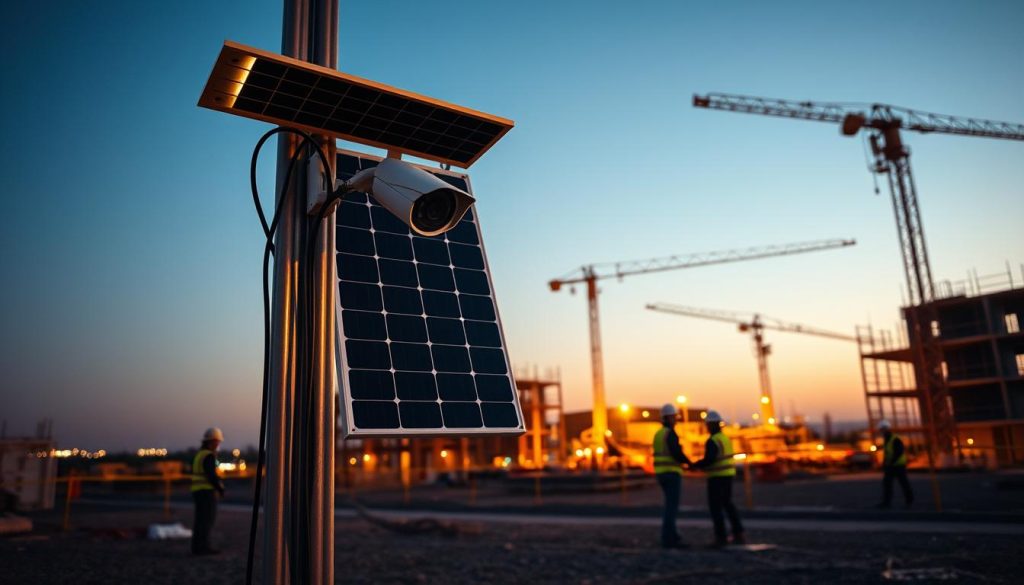
Solar-powered units have emerged as a game-changing answer. They combine high-efficiency photovoltaic panels with deep-cycle batteries. This creates a self-sustaining security post.
Systems like solar towers or portable kits can operate for weeks without direct sunlight. They provide uninterrupted surveillance in the most off-grid areas of a project. This resilience is a major advantage.
The long-term benefits are substantial. They eliminate ongoing fuel costs for diesel generators. This reduces the operational carbon footprint and minimizes routine maintenance.
There is no need for frequent refueling trips. Solar power also enhances overall system resilience. Your monitoring stays online during main power outages.
Investing in renewable power transforms a recurring operational expense into a one-time strategic asset. It future-proofs your security infrastructure.
Selecting the right power strategy depends on project duration, location, and budget. A hybrid approach often works best. Planning for this from the outset ensures your visual data is always being collected.
This foresight protects your investment over time and delivers the information you need.
Strategic Camera Placement for Maximum Coverage
Maximizing the deterrent and evidentiary value of your equipment depends entirely on a well-considered placement strategy. A high-quality unit becomes far less effective if it’s pointed at an empty wall.
Your layout plan is the blueprint for a truly secure environment. It ensures every dollar invested in technology translates into tangible protection.
Critical Zones: Entrances, Exits, and Material Laydown Yards
Focus your initial planning on high-traffic and high-value locations. These are the nerve centers of your project’s vulnerability.
Primary zones demand constant visibility. All vehicle and pedestrian access points must be covered to log everyone entering and exiting.
Material storage and laydown yards are prime targets for theft. These areas house your most valuable assets and supplies.
Equipment parking lots for excavators and generators also require vigilant monitoring.
- Site offices for protecting sensitive data and petty cash.
- Perimeter fences to detect unauthorized intrusion.
- High-risk work area like scaffolding, excavations, and zones under crane loads for safety oversight.
Eliminating Blind Spots and Ensuring Overlapping Fields of View
Blind spots are where illicit activity occurs undetected. A strategic layout eliminates these vulnerabilities.
The goal is to create a continuous visual net across the entire project. Position units so their fields of view overlap.
This overlap ensures that if one camera is blocked or fails, adjacent units still capture the activity. It leaves no gap for perpetrators to exploit.
Survey the location thoroughly before installation. Walk the perimeter and identify all potential hiding spots or obscured areas.
A professional site survey is often the best investment. It maps out an optimal grid for comprehensive detection.
Mounting Considerations for Height, Stability, and Visibility
How you install each unit is as crucial as where you place it. Proper mounting guarantees clear, usable video.
Height is a key factor. Install cameras typically 3 to 4 meters above ground level.
This elevation provides a broader perspective. It reduces the risk of tampering and avoids obstruction by passing vehicles or stacked materials.
Mounting structures must be extremely stable. Sturdy poles or brackets prevent shake from wind or nearby machinery.
Blurry footage from a wobbly camera is useless for identification. Stability is non-negotiable for evidence quality.
Consider the psychology of placement. Prominently visible units act as a powerful deterrent against crime.
In some sensitive areas, a more discreet placement can be beneficial. It may catch determined perpetrators off guard.
A thoughtful plan balances these tactics. It maximizes each unit’s effectiveness and ensures long-term operational integrity for your project’s security.
Choosing Between Wired and Wireless CCTV Systems
Two distinct technological paths exist for linking your cameras to the recording hub: one anchored by cables, the other liberated by airwaves. This fundamental choice shapes your project’s setup, daily operation, and adaptability.
Your decision hinges on a classic trade-off. It balances permanent reliability against temporary flexibility. The nature and duration of your work will heavily influence the best path forward.
Reliability and Infrastructure Needs of Wired Systems
Wired setups are the traditional powerhouse. They typically use Power over Ethernet (PoE) technology. A single cable delivers both electrical power and high-bandwidth data to each unit.
This creates a stable, high-performance connection. You get excellent video quality with minimal signal interference. The power supply is also consistently reliable.
The significant drawback is the extensive installation effort. It requires trenching for cables, mounting protective conduit, and connecting each camera back to a central network switch.
This process can be costly and disruptive on a live project. It is best suited for long-term developments with fixed structures and readily available power infrastructure.
The Flexibility and Deployment Speed of Wireless Solutions
Wireless systems transmit video data via Wi-Fi mesh networks or cellular connections like 4G and 5G. They often pair this with independent power from batteries or solar panels.
This design drastically reduces or eliminates the need for data cables. It enables rapid deployment and easy relocation of units.
These solutions are ideal for temporary projects or remote zones. They work where running cables is impossible or too expensive.
Think of areas across active roadways or large excavations. A wireless kit can be operational in hours, not days.
Potential challenges include signal reliability. Distance, physical obstacles, and radio interference can affect performance.
Managing battery life or solar charging cycles is another key consideration for maintaining power autonomy.
For a permanent structure on a multi-year project, a wired system often offers the most dependable operation. It provides a lower total cost of ownership over time.
For fast-moving, temporary, or changing work areas, the agility of a wireless setup is unmatched. It provides security from day one without major civil works.
The most strategic approach is often a hybrid system. Use wired cameras for core, permanent buildings and entry points.
Then, deploy wireless units for temporary material yards or remote perimeter zones. This balances rock-solid reliability with agile coverage.
The optimal architecture isn’t about choosing one over the other. It’s about strategically deploying each technology where its strengths are most valuable for your specific security priorities.
Integrating CCTV with Your Broader Site Security Plan
Think of your video network as the central hub that connects and empowers every other protective measure. A truly resilient plan weaves visual monitoring into a seamless fabric with access control, alarms, and human response.
This holistic approach transforms isolated tools into a unified command center. It ensures a faster, smarter reaction to any incident.
Linking Cameras with Access Control and Alarm Systems
Electronic gates and doors are your first line of defense. Integrating them with your visual network creates a powerful verification layer.
When a card is swiped at a gate, the nearest unit can automatically display the live feed. Guards instantly confirm the person’s identity before granting entry.
This link is crucial for perimeter intrusion detection. Fence sensors or infrared beams can trigger an immediate alert.
Integrated cameras then provide instant visual assessment. Operators distinguish between a real breach and a false alarm from wildlife.
This integration creates a coordinated response protocol. An alarm can trigger specific actions across the entire system.
PTZ camera units can swing to pre-set positions. Recording priorities shift to capture high-quality evidence.
Strobe lights or sirens may activate automatically to deter intruders. This multi-layered reaction happens in seconds, not minutes.
When your alarms, gates, and eyes work as one team, your perimeter becomes an intelligent barrier, not just a physical one.
Coordinating with On-Site Security Personnel
Technology excels at monitoring vast areas, but human judgment is irreplaceable. Your visual network acts as a powerful force multiplier for security teams.
Guards in a control room can patrol the entire project virtually. They investigate suspicious sounds or activities remotely before dispatching a physical team.
This extends their effective reach and keeps them safer. They gather precise information about an incident’s location and nature.
Mobile apps allow this management capability from anywhere. Supervisors can direct attention to live alerts on their smartphones.
Recorded footage from integrated systems provides irrefutable evidence. It is vital for post-incident investigations and insurance claims.
This visual record also helps resolve disputes between contractors or with visitors. It creates an objective timeline of events.
The result is a unified security and operations environment. It is greater than the sum of its individual parts.
This approach ensures every response is documented and informed. It enhances overall protection for your people, assets, and project timeline.
Key Questions to Ask Before You Buy
Procuring a video monitoring system requires a due diligence process focused on scalability, support, and lifetime costs. The right questions separate a strategic investment from a short-term fix.
This checklist ensures your chosen solution meets immediate needs and adapts to future challenges. It protects your budget and operational integrity over time.
Scaling for Future Site Expansion or Redeployment
Your project’s footprint will change. A rigid system becomes a liability as work zones shift or expand.
Ask suppliers about hardware scalability. Can the network video recorder support additional camera channels easily?
Investigate if the technology uses open standards. Proprietary ecosystems can lock you into a single brand, limiting future options.
For contractors moving between sites, redeployment is key. Inquire if components are designed for easy demounting and reinstallation.
Mobile units like surveillance trailers offer inherent flexibility. They should be part of the discussion for dynamic areas.
Vendor Support: Installation, Maintenance, and Local Service
Reliable technology is only half the equation. Strong vendor backing completes your protective plan.
Professional installation is crucial for optimal performance. It ensures correct placement and configuration from day one.
Clarify the warranty period on all hardware. Understand what failures are covered and for how long.
Local service presence in Singapore is a major advantage. A rapid-response team can address issues quickly, minimizing downtime.
Ask for specific Service Level Agreements (SLAs). These define response times for repairs and remote troubleshooting support.
A provider with deep local expertise understands the unique environmental and regulatory challenges you face.
Total Cost of Ownership: Beyond the Initial Purchase Price
The upfront price tag is just the beginning. True budgeting requires a full view of all ongoing expenses.
Calculate the Total Cost of Ownership (TCO). This includes installation labor, regular maintenance, and potential repair costs.
Software licensing fees are a common recurring charge. Some advanced analytics or management features require annual subscriptions.
If using cloud storage or cellular data for transmission, factor in those monthly plans. These can add up significantly over a multi-year project.
Don’t forget indirect costs like staff training for the new system. Ease of use impacts long-term adoption and effectiveness.
Use this final checklist when evaluating proposals:
- Scalability: Can I add more cameras later? Is the NVR channel capacity sufficient?
- Redeployment: Is the hardware rugged enough for multiple deployment cycles?
- Support: What is included in the warranty? Is there a local Singapore service team?
- References: Can the vendor share case studies from similar local construction projects?
- TCO: What are all projected costs over the next 3 years, including subscriptions and data plans?
Thorough due diligence prevents unexpected expenses. It guarantees your investment delivers value throughout the project lifecycle and beyond.
Top CCTV System Considerations for Singapore’s Environment
The final layer of resilience for your monitoring network is tailored to the local climate and support ecosystem. Success here ensures your investment performs reliably from day one through the project’s entire lifecycle.
Singapore’s tropical setting presents a unique set of environmental challenges. Equipment must endure constant heat, high humidity, and intense rainfall. Selecting hardware and a partner built for these conditions is non-negotiable.
Withstanding Tropical Heat, Humidity, and Heavy Rain
Prolonged exposure to high temperatures can degrade electronic components and lens optics over time. Look for a wide operating temperature range on product datasheets, such as -40°C to 60°C.
This specification guarantees functionality during the hottest afternoons. It also ensures cold startup capability if needed. Humidity is an equally persistent foe.
Constant moisture in the air can lead to internal fogging, which obscures the video feed. Cameras should have anti-fogging seals or heated housing options. This keeps the view clear during sudden temperature shifts.
Torrential rain is a regular occurrence. A high Ingress Protection (IP) rating is critical for uninterrupted monitoring. An IP67 or IP68 rating certifies the unit is fully sealed against dust and water immersion.
This protection is vital during monsoon seasons. It prevents failure when equipment is subjected to driving rain for extended periods.
Coastal projects face the additional challenge of salty, corrosive air. This can accelerate rust on metal brackets and housing. Opt for units with corrosion-resistant coatings or marine-grade materials.
These environmental specs directly impact long-term reliability. They prevent costly downtime and maintenance visits. Your system must be as resilient as your project timeline.
Selecting a Provider with Strong Local Expertise and Support
Hardware is only one part of the equation. Partnering with a provider that has deep roots in Singapore delivers operational advantages. Local knowledge translates into practical, effective solutions.
A Singapore-based expert understands the mandatory Video Surveillance System (VSS) regulations intimately. They can advise on compliant deployment and data management practices. This ensures you meet all legal requirements from the start.
They also possess invaluable insight into local construction practices and site layouts. This allows for advice on optimal camera placement for specific local conditions. It maximizes coverage and effectiveness.
Swift on-ground support is perhaps the greatest benefit of a local partner. When an issue arises, a technician can be on-site quickly to minimize security gaps.
Local providers stock critical spare parts domestically. This drastically reduces wait times for repairs. Familiarity with local permitting and compliance processes streamlines installation.
Providers like ED Viston (+65 8313 4578) exemplify this model. They combine robust product offerings with dedicated Singaporean support. This end-to-end local expertise safeguards your operation.
Tailoring your system to the weather and choosing a local partner are the final, crucial steps. They build a security solution that is both robust and resilient for the long haul.
Making the Informed Investment for Your Singapore Construction Site
The journey toward a fully protected worksite culminates in making an informed, strategic investment. This guide has equipped you to navigate the complex landscape of modern visual monitoring.
Investing in a top-tier system is a decisive move. It safeguards your financial assets, ensures workforce safety, and protects project timelines. Prioritize features like HD imaging, night detection, and rugged design for clear evidence.
Embrace flexible solutions like mobile trailers. They adapt to dynamic project needs. Adherence to Singapore’s VSS mandate builds a culture of accountability.
Consider total ownership costs, vendor support, and the tropical environment. For a tailored security plan, consult local experts. They translate this information into a resilient deployment for your specific needs.