
Keeping an eye on your property can be a challenge in Singapore. Many locations lack easy access to a traditional wired internet connection or a permanent power source.
Cellular-connected surveillance systems solve this problem. They provide a reliable, wireless monitoring solution for places where standard setups fail.
This technology is a game-changer for construction sites, remote landed properties, and even temporary events. It is also perfect for monitoring HDB corridors or a vacation home.
Advancements in solar power, battery life, and island-wide network coverage make these devices more practical than ever. Top brands like Hikvision, TP-Link, and Dahua offer strong options in the local market.
This article is your comprehensive buying guide. We will help you understand the technology, compare top models, and make an informed decision for your specific needs in Singapore.
Key Takeaways
- These wireless devices are ideal for locations without standard internet or power.
- They offer reliable surveillance for construction sites, landed properties, and HDB corridors.
- Modern improvements in solar panels and batteries enhance their usability.
- Singapore’s extensive cellular network supports stable connections.
- Leading brands provide various models suited for different needs.
- This guide will help you compare features and choose the right system.
Understanding 4G Security Cameras and Their Role in Modern Surveillance
Imagine a watchful eye that operates independently, needing only sunlight and a cellular signal. This is the promise of a modern cellular surveillance device. It is a standalone unit that transmits data over an LTE cellular network, bypassing the need for Wi-Fi or Ethernet cables entirely.
The core components are simple yet powerful. You have the imaging unit itself, a slot for a local data SIM card, and a built-in rechargeable battery. Often, an integrated or separate solar panel completes the kit. This combination creates a self-sufficient monitoring station.
How 4G Connectivity Transforms Remote Surveillance
This technology redefines where monitoring can happen. Deployment is possible in any location with a cellular signal. Think of remote farmlands, dense forests, temporary festival grounds, or distant highway sites. It brings a security presence to places previously considered off-grid.
The cellular network provides instant remote access. From anywhere, you can view a live video feed or review recorded footage through a smartphone app. This is a stark contrast to traditional wired IP systems or Wi-Fi-dependent cameras. The trade-off is unparalleled installation freedom for an ongoing data subscription cost.
Here is how it typically works. Motion detection triggers the device to start recording. The footage saves to a local microSD card or to a cloud storage service. Instant alerts are then sent directly to your phone, keeping you informed in real-time.
While power is still required, the solution is elegantly sustainable. Solar charging harnesses sunlight to keep the battery topped up. This makes the entire system truly wireless and maintenance-light for long-term use.
Why 4G Cameras Are a Smart Choice for Singaporean Properties
The unique architectural and geographical mix in Singapore creates distinct challenges for property protection. From towering HDB blocks to sprawling landed estates, the environment demands a versatile approach.
Cellular-connected monitoring systems rise to this occasion. They provide a practical answer where conventional wired setups are impractical or too costly to install.
Addressing Singapore’s Unique Security Challenges
Singapore’s landscape is a study in contrasts. Dense urban centers sit beside numerous construction sites and remote industrial zones.
This variety creates a wide range of surveillance needs. A single solution rarely fits all, but standalone cellular units offer remarkable flexibility.
For home owners with large gardens or outbuildings, running cables is disruptive. These wireless devices eliminate that headache entirely.
Businesses with temporary sites benefit greatly. Event organizers and construction firms need a deployable security service they can set up and remove quickly.
“The ability to monitor a remote location in real-time, without infrastructure, is a transformative advantage for asset protection.”
Connection reliability is paramount. Singapore’s extensive cellular network coverage ensures a stable link. This is often more dependable than public Wi-Fi or long-range extenders.
Significant time and cost savings come from the simple installation. There’s no need for extensive cabling work through walls or across properties.
This is a major advantage in Singapore’s fast-paced environment. You gain protection faster, with minimal disruption to daily life or business operations.
Monitoring a secondary property or vacation home becomes effortless. Owners enjoy peace of mind and remote access from anywhere.
Professional setup ensures optimal performance. Reputable local suppliers provide installation service and ongoing support tailored to local conditions.
Key Features to Look for in a 4G Security Camera
To ensure reliable monitoring, focus on the essential features that define a high-performance unit. The right combination of specifications directly impacts how well your system will work in real-world conditions.
Essential Specifications for Reliable Performance
Start with image clarity. Aim for a resolution of at least 4MP. This ensures you can identify details like faces or license plates from a distance.
Look for color imaging capabilities that work in low light. This feature provides usable footage both day and night, not just grainy black-and-white images.
Evaluate the power source critically. Manufacturers often state ideal battery life, but real-world use drains it faster. For long-term autonomy, integrated solar charging is a game-changer.
Assess the panel’s efficiency and its charging time. A good solar setup can make the device truly maintenance-free.
Consider your storage options. Many units support local recording on a microSD card. Note that this card is often sold separately.
Cloud storage subscriptions offer off-site backup. Your choice depends on how much footage you need to keep and your budget.
Advanced detection capabilities are crucial. Features like human or vehicle recognition minimize false alarms from passing animals or swaying branches.
This smart filtering saves precious battery life and conserves storage space. It makes alerts more meaningful and actionable.
Think about the field of view. A wide static lens covers a large area fixedly. For more coverage, some models offer Pan-Tilt functionality.
This allows you to remotely adjust the angle and scan a wider zone from a single point.
Durability is non-negotiable in Singapore’s climate. Seek an IP66 or IP67 weatherproof rating. This guarantees resistance against heavy tropical rain and dust.
Built-in two-way audio adds a valuable layer of interaction. You can listen in and speak through the device remotely.
This feature allows for communication or using a built-in siren for deterrence. It turns a passive observer into an active security tool.
Finally, check the video compression technology. Efficient codecs like H.265 drastically reduce the amount of cellular data used.
Choosing a model with modern compression can cut your monthly SIM plan costs significantly, making the system more affordable to operate.
Balancing these features helps you find a unit that delivers consistent performance without unnecessary complexity or cost.
Top 4G Security Camera Models for Singapore in [Present]
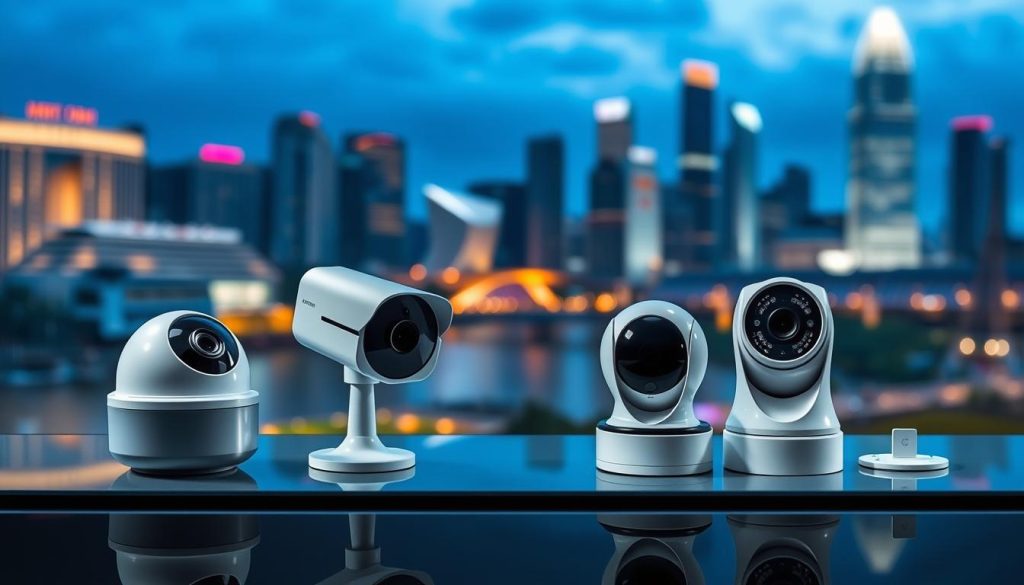
The market offers several standout products designed for reliable off-grid monitoring in Singapore. This curated list highlights top-performing units based on specifications and local vendor availability.
Leading Picks for Residential and Commercial Use
TP-Link provides strong options like the InSight S345-4G. This 4MP device delivers full-color night vision and two-way audio. Its IP66 rating ensures weather resistance.
Note that lab data suggests a battery life around 70 days in cellular mode. Real-world use may vary. The companion app is known for being user-friendly.
Another TP-Link model is the VIGI C540-4G. This outdoor PT unit also offers 4MP resolution. It gives you remote control over the viewing angle.
Hikvision’s DS-2CFSP4/4G is a versatile all-in-one product. It combines Pan-Tilt functionality with integrated solar charging. A built-in microphone and speaker add interactivity.
For a simpler fixed-lens option, consider the Hikvision DS-2CFS04/4G. This 4MP model also uses solar power for sustained operation.
Dahua offers the IPC-HFW2441DG-4G-SP-B-MAX. This is a comprehensive camera kit built for demanding applications. It features a robust, integrated solar panel and a sturdy build.
The Dahua DH-P3AE-PV-4G is a 3MP PT model. It provides flexible coverage for larger areas.
Consider the form factor of your chosen device. Compact bullet cameras are less conspicuous. More visible dome or PTZ units can act as a visual deterrent.
Your choice depends on whether you prioritize discretion or overt presence.
Most models support local storage via a microSD card. You typically purchase this separately. Local storage keeps video data on-site without monthly fees.
Cloud storage offers off-site backup and easier access. It usually requires a subscription. Weigh the pros and cons based on your budget and data needs.
Effective power management is critical. Look for features like smart scheduling and low-power modes. These settings maximize uptime between charges.
They help ensure your security camera remains operational when you need it most.
In-Depth Analysis: Hikvision Solar-Powered 4G Camera Systems
Hikvision’s engineering addresses the core challenge of persistent monitoring in completely off-grid environments. Their specialized systems are built for locations where deploying mains electricity is difficult or impossible.
This approach is highly relevant for Singapore’s diverse monitoring needs. It provides a robust answer for sites far from traditional infrastructure.
The cornerstone of their solution is an all-in-one design philosophy. It consolidates every critical component into a single, streamlined unit.
Evaluating the All-in-One Solar Power Kit
This integrated kit combines a high-efficiency solar panel, a modular battery, the imaging unit body, and a mounting bracket. A SIM and memory card slot are built-in.
The design drastically reduces installation time and complexity. The entire system has a net weight of around 14kg, making it manageable for professional setup.
Power resilience is a standout feature. Engineered with smart energy management, the system can deliver up to 7 days of continuous operation without sunlight.
This ensures uninterrupted surveillance through periods of poor weather. It is a critical advantage for reliable operation.
Advanced capabilities define these units. Hikvision’s AcuSense technology provides accurate human and vehicle detection.
This smart filtering minimizes false alerts from animals or foliage movement. It saves battery life and storage space.
24/7 full-color imaging is standard, even in low-light conditions. Users get identifiable footage at any hour.
Flexible viewing angles are available. Options include varifocal lenses, Pan-Tilt (PT), and Pan-Tilt-Zoom (PTZ) models.
“The integrated solar solution turns any site with sunlight into a viable monitoring point, eliminating the largest barrier to remote surveillance.”
Data retention is handled robustly. Alongside a standard microSD card slot, some models offer optional built-in eMMC or SSD storage.
This provides robust on-device data retention. It is a valuable feature for high-traffic areas where footage is critical.
These systems are suited for a wide range of Singaporean scenarios:
- Construction Sites & Highways: Monitoring progress and preventing theft or vandalism on temporary or linear sites.
- Temporary Events & Festivals: Providing deployable oversight for crowd management and asset safety.
- Agricultural Plots & Farmlands: Securing remote or expansive agricultural areas without power infrastructure.
- Forests & Nature Reserves: Enabling environmental monitoring and unauthorized access detection.
For unique project needs, Hikvision offers the possibility of creating a custom solar power kit. This positions their product line as highly adaptable for professional installations.
You can tailor the system to power various devices beyond a single camera. Exploring professional Hikvision 4G solar camera systems is recommended for a detailed specification review and support.
This adaptability makes it a premier choice for solving complex surveillance challenges. It delivers a truly autonomous security camera solution.
Comparing Brands: TP-Link, Dahua, and Other Contenders
Different manufacturers bring unique advantages to the table for cellular-connected monitoring. Your choice impacts the user experience, system reliability, and long-term value.
This comparison focuses on the major players available in Singapore. We will examine their core philosophies and who they serve best.
Strengths and Weaknesses of Major Players
Hikvision holds the position of the world’s leading supplier in this field. Its strength lies in a vast range of professional-grade products.
The brand excels with robust, all-in-one solar kits designed for harsh, off-grid environments. Features like AcuSense smart detection provide high accuracy.
A potential consideration is pricing. These systems are often geared towards commercial or prosumer markets. They represent a premium investment for top-tier performance.
Dahua Technology is a formidable number two globally. It competes directly with Hikvision on innovation and integrated system design.
Strengths include competitive pricing and proprietary technologies like HDCVI. Dahua offers comprehensive security camera ecosystems for professional installation.
Like its main rival, it focuses on the professional segment. This means features are powerful but may require more technical understanding to fully utilize.
TP-Link approaches the market from a strong consumer electronics background. Its Tapo and VIGI lines are known for user-friendly mobile apps.
This brand often provides excellent value for straightforward home and small business use. Setup is generally intuitive, appealing to non-technical users.
A noted weakness can be battery life in standalone cellular mode. Their units may not match the endurance of specialized solar products from the other brands.
Other contenders like EZVIZ and Reolink also offer capable options. They typically position themselves in the consumer space with competitive features.
These brands can be great for budget-conscious buyers needing reliable basic functions. Their trade-off is often in the depth of professional features and ruggedness.
The local supplier you choose is as crucial as the brand. Reliable after-sales service guarantees your system works long-term.
For instance, CCTVCamera.com.sg is a Singapore-based provider of Hikvision and Dahua systems. They offer a strong two-year warranty and promise one-business-day onsite support.
Free DDNS setup and lifetime technical support from a BizSafe-3 certified company add significant peace of mind for Singaporean buyers.
User access through mobile apps is another key differentiator. TP-Link’s Tapo app is renowned for its clean interface and simple navigation.
Hikvision’s Hik-Connect and Dahua’s DMSS apps are powerful but packed with professional settings. They offer deep customization for alerts and video playback.
The smoothness of live viewing can vary based on the app’s optimization. Testing the app experience is a wise step before finalizing your purchase.
So, which brand is right for you? For a straightforward home setup with easy DIY installation, TP-Link is an excellent starting point.
If your needs are more demanding—like a remote construction site, farm, or a fully off-grid property—the professional kits from Hikvision or Dahua are superior.
Their integrated solar solutions and rugged designs are built for these challenging scenarios. Partnering with a licensed local installer ensures optimal performance.
Your final decision should balance immediate cost, required features, and the value of dependable local support.
Practical Installation and Maintenance Tips for 4G Cameras
Getting the most from your wireless monitoring device requires careful planning and regular upkeep. A correct setup ensures reliable performance and extends the system’s operational life.
Follow this structured guide to install and maintain your equipment effectively. These steps help you avoid common pitfalls.
Ensuring Optimal Setup and Longevity
Begin with a thorough site survey. Identify the best location for a clear, unobstructed view of the area you need to monitor.
Use your smartphone to check the cellular signal strength at that exact spot. Strong reception is crucial for stable data transmission.
If your unit uses solar power, confirm the mounting spot receives several hours of direct sunlight each day. Shade from buildings or trees can drastically reduce charging efficiency.
For the physical installation, always use the provided sturdy mounting bracket. Secure it firmly to a wall, pole, or eave.
Position the camera at an appropriate height and angle. This deters tampering while maximizing its field of vision.
Note that some accessories, like specific mounting loops for TP-Link models, are often sold separately. Verify your kit’s contents before starting.
Selecting the right SIM card is a key step. Choose a local Singapore data plan with sufficient monthly data for your expected video upload volume.
Ensure the SIM is activated before inserting it into the device’s dedicated slot. A proper fit is essential for network connectivity.
Next, complete the digital setup via the manufacturer’s mobile app. This process typically involves powering on the device and connecting to it.
Configure motion detection zones and sensitivity settings carefully. Precise tuning conserves battery life and reduces unnecessary data usage from false alerts.
Set up user access permissions and notification alerts. This ensures you receive immediate updates on activity.
Regular maintenance keeps your system in top condition. Gently clean the lens and solar panel every few months to remove dust, pollen, and tropical grime.
Check for firmware updates through the app. These updates often improve features and patch potential vulnerabilities, enhancing your system’s security.
Monitor the battery level regularly via the app dashboard. This allows for proactive recharging or panel adjustment.
Establish a simple routine check, perhaps once a month. Verify that the unit is recording properly and that the view remains clear.
Growing foliage or new structures can sometimes block the sightline. A quick visual inspection catches these issues early.
While a DIY installation can save time and money, complex setups demand professional expertise.
For critical protection needs or challenging locations, engaging a licensed installation service is highly recommended. Professionals ensure optimal placement and configuration.
This is especially relevant for heavier integrated kits. For example, Hikvision notes its all-in-one solar kit has a net weight of 14kg, often benefiting from expert handling.
A professional security camera setup guarantees reliability and peace of mind for your most important assets.
Making Your Final Decision on a 4G Security Camera
Choosing the right wireless monitoring system for your Singapore property is a balance of practical needs and smart investment. Your goal is a solution that works reliably for the long term, giving you true peace of mind.
Balancing Budget, Features, and Singaporean Needs
Start by weighing your budget against your specific use case. Are you watching a home perimeter or a remote construction site? Your needs dictate the required detection intelligence and the ideal field of view.
Power autonomy is critical. For permanent off-grid spots, a robust solar kit is often necessary. A large battery may suffice for shorter, temporary setups.
Plan your storage strategy carefully. Estimate how much video you need to keep. Then choose between a reliable microSD card or a cloud subscription service.
Look at the total cost over time. This includes the product price, any extra kit parts, your cellular data plan, and potential service fees. Don’t forget professional installation if needed.
Consider future-proofing your choice. Opt for higher resolution, color night vision, and smart detection. This helps you avoid an upgrade too soon.
Always buy from a reputable Singaporean supplier. Strong after-sales support, warranty, and local expertise add immense long-term value to your purchase.
In the end, match the security camera system to your actual needs. The right choice provides a clear, reliable view and lasting protection for your home or business.