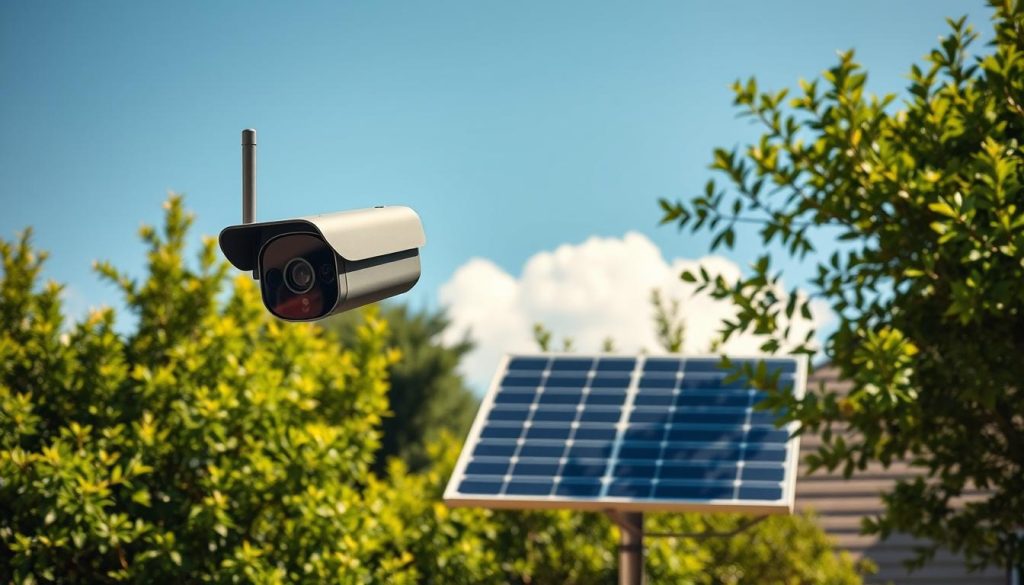
Keeping an eye on your property is getting a green upgrade. Modern surveillance now uses the sun’s energy. These eco-friendly devices offer a smart way to monitor your home or business.
Their popularity is rising fast. People want sustainable tech that works well. Advances in photovoltaic cells and battery tech make them reliable year-round.
This guide is a detailed product roundup. It helps readers, especially in Singapore, choose the right equipment. We focus on options that suit local needs and weather.
Many systems use a separate panel. This accessory keeps the internal battery charged. It ensures your protection stays online, even during rainy seasons.
We will cover top brands and must-have features. You’ll learn about benefits for Singapore’s sunny and wet climate. We also provide practical setup advice.
Our goal is to inform you about available choices. This data-driven guide will lead you to a confident purchase decision. We present facts and expert recommendations.
Prices vary from affordable to high-end models. There is a solution for every budget and requirement.
Get ready for a comprehensive look. We start with the core benefits, compare specific models, and finish with setup tips.
Key Takeaways
- Solar-powered surveillance is a modern, eco-conscious choice for property monitoring.
- Technological improvements have made these devices more reliable and efficient.
- This article serves as a detailed buying guide tailored for consumers in Singapore.
- Attachable panels can significantly extend operational time and provide consistent power.
- The review will analyze essential features like video quality, motion alerts, and storage options.
- Practical installation advice will be provided to ensure optimal performance.
- Options are available across various price points to match different needs and budgets.
Why Solar-Powered Security is a Smart Choice for Singapore
Singapore’s abundant sunshine presents a perfect opportunity to power modern surveillance solutions. The nation enjoys over 2,500 hours of sunlight each year. This comes with an average solar irradiance of 1,582 kWh/m².
Such conditions are ideal for harnessing renewable energy. Using the sun’s rays for property monitoring is a logical step forward. It combines effective protection with environmental responsibility.
This approach aligns with broader national initiatives. It also offers practical benefits for homeowners. Let’s explore why this technology fits so well here.
Aligning with Singapore’s Green Plan 2030
The Singapore Green Plan 2030 is a national roadmap for sustainable development. A key target is to deploy 2 gigawatts of solar capacity by 2030. Adopting sun-charged monitoring devices supports this ambitious goal.
Homeowners can contribute directly to this vision. Choosing eco-friendly protection systems reduces reliance on fossil fuels. It also lowers the overall carbon footprint for the nation.
Financial incentives make adoption easier. Subsidies of up to 30% are available for ECO-certified security systems. This significantly reduces the upfront cost for residents.
Specific initiatives, like the HDB solar panel rollout, include provisions for safety features. This integration makes it simpler for many households to adopt. It’s a holistic approach to urban living.
Case studies show successful implementation in places like nature reserves. These areas use photovoltaic-powered surveillance for protection and data collection. It showcases a balance between safety and sustainability.
Ideal Performance in a Tropical Climate
Singapore’s tropical climate is characterized by heat, humidity, and seasonal rain. Electronic devices must withstand these conditions. Modern sun-powered units are built for this challenge.
They feature weatherproof and durable designs. This ensures reliable operation during heavy downpours and intense heat. High-quality models maintain about 85% efficiency even in monsoon seasons.
The reliability of this power source is noteworthy. On cloudy days, integrated battery backup takes over. This ensures your surveillance system operates continuously, without interruption.
This resilience is crucial for round-the-clock monitoring. You gain peace of mind knowing your equipment is designed for local weather. For more details on robust outdoor options, explore our guide on solar outdoor security cameras.
Using renewable energy also reduces strain on the electrical grid. It’s a personal step towards energy independence. Every unit installed helps decentralize power generation.
Choosing a photovoltaic-powered surveillance system is a smart decision for any property. It offers dependable performance tailored to the local environment. It also represents a meaningful contribution to Singapore’s green future.
Top Benefits of Solar-Powered Security Cameras
Investing in a photovoltaic-powered monitoring system delivers a powerful trio of benefits: financial, practical, and ecological. These advantages make a strong case for upgrading your property’s protection.
You gain long-term savings, unwavering reliability, and a smaller environmental footprint. Let’s explore each benefit in detail.
Significant Cost and Energy Savings
The sun provides free fuel after your initial purchase. This eliminates monthly electricity costs for your surveillance equipment.
Over a decade, users typically save between $1,500 and $2,000 compared to traditional wired setups. A case study in Marina Bay showed security operational costs dropping by 75% after a switch.
Modern monocrystalline panels are highly efficient. They convert up to 22% of captured sunlight into usable power, minimizing waste.
The total cost of ownership for a solar-powered system is often lower, as it bypasses ongoing grid energy fees and complex wiring labor.
Maintenance is also more affordable. It averages about $50 per year, mostly for occasional panel cleaning. This contrasts sharply with the $300 annual average for maintaining conventional systems.
Some regions offer incentives like Solar Renewable Energy Certificates (SREC). These can provide additional financial returns on your sustainable choice.
Enhanced Reliability and Installation Flexibility
With a built-in battery backup, these units stay online during power outages. They ensure 24/7 surveillance even during periods of low sunlight.
Advanced panels can extend battery life exponentially. Quality devices can operate for up to seven full days without direct sun exposure.
Installation is remarkably simple. Wireless design means you can place a unit anywhere with decent sun exposure.
There’s no need to be near an outdoor power outlet. This freedom allows for optimal positioning to cover blind spots or large garden areas.
The system’s resilience is a key advantage. You get consistent protection without worrying about cords or scheduled downtime.
Reduced Environmental Impact
Choosing this technology directly lowers your carbon footprint. Each unit can offset approximately 2,000 pounds of CO² emissions annually.
This aligns perfectly with eco-friendly practices valued by many homeowners. It’s a tangible step towards more sustainable living.
Beyond personal satisfaction, this choice can enhance property value. Modern buyers appreciate integrated, green technology solutions.
Using renewable energy reduces strain on the local power grid. It contributes to a decentralized and more resilient energy model for the community.
Together, these benefits—financial savings, dependable operation, and environmental care—create a compelling package. They offer a modern, forward-thinking approach to keeping your home safe.
Essential Features to Look For in a Solar Security Camera
The capabilities of a modern, energy-independent surveillance system are defined by several core technical aspects. Knowing what to prioritize ensures your setup provides clear evidence and reliable peace of mind.
This breakdown highlights the specifications that directly impact performance. We’ll examine visual clarity, intelligent alerts, data handling, and physical resilience.
Video Resolution and Image Quality
Clarity is paramount for identification. High-definition video captures crucial details like faces or license plates.
1080p Full HD is a common, efficient standard. It provides good detail while being kinder to storage space and battery usage.
For forensic-level detail, 4K Ultra HD is superior. It offers four times the pixels of 1080p, which can be vital for complying with local regulations like the PDPA, where accurate data collection is key.
The trade-off is larger file sizes. This requires more robust storage solutions and efficient compression technology.
Night Vision Capabilities
Effective monitoring doesn’t stop at sunset. Night vision technology ensures your property is protected around the clock.
Most units use infrared (IR) LEDs to illuminate scenes in black and white. Effective ranges often extend up to 33 feet.
Advanced models feature color night vision. This uses low-light image sensors or supplemental lighting to provide full-color footage after dark, offering more contextual information.
Motion Detection and Smart Alerts
Basic motion sensors can be triggered by leaves or shadows. Smart systems use AI-powered analytics to filter out false alarms.
Advanced analytics can reduce irrelevant notifications by up to 90% by distinguishing between people, vehicles, and animals.
Look for features like customizable activity zones. You can tell the system to ignore the busy sidewalk but alert you if someone approaches your front door.
This intelligence saves you time and battery life. You only get notified for events that truly matter.
Storage Options: Cloud vs. Local
How your footage is stored is a critical decision. The two main paths are cloud-based and local storage.
Cloud storage uploads recordings to remote servers. It offers convenient remote access and backup if the device is damaged. Many services use a subscription model with policies like 30-day video retention.
Local storage keeps data on the premises. This is often done via a microSD card or built-in memory, like the 16GB internal storage in some Eufy models.
Local options provide greater data privacy and no monthly fees. For security, ensure any device transmitting data meets recognized cybersecurity standards, such as those from IMDA.
Weatherproof and Durable Design
Outdoor electronics must endure the elements. A robust build is non-negotiable for consistent operation.
Check the IP (Ingress Protection) rating. An IP67 certification, for example, guarantees protection against dust and immersion in water up to one meter for 30 minutes.
The housing should resist UV degradation, high heat, and physical tampering. This durability ensures your investment lasts through Singapore’s tropical climate.
Other valuable features include a wide field of view to minimize blind spots. Integration with smart home platforms like Alexa or Google Assistant allows for centralized control.
Finally, consider supplemental features like two-way audio for communication. Built-in sirens or spotlights can also serve as powerful deterrents.
How Solar-Powered Security Cameras Work
Understanding the inner workings of sun-powered surveillance reveals a clever blend of renewable energy and smart technology. These gadgets form a standalone protection solution. They operate through a continuous cycle of energy capture, storage, and wireless communication.
This process ensures your monitoring remains active day and night. It eliminates dependence on external power outlets. Let’s break down the three core components that make this possible.
Solar Panel Technology and Efficiency
The journey begins with photovoltaic cells. These cells convert sunlight directly into electrical energy to charge the unit’s internal battery.
Two main panel types are used. Monocrystalline panels offer high efficiency, up to 22%. They perform well in Singapore’s bright conditions.
Polycrystalline panels are a more affordable option. They are slightly less efficient but still effective for local use.
Proper placement is crucial for maximum charging. An optimal angle of around 30 degrees towards the sun is often recommended.
Most setups need just a few hours of direct sunlight daily to maintain a full charge. This makes them highly suitable for a sunny locale.
Battery Systems and Power Management
The harvested energy is stored in high-capacity batteries. Modern units typically use lithium-ion chemistries like LiFePO4 or NMC.
These batteries offer over 3,000 charge cycles. This translates to many years of reliable service.
A charge controller is a key internal component. It manages the power flow to prevent overcharging and protect the battery.
Intelligent power management logic prioritizes using direct solar energy during the day. It seamlessly switches to battery backup at night or during cloudy periods.
This system ensures uninterrupted operation. Some models include power-saving modes to extend battery life further during low-light seasons.
The result is a self-sustaining power loop. Your equipment stays online without manual intervention.
Wi-Fi Connectivity and Remote Access
Wireless connectivity is the link to your smart devices. Stable Wi-Fi is essential for live streaming and alerts.
A recommended upload speed of at least 5Mbps is needed for smooth 1080p video streaming. Higher resolution requires more bandwidth.
For larger properties, some systems support mesh Wi-Fi networks. This ensures a strong signal even for units placed far from the router.
Advanced models offer 4G cellular backup. This feature keeps your surveillance system online during home internet outages.
Remote access is managed through dedicated mobile apps. You can view live feeds, receive motion alerts, and review recorded footage from anywhere.
This access turns your smartphone into a monitoring command center. You stay connected to your property at all times.
Together, these elements—efficient energy capture, robust storage, and smart connectivity—create a fully integrated protection system. It delivers reliable, wire-free peace of mind for any home.
Our Top Picks for the Best Solar Security Camera
For homeowners seeking reliable, eco-friendly protection, we’ve evaluated the leading brands and models. This curated list presents standout options that harness sunlight for consistent operation.
Our selection focuses on performance, essential features, and value for money. We also consider suitability for users in Singapore’s unique climate.
The roundup includes prominent names like Ring, Reolink, and Eufy. Lorex, ADT with Google Nest, Arlo, SimpliSafe, Blink, and SEHMUA are also featured.
Prices span a wide range to match different budgets. You can find capable units starting around $60. Full multi-device kits with professional monitoring reach approximately $800.
Every product here works with a photovoltaic panel. This accessory may be built-in or sold separately. It ensures your equipment stays powered using renewable energy.
Our recommendations are not based on speculation. They draw from expert technical reviews, verified user feedback, and performance data from trusted sources.
This comparative analysis aims to cut through the marketing noise. We provide clear facts to help you identify the ideal fit for your property.
Subsequent sections will explore each brand in detail. You’ll get specific pros, cons, and key specifications for major models.
The diversity of choices is notable. Options range from simple, budget-friendly standalone gadgets to advanced systems with 24/7 professional oversight.
Key factors like video resolution, night vision range, and motion detection accuracy will be compared. Storage type—whether cloud-based or local—is another critical differentiator.
Integration with smart home platforms and overall ease of installation are also weighed. These elements determine how seamlessly a device fits into your daily life.
This guide simplifies your decision-making process. By presenting organized, data-driven insights, we empower you to make a confident purchase for your peace of mind.
Ring: Best for Ecosystem Integration and Value
Ring has carved out a significant niche by offering user-friendly equipment that prioritizes ecosystem synergy over standalone complexity. Its appeal lies in a balanced approach to cost, features, and connectivity.
This makes it a compelling choice for homeowners already using Amazon Alexa or invested in a connected home setup. The brand’s strong presence in Singapore, available on Amazon and through local retailers, adds to its accessibility.
Key Models: Stick Up Cam Solar & Solar Panel Accessories
The flagship model is the Stick Up Cam Solar. It comes with an integrated photovoltaic panel, priced around $139.98.
For other Ring battery units, separate panel accessories are available. The Standard Solar Panel costs $49.99. The Super Solar Panel is priced at $99.99.
Charging efficiency differs notably. The standard accessory needs about 3-4 hours of full sunlight daily. The super version requires just 1-2 hours of partial sun to maintain a charge.
This flexibility allows users to adapt to their property’s specific sun exposure.
Pros, Cons, and Key Specifications
Several advantages define the Ring experience. DIY installation is notably straightforward, with no professional help needed.
Performance is reliable, and integration is seamless with the broader Ring Alarm system. It works with both Alexa and Google Home for voice commands.
Power options are versatile. You can use the internal battery, the attached panel, or a wired connection.
There are some considerations to note. The brand has faced historical privacy concerns, though it has updated its policies.
Design aesthetics are functional but may not suit all tastes. Some indoor models lack 4K resolution, and premium kits can be expensive.
Key specifications provide a clear picture. Video resolution reaches up to 4K on newer models, with a 140° field of view.
Cloud storage is required for video history, accessed via a subscription plan. The design is weather-resistant for outdoor use.
Two-way talk allows for communication through the unit. Effective night vision and customizable motion detection zones are standard.
The total cost of ownership should factor in the ongoing cloud storage subscription, which is essential for full functionality.
For users seeking a reliable, sun-powered device with exceptional smart home integration, Ring is a top contender. It delivers a practical balance of value and ecosystem compatibility.
Reolink & Eufy: Leaders in Camera Quality and Local Storage
When video clarity and keeping footage on your own premises are top priorities, Reolink and Eufy emerge as clear leaders. These brands focus on delivering sharp evidence and giving users control over their data.
They minimize reliance on ongoing cloud subscriptions. This approach appeals to those who value privacy and long-term cost savings. Both companies have strong local support networks in Singapore.
Reolink Argus 3 Pro: High Resolution and Reliability
The Reolink Argus 3 Pro is a standout model priced around $199. It captures detailed footage with its 2K resolution. This provides excellent clarity for identifying faces or license plates.
Its wide 122° field of view covers more of your property. This reduces potential blind spots in your surveillance setup. The unit is built to handle Singapore’s humidity and heat.
Extensive heat dissipation testing at 35°C ensures stable performance. You get reliable operation even during our hottest months. Compatibility with various third-party photovoltaic panels offers flexible power solutions.
This gadget uses an efficient lithium battery. With adequate sun exposure, it maintains a strong charge. The companion app is user-friendly for live viewing and managing alerts.
A potential consideration is extended storage. While local microSD card support is included, accessing longer cloud video history may require a subscription. This is a trade-off for some users.
EufyCam 3 and Solar Wall Light Cam: Privacy-Focused Options
Eufy takes a strong stance on data privacy. The EufyCam 3, priced near $179, includes 16GB of built-in local storage. This eliminates the need for any monthly cloud fee.
Your recorded video stays securely on the device itself. The design is vandal-resistant, suitable for both homes and industrial settings. It’s a robust choice for demanding environments.
For a unique two-in-one solution, consider the Eufy Solar Wall Light Cam at $99.99. It combines a bright floodlight with a surveillance unit. An integrated photovoltaic panel powers the entire setup.
The major advantage of local storage is that your personal surveillance data never leaves your property, addressing core privacy concerns.
This model is perfect for illuminating and monitoring dark entryways. A note on the light cam: frequent use of the bright light can draw more energy. This may require more sunlight hours to maintain optimal battery life.
Both Eufy devices feature strong night vision and accurate motion detection. They integrate seamlessly with smart home platforms like Alexa and Google Assistant.
For Singapore residents, this local support is key. Both brands have distributors here for easier warranty claims and firmware updates tailored to our region. Payment methods like NETS and ShopeePay are often accepted.
Choosing between these brands often comes down to preference. Reolink offers superb resolution and panel compatibility. Eufy provides exceptional privacy with its local storage philosophy.
Both deliver the reliable, sun-powered operation needed for effective property monitoring. They represent excellent value for homeowners prioritizing video quality and data control.
Lorex: Premium Choice for High-Resolution Surveillance
For property owners demanding crystal-clear video evidence, Lorex stands as a premium manufacturer focused on high-resolution surveillance. This brand targets users who view their protection system as a long-term investment. It offers professional-grade equipment that supports renewable energy.
Lorex devices are known for exceptional build quality and detailed imagery. They cater to those who prioritize forensic-level detail over basic monitoring. The product line integrates seamlessly with optional photovoltaic accessories.
Professional-Grade 4K Solar Camera Options
Lorex provides separate photovoltaic panels compatible with specific wire-free models. An example is the LWB4850-Series. This accessory typically costs $79.99.
The panel is built to endure extreme conditions. Its weatherproof rating allows operation from -22°F to 122°F. This ensures reliable performance in Singapore’s tropical heat and occasional cool spells.
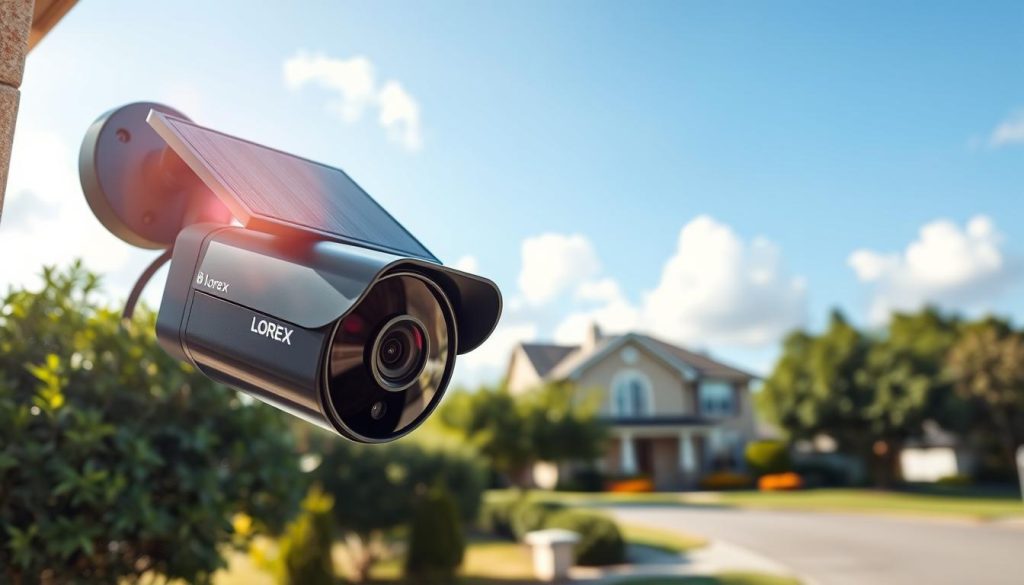
Video quality is a standout feature. Many Lorex units capture footage in stunning 4K resolution. This provides four times the detail of standard 1080p HD.
Identification of faces or license plates becomes far more accurate. Long-range color night vision further enhances low-light monitoring. You get full-color imagery instead of traditional black and white.
Storage flexibility is another strong point. Users have free local recording options via internal storage. Optional cloud plans are available for those who want off-site backup.
This dual-storage approach gives homeowners complete control over their surveillance data, balancing convenience with privacy.
Key specifications highlight the system’s capabilities. Connectivity includes Wi-Fi, Ethernet, and Power over Ethernet (PoE). Power sources are versatile: wired, battery, or solar.
The field of view can reach up to 180 degrees. This minimizes blind spots across a large area. Smart home integration works with Alexa and Google Home for voice commands.
Ideal Use Cases for Landed Properties
Lorex systems are particularly well-suited for large landed properties in Singapore. These homes often have expansive perimeters and gardens. High-resolution coverage is essential for monitoring such spaces.
The combination of wide viewing angles and top-tier image clarity ensures comprehensive oversight. You can identify details at a distance. This is crucial for gated communities or homes with long driveways.
Using a sun-powered setup aligns with sustainable building practices. In Singapore, Lorex systems may contribute to earning BCA Green Mark points. This certification rewards eco-friendly construction and operations.
The brand’s reputation in professional security manufacturing translates to reliable performance. Equipment is designed for durability and consistent operation. Users report a smooth and intuitive app experience.
There are a few considerations for potential buyers. The extensive product catalog can be overwhelming for beginners. It requires some research to select the right model and compatible panel.
Also, Lorex does not offer professional monitoring services for its cameras. The system is designed for self-monitoring. This might not suit users seeking 24/7 third-party oversight.
Pros of choosing Lorex include superior build quality and reliable performance. The video quality is exceptional for identification purposes. Storage options provide great flexibility and control.
Cons involve a potentially confusing product lineup for new users. The lack of professional monitoring is a limitation for some. The upfront investment is generally higher than budget brands.
Lorex is an excellent choice for users who want the highest video quality. It’s for those who don’t mind a higher initial cost for a durable, feature-rich system. It delivers professional-grade surveillance powered by renewable energy.
ADT with Google Nest: Best Professional System Integration
The pinnacle of integrated home safety combines 24/7 professional oversight with the convenience of renewable energy. This solution is for those who want a fully managed protection service. It goes beyond DIY gadgets.
ADT is a top-rated provider of monitored alarm systems. Its partnership with Google Nest creates a powerful hybrid. You get certified emergency response paired with modern, intelligent devices.
This setup represents the high end of residential surveillance. It suits homeowners seeking comprehensive coverage and hands-free management.
Combining Professional Monitoring with Solar Power
ADT’s professionally installed packages often include Google Nest equipment. These modern devices can be paired with third-party photovoltaic accessories. A popular choice is the Wasserstein panel, priced around $59.99.
This accessory provides continuous energy from the sun. It keeps the internal batteries charged for consistent operation. The setup ensures your monitoring stays active without grid dependency.
The core advantage is ADT’s 24/7 monitoring center. Staff watch over your property and can verify alerts via live video. They are trained to dispatch emergency services if needed.
This layer of human oversight offers peace of mind beyond automated alerts. It’s a robust safety net for any household.
Key benefits of this integrated approach include top-tier reliability. The equipment is high-quality and professionally installed. Smart automation allows the system to recognize trusted individuals.
It can permit access during alarm events, reducing false dispatches. The integration with Google Assistant enables seamless voice control.
There are important considerations. Professionally installed systems typically require a long-term contract. Monthly fees are higher than DIY alternatives.
The photovoltaic panel is not sold directly by ADT. You must purchase it separately for continuous power. This adds an extra step to the setup process.
Smart Home Features and Facial Recognition
Google Nest devices bring advanced intelligence to the setup. They offer features like facial recognition-powered alerts. The system can notify you if an unknown person is detected.
AI-driven activity zones let you focus on specific areas of your property. You can ignore motion on the street but get alerts for your front porch. This reduces unnecessary notifications.
The seamless integration with the Google ecosystem allows for powerful automations, turning your surveillance into a proactive part of your smart home.
Specifications for Nest Cams are impressive. They capture video in up to 2K resolution. This provides excellent image quality for identification.
The field of view is a wide 130 degrees. This covers a broad area with a single unit. Storage is primarily through cloud subscriptions, which are required for video history.
These devices work with both Alexa and Google Home for voice commands. They offer reliable night vision and accurate motion detection.
A technical note: the external panel may not charge effectively in freezing temperatures. This is largely irrelevant for Singapore’s warm climate. Our consistent sunlight ensures good performance year-round.
This option is ideal for homeowners who want a complete, professionally managed solution. It adds the benefit of sustainable power. You gain a robust security system with expert backup.
ADT with Google Nest represents the high end of integrated protection. It is suitable for those prioritizing professional monitoring and advanced smart features. It delivers a turn-key approach to property safety.
Installing Your Solar-Powered Security Camera
A proper setup is the key to unlocking the full potential of your sun-powered monitoring equipment. Correct placement and configuration ensure reliable operation and maximum energy savings. This step-by-step guide walks you through the process for optimal results.
Following these instructions will help you avoid common mistakes. You’ll get your security system running smoothly. It’s designed for a successful DIY experience.
Step 1: Choosing the Optimal Sunny Location
Start by finding a spot with abundant sunlight. Your photovoltaic panel needs direct exposure for several hours each day. A south-facing position is typically ideal in Singapore.
Simultaneously, ensure the camera itself has a clear view of the area you want to monitor. Cover vulnerable points like entryways and driveways. Balance sun access with surveillance coverage.
Check for potential shade from trees or structures throughout the day. Even partial shading can significantly reduce power generation. Haze can lower panel efficiency by about 15%.
Before drilling any holes, verify local regulations. For public housing, check HDB guidelines. For private property, ensure your installation complies with URA rules.
Step 2: Mounting the Camera and Solar Panel
Use the provided brackets to secure both units firmly. For the solar panel, tilt it at an angle of approximately 30 degrees. This angle optimizes energy capture in our latitude.
If setting up multiple devices, consider using a laser level for alignment. This creates a neat, professional appearance. Manage any cables neatly to preserve your home‘s aesthetics.
For enhanced protection, invest in anti-theft mounting brackets. These make it difficult for vandals to remove your equipment. In landed properties, include proper grounding for lightning protection.
Ensure all weatherproofing seals are tight. This protects the internal electronics from Singapore’s humidity and rain. A secure mount is the foundation for long-term reliability.
Step 3: System Setup and App Configuration
Power on your equipment and connect it to your home Wi-Fi network. A stable connection is crucial for remote access and alerts. Download the manufacturer’s mobile app on your smartphone.
Follow the in-app instructions to create a user account and add your new device. This process usually involves scanning a QR code. You’ll then gain access to the live video feed.
Configure your preferred settings. Set up motion detection zones to focus on specific areas. Adjust sensitivity to minimize false alarms from passing traffic or animals.
Enable the notification alerts you want to receive. You can also set storage preferences, choosing between local or cloud options. Test two-way audio if your model supports it.
Surveys show a high DIY installation satisfaction rate of 85%, as most wireless units require only basic tools and no complex wiring.
After configuration, perform a full system test. Verify that the solar panel is charging the internal battery. Check night vision quality and motion detection accuracy.
Confirm you can access the live stream remotely. For complex setups covering large areas, professional help might be worthwhile. They can ensure optimal placement and system integration.
Regular maintenance is simple but important. Cleaning the panel surface every few months can boost efficiency by up to 25%. This directly supports longer battery life.
Proper installation is crucial. It delivers the promised benefits of reliability, savings, and effective surveillance. Your security investment pays off when it’s set up right.
Evaluating Your Options: Budget vs. Premium Systems
The market for sun-powered surveillance presents a wide spectrum. You can find affordable entry-level gadgets and high-end professional systems.
Prices start as low as $59.99 for basic models like SEHMUA. Premium multi-unit kits, such as the eufyCam Pro, can reach $799.99.
Your choice impacts daily performance and long-term satisfaction. It’s crucial to understand what each tier delivers.
What to Expect from Budget-Friendly Models
Economical units provide essential monitoring functions. They typically capture video in 1080p resolution.
Standard night vision and basic motion detection are included. These features work adequately for small areas.
Trade-offs often come with the lower price. App support might be less polished or receive fewer updates.
Warranties can be shorter, sometimes just one year. The physical build may use more plastic, which is less durable in tropical humidity.
Many budget choices rely heavily on cloud storage subscriptions. This adds a recurring monthly cost to the initial purchase.
Brands like basic Blink models operate on this model. You get a functional device, but with potential limitations in extreme weather.
The Long-Term Value of Premium Systems
High-end equipment, like Lorex 4K units, offers superior clarity. Advanced AI features distinguish between people, pets, and vehicles.
Construction is robust, with higher IP ratings for weather resistance. These systems often include local storage options, avoiding monthly fees.
Long-term value becomes clear over years of use. Premium setups generally have lower maintenance costs and better reliability.
Their resale value also remains higher. A professional system from ADT includes monitored response, which can justify its cost.
Investing in a quality system often pays off through consistent performance, fewer replacements, and greater peace of mind.
The initial investment is higher. Yet the extended lifespan and advanced capabilities provide a strong return.
Understanding Total Cost of Ownership
The sticker price is just one part of the equation. Total cost includes the unit, the photovoltaic panel, and setup.
Professional installation adds expense. Choosing a DIY approach can save up to $150 per device.
Ongoing fees for cloud services or professional monitoring must be factored in. Estimate maintenance costs over 5 to 10 years.
Calculate value by considering the device’s expected lifespan. Factor in energy savings from using the sun and potential home insurance discounts.
Avoid grey market products. They may lack local warranty support and compatible firmware for Singapore.
Always buy from authorized distributors here. This ensures you get proper after-sales service.
Smart shopping strategies can help. Look for package deals that bundle multiple items.
In condominiums, consider organizing group buys for bulk discounts. Explore refurbished equipment sold with a warranty from reputable sellers.
The right choice depends on your budget and specific needs. For critical areas, a premium system’s reliability is often worth the cost.
For supplemental coverage, a budget-friendly model might suffice. Assess your property‘s layout and your personal requirements carefully.
Making the Right Choice for Your Home Security
Your final decision on a surveillance system should balance performance, cost, and sustainability. We’ve covered the advantages of sun-powered monitoring, from savings to reliability.
Essential features like high resolution and effective night vision matter. Top picks from brands like Reolink and Eufy offer various storage options.
Align your choice with your specific needs. Consider property size, desired features such as local storage, and your budget.
Compatibility with existing smart home setups is also key. In Singapore’s climate, harnessing sunlight offers dependable operation and supports green goals.
Before buying, revisit the detailed brand sections. Compare specifications and pros and cons side-by-side.
Use a final checklist. Verify solar panel compatibility and check for local warranty support.
Understand the total cost, including any subscriptions. Ensure the device meets your requirements for video quality.
Visit official brand websites or authorized retailers in Singapore for current promotions. Technology evolves, so check for the latest models.
Investing in a photovoltaic-powered unit is a smart move. It enhances safety, supports the environment, and provides lasting value for your peace of mind.