
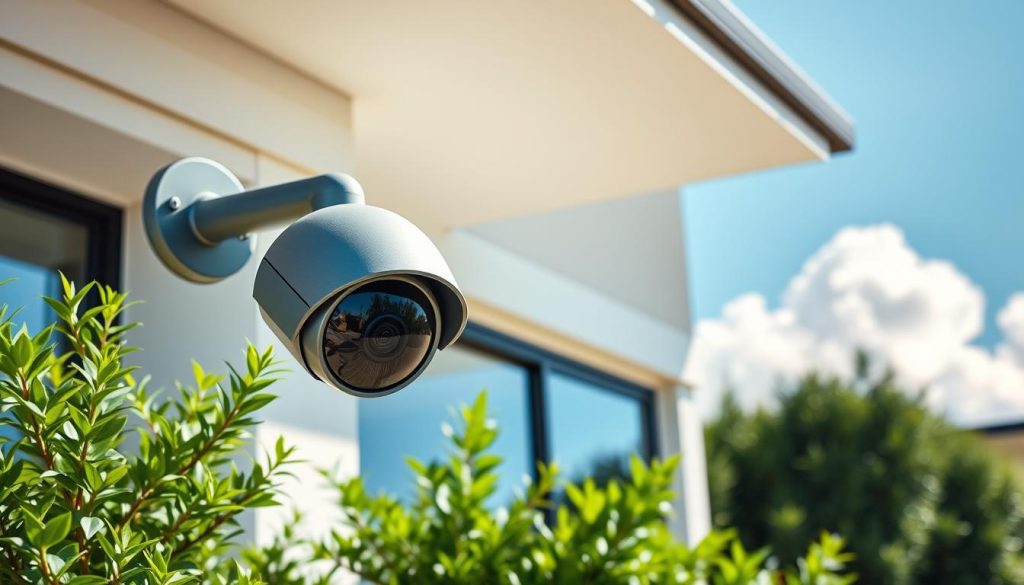
Keeping an eye on your property has never been easier or more sustainable. Modern surveillance technology now harnesses renewable energy, eliminating the need for complex wiring and external power outlets.
This approach is especially popular in places like Singapore. The abundant sunlight and a preference for hassle-free setups make it an ideal upgrade for home and business monitoring.
Our guide serves as your comprehensive resource. We review leading products and provide the key information you need to make a smart, informed purchase.
We will explore the core benefits, essential features, and specific product recommendations tailored to various needs and budgets. Understanding technical details is crucial for optimal performance.
Factors like battery life, panel efficiency, video resolution, and connectivity options all play a major role. Proper setup is also vital, particularly in Singapore’s unique climate.
We draw on current data from top manufacturers to ensure our advice is reliable. By the end, you’ll be fully equipped to select the best option for your property.
Key Takeaways
- Modern surveillance uses renewable energy for easier, wire-free installation.
- Singapore’s climate is perfect for this sustainable technology.
- This article is a complete guide with reviews and buying advice.
- We cover benefits, key features, and product picks for different needs.
- Technical specs like battery life and video quality are important.
- Proper installation for the local environment is covered.
- You’ll finish ready to choose the right system for your home or business.
Why a Solar-Powered WiFi Camera is a Smart Security Upgrade
Imagine a monitoring solution that installs anywhere, costs almost nothing to run, and never stops watching, even when the lights go out. This is the promise of a modern, self-sufficient surveillance system.
It represents a significant leap forward from traditional, wired setups. For homeowners in Singapore, this technology aligns perfectly with a desire for hassle-free and effective home protection.
The core advantage is true wireless freedom. Since the device operates independently of your home’s electrical grid, you can place it in virtually any outdoor location with sunlight.
Think about gardens, gates, or remote sheds. There’s no need for costly and disruptive cable trenching.
This freedom directly leads to noticeable cost savings. By harnessing free energy from the sun, these units can drastically reduce or even eliminate their impact on your monthly electricity bill.
This benefit scales up when you deploy multiple devices across your property.
Reliability is another major strength. Unlike plug-in models, a unit with a well-charged battery continues to provide surveillance during blackouts.
Whether caused by storms or grid issues, your protection remains uninterrupted when you need it most.
Maintenance is refreshingly simple. The panels have no moving parts, requiring only occasional cleaning to remove dust or debris.
This makes them a durable, set-and-forget component of your security system.
For properties with large perimeters, farmlands, or areas far from power outlets, this technology is a game-changer. You can secure these spaces without the expense and hassle of running long electrical cables.
This expanded coverage potential is ideal for securing remote areas like long driveways or storage sheds without costly infrastructure work.
Choosing this path also has an eco-friendly benefit. Using renewable energy reduces your household’s carbon footprint.
It’s a choice that aligns with sustainable living goals, which are increasingly important.
Convenience is delivered through your home network. Live video feeds and instant motion alerts are accessible on your smartphone from anywhere.
This offers genuine peace of mind, whether you’re at home or away. For a robust outdoor surveillance unit, this combination of features is key.
Together, these benefits make such a system a smart, forward-thinking investment. In Singapore’s sunny environment, it’s an upgrade that enhances property security intelligently and sustainably.
Key Features to Look For in Your Solar Security Camera
The effectiveness of your surveillance setup hinges on a few critical components working in harmony under local conditions.
Understanding these specifications ensures your investment delivers consistent, reliable monitoring for years.
Battery Life and Solar Panel Efficiency
A high-capacity battery, measured in milliampere-hours (mAh), is the unit’s energy reserve.
It powers the device through the night and during stretches of cloudy weather. An efficient photovoltaic panel quickly replenishes this reserve under sunlight.
Look for a system where the panel’s wattage and the battery’s capacity are well-matched.
Leading manufacturers design units that can operate for extended periods, with some benchmarks citing up to seven days of continuous use without direct sunlight.
Connectivity: Dual-Band WiFi and Beyond
Stable video streaming depends on robust network links. Dual-band connectivity, supporting both 2.4GHz and 5GHz frequencies, offers flexibility.
The 5GHz band provides faster, less congested streams for high-resolution footage, while 2.4GHz offers better range through walls.
For areas where a WiFi signal is weak, some models offer 4G LTE cellular connectivity as a primary or backup option.
This ensures your surveillance system remains online, even if your home network experiences issues.
Video Quality and Night Vision Capabilities
Clarity is non-negotiable. Seek a resolution of at least 2K (5MP) or 4K (8MP) to capture fine details like faces or license plates.
Equally important is low-light performance. Traditional infrared (IR) night vision renders scenes in black and white.
Advanced color night vision or technologies like ColorX illuminate the scene, allowing for critical color identification of persons or vehicles after dark.
This can be a decisive factor for useful evidence.
Durability and Weather Resistance (IP Rating)
Your device will live outdoors. A high Ingress Protection (IP) rating is essential to withstand Singapore’s tropical climate.
Look for ratings of IP65 or higher, with IP66 or IP67 being ideal. These ratings guarantee protection against heavy rain, high humidity, and dust ingress.
Robust construction with anti-corrosion materials further ensures the housing survives long-term exposure to the elements.
Smart Detection and Additional Functionality
Modern systems use artificial intelligence to distinguish between people, vehicles, and animals.
This smart detection drastically reduces false alarms from passing leaves or pets. Useful add-ons include two-way audio for communication, built-in sirens, and spotlights to deter intruders.
Some units feature auto-tracking or pan-and-tilt capabilities to actively follow movement across a wider area.
Don’t forget about data storage. Options typically include onboard microSD card slots (supporting high capacities) or encrypted cloud storage services.
Ease of accessing and managing these recordings is a key part of the user experience. Advanced models may also offer time-lapse recording or integrate with popular smart home ecosystems for a unified comprehensive solar CCTV system.
Balancing these features according to your specific property layout and needs will lead you to a robust, long-term surveillance solution.
Our Top Picks for the Best Solar Powered Security Camera with WiFi
To simplify your decision, we’ve categorized our recommendations based on key performance and use-case scenarios.
Each category highlights leading models that excel in specific areas. This helps you match the right technology to your property’s unique layout and monitoring demands.
All selections are built for durability in tropical environments. They offer reliable performance under Singapore’s sun and rain.
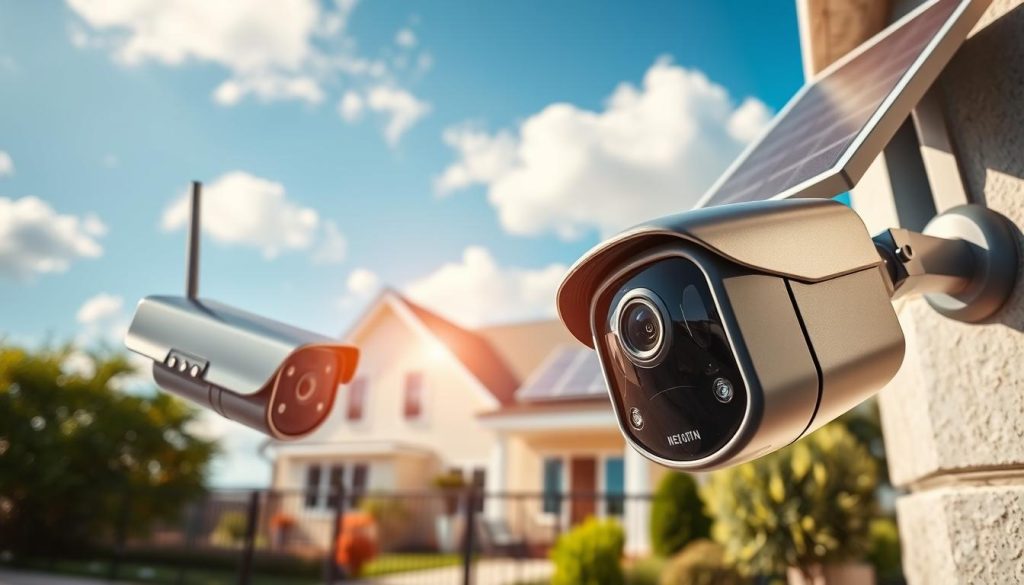
For Premium All-Round Performance: High-Resolution 4K Models
When detail is non-negotiable, an 8MP (4K) unit is the top choice. These devices capture ultra-high-definition video, making identification clear and accurate.
Models like the Reolink Argus 4 Pro set a high bar. They feature dual-band WiFi 6 for stable, high-speed data transfer and true full-color night vision.
This advanced low-light imaging provides critical color information after dark. Hikvision’s 8MP series offers similar clarity with a modular design for flexible installation.
Current promotions often show significant savings on these premium picks, enhancing their value. Their high-capacity batteries, paired with efficient panels, ensure continuous operation.
In typical local conditions, they maintain a strong charge even during brief cloudy periods. This makes them a robust, set-and-forget solution for critical areas.
Best for Wide-Area Coverage: Pan, Tilt, and Tracking Cameras
Monitoring a large yard, driveway, or open perimeter requires a device that can move. A pan-and-tilt model provides a viewing angle far beyond a fixed lens.
The Reolink Argus PT Ultra offers 355° horizontal and 140° vertical rotation. You can control this remotely via an app to scan the entire area.
Advanced versions include auto-zoom tracking. They automatically follow and zoom in on moving subjects, providing a close-up view.
This intelligent coverage eliminates blind spots effectively. For expansive landed properties or gardens, this category is a game-changer.
These surveillance units are designed for all-weather use. Their motors and joints are sealed to a high IP rating, resisting humidity and rain.
Most Flexible Power and Connectivity: 4G LTE & Solar Hybrids
Not every location has a reliable home network signal. For truly off-grid operation, a hybrid that uses cellular data is the answer.
The Reolink Go PT Ultra or Go Ranger PT are prime examples. They operate on a 4G LTE SIM card, transmitting video without any WiFi connection.
This is ideal for remote sheds, construction sites, or large farms. The energy-harvesting system keeps the battery topped up independently.
You get complete placement freedom. There’s no need to extend your router’s range or install additional networking equipment.
Data plans are available from local providers, making setup straightforward. This combination delivers unwavering surveillance where traditional setups can’t reach.
Value-Priced Entry Point: Reliable 2K and 5MP Options
Excellent protection doesn’t require the highest budget. Many 2K (5MP) models deliver outstanding performance at a more accessible price point.
The Reolink Argus 3 Pro and Argus Eco Ultra are standout choices. They offer sharp 5MP resolution, smart person/vehicle detection, and color night vision.
You still benefit from seamless photovoltaic charging and durable, weatherproof construction. Current market promotions often make these models particularly attractive.
For homeowners seeking a reliable first unit or wanting to deploy several devices cost-effectively, this category is perfect. They provide the core features needed for effective monitoring.
Battery life is optimized for regular use, and the panels efficiently recharge under local sunlight. It’s a smart way to build a comprehensive system without overspending.
Final advice: Consider your specific property layout, primary monitoring needs, and budget. A 4K model is best for detail-critical spots.
A pan-tilt device excels for wide coverage. A 4G LTE hybrid solves connectivity challenges in remote areas.
Value-priced 2K options offer a balanced start. All recommended units are built to withstand Singapore’s climate, ensuring long-term reliability for your home protection.
Buying and Installation Guide for Singapore Homeowners
Getting the most from your new investment requires careful planning tailored to Singapore’s unique environment. This guide provides the essential steps to install and configure your system for reliable, long-term performance.
We’ll cover climate considerations, network setup, physical mounting, and crucial software settings. Following these recommendations ensures your property monitoring operates seamlessly.
Considering Singapore’s Climate: Humidity and Sun Exposure
The local tropical weather demands robust hardware. Always select devices with a high Ingress Protection (IP) rating.
Look for IP66 or IP67 certification. This guarantees resistance against intense rain, persistent humidity, and dust ingress.
Positioning the photovoltaic panel is critical. Ensure it has a clear, unobstructed view of the sky to capture maximum sunlight.
Avoid spots shaded by buildings or dense foliage, especially in the afternoon. Regular cleaning every few months prevents dust buildup that can reduce charging efficiency.
Products like Hikvision’s units are designed for this, featuring IP67-rated, wind-resistant housings suitable for challenging outdoor scenarios.
Ensuring Strong WiFi Coverage in Your HDB or Landed Property
Stable connectivity is the backbone of remote viewing and alerts. Before mounting your device, conduct a simple signal strength test at the intended location using your smartphone.
Walls in HDB flats and large landed estates can significantly weaken signals. For consistent performance, consider using a WiFi extender or a modern mesh network system.
This creates a strong, unified network across your entire property. It ensures your dual-band device maintains a stable link for smooth video streaming.
For areas with no reliable signal, remember that 4G LTE hybrid models are an excellent alternative. They operate completely independently of your home network.
Step-by-Step: Mounting Your Solar Camera for Optimal Performance
A methodical installation process is key to optimal function. Follow these steps for the best results.
- Survey the Site: Identify the primary monitoring area. Check the sun’s path to find a spot with at least 4-6 hours of direct sunlight. Also verify your WiFi signal strength here.
- Choose the Mounting Point: A south-facing wall or pole is often ideal in Singapore. Ensure the location provides the desired viewing angle and is secure from easy tampering.
- Install the Bracket: Securely attach the mounting bracket using appropriate screws and wall plugs. Ensure it is level and firmly fixed to withstand weather.
- Angle the Panel: Attach the unit and adjust the panel. An angle of approximately 30 degrees is generally recommended for Singapore’s latitude to maximize energy harvest.
- Connect and Secure: Connect any weatherproof cables firmly. Power on the device and proceed with the app-based setup.
After installation, test the night vision and motion alerts. Fine-tune the sensitivity settings to avoid false notifications from passing vehicles or animals.
Data Storage and Privacy Settings You Should Configure
Protecting your footage is as important as capturing it. You typically have two main storage options.
Local storage uses a microSD card (often supporting up to 512GB). Cloud storage offers off-site backup via a subscription service.
Configure motion detection zones within the app. This focuses recording on specific areas, saving storage space and battery life.
Always set up strong, unique passwords for your device and app account. Enable two-factor authentication if available for an extra layer of protection.
Finally, register your product for its warranty and enable automatic firmware updates. This ensures you receive the latest security patches and feature enhancements.
Proper installation and thoughtful configuration are the final steps to maximizing your system’s lifespan and effectiveness. They transform a capable device into a dependable component of your home protection strategy.
Making the Right Choice for Your Home Security
Selecting the ideal surveillance system for your property involves balancing several practical considerations. Assess your specific needs, property layout, and budget first.
Desired features like video resolution and connectivity type are also key. This careful evaluation ensures your investment matches your monitoring goals.
The initial cost may be higher than traditional plug-in models. However, the long-term benefits are significant savings on electricity and off-grid reliability.
Hassle-free setup adds to the value. For areas with ample sunlight, it’s a worthwhile, eco-friendly upgrade.
These devices operate at night using stored battery power. Quality models typically last three to five years or longer.
This ensures a solid return on investment. There is no monthly fee for the unit itself, though cloud storage may incur costs.
Before purchasing, review our top picks against your requirements. Take advantage of current promotions for the best value.
Consider future-proofing by choosing units with upgradable firmware and expandable storage. Compatibility with smart home ecosystems is a plus.
Remember, proper installation and routine maintenance are crucial for optimal performance. Following our guide maximizes longevity and effectiveness.
This sustainable technology offers modern convenience and lasting peace of mind. For personalized advice, explore further resources or contact suppliers to tailor a solution to your unique security goals.