
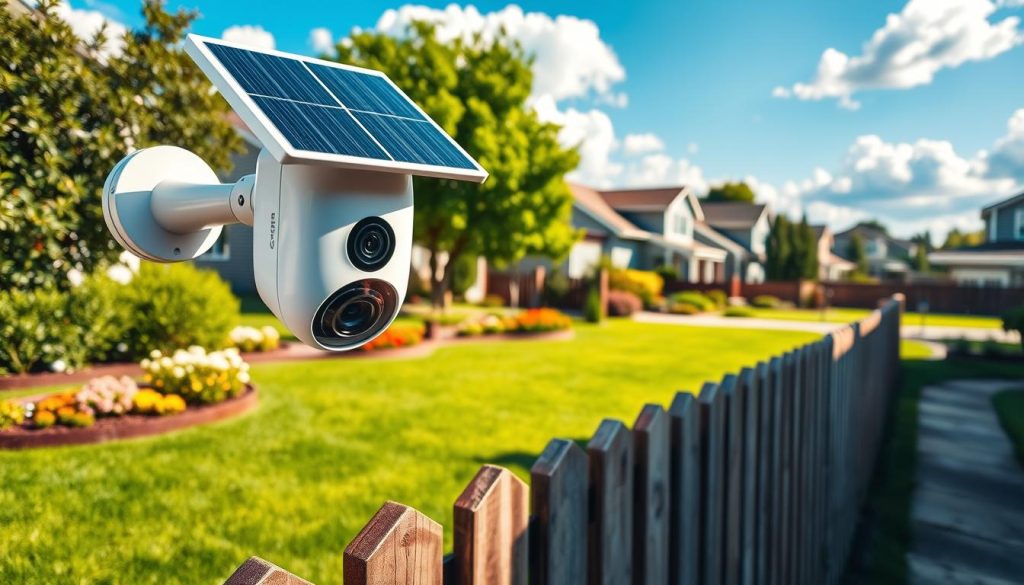
Home monitoring has taken a smart leap forward. Modern systems now blend photovoltaic panels with WiFi connectivity for a truly wire-free experience.
This hybrid technology is perfect for places with abundant sunshine. In Singapore’s urban landscape, it offers a sustainable and practical solution for keeping an eye on your property.
A major benefit is saying goodbye to complicated wiring. These units draw their power directly from the sun, providing reliable operation even if clouds roll in for a day or two.
Motion-activated recording is a standard feature. This smart function can conserve up to 40% more energy. With a wide 130° field of view, you get comprehensive coverage of key areas.
This article is a curated roundup of the top options available. Our goal is to help Singaporean homeowners make an informed choice for a brighter, more sustainable way to protect their homes.
Key Takeaways
- Modern monitoring devices combine solar panels and WiFi for efficient, wire-free operation.
- They are an ideal fit for Singapore’s sunny climate and space-conscious urban homes.
- A primary advantage is the complete elimination of difficult electrical wiring during setup.
- Smart features like motion activation significantly boost energy efficiency and battery life.
- This guide serves as a product roundup to help you choose the best system for your needs.
- These systems provide reliable performance and can operate for extended periods on a single charge.
- Adopting this technology is a smart step toward enhancing your home’s safety in an eco-friendly way.
Why Singapore Homes Are Ideal for Solar Security
The city-state’s climate and infrastructure create an ideal environment for adopting energy-independent monitoring systems. Several local factors converge to make this technology a particularly smart fit for residences here.
Harnessing Singapore’s Abundant Sunshine
Singapore enjoys about 5.5 peak sun hours every day. Its annual solar irradiance measures a robust 1,800 kWh/m².
This consistent, intense light is perfect for photovoltaic technology. A solar panel can generate ample power throughout the year.
This reliable energy source means your monitoring unit operates without fail. It significantly cuts dependence on the main electrical grid.
The system’s battery stays charged, ensuring continuous protection. You get peace of mind, even during brief cloudy days.
The Shift Towards Sustainable, Wireless Solutions
National initiatives like the Smart Nation program encourage such innovations. Housing Development Board (HDB) regulations also favor wireless setups.
These policies actively discourage intrusive and messy wiring. For dense living spaces, this is a major benefit.
Installing a unit on an HDB flat or condominium becomes simple. There’s no need for complex drilling or running cables through walls.
The economic argument is equally strong. A case study of landed properties showed remarkable savings.
Homeowners achieved 60% cost savings over three years by switching to photovoltaic-powered solutions.
Government subsidies for eco-friendly devices further improve affordability. The cultural emphasis on sustainability is growing rapidly.
With 92% of the population living in urban areas, convenience is key. A wireless system offers just that—easy setup and minimal upkeep.
The concept of energy independence is powerful. Your home’s security remains active during local power fluctuations.
This combination of climate, policy, and urban living makes Singapore a prime market. Adopting this technology is a forward-thinking choice for any homeowner.
You can find more details on specific models and incentives on our website. It’s the first step toward a smarter, greener home.
The Smart Benefits of Choosing Solar-Powered Security
Modern, sun-powered home protection systems are designed to be smarter for your wallet, the planet, and your peace of mind. Moving beyond basic surveillance, they deliver tangible advantages in three key areas.
These benefits make a compelling case for upgrading your property’s monitoring setup.
Significant Cost and Energy Savings Over Time
The financial argument for photovoltaic technology is strong. You immediately cut your monthly energy use by about 10%.
This is because the unit draws its power directly from the sun. Over a year, the savings on your electricity bill add up.
Maintenance is another area where you save a lot. Annual upkeep for these systems averages just $15.
That’s a fraction of the $75 often needed for traditional wired options. The long-term cost of ownership is significantly lower.
High-quality lithium-ion batteries are a key reason for this reliability. They perform exceptionally well in Singapore’s consistent heat.
This extends the device’s useful life and ensures stable power storage. You won’t need to replace them often.
Premium brands back their products with confidence. Many offer extensive 5-year warranties for complete peace of mind.
This warranty coverage protects your investment far into the future, ensuring you get value for every dollar spent.
Eco-Friendly Operation with Minimal Carbon Footprint
Choosing a green monitoring solution has a direct positive impact. Each device can reduce CO2 emissions by 2.1kg every month.
That’s a meaningful step toward a more sustainable household. The operation is also silent, which is perfect for residential areas.
You avoid adding any noise pollution to your neighborhood. This thoughtful design considers the community.
Responsible manufacturers take this further with recycling programs. Brands like Eufy and Ring have initiatives to handle electronic waste properly.
It ensures that at the end of its life, your unit is disposed of responsibly. This closes the loop on a clean product lifecycle.
Simplified Installation and HDB-Friendly Setup
Ease of setup is a major advantage. Studies show an 80% do-it-yourself installation rate for these systems.
Most homeowners can handle it without calling an electrician. You avoid the mess and high cost of running cables through your wall.
This plug-and-play approach offers incredible placement flexibility. You can position the unit for the best view without hunting for a nearby outlet.
Advanced models, like the TP-Link Tapo C420S1, highlight this convenience. They can achieve a full charge in just 30 minutes of good sunlight.
For HDB dwellers, this simplicity is crucial. Housing rules often restrict permanent modifications and complex wiring.
A wireless, stick-up design complies perfectly with these guidelines. You get robust protection for your house without any hassle.
In one simple package, you tackle several things: lower bills, a greener footprint, and hassle-free setup. It’s a smart upgrade from every angle.
Key Features to Look for in a Solar Outdoor Security Camera
A superior energy-independent surveillance device combines visual precision with robust construction and intelligent connectivity. Understanding these core elements helps you select a system that performs reliably day and night.
High-Resolution Video and Smart Night Vision
Visual clarity is paramount for identification. Look for units offering 2K or 4K resolution, which provides four times the detail of standard 1080p.
This is especially valuable in Singapore’s dense urban landscape where you need a clear picture of faces or license plates. Advanced CMOS sensors enhance performance in low-light conditions.
For round-the-clock monitoring, color night vision with a range up to 98 feet is critical. It transforms dark areas into identifiable scenes.
Artificial intelligence dramatically improves motion detection. This smart technology can reduce false alarms by an impressive 70%.
AI-powered analytics distinguish between a passing cat and a person at your door, saving you from unnecessary alerts.
Battery Life, Solar Panel Efficiency, and Weatherproofing
The harmony between energy collection and consumption defines a system’s independence. Assess the battery capacity against the unit’s power draw.
A higher-wattage photovoltaic panel, like a 6W model, charges the battery faster. Monocrystalline panels are the most efficient options available.
An MPPT charge controller optimizes this energy conversion. It squeezes every bit of power from available sunlight.
Note that charging efficiency drops in cooler temperatures. Some panels work less effectively below 5-6°C, and a few camera models won’t charge at all below freezing.
This is relevant for winter days or units mounted near air-conditioning exhausts. Also, a connected solar panel can sometimes cause false battery level readings.
Durability is non-negotiable. An IP67 waterproof rating guarantees protection against Singapore’s heavy tropical rains and high humidity.
Construction materials matter too. Glass-reinforced polycarbonate housings withstand the elements for years, extending the device’s useful life.
Smart Home Integration and Alert Systems
Modern devices should work seamlessly with your existing tech ecosystem. Compatibility with Alexa, Google Home, and Apple HomeKit is common.
This allows for voice commands and automated routines. For example, your porch light can turn on automatically when motion is detected.
Alert systems need to be smart and fast. Look for customizable motion zones to monitor only specific areas.
Geofencing uses your phone’s location to arm or disarm the system. Real-time notifications with transmission speeds as fast as 300ms keep you instantly informed.
Efficient energy management is key for sustained battery life. Some options handle scheduled recording better than constant motion triggers.
Choosing a model with this smart power management maximizes uptime. It ensures your protection remains active without frequent manual intervention.
Consider this section your practical checklist. Evaluate each potential system against these features to find the one that best fits your needs, avoiding complex wiring and ensuring reliable performance.
Comparing Top Solar Security Camera Models for Singapore
With several leading brands available, choosing the right photovoltaic monitoring system comes down to matching features with your specific needs. Prices in Singapore can range from under S$100 to over S$800.
This roundup examines four distinct categories. We’ll look at value leaders, AI specialists, smart home champions, and premium solutions.
Your priority might be budget, video quality, or seamless integration. This guide helps you find the best fit for your property.
Reolink Argus Series: Balancing Performance and Value
The Reolink Argus series is a strong mid-range contender. It delivers excellent performance without a premium price tag.
Models like the Argus 3 Pro offer sharp 2K video. You get a 122-degree field of view and an IP65 weatherproof rating.
Storage is handled locally via a microSD card. This keeps your data private and avoids monthly cloud fees.
User reviews highlight its reliable operation. The system works well with its compatible photovoltaic panel.
A minor point to note involves battery level reporting. In certain cool conditions, readings can sometimes be inconsistent.
For the cost, it’s a robust one-stop solution. It’s ideal for homeowners seeking clear video and straightforward local storage.
EufyCam 3: Advanced AI and Local Storage
EufyCam 3 focuses on privacy and intelligent detection. It includes 8GB of built-in storage right in the home base.
This means no cards to buy and no data traveling to the cloud. Its advanced AI is a standout feature.
The system offers facial recognition for familiar people. Its pet detection accuracy is rated at an impressive 92%.
This smart filtering drastically cuts down false alerts from animals or passing vehicles, a major benefit for landed properties.
You get clear notifications for what matters. It’s a superb option for those prioritizing data security and smart alerts.
Ring Stick Up Cam Solar: Seamless Smart Home Integration
For users invested in the Amazon ecosystem, the Ring Stick Up Cam Solar is a top pick. It integrates seamlessly with Alexa for voice commands and routines.
Setup is famously straightforward. The unit offers a wide 155-degree diagonal view.
When paired with its dedicated solar panel, it maintains consistent power. This makes it a true set-and-forget device.
It excels at providing a unified smart home security experience. You can view feeds on Echo Shows and receive alerts through the Ring app.
If your smart house runs on Alexa, this model simplifies things.
Lorex and Other Premium Options for Demanding Needs
For demanding applications, brands like Lorex and integrated systems shine. Lorex offers units with up to 4K resolution and long-range color night vision.
A key benefit is free, unlimited local recording to a hard drive. Their wire-free models are compatible with a separate S$79.99 panel.
Other premium options include systems from ADT and Arlo. ADT integrates Google Nest cameras, while Arlo sells panels for its Pro series.
SimpliSafe also offers a panel for its outdoor unit. These are for users who need the highest clarity or professional monitoring.
Key considerations for Singapore:
- Panel Compatibility: Always check if the photovoltaic panel is included or sold separately.
- Local Support: Purchase from authorized dealers or a reputable website for local warranty service.
- Firmware Updates: Ensure the brand offers consistent updates for your region.
Your final choice hinges on what you value most. Is it initial cost, AI smarts, ecosystem fit, or top-tier video?
For a deeper dive into specific options and technical specs, explore our detailed guide on the best WiFi options. It will help you back your decision with comprehensive data.
Making Your Decision: Installation and Final Considerations
A successful installation hinges on smart placement and a few key checks. First, find a spot with at least six hours of direct sun daily for your photovoltaic panel. Use a tool like the Solar Surveyor app to confirm this.
Mount the camera between 2.4 and 3 meters high on a sturdy wall. A slight downward tilt of 10-15 degrees optimizes the view. Secure it with tamper-proof screws and seal gaps with weatherproofing silicone.
After mounting, test your WiFi signal strength immediately. Calibrate the motion detection zones to avoid false alerts from public areas. For battery care, charge it outside to prevent lens condensation.
Perform simple maintenance every three months. When making your final choice, balance your budget with desired features. Consider the total cost of ownership, including any subscription fees.
Choose reputable local suppliers with CASE Trust accreditation. Check compatibility with your existing smart home setup. This thoughtful approach delivers long-term value and sustainable peace of mind for your home.