
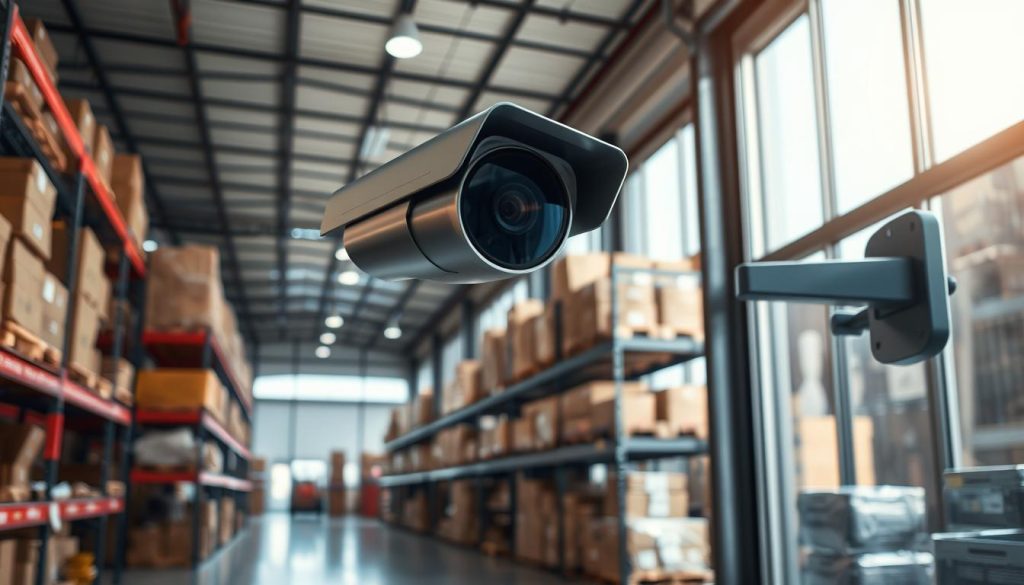
Protecting a logistics facility requires a robust surveillance solution. In Singapore’s fast-paced environment, a strong monitoring setup is essential for smooth operations.
Recent data shows a troubling 40% rise in warehouse theft locally. This trend makes modern video systems a vital necessity for any business.
Simply having visible CCTV can deter up to 60% of potential intruders. This turns a basic expense into a strategic investment in your assets and personnel.
This buyer’s guide aims to cut through the noise. We provide clear, expert recommendations for selecting the optimal setup for your specific needs.
We will break down everything from essential features and camera types to cost considerations. You’ll also learn best practices for installation and system integration.
Implementing the right technology transforms your approach. It shifts from a reactive cost to a proactive competitive advantage.
Key Takeaways
- Warehouse theft in Singapore has increased by 40%, highlighting an urgent need for action.
- Visible surveillance equipment can deter a significant majority of potential criminal activity.
- A modern system is a strategic investment in protecting inventory, assets, and worker safety.
- This guide provides expert insights to help you choose the optimal monitoring solution.
- You will learn about essential features, different camera types, and key cost considerations.
- Proper installation and integration are crucial for maximizing your system’s effectiveness.
- The right setup can turn your security posture into a source of business efficiency and advantage.
Why Warehouse Security Demands Your Immediate Attention
A staggering rise in inventory loss presents a clear and present danger to supply chain integrity. The risks are no longer hypothetical but quantifiable and severe.
Delaying action directly compromises your financial health and operational stability.
The Sobering Statistics of Warehouse Theft
Globally, facilities report a 40% surge in theft incidents. In Singapore, the trend mirrors this alarming climb.
Up to 40% of all cargo theft occurs within storage premises. This leads to substantial annual losses that cripple profitability.
The threat is dual in nature. External breaches are a constant concern.
Perhaps more damaging is internal pilferage by personnel. A visible surveillance system is a powerful deterrent against both.
Studies confirm that prominent CCTV can deter up to 60% of potential intruders. This turns a passive cost into an active shield for your assets.
Beyond Theft: Protecting People and Ensuring Compliance
Modern monitoring does far more than guard stock. It plays a crucial role in safeguarding your team.
By watching high-risk zones, these systems help prevent accidents. Proactive visibility can reduce safety incidents by a significant margin.
This function is also a compliance cornerstone. A documented surveillance setup helps meet OSHA and local safety rules.
It provides a clear audit trail for inspections. This avoids costly penalties and demonstrates corporate responsibility.
Recorded footage serves as invaluable evidence. It supports insurance claims, internal investigations, and process audits.
Ultimately, a robust setup protects more than physical items. It defends your company’s reputation and ensures operational continuity.
Neglecting this foundational business imperative is a direct threat. It risks profitability, liability management, and long-term viability.
The Rising Tide of Warehouse Crime in Singapore
Singapore’s position as a global logistics hub makes its storage facilities prime targets for criminal activity. The local logistics world is changing fast, with a reported 40% surge in theft incidents. This trend mirrors a global problem, putting immense pressure on business operations.
As a major transshipment port, the nation’s economic vitality relies on secure supply chains. Any disruption here has far-reaching consequences. Proactive measures are no longer optional but a core business imperative.
Understanding the Financial Impact on Your Business
The direct costs of inventory loss are staggering. Globally, cargo theft costs businesses between $15 to $30 billion annually. A significant portion occurs within storage premises.
Indirect expenses often hit harder. Operational delays, increased insurance premiums, and potential legal liabilities add up quickly. A single incident can cripple a company’s cash flow.
Investing in a superior CCTV system translates into tangible financial benefits. Proactive monitoring can cut theft by up to 70% in watched areas. This directly reduces loss ratios and can lead to lower insurance costs.
Insurers often offer better rates to facilities with documented surveillance. This turns an expense into a strategic asset that protects your bottom line.
How Proactive Security Becomes a Competitive Advantage
A secure storage facility does more than protect goods. It builds immense brand trust with clients and partners. Guaranteeing the safety of their items in your care is a powerful market differentiator.
Advanced surveillance is not just a utility. It is a strategic tool that can streamline operations. The data from video footage provides insights for process optimization.
Businesses leverage this infrastructure to gain a market edge. With reduced risk, they can offer faster and more reliable services. This efficiency improvement attracts better clients.
Consider the long-term value of a reputation for security. It attracts superior business partnerships and top talent. People want to work with and for companies that prioritize safety.
View this spending as an investment in business resilience and growth. It shifts from a reactive cost to a proactive foundation for scaling your operations. The right system pays for itself by preventing loss and creating opportunity.
Essential Features of Top-Tier Warehouse Security Cameras
Not all monitoring equipment is created equal. Specific functionalities separate basic models from professional-grade solutions.
Your investment’s value is determined by the core capabilities embedded in each unit. These attributes ensure you capture usable evidence and gain operational control.
High-Resolution Imaging for Critical Detail
Clarity is non-negotiable. Modern systems start at Full HD (1080p) and extend to 4K Ultra HD.
This progression means capturing finer details. You can read product labels, identify facial features, and discern license plates from a distance.
A high frame rate, typically 25-30 fps, is equally vital. It ensures smooth playback without motion blur. This is crucial for reviewing fast-moving events like forklift operations.
Look for Wide Dynamic Range (WDR) technology. It balances extreme light and dark areas in a single shot. This feature is essential for spaces with bright dock doors and shadowy aisles.
Superior Night Vision and Low-Light Performance
Facilities operate around the clock. Protection must not fade when the sun goes down.
Infrared (IR) illumination is the standard. Quality units offer a range measured in meters, often 30m or more. They provide clear monochrome footage in total darkness.
Thermal imaging represents the advanced tier. It detects heat signatures rather than light. This technology can see through smoke, light fog, and is immune to glare.
For challenging logistics yards, thermal sensors identify intrusions where traditional IR might fail. They provide a reliable layer of detection in zero-light warehouse environments.
The Power of Remote Access and Monitoring
Being tied to a physical control room is outdated. Modern platforms enable live viewing from any internet-connected device.
Managers can check site activity on a smartphone or tablet. This capability offers peace of mind and enables swift response.
Instant alerts are a game-changer. The system can send notifications directly to your phone. You are informed of motion events or triggered sensors in real-time.
This transforms your approach from reactive to proactive. You can address potential issues before they escalate, no matter your location.
Advanced Motion Detection and AI Analytics
Basic motion sensing triggers on any movement, including shadows. This leads to false alarms and wasted storage space.
Intelligent video analytics change the game. AI-powered software can differentiate between a human, a vehicle, and environmental noise.
These smart features allow for precise zone configuration. You can set rules to detect loitering in restricted areas or unauthorized after-hours access.
Some analytics can even identify fallen objects or perimeter breaches. This turns your cameras into proactive guardians that provide meaningful data.
Additional components round out a robust setup. Power over Ethernet (PoE) simplifies installation by delivering data and power through one cable.
Vandal-resistant housings with high IK ratings protect against physical tampering. Wide-angle lenses (up to 180°) maximize coverage with fewer devices.
Pan-Tilt-Zoom (PTZ) capability offers active monitoring of large, open spaces. Operators can control the unit remotely to follow activity or zoom in on details.
Your 2024 Feature Checklist:
- Resolution: Minimum 1080p, with 4K for critical identification points.
- Night Vision: Effective IR range suitable for your site’s size; consider thermal for perimeter.
- Smart Analytics: AI-driven person/vehicle detection to minimize false alerts.
- Remote Access: Secure mobile and web app for live viewing and alert management.
- Durability: IP66 or higher weatherproof rating; IK10 vandal resistance for vulnerable spots.
- Storage Efficiency: H.265+ video compression to save on hard drive space without losing quality.
- Integration Ready: Open protocol support (e.g., ONVIF) for connecting with access control and alarms.
Selecting units with this core feature set ensures your surveillance system is a powerful, future-ready asset. It moves beyond simple recording to become an intelligent operational platform.
Tangible Benefits of a Robust Warehouse Surveillance System
Forward-thinking managers view their surveillance infrastructure as a strategic business tool. Its value extends well beyond preventing loss.
A modern setup delivers a powerful return on investment across multiple operational areas.
Deterring Criminal Activity Before It Happens
The most immediate advantage is psychological deterrence. Prominently placed units send a clear message that the premises are watched.
Studies show this visibility makes intruders 40% less likely to target a facility. Instances of theft and vandalism can be cut by up to 50%.
Employee theft alone drops by about 30% with professional video monitoring in place.
This creates a powerful shield for your assets and inventory. It addresses both external breaches and internal risks effectively.
Gaining Operational Insights and Improving Efficiency
Recorded footage is a goldmine of operational data. Managers use it to analyze workflow and identify bottlenecks.
You can see how staff navigate aisles or how long loading dock processes take. This visibility leads to smarter layouts and faster retrieval.
About 60% of facility managers report better efficiency after implementing a comprehensive CCTV system.
It also tightens inventory control. Regular reviews of stock movement reduce shrinkage and improve audit accuracy.
Knowing they are monitored professionally fosters greater employee accountability. This often translates into more consistent productivity.
Reducing Insurance Premiums and Liability
Insurers recognize the risk mitigation of certified security systems. Properties with them often qualify for premium discounts of up to 20%.
This turns an operational cost into direct financial savings. Your setup pays for itself faster.
Clear video evidence is crucial for liability management. In case of workplace accidents, footage helps determine fault swiftly.
This protects your business from fraudulent claims. It also supports a culture of safety, with monitoring linked to a 25% drop in safety incidents.
Having an indisputable audit trail ensures compliance during inspections. It guarantees operational continuity by preventing disruptive security events.
The Multi-Faceted Return on Your Investment:
- Crime Deterrence: Cuts attempted theft and vandalism by up to half.
- Operational Intelligence: Provides data to streamline workflows and boost productivity.
- Financial Savings: Lowers insurance costs and reduces inventory shrinkage.
- Risk Mitigation: Offers clear evidence for liability cases and accident reviews.
- Business Assurance: Protects reputation and ensures uninterrupted operations.
The payoff from a quality monitoring solution touches every part of your operation. It is an investment in performance, not just protection.
Decoding Key Specifications for Warehouse CCTV
Technical specifications can seem like a confusing alphabet soup to the uninitiated. Understanding these details is crucial for selecting gear that performs reliably in demanding storage spaces.
This guide breaks down the essential numbers and codes. You will learn what they mean for your operational visibility and long-term investment.
Video Resolution: From HD to 4K Clarity
Resolution determines the level of detail in your video. It is measured in pixels, with common standards being 1080p (Full HD) and 4K (Ultra HD).
Higher megapixel counts provide sharper images. This allows you to identify faces or read labels from much greater distances.
For general aisle monitoring, 1080p often suffices. Critical identification points, like loading docks or entry gates, benefit from 4K clarity.
The right choice balances detail with storage needs. Higher resolution requires more hard drive space.
Durability Ratings: IP66 and IK10 for Harsh Environments
Industrial settings are tough on equipment. Ingress Protection (IP) ratings define a unit’s resistance to dust and water.
An IP66 rating is a common benchmark. It guarantees protection against powerful water jets and total dust ingress.
This makes such systems ideal for outdoor use or dusty indoor areas. For harsher conditions, IP67 or IP68 may be needed.
Vandal resistance is measured by IK ratings. An IK10 rating means the housing can withstand impacts of up to 20 joules.
Install units within reach with high IK ratings. This prevents tampering and ensures continuous operation.
Frame Rate and Storage Considerations
Frame rate, measured in frames per second (fps), affects playback smoothness. Standard real-time video uses 25-30 fps.
A lower rate saves significant data but can make motion appear choppy. This is problematic for reviewing fast-paced events.
Calculating your storage capacity is a key step. You must consider the number of units, their resolution, frame rate, and recording schedule.
Motion-activated recording conserves space versus continuous capture. A common retention policy is 60 to 90 days of footage.
Use online calculators provided by manufacturers. Input your specific needs to estimate the required hard drive size accurately.
Lens Focal Length and Field of View
The lens determines how much area a single device can cover. Focal length (e.g., 2.8mm, 12mm) and field of view are inversely related.
A wide-angle lens (2.8mm) captures a broad scene, perfect for monitoring open aisles. A longer lens (12mm) provides a narrower, zoomed-in view for specific points like gates.
Choose based on the zone’s monitoring goal. Wide coverage for general observation, focused views for detailed identification.
Ensuring Compatibility and Future-Proofing
Adherence to the ONVIF standard is highly recommended. This open protocol ensures different brands of camera and recorder can work together.
It protects your investment and provides flexibility for future upgrades. You are not locked into a single vendor’s ecosystem.
Power over Ethernet (PoE) simplifies setup dramatically. It delivers both power and data through a single network cable.
This reduces installation complexity and cost. It is a modern feature worth seeking in your new system.
For challenging low-light warehouse environments, prioritize units with superior infrared or thermal night vision range, not just resolution.
Your Specification Checklist:
- Resolution & Detail: 1080p for general areas, 4K for critical choke points.
- Durability: IP66 for weatherproofing, IK10 for vandal-prone locations.
- Low-Light Performance: Strong IR night vision range (30m+) for 24/7 visibility.
- Lens Choice: Match focal length to the zone—wide for aisles, long for entry points.
- Integration: Ensure ONVIF compliance for brand interoperability.
- Infrastructure: Prefer PoE-capable units for cleaner, more scalable installation.
Matching these technical specifications to your facility’s unique challenges is the final step. It transforms a list of features into a reliable monitoring solution.
Navigating the Different Types of Security Cameras for Warehouse Use
The market offers a diverse array of visual monitoring units, each engineered for specific scenarios. Selecting the right mix is a foundational step in building a robust defense.
Your facility’s unique layout and risk profile dictate which models will deliver the best results. A strategic combination creates a layered shield.
Bullet Cameras: Long-Range Perimeter Defense
Recognizable by their cylindrical, barrel-like shape, these units are built for toughness. They are typically mounted on walls or eaves, pointing directly at a target zone.
This visible design acts as a powerful psychological deterrent. Intruders know they are being watched from a distance.
Their housing is often weatherproof with a high IP rating. This makes them ideal for outdoor use around fences, gates, and parking lots.
The long-range lens is perfect for capturing clear images of license plates or identifying individuals approaching the property line.
Dome Cameras: Discreet Indoor Surveillance
These devices feature a compact, hemispherical housing that blends into ceilings. Their discreet profile is less obtrusive in office spaces or packing areas.
The dome is often made of tough, tinted polycarbonate. This makes it difficult for people to tell which way the lens is pointing.
This design also offers inherent tamper resistance. It is an excellent choice for monitoring indoor transactions, inventory aisles, and staff common areas.
Many models provide a wide-angle view. A single unit can cover a significant portion of a storage rack zone or production floor.
PTZ Cameras: Flexible, Active Monitoring of Large Areas
Pan-Tilt-Zoom (PTZ) units provide unmatched flexibility for vast, open spaces. Operators can control them remotely to pan left/right, tilt up/down, and zoom in optically.
This allows security personnel to actively track motion across a wide warehouse floor. They can follow a person or vehicle in real-time.
When an alert is triggered, the camera can automatically swing to a preset position. The zoom function lets you read a label or see a face from hundreds of feet away.
They are perfect for monitoring large yards, loading docks, and distribution centers where constant, active surveillance is needed.
360-Degree Fisheye Cameras: Maximizing Coverage
This innovative type uses a single, ultra-wide lens to capture a complete panoramic view. It eliminates blind spots in a single shot.
The video stream can be digitally “de-warped” on a monitor. This allows you to view multiple virtual angles from one physical device.
It drastically reduces the number of units needed for large, open ceilings. This cuts down on installation costs and system complexity.
They are superb for central areas like shipping hubs or main storage aisles. You get total situational awareness with minimal hardware.
Other models, like turret cameras, offer an adjustable ball-and-socket design for precise aiming. Specialized thermal cameras detect heat signatures, providing detection in total darkness where standard night vision fails.
The key is integration. Use bullet models as your first perimeter layer. Employ dome units for interior oversight and discreet observation.
Strategically place PTZ devices to patrol large zones. Install fisheyes in central choke points for maximum coverage efficiency.
A layered approach using complementary types is far more effective than relying on a single model. It creates a defense-in-depth strategy that adapts to every threat.
Real-World Placement Guide:
- Bullet: Mounted on exterior walls facing perimeter fences, main entry gates, and vehicle parking areas.
- Dome: Installed on ceilings above high-value inventory racks, packing stations, and employee entrances.
- PTZ: Positioned on high poles in the yard to scan the entire lot or on warehouse beams to oversee the main floor.
- Fisheye: Centered in receiving docks, main sorting areas, or large retail storage spaces for a full 360° view.
This strategic mix ensures you capture every critical angle. Your footage will be clear, actionable, and comprehensive for any investigation.
How to Choose the Right Security Cameras for Your Warehouse
Navigating the myriad of options for industrial monitoring technology requires a plan tailored to your unique operational landscape. This decision impacts your long-term protection and operational insight.
A methodical selection process ensures your investment directly addresses real-world risks. It also guarantees compatibility with your existing infrastructure.
Begin by defining your core objectives. Are you focusing on theft prevention, employee safety, or process verification? Your primary goal will steer the entire project.
Conducting a Thorough Site Risk Assessment
Every effective plan starts with a detailed evaluation of your premises. Walk through the entire facility with a fresh perspective.
First, identify all critical assets. This includes high-value inventory, sensitive documents, equipment, and access points.
Next, pinpoint physical vulnerabilities. Look for blind spots in aisles, poorly lit areas, and unprotected perimeter sections.
Finally, analyze potential threat vectors. Consider risks like unauthorized after-hours entry, internal pilferage, or vehicular theft at loading docks.
Documenting these elements creates a risk map. This visual guide becomes the foundation for your entire monitoring strategy.
Matching Camera Types to Specific Zones and Threats
With your risk map complete, assign the appropriate technology to each zone. Different areas demand different solutions.
Use rugged bullet camera models for long-range perimeter defense. Their visible design deters intruders at fences and gates.
Install discreet dome units for indoor oversight of inventory aisles and packing stations. Their tamper-resistant design is ideal for staff areas.
High-resolution PTZ models are perfect for active monitoring of large spaces like loading bays. They allow operators to zoom in on details like license plates.
For maximum coverage in central hubs, consider 360-degree fisheye systems. One device can eliminate blind spots in a receiving dock.
Professional advice often points to high-definition models like the Hikvision DS-2CD2386G2-I(U) for critical zones. Its 8MP resolution provides the quality needed for clear identification.
Always consider lighting conditions. Infrared-capable units are essential for dark storage areas or exterior spaces at night.
Balancing Performance with Budget and Infrastructure
Your ideal technology must work within practical constraints. Assess your current setup before making any purchases.
Evaluate network capacity, power availability, and cabling pathways. A Power over Ethernet (PoE) setup simplifies installation but requires network switches.
Create a budget framework that balances upfront costs with long-term value. Consider the total cost of ownership, including maintenance and potential upgrades.
The expected ROI from loss prevention often justifies a higher initial investment. A robust setup can pay for itself by stopping a single major theft.
Weigh the pros and cons of wired versus wireless systems. Wired PoE offers superior reliability for core areas.
Wireless units might be better for office spaces or temporary setups. They offer flexibility but can face signal interference in large metal buildings.
Never underestimate the value of professional consultation. A local integrator understands Singapore’s specific challenges. They can provide site-specific recommendations and ensure proper design.
Choose a scalable solution that can grow with your business. Your needs will evolve, and your technology should adapt.
Your Vendor Evaluation Checklist:
- Does the system support your required resolution (minimum 1080p) and features like AI analytics?
- Are the cameras rated for their environment (e.g., IP65/IP66 for outdoor use)?
- What is the total storage requirement for your desired retention period?
- Can the CCTV platform integrate with other security and access control systems?
- Does the vendor provide clear total cost of ownership and reliable local support?
- Is the system based on open standards (like ONVIF) for future flexibility?
- How does the solution address our specific site vulnerabilities and protect our assets?
Answering these questions turns a complex purchase into a strategic investment. You gain a solution built for your warehouse’s unique safety and operational data needs.
Best Practices for Warehouse CCTV Installation and Placement
The true effectiveness of a surveillance network is determined not just by the equipment you buy, but by how and where you install it. Proper setup transforms hardware into a reliable shield for your operations.
Strategic implementation ensures every dollar spent delivers maximum visibility and protection. It is the final, crucial step in securing your logistics space.
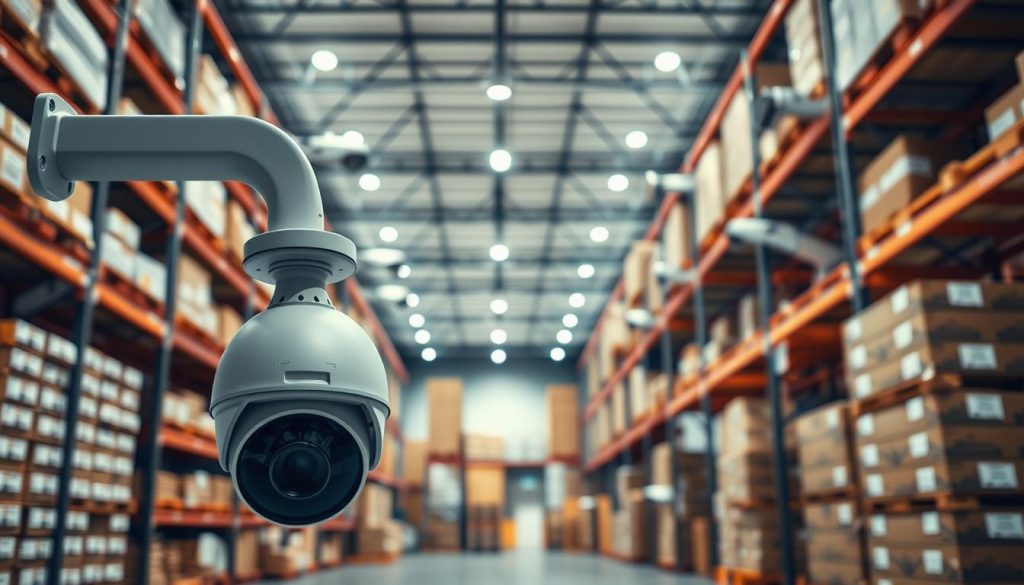
Strategic Positioning for Maximum Coverage and Deterrence
Height and angle are your first considerations. Mount units at 9 to 12 feet high. This prevents easy tampering while providing a broad field of view.
Angle each device to cover critical lines of sight. Primary goals include all entry and exit points. Also cover hidden spots behind tall racks or machinery.
Eliminate blind spots by overlapping fields of view from multiple units. Avoid obstructions like pillars, ductwork, or stacked goods. A clear line of sight is non-negotiable for usable footage.
Visible placement of dome or bullet models acts as a powerful psychological deterrent. It tells everyone that the area is under watch.
Ensuring Proper Lighting and Environmental Protection
Clear images depend heavily on ambient light. Artificial lighting and unit performance have a symbiotic relationship.
We recommend supplemental LED lighting for critical low-light zones. This includes loading docks at night and dimly lit interior aisles. It ensures color accuracy and sharp detail.
Industrial environments are harsh. Protect your investment from dust, moisture, and vibration from forklifts.
Use housings with an IP66 rating or higher for outdoor use. These resist powerful water jets and total dust ingress. For high-vibration areas near machinery, choose units with robust shock-absorbing mounts.
Extreme temperatures in some warehouse environments demand careful selection. Check the operational temperature range specified by the manufacturer.
Planning for Data Storage and System Maintenance
The brain of your setup is the Network Video Recorder (NVR) or Digital Video Recorder (DVR). Place this device in a secure, locked, and temperature-controlled room.
This location protects the data and hardware from unauthorized access and heat damage. Proper storage planning is a core part of the installation.
A proactive maintenance schedule keeps everything running. Clean lenses quarterly to prevent dust haze. Check all cable connections and power supplies every six months.
Regularly update device firmware to patch vulnerabilities. Verify recording functionality weekly to ensure no gaps in coverage.
“A professional installation by certified technicians isn’t an extra cost—it’s an insurance policy for your entire investment.”
Your data storage strategy must be robust. We advise a retention policy of 60 to 90 days for footage. This complies with many investigative and audit needs.
Consider Network-Attached Storage (NAS) for scalable capacity. Cloud backups add a layer of redundancy for critical evidence. Always encrypt stored video.
Neat cable management is vital. Use conduits and cable trays to organize wires. This creates a tidy, safe setup that is easy to troubleshoot and expand later.
Investments in these systems range widely. Dome models cost between $200 and $800. PTZ units are $800 to $2,000. Modern IP cameras range from $300 to $1,500 each.
Your Installation and Maintenance Checklist:
- Positioning: Mount at optimal height, cover all entries/exits, and eliminate blind spots.
- Lighting: Augment ambient light in key zones for superior image quality.
- Protection: Use IP66+ housings and industrial mounts for harsh conditions.
- NVR/DVR Placement: Secure in a locked, climate-controlled location.
- Maintenance: Schedule quarterly lens cleaning and bi-annual connection checks.
- Data Policy: Implement a 60-90 day retention rule with encrypted backups.
- Cabling: Employ conduits for a clean, safe, and serviceable installation.
- Professional Setup: Engage certified technicians for optimal performance and longevity.
Following these best practices ensures your CCTV system operates at peak effectiveness. It delivers the monitoring and detection capabilities your site and staff require.
Enhancing Employee Safety and Regulatory Compliance with CCTV
In today’s regulated industrial environment, video documentation is not just about security—it’s a fundamental component of operational responsibility. A modern visual monitoring system actively safeguards your team while ensuring you meet strict legal standards.
This dual function protects your most valuable asset: your people. It also shields your business from costly penalties and liability issues.
Monitoring High-Risk Zones for Accident Prevention
Strategic placement of monitoring units is crucial for preventing workplace injuries. Focus on areas with the greatest potential for accidents.
These zones include busy forklift lanes, elevated loading docks, and areas around heavy machinery. A clear view of these spots allows for real-time observation of unsafe behavior.
Managers can intervene before a minor mistake becomes a major incident. Integrating this technology with electronic access control adds another layer of prevention.
It can restrict entry to hazardous areas to authorized personnel only. This prevents untrained staff from entering dangerous zones.
Using Footage for Training and Process Improvement
Recorded footage is a powerful educational tool. It turns abstract safety rules into concrete, real-world examples.
Use video clips of near-miss incidents during team briefings. This shows employees the real consequences of bypassing protocols.
Analyzing this data also reveals workflow bottlenecks that create risk. You might see congestion in an aisle that leads to rushed movements.
Addressing these issues improves both safety and efficiency. When teams see leadership investing in their well-being, company culture improves.
Facilities using video for safety training report up to a 40% reduction in workers’ compensation claims. This demonstrates a direct financial return on a culture of care.
Morale rises because people feel valued and protected. This positive environment reduces turnover and boosts productivity.
Maintaining an Audit Trail for Safety Inspections
Video recording creates an immutable audit trail for regulatory bodies. In Singapore, compliance with the Workplace Safety and Health Act is mandatory.
Your CCTV system provides documented proof of due diligence. It shows inspectors that you actively monitor and enforce safe practices.
Modern analytics can automate this compliance monitoring. Software can detect safety violations like missing hard hats or unauthorized entry into marked zones.
These alerts allow for immediate correction. Cloud-based platforms let safety officers review footage remotely during an investigation.
This visibility is invaluable for mandatory reporting after an incident. Clear images establish facts quickly, preventing disputes.
This robust documentation meets all legal needs. It turns your surveillance infrastructure into a shield against litigation and fines.
Integrating with leading technology providers ensures system reliability. A professional setup delivers the consistent visibility required for true compliance.
Ultimately, this technology demonstrates a serious commitment to your team’s welfare. It builds a foundation of trust that benefits the entire business.
Understanding the Cost of Warehouse Security Camera Systems
A clear understanding of costs transforms a necessary purchase into a strategic financial decision. Smart spending is defined by value, not just the lowest price tag.
This analysis helps you budget effectively. You will see where your money goes and how it pays you back over time.
Breaking Down Initial Investment vs. Long-Term Value
Your upfront capital expenditure (CapEx) covers several components. The hardware is the most visible part.
Typical unit prices provide a baseline. Dome models range from $200 to $800 each. Bullet types can be $50 to $200.
Advanced PTZ units cost between $800 and $2,000. Remember, these are just the eyes of your operation.
The brain is the Network Video Recorder (NVR). You also need sufficient hard drives for data storage, network switches, and miles of cabling.
Professional installation labor is a significant and wise line item. A basic setup can start around $600 for equipment alone.
Ongoing operational costs (OpEx) are just as crucial. These include cloud subscription fees for backup, annual maintenance contracts, and incremental power consumption.
Viewing these expenses together paints the true financial picture. It separates a simple purchase from a managed business asset.
Factors Influencing Total Cost of Ownership
Several variables affect what you pay over five or ten years. Scalability is a major one.
A system that can’t grow with your needs becomes obsolete faster. Technology lifespan and warranty periods directly impact replacement cycles.
The cost of future upgrades should be considered. Does the platform allow adding new analytics or higher-resolution units easily?
For companies with limited initial capital, a phased strategy works. Secure the most critical zones first, like receiving docks and perimeter gates.
Expand coverage to interior aisles and offices in the next budget cycle. This spreads the investment while building immediate protection.
Investing in a robust CCTV system can prevent theft and accidents, saving a facility over £31,000 a year. This turns a capital cost into a recurring financial benefit.
Calculating the ROI of Theft Prevention and Loss Avoidance
Return on investment (ROI) is where the value becomes crystal clear. Quantify potential savings from several areas.
First, reduced inventory shrinkage from theft. Second, lower insurance premiums—some providers offer discounts up to 20%.
Third, avoided fines for non-compliance. Fourth, productivity gains from improved workflow monitoring.
Compare the total cost of a comprehensive setup against the impact of one major breach. A single pallet of high-value goods can eclipse an entire year’s security budget.
Always seek quotes from multiple reputable vendors. Understand what is included: design, installation, training, and ongoing support.
The most expensive system is not automatically the best. True value is defined by how well the solution meets your facility’s specific operational needs and protects your assets.
It’s an investment in stability, safety, and peace of mind. That long-term value far outweighs the initial price.
Leading Brands and Solutions for Warehouse Surveillance
Beyond specifications, the ecosystem and support offered by a brand define a successful deployment. The right partner provides technology that integrates seamlessly and stands up to daily industrial demands.
Your choice influences long-term reliability, scalability, and the quality of your operational insights. This section profiles the market leaders and provides a framework for evaluation.
Several global manufacturers dominate the professional monitoring space. Each brings distinct strengths to the table for logistics applications.
Industry Leaders: Hikvision, Dahua, and Avigilon
Hikvision is renowned for its extensive product portfolio and value. Models like the DS-2CD2386G2-I(U) offer 8MP clarity, robust build quality, and advanced analytics at a competitive price point.
Their systems are known for high-definition video and comprehensive remote access capabilities. This makes them a common choice for businesses seeking strong performance.
Dahua Technology matches this with durable hardware designed for tough environments. The IPC-HFW1831E, for example, is built for reliable outdoor use.
They focus on innovation in AI-powered video analytics and thermal detection. This provides smart tools for complex warehouse layouts.
Avigilon, a Motorola Solutions company, is recognized for its high-end analytics and unified security platform. Their technology excels in forensic search and proactive threat detection.
Other notable brands include Axis Communications, a pioneer in network video, and Hanwha Vision, which offers strong cybersecurity as a core feature.
Evaluating Brands on Reliability, Support, and Innovation
Choosing between these leaders requires a structured assessment. Look beyond the initial product sheet to their long-term commitment.
First, evaluate product reliability and warranty terms. Industrial cameras must withstand vibration, dust, and temperature swings for years.
Second, examine their range of device types. A strong brand offers bullet, dome, PTZ, and fisheye models that work together seamlessly.
Third, assess their innovation in AI and analytics. Look for tools like automated person/vehicle detection and perimeter intrusion algorithms.
Cybersecurity standards are non-negotiable. Reputable brands adhere to strict protocols and provide regular firmware updates to patch vulnerabilities.
“A brand’s true value is revealed not at purchase, but over years of service through its support network and product evolution.”
Finally, consider the total ecosystem. Compatibility between cameras, recorders, and video management software (VMS) prevents integration headaches.
The Importance of Professional Installation and Local Support
Even the best equipment underperforms without expert setup. This is where a local authorized partner in Singapore becomes invaluable.
Professional installation ensures optimal placement for coverage and deterrence. Certified technicians handle complex cabling, network configuration, and power requirements.
Local dealers provide crucial site surveys and custom design. They understand Singapore’s specific climate, regulatory environment, and common facility layouts.
After-sales service is the backbone of your investment. Responsive local support means quick troubleshooting, maintenance, and hardware replacement when needs arise.
Referencing case studies from other Singapore logistics operators can provide real-world confidence. It shows how a brand’s solution performs in conditions similar to yours.
For a detailed look at proven models available locally, explore this guide to top warehouse security cameras in Singapore.
Your final decision should balance product quality, local support availability, and total cost of ownership. The right partner delivers clear images, reliable data storage, and peace of mind for the long haul.
Integrating Advanced Technology into Your Security Ecosystem
An isolated camera is a passive recorder. An integrated system becomes an active, intelligent guardian of your premises.
Modern protection relies on a cohesive network. Your visual monitoring tools must talk to other technologies.
This creates a unified operational shield. It combines AI analytics, entry point controls, and alarm devices.
Leveraging Video Analytics for Proactive Alerts
Artificial intelligence transforms simple video streams into smart data. Modern software can analyze behavior in real-time.
It distinguishes between a person, a vehicle, and a stray animal. This eliminates false alarms from shadows or weather.
Advanced analytics enable automatic threat classification. The system can identify loitering in restricted zones or a fallen object in an aisle.
It sends instant notifications to managers’ mobile devices. This allows for a swift response before a situation escalates.
“The goal is to move from reviewing footage after an incident to preventing the incident from happening at all.”
Tools like license plate recognition manage vehicular access automatically. Facial recognition can verify personnel identity at sensitive points.
This intelligence turns your surveillance into a proactive partner. It focuses human attention where it’s needed most.
Syncing Cameras with Access Control and Alarm Systems
Linking your visual monitoring with door systems is a game-changer. Every entry event gets a visual verification.
When a card is swiped, the nearest unit captures who used it. This deters credential sharing and confirms authorized entry.
Tailgating detection is a major benefit. The analytics can spot a second person slipping in behind an authorized employee.
Integration with intrusion alarms creates a layered defense. When a motion sensor is triggered, nearby PTZ units automatically swing to view the zone.
They begin recording at high quality. This provides immediate visual context for any alarm.
Your entire response becomes faster and more informed. Guards see what triggered the alert before they even arrive on site.
The Role of Cloud Storage and Remote Management
Cloud-based video management offers significant flexibility. It moves your critical footage off-site.
This provides storage redundancy if local recorders are damaged. It also allows for easy scalability as your needs grow.
System administration happens through a secure web portal. Managers can adjust settings, view live streams, and pull recordings from anywhere.
Mobile apps deliver true remote monitoring capability. You can check on your facility while traveling or after hours.
Emerging IoT integration adds another layer. Cameras can be programmed to react to data from other sensors.
For example, a temperature spike in a cold storage area could trigger a specific unit to start recording. This protects both inventory and safety.
Cybersecurity is paramount for these connected systems. Always use strong, unique passwords and enable network encryption.
Segment your surveillance network from other business data. Regular firmware updates from your vendor patch potential vulnerabilities.
In a real-world incident, an integrated ecosystem works in concert. An unauthorized door forced open triggers an alarm.
Nearby cameras immediately focus on the entry point and start recording. Access control locks down adjacent doors.
Alerts are sent to onsite guards and remote managers. All actions and footage are logged for the investigation.
This is the shift from simple recording to intelligent, automated operations. Your technology works as a unified team to protect assets and people.
Taking the Next Step Toward a More Secure Warehouse
Armed with this knowledge, you are now poised to transform your facility’s operational integrity. A modern, feature-rich security system is no longer optional for any logistics center.
Begin by initiating a professional assessment of your premises. Contact reputable CCTV integrators in Singapore for a detailed consultation and site survey.
This investment delivers long-term peace of mind, protected assets, and a safer workforce. Delaying this upgrade is a risky proposition given rising theft trends.
Reach out today for personalized advice or to schedule a demonstration. The right technology not only solves current problems but also future-proofs your business against evolving threats.