
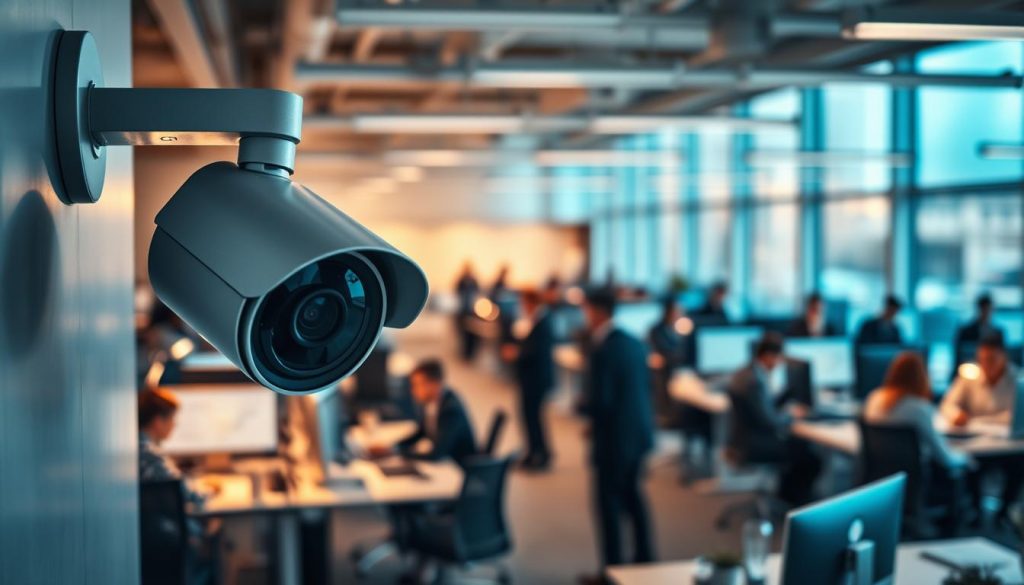
Protecting your company’s assets, staff, and daily operations is a top priority for any owner in Singapore. A robust surveillance system is a cornerstone of this protection. It offers a clear view of your premises and helps manage risk.
Today’s commercial security solutions go far beyond simple video recording. They are an integrated part of a complete safety and operations strategy. This approach helps prevent theft, reduces liability, and supports a secure work environment.
Choosing a professional team for your installation is critical. Experts ensure your equipment performs reliably and complies with all local rules. A DIY setup often leads to blind spots and technical failures.
The threat landscape continues to evolve, making advanced CCTV surveillance a smart investment. A properly installed system acts as a powerful crime deterrent. It also provides crucial evidence if an incident occurs.
This guide will walk you through the benefits, options, and process of setting up a modern monitoring system. Our goal is to help you gain true peace of mind through reliable technology and expert support.
Key Takeaways
- Professional setup guarantees optimal system performance and adherence to regulations.
- Modern surveillance is a key component of an integrated risk management plan.
- A visible system actively deters criminal activity and provides vital evidence.
- Integrating CCTV with other tools like access control improves overall facility management.
- Investing in a professionally installed system is a strategic decision for long-term business protection.
- Robust monitoring is essential for companies of all sizes operating in Singapore.
- Advanced technology delivers actionable insights and operational intelligence.
Why Your Singapore Business Needs a Professional Surveillance System
With theft and crime presenting a persistent challenge globally and locally, safeguarding a business demands more than just locks and alarms. A professionally deployed surveillance system is a foundational layer of modern risk management. It transforms passive protection into an active, intelligent shield for your premises.
Deter Crime and Prevent Loss
The visible presence of a well-installed CCTV system is a powerful psychological barrier. Potential intruders or vandals are far less likely to target a property they know is being watched. This deterrent effect is a primary defense against loss.
Data shows theft has increased, making surveillance in Singapore more critical than ever. Companies without these solutions operate at a significantly higher risk. A visible camera can stop a crime before it even begins, protecting your assets.
This protection extends internally as well. Knowing that activities are monitored promotes honesty and deters internal theft or policy violations. It creates a culture of accountability from the ground up.
Provide Evidence and Enhance Accountability
Should an incident occur, high-definition video evidence is invaluable. Clear footage can capture crucial details like facial features or license plates. This evidence is vital for filing accurate police reports and supporting insurance claims.
Internally, recorded footage allows for transparent investigation of workplace incidents or safety protocol breaches. It helps management understand events objectively, reducing liability and ensuring fair outcomes. This level of oversight encourages everyone to adhere to best practices.
A reliable professional system ensures continuous, gap-free recording. This integrity is non-negotiable for the evidence to hold up when it matters most. You cannot afford blind spots or technical failures during critical moments.
Gain Remote Monitoring and Peace of Mind
Modern surveillance technology offers live viewing from anywhere. Business owners and managers can check on their premises using a smartphone, tablet, or computer. This remote monitoring capability is a game-changer for operational control.
You gain unparalleled peace of mind when you can visually verify that all is well, especially after hours, during holidays, or across multiple sites. It ends the anxiety of wondering about the safety of your property.
Advanced systems can send intelligent alerts for suspicious motion. This enables a rapid response, allowing you or your security team to react in real-time. You move from simply recording events to actively managing your site’s safety.
Together, these benefits—deterrence, indisputable evidence, and constant remote oversight—make a professional surveillance system a critical investment. It mitigates risk and builds operational confidence for any Singapore enterprise.
Key Features of Modern Commercial Security Cameras
Selecting the right equipment involves a clear grasp of key technological features that address specific environmental challenges. Today’s devices are intelligent tools designed for clarity and proactive alerts.
Understanding these core capabilities allows you to build a network that delivers reliable evidence and operational insight. It transforms simple video recording into a powerful management asset.
High-Definition (HD) and 4K Resolution for Critical Detail
Image clarity is non-negotiable. High-definition 1080p and 4K Ultra HD cameras capture immense detail. This is vital for identifying faces, clothing logos, or license plates.
Higher megapixel counts mean you can digitally zoom into a recorded scene without the picture turning into a blurry mess. This level of detail is essential for any post-event investigation. It turns a general recording into actionable evidence.
Night Vision Capabilities for 24/7 Security
Protection cannot stop when the sun goes down. Modern systems use infrared (IR) LEDs and highly sensitive sensors for round-the-clock monitoring.
Professional-grade equipment can see in near-total darkness. Specifications like a low-light sensitivity of 0.1 Lux or an IR range of 25 meters ensure clear monochrome video. Some advanced models even provide color video in very low light.
This continuous coverage eliminates blind spots in your surveillance schedule. It ensures your premises are watched every hour of the day and night.
Motion Detection and Intelligent Alerts
Smart features save time and storage space. Motion detection algorithms trigger recording only when activity is sensed. This focuses attention on potential events.
You can receive instant push notifications on your phone when motion is detected in specific areas. This enables a rapid real-time response instead of reviewing hours of empty footage later.
Advanced analytics go further. They can differentiate between a person and a stray animal, or alert you to line crossing or loitering. This intelligence moves your setup from passive recording to proactive threat identification.
Wide Dynamic Range (WDR) and Low-Light Performance
Challenging lighting can ruin a crucial shot. Entrances with bright sunlight behind a subject or rooms with dark corners are common problems. Wide Dynamic Range (WDR) technology solves this.
WDR and Digital WDR (DWDR) balance the light and dark areas within a single frame. The result is a clear, usable image where details are visible both inside and outside a window.
Combined with superior low-light performance, these features guarantee video quality in almost any condition. Your evidence remains clear whether an incident happens at noon or in a dimly lit warehouse aisle.
Together, these features create a comprehensive net. High resolution captures detail, night vision ensures continuity, intelligent detection provides alerts, and WDR handles difficult lighting.
A professional assessment will identify which cameras and solutions are best for your specific areas. This informed approach directly addresses your vulnerabilities and builds true peace of mind.
Understanding Your Options: Types of CCTV Systems
A tailored monitoring approach starts with understanding the key differences between wired, wireless, IP, and analog systems. This knowledge empowers you to make informed decisions and collaborate effectively with a professional.
The right choice balances performance, budget, and your long-term operational needs. It forms the backbone of a reliable surveillance network.
Wired vs. Wireless Security Systems
Wired setups use Power over Ethernet (PoE) or coaxial cables. They provide superior reliability, consistent power, and higher data security.
This makes them the go-to for business-critical operations. A professional handles the cable runs, ensuring a neat and robust installation.
Wireless systems connect via Wi-Fi. They offer easier retrofitting for certain small business layouts, like compact storefronts.
While simpler to deploy, a pro can assess risks like signal interference or network vulnerability. For dependable, round-the-clock coverage, experts often recommend a wired or hybrid solution.
IP Cameras vs. Analog HD Systems
IP, or Internet Protocol, cameras transmit digital video over your data network. This supports higher resolution and advanced analytics features.
They connect to a Network Video Recorder (NVR) for storage and management. IP-based solutions are highly scalable and future-proof for smart building integration.
Modern Analog HD systems (TVI, CVI, AHD) offer a cost-effective upgrade from older equipment. They deliver good video quality and use a Digital Video Recorder (DVR).
Some DVRs, like AVTECH’s quadbrid models, support multiple signal types. This flexibility can protect your investment in existing infrastructure.
Specialized Cameras: PTZ, Dome, and Bullet
Form factor matters as much as technology. PTZ (Pan-Tilt-Zoom) cameras are for active monitoring of large spaces.
An operator can control them remotely to track movement. Models like Hikvision’s with 23x optical zoom are ideal for parking lots or perimeters.
Dome cameras are discreet and often used indoors. Their design suits retail spaces or offices where a subtle presence is preferred.
Bullet cameras have a visible, cylindrical shape. Mounted outdoors, they act as a strong visual deterrent to unwanted activity.
A professional installer evaluates your physical layout and goals. They recommend the optimal mix of these specialized units for complete coverage.
Understanding these options is the essential first step. It leads to a tailored surveillance solution that delivers true peace of mind and operational control.
The Process of Professional Commercial Security Camera Installation
The true value of a surveillance solution is unlocked not by the hardware alone, but by a precise and professional deployment process. A methodical approach ensures every component works in harmony to meet your specific needs.
This structured procedure turns advanced technology into a dependable operational asset. It avoids the common pitfalls of a DIY setup and maximizes your investment.
Step 1: On-Site Security Assessment and Planning
A certified expert visits your premises to conduct a thorough evaluation. They identify vulnerabilities like blind spots, entry points, and high-value areas.
This consultation also clarifies your operational objectives and compliance requirements. As one provider notes, they “assess your premises to recommend the most effective CCTV installation in Singapore.”
The goal is to build a complete understanding of the environment. This foundational step informs every subsequent decision for your system.
Step 2: System Design and Equipment Selection
Using data from the assessment, a customized blueprint is created. This plan specifies the number, types, and optimal placement of all devices.
It selects the right recording equipment, storage capacity, and networking hardware. The design balances performance, budget, and future scalability.
This phase ensures the proposed solution directly addresses identified risks. It provides a clear roadmap before any physical work begins.
Step 3: Expert Installation, Cabling, and Setup
Skilled technicians execute the design with minimal disruption. They perform professional cabling, often using concealed runs for aesthetics and tamper-resistance.
Standard packages include cabling works for defined lengths and heights. Devices are mounted securely at optimal angles to eliminate coverage gaps.
Proper setup of power and network connections is crucial for reliability. This stage builds the physical backbone of your monitoring infrastructure.
Step 4: Commissioning, Testing, and User Training
Every camera feed is verified for image quality, coverage, and night vision performance. Motion detection zones and alert settings are fine-tuned.
The entire network undergoes stress-testing to ensure 24/7 reliability. Internet configuration for remote viewing is completed, a key feature of professional packages.
Finally, comprehensive user training is provided. Your team learns to access live feeds, review recorded video, manage alerts, and perform basic maintenance.
This phase concludes with the handover of a fully operational system and documentation. A professional package typically includes a significant on-site warranty for post-installation support.
Entrusting this process to certified professionals, like the expert security camera installers at WeHong, guarantees a seamless result. You gain a compliant, effective infrastructure that requires minimal ongoing intervention and grows with your business.
Beyond Recording: The Integrated Benefits of a Professional System
The real power of a professionally deployed monitoring network lies in its ability to connect, analyze, and automate. Modern setups deliver a unified experience that extends far beyond simple video capture.
They become a central nervous system for your premises. This integration provides operational intelligence and streamlined management.
Remote Access and Live Viewing from Any Device
Improved mobile connectivity and apps have changed the landscape. Managers can now view live feeds from smartphones or tablets.
This capability allows for real-time checks on multiple sites. You can verify an alarm instantly while away from the office.
Professional packages often include simplified remote access setup. Features like P2P (Peer-to-Peer) cloud networking eliminate complex port forwarding.
You get a secure, direct connection to your surveillance system. Push notifications alert you to motion or other triggered events.
This constant connection fosters true peace of mind. You are never truly disconnected from your operations.
Secure Cloud and Network Video Recorder (NVR) Storage
Reliable evidence requires robust storage solutions. On-premise Network Video Recorders (NVRs) offer high-capacity local archiving.
They use redundant hard drives for data protection. This ensures fast access to recorded footage when needed for review.
Secure cloud storage adds a vital off-site backup layer. It protects against local hardware failure or physical damage to the premises.
Cloud services also enable scalable archiving for long-term needs. A professional installation ensures both methods are configured correctly.
Cybersecurity is paramount for these network features. Experts set up encrypted data transmission and enforce strong password policies.
This dual approach guarantees your video evidence remains safe and available.
Integration with Access Control and Other Security Systems
The greatest leap forward is seamless integration. Your CCTV can work with electronic access control, alarms, and intercoms.
This creates a single, holistic framework for facility management. For example, an unauthorized door attempt can trigger a specific camera to record.
It can also send an immediate alert to your phone. This automated response greatly enhances situational awareness.
Such integrated systems provide intelligence beyond pure security. In retail, they can analyze customer foot traffic patterns.
In a warehouse, they might monitor production line activity. The data helps manage building occupancy for better energy efficiency.
Managing one unified platform is simpler than several separate solutions. It reduces long-term maintenance costs and makes user training easier.
Your team learns one interface for all safety and control functions. This efficiency is a key benefit of professional design.
Ultimately, these integrated features transform a basic recording tool. It becomes an active, intelligent component of your business infrastructure.
You gain enhanced security, operational insight, and streamlined management. This is the modern standard for protecting and running a Singapore enterprise.
Choosing the Right Security Installation Partner in Singapore
The effectiveness of your surveillance infrastructure hinges significantly on the competency of the company you hire to deploy it. This choice impacts every aspect, from initial design to long-term reliability.
Selecting a partner is a strategic decision for your business. It requires evaluating their technical skill, support services, and professional standing.

Expertise in Advanced Surveillance Solutions
Look for a provider with deep experience in complex commercial and industrial environments. Residential setups differ greatly from the demands of a large facility.
True expertise means designing solutions that integrate seamlessly with other systems. This includes access control, alarms, and building management networks.
A skilled partner creates customised security strategies. They assess your unique risk profile and operational needs.
Reputable firms have portfolios featuring major clients. Trusted organizations like the Singapore Prison Services and Changi Airport Group rely on professional partners.
This level of clientele demonstrates a proven ability to handle high-stakes projects. It shows they can deliver robust protection for critical areas.
Commitment to Quality and Post-Installation Support
The relationship should not end when the installation is complete. Ongoing maintenance is vital for system longevity and performance.
A quality partner offers comprehensive after-sales services. This includes warranty coverage, preventative check-ups, and timely firmware updates.
They provide technical assistance to ensure your team can use all features effectively. This support keeps your technology current and functioning optimally.
Proactive maintenance plans help avoid unexpected failures. They ensure your monitoring remains uninterrupted, providing continuous safety.
This long-term advisory role transforms a vendor into a true technology partner. They help you adapt your network as your business grows.
Important Accreditations: BizSAFE, SSIP, and ISO Certifications
Industry accreditations are objective markers of a company’s standards. They verify a commitment to quality, workplace safety, and legal compliance.
Key Singapore-relevant certifications include:
- BizSAFE Star: Recognizes excellence in workplace risk management.
- ISO 9001:2015: International standard for quality management systems.
- Security Service Provider License: A legal requirement for providing security services in Singapore.
- ISO 45001:2018: Framework for occupational health and safety management.
Other notable marks include the Progressive Wage Mark and BICSI Certification. These signal fair employment practices and technical competency.
Certified technicians ensure work meets all electrical and building codes. They use high-grade equipment from trusted brands like Hikvision or AVTECH.
A transparent partner provides detailed proposals with clear costs. They explain the range of services and equipment options available.
Due diligence in selecting an accredited, experienced partner is crucial. It directly determines your system’s effectiveness over its entire lifecycle.
Your investment in CCTV surveillance deserves a foundation of professional excellence. The right partner delivers solutions that protect your business today and tomorrow.
Compliance and Best Practices for Security in Singapore
For any Singapore enterprise, deploying a video monitoring system must align with strict regulatory frameworks to ensure both protection and privacy. A robust approach balances effective oversight with respect for individual rights.
This dual focus is not just ethical; it is a legal requirement. Following established guidelines safeguards your company from liability while maximizing your investment’s value.
Understanding PDPA Considerations for Video Surveillance
Singapore’s Personal Data Protection Act (PDPA) governs the collection of personal data, which includes footage from your surveillance network. You have specific obligations when operating such a system.
You must notify individuals that recording is taking place. Clear signage at entrances is the standard method. The purpose for collecting video must be legitimate and reasonable.
Common legitimate purposes include crime prevention, securing assets, and ensuring staff safety. You cannot use footage for unrelated reasons without consent.
Best practices for PDPA compliance are straightforward. Avoid placing cameras in private areas like restrooms or changing rooms.
Implement strict data access control. Only authorized personnel should view or export recordings. Define and enforce a clear retention policy for stored footage.
Most business environments keep recordings for 30 to 90 days. This period should match your operational needs and legal advisories.
Strategic Camera Placement for Maximum Coverage and Privacy
Effective placement eliminates blind spots while respecting personal boundaries. The goal is to monitor all critical zones without intrusion.
Priority areas include all entry and exit points, cash handling locations, stock rooms, and perimeter fences. Cover these points with overlapping fields of view.
Technical aspects are crucial for performance. Mount cameras at a height that prevents tampering but still captures identifiable faces.
Adjust angles to avoid direct backlight from windows or bright lights. Use varifocal lenses to optimize the view for each specific spot.
Professional installers are trained in these compliance and technical best practices. They ensure your system is both legally sound and operationally effective.
Proper placement also considers lighting conditions. This leverages camera features like Wide Dynamic Range and night vision.
The result is usable video evidence at all hours. It turns your monitoring into a reliable tool for management.
Securing the recorded data itself is part of a holistic strategy. Physically lock Network Video Recorder cabinets in a secure room.
Digitally, employ network security measures and encryption for data transmission. This protects against unauthorized access and cyber risk.
For larger installations, conducting a Privacy Impact Assessment (PIA) is wise. It systematically identifies and mitigates privacy risks tied to your surveillance.
Adhering to these standards does more than mitigate legal risk. It maximizes your system’s deterrent value and the quality of evidence it provides.
You create a responsible framework for protection that supports long-term operational confidence. This is the mark of a truly professional solution.
From Surveillance to Smart Management: The Future of Security
Forward-thinking companies are now leveraging their visual monitoring infrastructure as a source of actionable data and automated control. This evolution moves beyond basic recording toward intelligent, predictive management.
The future lies in active intelligence. Your system can become a core component of business operations and facility efficiency.
AI-Powered Analytics and Operational Insights
Artificial Intelligence transforms simple video streams into rich business intelligence. Modern analytics go far beyond basic motion detection.
Advanced algorithms enable powerful features like facial recognition for authorized personnel. They can perform crowd counting, identify loitering, and spot anomalies in real-time.
These insights feed directly into operational strategy. In retail, heatmaps show customer flow to optimize store layouts.
For workplace safety, AI can detect protocol violations, like missing safety gear. In logistics, it monitors loading bay activity to streamline workflows.
This shift turns your surveillance network from a cost center into a strategic asset. It provides data-driven insights for smarter decision-making.
Integrating CCTV with Smart Building Solutions
The true potential is unlocked through integration. Your CCTV becomes the visual sensor layer for a broader Internet of Things (IoT) ecosystem.
With today’s technology, building management can be streamlined. Smart buildings depend on monitoring systems, like sensors and security camera solutions, with AI-assisted controls.
These automate functions like usage logging, access restriction, and climate control.
Imagine a system where cameras detecting after-hours entry in specific areas automatically trigger lights and HVAC. Or where a smoke alarm directs a PTZ camera to the incident for visual assessment.
The trend is toward centralized platforms. These offer a “single pane of glass” for operators to unify security, facility, and energy management.
Future-proofing your installation means choosing scalable, IP-based systems. Open APIs allow easy integration with new smart technologies as they emerge.
Implementing such advanced solutions requires a specialized partner. You need expertise in both security integration and smart building connectivity.
This holistic approach enhances operational efficiency and user experience. It also contributes to significant energy savings and reduced long-term maintenance needs.
The future of enterprise protection is intelligent and interconnected. Your visual monitoring network acts as the eyes for an automated, responsive, and efficient business environment.
Take the Next Step to Secure Your Premises
The journey toward a safer and more efficient facility begins with a single, informed step. Experience the difference that comes with high-grade product quality, expert planning, and hassle-free security camera installation. Singapore’s leading partner is ready to help.
A professional surveillance system provides deterrence, vital evidence, and remote monitoring. It forms the cornerstone of modern business risk management. Partnering with an accredited provider ensures compliant design and reliable support for your long-term needs.
Delaying this investment leaves your business exposed to preventable loss. Act today by contacting an expert team for a no-obligation assessment. Explore tailored business CCTV solutions to address your specific vulnerabilities.
This is a strategic investment in the safety of people and the protection of assets. It enables intelligent management for lasting peace of mind and operational success.