
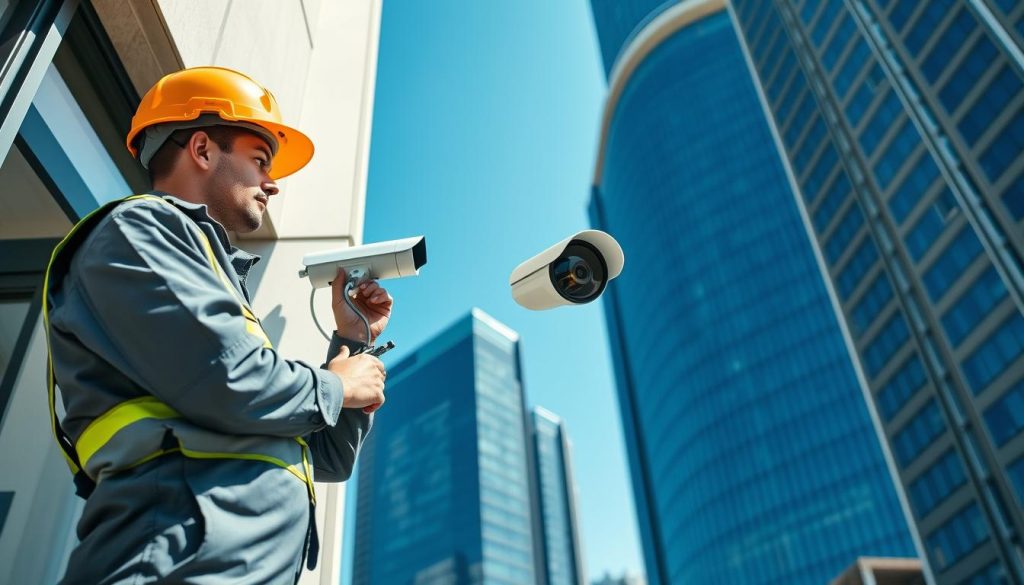
For homeowners and business owners in Singapore, a silent threat can undermine your entire security setup. The intentional obstruction of a security camera is a real vulnerability. It leaves your property exposed and defeats the purpose of your investment.
This guide provides a proactive path forward. We focus on prevention rather than reaction. You will learn how to fortify your surveillance system before a problem arises.
A compromised device creates a dangerous blind spot. This gap in your view negates the safety you expect. Protecting your visual coverage is essential for complete peace of mind.
Our comprehensive approach covers Singapore’s specific legal frameworks. We also explore common tampering methods used by intruders. The solution is a multi-layered defense combining smart hardware placement, technology, and lighting.
Securing your surveillance investment is absolutely achievable. Informed planning and the right equipment choices make a powerful difference. This advice enhances protection while respecting neighbor privacy to avoid disputes.
Key Takeaways
- Security cameras can be vulnerable to intentional blocking or tampering, creating a critical blind spot.
- A proactive, preventive approach is more effective than reacting to an incident after it occurs.
- Understanding Singapore’s legal landscape regarding surveillance is crucial to avoid conflicts.
- A strong defense uses multiple layers, including camera placement, technology features, and environmental lighting.
- Choosing the right equipment and planning its setup are key steps in safeguarding your property.
- Balancing robust security with respect for neighbors’ privacy helps maintain community harmony.
- A compromised camera system fails its primary purpose, leaving your home or business exposed.
Can Someone Block My Security Camera? Understanding the Threat
Intentional interference with surveillance equipment is a documented security challenge, not just a hypothetical fear. The short answer is yes. Individuals can and do attempt to obstruct these devices.
This reality undermines the very security they are meant to provide. Understanding this threat is the first step toward stopping it.
The Reality of Camera Tampering and Blocking
Tampering is a tangible risk for property owners. It’s not a rare event confined to movies.
Reports confirm that security cameras are targeted regularly. The methods range from crude to clever.
Someone might simply spray paint a lens or hang a bag over it. More technical approaches involve jamming signals or using lasers.
It’s crucial to distinguish malicious acts from accidental blockages. Overgrown plants or new structures can also obscure a view.
Knowing the difference helps you respond appropriately. For more on legal boundaries, see our guide on understanding your rights.
Why People Might Target Your Surveillance System
Motives for disabling a camera generally fall into three categories. Each requires a slightly different defensive mindset.
The first is criminal intent. A burglar may disable surveillance to enter unseen. This is a pre-meditated attack on your property‘s safety.
The second stems from privacy disputes. A neighbor might feel your device invades their personal space.
“I feel like I’m always being watched. It doesn’t feel right.”
This feeling can lead someone to block the lens. They see it as reclaiming their privacy, not as vandalism.
The third motive is simple vandalism or mischief. No deeper reason exists beyond causing disruption.
Recognizing these motivations is powerful. It allows you to build specific, effective countermeasures rather than guessing.
Your prevention strategy starts here. The following sections detail how to fortify your system against each type of threat.
Knowing Your Rights: Security Camera Laws in Singapore
Legal boundaries for visual monitoring in Singapore center on balancing safety with personal privacy. You have a right to protect your property, but this right is framed by specific laws.
These regulations prevent surveillance from becoming intrusive. Understanding them is your strongest shield against disputes.
Legal Placement and “Reasonable Expectation of Privacy”
The core legal principle is a “reasonable expectation of privacy.” This concept guides all security camera placement in Singapore.
It means individuals have a right to privacy in certain areas. Your own home is a private space, and so is your neighbor’s.
Your camera should monitor your own premises and public areas like the street. It must not intentionally peer into a neighbor’s windows, backyard, or other private zones.
Pointing a device directly into such spaces may violate privacy laws. This action can quickly escalate into serious issues.
“Proper placement respects boundaries and builds community trust, preventing many concerns before they start.”
Positioning your equipment legally from the start is a powerful deterrent. It gives you stronger legal standing if any tampering occurs.
Consequences for Tampering with Private Property in Singapore
Physically damaging a security camera is a criminal act. This includes spraying paint, cutting wires, or smashing the lens.
Such actions are not just nuisances. They are offenses under Singaporean law.
Individuals who tamper with your property face serious charges. These can include vandalism, mischief, or destruction of private property.
The authorities, including the police, take these cases seriously. Evidence from your surveillance system can be crucial for their investigation.
Destructive blocking methods are illegal. They can lead to lawsuits or direct police involvement.
If you follow the law in your setup, you take the right steps. For definitive advice on placement boundaries, consult specific Singapore statutes or a legal professional.
Common Ways Intruders Attempt to Blind or Block Cameras
Intruders and vandals possess a toolkit of techniques designed to blind or disable monitoring devices. Knowing these ways block attempts is your first strategic advantage.
This knowledge transforms your approach from reactive to proactive. You can anticipate weaknesses before they are exploited.
Attacks generally fall into three categories. Each targets a different part of your security cameras system.
Understanding them is essential for implementing the protective measures detailed later.
Physical Obstruction: Spray Paint, Bags, and Covers
The most direct way to stop a device is to cover its lens. This method is crude but can be instantly effective.
Common tactics include spraying paint directly onto the glass. Others place a bag, piece of cloth, or sticker over the front.
These actions are physically obvious and often trigger motion detection alerts. They rely on the target being within easy reach.
For a neighbor concerned about block neighbor security views, a simple physical cover might be used. This highlights why placement out of arm’s reach is a fundamental defense.
Optical Interference: Lasers and Powerful Lights
This technique uses intense light to sabotage the image sensor. It is a more technical form of attack.
Pointing a laser pointer or a powerful LED flashlight directly at the camera can overwhelm it. The result is a completely washed-out or flaring view.
Sustained laser exposure can even cause permanent sensor damage. Powerful infrared (IR) lights can blind night-vision capabilities.
These methods require precise aim and proximity. They represent a more deliberate attempt to disable without leaving physical evidence.
Signal Jamming and Cyber Hacking Attempts
Advanced threats target the system’s technology, not just the hardware. Wireless security cameras are vulnerable to signal jamming.
A jammer broadcasts noise on the same frequency. This disrupts the video transmission between your devices and the recorder.
Cyber hacking is another sophisticated risk. Intruders may try to access your network to disable feeds or manipulate settings.
“Understanding these technical threats underscores the need for encrypted signals and regular firmware updates—a digital fortress for your physical security.”
Both jamming and hacking require specific equipment and knowledge. They are less common but pose a severe risk to system integrity.
Arming yourself with this knowledge is not about fear. It is about building a defense that covers all angles.
The following sections will show you how to counter each of these methods effectively.
Fortify Your Hardware: Physical Protection Strategies
A camera’s resilience is not just in its electronics but in its physical fortification and placement. This approach stops tampering before it starts.
Your hardware forms the first, most tangible barrier. Strengthening it removes the easiest ways block attempts.
This strategy directly counters the physical threats outlined earlier. It makes your property a harder target.
Investing in Tamper-Resistant Housings and Mounts
Begin with your equipment’s built-in durability. Seek out models designed to withstand interference.
Look for an official IK rating, which measures impact resistance. A high IK10 rating means the housing can endure significant force.
These security camera housings are often made of hardened polycarbonate or metal. Tamper-resistant mounts require special tools for removal.
Brands like Reolink offer these robust options. They turn a vulnerable device into a fortified one.
“A vandal-proof housing doesn’t just protect the lens; it signals that the entire system is built to deter.”
This investment is a proactive solution. It addresses both casual mischief and deliberate attacks.
Using Protective Cages and Locking Conduits for Wires
Add an extra layer of armor in high-risk areas. A metal cage or shroud encloses the entire unit.
This cage defends against sprays, covers, and blunt impacts. It keeps the camera operational even if the outer shell is struck.
Do not overlook the wiring. Exposed cables are a critical weakness.
Secure all wires inside locked metal conduits. This prevents them from being cut, which would disable the device instantly.
This comprehensive hardware defense covers every physical angle. It turns a simple mount into a secure installation.
Installing Cameras at Height and Out of Easy Reach
Physical inaccessibility is a supremely effective deterrent. Place your units where they cannot be easily touched.
Mount them high on exterior walls, under eaves, or on dedicated poles. The goal is to require a ladder for access.
This simple way thwarts most opportunistic tampering. A person cannot quickly spray paint or hang an object over the lens.
Make sure your placement is also clear of natural obstructions. Position cameras above growing trees or tall shrubs.
Avoid aiming directly over a shared fence line where a hand could reach. This also helps protect privacy and avoid disputes.
Consider the trade-off between visibility and concealment. A visible camera acts as a deterrent.
A more concealed unit is protected from targeting. Assess your specific security needs to choose the best approach.
Height and clearance create a fundamental, passive defense. They are among the most reliable strategies for keeping your surveillance view unobstructed.
Strategic Placement to Minimize Vulnerable Angles
Strategic camera placement transforms your property’s surveillance from a collection of devices into an intelligent security network. It is the art of positioning your equipment to see everything while remaining resilient.
This approach directly counters an intruder’s first tactic: finding blind spots. Your goal is to eliminate those weaknesses before they are discovered.
Thoughtful positioning also respects neighbor privacy. It maintains community harmony while strengthening your neighbor security posture.
Eliminating Natural Blind Spots and Approach Paths
Begin with a thorough site survey. Walk your property at different times to identify hidden areas.
Look for corners, alcoves, and approach paths concealed by structures. These are natural blind spots where someone could approach unseen.
Overgrown trees or dense shrubs can also create temporary obstructions. Trim vegetation regularly to maintain a clear view.
Fixed security cameras have larger, permanent blind spots compared to PTZ models. Their placement must be deliberate and calculated.
Consider all potential approach angles, including from over a shared fence. The best solution is to make these paths clearly visible to your system.
The Importance of Overlapping Camera Fields of View
A single device is a single point of failure. Multiple units with overlapping coverage create a safety net.
If one camera is obstructed, another still monitors the same area. This redundancy is a critical security strategy.
Use field-of-view simulators during planning. These tools help visualize coverage and identify gaps between devices.
“Overlapping fields of view turn individual cameras into a coordinated team, ensuring no event goes unrecorded.”
This layered way of monitoring makes it harder for an intruder to approach any device unseen. It significantly deters tampering attempts.
Avoiding Direct Exposure to Public Pathways
Angle your security cameras to monitor property boundaries and points of entry. Avoid pointing them directly into public pathways or neighboring properties.
Direct exposure can feel intrusive and provoke conflict. It may lead to privacy disputes with a neighbor.
Aim lenses downward slightly to capture activity on your grounds. Keep them clear of windows and private outdoor spaces next door.
Strategic placement makes your equipment less obtrusive. It protects privacy while maintaining a comprehensive view.
This thoughtful approach brings peace of mind. It ensures your surveillance enhances safety without creating new problems.
Leverage Technology: Built-In Camera Defense Features
Your camera’s internal software is a powerful ally in the fight against tampering and privacy conflicts. Modern surveillance devices offer intelligent features that actively defend your property.
These technological options work alongside physical hardware. They create a comprehensive digital fortress for your visual monitoring system.
Activating these built-in tools is a critical step in any robust security plan. They provide automated responses and preemptive solutions.
Utilizing Tamper Detection Alerts and Sirens
Many advanced models now include a tamper detection function. This feature monitors the device itself for physical interference.
If the unit is moved, covered, or struck, an instant alert is sent to your mobile phone. This gives you real-time awareness of a potential threat.
Some systems can even activate a built-in siren or strobe light. This audible and visual alarm startles intruders and draws immediate attention.
“Tamper detection transforms a passive recording device into an active sentinel. It announces that interference will not go unnoticed.”
This automated response is a powerful deterrent. It addresses the threat before a full obstruction occurs.
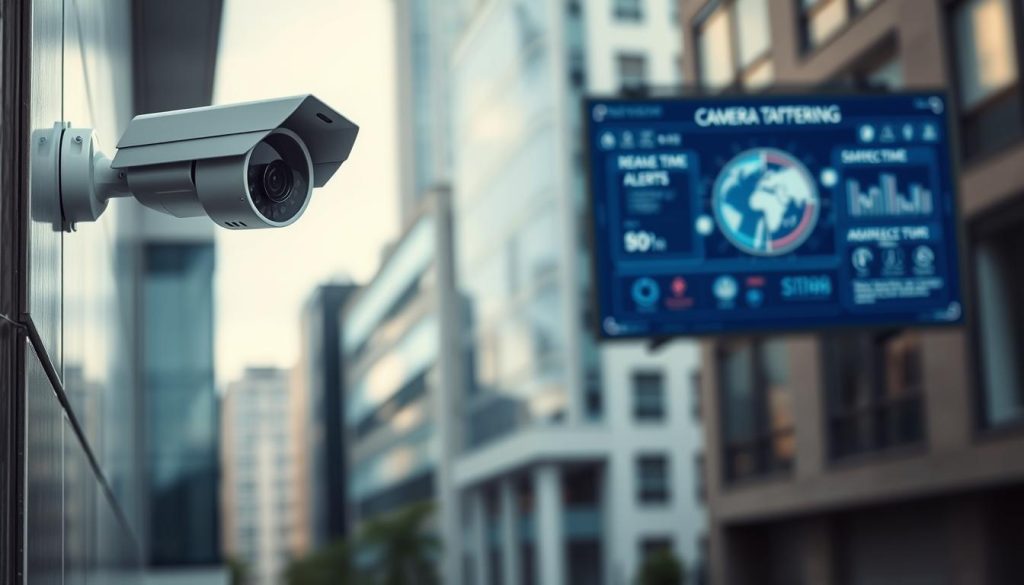
Brands like Reolink integrate this technology seamlessly into their security camera ecosystems. It’s a key feature for protecting vulnerable outdoor angles.
How Privacy Masking Can Prevent Privacy Disputes
Privacy masking, or zone masking, is a proactive software solution. It allows you to digitally block out specific portions of the camera‘s field of view.
You can permanently blur or black out areas like a neighbor’s windows or private balcony. This action demonstrates respect for personal boundaries.
It is a highly effective way to protect privacy and prevent accusations of intrusive surveillance. By masking these zones, you eliminate the core of many neighbor security disputes.
Manufacturers like Aqara offer “customizable shielding zones” in their app settings. Reolink also promotes privacy masking as a standard ethical feature.
Implementing this feature is a smart, preemptive step. It builds trust while maintaining full coverage of your own property.
Ensuring Firmware is Updated for Security Patches
Regular firmware updates are non-negotiable for digital security. These updates patch vulnerabilities that hackers could exploit.
Outdated software is a major risk. It can allow unauthorized access to your video feeds or let someone disable your devices remotely.
Make sure to enable automatic updates in your camera’s settings menu. If manual updates are required, set a quarterly reminder to check for new versions.
This simple habit closes digital backdoors. It keeps your entire surveillance network resilient against cyber threats.
Other essential technological defenses include enforcing strong, unique passwords. Enable two-factor authentication (2FA) wherever your system allows it.
For wireless security camera setups, use WPA3 encryption on your Wi-Fi network. Ensure video data transmission is secured with AES encryption.
These software and firmware features form an intelligent shield. They are the indispensable complement to the physical protection strategies discussed earlier.
Use Lighting to Your Advantage for Camera Security
Proper illumination transforms your property’s nighttime security from passive recording to active deterrence. Light is a fundamental tool that enhances both visibility and psychological defense.
It ensures your security camera captures usable footage while discouraging interference. A well-lit perimeter leaves fewer hiding spots for anyone with ill intent.
This approach also addresses a specific neighbor security concern. Strategic lighting can prevent disputes by clearly defining monitored areas.
Installing Motion-Activated Floodlights as a Deterrent
Bright, motion-activated floodlights are a highly effective first line of defense. They startle potential tamperers and illuminate them for your camera.
When movement is detected, these lights instantly flood the area with brightness. This sudden exposure is a powerful deterrent against covert approaches.
“Motion-sensing lights turn darkness into an ally. They announce that an intruder has been seen, often stopping a threat before it reaches your camera.”
Position these fixtures near your security camera mounts. This ensures any activity around the device is fully lit and recorded clearly.
The same principle that could blind a device is used for protection. Your lights deter others from attempting to shine a light into your lens.
Strategic Lighting to Eliminate Shadows and Hiding Spots
Ambient lighting plays a crucial role in eliminating dark corners. Deep shadows provide cover for someone to approach unseen.
Strategically placed lights should wash over walls, fences, and pathways. The goal is to create even illumination across all key angles.
This removes the shadows where a person could hide. It makes covert movement across your property nearly impossible.
Pay special attention to areas near windows and entry points. Consistent lighting here improves your camera‘s view and overall security.
It is a proactive way to support your visual monitoring system. A well-lit environment is a less attractive target for tampering.
Choosing Camera-Friendly Lighting to Avoid Lens Glare
Positioning external lights requires careful planning. You must avoid self-inflicted glare that could blind your own equipment.
Overly bright LEDs pointed directly at a camera lens cause washout and blooming. This renders the footage useless, defeating the purpose.
Install fixtures so they illuminate the scene, not the device itself. Use shielded or carefully angled housings to direct light downward.
Test the view from your security camera after installing any new light. Ensure there is no direct flare or hotspot in the image.
This careful placement protects your investment. It ensures your lighting enhances, rather than hinders, your surveillance capabilities.
Good lighting acts as a force multiplier for your security setup. It deters others, supports clear recording, and fortifies your property against all forms of interference.
Legal and Official Steps to Take if Your Camera is Tampered With
A deliberate obstruction of your visual coverage demands immediate action through proper legal channels and documentation. Even with the best preventive measures, tampering can occur.
Your response in these moments is critical. It determines whether the situation escalates into a conflict or is resolved with authority.
Following official steps protects your rights and your property. It also demonstrates that you are a responsible resident who respects the law.
This process begins with evidence, moves to official reports, and may involve mediation. Each phase is designed to restore your security and peace of mind.
Documenting the Evidence: Footage and Damage
Your first action should be to secure all proof of the incident. This evidence forms the foundation for any official action.
Immediately save the video footage showing the tampering event. Most systems have motion detection alerts that capture the act.
Ensure the recording includes a clear timestamp. This proves when the interference happened.
Next, take detailed, timestamped photographs of any physical damage. Capture spray paint on the lens, cut wires, or a displaced mount.
Photograph the camera from multiple angles. Show the context of its location on your property.
“Thorough documentation turns a frustrating violation into a winnable case. It provides the authorities with what they need to act.”
Compile this evidence into a single folder. Keep both digital and backup copies safe.
This meticulous record-keeping is your most powerful tool. It removes any doubt about what occurred.
Filing a Police Report for Vandalism or Harassment
With evidence in hand, the next step is to file a formal report with the Singapore police. Tampering with surveillance equipment is a criminal offense.
Physical damage like spray painting or breaking a housing constitutes vandalism. Repeated obstruction could be considered harassment or mischief.
Visit your nearest neighborhood police center or file online via the Police@SG app. Present your compiled evidence clearly and calmly.
Provide a factual statement describing the incident. Avoid emotional accusations or assumptions about the perpetrator’s identity.
The police will assess the report and may initiate an investigation. Your video and photos are crucial for identifying suspects.
This official record also serves another purpose. It creates a paper trail if the issues persist or escalate later.
Filing a report is not an overreaction. It is the appropriate way to address destruction of private property.
Engaging Mediators or Seeking Legal Counsel
If the tampering stems from a dispute with a neighbor, consider mediation before legal action. This approach can resolve underlying privacy issues amicably.
Singapore’s Community Mediation Centres offer neutral, third-party facilitators. They help neighbors discuss concerns like perceived invasions of privacy.
For public housing residents, the Housing & Development Board (HDB) can assist in neighbor disputes. They encourage dialogue to maintain community harmony.
Mediation addresses the root cause, such as a block neighbor security view concern. It can lead to an agreement on adjusting camera angles without hostility.
“A mediated agreement often provides a lasting solution where a legal order might only create silence. It rebuilds the relationship.”
If mediation fails or the tampering is malicious, consult a lawyer. Legal professionals understand Singapore’s privacy laws and property rights.
A lawyer can advise on civil recourse for repeated vandalism. They might send a cease-and-desist letter or pursue a claim for damages.
Understanding your rights under the laws empowers you. It ensures your response is proportional and effective.
Taking these official steps reinforces your commitment to security. It shows you will defend your property through proper channels, not personal confrontation.
Choosing the Right Security Camera to Resist Tampering
The foundation of a tamper-resistant monitoring setup lies in choosing hardware designed to withstand physical and digital attacks. Your selection determines the baseline strength of your entire surveillance network.
Not all devices offer the same level of built-in defense. Prioritizing specific features transforms your property from an easy target into a hardened asset.
This decision directly impacts your long-term peace of safety and privacy. The right equipment provides a robust solution against common obstruction methods.
Features to Look For: Vandal-Proof Ratings, Encryption
Start your search by examining two critical specifications: physical durability and data protection. These features form the core of any resilient device.
For physical defense, an official IK rating is non-negotiable. This scale measures a housing’s resistance to impact forces.
- IK10 Rating: The highest level, indicating the unit can withstand a 20-joule impact (equivalent to a 5kg mass dropped from 400mm). This is essential for security cameras in accessible areas.
- IP66/67 Weatherproofing: Ensures the device is dust-tight and protected against powerful water jets. It guarantees operation in Singapore’s tropical climate.
- Tamper Detection Alerts: Software that triggers an immediate notification if the camera is moved, covered, or struck.
- End-to-End Encryption: Scrambles video data from the lens to your storage, preventing interception or hacking.
- Regular Firmware Support: Brands that provide consistent updates close digital vulnerabilities and add new defensive features over time.
Encryption is your digital shield. It ensures that even if signals are intercepted, the footage remains unreadable to unauthorized devices.
“A high IK rating paired with strong encryption creates a dual-layer barrier. It defends against both the hammer and the hacker.”
Brands like Reolink emphasize these aspects in their product design. Their models often integrate tamper alerts and AES encryption as standard.
Recommended Camera Types for High-Risk Areas
Different form factors serve different strategic purposes. Matching the camera type to the location’s risk profile is a smart way to enhance protection.
For general indoor and outdoor use, dome security cameras are a popular choice. Their tamper-resistant mounts and discreet design make them difficult to manipulate.
Bullet cameras, with their long, cylindrical shape, often come with protective shrouds. These are excellent for monitoring long-range views across driveways or large yards.
In spots where visibility might provoke tampering, consider a more discreet form factor. Smaller, less obvious devices can be placed to monitor without drawing attention.
Make sure to assess the specific angles and sightlines of your home. A professional-grade or commercial-rated model is a worthwhile investment for truly high-risk zones.
These commercial options typically boast superior build quality and more advanced analytics. They are built for 24/7 operation in challenging environments.
The Role of a Comprehensive Security System Ecosystem
A standalone device is powerful, but a connected system is intelligent. Choosing equipment from a brand with a broad ecosystem unlocks automated defense routines.
Imagine a scenario where tamper detection triggers a chain reaction. Your camera sends an alert, which then turns on all exterior lights and sounds a central alarm.
This level of integration creates a dynamic response that startles intruders. It turns a silent alert into a loud, visible deterrent.
Products like the Aqara Camera Hub G5 Pro exemplify this approach. It offers AI-powered detection and customizable privacy zones that protect privacy by masking neighbors’ windows.
Similarly, Aqara’s video doorbells integrate privacy masking directly into their firmware. Reolink’s ecosystem focuses on seamless connectivity between cameras, recorders, and mobile apps.
“An integrated ecosystem transforms individual components into a unified sentinel. It ensures your surveillance response is greater than the sum of its parts.”
This holistic approach is the final piece of the selection puzzle. Your security cameras become the cornerstone of a proactive, tamper-resistant strategy for your home.
Choosing wisely empowers your entire property defense. It ensures your visual coverage remains active and effective, providing the safety you deserve.
Staying Proactive: Maintaining Your Security Camera’s Integrity
A truly resilient security setup is not a one-time installation but an ongoing commitment to vigilance. The multi-layered defense combines robust hardware, intelligent placement, smart technology, and strategic lights.
Regular maintenance keeps your surveillance system effective. Check camera views for obstructions from growing trees or shrubs. Test tamper detection alerts and apply firmware updates promptly.
By ensuring your placement respects privacy laws, you strengthen your moral and legal standing. This is crucial if you need to report any issues to the authorities.
Reassess angles periodically as plants grow or new structures appear. This keeps coverage optimal and prevents blind spots.
The goal is uninterrupted surveillance and lasting peace of mind. Take control of your property‘s protection with these proactive measures.