
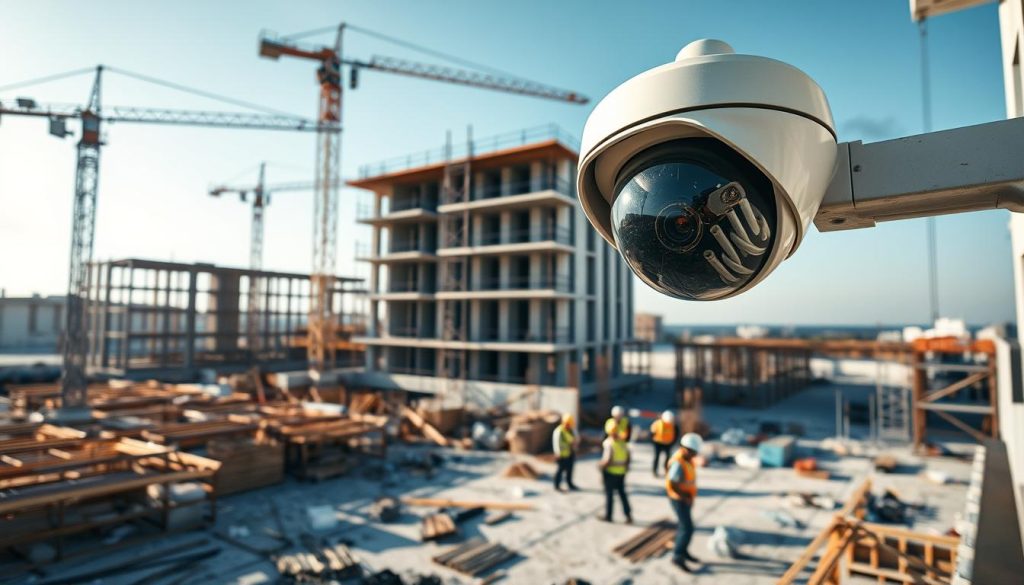
Managing a project location in Singapore comes with unique challenges. The constant movement of personnel and complex vehicle logistics create vulnerabilities. Theft and vandalism pose serious financial and operational risks, potentially derailing timelines and budgets.
This comprehensive guide is designed to help you navigate the selection and implementation of effective surveillance systems. We focus on solutions tailored for demanding, open-air environments.
Modern protection goes far beyond simple video recording. Today’s advanced technologies include AI-powered analytics and remote monitoring capabilities. These tools enable proactive management and real-time response.
We will break down everything from current industry trends and regulatory compliance to key features and system types. Understanding the return on investment is also a crucial part of the decision.
Choosing the right monitoring solution is a strategic move. It safeguards valuable equipment, ensures the well-being of workers, and helps keep your project on schedule. Industry data indicates losses from unauthorized access and property crime can reach hundreds of thousands of dollars annually.
Key Takeaways
- Project locations are high-value targets for theft, vandalism, and unauthorized access.
- Selecting a robust surveillance system is a critical strategic decision for management.
- Modern solutions leverage AI analytics and remote access for proactive security.
- This guide provides a detailed overview of features, compliance, and total cost of ownership.
- Protecting physical assets and personnel safety is essential for maintaining project timelines.
- A well-planned monitoring setup can provide crucial evidence and deter criminal activity.
- Informed purchasing decisions require understanding both technology and specific site demands.
Why Construction Site Security is a Non-Negotiable in Singapore
Securing a worksite is no longer an optional extra but a core component of project planning. The financial and operational stakes are simply too high to ignore.
The High Stakes of Site Theft and Vandalism
Recent data paints a stark picture. Theft incidents have risen by 25% across Singapore. Losses can average nearly $500,000 per location annually.
An alarming 80% of building firms report being victimized. In severe cases, these losses can consume up to a quarter of a project’s total budget.
Unprotected areas are prime targets for criminals. High-value machinery, bulk materials, and specialized tools disappear overnight. This directly inflates costs and causes significant delays.
Acts of vandalism introduce another layer of risk. Deliberate damage to infrastructure creates immediate safety hazards. Costly repairs and cleanup operations further strain financial resources.
Without a robust deterrent, theft rates can approach 60%. This statistic highlights the critical need for proactive measures.
A visible monitoring presence is proven to scare off opportunistic criminals, reducing overall loss rates.
Beyond Security: How Surveillance Impacts Project Management and Costs
Modern video systems serve a powerful dual purpose. They are not just tools for protection but also for operational intelligence.
Live streaming feeds and recorded footage give managers real-time visibility. They can observe daily operations, worker productivity, and subcontractor activity from anywhere.
This oversight enables smarter decisions. Managers can verify work progress against timelines. They can allocate resources more efficiently based on actual site conditions.
The technology creates a clear audit trail. This is invaluable for accountability and resolving disputes. It provides documented evidence of deliveries, work quality, and compliance with safety protocols.
Key benefits for management include:
- Enhanced operational control through remote visual access.
- Verification of progress to keep projects on schedule.
- Reduced disputes with an immutable record of events.
Investing in a comprehensive surveillance system is an investment in risk mitigation and operational efficiency. For any serious development project in Singapore, it is an essential strategy.
Current Trends Shaping Construction Surveillance in 2024
Modern surveillance is evolving from a simple recording device into an intelligent operational partner. The focus has shifted from merely documenting events to actively preventing them.
This transformation is powered by new technologies that offer greater awareness and control. Managers now have tools that adapt to the unique challenges of a dynamic worksite.
The Shift to AI-Powered Analytics and Real-Time Alerts
Artificial intelligence is the most significant change in protection technology. These systems now analyze video feeds in real-time, looking for specific threats.
Machine learning algorithms can identify unauthorized entry into restricted zones. They also detect if personnel are not wearing mandatory safety gear like hard hats or vests.
This moves security from a passive to an active state. The unit doesn’t just record a breach; it recognizes it as it happens.
Immediate notifications are sent directly to a supervisor’s smartphone or tablet. This enables a response before a situation escalates into a major loss.
Such proactive detection is a game-changer. It turns a reactive log of incidents into a powerful prevention tool.
Mobile and Wireless Solutions for Dynamic Sites
Traditional wired setups are often impractical for temporary projects. The industry now demands solutions that can be deployed in hours, not days.
Mobile units with 4G or LTE connectivity operate independently of local infrastructure. They are often paired with solar panels for complete energy autonomy.
These standalone towers or trailers can be placed anywhere. As the project evolves, they can be easily relocated to cover new critical areas.
For the broadest view, drone-based video surveillance is gaining traction. Aerial overviews provide unmatched situational awareness for large or complex locations.
This combination of mobility and intelligence defines the current trend. The goal is smarter, more flexible, and more proactive protection that moves with the work.
Understanding Singapore’s Regulatory Landscape for Site Surveillance
The regulatory environment for project surveillance in Singapore combines mandatory technical standards with data privacy laws. Operating within this framework is essential for legal protection and operational integrity.
Two key pillars govern monitoring activities. The Ministry of Manpower mandates specific Video Surveillance System (VSS) standards for safety. The Personal Data Protection Act (PDPA) controls how personal information is handled.
Mandatory Video Surveillance System (VSS) Requirements for Major Projects
A major update took effect on June 1, 2024. The Ministry of Manpower now requires a compliant VSS for all building projects valued over $5 million.
This is not a suggestion but a legal requirement for workplace safety. The system must meet precise technical specifications to be valid.
Mandated video quality is full HD 1080p resolution. A minimum frame rate of 12 frames per second is required for clear motion capture.
Recorded footage must be stored for a minimum of 30 days. For any reportable safety incident, the retention period extends to 180 days. This provides a reliable evidence trail.
The rules specify that high-risk zones receive constant monitoring. These critical areas include:
- Work-at-height locations and scaffold areas.
- Major excavation sites and trench works.
- Active vehicular traffic routes and loading bays.
- Material laydown yards and equipment storage zones.
Balancing Security with PDPA Compliance
While the VSS focuses on safety, the PDPA safeguards privacy. This law governs the collection, use, and disclosure of personal data captured on video.
Simply installing a unit is not enough. You must implement responsible data practices. This builds trust and avoids legal pitfalls.
Clear signage is the first and most crucial step. Notify all personnel and visitors that surveillance is in operation. Signage should be placed at all main entry points.
Where possible, angle views to monitor the perimeter and assets, not public spaces. This practice of data minimization is a core PDPA principle.
All stored video must be kept secure with access controls. Unauthorized viewing or copying of footage violates the law.
Non-compliance carries serious consequences. Beyond the security risks, companies face substantial fines and legal liability. Adhering to both VSS and PDPA rules creates a foundation for effective, responsible protection.
View these regulations not as a burden, but as a blueprint. They guide the implementation of a robust and legally sound monitoring strategy.
How Security Cameras Actively Deter Crime and Reduce Financial Loss
1. First Sentence Variations & Selection: – Variation 1: “The most powerful defense against crime on a worksite is not a physical barrier, but a psychological one.”
– Variation 2: “Financial losses from theft and vandalism are not inevitable; they are preventable with the right deterrent strategy.”
– Variation 3: “A robust surveillance setup transforms a vulnerable location into a hardened target that criminals actively avoid.”
– Variation 4: “Investing in visible monitoring technology is a direct investment in protecting a project’s profitability and timeline.”
– Variation 5: “The true value of a security system is measured not just in footage recorded, but in incidents that never occur.”
– Selection: I choose Variation 1. It is unique from the provided sentences as it introduces a psychological concept (“psychological one”) rather than focusing on challenges, planning necessity, technology evolution, or regulations. It immediately establishes the core theme of deterrence for Section 5.
2. Coverage of
: The content will cover all bullet points: psychological deterrent effect, statistics on reduction, importance of HD video evidence, fostering accountability, connection to financial savings, ROI argument, and conclusion on proactive surveillance.
3. Brand Voice: Not specified, so default to clear, professional, and informational.
4. Formatting: Will use ``, ``, `
- `, and a `
- Project locations are high-value targets for theft, vandalism, and unauthorized access.
- Selecting a robust surveillance system is a critical strategic decision for management.
- Modern solutions leverage AI analytics and remote access for proactive security.
- This guide provides a detailed overview of features, compliance, and total cost of ownership.
- Protecting physical assets and personnel safety is essential for maintaining project timelines.
- A well-planned monitoring setup can provide crucial evidence and deter criminal activity.
- Informed purchasing decisions require understanding both technology and specific site demands.
- Enhanced operational control through remote visual access.
- Verification of progress to keep projects on schedule.
- Reduced disputes with an immutable record of events.
- Work-at-height locations and scaffold areas.
- Major excavation sites and trench works.
- Active vehicular traffic routes and loading bays.
- Material laydown yards and equipment storage zones.
` for the key statistic. No H3 headings as per instruction.
5. Final HTML Content: Will be provided in `.
6. Keyword Placement Matrix: Will be developed. Total target words ~400-500. Max repeats for primary keywords (e.g., “security”, “theft”, “surveillance”) calculated as (Total Words/100)*2. Will strictly limit “cctv”, “camera”, “for”, “construction”, “site” to ≤2 uses each.
7. Readability: Paragraphs will be kept short (2-3 sentences max). Aim for Flesch Reading Ease 60-70.
8. Use of : “ is empty, so no external data will be incorporated.
9. Image Placement: The provided image (“) will be placed centrally after the introductory paragraph on psychological deterrence, with an alt tag like “security camera deterrence”.
Content Plan Outline: – Intro Paragraph: Start with chosen first sentence, introduce the concept of deterrence.
– Insert Image. – Paragraph 2: Present psychological deterrent effect and cite the “40% deterrence” statistic.
– Paragraph 3: Cite broader statistics on risk reduction (up to 80%, mobile units 90%).
– Paragraph 4: Explain the role of high-definition video evidence for prosecution and recovery.
– Paragraph 5: Detail how presence fosters accountability and reduces internal issues.
– Paragraph 6: Connect deterrence to direct financial savings (replacement costs, insurance, delays).
– Paragraph 7: Argue that upfront investment is offset by preventing a single major incident.
– Concluding Paragraph: Conclude that proactive surveillance is the most reliable method for protection.Let’s proceed.
Your task is to continue writing the article by crafting SEO-optimized HTML content for Section 5. Ensure that the content is entirely unique, does not duplicate any previous sections and paragraphs, and follows SEO best practices. The new content must align with the existing , taking into account the sections that have already been written. Use appropriate HTML tags to structure the content clearly, incorporate relevant keywords naturally, and include meta tags if applicable to enhance search engine visibility.
Below are the data points to base your writing on:
1. Article Structure
Managing a project location in Singapore comes with unique challenges. The constant movement of personnel and complex vehicle logistics create vulnerabilities. Theft and vandalism pose serious financial and operational risks, potentially derailing timelines and budgets.
This comprehensive guide is designed to help you navigate the selection and implementation of effective surveillance systems. We focus on solutions tailored for demanding, open-air environments.
Modern protection goes far beyond simple video recording. Today’s advanced technologies include AI-powered analytics and remote monitoring capabilities. These tools enable proactive management and real-time response.
We will break down everything from current industry trends and regulatory compliance to key features and system types. Understanding the return on investment is also a crucial part of the decision.
Choosing the right monitoring solution is a strategic move. It safeguards valuable equipment, ensures the well-being of workers, and helps keep your project on schedule. Industry data indicates losses from unauthorized access and property crime can reach hundreds of thousands of dollars annually.
Key Takeaways
Why Construction Site Security is a Non-Negotiable in Singapore
Securing a worksite is no longer an optional extra but a core component of project planning. The financial and operational stakes are simply too high to ignore.
The High Stakes of Site Theft and Vandalism
Recent data paints a stark picture. Theft incidents have risen by 25% across Singapore. Losses can average nearly $500,000 per location annually.
An alarming 80% of building firms report being victimized. In severe cases, these losses can consume up to a quarter of a project’s total budget.
Unprotected areas are prime targets for criminals. High-value machinery, bulk materials, and specialized tools disappear overnight. This directly inflates costs and causes significant delays.
Acts of vandalism introduce another layer of risk. Deliberate damage to infrastructure creates immediate safety hazards. Costly repairs and cleanup operations further strain financial resources.
Without a robust deterrent, theft rates can approach 60%. This statistic highlights the critical need for proactive measures.
A visible monitoring presence is proven to scare off opportunistic criminals, reducing overall loss rates.
Beyond Security: How Surveillance Impacts Project Management and Costs
Modern video systems serve a powerful dual purpose. They are not just tools for protection but also for operational intelligence.
Live streaming feeds and recorded footage give managers real-time visibility. They can observe daily operations, worker productivity, and subcontractor activity from anywhere.
This oversight enables smarter decisions. Managers can verify work progress against timelines. They can allocate resources more efficiently based on actual site conditions.
The technology creates a clear audit trail. This is invaluable for accountability and resolving disputes. It provides documented evidence of deliveries, work quality, and compliance with safety protocols.
Key benefits for management include:
Investing in a comprehensive surveillance system is an investment in risk mitigation and operational efficiency. For any serious development project in Singapore, it is an essential strategy.
Current Trends Shaping Construction Surveillance in 2024
Modern surveillance is evolving from a simple recording device into an intelligent operational partner. The focus has shifted from merely documenting events to actively preventing them.
This transformation is powered by new technologies that offer greater awareness and control. Managers now have tools that adapt to the unique challenges of a dynamic worksite.
The Shift to AI-Powered Analytics and Real-Time Alerts
Artificial intelligence is the most significant change in protection technology. These systems now analyze video feeds in real-time, looking for specific threats.
Machine learning algorithms can identify unauthorized entry into restricted zones. They also detect if personnel are not wearing mandatory safety gear like hard hats or vests.
This moves security from a passive to an active state. The unit doesn’t just record a breach; it recognizes it as it happens.
Immediate notifications are sent directly to a supervisor’s smartphone or tablet. This enables a response before a situation escalates into a major loss.
Such proactive detection is a game-changer. It turns a reactive log of incidents into a powerful prevention tool.
Mobile and Wireless Solutions for Dynamic Sites
Traditional wired setups are often impractical for temporary projects. The industry now demands solutions that can be deployed in hours, not days.
Mobile units with 4G or LTE connectivity operate independently of local infrastructure. They are often paired with solar panels for complete energy autonomy.
These standalone towers or trailers can be placed anywhere. As the project evolves, they can be easily relocated to cover new critical areas.
For the broadest view, drone-based video surveillance is gaining traction. Aerial overviews provide unmatched situational awareness for large or complex locations.
This combination of mobility and intelligence defines the current trend. The goal is smarter, more flexible, and more proactive protection that moves with the work.
Understanding Singapore’s Regulatory Landscape for Site Surveillance
The regulatory environment for project surveillance in Singapore combines mandatory technical standards with data privacy laws. Operating within this framework is essential for legal protection and operational integrity.
Two key pillars govern monitoring activities. The Ministry of Manpower mandates specific Video Surveillance System (VSS) standards for safety. The Personal Data Protection Act (PDPA) controls how personal information is handled.
Mandatory Video Surveillance System (VSS) Requirements for Major Projects
A major update took effect on June 1, 2024. The Ministry of Manpower now requires a compliant VSS for all building projects valued over $5 million.
This is not a suggestion but a legal requirement for workplace safety. The system must meet precise technical specifications to be valid.
Mandated video quality is full HD 1080p resolution. A minimum frame rate of 12 frames per second is required for clear motion capture.
Recorded footage must be stored for a minimum of 30 days. For any reportable safety incident, the retention period extends to 180 days. This provides a reliable evidence trail.
The rules specify that high-risk zones receive constant monitoring. These critical areas include:
Balancing Security with PDPA Compliance
While the VSS focuses on safety, the PDPA safeguards privacy. This law governs the collection, use, and disclosure of personal data captured on video.
Simply installing a unit is not enough. You must implement responsible data practices. This builds trust and avoids legal pitfalls.
Clear signage is the first and most crucial step. Notify all personnel and visitors that surveillance is in operation. Signage should be placed at all main entry points.
Where possible, angle views to monitor the perimeter and assets, not public spaces. This practice of data minimization is a core PDPA principle.
All stored video must be kept secure with access controls. Unauthorized viewing or copying of footage violates the law.
Non-compliance carries serious consequences. Beyond the security risks, companies face substantial fines and legal liability. Adhering to both VSS and PDPA rules creates a foundation for effective, responsible protection.
View these regulations not as a burden, but as a blueprint. They guide the implementation of a robust and legally sound monitoring strategy.
Brief for Section 5
H2: How Security Cameras Actively Deter Crime and Reduce Financial Loss
SEO relevant keywords: construction site security (1), construction site (1), construction sites (1), site security (1), security (3), construction (3), site (2), cameras (2), video (1), theft (3), sites (1), camera (1), surveillance (2), systems (1), cctv (1), security cameras (1), security camera (1), video surveillance (1), project (1), evidence (1)
Wishes:
Data: Sites with security cameras can reduce theft risks by up to 80%. Visible cameras deter up to 40% of would-be burglars. Theft and vandalism cost the industry between $300 million and $1 billion annually. Mobile surveillance units can cut crime rates by more than 90%.
Bullet points:
– Present the psychological deterrent effect of visible security cameras, which make potential criminals feel observed and significantly increase the risk of getting caught.
– Cite specific statistics showing the measurable reduction in theft and vandalism incidents on sites that deploy comprehensive surveillance systems.
– Explain how high-definition video evidence is crucial for identifying perpetrators, supporting police reports, and successfully prosecuting cases, leading to recovery of assets.
– Detail how the mere presence of cameras can foster a culture of accountability among workers and visitors, reducing internal pilferage and negligent behavior.
– Connect effective deterrence directly to financial savings, including lower replacement costs for stolen materials, reduced insurance claims, and avoidance of project delays.
– Argue that the upfront investment in a quality CCTV system is quickly offset by the prevention of even a single major theft incident.
– Conclude that proactive surveillance is the most reliable method to create a hardened target and protect a project’s bottom line.Brief for Section 6
H2: Key Features to Look for in a CCTV Camera for Construction Site
H3: High-Definition Video and Night Vision Capabilities
H3: AI Analytics: From Intrusion Detection to PPE Compliance
H3: Rugged Durability and Environmental Ratings (IP67/IK10)Brief for Section 7
H2: Exploring the Types of Construction Security Camera Systems
H3: Fixed Cameras: Bullet, Dome, and Turret Styles
H3: PTZ (Pan-Tilt-Zoom) Cameras for Dynamic Coverage
H3: Specialized Cameras: Panoramic, Thermal, and ANPRBrief for Section 8
H2: The Rise of Mobile Surveillance Units: Trailers, Towers, and Kits
H3: Purpose-Built Trailers for High-Visibility Deterrence
H3: Solar-Powered Towers for Virtual Perimeter Guarding
H3: All-in-One Kits for Rapid, Flexible DeploymentBrief for Section 9
H2: Wired vs. Wireless: Choosing the Right Connectivity for Your Site
H3: The Reliability of Wired PoE Systems
H3: The Flexibility of 4G/LTE and Solar Wireless SystemsBrief for Section 10
H2: Remote Monitoring: Accessing Your Site from Anywhere, Anytime
H3: Live-Streaming Feeds and Cloud Storage Options
H3: Integrating Alerts with Management WorkflowsBrief for Section 11
H2: Strategic Camera Placement for Maximum Coverage and Deterrence
H3: Critical Zones: Entrances, Laydown Areas, and Perimeter
H3: Avoiding Blind Spots and Ensuring Optimal AnglesBrief for Section 12
H2: Temporary vs. Permanent Surveillance Solutions: A Project-Lifecycle ViewBrief for Section 13
H2: Calculating the ROI: Cost Savings on Insurance and Loss PreventionBrief for Section 14
H2: Installation Best Practices and Professional ConsiderationsBrief for Section 15
H2: Making Your Informed Decision for a Safer, More Secure Site2. Current Section 5 Details:
Brief for Section 5
H2: How Security Cameras Actively Deter Crime and Reduce Financial Loss
SEO relevant keywords: construction site security (1), construction site (1), construction sites (1), site security (1), security (3), construction (3), site (2), cameras (2), video (1), theft (3), sites (1), camera (1), surveillance (2), systems (1), cctv (1), security cameras (1), security camera (1), video surveillance (1), project (1), evidence (1)
Wishes:
Data: Sites with security cameras can reduce theft risks by up to 80%. Visible cameras deter up to 40% of would-be burglars. Theft and vandalism cost the industry between $300 million and $1 billion annually. Mobile surveillance units can cut crime rates by more than 90%.
Bullet points:
– Present the psychological deterrent effect of visible security cameras, which make potential criminals feel observed and significantly increase the risk of getting caught.
– Cite specific statistics showing the measurable reduction in theft and vandalism incidents on sites that deploy comprehensive surveillance systems.
– Explain how high-definition video evidence is crucial for identifying perpetrators, supporting police reports, and successfully prosecuting cases, leading to recovery of assets.
– Detail how the mere presence of cameras can foster a culture of accountability among workers and visitors, reducing internal pilferage and negligent behavior.
– Connect effective deterrence directly to financial savings, including lower replacement costs for stolen materials, reduced insurance claims, and avoidance of project delays.
– Argue that the upfront investment in a quality CCTV system is quickly offset by the prevention of even a single major theft incident.
– Conclude that proactive surveillance is the most reliable method to create a hardened target and protect a project’s bottom line.Don’t write H3 headings as they are missing.
3. Brand Voice:
4. Language:
American English
5. Keyword Requirements:
: construction site security (1), construction site (1), construction sites (1), site security (1), security (3), construction (3), site (2), cameras (2), video (1), theft (3), sites (1), camera (1), surveillance (2), systems (1), cctv (1), security cameras (1), security camera (1), video surveillance (1), project (1), evidence (1).
6. Target Audience:
Target country: Singapore.
7. Tone of Voice:
Tone of voice: Informational.
8. Point of View:
9. Time – defines the temporal context of the article’s topic:
10. Search Intent:
Commercial
11. Information found on the web:
Enhanced guidelines:
1. Context Analysis:
– Cross-reference to ensure continuity without repetition
– Analyze details for 100% coverage
– Align tone with using semantic matching2. Content Engineering:
– Do not use this keywords: “cctv”, “camera”, “for”, “construction”, “site” in the text more than twice.
– Apply TF-IDF optimization for semantic richness
– Implement coherence scoring between paragraphs
– Make a short paragraphs – should be small in size and follow the rule of Flesch Reading Ease and the Flesch Kincaid Grade to have 8th & 9th grade school grade. Verify Flesch score between 60-70.3. Quality Control:
– Validate keyword distribution using: (Total Words/100)*2 = Max Keyword Repeats
– Apply Hemingway Editor principles for readability
– Use real names and brands; avoid fictitious names or placeholders
– Use Bullet points as a draft, don’t write it exactly as it is. Bullet points is intended to provide an understanding of what the section 5 is about.
– Harmoniously insert information from “Wishes:” and “Data:” so that the text is coherent and clear in meaning.4. Optimization Techniques:
– Use LSI keywords
– Implement paragraph transition analysis
– Apply Target country: Singapore. cultural localization5. HTML Structural Requirements:
–: Apply these tag to create paragraphs.
– : the tag is used to highlight emotional nuances and intonational accents, adding extra expressiveness to the text.
– :Use the tag to emphasize key advantages and important features, helping the reader quickly identify the main points.
–: This tag is used to highlight quotes or long direct speeches, separating them from the main text. If you know the source of the quote, then indicate it in the
Key Features to Look for in a CCTV Camera for Construction Site
Selecting the right hardware is a technical decision that determines the reliability of your entire security strategy. The demanding environment of a worksite filters out inadequate equipment quickly.
Your feature checklist must address three core pillars: visual clarity, intelligent analysis, and physical resilience. Compromising on any one undermines the whole system.
High-Definition Video and Night Vision Capabilities
Video quality is non-negotiable for useful evidence. High-definition resolution, meaning 1080p or higher, is essential.
This clarity captures critical details like facial features, license plates, and equipment serial numbers. For large perimeters, 4K resolution provides the necessary digital zoom without blurring.
Superior night vision technology maintains this clarity after dark. Infrared LEDs or true-color starlight sensors are critical for 24/7 monitoring.
They illuminate scenes in low-light or complete darkness. This ensures continuous visibility when projects are most vulnerable.
AI Analytics: From Intrusion Detection to PPE Compliance
Artificial intelligence transforms a passive recorder into an active guardian. These smart features can boost incident detection by up to 40% over traditional setups.
Algorithms analyze the video feed in real-time. They identify specific events like unauthorized perimeter crossing or prolonged loitering in restricted areas.
A crucial application is automated PPE compliance monitoring. The system can detect if personnel are not wearing mandatory hard hats or safety vests.
This intelligent filtering drastically reduces false alarms from routine motion. It sends targeted notifications only for genuine threats, allowing personnel to focus effectively.
Rugged Durability and Environmental Ratings (IP67/IK10)
The physical toughness of your monitoring device is as important as its software. Units must withstand dust, heavy rain, extreme temperatures, and potential impact.
Ingress protection (IP) and impact resistance (IK) ratings provide a clear benchmark. An IP67 rating guarantees complete protection against dust and immersion in water up to one meter.
An IK10 rating signifies the highest level of vandal resistance. It means the housing can withstand an impact of 20 joules, equivalent to a 5kg mass dropped from 40cm.
These ratings are the ideal standard for harsh project environments. They ensure your investment continues to perform under real-world pressure.
Let this feature checklist guide your purchasing decision. It ensures your surveillance solution is built to protect, from the circuit board to the outer shell.
Exploring the Types of Construction Security Camera Systems
Effective protection relies on deploying the right tool for the right job, from fixed watchdogs to intelligent trackers. Not every monitoring task requires the same solution.
A robust strategy uses a mix of hardware. Each category is engineered for specific challenges on a dynamic worksite.
Systems generally fall into three groups: fixed, remotely controllable, and specialized. Understanding their strengths is key to building a visual shield.
Fixed Cameras: Bullet, Dome, and Turret Styles
These units provide constant, unwavering surveillance of a predetermined area. Their design dictates their primary function.
Bullet-style devices have a long, cylindrical shape. They are ideal for long-range monitoring of perimeters and fence lines.
Dome units are typically ceiling-mounted and offer a more discreet presence. They provide wide-area coverage for general surveillance over entrances or common zones.
Turret models offer a compact design with a flexible ball joint. This allows for easy manual positioning during installation to achieve the perfect angle.
PTZ (Pan-Tilt-Zoom) Cameras for Dynamic Coverage
PTZ units bring unmatched flexibility to a surveillance operation. An operator can control them remotely via software.
They can pan left and right, tilt up and down, and zoom in optically on details. This allows a single device to cover a vast area that would otherwise need multiple fixed units.
Their key advantage is active tracking. If an intrusion alert is triggered in one zone, the operator can swing the view to follow movement. This provides critical real-time intelligence.
Specialized Cameras: Panoramic, Thermal, and ANPR
For unique challenges, specialized imaging technology provides a decisive edge. These solutions solve specific problems that standard video cannot.
Panoramic or fisheye devices capture a 180° or 360° view in a single frame. They eliminate blind spots in large open areas like material laydown yards.
Thermal imaging cameras detect heat signatures rather than visible light. They can see intruders in total darkness, through fog, or light foliage, making them perfect for perimeter guarding.
Automatic Number Plate Recognition (ANPR) systems automate vehicle logging. Installed at site entrances, they capture and log every license plate, enhancing gate security and traffic management.
The most powerful strategy is a hybrid system. It mixes fixed, PTZ, and specialized units for comprehensive, cost-effective coverage.
Consider a typical project entrance. A fixed dome provides general overview, an ANPR system logs vehicles, and a PTZ unit on standby can zoom in on any suspicious activity.
In contrast, a remote storage yard might use fixed bullet cameras on the perimeter paired with a thermal imager for night-time intrusion detection.
Strategic mixing creates a multi-layered visual net. It ensures no blind spot is left unguarded and every potential threat has a countermeasure.
The Rise of Mobile Surveillance Units: Trailers, Towers, and Kits
Mobile surveillance represents a paradigm shift, bringing professional-grade protection to temporary locations without permanent infrastructure. These solutions answer the critical need for adaptability in dynamic project environments.
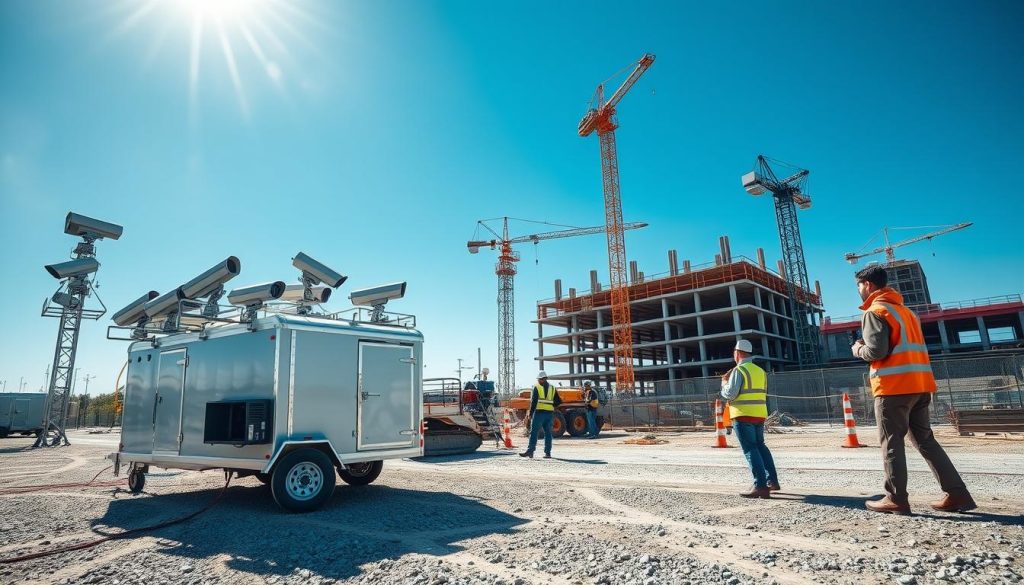
Mobile surveillance units are self-contained, portable systems. They can be deployed anywhere on a project location without relying on existing power or internet connections.
This independence is their greatest strength. It allows for rapid setup and relocation as work zones evolve weekly.
Providers like Milesight specialize in these innovative solutions. Their offerings include trailers, towers, enclosures, and all-in-one kits designed for harsh conditions.
Purpose-Built Trailers for High-Visibility Deterrence
Surveillance trailers are the most visible form of mobile deterrence. They often feature multiple AI-powered cameras, powerful lighting, and audible sirens.
This creates a “show of force” that discourages criminal activity before it begins. The psychological impact is significant, making the entire area seem actively guarded.
These units are typically towed into position at the heart of a project. They are ideal for monitoring central compounds, equipment yards, and main access points.
As the project progresses, the trailer can be easily moved to cover new critical zones. This ensures continuous security coverage without costly reinstallation.
Solar-Powered Towers for Virtual Perimeter Guarding
Solar-powered tower systems excel at creating virtual fences around large perimeters. They use Passive Infrared (PIR) sensors combined with AI analytics for intrusion detection.
When a sensor detects movement, it triggers the system. Lights activate, and alerts are sent to security personnel in real-time.
These towers operate completely off-grid. Solar panels charge integrated batteries, providing 24/7 operation even in remote areas.
They are perfect for guarding the outer boundaries of a worksite. This prevents unauthorized access before intruders reach valuable assets.
All-in-One Kits for Rapid, Flexible Deployment
All-in-one kits package a camera, power supply, and 4G connectivity into a single, rugged enclosure. They are designed for quick installation on fences, poles, or temporary structures.
These kits are the most flexible option for temporary monitoring of hot spots. A team can deploy them in minutes to address emerging security challenges.
Features like edge-based AI allow for on-device analysis. This reduces bandwidth usage and enables low-power consumption for extended operation.
Common use cases include monitoring newly delivered materials, isolated work areas, or temporary storage locations. Their wireless nature makes them ideal for short-term, focused surveillance.
The primary benefit of all mobile units is operational agility. Security assets can be redeployed as the site layout changes, ensuring protection adapts to each project phase.
This flexibility directly translates to cost savings and enhanced risk management. It allows project managers to maintain a robust security posture from groundbreaking to completion.
Wired vs. Wireless: Choosing the Right Connectivity for Your Site
In the realm of project surveillance, the debate between wired reliability and wireless flexibility defines modern installation strategies.
This network decision impacts your total cost, deployment speed, and long-term system performance. It is a foundational choice made during the planning phase.
The Reliability of Wired PoE Systems
Wired systems, primarily using Power over Ethernet (PoE), offer a proven and stable connection. A single cable delivers both electrical power and high-speed data transmission.
This setup guarantees consistent bandwidth for high-definition video streams. It is virtually immune to the radio frequency interference common in industrial environments.
The primary challenge is the physical installation. Running cables across a large, active worksite is costly and disruptive.
Trenches must be dug, conduits installed, and connections secured. This process becomes complex and expensive as the project layout evolves.
The Flexibility of 4G/LTE and Solar Wireless Systems
Wireless systems represent the modern alternative for dynamic locations. They use 4G or LTE cellular networks to transmit video data.
This approach eliminates the need for extensive data cabling. When paired with solar panels, it also removes dependency on the local power grid.
This combination provides ultimate deployment flexibility. Units can be operational in hours, not days, and moved as needed.
However, wireless technology has its own considerations. Signal strength can vary, leading to potential video lag or dropout.
Ongoing cellular data plan costs are an operational expense. Robust encryption is also mandatory to protect the transmitted video feed from interception.
A strategic hybrid approach often delivers the best results. Use wired PoE for critical, fixed locations like site offices and permanent storage.
Deploy wireless, solar-powered units for monitoring temporary work zones and perimeter hotspots. This balances rock-solid reliability with agile mobility.
Your final decision should be guided by several key factors:
- Project Duration: Long-term projects better justify wired infrastructure costs.
- Site Size & Topography: Large or rugged areas favor wireless solutions.
- Existing Infrastructure: Availability of power and data lines reduces wired installation complexity.
- Budget: Consider both upfront capital expenditure and ongoing operational costs like data plans.
There is no universal best choice. The optimal connectivity strategy aligns precisely with your project’s unique logistical and protection requirements.
Remote Monitoring: Accessing Your Site from Anywhere, Anytime
Remote monitoring technology has erased geographical barriers, putting the eyes of management directly on a project 24 hours a day. This capability transforms oversight from a physical constraint into a digital advantage.
Authorized personnel can view live feeds from any internet-connected device. It empowers real-time decision-making without being on location.
This powerful functionality rests on two interconnected pillars. The first is instant visual access and secure data storage. The second is intelligent alert integration into daily operations.
Live-Streaming Feeds and Cloud Storage Options
Live-streaming is typically delivered through a dedicated mobile app or web portal. These platforms provide a real-time dashboard showing all connected units.
Project managers gain a virtual window into daily activities. They can verify work progress or check conditions after a storm with a few taps.
Storage strategy is equally critical for a reliable system. Most setups use a hybrid approach for resilience and speed.
Local Network Video Recorders (NVRs) provide high-capacity, on-site archiving. They offer immediate playback access without internet dependency.
Cloud storage serves as a secure, off-site backup. It enables footage retrieval from any location, safeguarding evidence against on-site damage or theft.
This dual-storage method ensures continuous recording and protection. Video history remains accessible even if local hardware is compromised.
Integrating Alerts with Management Workflows
Smart alerts turn a surveillance system into an active sentinel. AI-driven analytics detect specific events like intrusion or safety violations.
The system then sends instant notifications via push alerts, email, or SMS. This moves response from periodic checking to immediate awareness.
These alerts can feed directly into broader project management workflows. For example, an after-hours perimeter breach can auto-create a ticket in software like Jira.
It can also log the incident and notify the designated security lead. This automation streamlines accountability and response protocols.
The operational benefits are substantial. Supervisors can conduct virtual site walks to inspect safety compliance.
They can verify material deliveries that occur outside office hours. Stakeholders can be shown visual evidence without arranging a physical meeting.
Remote monitoring elevates surveillance from a passive log to an active management tool. It enhances responsiveness and protects the project’s bottom line through faster, more informed actions.
Strategic Camera Placement for Maximum Coverage and Deterrence
A perfectly engineered system can fail if its eyes are not pointed at the right targets. Placement dictates the effectiveness of your entire monitoring operation.
It is the critical link between technology investment and real-world protection. A strategic plan ensures every dollar spent on hardware translates into visible security.
Begin with a detailed map of your location. Identify every vulnerability and the sightlines needed to guard them.
This process prioritizes zones where loss is most likely or most costly. It transforms a collection of devices into a unified visual shield.
Critical Zones: Entrances, Laydown Areas, and Perimeter
Not all areas carry equal risk. Your surveillance resources must focus on the most critical points first.
Main gates and access points are the top priority. They control the flow of all personnel and vehicles.
Position units to capture clear facial identification and license plate numbers. This creates an automatic log of all site activity for accountability.
High-value asset zones are the next focus. These include material laydown yards, tool cribs, and parking for heavy machinery.
These locations are prime targets for theft. Continuous monitoring here protects your project’s largest capital investments.
The outer perimeter forms your first line of defense. Securing it requires overlapping camera views.
This approach eliminates blind spots along fences or boundaries. It ensures any attempted breach is detected and recorded from multiple angles.
Key zones for overlapping coverage include:
- Fence lines and any potential weak points in the boundary.
- Remote storage areas that are not in constant view of workers.
- Dark corners and alleyways between temporary structures.
Avoiding Blind Spots and Ensuring Optimal Angles
Technical execution is where planning meets reality. Proper mounting height, angle, and lens selection are non-negotiable.
An optimal mounting height is around nine feet. This provides a clear, broad view while making physical tampering difficult.
Angles must be calculated to avoid obstruction. Temporary structures, scaffolding, and material stockpiles can create fatal coverage gaps.
Regularly audit sightlines as the project evolves. What was clear last week may be blocked by new construction today.
This careful planning creates a defensible space. The visible, comprehensive coverage psychologically discourages criminal activity.
A defensible space signals that the area is monitored, controlled, and that illicit actions will be seen and recorded.
Honest workers also feel safer in such an environment. They know their safety and property are being watched over.
We strongly recommend conducting a formal site survey. Doing this with a security professional identifies hidden blind spots.
They can plan positions that provide comprehensive, overlapping coverage from day one. This proactive step prevents costly reactive adjustments later.
Finally, use a mix of lens types to achieve detailed coverage. Deploy wide-angle devices for broad area overviews.
Use varifocal lens units for specific choke points like gates or tool room doors. This combination ensures you have both the wide view and the necessary detail for identification.
Strategic placement is the linchpin of a successful surveillance system. It ensures your technology delivers on its promise of deterrence, detection, and evidence.
Temporary vs. Permanent Surveillance Solutions: A Project-Lifecycle View
Every project has a lifecycle, and your security system should evolve alongside it from groundbreaking to handover.
This evolution demands a strategic choice. Do you need agile, movable eyes or a fixed, enduring sentinel?
Temporary monitoring solutions are designed for short-term, dynamic deployment. They are typically wireless, solar-powered, and easily relocatable.
Examples include mobile trailers, standalone towers, and all-in-one kits. These units provide professional-grade oversight without permanent infrastructure.
In contrast, permanent systems are fixed, wired installations with extensive cabling. They feature central recording and are integrated into a location’s long-term infrastructure.
This setup is intended to remain in place for years. It offers structured, comprehensive coverage for stable environments.
The project lifecycle itself dictates the optimal approach. Early phases like earthworks and framing are highly dynamic.
Work zones shift daily, and assets move constantly. Temporary, wireless solutions excel here due to their adaptability.
Later stages involve fixed structures and completed areas. Installing permanent devices in these zones becomes practical and cost-effective.
Cost structures differ significantly between the two models. Temporary setups may have lower upfront capital expenditure.
However, they can involve ongoing rental or service fees. Permanent installations require a higher initial investment in hardware and labor.
This investment pays off through long-term reliability and lower recurring costs. The break-even point depends on your project timeline.
Scalability is another critical factor. Temporary systems can be added or removed with minimal effort.
As the work area expands or contracts, your surveillance footprint can adjust accordingly. Permanent systems are less flexible once conduits and cables are buried.
When planning, consider these three key questions:
- Total Project Duration: Is this a multi-year development or a short-term renovation?
- Asset Value & Mobility: Are you protecting static, high-value machinery or frequently moved materials?
- Future Repurposing: Will the monitoring equipment need to serve another location after this project concludes?
The answers will guide your investment. For most developments, the optimal strategy is a blended approach.
Use temporary, mobile units to guard the perimeter and active work zones during the main construction phase. This provides the needed flexibility.
As the building nears completion, install permanent devices in key locations. These include main entrances, lobbies, and finished equipment rooms.
A hybrid model ensures protection adapts to each phase, maximizing both coverage and cost-efficiency over the entire project lifespan.
This lifecycle view transforms surveillance from a static purchase into a dynamic asset. It aligns your security posture with the natural rhythm of building progress.
Calculating the ROI: Cost Savings on Insurance and Loss Prevention
A detailed ROI analysis transforms security from an abstract concept into a quantifiable business decision. This financial perspective reveals the true value of a monitoring investment beyond basic protection.
The most direct return comes from preventing asset loss. Consider the replacement cost of a single stolen excavator or a shipment of copper wiring.
Such incidents can represent a six-figure financial hit. A robust surveillance setup that deters this single event can pay for itself instantly.
Insurance providers recognize this risk mitigation. They often offer premium discounts of 5% to 15% for locations with certified monitoring systems.
This annual savings can offset a significant portion of your hardware and installation costs. It turns an expense into a recurring financial benefit.
Delays caused by theft or vandalism create massive indirect costs. Idle labor waiting for replacement materials is a pure loss.
Missed project deadlines can trigger penalty clauses from clients. Preventing these disruptions protects your schedule and reputation.
High-definition video evidence streamlines insurance claims. It provides indisputable proof of incidents, speeding up processing times.
This evidence is equally powerful in accident investigations. It clearly establishes liability, protecting against fraudulent claims.
Both scenarios save substantial legal fees and administrative hassle. Your documented footage becomes a powerful defensive tool.
Use this simplified framework to evaluate your potential return:
- System Cost: Total purchase, installation, and any ongoing service fees.
- Annual Loss Estimate: Historical loss value from theft, vandalism, and related delays on similar projects.
- Prevention Rate: Apply a conservative 60-80% reduction factor based on surveillance effectiveness data.
- Insurance Discount: Calculate the yearly premium reduction offered for having a certified system.
The formula is straightforward: (Annual Losses Prevented + Insurance Savings) – System Cost = Annual Net Benefit. A positive result indicates a wise investment.
Operational efficiency gains further boost the financial case. Industry data shows firms using remote monitoring achieve up to 60% better oversight efficiency.
This translates to fewer managerial site visits and faster response to issues. The time savings directly reduce project management overhead.
For a comprehensive evaluation of your specific needs, consider a professional site survey. This step helps tailor the ROI calculation to your unique project parameters.
A surveillance system should be viewed as capital investment with a measurable payback period, not merely an operational expense.
The initial outlay is recouped through prevented losses, lower insurance costs, and avoided delays. This makes proactive monitoring one of the soundest financial decisions for project leadership.
Installation Best Practices and Professional Considerations
The final step before your surveillance system goes live is often the most critical: proper installation and configuration.
This phase determines whether your technology investment performs as intended. It bridges the gap between purchasing hardware and achieving reliable protection.
Engaging certified technicians is highly recommended. These professionals understand both the electronic components and the harsh realities of a project environment.
Their expertise ensures a seamless setup from start to finish. This avoids common technical errors that can cripple an entire monitoring operation.
The advantages of a professional setup are substantial. Correct cable management prevents damage and signal loss in wired systems.
Optimal device configuration maximizes video quality and analytic accuracy. Proper network setup guarantees stable remote access and data flow.
Full integration of all components creates a unified, responsive security asset. Each part works in harmony with the others.
Legal compliance is a non-negotiable aspect of installation in Singapore. The Personal Data Protection Act (PDPA) governs all video monitoring.
You must display clear signage at all entry points. This informs everyone that surveillance is active on the premises.
Angle all units to monitor project assets and perimeters only. Avoid pointing lenses at neighboring private properties or public spaces.
This practice of data minimization is a core PDPA principle. It builds trust and shields your firm from legal liability.
Technical execution requires attention to detail. Use weatherproof conduits to protect cables from moisture and physical damage.
Secure all mounts against vibration from heavy machinery. Ensure adequate ambient lighting for optimal imaging performance after dark.
Strategic placement at entrances and high-traffic zones is key. Mounting at a height of approximately nine feet provides a clear view.
This height also deters tampering while capturing essential details. It balances coverage with practical security.
Thorough testing is mandatory after installation. Verify every live feed from the monitoring software.
Check that recording functionality is active across all channels. Test alert triggers for intrusion detection or safety violations.
Confirm remote access works from multiple devices like smartphones and laptops. This ensures the system is fully operational for management.
Documentation is a powerful tool for ongoing security. Create an “as-built” plan that maps every unit location and its field of view.
This visual guide is invaluable for security personnel during patrols. It also serves as evidence of compliance during audits.
A proactive maintenance schedule preserves system reliability. Clean lenses regularly to remove dust and debris that blur video.
Check all physical connections for corrosion or looseness. Update device firmware to patch vulnerabilities and access new features.
These simple steps prevent minor issues from escalating into major failures. They ensure continuous protection throughout the project lifecycle.
Professional installation transforms purchased components into a dependable, compliant security solution that protects your investment from day one.
View this phase not as a cost, but as a quality assurance measure. It ensures your surveillance strategy delivers on its promise of safety and loss prevention.
Making Your Informed Decision for a Safer, More Secure Site
A safer, more productive worksite is not a matter of chance but the direct result of a strategic security investment. Your choice must balance specific risks, regulatory mandates, and required features like night visibility or remote alerts.
View this protection as a core component of project planning from the outset. Engage with reputable providers for tailored demonstrations and proposals that fit your budget.
The ideal system delivers both deterrence and valuable operational insights for management. This integration strengthens safety protocols and offers a compelling financial return.
As technology evolves with AI and 5G, staying informed ensures ongoing resilience. Use this guide to take the next step and consult with a specialist to secure your assets effectively.