
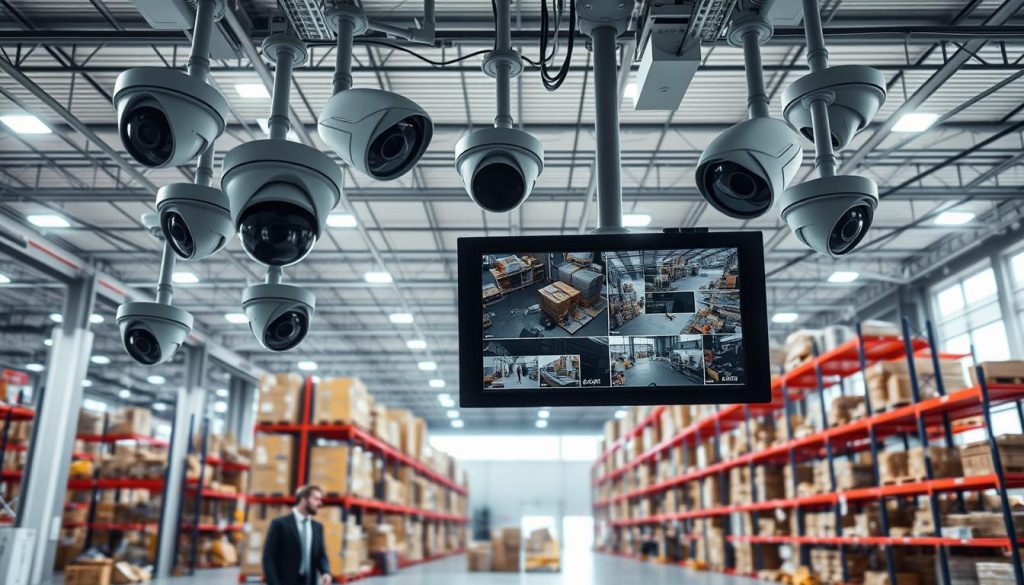
Protecting a large storage facility is a complex task. Modern operations demand robust solutions to keep assets and people safe.
Recent data shows a sharp rise in threats. Thefts have increased by 40%. Physical attacks on businesses are up 28%.
Cargo theft costs US companies $15 to $30 billion every year. Almost one-third of these incidents happen inside warehouses.
The average storage space in the US is over 15,000 square feet. Ensuring continuous monitoring across all areas is a major challenge.
This guide provides essential information for selecting the right video system. It helps managers in Singapore make informed decisions. A proper setup is a strategic investment in operational safety.
Key Takeaways
- Warehouse crime statistics highlight an urgent need for improved security.
- The scale of modern storage facilities makes complete visual coverage difficult.
- Choosing the correct security camera system requires careful planning.
- High-quality video footage is crucial for investigation and evidence.
- Advanced features like motion detection and access control add proactive layers of safety.
- Professional implementation ensures the system meets specific operational needs.
Why Warehouse Security Demands a Robust CCTV System
Implementing a resilient visual monitoring network addresses multiple critical business risks simultaneously. It protects your financial bottom line, ensures employee safety, and safeguards your company’s reputation.
Threats to storage and logistics operations are escalating rapidly. Industry reports show a 40% surge in thefts. Physical attacks on commercial properties have also risen by 28%.
Organized crime groups often target these facilities. They see them as hubs for valuable, movable goods.
The financial impact is staggering. Cargo theft costs U.S. companies between $15 and $30 billion annually. A shocking one-third of these incidents occur inside storage buildings.
Internal risks are just as serious. Employees can be a source of loss. A notable case involved Amazon losing $100,000 in merchandise to internal theft.
Health and safety is another major concern. Proper camera systems do more than catch thieves. They record workplace accidents and unsafe practices.
This video evidence is vital for OSHA investigations. It also helps management improve operational procedures to prevent future incidents.
Simply having visible security cameras acts as a powerful deterrent. Studies indicate they can reduce criminal attempts by up to 60%. This proactive layer of defense is invaluable.
Relying solely on manual patrols is ineffective for large facilities. These spaces require 24/7 monitoring across vast, complex areas. Human teams cannot be everywhere at once.
A modern surveillance system provides indisputable evidence. High-quality footage is crucial for law enforcement. It also supports internal investigations with clear facts.
Strong protection is directly tied to operational continuity. It secures inventory, ensures employee well-being, and defends your brand’s integrity. A single major incident can damage trust for years.
For managers in Singapore, a robust setup is essential. It is a core component of compliance, risk management, and loss prevention strategy. This investment secures your entire operation.
How CCTV for Warehouse Systems Work: Core Components Explained
Understanding the anatomy of a visual monitoring setup is key to selecting the right tools for your facility’s protection. A robust solution is not a single device but a network of interconnected parts.
Each component has a specific job. They work together to capture events, store evidence, and provide actionable insights.
Cameras: The Eyes of Your Operation
Security cameras are the frontline sensors. They capture live video of critical zones like loading docks, aisles, and entry points.
High-resolution models ensure clarity for identifying people and objects. Image quality is vital for reviewing footage later.
Different types suit various locations. A wide-angle dome camera might cover a packing station, while a long-range bullet model watches the perimeter.
Recorders: The Central Hub for Footage
Network Video Recorders (NVR) or Digital Video Recorders (DVR) are the system’s brain. They process, compress, and store all incoming video streams.
The choice between analog and digital impacts performance. Analog systems use coaxial cables and are known for reliability.
Digital setups use Ethernet cables. They offer superior resolution and easier integration with other business software.
Recording can be continuous or triggered by motion detection. Higher frame rates and resolution create larger files.
This directly affects data storage needs and how long footage is retained. Proper planning here is essential.
Monitoring & Management: Taking Action on Insights
Live viewing happens through monitoring devices. This can be a wall of screens in an on-site control room.
Modern solutions also allow remote access via smartphones or laptops. Cloud platforms enable managers to check in from any location.
Video Management Software (VMS) turns raw footage into intelligence. Security teams use it to search for events by time, date, or camera.
Advanced analytics can flag unusual motion or detect hazards. This enables a proactive response.
All components must integrate seamlessly. A compatible camera system provides real-time situational awareness and solid historical evidence.
For a seamless operation, consider professional warehouse security system installation to ensure all parts work in harmony.
Choosing compatible technology is the foundation of effective security management. It transforms a collection of devices into a unified defense network.
Choosing the Right Camera Type for Each Warehouse Zone
Not all security cameras are created equal; each type excels in different operational environments. Your facility’s layout presents unique challenges. A loading dock needs different visibility than a high-bay storage aisle.
Selecting the correct model for each location is the first step to a robust monitoring network. This zone-based approach maximizes coverage and security.
“A strategic camera plan treats each area as a unique puzzle piece. The right technology solves its specific monitoring needs,” notes a senior security consultant in Singapore.
Bullet Cameras for Long-Range Perimeter Security
These units are designed for distance. Their cylindrical shape houses a lens with a narrow field of view.
This focuses on far-away subjects like vehicles or individuals at your fence line. They provide clear identification evidence.
Bullet cameras are ideal for monitoring external areas. Think parking lots, loading bays, and facility boundaries.
Their visible presence also acts as a strong deterrent. Intruders see a professional security camera system is in place.
Dome Cameras for Wide-Angle Indoor Coverage
Dome models are the workhorses inside your building. Their design offers a broad viewing angle.
This makes them perfect for covering workstations, packed aisles, and office spaces. Subjects are closer here, so wide coverage is key.
Their discreet, low-profile housing blends into ceilings. This allows for subtle surveillance without disrupting workflow.
A practical note: the dome enclosure can gather dust. Regular cleaning maintains video quality.
PTZ Cameras for Actively Monitoring High-Traffic Areas
Pan-Tilt-Zoom (PTZ) cameras offer remote control. Operators can pan across a scene, tilt up or down, and zoom in on activity.
This dynamic capability is perfect for busy zones like main shipping docks. One PTZ unit can cover a large area, reducing the number of fixed camera systems needed.
They are excellent for following moving people or investigating incidents in real-time. The trade-off is mechanical complexity.
Moving parts require more scheduled maintenance than fixed models. But for active security teams, the benefit is unmatched.
Specialized Cameras: Fisheye, Turret, and Explosion-Proof
Some spaces demand unique solutions. Specialized security cameras address these specific needs.
Fisheye cameras capture a full 360-degree panoramic view. They are mounted on the ceiling in open spaces like large receiving floors.
Special software ‘dewarp’s the footage into a usable view. This provides complete visibility with a single device.
Turret models feature a ball-and-socket design. Installers can manually adjust them on-site to perfect the angle.
This flexibility is great for dynamic areas where layouts change. A loading bay’s configuration might shift based on goods received.
Explosion-proof camera housings are for hazardous environments. They contain any internal spark, preventing ignition of flammable materials.
These are essential for storage zones holding chemicals or volatile products.
Balancing coverage, hardware limits, and budget is crucial. A Singapore facility might use turret cameras in flexible docks and fisheye units in vast assembly areas.
The goal is a layered security approach. Each camera type contributes to a seamless shield for your entire operation.
Key Technical Features to Prioritize in Your Warehouse Cameras
Image clarity, recording smoothness, and environmental resilience are non-negotiable traits for industrial-grade cameras. Once you’ve selected the right types for different zones, you must scrutinize their core performance features.
These technical specifications determine if your system merely records events or provides actionable, high-fidelity evidence. They directly impact security outcomes and operational management.
Resolution and Image Quality: Capturing Crucial Details
Resolution is the most critical factor for image quality. It defines the amount of detail a camera can capture. Think of it as the number of pixels in your video.
A minimum of 1080p Full HD is essential. This provides sufficient detail to identify individuals or read labels from a moderate distance.
For superior identification, 4K Ultra HD is ideal. It offers four times the detail of 1080p. This allows you to zoom in digitally on footage without losing clarity.
This is vital for reading license plates or distinguishing facial features from across a large facility. High resolution ensures your security cameras deliver usable evidence.
Frame Rate: Ensuring Smooth Footage of Fast-Paced Activity
Frame rate, measured in frames per second (fps), dictates how smoothly motion is recorded. A low frame rate creates choppy, blurry video of moving objects.
This is problematic in dynamic areas like loading docks. Fast-moving forklifts or running individuals become indistinct ghosts.
A rate around 10 fps strikes an excellent balance. It provides smooth clear footage of fast activity without creating excessively large video files.
Higher frame rates like 30 fps are used for critical locations requiring the utmost detail in motion. Balancing frame rate with storage capacity is a key planning step.
Low-Light and Night Vision Capabilities for 24/7 Security
Operations don’t stop when the sun sets. Many facilities run night shifts or have poorly lit storage areas. Standard cameras fail in these conditions.
You need models with advanced low-light functionality. The two primary technologies are infrared (IR) and thermal imaging.
IR security cameras emit invisible light and use the reflected radiation to create a viewable image. They provide night vision in total darkness but have a limited range.
Thermal cameras detect heat signatures from people and objects. They work in complete darkness, fog, or light smoke. They are excellent for perimeter detection.
Specific technologies like Pelco’s SureVision enhance low-light performance without IR. They use advanced sensors to capture clear footage in near-darkness.
Choosing the right technology depends on your specific needs. IR is cost-effective for indoor warehouses. Thermal is superior for outdoor perimeter security.
Durability Ratings: Withstanding Harsh Warehouse Environments
Industrial environments are tough on equipment. Dust, moisture, and temperature swings are common. A standard office camera will fail quickly here.
Ingress Protection (IP) ratings are your guide. Look for a rating of IP66 or IP67 for your security camera units.
An IP66 rating means the unit is totally dust-tight and protected against powerful water jets. An IP67 rating adds protection against temporary immersion.
This durability is essential for cameras near loading docks, in freezers, or in dusty packing areas. It ensures reliable visibility year-round.
These technical features form the backbone of an effective surveillance system. High resolution and frame rate guarantee clear footage.
Robust night vision maintains security around the clock. Strong durability ratings protect your investment from the environment.
Consulting with a security expert in Singapore is wise. They can help match these features to the unique challenges of your facility’s layout and operation.
Smart Integrations: Elevating Your System Beyond Basic Recording
Smart integrations act as force multipliers. They transform a passive recording setup into a proactive security command center.
Modern security camera systems do more than capture clear footage. They connect with other technologies to analyze events and automate responses.
This intelligence turns your surveillance network into a dynamic partner for management. It helps security teams prevent incidents before they escalate.
Planning for these features early is crucial. It ensures your camera system is compatible and ready to scale.
For managers in Singapore, this approach future-proofs your investment. It aligns with advanced operational needs.
Video Analytics for Proactive Threat and Hazard Detection
Artificial intelligence powers modern video analytics. Software scans live feeds to identify unusual patterns.
It can flag unauthorized access in restricted areas. The system also detects safety hazards like improper forklift use.
This automated detection is a game-changer. It reduces reliance on human monitors watching screens for hours.
Analytics can spot OSHA violations in real-time. Examples include workers without safety gear or blocked fire exits.
Alerts are sent instantly to security personnel. This allows for a swift response to potential threats.
The technology learns normal activity over time. This minimizes false alarms from routine motion.
Access Control Synergy for Enhanced Entry Point Security
Integrating security cameras with access control creates a powerful barrier. It strengthens the defense of doors and gates.
When a card reader or keypad is used, a nearby camera can capture the event. This links a person’s identity to their location and time of entry.
Facial recognition takes this further. Cameras with this feature act as biometric readers.
They grant or deny access based on a stored database of authorized personnel. This is ideal for high-security areas like server rooms or valuable warehouses.
The system creates a detailed audit trail. You know exactly who entered, when, and what they did.
If a door is forced open, the event triggers recording. The security camera focuses on the breach and sends an alert.
License Plate Recognition for Perimeter and Dock Control
License Plate Recognition (LPR) technology automates vehicle control. It is essential for perimeter gates and loading docks.
Specialized camera systems read plate numbers as trucks approach. The system checks them against an approved list.
Authorized vehicles gain automated gate access. Unknown plates trigger an immediate alert for security review.
This streamlines logistics for delivery warehouses. It also creates a digital log of all vehicle movements.
LPR works effectively day and night. It pairs with night vision cameras for 24/7 visibility.
Remote monitoring via the cloud is another key integration. Security staff can view live feeds on smartphones or tablets.
This ensures oversight continues even when personnel are off-site. Managers in Singapore can check on facilities from anywhere.
IoT sensors add another layer. Devices like the HALO Smart Sensor detect vape, smoke, or abnormal noise.
When a sensor is triggered, it can command nearby security cameras to start recording. This provides visual context to an alarm.
The operational benefits are significant. Smart integrations reduce false alarms and speed up incident response time.
They transform surveillance from a simple recording tool into an intelligent management asset. This is the future of industrial security.
Best Practices for Planning Your Warehouse Camera Layout
The effectiveness of your entire security investment hinges on a well-designed camera placement plan. A strategic layout ensures your security cameras work as a unified network, not a collection of isolated devices.
This process turns your facility’s blueprint into a visual command map. It identifies every vulnerable point and deploys the right technology to protect it.
Follow a structured methodology to avoid costly blind spots. A good plan balances ideal coverage with real-world installation limits.
Step 1: Conduct a Thorough Risk Assessment of Your Facility
Begin by understanding your specific threats. A comprehensive risk assessment forms the foundation of your camera system design.
Review past incident reports. Look for patterns in theft, unauthorized access, or safety violations. This historical data reveals your true weak points.
Map your high-value storage areas and inventory choke points. These locations are prime targets and require priority monitoring.
Analyze employee and vehicle traffic patterns. Identify where people congregate and which routes are less supervised. These insights help pinpoint where surveillance is most needed.
This analysis defines your security requirements. It tells you what you need to see, not just where you can easily install a device.
“A site survey is not a luxury; it’s a necessity. We often find that 30% of a client’s initial self-identified camera locations would have created major blind spots,” notes
.
Step 2: Map Camera Placements to Cover All Critical Areas
With risks identified, translate them into a physical plan. Use a facility blueprint to map proposed camera placements.
Ensure coverage of all critical zones. This includes all entrances, exits, loading docks, storage aisles, and office areas.
Pay close attention to camera height and angle. Mounting too high can lose facial detail. A bad angle can create a blind spot behind equipment.
The goal is identification-capable footage. You must be able to clearly see who is doing what, and when.
Use a mix of camera systems for optimal results. Fixed units are perfect for stable chokepoints. PTZ or 360° models cover large, open warehouses where wiring space is limited.
Step 3: Balance Coverage with Practical Installation Limits
The perfect paper plan meets the reality of your building. You must address practical constraints during the design phase.
Consider wiring limitations and power sources. Long cable runs in vast facilities can be challenging and costly.
Solutions like Power over Ethernet (PoE) simplify this. Wireless security cameras can also solve problems in hard-to-wire locations.
Structural obstacles like high ceilings or machinery can block views. Temporary mounts are a smart way to test placements before final installation.
Verify sightlines and lighting conditions with these tests. What looks good on paper might be useless in practice.
Always plan for the future. Leave capacity in your network and management software for additional warehouse security cameras. Your security needs will evolve over time.
Engaging a professional for a site survey is highly recommended. Experts from established firms can tailor the layout to your operational flow, ensuring your visual monitoring investment delivers maximum protection from day one.
Installation Considerations: Wired vs. Wireless and Infrastructure
A robust installation plan addresses the critical link between camera technology and real-world environmental challenges. The choice between wired and wireless connectivity determines your system’s reliability, flexibility, and long-term cost.
This decision impacts daily operations and future scalability. It requires balancing performance needs with the physical constraints of your building.
Wired systems form the traditional backbone for permanent security camera networks. They offer unmatched stability for continuous recording.
Two primary cable types are used. Analog setups rely on coaxial cables to transmit video signals.
Modern digital camera systems use Ethernet cables. This approach enables high-definition video and advanced features.
The Power over Ethernet Advantage
Power over Ethernet (PoE) is a popular wired solution. It simplifies the installation process significantly.
A single Ethernet cable delivers both data and electrical power to each security camera. This eliminates the need for separate power outlets near every unit.
PoE reduces wiring complexity and material costs. It also centralizes power management through a PoE network switch.
This makes the system easier to maintain and expand over time. For large facilities, this streamlined approach is a major benefit.
Wireless Flexibility and Its Trade-Offs
Wireless cameras transmit video via Wi-Fi or cellular networks. They provide notable flexibility during setup.
Installation is often quicker and less invasive. There is no need to run long cables through walls or across ceilings.
This makes them ideal for temporary monitoring needs or hard-to-wire areas. However, this convenience comes with important considerations.
Battery-powered models require diligent battery management. Frequent changes can become a logistical burden for security teams.
Signal interference is another potential issue. Metal structures common in warehouses can weaken or block Wi-Fi signals.
This can lead to dropped footage or laggy live streams. A wired connection generally provides superior reliability and data security.
Confronting Infrastructure Realities
Large storage spaces present unique infrastructure hurdles. Running cables across vast distances is a primary challenge.
Professional installers use cable trays, conduits, and strategic routing to overcome this. They plan routes that avoid machinery and high-traffic zones.
Metal racking and building frames can also interfere with wireless signals. A pre-installation site survey identifies these potential dead zones.
Your network backbone must support the data load. High-resolution streams from multiple security cameras demand sufficient bandwidth.
Quality network switches and routers are essential. They ensure smooth data flow without bottlenecks that degrade video quality.
Ensuring Compatibility and Longevity
Adherence to open standards safeguards your investment. The ONVIF compliance standard is crucial.
It ensures interoperability between different brands of cameras and recorders. This protects you from being locked into a single vendor.
Consulting with installation professionals is highly recommended. Experts assess site-specific conditions to avoid common pitfalls.
“A proper infrastructure design accounts for future expansion from day one. We often integrate extra conduit runs during the initial install to make adding warehouse security cameras years later a simple task,” notes a Singapore-based integrator.
Proper installation is critical for system longevity and performance. It directly impacts overall security by ensuring consistent visibility and reliable evidence capture.
Whether opting for a wired, wireless, or hybrid approach, professional planning is key. For a tailored assessment of your facility’s needs, consider a professional security installation consultation.
Ongoing Maintenance and System Management for Long-Term Reliability
The long-term value of your visual monitoring investment depends entirely on consistent upkeep and smart management. A neglected system quickly becomes a liability, failing when you need it most.
Proactive care ensures your security cameras operate at peak performance. It guarantees reliable security and clear footage for investigations.
Dust and grime are enemies of visibility. Establish a regular schedule for cleaning lenses and housings.
This is vital in dusty industrial areas. A clean lens maintains image quality and resolution.
Software Updates and Storage Health Checks
Firmware and software updates are non-negotiable. They patch critical security vulnerabilities and often add new features.
Schedule these updates during low-activity periods. This minimizes disruption to your surveillance coverage.
Regularly check your storage health. Ensure recorders have adequate space and that footage is saving correctly.
Full drives or corrupted files can mean lost evidence. Automated alerts from your management software can warn you early.
Testing Functional Components
Cameras with moving parts need extra attention. Test PTZ units to verify they pan, tilt, and zoom as programmed.
Check the focus and motion detection zones on all units. This ensures your camera systems capture events accurately.
For wireless security cameras, battery management is key. A log helps track change-out times to prevent failures.
The Critical Role of Documentation and Professional Support
Keep a detailed maintenance log. Track every inspection, repair, and part replacement.
This creates accountability and a valuable history for your security camera system. It helps diagnose recurring issues.
“A comprehensive logbook is the first thing we ask for during a service call. It cuts diagnostic time in half and gets the client’s security back online faster,” notes a Singapore-based systems engineer.
Use your Video Management Software (VMS) as a management tool. It allows remote checks of camera status and health.
Set up alerts for device failures or unauthorized access attempts. This gives your security teams a proactive advantage.
For large or complex security camera systems, a professional maintenance contract is wise. Experts handle updates, deep cleaning, and hardware checks.
This service ensures your warehouse security cameras and control infrastructure remain in top condition. It protects your capital investment.
Proper maintenance directly reduces downtime and extends equipment life. It delivers consistent security coverage that meets your operational needs.
This disciplined approach transforms your surveillance network from a static installation into a dynamic, reliable asset.
Future-Proofing Your Investment: Scalability and Technology Upgrades
Anticipating technological change is the hallmark of a strategic security investment. A forward-thinking plan protects your capital and ensures your monitoring network evolves with your business.
This approach treats your security camera system as a living asset. It grows and adapts to meet future operational needs.
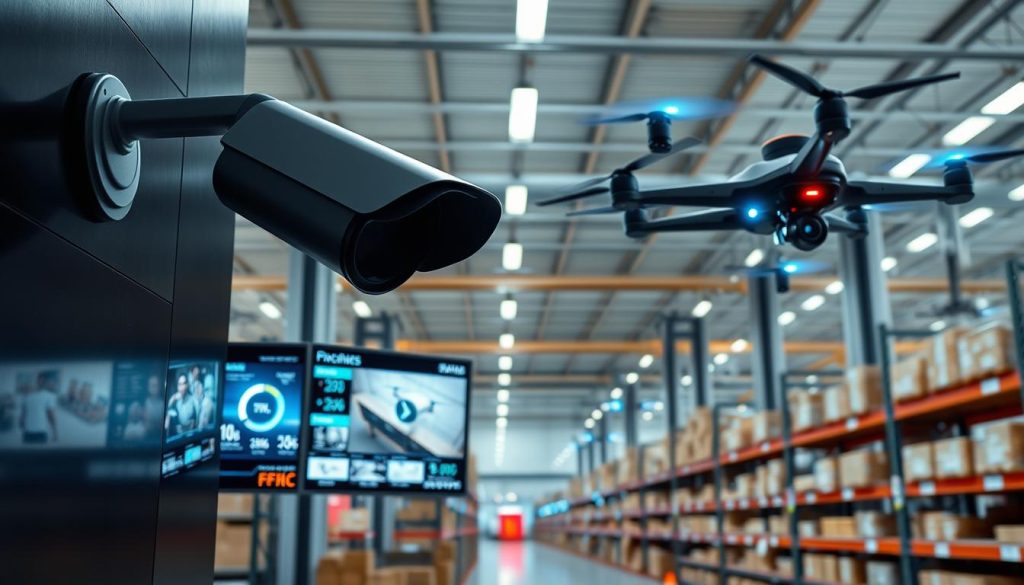
Scalability is the core principle. It means choosing hardware and software that can expand effortlessly.
Start with your recorder. Select a model with extra input channels beyond your current camera count.
This provides room to add more warehouse security cameras later. Your network infrastructure should also have spare capacity.
High-quality switches and routers handle increased data from new, high-resolution units. Modular camera systems make upgrades simple.
“The most cost-effective upgrade path is planned during the initial design. We advise clients to install conduit with pull strings for future camera runs, even if they’re not used immediately,” shares a security consultant specializing in Singapore logistics facilities.
Open standards are your best friend for compatibility. Insist on ONVIF compliance for all new equipment.
This standard allows different brands of security cameras and recorders to work together. It prevents vendor lock-in and simplifies future technology swaps.
Planning for physical expansion is equally important. If you plan to add new building wings, pre-run network cables during construction.
For wireless solutions, ensure your network design can support additional access points. This proactive step avoids costly retrofits down the line.
Emerging technologies will redefine surveillance capabilities. Artificial intelligence analytics are becoming more powerful and affordable.
Future systems may automatically detect specific safety violations or track inventory movement. Higher resolution standards, like 8K video, will offer incredible detail.
Integration with the Internet of Things (IoT) will create smarter security ecosystems. Your camera system could interact with environmental sensors and smart locks.
Cybersecurity is a non-negotiable part of future-proofing. Networked security camera systems are potential targets for digital threats.
Regular firmware updates patch vulnerabilities. A robust plan includes scheduled security audits for your entire surveillance network.
Budgeting for periodic technology refreshes is wise. Cameras and recorders have a functional lifespan.
Replacing units before they fail prevents gaps in your security coverage. It also lets you adopt new features gradually.
Consider this real-world example. A distribution center in Singapore planned for growth.
They installed a recorder with 50% extra channels and ran spare fiber to their perimeter. Two years later, they doubled their storage areas.
Adding new security cameras was simple and cost-effective. They avoided a complete system overhaul.
Future-proofing is a smart business decision. It protects your initial investment and ensures ongoing security.
Your security teams get tools that remain effective over time. Your operation gains resilience against evolving threats.
Think long-term from the start. A scalable, upgrade-ready design delivers lasting value and peace of mind.
Taking the Next Step: Implementing Your Warehouse Security Solution
Moving from planning to implementation is the critical phase where your security strategy becomes operational reality. This guide has outlined the essentials: assessing your specific needs, selecting the right components, and designing an effective layout.
The next step is to engage with professional security experts. They can provide a tailored solution for your storage facility. Reputable providers like A1 Security Cameras and Pelco offer customized system design.
For managers in Singapore, working with vendors who understand local regulations is key. Concrete actions include conducting a site survey and obtaining professional quotes. Contact A1 Security Cameras at 866-441-2288 or sales@a1securitycameras.com.
A well-implemented surveillance system is a strategic investment. It pays off through theft prevention and safety improvements. Secure your premises today with a robust security solution.