
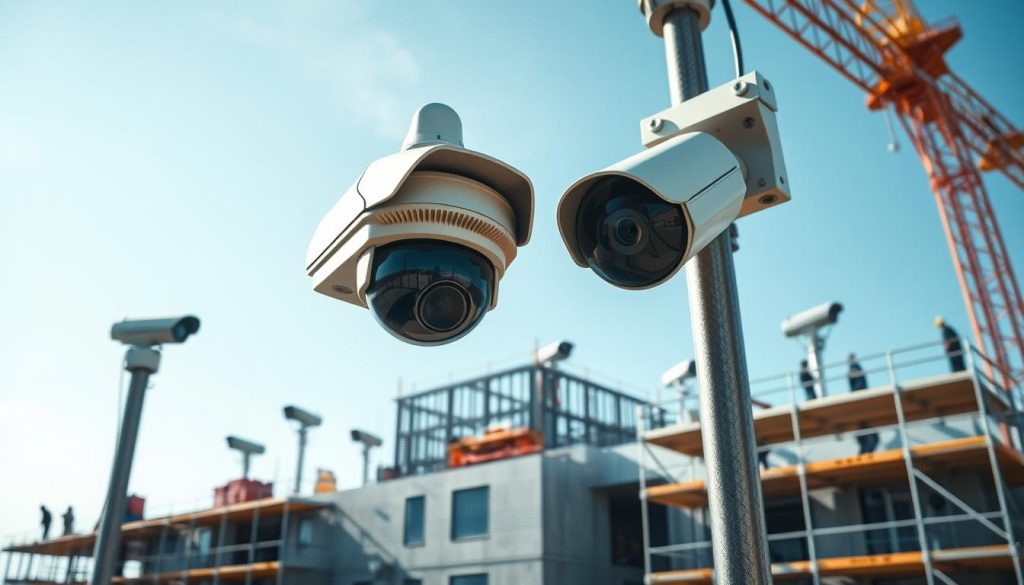
Protecting a project area is a top priority for managers in Singapore. The stakes are high. Theft and vandalism cause huge financial hits. Recent data shows a 25% increase in such incidents across the local industry.
Annual losses can approach $500,000 per location. This makes a strong case for a robust visual monitoring solution. The right setup does more than just record. It acts as a powerful deterrent, potentially stopping 40% of burglaries before they happen.
Modern technology transforms simple recording into intelligent oversight. These systems provide real-time alerts and remote access. Managers can watch over their projects from anywhere. This leads to much better operational control and safety compliance.
With new rules coming, video surveillance will soon be mandatory for larger developments. This adds a legal need to the clear financial one. Choosing the correct equipment is now a critical business decision.
This guide will help you navigate the options. We’ll break down the features, types, and benefits of today’s top systems. Our goal is to help you make an informed choice for your project’s unique needs.
Key Takeaways
- Theft causes massive financial losses, nearing half a million dollars annually per project in Singapore.
- Visible surveillance can prevent up to 40% of crime attempts and reduce losses by 80%.
- Remote-access systems boost operational efficiency by 60%, allowing for better management.
- High-quality video provides crucial evidence for investigations and insurance claims.
- Upcoming regulations will make video monitoring a legal requirement for major projects.
- Investing in the right system is a proactive step that pays for itself through loss prevention.
- A comprehensive setup enhances overall site oversight, safety, and project timeline adherence.
Why Construction Site Security Cameras Are Non-Negotiable in Singapore
Project managers across the island are facing a stark new reality: visual monitoring is no longer optional. The data paints a clear and urgent picture. Ignoring this need directly threatens a project’s bottom line and timeline.
The Rising Tide of Theft and Vandalism on Job Sites
Project areas are prime targets for criminal activity. Statistics show they are 400% more likely to be hit compared to other properties.
About 80% of local firms have dealt with stolen assets. This isn’t just about missing tools. High-value equipment and bulk materials often disappear.
Such losses can inflate total project costs by up to 25%. This hits profitability hard. Every stolen item needs replacing, causing delays and budget overruns.
A visible surveillance system acts as a powerful deterrent. Studies indicate it can reduce criminal incidents by up to 65%. This proactive approach stops trouble before it starts.
Implementing a robust monitoring setup has proven results. It can slash theft by 50% and vandalism by 70%. This protection is a direct investment in financial safety.
Beyond Security: Enhancing Site Management and Safety Compliance
Modern visual systems are multi-purpose management tools. They provide continuous oversight of all activity. Supervisors gain a clear view without being physically present.
This remote access improves worker accountability. It also offers irrefutable evidence for any safety incident investigations. Video proof is invaluable for understanding what truly happened.
Managers use feeds to verify material deliveries. They can monitor subcontractor work and ensure safe procedures are followed. This level of oversight streamlines daily operations.
A documented visual record is crucial for regulatory audits. It also defends against false liability claims. Having a timestamped log supports your position without question.
In essence, a comprehensive monitoring solution is a core component of responsible project management. It safeguards assets, enforces protocols, and provides peace of mind.
Key Features to Look for in Construction Security Camera Systems
With numerous options on the market, knowing which technical specifications truly matter can make the difference between a basic recorder and a powerful management tool. This checklist breaks down the must-have capabilities that deliver clear evidence, intelligent oversight, and unwavering reliability.
High-Definition Video and Color Night Vision for Critical Detail
Image clarity is non-negotiable. You need to see faces, read labels, and identify license plates. A minimum of 1080p resolution is standard, but 4K provides four times the detail for crucial identification.
Since the risk of theft and unauthorized activity peaks after dark, low-light performance is vital. Traditional infrared illuminators create black-and-white images.
For critical color detail at night, look for models with advanced starlight sensors or full-color night vision. This technology captures usable evidentiary video in near-total darkness, making every hour a monitored hour.
AI-Powered Analytics and Smart Motion Detection
Modern intelligence transforms passive recording into an active sentry. Artificial Intelligence (AI) analytics can improve accurate incident detection by up to 40%.
Instead of alerting you to every moving shadow, smart motion detection classifies objects. It distinguishes between a person, a vehicle, and an animal. This drastically cuts false alerts from wind or wildlife.
You receive targeted notifications only for relevant events. This enables a proactive security posture. Managers can respond immediately to genuine threats, right from their phones.
Rugged, Weatherproof Design and Reliable Power Options
Project environments are harsh. Equipment faces dust, torrential rain, physical impacts, and extreme heat. A flimsy camera won’t last a week.
Seek out units with an IP65 rating or higher. This guarantees complete protection against dust and jets of water. Vandal-resistant housings add another layer of durability.
Power reliability is equally important. For locations with stable infrastructure, Power over Ethernet (PoE) is excellent. It sends both data and electricity through one cable.
For remote or temporary setups, consider high-capacity battery packs or solar panels. These solutions ensure your monitoring system stays online, providing a continuous view regardless of grid availability. A professional assessment, like the one offered by Wenhong’s surveillance experts, can determine the best power and setup for your specific needs.
Understanding the Different Types of Construction Security Cameras
Effective oversight requires matching specific hardware technologies to the unique challenges of different zones within a project boundary. The right choice depends on what you need to see and the conditions on the ground.
This breakdown covers the primary device categories and system architectures. It will help you configure a setup that delivers both comprehensive coverage and reliable operation.
Fixed Cameras vs. PTZ (Pan-Tilt-Zoom) Cameras
Your first decision is between stationary and movable units. Fixed security cameras are the workhorses for constant observation of a specific spot.
They are cost-effective for monitoring choke points like gates or storage yards. Common types include discreet dome units and visible, long-range bullet models.
In contrast, PTZ units offer remote directional control. A supervisor can pan left or right, tilt up or down, and use optical zoom to inspect details from miles away.
This provides flexible, wide-area coverage and is ideal for tracking activity across large, open work areas. While a fixed device watches one angle, a single PTZ camera can survey an entire yard.
Wired, Wireless, and 4G LTE Connectivity Solutions
Getting the video feed to you is the next critical step. Wired systems, like Power over Ethernet (PoE), offer the most stable data stream and power in one cable.
This reliability is excellent for permanent installations. Wireless Wi-Fi units simplify installation where running cables is difficult.
Their performance depends on network range and signal strength. For remote locations without local internet infrastructure, 4G LTE is the go-to solution.
These cameras use cellular data for connectivity. Brands like Reolink and Pelco offer models with this capability specifically designed for challenging construction environments.
Solar-Powered and Battery-Operated Systems for Remote Sites
Autonomous power solutions are essential for off-grid locations. Solar panels paired with high-capacity lithium batteries can keep a camera running indefinitely.
This eliminates the need for generator fuel or running temporary power lines. It’s a clean, set-and-forget option for temporary projects.
Successful deployment requires careful calculation. You must size the battery life and solar panel output based on local weather patterns.
In Singapore’s climate, accounting for rainy seasons is crucial to ensure continuous operation. This planning guarantees your monitoring system never goes dark.
By understanding these types, you can match the right hardware and architecture to your project’s specific geography, timeline, and infrastructure. The goal is a seamless view and access to protect your investment.
Navigating Singapore’s Video Surveillance System (VSS) Regulations
A new regulatory framework transforms video monitoring from a strategic choice into a legal necessity for many projects. Effective June 1, 2024, the Ministry of Manpower mandates a Video Surveillance System (VSS) for specific developments.
This move formalizes a critical layer of protection and oversight. Understanding these rules is essential for lawful operation and avoiding penalties.
Mandatory Requirements for Projects Over $5 Million
The primary compliance trigger is project value. Any undertaking valued at $5 million and above must install a compliant VSS.
The system must deliver clear, usable footage. Minimum technical specs are HD 1080p resolution and a frame rate of 12 fps.
Coverage is not arbitrary. The rules specify monitoring high-risk zones. These include work at heights over two meters, scaffold access points, and active vehicular areas.
Practical deployment requires a detailed site map. You must position units to ensure all mandated zones are within the field of view. Blind spots in these critical areas are a compliance failure.
Data Retention, Privacy, and Compliance Best Practices
Managing the recorded footage is as important as capturing it. Standard video must be retained for a minimum of 30 days.
For any reportable workplace safety incident, the retention period extends to 180 days. This extended archive is vital for investigations and evidence.
You must also comply with the Personal Data Protection Act (PDPA). Clear signage must notify all personnel and visitors that surveillance is in operation.
Best practices for data management include:
- Securing stored video with encryption and access logs.
- Restricting system access to authorized personnel only.
- Using approved formats (.avi, .mp4) when exporting footage for authorities.
This structured approach turns regulatory adherence into an operational asset. It creates a transparent, accountable, and safer work environment for everyone.
How Remote Jobsite Cameras Work to Protect Your Assets 24/7
Today’s remote surveillance technology creates a virtual guard that never sleeps. It offers constant vigilance over your valuable assets. This interactive shield operates far beyond simple recording.
The core mechanics involve three synchronized functions. They deliver live oversight, preserve critical footage, and trigger immediate warnings. Together, they form a resilient barrier against loss.
Real-Time Live Streaming and Remote Access via Mobile Apps
High-definition video streams continuously to a central hub. This feed travels over the internet or cellular networks. Authorized personnel gain instant access from anywhere.
Dedicated mobile applications and web portals are the gateways. They allow multiple supervisors to view the same live feed simultaneously. This happens from their office or home.
A user-friendly interface is crucial for effective monitoring. The best apps provide smooth control over pan, tilt, and zoom functions. This turns a smartphone into a powerful command center.
Remote visual access isn’t just a convenience; it’s a force multiplier for project management.
This capability ensures you always have a clear view of operations. It connects leadership directly to the field. The physical distance between the office and the project vanishes.
Local and Cloud Storage Options for Evidence Preservation
Reliable storage is the backbone of any evidentiary record. You have two primary methodologies to choose from. Each has distinct advantages for different needs.
Local storage uses on-premise hardware like Network Video Recorders (NVRs).
- Pros: Full control over data, no recurring fees, fast retrieval.
- Cons: Risk of physical damage or theft, requires on-site maintenance.
Cloud storage uploads encrypted footage to remote servers.
- Pros: Off-site backup safe from local disasters, accessible from any device.
- Cons: Involves a monthly subscription, depends on internet bandwidth.
Capacity planning is essential. It depends on video resolution, frame rate, device count, and retention laws. For compliance with Singapore’s VSS rules, ensure your setup can store footage for at least 30 days, or 180 days for incidents.
Instant Alerts and Notifications for Proactive Response
Smart detection transforms passive recording into an active sentry. Advanced analytics filter out irrelevant motion. They distinguish between a wandering animal and a person.
You can set up customizable motion zones. This focuses alerts on high-risk areas like entry gates or material yards. The result is a drastic reduction in false alarms.
When a genuine threat is identified, notifications fire instantly.
- Push notifications appear directly on your mobile device.
- SMS text messages provide a backup if data is unavailable.
- Email alerts often include a snapshot of the triggering event.
This ecosystem enables a proactive stance. Managers can assess the situation in real-time and initiate a response protocol immediately. Whether it’s contacting on-site guards or local authorities, speed is critical.
Combined, these three pillars—live streaming, secure storage, and instant alerts—create a comprehensive virtual presence. Your assets gain protection that is always on, always watching, and always ready to act.
Quantifiable Benefits: How Security Cameras Save Time and Money
Investing in surveillance technology is a strategic business decision with a clear, calculable return. The right system transforms from a simple cost into a powerful tool for protecting profits and streamlining operations.
This analysis moves beyond features to focus on outcomes. We examine the direct and indirect financial gains that justify the initial outlay.
Deterring Crime and Reducing Financial Losses
The most immediate benefit is loss prevention. Visible surveillance acts as a powerful psychological barrier. Studies show it can deter up to 40% of burglary attempts before they even occur.
For incidents that do happen, the impact is drastically reduced. Projects with active monitoring report decreases in actual theft by as much as 80%. This protects valuable equipment, tools, and bulk materials.
Industry-wide, theft and vandalism represent a staggering cost, estimated at $1 billion annually. A single system directly defends your project’s margin from this drain.
Furthermore, the presence of a reliable visual record can slash security guard expenses. Some firms report reductions of up to 80% in these personnel costs. Automated vigilance works around the clock without breaks.
Improving Operational Efficiency and Worker Accountability
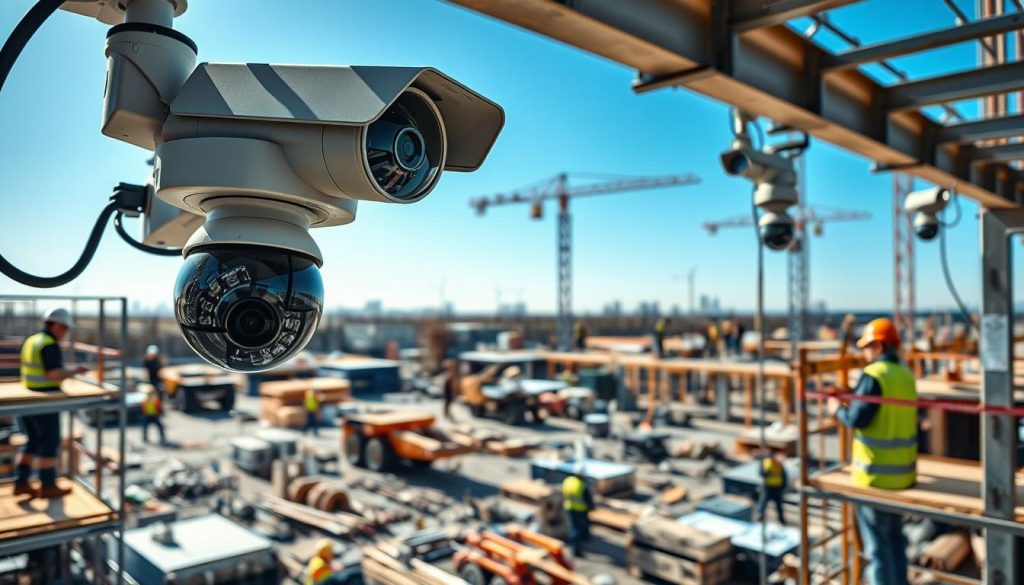
The advantages extend far beyond stopping crime. Live video feeds grant managers instant remote access to the project. This saves immense amounts of time previously spent on travel.
Supervisors can verify work progress, coordinate material deliveries, and resolve disputes from their desk. This leads to faster decision-making and smoother daily workflows.
The ability to visually audit site activity without being physically present is a game-changer for project efficiency and control.
The knowledge of being observed also fosters a culture of responsibility. Workers and subcontractors are more likely to adhere to safety protocols and efficient practices. This oversight promotes a more productive and disciplined environment.
Potentially Lowering Insurance Premiums
A comprehensive monitoring setup is recognized by insurers as a major risk mitigation measure. Many providers offer reduced premiums for locations with certified systems.
By presenting your installation as a proactive step, you demonstrate a lower risk profile. This can translate into significant annual savings on your policy costs.
It’s advisable to consult directly with your insurance broker. Discuss what specific system features—like 24/7 recording, remote access, or motion alerts—might qualify for the best discounts.
When aggregated, these benefits paint a compelling picture. From direct loss prevention and lower guard costs to operational time savings and potential insurance breaks, a visual system is a profit-protecting asset. It safeguards your investment and enhances your management capability.
Choosing Between Temporary and Permanent Surveillance Solutions
The choice between a temporary watchman and a permanent sentinel hinges on the project’s lifecycle and future use. This critical decision influences upfront investment, long-term value, and daily operational flexibility.
Your strategy must be as dynamic as the work environment it protects. A mismatched approach can lead to wasted capital or dangerous oversight gaps.
Assessing Your Project Timeline and Site-Specific Needs
Begin by asking key questions about your undertaking. What is the total expected duration? Will the layout of the work area change significantly as phases progress?
Perhaps most importantly, will visual oversight be required after the build is complete? The answers directly point to the ideal system type.
For short-term projects under 12 months, agility is paramount. Mobile units or pole-mounted wireless cameras offer the needed flexibility. They can be repositioned as excavation gives way to framing.
A practical framework is to match the monitoring solution to the project phase. Use standalone solar-powered units with LTE connectivity for initial groundworks.
These options require no fixed infrastructure. Once the main structure is up, you can transition to a more permanent, wired setup for interior areas.
This phased approach ensures continuous coverage without overcommitting resources too early. It allows managers to adapt their oversight as the site evolves.
Pros and Cons of Mobile vs. Fixed-Infrastructure Systems
Understanding the core trade-offs is essential for a sound investment. Each setup has distinct advantages and potential drawbacks.
Mobile & Temporary Solutions:
- Pros: Rapid deployment with no trenching for cables. High relocation flexibility. Often use autonomous power like solar, ideal for off-grid locations.
- Cons: The unit itself can be a target for theft if not properly anchored. May involve recurring cellular data costs. Can have higher upfront rental or purchase costs for short-term use.
Fixed & Permanent Infrastructure:
- Pros: Superior reliability with wired power and data. Typically offers the best image quality and stability. More cost-effective over a long timeline.
- Cons: Requires significant planning and installation labor. Inflexible once cables are run. Not suitable for projects where the layout is constantly shifting.
The most effective strategy is often a hybrid one, blending mobile units for a dynamic perimeter with fixed cameras for critical, stable interior zones.
This discussion helps avoid common pitfalls. Don’t over-invest in a rigid, permanent system for a brief project. Conversely, don’t under-invest in a flimsy temporary setup for a multi-year development.
The goal is a surveillance strategy that is responsive and resilient. It should protect your assets efficiently throughout the entire construction journey and beyond.
Your Step-by-Step Guide to Selecting the Right Camera System
A methodical approach simplifies the process of choosing the right visual monitoring equipment. This clear, four-step plan turns a complex decision into a manageable task.
You will move from initial evaluation to a fully specified, budgeted plan. Follow these sequential tasks to protect your investment effectively.
Step 1: Conduct a Site Assessment and Risk Analysis
Begin by walking the entire project location. Your goal is to map vulnerabilities and prioritize zones for oversight.
Identify high-value asset spots like tool cribs and material storage. Note all entry and exit points along the perimeter fence.
Pay close attention to potential blind spots behind temporary structures. Understanding the specific threats you face, such as theft or unauthorized entry, is crucial.
This hands-on view forms the foundation for your entire system. It tells you exactly what needs watching.
Step 2: Define Your Coverage, Connectivity, and Power Needs
Next, translate your assessment into technical requirements. Calculate how many units you need for complete coverage.
Decide between fixed camera types for choke points and PTZ models for wide, open areas. Your connectivity choice depends on local internet availability.
Wi-Fi works where signal is strong. For remote spots, 4G LTE provides a reliable fallback. Wired options offer the most stable data stream.
Power solutions range from convenient PoE to autonomous solar and battery combos. Your project’s infrastructure dictates the best fit.
Step 3: Balance Features with Your Project Budget
Now, align your technical wish list with financial reality. Allocate funds first to essential features.
Weatherproofing and color night vision are non-negotiable for reliable evidence. Advanced features like AI-powered motion detection are valuable upgrades.
Your budget must account for hardware, professional installation, potential cellular data plans, and cloud storage fees.
A good rule is to spend 60-70% on core hardware and installation, reserving the remainder for connectivity and advanced analytics.
For perspective, a basic four-unit setup with monitoring might start around a few thousand dollars. A large, multi-camera network with AI can represent a more significant investment.
Step 4: Plan for Professional Installation and Maintenance
The final step ensures your plan works in the real world. Engage qualified technicians for the setup.
Professionals mount units at the correct height and angle. They secure them against tampering and integrate everything into a cohesive network.
This guarantees reliable remote access and clear video feeds for managers. Do not underestimate this phase.
Also, establish a simple maintenance routine. Periodically clean lenses and check solar panel connections.
Verify that all software and firmware is up to date. This proactive care prevents failures and keeps your security posture strong.
Following this guide demystifies the procurement process. You gain a tailored solution that delivers peace of mind and tangible protection.
Securing Your Project’s Future with the Right Surveillance Investment
A strategic investment in visual oversight is a cornerstone of responsible project management in today’s environment. It directly safeguards against financial losses while enhancing operational control.
Aligning your setup with Singapore’s VSS requirements ensures regulatory compliance. The best system is a tailored solution based on your unique risks and goals.
Taking this proactive step secures your project’s future. It delivers the peace of mind needed to focus on successful, timely completion.