
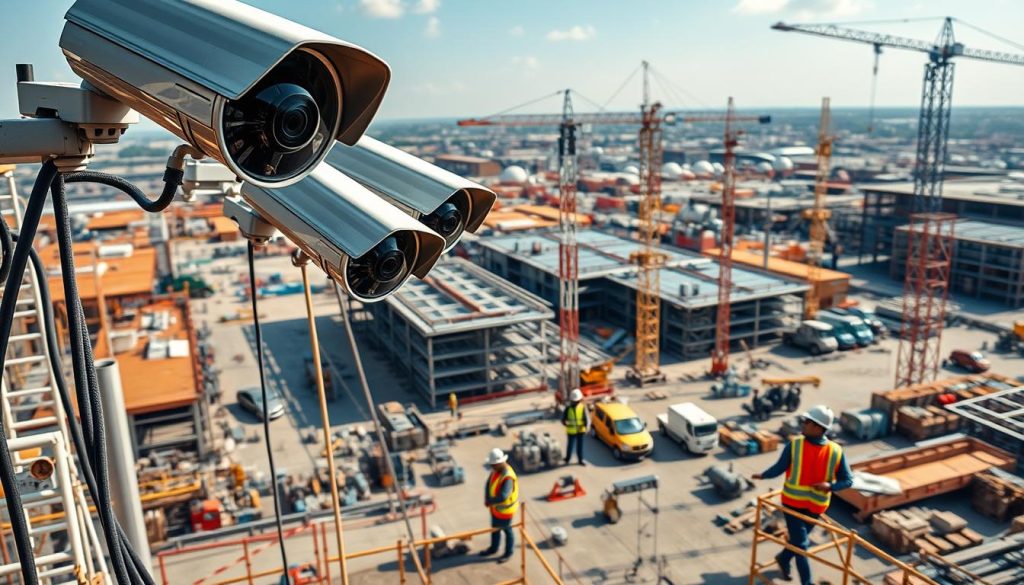
A modern project zone is a dynamic hub of high-value assets. It faces constant challenges that demand robust construction site security.
Professional monitoring systems are not just a deterrent. They are a fundamental component of project management and risk mitigation.
This guide is for project managers and supervisors in Singapore. It will help you understand, select, and implement an effective solution.
The stakes for your operation are incredibly high. Security directly impacts project timelines, budgetary control, and overall profitability.
Threats continue to evolve, from organized theft to opportunistic vandalism. A proactive posture is no longer optional—it’s essential.
We promise a detailed exploration of features, benefits, and strategic implementation. You will gain the knowledge to make an informed decision.
Technological advancements like AI and remote monitoring have changed everything. Today’s tools offer active management, not just passive recording.
Key Takeaways
- Modern project environments are high-risk areas requiring constant vigilance.
- Professional monitoring is a core element of successful project management.
- Effective protection directly safeguards timelines and profitability.
- Evolving threats like theft and vandalism demand proactive solutions.
- Technology such as AI transforms systems into active management tools.
- This guide provides a roadmap for selecting the right system.
- Understanding local regulations is crucial for implementation in Singapore.
Why Construction Site Security is Non-Negotiable in Singapore
The convergence of high-value assets, transient personnel, and constant activity defines a modern work zone’s security challenge. This environment is inherently a prime target for loss.
An unprotected perimeter invites operational and financial disaster. For project leaders in Singapore, robust protection is a fundamental business requirement.
The High Stakes of Modern Construction Sites
Project zones are uniquely vulnerable. They are often open, containing valuable materials and machinery.
Operations frequently extend beyond standard hours. This creates ample opportunity for theft and vandalism.
Daily management presents complex hurdles. Supervisors must coordinate a transient workforce and manage constant vehicle and material deliveries.
The physical layout changes weekly. Securing assets in this fluid environment is a constant battle.
The financial pressure is immense. This industry operates on notoriously tight margins.
Any loss from security incidents hits the bottom line directly. Delays can cascade into missed deadlines and costly contractual penalties.
Reputational damage from a compromised project can have long-term consequences. The stakes for every manager are incredibly high.
Connecting Security to Project Success and Profitability
A secure location is an efficient one. Reduced incidents mean fewer work stoppages and lower replacement costs.
This directly protects timelines and budgetary control. Every day saved is money earned.
Robust protection also fosters a safer working environment. When teams feel their workplace is monitored and secure, morale often improves.
This can lead to better focus and higher productivity. It indirectly contributes to overall project success.
Therefore, a professional monitoring system is not a mere cost center. It is a strategic investment.
It safeguards the project’s financial viability from the first day to the final handover. This ensures smooth progression from groundbreaking to completion.
The Rising Threat: Theft and Vandalism on Singaporean Job Sites
For project managers across the island, operational challenges are now compounded by a clear and present danger. Criminal activity targeting work zones has escalated from an occasional headache to a persistent business risk.
This threat directly undermines profitability and schedule integrity. Understanding its scale is the first step toward an effective defense.
Recent Statistics on Construction Site Crime
The data paints a sobering picture. Industry reports indicate a 25% rise in theft incidents in recent years.
Average annual losses per location are approaching $500,000. Perhaps most staggering, about 80% of firms report experiencing theft.
High-value, portable assets are prime targets. These include copper wiring, power tools, installed appliances, and even fuel from heavy machinery.
The annual estimated loss for the entire industry ranges between $300 million and $1 billion. This is a systemic issue demanding a systematic response.
Understanding the Financial and Operational Impact
The true cost extends far beyond replacing stolen items. A single act of vandalism, like cutting cables or damaging scaffolding, can halt work for days.
This delay affects multiple trades and subcontractors. The resulting schedule slippage incurs heavy contractual penalties.
Compounded impacts include increased insurance premiums and the administrative burden of police reports. These hidden costs are substantial.
There is also an indirect toll on worker morale. Teams in an environment perceived as insecure may experience lower focus and productivity.
When combined, theft and vandalism can consume up to 25% of a project’s budget. This makes robust security a direct contributor to financial health.
Framing these threats as a persistent business risk is crucial. It moves the conversation from reactive damage control to proactive, technology-driven protection.
A professional approach is essential for safeguarding your assets and ensuring project success. Learn more about implementing a professional surveillance system tailored to Singapore’s unique challenges.
How Modern Surveillance Acts as Your 24/7 Site Guardian
The solution to persistent project zone vulnerabilities lies in a system that never sleeps: the intelligent surveillance network. This technology represents a fundamental shift from reactive recording to active, perpetual guardianship.
Contrast this with traditional methods. Night watchmen and periodic checks create gaps in coverage. A modern networked system provides continuous, unblinking observation.
It acts as a powerful force multiplier. A single manager can now visually oversee an entire perimeter in real-time.
This is possible from a central command post or a mobile device. Comprehensive visibility is no longer a logistical challenge.
The true power of a guardian lies in its intelligence. Modern solutions don’t just capture video; they can be configured to watch for specific events.
Examples include perimeter breaches after hours or unauthorized access to storage compounds. The system alerts personnel to potential threats as they happen.
The evolution from a passive camera to an intelligent sentry marks the biggest leap forward in physical security in a generation.
Intelligent video analytics serve as the system’s “brain.” Providers like Avigilon utilize AI-powered analytics to distinguish between normal activity and genuine threats.
It can tell a night shift worker from an intruder climbing a fence. This enables fast, informed responses and reduces false alarms.
Companies like Hikvision offer diverse, easy-to-deploy systems. These platforms guarantee effective safety and robust asset protection.
The psychological impact is equally powerful. The visible presence of professional security technology creates a perception of constant observation.
This perception is a proven deterrent. It discourages criminal activity before it even begins, saving time and money.
This intelligent monitoring approach sets a new standard. It transforms a basic utility into a strategic project management tool.
The following section explores the specific features that give this digital guardian its capabilities.
Essential Features of Effective Construction Site Surveillance Cameras
Not all visual monitoring devices are created equal, especially when tasked with safeguarding a dynamic, high-risk environment. The right technical specifications transform a basic recorder into a reliable guardian.
Selecting equipment without these core features can leave critical gaps in your protection. Here are the non-negotiable capabilities for any professional system.
High-Definition Video Quality for Clear Identification
High-definition footage is the foundation of any useful system. You need a minimum of 1080p resolution.
This clarity is crucial for identifying individuals and reading vehicle license plates. Blurry video is evidentially worthless during an investigation.
Clear recordings provide admissible evidence for authorities. They also help managers review operational details accurately.
Night Vision Capabilities for Round-the-Clock Protection
Project zones are often pitch black after hours. Effective night vision is therefore mandatory.
Infrared (IR) illuminators allow cameras to see in total darkness. Standard ranges vary from 30 to 100 meters.
For extreme conditions like fog or very long distances, thermal imaging cameras are used. They detect heat signatures instead of light.
Specialized models, like the Avigilon H5A IR PTZ, can see up to 300 meters in darkness. This ensures continuous security.
AI-Powered Analytics for Proactive Threat Detection
Modern systems go far beyond simple motion alerts. AI-powered analytics act as a force multiplier for your team.
They can be programmed for specific behaviors. Examples include virtual tripwires at a perimeter fence.
Other functions detect loitering in storage areas or the removal of a key asset. Vehicle counting at access gates is also possible.
This intelligence filters out false alarms from animals or moving foliage. It can boost genuine incident detection by up to 40%.
Managers receive prioritized alerts for proactive response. This transforms the system from reactive to actively preventive.
Rugged, Weatherproof Design for Harsh Environments
A work zone is a brutal place for electronics. Devices must withstand dust, heavy rain, and high humidity.
This durability is measured by an Ingress Protection (IP) rating. Look for ratings like IP66 or IP67.
These ratings guarantee resistance to powerful water jets and dust ingress. This is critical for Singapore’s tropical climate.
Housings should also be vandal-resistant to deter tampering. A physically robust design ensures long-term reliability.
In summary, a visual monitoring system lacking any of these core features will likely fail. It cannot deliver the reliable security a modern project demands.
Each capability works in concert to provide identification, continuous coverage, intelligent alerts, and physical resilience. This combination is what defines a professional solution.
Navigating Singapore’s Video Surveillance Regulations
Regulatory requirements for visual monitoring have become precise and mandatory for major developments. For project managers, understanding this legal landscape is a critical layer of operational planning.
Implementing a professional system is no longer just a best practice. For many, it is a direct compliance obligation with significant legal implications.
Mandatory VSS Requirements for Projects Over $5 Million
A key regulation is the Video Surveillance System (VSS) mandate from the Ministry of Manpower. It applies to all construction projects valued at S$5 million and above.
This rule took effect on June 1, 2024. Its primary objective is enhancing workplace safety through documented oversight.
The VSS outlines specific technical standards for any installed system. Footage must be in minimum 1080p high-definition quality.
A frame rate of at least 12 frames per second is required. All recorded video must be retained for a minimum of 30 days.
For any reportable incident, this retention period extends to 180 days. Export formats like .avi or .mp4 are specified for evidence sharing.
Coverage is mandated for designated high-risk zones. These include work at height locations over two meters.
- Scaffolding and temporary structures
- Excavation and piling sites
- Areas with active vehicular traffic
Adhering to these specifications ensures your security systems meet the baseline for regulatory compliance and safety oversight.
Compliance with the Personal Data Protection Act (PDPA)
Project leaders face a dual obligation. While the VSS mandates the collection of footage, the PDPA governs how the personal data within it is handled.
The PDPA considers video recordings containing images of people as personal data. Therefore, its core principles apply directly.
You must notify individuals that recording is taking place. This is typically done through clearly posted signage at entry points.
Collection should be limited to what is necessary for the stated safety and security purposes. The stored footage must be kept secure from unauthorized access.
Perhaps most importantly, the data cannot be used for unrelated purposes. Using footage for general employee performance reviews, for example, would likely breach PDPA guidelines.
A professionally designed surveillance system is configured to meet both VSS and PDPA requirements from the outset, turning legal complexity into operational clarity.
This integrated approach avoids costly fines and legal complications. It builds a foundation of trust and compliance into your project’s systems from day one.
From Deterrence to Evidence: How Cameras Reduce Your Risk
Risk mitigation in high-value environments operates on two fundamental principles: prevention and resolution. A professional monitoring system excels at both. It first stops problems before they start, then provides definitive answers when incidents occur.
This dual-layer defense directly lowers your operational and financial exposure. Understanding how it works is key to maximizing your investment.
The Proven Deterrent Effect of Visible Cameras
The mere presence of visible security cameras changes criminal behavior. Industry studies consistently show this. Locations with obvious monitoring can see criminal attempts drop by 40-65%.
One specific finding is striking. Project zones with security systems can reduce theft by up to 80%. Criminals actively seek easier targets with no visible protection.
This psychological impact is powerful. A potential thief sees the device and assumes they are being watched. They often abandon their plan immediately.
Strategic placement maximizes this effect. Units should be clearly visible at all main entry points and around high-value storage areas.
Complementary signage is equally important. Signs stating “24/7 Video Monitoring” reinforce the message. They create a perception of constant oversight.
This proactive layer of protection saves immense time and money. It prevents losses and the disruptive aftermath. The goal is to make your location a hardened, unattractive target.
Providing Irrefutable Evidence for Investigations
When prevention isn’t enough, the system’s second function activates. High-quality footage provides an unbiased record of events. This transforms chaotic post-incident response.
Contrast two scenarios. A disputed accident claim becomes a “he-said-she-said” argument. Without proof, liability is unclear and legal risks soar.
Now imagine a clear video timeline. It shows exactly what happened, who was involved, and which vehicle was used. This objective evidence cuts through confusion.
Such footage allows for quick perpetrator identification. It speeds up police reports and insurance claims significantly. Adjusters can process claims faster with visual proof.
Data indicates that without video evidence, liability and legal claims can increase by 20%. A recording turns a subjective dispute into a factual investigation.
The evidentiary value extends to internal issues. It protects your company from false claims by workers or third parties. This directly reduces legal liability and associated costs.
Over time, the impact is measurable. Professional surveillance systems have cut instances of vandalism by 70% in monitored areas. They provide the tools for both stopping crime and resolving it efficiently.
This combination makes visual monitoring a cornerstone of modern risk management. It addresses threats at both the beginning and the end of the incident cycle.
Remote Monitoring: Managing Your Site Security from Anywhere
The most significant advancement in perimeter security is the power to see everything without being there. Remote monitoring dissolves the traditional barriers of time and place for project leaders.
This capability transforms a static security system into a dynamic management platform. You gain continuous visibility and control, regardless of your physical location.
The Technology Behind Real-Time Live Feeds
Modern systems achieve this through robust connectivity. Wired Ethernet provides a stable backbone for fixed infrastructure.
For temporary or remote locations, 4G/LTE cellular networks offer a reliable link. Wi-Fi can extend coverage to specific zones within the perimeter.
Authorized personnel access the system via a secure web portal or mobile app. They can view live video feeds, review recordings, and manage settings.
This is possible from a smartphone, tablet, or office computer. Platforms like Avigilon Unity Video enable this seamless remote access.
Real-time feeds are crucial for verifying alerts. When a motion sensor triggers an alarm, a manager can instantly pull up the live view.
This allows for immediate assessment of the situation. It prevents unnecessary responses to false alarms, saving valuable time and resources.
Gaining Operational Insights Beyond Security
The value of remote monitoring extends far beyond theft prevention. These solutions become powerful project management tools.
Managers can visually track work progress against schedules. They can verify delivery times and material quantities as they arrive.
Compliance with safety protocols, like hard hat usage, is easily observable. This visual oversight helps optimize workflow and resource allocation.
Companies utilizing remote camera systems report up to 60% better operational efficiency. The visual record turns daily oversight into a data-driven process.
Cloud-based analytics, such as those in Alta Aware software, add another layer. They can analyze video to provide insights on traffic patterns and peak activity periods.
This dual-purpose use is transformative. It provides an unbiased, visual log of all daily activities and milestones.
For firms managing multiple projects, this capability is essential. Senior leadership can maintain clear oversight without constant physical site visits.
Remote monitoring redefines proactive project leadership. It ensures nothing important is ever out of sight.
Tangible Benefits of Investing in a Professional Surveillance System
For project managers, the true value of a surveillance system is revealed in hard numbers: reduced costs, improved efficiency, and tangible risk mitigation.
Viewing this technology as a mere expense is a common mistake. A professional setup is a strategic investment with a clear and quantifiable return.
The benefits extend far beyond basic theft prevention. They directly enhance operational control and financial predictability for any project.
Significant Reduction in Losses from Theft and Vandalism
The most immediate financial impact is loss prevention. Industry data is compelling. Professional security systems can cut incidents of theft by as much as 80%.
Instances of vandalism can decrease by up to 70% in monitored areas. This translates into direct savings on replacing stolen tools, materials, and equipment.
Consider the cost of a single stolen generator or a load of copper wiring. Preventing just one major incident can cover a significant portion of the system’s cost.
Reduced downtime is another major saving. Fewer work stoppages mean the project stays on schedule. This avoids costly late penalties from clients.
The system pays for itself by stopping problems before they happen. It turns a potential financial drain into a source of stability.
Improved Overall Site Management and Productivity
Visual oversight provides a powerful management tool. Supervisors can monitor work progress in real-time from any location.
This leads to better resource allocation and identification of workflow bottlenecks. Delivery logs and subcontractor work hours are easily verified.
Accountability increases when teams know their work area is observed. Studies indicate visual monitoring can help improve productivity and accountability by 25%.
Adherence to safety protocols often improves. Workers are more likely to follow correct procedures when they know they are on camera.
This creates a more efficient and orderly work environment. Better management saves time and directly boosts project productivity.
Potential for Lower Insurance Premiums
Insurers view comprehensive surveillance as a major risk mitigation factor. A project zone with 24/7 recording and remote monitoring presents a lower claims risk.
This can be reflected in reduced annual premiums. Providing proof of a professional system to your insurer is a smart move.
Some companies report premium discounts of 10-20%. The savings accumulate year after year, adding to the overall return on investment.
“A verified surveillance system is not just a security device; it’s a risk management credential that insurers recognize and reward with better terms.”
Combined with savings from reduced guard costs—up to 80% in some cases—the financial argument becomes overwhelming. The system transforms from a cost center into a profit-protecting asset.
In summary, the benefits are clear and measurable. A professional solution pays for itself through loss prevention, operational gains, and insurance savings.
It is one of the few investments that actively protects your bottom line from day one. For any major project, this level of security is a cornerstone of smart business.
Exploring Your Options: Types of Construction Security Cameras
The hardware landscape for perimeter protection offers a diverse range of devices, each designed for specific operational roles. Choosing the right type is not about finding the “best” one, but the most appropriate for each location and task.
A robust video security network often integrates several kinds. This creates layered coverage that addresses different threats and operational needs.
Fixed Cameras for Constant Coverage of Key Areas
These units are the unwavering sentinels of any professional setup. They provide continuous, non-moving views of critical choke points.
Dome and bullet styles are the most common fixed cameras. Dome models are discreet and often vandal-resistant, ideal for indoor areas like site offices.
Bullet cameras are more visible and typically house longer-range lenses. They are perfect for monitoring gates, material storage yards, and perimeter fences.
Models like the Avigilon H6SL Dome come with built-in AI analytics and weatherproofing. They deliver constant, intelligent oversight without requiring manual operation.
PTZ (Pan-Tilt-Zoom) Cameras for Active Monitoring
For large, open spaces, fixed units may be insufficient. This is where PTZ technology excels.
Operators can remotely control the pan, tilt, and zoom functions. They can follow a person across a yard or zoom in to read a license plate hundreds of feet away.
This capability allows for virtual patrols and detailed alarm investigation. A single PTZ camera can cover an area that would require multiple fixed devices.
It brings active, human-directed monitoring into the system. This is invaluable for dynamic project environments where activity isn’t confined to one spot.
Specialized Cameras: Thermal, ANPR, and Fisheye
Advanced challenges demand specialized tools. These units add unique features to a comprehensive system.
Thermal imaging devices detect intruders based on heat signature. They work in total darkness, through light fog, and can see through some visual obstructions.
ANPR (Automatic Number Plate Recognition) units log every vehicle entering and exiting. They automate access control and provide an audit trail for deliveries and personnel.
Fisheye lenses offer a single, 360-degree view of an interior space. They eliminate blind spots in rooms like warehouses or offices with just one device.
A well-designed network uses a strategic mix: fixed eyes for constant watch, PTZ for active response, and specialized tools for unique threat detection.
The choice depends entirely on your specific risks, physical layout, and monitoring objectives. Professional surveillance systems are built by combining these technologies.
This creates a cohesive construction security cameras solution that is far greater than the sum of its parts. It ensures every potential vulnerability has the right type of watchful eye on it.
Strategic Installation Best Practices for Maximum Coverage
The effectiveness of any monitoring network hinges not just on its technology, but on where and how each component is deployed. A meticulous implementation strategy is what separates a robust shield from a system full of holes.
This phase moves from theory to practical action. It determines whether your investment delivers total peace of mind or frustrating blind spots.
Identifying Critical Zones: Entrances, Storage, and High-Risk Areas
Begin with a thorough walk-through of the entire location. Your goal is to map every potential vulnerability where loss or unsafe acts could occur.
Essential spots demand constant, unobstructed viewing. Focus your primary devices on these key areas:
- All perimeter entry and exit points: This includes main gates, secondary access, and any temporary openings in fences.
- Material and asset storage compounds: Prioritize zones holding copper, appliances, lumber, and other high-theft-risk items.
- Fuel storage tanks and tool cribs: These are attractive targets for opportunistic theft.
- Equipment parking and maintenance yards: Protect valuable machinery from tampering or unauthorized use.
- Site offices and worker facilities: Secure administrative records, personal belongings, and controlled access.
- High-risk work zones: As per VSS rules, cover locations like scaffolding, excavations, and areas with active vehicle traffic.
This audit ensures coverage eliminates dangerous gaps. A criminal or a safety violation should have nowhere to hide.
Ensuring Proper Placement for Optimal Visibility and Deterrence
Once zones are mapped, precise positioning is critical. Technical accuracy here directly impacts system performance.
Mounting height is a primary consideration. A good rule is to install units approximately nine feet high.
This elevation provides a clear view of faces and activities. It also helps prevent easy tampering or vandalism.
Angle the device to avoid direct backlight from the sun. This prevents washed-out footage during key hours.
Ensure the housing itself is rugged and weather-sealed. It must withstand Singapore’s tropical climate and potential physical challenges.
Visibility itself is a powerful tool. Criminals should clearly see the cameras as they approach a protected site.
A visibly professional system can deter crime before it starts, making strategic placement a key part of your prevention plan.
In some cases, dummy units can supplement real ones in lower-risk areas. However, all critical zones must be covered by functional, recording devices.
This level of precision demands expertise. We strongly recommend professional installation by certified technicians.
These experts handle complex details. They manage cable routing, stable power supply, and optimal network configuration.
They also calibrate each camera for its specific field of view. This ensures the entire security network operates as one seamless unit.
A poorly installed setup will fail, regardless of hardware quality. Gaps in coverage and reliability issues will undermine your entire surveillance effort.
Investing in correct placement from the start guarantees your system performs as intended. It turns individual components into an intelligent, cohesive shield for your project.
Temporary vs. Permanent Surveillance Solutions
Project planners face a critical strategic choice: should their protective measures be as flexible as the work itself, or built to last for the long haul? This decision directly impacts capital expenditure, operational flexibility, and your long-term security posture.
The right answer depends entirely on your project’s lifecycle and specific operational challenges. Selecting the wrong type of system can lead to wasted resources or dangerous coverage gaps.
Choosing Mobile Systems for Short-Term or Evolving Projects
For dynamic or short-duration work, mobile solutions offer unmatched adaptability. These are often trailer-mounted or pole-mounted all-in-one units.
They come with built-in recording hardware and cellular connectivity. This makes them completely self-contained and independent of local infrastructure.
These systems are ideal for specific scenarios:
- Short-duration projects (typically under 12 months).
- Locations with rapidly changing layouts and focal points.
- Providing a temporary boost in coverage during high-risk periods.
Their key advantages are speed and flexibility. Deployment is often a plug-and-play process with no need for extensive cabling runs.
You can also relocate the entire unit in a matter of hours. This allows your monitoring to follow the project’s active work zones as they shift.
Investing in Fixed Infrastructure for Long-Term Developments
For large, multi-year developments or permanent facilities, a fixed wired system is the superior investment. This involves mounting devices on buildings and poles.
Conduits run back to a central control room or network video recorder. It creates a structured, comprehensive monitoring network.
This approach is the standard for:
- Major residential or commercial developments.
- Industrial plants and permanent installations.
- Any location where the footprint is stable for several years.
The benefits of a permanent installation are significant. You gain higher reliability and greater network bandwidth.
This setup allows for a larger number of devices and more advanced features. It also enables seamless integration with other building systems like access control and alarms.
While the upfront cost is higher, the total cost of ownership over a long period is often lower. It represents a foundational investment in the asset’s long-term security.
The most strategic approach is to match the solution to your project’s specific timeline and needs. A hybrid model is also highly effective for complex projects.
You might use mobile units during the initial earthworks phase. These can later be integrated into the permanent wired system as structures rise.
This choice isn’t just about hardware; it’s about aligning your protective strategy with the project’s financial and operational lifecycle for maximum return.
Making the correct decision here sets a strong foundation. It ensures your operational security and management efficiency from day one through to project completion.
Selecting the Right Construction Site Surveillance Camera System
Choosing a professional monitoring network is not about finding the best product, but the most appropriate system for your challenges. This final decision synthesizes everything you’ve learned into a practical action plan.
Your goal is to build a cohesive shield, not just a collection of devices. A tailored approach is the only way to achieve this.
The right framework turns complex technical choices into clear steps. It ensures your investment delivers maximum protection and operational insight.
Assessing Your Site’s Specific Size, Layout, and Risks
A one-size-fits-all approach is a recipe for failure. A dense urban condo project has vastly different needs than a sprawling infrastructure job.
Your first task is a thorough, honest assessment. This creates the blueprint for your entire security systems design.
Follow this practical checklist to map your unique profile:
- Create a detailed site map. Mark all entry points, storage yards, and high-risk work zones.
- Identify high-value asset locations. Pinpoint where tools, materials, and fuel are stored.
- Review past incident reports. Understand your specific historical risks and vulnerabilities.
- Analyze the project timeline and phases. Your system must adapt as the layout evolves.
- Note existing environmental challenges. Consider lighting conditions, weather exposure, and physical obstructions.
This audit reveals exactly what you need to protect. It moves the planning process from guesswork to data-driven strategy.
Balancing Advanced Features with Budget Considerations
Not all capabilities carry equal weight. Smart prioritization is key to staying within budget without compromising core protection.
Some features are non-negotiable foundations. These include high-definition video, robust night vision, and a high IP rating for weatherproof durability.
For advanced analytics and specialized tools, apply strategic thinking:
- Prioritize AI-powered detection for high-risk storage areas and perimeter fences.
- Consider PTZ units to cover large, open spaces cost-effectively.
- Use thermal imaging only for extreme conditions like total darkness or long-range monitoring.
Always calculate the total cost of ownership. Look beyond the upfront price of hardware and installation.
Factor in ongoing software licensing, potential cloud storage fees, and routine maintenance. A slightly higher initial investment in a robust, integrated system often saves money long-term.
The Value of Professional Consultation and System Design
This is where expert guidance becomes invaluable. Engaging with a specialist like Wen Hong or an authorized dealer for major brands transforms the process.
Piecemeal purchases from general retailers lead to incompatible components and dangerous coverage gaps. A professional design ensures every part works together seamlessly.
Security specialists provide critical services a DIY approach cannot match. They conduct a comprehensive site survey and recommend a tailored configuration.
A professional consultant doesn’t just sell you equipment; they engineer a solution. They ensure regulatory compliance, optimize coverage to eliminate blind spots, and provide ongoing technical support.
This partnership is the final step that elevates a purchase into a strategic investment. It guarantees your construction security and management tools are intelligent, reliable, and fully integrated from day one.
The right solutions are born from this collaborative, analytical process. They are built to address your specific risks and empower your project team.
Taking the Next Step Towards a Secure and Efficient Site
The journey toward a fully protected and efficient operation culminates in informed action. In Singapore’s competitive landscape, a professional security system is a critical investment. It manages risks, ensures operational control, and meets regulatory needs.
This solution offers multifaceted benefits. It deters theft and vandalism, provides irrefutable evidence, and enables remote management. It can also lower insurance costs.
The challenges of inaction are clear. Financial loss, project delays, and safety incidents are quantifiable threats. Use this guide as a foundation for talks with solutions providers.
Take concrete steps. Conduct a preliminary audit of your areas. Identify priority coverage zones. Research vendors specializing in construction site security.
Select a partner who understands local challenges and regulations like VSS and PDPA. A robust surveillance system lays the foundation for a successful project. It ensures protection, productivity, and peace of mind.