
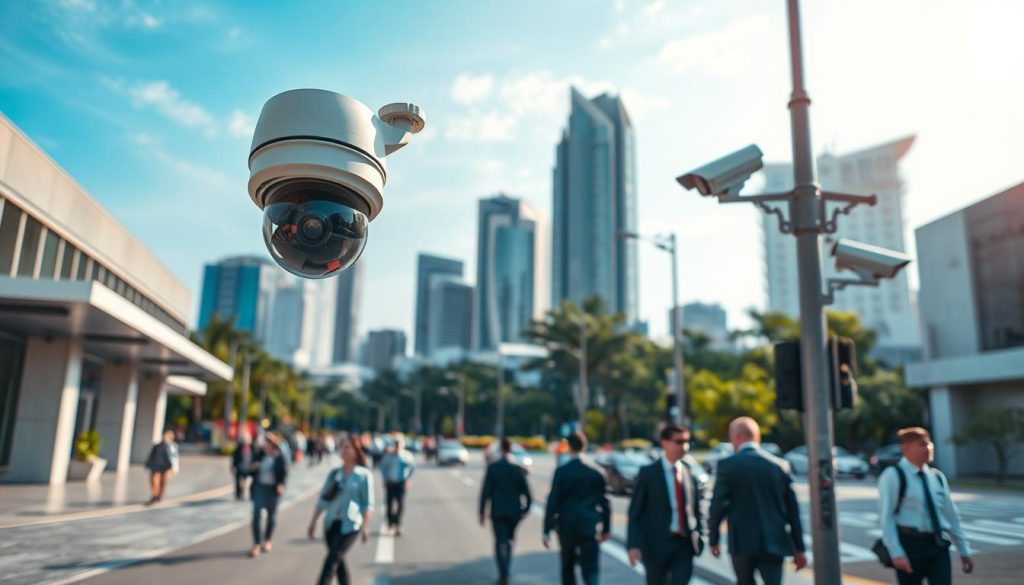
With over 900,000 security cameras operating across the island, surveillance systems are a common sight. Many residents and business owners consider installing their own equipment. A primary question often arises regarding the legal permissions required.
Singapore has established a clear legal framework governing the use of these devices. The rules aim to balance security needs with the protection of individual privacy rights. Understanding these laws and regulations is a critical first step before any installation.
Failing to comply can lead to significant legal issues. Evidence gathered from non-compliant systems may even be invalidated in court. This guide will explore the requirements for different scenarios, from HDB flats to commercial spaces.
Key Takeaways
- Singapore has specific laws governing the installation and use of surveillance cameras.
- Compliance is essential to avoid legal penalties and ensure evidence is admissible.
- The regulations seek to balance public and private security with personal privacy.
- Rules can differ between residential properties (like HDB flats) and commercial premises.
- Understanding the framework before installing any equipment is highly recommended.
Navigating Singapore’s CCTV and Surveillance Camera Regulations
The legal landscape for monitoring devices is not governed by a single entity but a collaborative system. Several authorities create a multi-layered framework of rules. This network ensures surveillance serves its purpose without infringing on rights.
Understanding which body oversees your specific situation is essential. The applicable regulations differ for a homeowner, a business, and a public housing resident. This section maps out the key players and their domains.
The Role of the PDPA and Personal Data Protection Commission
The Personal Data Protection Act (PDPA) is the cornerstone of Singapore’s data protection law. It governs how organizations collect, use, and disclose personal data. Since video footage can identify individuals, most commercial CCTV cameras fall under this protection act.
The Personal Data Protection Commission (PDPC) enforces these laws. They provide clear guidelines for balancing security needs with privacy. A core principle is that surveillance must have a reasonable purpose.
“Organisations should notify individuals of the purpose of collection through appropriate means,” advises the PDPC. This often means placing clear signage where cameras operate.
It is crucial to note the PDPA primarily regulates organizations. This includes companies, shops, and condominium management bodies. For individual homeowners, the act’s obligations are less stringent, but other rules from housing authorities still apply.
Other Governing Bodies: HDB, URA, and Town Councils
Beyond data protection, physical installation is controlled by property regulators. The Housing & Development Board (HDB) sets strict regulations for flats and common areas in public housing. They have specific guidelines for where you can mount devices.
The Urban Redevelopment Authority (URA) oversees external installations affecting building facades. If a camera alters a building’s exterior look, URA’s conservation or planning guidelines may come into play.
For common corridors and estate areas in HDB towns, your local Town Council is the approving body. They manage the shared property and ensure installations do not pose safety hazards or cause disputes.
This collaborative network ensures comprehensive oversight. A business in a shophouse must consider PDPA, URA, and perhaps building management rules. An HDB resident follows HDB and Town Council directives while being mindful of the PDPA’s spirit regarding neighbors’ personal data.
Why CCTV Security is a Priority for Homes and Businesses
Modern security systems offer a powerful combination of prevention and protection for both residential and commercial properties. The value of these systems goes far beyond simple recording. They address fundamental concerns about safety, liability, and peace of mind.
Deterring Crime and Providing Vital Evidence
Visible cameras act as a strong deterrent. Potential intruders, vandals, and thieves often avoid properties under watch. This preventive effect is a primary reason for the widespread use of surveillance.
When incidents do occur, recorded footage becomes crucial evidence. Police investigations rely on clear video to identify suspects and reconstruct events. This visual proof is also highly persuasive in legal proceedings.
Singapore’s high adoption rate of these systems underscores their perceived effectiveness. Many residents and business owners consider them a necessary layer of security.
Enhancing Safety for Families and Employees
For homes, cameras enhance safety for vulnerable members. Families with young children or elderly relatives gain an extra sense of security. Monitoring entry points and common areas provides reassurance.
In a business setting, the focus expands to protecting assets and people. Surveillance systems help reduce internal theft and discourage external crime. They also promote a safer environment for employees.
Having a reliable system in place offers significant psychological peace of mind. Knowing your property and loved ones are monitored allows for greater focus on daily life and operations.
The tangible benefits make a strong case for installing compliant CCTV cameras. They serve as both a shield and a record, delivering value that justifies the investment.
Public Surveillance vs. Private Security: Defining the Boundaries
A fundamental principle in surveillance law separates cameras aimed at communal areas from those protecting personal property. This distinction is critical for understanding your legal obligations.
The rules you must follow depend entirely on where your lens is pointed. Getting this boundary wrong can lead to non-compliance, even with the best intentions.
Monitoring Public Areas and Common Property
Public surveillance involves monitoring spaces where people have a general right to access. This includes sidewalks, public parks, and shopping mall walkways.
In residential settings, common areas like shared HDB corridors, lifts, and void decks also fall under this category. These spaces are not owned by any single individual.
Because these systems collect data from many unidentified people, they face stricter oversight. The primary concern is balancing security with collective privacy.
Installing CCTV cameras for this purpose often requires formal permission. Approval from authorities like Town Councils or building management is typically needed.
Securing Your Private Residential Space
Private security refers to systems focused solely on your own private property. The boundary is your legal property line or the interior of your leased unit.
Examples include a camera inside your HDB flat, one monitoring a landed home’s driveway, or a device in a private office. The intent is personal or asset protection.
Formal licensing is less common for these purely private setups. The law generally affords more freedom to secure one’s own domain.
However, this freedom is not absolute. Your right to security ends where your neighbor’s right to privacy begins.
For instance, a camera on a shop front filming the public sidewalk is public surveillance. A camera inside the same shop, pointing only at the cashier area, is private security.
Even on your own property, you must ensure cameras used do not peer into neighboring windows or capture others’ private moments. This responsibility bridges the gap between these two concepts.
Understanding this boundary is the key to knowing which set of rules applies to your CCTV cameras.
Do I Need a CCTV Licence? The Direct Answer and Key Factors
Determining if your surveillance setup needs government approval is not a one-size-fits-all matter in Singapore. The answer hinges on three core factors: the type of property, where the lens is pointed, and the primary purpose of the monitoring.
Official permission is generally tied to cameras observing spaces beyond your personal domain. For purely private security within your own boundaries, formal licencing is often unnecessary. This distinction provides clarity for residents and business owners.
When a Formal Licence or Permit is Typically Required
You will likely need formal approval when your security system monitors areas where people have a general right to be. This shifts the activity from private security into the realm of public or shared space surveillance.
Specific situations that usually demand a permit include monitoring public sidewalks, shopping mall entrances, or common corridors in HDB blocks. Commercial establishments open to the public, like retail shops or restaurants, almost always require compliance with specific rules.
For HDB residents, a key example is installing a device that faces the shared corridor. This directly involves the Town Council, the managing body for common property. You must submit an application and obtain their written approval before proceeding.
This process acts as the de facto licence for such installations. The Town Council ensures the camera does not obstruct walkways, invade neighbor privacy, or pose safety risks. This requirement underscores that monitoring shared areas is a regulated activity.
For organizations, the Personal Data Protection Act (PDPA) imposes strict obligations. While not called a “licence,” it mandates notification and a reasonable purpose for collecting footage, which functions as a regulatory approval framework.
Common Scenarios Where No Licence is Needed
Many common security setups do not require a government-issued licence. This applies when the system is for personal use and remains within the physical confines of your private space.
Indoor cameras inside a private residence, such as an HDB flat or condo unit, are typically exempt. Their purpose is personal and family safety, not monitoring public domains. Similarly, devices placed entirely within the boundaries of a landed property, like in a garden or garage, enjoy greater flexibility.
The concept of “personal use” is central here. A homeowner securing their own driveway or a parent monitoring a child’s playroom inside their home is exercising a recognized right to security. This freedom is a key reason many residents can install cctv without navigating a complex licencing process.
However, this exemption is not a blanket permission to ignore all concerns. You must ensure your cameras do not inadvertently capture your neighbor’s private windows or living spaces. Even on your own property, respectful placement is crucial to avoid legal disputes over privacy.
A common misconception is that all security camera installations demand a formal government licence. In reality, Singapore’s framework is designed to regulate surveillance of shared and public areas while allowing individuals leeway to protect their private homes.
Always verify specific rules with the relevant authorities—your Town Council, building management, or the PDPC—before you install cctv. A quick check can provide certainty and ensure your security measures are fully compliant from day one.
Your Property Type is Key: HDB Flats, Condos, and Landed Homes
The type of home you own becomes a primary factor in determining which security camera rules apply. Singapore’s regulations are not one-size-fits-all. They are carefully tailored to different living environments.
This framework ensures security measures are appropriate for each setting. Understanding your property category is the first step toward compliant installation. It provides clarity on the relevant authorities and guidelines you must follow.
For a complete overview of Singapore’s surveillance framework, visit our detailed guide on understanding Singapore’s surveillance framework.
How HDB Rules Differ from Private Housing Guidelines
HDB flats operate under a unique set of rules. The Housing & Development Board sets centralized guidelines for all public housing. This creates a consistent standard across thousands of homes.
The focus is heavily on shared living spaces like corridors and void decks. These common areas require careful management to balance security with community privacy. Installation plans often need formal approval from the HDB or your Town Council.
Private housing, including condominiums and landed property, follows a different model. Regulations here are more variable and decentralized. There is no single, nationwide rulebook for private homes.
The Authority of MCSTs in Condominiums
For condominiums and private apartments, the Management Corporation Strata Title (MCST) holds key authority. This elected body manages the entire development. Their by-laws govern all modifications, including security camera setups.
MCST by-laws can differ significantly from one condo to the next. One development may allow corridor cameras with certain conditions. Another might prohibit them entirely to preserve a uniform facade.
Residents must seek formal approval from their MCST management council before proceeding. This process is mandatory for any installation affecting common property or the building exterior.
Landed homes generally offer more autonomy for owners. However, this freedom comes with greater personal responsibility. You must ensure your cameras respect neighbor privacy and adhere to any community guidelines.
This property-based framework sets clear expectations. The following sections will delve into the specific rules for HDB flats, condos, and landed properties.
CCTV Installation Rules for HDB Flats and Corridors
Installing surveillance equipment in an HDB flat involves distinct guidelines that differ from other property types. As Singapore’s most common housing, these flats have specific rules to manage shared living spaces.
Understanding these regulations ensures your security measures are effective and compliant. This section breaks down the key installation rules for indoor and corridor setups.
Indoor Cameras: Your Rights and Limitations
Placing cameras inside your HDB home is generally straightforward. Residents have the right to secure their private living spaces for personal safety.
No formal permission from the HDB is typically required for indoor installation. This applies to devices monitoring living rooms, bedrooms, or other interior areas.
However, certain limitations still apply. If your system includes audio recording, you must consider privacy implications. Recording conversations without consent could raise legal concerns.
It’s wise to inform household members about any recording devices. Transparency helps maintain trust and aligns with good data handling practices.
Corridor-Facing Cameras and the Updated Approval Process
A significant policy change took effect in May 2023. HDB flat owners no longer need HDB approval for corridor-facing cameras installed from within their unit.
This streamlined process makes enhancing doorstep security easier. The key condition is that the device must not point directly at a neighbor’s door or windows.
Respecting neighbor privacy remains the cornerstone of this updated guideline. Proper placement is essential to avoid legal disputes.
Even without HDB approval, you should ensure your cctv camera only monitors your immediate doorway. Angling the lens away from adjacent units demonstrates consideration.
If your setup requires mounting anything on the external wall or common corridor, different rules apply. Such work involves HDB common property and triggers another requirement.
Guidelines for Smart Doorbells and Peephole Cameras
Modern devices like smart doorbells and peephole cameras are generally accepted. When installed inside the flat, they usually do not require HDB permission.
These compact devices offer discreet monitoring of your entryway. They align with the updated guidelines for corridor-facing equipment.
Their design often minimizes intrusion into shared spaces. This makes them a popular choice for HDB residents seeking enhanced security.
As with any cctv camera, ensure the field of view respects neighboring privacy. Pointing the lens solely at your own door is the best practice.
For any fixture attached to HDB common property, Town Council approval is mandatory. This includes brackets mounted on external walls or structures in shared areas.
Failing to obtain this approval can result in fines up to $5,000. The Town Council evaluates applications to ensure safety and prevent obstructions.
Communicating with neighbors about your installation plans is highly recommended. A simple conversation can prevent misunderstandings and foster community harmony.
Following these rules protects your security investment. It also ensures your footage remains admissible as evidence if ever needed.
CCTV Guidelines for Condominiums and Private Apartments
Condominium living introduces a unique layer of governance for security camera installations. The rules here are distinct from those for HDB flats or landed property.
Instead of a central housing board, authority rests with your development’s own management. This system provides tailored guidelines but requires residents to navigate a specific approval process.
Understanding and Navigating MCST By-Laws
The Management Corporation Strata Title (MCST) is the legal entity that manages a condominium. Its by-laws form the rulebook for all modifications within the development.
Your first step is to locate these documents. They are often available from the managing agent or the MCST council. Look for clauses related to alterations, fixtures, or security systems.
Common restrictions found in MCST by-laws include:
- Prohibitions on mounting cameras on external walls or common area facades.
- Specific rules for concealing wiring to maintain aesthetic standards.
- Requirements that all equipment blends with the building’s design.
- Bans on any installation that points directly into neighboring units or common facilities.
Understanding these guidelines before you plan your system is crucial. It prevents wasted effort on a proposal that violates core rules.
Seeking Formal Approval from Your Management Council
Formal approval from your MCST management council is almost always mandatory. This is especially true if your installation affects common property or the building’s exterior.
The recommended process involves several key steps:
- Submit a written request. Address it to the MCST council or managing agent. Clearly state your intent to install surveillance equipment.
- Provide technical details. Include the camera model, dimensions, and proposed mounting locations. A simple floor plan or diagram showing the camera’s field of view is highly persuasive.
- Highlight compliance. Emphasize how your setup respects neighbor privacy and adheres to PDPA principles. Frame it as a security enhancement for your unit that poses no risk to others.
- Request written approval. Verbal consent is insufficient. Obtain a formal letter or email from the authorities to avoid future disputes.
A well-prepared application demonstrates respect for the council’s rules and makes the decision easier for them.
If you encounter resistance, be prepared to discuss your proposal. Reference the development’s security needs and your commitment to full compliance. Sometimes, offering to use a specific color for the camera housing to match the building can help.
Securing this permission is not just a bureaucratic step. It protects your investment and ensures your security measures are legally sound from the start.
CCTV for Landed Property: More Freedom with Responsibility
Owning a landed home in Singapore brings a distinct set of considerations for security camera installation. Unlike public housing, landed property owners enjoy greater autonomy. This freedom, however, is paired with a significant duty to act responsibly.
The rules here are less about formal permits and more about common sense and community respect. Your primary obligation is to ensure your security measures do not infringe on others’ rights.
Placement Within Your Private Compound
For terraced houses, semi-detached homes, and bungalows, formal cctv licences are typically unnecessary. You can generally install cameras anywhere within your own boundaries.
This includes driveways, gardens, gates, and exterior walls facing your yard. The key is that all monitored areas must be part of your private compound.
Consider these practical tips for placement:
- Angle cameras to cover entry points like gates and front doors.
- Use wide-angle lenses cautiously to avoid capturing adjacent property.
- Ensure wiring is tidy and does not pose a safety hazard on your land.
The goal is to create a secure perimeter without extending surveillance beyond your legal space. This approach maximizes your security while minimizing potential conflicts.
Respecting Neighbor Privacy and Community Guidelines
Your greatest responsibility is to your neighbors. Even on your own property, you must avoid any cctv setup that invades their privacy.
The legal concept of “reasonable expectation of privacy” applies strongly here. Neighbors have this expectation inside their homes, gardens, and balconies.
Your right to security ends where your neighbor’s right to privacy begins. Camera placement must reflect this balance.
Always angle your cameras away from neighboring windows, balconies, and private outdoor areas. A slight adjustment can prevent footage from capturing activities next door.
Some landed estates or private enclaves have their own community guidelines. These rules might govern the appearance or use of external fixtures.
It is wise to check with your estate management or residents’ association. A quick review can prevent misunderstandings and ensure your system is fully compliant.
With greater freedom comes a greater duty to use surveillance technology responsibly. Landed property owners must be leaders in balancing security with community harmony.
Mandatory CCTV Rules for Commercial and Business Use
For businesses, installing security cameras triggers a comprehensive set of legal obligations under Singapore’s data protection framework. The regulatory environment for commercial and business use is significantly stricter than for residential settings.
This heightened scrutiny exists because company operations involve collecting information from many people. Every customer and employee captured on video has rights that must be protected.
Why Business Installations Are More Strictly Regulated
Businesses operate at a different scale. A retail shop or office records dozens, even hundreds, of individuals daily. This volume of personal data collection triggers automatic obligations under Singapore’s data protection act.
The primary concern is the systematic gathering of identifiable information. Video footage showing faces, license plates, or behavior patterns is considered personal data.
Such collection must have a legitimate purpose and be handled responsibly. The laws aim to prevent misuse while allowing legitimate security operations.
Complying with the PDPA for Business CCTV Systems
The Personal Data Protection Act (PDPA) is the central pillar for commercial surveillance. It sets the national standard for how organizations manage personal data.
This protection act applies to all companies, from small shops to large corporations. Its rules govern the entire lifecycle of video footage.
Non-compliance can result in severe penalties. The Personal Data Protection Commission (PDPC) can impose fines of up to S$1 million.
Adhering to the PDPA is not optional. It is a mandatory cost of operating CCTV cameras in any business environment.
The Consent, Notification, and “Reasonable Purpose” Requirements
The PDPA establishes three core pillars for lawful surveillance. Organizations must satisfy all three to achieve full compliance.
1. Reasonable Purpose
You must have a clear, legitimate reason for monitoring. Common acceptable purposes include preventing theft, ensuring staff safety, and protecting property.
Camera placement should directly link to this stated purpose. For example, a camera at a cashier point serves theft prevention.
2. Notification & Deemed Consent
Individuals must be informed they are being recorded. The standard method is through clear signage at all entrances.
Signage creates “deemed consent,” meaning individuals consent by entering the premises after being notified.
A compliant notice should include:
- A statement that CCTV cameras are in operation.
- The specific purpose of the monitoring (e.g., “for security and safety”).
- Contact details for the data protection officer or company representative.
3. Additional Installation Considerations
The Private Security Industry Act may require using licensed providers to install cctv. This ensures the work meets professional and safety standards.
Businesses should conduct a simple privacy impact assessment. Documenting your security needs and camera placements shows a proactive approach to following the rules.
This structured framework protects both the business and the public. It turns a security system into a trusted, legally sound asset.
Privacy Laws and Prohibited Areas for Camera Placement
The law draws a firm line between securing property and intruding upon spaces where individuals have a fundamental right to privacy. While you have broad authority to monitor your own domain, that authority ends at certain boundaries.
Singapore’s privacy laws and criminal statutes define specific areas where placing cameras is strictly prohibited. Violating these rules can transform a security tool into evidence of a serious crime.
Absolute Bans: Toilets, Changing Rooms, and Private Spaces
Certain locations are completely off-limits for any form of video surveillance. This ban is absolute, regardless of your intent. The legal foundation is the concept of a “reasonable expectation of privacy.”
People reasonably expect not to be watched in spaces dedicated to personal bodily functions or intimate activities. Installing a cctv camera in such a zone is a direct violation of this expectation.
Explicitly prohibited areas include:
- Toilets, bathrooms, and showers.
- Changing rooms and fitting areas.
- Hotel guest rooms and private residential bedrooms.
- Any other space where a person would expect to be unobserved.
These restrictions apply to everyone. A homeowner cannot place a device inside a shared bathroom. A business cannot monitor fitting rooms, even under the guise of loss prevention.
The legal consequences are severe. Violations can lead to criminal charges under the Penal Code. These include outrage of modesty or voyeurism, which carry potential imprisonment.
Recording someone in a private space without their knowledge or consent is not just a regulatory breach; it is a criminal act.
This principle helps you avoid legal trouble. When planning your system, the first step is to identify and exclude all such zones from your coverage plan.
Managing Footage that Accidentally Captures Public Areas
A common challenge arises when a security camera’s field of view inadvertently includes adjacent spaces. Your lens might capture a sliver of public sidewalk or a neighboring common corridor.
Managing this incidental footage responsibly is crucial for compliance. The rules differ based on the type of space captured.
Truly public spaces, like government-owned streets, have fewer restrictions under the PDPA. However, semi-public spaces present a gray area.
Shopping mall walkways, condo lobbies, and HDB void decks are privately-owned but publicly accessible. Capturing these areas means collecting personal data from many individuals.
For such scenarios, consider these management strategies:
- Technical Adjustments: Use digital masking or blurring features to obscure non-essential parts of the video feed.
- Data Protocols: Establish clear internal rules on who can access the footage and how long it is retained.
- Regular Reviews: Periodically check camera sightlines. Ensure they are focused solely on your intended target zone.
Minimizing unnecessary capture demonstrates good faith and aligns with the spirit of data protection laws. It shows you respect the privacy of those passing through adjacent areas.
Proactive management turns a potential compliance risk into a demonstration of responsible surveillance use.
Handling CCTV Footage: Access, Retention, and Deletion Rules
Once a surveillance camera captures video, a new set of legal responsibilities for managing that recorded material begins. Compliance does not end with proper installation. The ongoing handling of cctv footage is governed by strict data protection rules.
These laws ensure collected personal data is used responsibly and protected. They define who can view recordings, how long they can be kept, and when they must be erased. Establishing clear protocols for this lifecycle is essential for both business operations and residential use.
Individual Rights to Request Footage Under the PDPA
Singapore’s protection act, the PDPA, grants specific rights to individuals. If you appear in surveillance footage, you have the right to request access to that recording. This is outlined in Sections 21 and 22 of the law.
Organizations must respond to such requests within a reasonable timeframe. The standard is typically 30 days from receiving the query. They must provide the data or a valid reason for refusal.
“An organisation shall, as soon as reasonably possible, respond to an access request,” states the Personal Data Protection Commission. A formal process must be in place.
Companies should designate a data protection officer to handle these inquiries. A clear internal procedure ensures timely and lawful responses. This upholds the individual’s right while protecting the organization’s compliance status.
Establishing a Legally Compliant Retention Policy
A documented retention policy is a cornerstone of good data governance. It states how long you will keep cctv footage before secure deletion. The key principle is not to retain personal data longer than necessary for its original purpose.
For general security monitoring, a period of 30 days is often considered reasonable. This allows time to review incidents without hoarding excessive footage. Specific events under investigation may be kept longer as required.
Your policy should also cover secure storage and access controls. Footage must be stored in a way that prevents unauthorized viewing or tampering.
- Use password-protected systems or encrypted drives.
- Limit viewing permissions to authorized personnel only.
- Maintain an access log to track who views recordings and when.
When the retention period expires, deletion must be permanent and secure. Simply deleting files on a hard drive is often insufficient. Use dedicated software to overwrite the data to prevent recovery.
This end-to-end management is vital for compliance. It also preserves the integrity of recordings. Well-managed cctv footage holds up as strong evidence if needed for legal matters.
Both businesses and homeowners should adopt these responsible practices. They demonstrate respect for privacy and a serious approach to security system use.
Consequences of Not Following CCTV Regulations
Failing to adhere to Singapore’s surveillance rules can trigger a cascade of negative outcomes. The consequences are real and extend far beyond receiving a simple warning letter.
Ignoring the established laws and regulations exposes you to financial penalties, civil suits, and even criminal prosecution. Understanding these risks is crucial to avoid legal trouble and protect your security investment.
Potential Fines and Legal Actions for Non-Compliance
Authorities have a range of penalties for non-compliance. Monetary fines are a common first response. For example, unauthorized installations on HDB common property can lead to fines of up to $5,000.
The Personal Data Protection Commission (PDPC) can impose much heavier penalties on organizations. Breaches of the PDPA can result in fines reaching S$1 million.
Beyond fines, affected individuals can pursue civil legal actions. A neighbor whose privacy is invaded may sue for damages. Such lawsuits can be costly and stressful.
In severe cases, criminal charges may apply. Placing a camera in a prohibited area like a bathroom could lead to prosecution for voyeurism. This is a serious criminal offense.
- Substantial financial fines from housing and data protection authorities.
- Civil lawsuits for invasion of privacy, leading to compensation payouts.
- Criminal charges for egregious violations of surveillance laws.
How Violations Can Invalidate Your Security Evidence
The most damaging consequence may be losing the value of your cftv footage. If your system violates the rules, the recorded footage may be deemed inadmissible in court.
Singapore’s legal system often excludes evidence obtained unlawfully. This is similar to the “fruit of the poisonous tree” doctrine. Tainted evidence cannot be used to support your case.
Illegally collected video may be thrown out by a judge, rendering your security system useless for its primary purpose.
This undermines the entire reason for installation. You cannot use the recording to identify a thief or prove an incident. Your main piece of evidence becomes worthless.
Investing time in proper compliance is minimal compared to this risk. Following the regulations ensures your cctv footage remains a powerful and lawful tool for protection.
Maintaining Compliance and Security with Best Practices
Protecting your investment in surveillance technology means committing to its proper upkeep and regulatory compliance. Regular maintenance of your CCTV system, like cleaning lenses and checking recordings, ensures optimal performance.
Staying informed about updates to regulations and guidelines from the PDPC or housing authorities is a core best practice. This proactive process sustains both security and legal standing.
Establish a relationship with licensed providers for expert advice on installation and ongoing upkeep. Periodically review your cameras‘ angles, signage, and access logs.
A successful system deters crime while fully respecting Singapore’s legal framework. For peace of mind, consult a professional to assess your specific needs.