

Security cameras are becoming a common sight across Singapore. Both homeowners and businesses are turning to these surveillance systems for added peace of mind.
The reasons are clear. People use them to monitor their property, deter potential trouble, and check on family safety. For companies, they are vital for protecting assets and staff.
While the benefits are significant, it’s not a free-for-all. Navigating the local rules and laws is a critical first step. Getting it wrong can lead to fines or legal issues.
This raises a central question: is a permit required for your setup? The answer depends on your property type and camera placement.
This guide breaks down the essential regulations. We cover residential guidelines, commercial requirements, and the Personal Data Protection Act (PDPA). Understanding this landscape ensures your system is both effective and compliant.
Various authorities oversee different aspects. These include HDB, Town Councils, the Urban Redevelopment Authority (URA), and the Personal Data Protection Commission (PDPC).
The information here is reviewed for 2026. It provides clear, current details based on Singapore’s regulations.
For a smooth process, consider using professional installation services. Experts can help ensure your security system meets all legal standards and works perfectly.
Key Takeaways
- CCTV and security camera use is growing rapidly in Singapore for homes and businesses.
- Primary motivations include property monitoring, crime deterrence, and ensuring the safety of people.
- Legal compliance is not optional; failing to follow rules can result in penalties.
- Different authorities like HDB, URA, and the PDPC set specific regulations for surveillance.
- The core question involves whether a formal permit is needed, which depends on your specific situation.
- Key areas covered are residential rules, commercial policies, and data privacy under the PDPA.
- Professional installers can help navigate the legal requirements and ensure a proper setup.
Understanding Singapore’s CCTV Legal Landscape
With a dense network of over 900,000 surveillance devices, Singapore has established clear legal boundaries for their operation. The framework aims for a careful balance. It must enable security while fiercely guarding individual privacy.
The cornerstone of this system is the Personal Data Protection Act (PDPA). This law regulates how personal data is collected, used, and disclosed. Since CCTV footage that identifies individuals is considered personal data, the PDPA’s rules apply directly.
Enforcement falls to the Personal Data Protection Commission (PDPC). This body ensures organizations follow the data protection obligations. Their guidelines shape how businesses manage their CCTV systems.
Other authorities oversee specific areas. The Urban Redevelopment Authority (URA) manages installations in public spaces and commercial zones. For public housing, the Housing & Development Board (HDB) and local Town Councils set the requirements.
Even between neighbors, the law provides recourse. The Community Disputes Resolution Act (CDRA) addresses conflicts caused by surveillance. Compliance isn’t just about avoiding penalties. It’s about fostering trust and respectful security practices within the community.
Your specific rules depend entirely on your property type. HDB flats have strict guidelines on corridor camera placement. Condominiums are governed by their Management Corporation Strata Title (MCST). Landed homes and commercial buildings each face distinct regulatory focuses.
Grasping this multi-layered landscape is the non-negotiable first step. A thorough understanding ensures your video monitoring system is both effective and fully lawful.
Do You Need a Permit to Install CCTV in Singapore? The Direct Answer
The question of regulatory approval for video monitoring systems cannot be answered with a simple yes or no. The need for a formal permit hinges on three primary factors: camera location, property type, and intended use.
For most indoor residential installations inside your own unit, no specific approval is typically required. Placing security cameras within private living spaces is generally straightforward.
Outdoor setups are a different matter. Cameras pointing at common corridors, public walkways, or shared areas often need formal permission. This usually comes from the relevant managing body, like a Town Council or building management.
Your property dictates specific rules. A key update for HDB residents: corridor-facing cameras no longer require prior HDB approval. They must, however, strictly respect neighbor privacy. Condominium and landed homeowners should check with their estate management.
For commercial businesses, the requirements shift. The Personal Data Protection Act (PDPA) imposes notification and consent obligations. Exterior commercial installations may also need Urban Redevelopment Authority (URA) clearance. This is more about data protection compliance than a traditional construction permit.
Even if a specific permit isn’t needed, all CCTV setups must follow broader laws. This includes the PDPA for handling footage and the Community Disputes Resolution Act. These regulations protect individual privacy and prevent nuisance.
Use this section as a quick reference before exploring detailed rules for your situation. When in doubt, seeking approval or professional advice is the safest path for homeowners and businesses. A compliant system ensures effective security without legal risk.
Residential CCTV Rules: A Guide for Homeowners
Homeowners must follow specific regulations based on whether they live in an HDB flat, condominium, or landed property. The rules are not one-size-fits-all. Each housing type comes with its own set of guidelines from different managing bodies.
Understanding these distinctions is crucial for a compliant CCTV installation. The goal is to achieve security without infringing on the privacy and peace of your community.
Installing CCTV in HDB Flats: Corridors, Privacy, and Approvals
A significant update in 2023 simplified the process for many HDB residents. You no longer need prior HDB approval to place corridor-facing cameras from within your flat.
This change comes with a critical condition. Your camera must not intrude on neighbor privacy. It should not point directly at other units’ doors, windows, or private living spaces.
For installations outside your flat on common property, different requirements apply. This includes mounting devices on external walls or ceilings. You must obtain Town Council permission.
The process typically requires a police report documenting a safety threat, like harassment or repeated theft. This approval is temporary, usually granted for a maximum of six months.
Violating these rules can have serious consequences. Homeowners may face fines of up to $5,000. They can also be ordered to remove the non-compliant CCTV system.
Condominiums and Landed Properties
For condominiums and private apartments, the Management Corporation Strata Title (MCST) sets the bylaws. Indoor installations are usually acceptable. However, cameras facing common corridors or shared areas almost always need MCST approval.
Always check your building’s specific by-laws before proceeding. Written consent from the management avoids future issues.
Owners of landed property generally have more freedom to install surveillance on their own land. The key consideration is camera direction.
Avoid pointing cameras at public roads or your neighbors’ homes. Recording these areas can lead to privacy disputes and legal complaints.
Universal Principles and Practical Tips
Regardless of your home type, the Community Disputes Resolution Act (CDRA) applies. This law protects neighbors from unreasonable interference with their enjoyment of their property.
A good practice is to inform adjoining homeowners about your security cameras as a courtesy. Aim your video devices strategically to monitor only your own entry points and property.
When in doubt, always seek written permission from the relevant authority. This could be your Town Council, HDB, or MCST. Erring on the side of caution ensures your system is both effective and lawful.
Smart Doorbells vs. Traditional CCTV: Know the Difference
Modern home security is evolving, with smart doorbells offering a focused alternative to traditional surveillance systems. These devices, along with digital peephole cameras, provide a different approach to monitoring your doorstep.
Smart doorbells and peephole cameras are compact devices. They integrate video and often audio recording capabilities directly at your entry point. Their primary function is visitor identification and package delivery monitoring.
Authorities like the HDB generally view these devices as less intrusive than standard CCTV cameras. This distinction leads to different regulatory treatment for homeowners.
The key difference lies in placement. Installing a smart door device inside your HDB flat, such as on the interior side of your door, typically does not require prior HDB approval. This is a significant simplification compared to some corridor CCTV rules.
If you plan to mount the device outside your flat in a common area, different rules apply. Town Council permission is usually required. For example, Ang Mo Kio Town Council mandates approval for both CCTV and smart doorbells in shared areas.
This logic extends to condominiums. The Management Corporation Strata Title (MCST) often differentiates between devices on private property versus common property. Always check your building’s specific bylaws.
Critical privacy considerations remain. Even without an approval requirement, pointing a smart doorbell directly at a neighbor’s entrance can cause disputes. The Community Disputes Resolution Act (CDRA) still protects against unreasonable interference.
Functionally, smart doorbells focus on a specific point: your doorway. Traditional CCTV systems are designed for broader surveillance of yards, driveways, or interiors. Your choice should match your security needs.
Before any installation in a common area, obtain written confirmation from your specific Town Council or MCST. This simple step prevents future compliance issues.
Peephole cameras, because they are part of the door itself, generally need no external approval. They must still be used responsibly to respect neighbor privacy.
For homeowners primarily concerned with monitoring their own doorstep, smart door devices can be a less legally cumbersome option. They offer effective monitoring with a simpler regulatory path, provided they are installed and used thoughtfully.
Commercial CCTV Installation: Compliance is Key
Businesses operating in Singapore face a stricter compliance framework when deploying surveillance systems. Unlike residential setups, commercial cctv installations are primarily governed by the Personal Data Protection Act (PDPA).
The law applies because video recordings that identify people constitute personal data. This includes footage from security cameras in shops, offices, and warehouses. Companies must handle this data according to specific rules.
Failure to comply can lead to significant penalties from the Personal Data Protection Commission. Therefore, understanding these obligations is not optional for any business.
Meeting PDPA Notification and Consent Obligations
The PDPA sets out core duties for organizations collecting personal data. The Consent Obligation states that a business cannot collect data via CCTV unless the individual has given consent.
Consent can be explicit or deemed. The Notification Obligation requires informing individuals of the purpose for collection. This must happen before or at the point of collection.
For surveillance systems, the standard compliance method is posting clear signage. Signs should be placed at all entrances and within monitored areas.
Effective signage does more than show a camera icon. It must explicitly state the purpose, such as “This premises is under video surveillance for security and safety purposes.”
Properly displayed signs satisfy the notification duty. They can also imply deemed consent. Individuals who enter after seeing the notice are considered to have agreed to the collection.
Different rules apply based on area accessibility. Publicly accessible spaces, like retail floors, rely heavily on signage.
Non-public zones, such as staff-only rooms or private offices, have stricter requirements. In these areas, obtaining explicit consent from employees is often necessary.
Businesses should document their notification methods. Keep records of where signs are posted and when they were installed. This creates a vital audit trail for compliance.
The data protection obligations extend to the entire cctv system. This includes secure storage of footage and controlled access. A robust policy ensures all laws are followed.
Ignoring these requirements risks enforcement action. The PDPC can investigate and impose financial penalties. Proactive compliance protects your company’s reputation and security goals.
Navigating the Personal Data Protection Act (PDPA)
For businesses and some homeowners, managing recorded video isn’t just about storage. It’s a legal obligation under Singapore’s data protection framework.
The Personal Data Protection Act (PDPA) governs how personal data is handled. Since CCTV footage that identifies individuals qualifies as such data, the law applies directly.
Two critical operational challenges arise under this protection act. Operators must know how long to retain recordings and how to lawfully handle requests for them.
How Long Can You Keep CCTV Footage?
The PDPA’s Data Protection Obligation is clear. Organizations cannot retain personal data longer than necessary for the purpose it was collected.
There is no universal statutory retention period for surveillance footage. A legitimate purpose dictates the timeline.
For example, a retail store might keep recordings for 30 days to investigate incidents. A facility with higher risk might justify a 90-day archive.
The key is to establish a formal, written data retention policy for your CCTV system. This policy should define clear retention periods based on your specific security and operational needs.
Regularly review stored data and securely delete outdated recordings. Automated deletion within your cctv management software is a best practice.
This proactive approach demonstrates compliance and minimizes privacy risks.
Handling Requests for CCTV Footage Access and Deletion
Individuals have a legal right to access footage containing their personal data. This is the PDPA’s Access Obligation under Sections 21 and 22.
When someone submits a request, your business must respond within a reasonable timeframe. You can charge a reasonable fee for administrative costs.
A common complication arises because video often contains multiple people. Sharing unedited footage could reveal another individual’s data without consent.
In such cases, you have options. You can redact or blur the identities of other persons before providing access.
If redaction isn’t feasible and you lack consent from the other individuals, you may lawfully refuse the request.
Individuals also have the right to withdraw consent for the use of their data. This means you should stop using that specific footage for new purposes.
However, you are not obligated to delete recordings if you still need them for legitimate legal or business reasons, such as an ongoing investigation.
Proper handling of these requests is critical. Mishandling can lead to complaints to the Personal Data Protection Commission and potential penalties.
To manage these rules effectively, appointing a Data Protection Officer (DPO) is highly recommended. For complex cctv installations, seeking legal counsel ensures your system and policies are fully compliant.
This safeguards your organization while respecting individual privacy rights.
The Step-by-Step Application Process for Permits
When your CCTV setup demands official authorization, following a structured approach is essential. This process applies to installations on common property, like HDB corridors or condominium exteriors.
Securing approval involves specific documentation and patience. Skipping steps can result in rejected requests or legal trouble.
Understanding the sequence ensures a smooth experience. The focus here is on the common scenario for HDB flats seeking Town Council permission.
Gathering Documentation and Filing a Police Report
The first step often involves justifying your need for surveillance. If motivated by specific incidents, filing a police report is crucial.
This report documents threats like harassment, vandalism, or repeated theft. It serves as official justification for your security request.
Alongside the police report, gather these standard documents:
- Proof of identity: Your NRIC or passport.
- Proof of residence/ownership: A recent utility bill or property deed.
- CCTV system specifications: Details on camera models, locations, and fields of view.
A detailed site plan helps authorities visualize your proposal. Clearly mark where each cctv camera will be placed.
This preparation demonstrates seriousness and respect for the rules. It also speeds up the review process.
Submitting Your Request and Awaiting Approval
With documents ready, submit a formal written request to the relevant authority. For HDB common areas, this is your local Town Council.
Email is the standard channel. Attach your police report and all supporting documents. Clearly state your reasons for installing cctv.
Set realistic expectations for the timeline. Town Council reviews typically take one to two weeks.
Other bodies, like a condominium MCST or the URA, may have different schedules. Always check their specific requirements.
Approval for common area installations is usually conditional and temporary. HDB grants typically last up to six months.
After this period, you must remove the cameras or submit a fresh request. This ensures ongoing need is reassessed.
To increase your chance of approval, design your cctv installation to respect privacy. Avoid pointing cameras at neighbors’ doors or windows.
Never begin work before receiving written consent. Proceeding without permission risks fines and forced removal.
For commercial businesses, the process may involve additional layers. Exterior cctv installations might need Urban Redevelopment Authority (URA) clearance for building facade changes.
Following this process meticulously protects you from penalties. It ensures your security system operates legally and effectively.
Consequences of Non-Compliance: Fines and Legal Action
Failing to follow Singapore’s surveillance regulations carries serious financial and legal risks. Authorities actively enforce these laws to protect community privacy and safety.
Ignoring the rules is not a minor oversight. It can trigger a cascade of penalties, from hefty fines to court orders.
The financial penalties vary based on the violation. For unauthorized cctv installations on HDB common property, Town Council by-laws allow fines of up to $5,000.
Breaches of the Personal Data Protection Act (PDPA) carry stiffer consequences. Organizations face fines up to $10,000, imprisonment for up to 3 years, or both.
These data protection penalties apply to mishandling cctv footage. A real-world case highlights this risk.
Management Corporation Strata Title Plan No. 3593 was fined $5,000. A security firm it hired unlawfully disclosed recorded video. The ruling confirmed that the entity responsible for the premises bears ultimate liability.
Beyond fines, legal action can force specific changes. The Community Disputes Resolution Tribunal (CDRT) can issue orders.
- Remove non-compliant cameras.
- Adjust camera angles to respect neighbors.
- Pay compensation up to $20,000 to affected parties.
If surveillance is deemed harassing, criminal charges may apply. The Protection from Harassment Act (POHA) could lead to further prosecution.
Non-financial consequences are also significant. For businesses, reputational damage can be costly. For homeowners, strained community relations create lasting tension.
Ignorance of the law is not a valid defense. Authorities are vigilant, as shown by hundreds of complaints received by HDB between 2020 and 2022.
The costs of proactive compliance are far lower. Investing in professional CCTV installation services and legal consultation avoids massive penalties.
Repeated or egregious offenses invite escalated action. Courts may impose maximum fines and stricter sentences.
Ultimately, following all requirements is a non-negotiable aspect of responsible ownership. A compliant security system protects your property without exposing you to legal jeopardy.
Professional Installation vs. DIY: What the Law Says
A critical legal distinction exists between installing a camera for personal use and offering installation as a commercial service. This difference is defined by Singapore’s Private Security Industry Act.
The law states that anyone providing security-related services must hold a valid Security Service Provider licence. This directly covers firms that offer to install cctv cameras for clients.
For property owners, the implication is clear. You cannot legally install cctv systems for others as a business without this licence. The act primarily targets commercial installers.
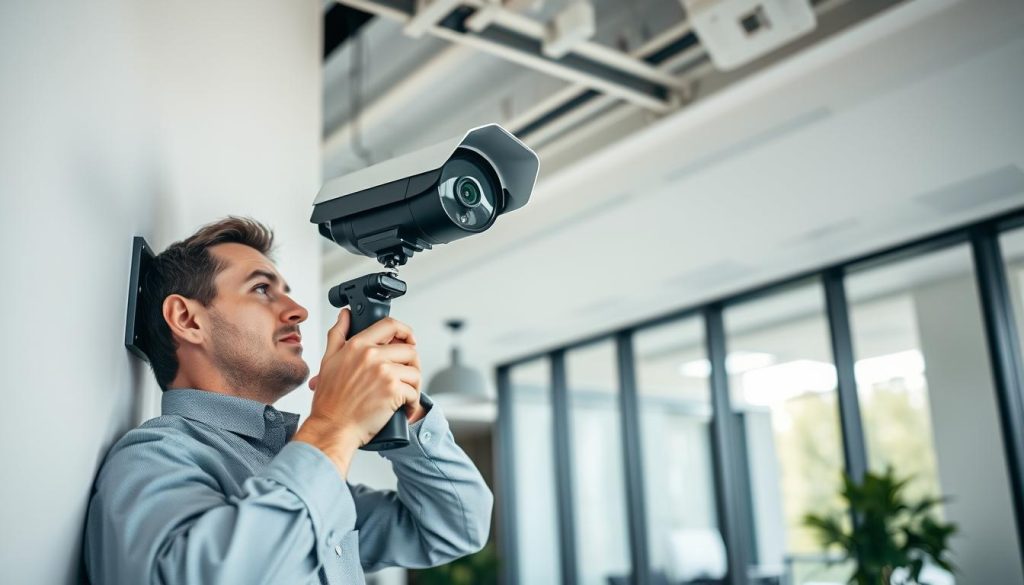
What about a homeowner setting up a single device on their own property? While prosecution for personal DIY use is rare, the act strongly discourages unlicensed installing cctv. The practical guidance leans toward hiring a professional.
Licensed installers bring significant advantages. They ensure your cctv system is set up correctly. This includes optimal positioning for coverage and privacy, along with safe, reliable wiring.
These experts are knowledgeable about current rules. They can help position cameras to comply with PDPA “reasonable purposes” and avoid neighbor disputes. This is crucial for both homeowners and businesses.
For commercial cctv installations or complex residential setups, professional help is virtually mandatory. It ensures system reliability, full legal compliance, and often validates product warranties.
Using a licensed professional provides peace of mind. It drastically reduces the risk of technical failures or legal oversights that could lead to penalties.
Many reputable security firms in Singapore hold the necessary licences. They can provide certificates of compliance upon completion of the cctv installation.
The choice is not merely DIY versus professional. It is between assuming all legal and technical risk yourself versus leveraging expert assurance.
Always verify a contractor’s Security Service Provider licence before engaging their services. This simple check protects your investment and your security.
Ensuring Your CCTV System is Secure and Compliant
A truly effective security setup extends beyond physical placement. It must encompass digital safety and ongoing legal adherence.
Implement strong, unique passwords for all devices. Enable encryption for data transmission, especially for wireless cameras. Apply regular firmware updates to patch vulnerabilities. Cybersecurity experts warn that poorly secured systems risk hacking, leading to data theft or privacy invasion.
Use secure storage solutions like encrypted Network Video Recorders. Utilize privacy masking features to digitally block out neighbors’ windows or public areas. This minimizes unnecessary recording and supports personal data protection obligations.
Display clear signage for transparency. Establish a routine to review and delete old footage according to a retention policy. Periodic reviews ensure the system’s purpose remains compliant. A proactively managed surveillance setup delivers true peace of mind without legal or privacy drawbacks.