
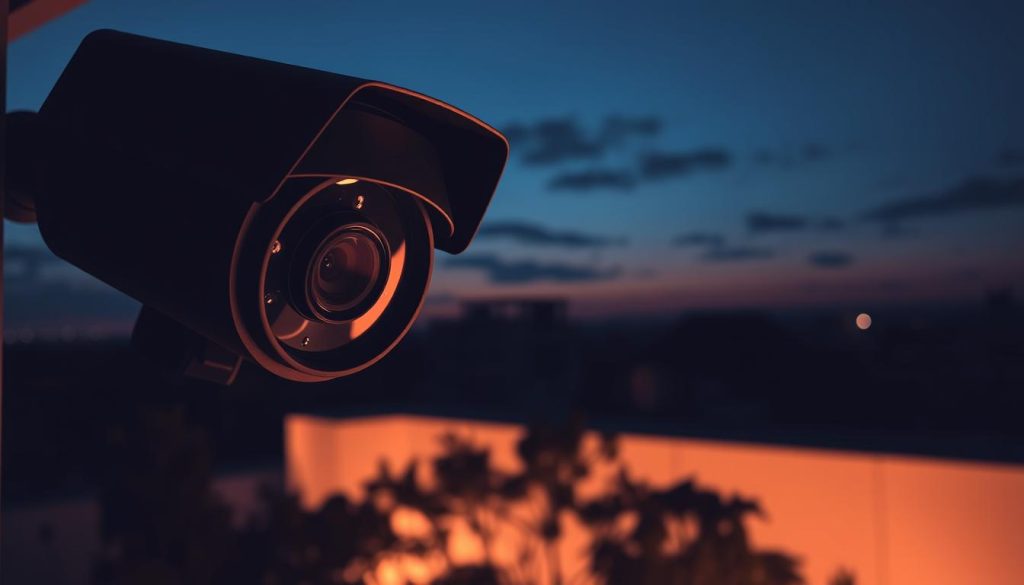
Singapore’s vibrant urban environment requires constant protection. Businesses here face burglary risks four times higher than residential properties. This makes reliable nighttime monitoring absolutely essential.
Modern surveillance systems don’t stop when the sun goes down. They use specialized technology to maintain watch around the clock. These devices capture detailed footage even in challenging conditions.
Advanced features like infrared illumination and thermal imaging allow clear viewing in complete darkness. Tropical weather and dense cityscapes create unique obstacles for security. High-quality recording is crucial for obtaining usable evidence.
This guide explores the technologies that make 24/7 monitoring possible. We’ll examine how different systems adapt to low-light environments. You’ll learn what ensures optimal performance when visibility drops.
Key Takeaways
- Modern security systems provide continuous monitoring through advanced night vision technology.
- Infrared illumination and thermal imaging enable clear footage in total darkness.
- Business properties in Singapore face significantly higher nighttime security risks.
- Tropical climate and urban density require specialized surveillance solutions.
- Proper maintenance and placement are critical for consistent nighttime performance.
- High-resolution recording is essential for capturing detailed evidence after dark.
- Different technologies suit various environmental conditions and security needs.
Does CCTV Camera Work in Dark? The Definitive Answer
The transition from day to night presents the ultimate test for any monitoring setup. The definitive answer is a resounding yes. Modern security systems are engineered to deliver clear images when natural light fails.
This capability is not magic. It’s the result of specialized night vision technology. These systems actively overcome total darkness to provide continuous surveillance.
Overcoming Darkness with Specialized Technology
Standard devices capture light we can see. When that light disappears, they fail. Specialized security cameras use a different approach.
They employ infrared (IR) illumination. This technology emits a spectrum of light invisible to our eyes. The camera’s sensors, however, detect it perfectly.
This allows the system to capture clear footage in zero-light conditions. High-sensitivity sensors are crucial here. They work with the IR lights to create a usable video feed.
In Singapore’s dense urban landscape, this is vital. Identifying a face or a license plate after sunset depends on it. Without these features, footage becomes grainy or completely black.
For those seeking reliable nighttime monitoring, understanding this core technology is the first step.
Key Factors That Determine Nighttime Efficacy
Not all night vision is created equal. Performance after dark depends on several interconnected factors. Choosing the right combination is key for your security.
- Infrared Range: This dictates how far the camera can see in the dark. Standard IR LEDs offer about 25 meters. Enhanced systems like EXIR can push beyond 50 meters, ideal for large car parks or perimeter walls.
- Sensor Sensitivity: Measured in lux, a lower number is better. It determines how little ambient light the sensor needs. High-quality sensors perform well in extremely low light conditions.
- Lens Quality & Aperture: The lens gathers available light. A wider aperture (lower f-number) allows more light to hit the sensor. This is critical for capturing detail, like facial features, at night.
- Environmental Hardiness: Singapore’s humidity can cause voltage drops. This weakens IR LED output. Look for systems designed to handle tropical climate challenges for consistent performance.
- Physical Design: The housing affects performance. Dome covers can sometimes reflect IR beams back at the lens. Bullet-style designs often provide better, more even light distribution for nighttime surveillance.
Understanding these factors helps professionals configure systems that perform reliably from dusk until dawn. The right technology makes darkness a manageable element, not a barrier.
Understanding the Core of Night Vision Technology
The ability to see after sunset defines modern security. It relies on a fascinating interplay of light, sensors, and processing. This section breaks down the essential components that make this possible.
We will explore the invisible light that powers most systems. We will also compare the sensor technologies that capture it. Finally, we will see how raw data becomes a usable video feed.
The Role of Infrared (IR) Illumination
Infrared illumination is the hidden engine of nighttime surveillance. It provides the light source when natural light disappears.
Special LEDs emit light at wavelengths between 850 and 940 nanometers. This spectrum is completely invisible to the human eye. However, security cameras detect it perfectly.
These IR LEDs activate automatically as daylight fades. They cast an even beam over the surveillance area. This creates the necessary illumination for the camera’s sensor to capture details.
In Singapore’s urban canyons, this consistent light source is critical. It ensures faces and objects remain identifiable throughout the night.
Sensor Showdown: CMOS vs. CCD for Low Light
The sensor is the eye of the camera. Its job is to convert incoming light into an electronic signal. For night vision, two main types have competed: CCD and CMOS.
CMOS sensors are now the dominant choice for modern systems. They offer significant advantages for 24/7 monitoring.
- Power Efficiency: CMOS chips consume roughly 30% less power than traditional CCD sensors. This reduces operational costs and heat generation.
- Heat Management: Superior heat dissipation minimizes electronic noise. This is vital for getting clear images in Singapore’s warm, humid climate.
- Low-Light Performance: Advanced CMOS designs excel in challenging lighting. They produce cleaner footage with less grain in shadowy areas.
- Integration: CMOS technology allows more processing functions on a single chip. This leads to more compact and feature-rich security cameras.
While CCD sensors were once praised for quality, CMOS advancements have closed the gap. Today, they deliver the reliability needed for professional security monitoring.
From Invisible Light to Visible Images
The magic happens when invisible infrared light becomes a viewable picture. This process is called photon-to-electron conversion.
Photons from the IR LEDs strike the camera’s sensor surface. Each photon carries energy that the sensor material absorbs. This energy knocks electrons loose, creating a tiny electrical charge.
The sensor’s circuitry measures these charges across millions of points. It builds a detailed map of the light intensity in the scene. This raw data is then processed into the monochrome video we see on monitors.
Lux ratings quantify this sensitivity. A lower lux number means better performance in near-total darkness. For example, a rating of 0.01 lux indicates the sensor needs very little light to form an image.
This entire chain—from IR beam to electronic signal—happens instantly. It provides seamless, real-time surveillance from day to night.
Types of Night Vision Cameras and How They Compare
Modern security systems offer multiple approaches to overcoming darkness, each with distinct advantages. Understanding these options helps professionals select the right tools for specific environments.
Different technologies excel in various scenarios. Some provide detailed identification, while others offer long-range detection capabilities.
Infrared (IR) Night Vision: The Common Standard
Infrared night vision represents the most widespread solution for after-hours monitoring. These units use arrays of IR LEDs to illuminate dark areas.
The LEDs emit light invisible to human eyes. Security cameras detect this illumination to produce monochrome footage.
Typical effective range extends to about 50 meters. This makes infrared systems suitable for most commercial and residential applications.
Cost represents a significant advantage here. Infrared vision cameras typically cost about 80% less than thermal imaging alternatives.
For detailed identification within moderate distances, infrared remains the practical choice. It balances performance with affordability for routine surveillance needs.
Thermal Imaging Cameras: Seeing Heat
Thermal imaging operates on a fundamentally different principle. Instead of visible or infrared light, these cameras detect heat signatures.
Every object emits thermal radiation. Thermal imaging units translate these temperature differences into visible images.
This technology excels in absolute darkness. It also penetrates obscurants like smoke, fog, or light foliage.
Detection range can reach an impressive 300 meters. This makes thermal systems ideal for perimeter security at ports or coastal monitoring.
The trade-off comes in cost and image detail. While excellent for detection, thermal images lack the fine details needed for facial recognition at distance.
Color Night Vision and Starlight Technology
Color night vision represents a significant advancement in low-light monitoring. Starlight sensors enable full-color images in extremely challenging conditions.
These systems can capture clear footage at just 0.005 lux. This illumination level is darker than moonlight.
Such performance requires specialized hardware. Starlight technology cameras need larger sensors, typically 1/1.8″ or bigger.
The larger surface area gathers more available light. This allows for color reproduction when other systems switch to black-and-white.
For evidentiary quality footage, color night vision proves invaluable. Identifying clothing colors or vehicle details becomes possible even at night.
Breaking Down EXIR and Other Enhanced Systems
Extended Infrared (EXIR) systems address common limitations of traditional infrared. Their design improves illumination quality across the entire surveillance area.
EXIR features a radial LED arrangement. This configuration reduces center hotspotting by 40% compared to standard matrix arrays.
The result is more uniform lighting without overexposed zones. Details remain visible from the center to the edges of the frame.
Singapore’s regulatory environment mandates specific features for public installations. PSB compliance requires IP66 weatherproof ratings for monsoon season durability.
Electrical surge protection (EN 50130-4) is also essential. Minimum 30fps recording ensures reliable license plate recognition for traffic monitoring.
Multi-sensor systems now combine different technologies. Hybrid solutions merge thermal detection with infrared detail capture.
This approach meets diverse security needs across Singapore’s varied urban and industrial environments. Professionals can select the optimal combination for comprehensive 24/7 coverage.
Infrared LEDs: The Engine of Night Surveillance
At the heart of every reliable night vision system lies a critical component: the infrared LED. These tiny light sources provide the essential illumination when the sun goes down.
They emit a spectrum of light our eyes cannot see. This allows security cameras to capture detailed footage without alerting anyone to their presence.
Understanding their technology is key to selecting a system that performs consistently after dark.
How IR LEDs Create Light We Can’t See
Infrared LEDs operate at specific wavelengths, measured in nanometers (nm). The two most common are 850nm and 940nm.
850nm LEDs produce a very faint red glow that can sometimes be seen. They offer about 20% brighter performance, which is excellent for general area monitoring.
940nm variants are completely covert. They leave no visible trace, making them ideal for sensitive areas like bank vaults or research facilities.
“The choice between 850nm and 940nm is a trade-off between raw illumination power and operational stealth.”
The physical arrangement of these LEDs is just as important. A circular array distributes light evenly, perfect for open spaces like parking lots.
Linear configurations focus intensity into a beam. This design is optimal for long corridors or perimeter fences.
For complex zones like Changi’s cargo areas, multi-tiered systems combine both wide and narrow beams. This provides comprehensive coverage.
Identifying Quality and Effective Range
Not all infrared illumination is created equal. Quality depends on construction, materials, and thermal management.
Premium brands like Luminus integrate copper heat sinks into their designs. This reduces LED failure rates by up to 35% in tropical climates like Singapore’s.
High-end LEDs can last for 50,000 hours of operation. Effective heat dissipation is what makes this longevity possible.
Durability is certified by standards like IEC 60529. An IP66-rated enclosure ensures the array survives monsoon rains and high humidity.
Calculating effective range involves lumen output. A 50-meter surveillance range typically needs about 10 lumens per square meter of illuminated area.
To maintain peak performance, a regular maintenance schedule is vital:
- Quarterly Output Tests: Use a lux meter to check IR intensity hasn’t degraded.
- Lens Cleaning: Prevent dirt from causing reflections or haze that can lead to blurry nighttime footage.
- Voltage Checks: Humid conditions can cause drops that weaken LED output.
Modern Video Management Software (VMS) adds a smart layer. It can automatically adjust IR intensity based on ambient light levels.
This optimization protects the LEDs and extends their lifespan. It also ensures the clearest possible image in all conditions.
Choosing the right infrared engine guarantees your surveillance system doesn’t just see in the dark—it sees clearly.
Boosting Performance with External Lighting Solutions
A truly robust surveillance strategy doesn’t end with the camera itself. It extends to the environment it monitors. Intelligent use of external lighting can dramatically improve your system’s nighttime effectiveness.
Ambient light is a powerful ally for night vision cameras. It provides the illumination needed for sharper images and better color reproduction. This approach reduces strain on internal components.
Strategically Using Ambient Light
Positioning is everything. Placing your security units near existing light sources is a smart first step. The goal is to leverage illumination without introducing problems.
Light between 3000K and 4000K in color temperature is ideal. This range minimizes harsh glare while preserving critical details in the footage. It creates a balanced scene for the camera sensors.
For reliable color imaging, aim for at least 0.5 lux of ambient light. Smart IR-cut filters in modern units handle the transition. They automatically switch between color and monochrome modes based on available light.
This automation optimizes image quality throughout the evening. It ensures the system always uses the best possible setting.
Integrating Supplementary Lighting Systems
When existing light isn’t enough, adding dedicated fixtures is the answer. Modern supplementary systems integrate directly with your security network.
PoE-powered LED arrays are a popular choice. They can synchronize with cameras using standard ONVIF protocols. This creates dynamic lighting conditions that activate with motion detection.
Floodlights must be positioned with care. They should illuminate key zones without causing overexposure. Proper alignment with the camera’s field of view ensures uniform coverage and avoids washed-out details.
In Singapore, compliance is key. The National Environment Agency (NEA) sets standards for light pollution. For HDB corridor installations, staggered LED placement prevents dark spots while meeting these regulations.
Such integrated systems can boost overall visibility by up to 40%. They extend the effective range and clarity of your night vision setup. Regular maintenance of both lighting and camera components guarantees consistent performance.
This proactive approach turns environmental challenge into a strategic advantage. It delivers superior monitoring results after dark.
Thermal Imaging: The Advanced Alternative for Absolute Darkness
Security professionals turn to thermal imaging when they need to see through absolute darkness, smoke, or light foliage. This technology operates on a different principle than standard night vision cameras. It detects heat signatures, not reflected light.
This makes it invaluable for critical applications where other systems fail. In Singapore’s diverse landscape, from busy ports to dense coastal areas, it provides a reliable layer of security.
Principles of Heat Signature Detection
Thermal imaging is governed by Planck’s Law of radiation. Every object with a temperature above absolute zero emits infrared energy. The cameras detect this emitted heat.
They use microbolometer sensors to measure tiny temperature differences. Modern units can sense variations as slight as 0.05°C. This sensitivity allows them to visualize a human form at ranges up to 300 meters.
The result is a detailed heat map, not a traditional visual image. Warmer areas appear brighter, while cooler zones are darker. This data is processed into a clear picture for monitoring.
“Thermal technology transforms the security paradigm. It doesn’t require any ambient light, making it the only true 24/7 visual surveillance solution for total darkness.”
Key advantages of this method include:
- All-Weather Operation: It performs consistently in rain, fog, smoke, and dust.
- Penetration Capability: It can see through light obstructions like bushes or steam.
- Effective Detection: It excels at identifying living beings and moving vehicles, even when camouflaged.
Practical Security Applications in Singapore
Singapore’s specific security needs make thermal imaging a strategic choice. Its ability to function in complete darkness and challenging conditions is highly valued.
The Singapore Coast Guard uses these systems across coastal watch stations. Advanced analytics integrated with the technology have reduced false alarms by 62%. This improves response times and resource allocation.
For industrial security, the Singapore Civil Defence Force (SCDF) sets clear standards. Facilities often require cameras with a minimum 9Hz refresh rate. This ensures smooth tracking of fast-moving targets.
Common applications across the island include:
- Port and Coastal Monitoring: Securing waterways and detecting unauthorized vessel approaches.
- Critical Infrastructure Protection: Guarding power substations and water treatment plants.
- Perimeter Security for Industrial Estates: Providing reliable intrusion detection in Jurong and Tuas.
- High-Security Facility Surveillance: Where covert, light-free monitoring is essential.
While the initial investment is higher than infrared, the long-term value is clear. Lower maintenance needs and specialized performance justify the cost for these critical roles. Regular calibration is vital in the humid climate to maintain image accuracy.
For the most comprehensive coverage, fusion systems are emerging. They combine thermal detection with the detailed images from a visual camera. This hybrid approach leverages the strengths of both technologies.
Best Practices for Installing Night Vision CCTV in Singapore
Strategic placement decisions can make the difference between capturing usable evidence and recording useless footage at night. Proper installation methodology transforms advanced technology into practical, reliable security. In Singapore’s dense urban environment, specific guidelines ensure optimal performance after sunset.
Following these protocols maximizes your investment in surveillance equipment. They address unique local challenges from tropical weather to regulatory requirements. The result is consistent, high-quality monitoring when visibility is lowest.
Strategic Placement for Maximum Coverage
Height and angle form the foundation of effective installation. Mounting units at approximately 2.4 meters creates the ideal vantage point. This elevation provides tamper resistance while maintaining facial recognition capability.
A downward tilt between 15 and 30 degrees prevents sky glare. It also covers natural movement paths effectively. This positioning ensures the field of view captures critical entry points and activity zones.
For HDB corridor installations, opposite stairwell placement offers full-length views. Using 2.8mm lenses provides approximately 90° coverage in tight spaces. Position units every 15 meters with 70% overlap for comprehensive monitoring.
Zone coverage fundamentals involve creating overlapping fields of view. This approach eliminates blind spots while using resources efficiently. Orchard Road’s retail security deployments demonstrate these principles effectively.
They combine wide-angle lenses for pedestrian flow analysis with pan-tilt-zoom units for incident verification. Regular alignment checks during both day and night conditions maintain ongoing effectiveness.
Overcoming Environmental and Urban Obstructions
Singapore’s tropical climate presents unique installation challenges. High humidity and frequent rainfall affect equipment performance. Spider webs on dome housings are a common cause of blurred surveillance footage.
Ultrasonic repellents offer an effective solution to this persistent problem. They deter insects without affecting camera operation. This simple addition preserves image quality throughout the night.
Glass facade installations require specialized approaches. Anti-reflective coatings applied at 45° angles significantly reduce glare. Hybrid IR/visible light cameras further minimize reflections that compromise night vision quality.
Maintain at least 1.5 meters clearance from surrounding foliage. This prevents obstruction and reduces false alarms triggered by moving vegetation. Windy conditions can otherwise create unnecessary security alerts.
The Urban Redevelopment Authority (URA) mandates specific placement requirements for public areas. These regulations ensure coverage of all entry points and emergency exits. Compliance is essential for commercial and residential installations.
Height, Angle, and Zone Coverage Fundamentals
Three core principles govern successful night vision installation. Each addresses different aspects of surveillance effectiveness. Together, they create a robust monitoring network.
Optimal Height Protocol: The 2.4-meter standard balances multiple security needs. It places equipment beyond easy reach while keeping subjects within detailed view. This height supports both deterrence and identification functions.
Precision Angling: The 15-30° downward tilt serves multiple purposes. It avoids overexposure from ambient urban lighting. It also focuses on ground-level activity where security incidents typically occur.
Strategic Zoning: Divide your property into logical monitoring areas. Assign appropriate lens types and placements to each zone. Consider these factors for each area:
- Traffic Flow Patterns: Position units to capture natural movement directions
- Lighting Conditions: Account for existing ambient light sources and shadows
- Priority Monitoring Zones: Focus resources on high-value or high-risk areas
- Environmental Factors: Adjust for weather exposure and potential obstructions
Regular verification ensures these fundamentals remain effective over time. Schedule quarterly checks of alignment and performance. Test during both daylight and complete darkness to confirm consistent operation.
Proper installation transforms technical specifications into real-world security benefits. These practices ensure your system delivers clear images when they matter most. They adapt advanced vision technology to Singapore’s specific urban landscape.
Maintaining Your System for Consistent Night Performance
Consistent nighttime surveillance requires more than just advanced equipment; it demands disciplined maintenance routines. Singapore’s humid climate accelerates wear on security components. Proactive care ensures your night vision setup delivers reliable performance when visibility drops.
Regular upkeep prevents common failures that compromise after-hours security. A structured program addresses environmental challenges unique to tropical regions. This approach extends equipment lifespan while maintaining image quality.
Essential Cleaning and Inspection Routines
Dust and moisture degrade image quality faster in humid environments. Accumulation on lenses creates haze that obscures critical details. This problem intensifies during night operations when light is scarce.
Jurong Industrial Estate documented impressive results after implementing rigorous maintenance. Their program reduced false alarms by 38%. This improvement came from three core practices.
First, bi-monthly lens cleaning with 70% isopropyl alcohol solutions prevents buildup. This maintains optical clarity for clear images. Second, quarterly housing gasket replacements preserve weatherproofing integrity.
These seals protect electronics during monsoon seasons. Third, annual sensor calibration using NIST-traceable light meters ensures accuracy. This maintains proper light sensitivity across varying conditions.
For thermal imaging units, additional checks are necessary. Verify microbolometer sensors maintain their temperature sensitivity. Clean housing vents to prevent heat buildup that affects calibration.
The Critical Role of Firmware Updates
Outdated software causes 27% of nighttime system failures. These issues often manifest as connectivity drops or processing errors. Regular updates address security vulnerabilities and performance bugs.
Validation processes ensure updates enhance rather than disrupt operations. Enterprise security teams in Singapore follow specific protocols. They review manufacturer vulnerability bulletins monthly for critical patches.
On-site testing during daylight hours verifies compatibility. CRC checksum verification confirms file integrity before deployment. This prevents corrupted installations that could disable surveillance after sunset.
Automated firmware management through centralized VMS platforms ensures compliance with Cyber Security Agency standards. This approach maintains system security while minimizing operational disruption.
For hybrid systems combining multiple vision technologies, coordinated updates are crucial. Ensure all components receive compatible software versions. This preserves integration between different cameras and imaging modules.
Preventative Maintenance Checklist
A comprehensive checklist organizes essential maintenance tasks. This systematic approach prevents oversights that compromise night vision capabilities. Follow this schedule for optimal reliability.
- Storage Media: Replace SD cards every 18 months (approximately 3,000 write cycles). This prevents data loss during critical events.
- IR Illuminators: Test monthly with lux meters. Verify consistent output levels for reliable low light operation.
- Component Documentation: Record warranty validation dates for all parts. This facilitates timely repairs before failures occur.
- Power Systems: Check voltage stability quarterly. Humid conditions can cause drops that weaken LEDs.
- Environmental Sensors: Calibrate light and temperature sensors annually. This ensures accurate automatic mode switching.
Certified providers like Certis CISCO offer tailored maintenance packages. Their service contracts cover thermal cameras and hybrid systems. Emergency response within 2 hours is available for critical installations.
Implementing these routines delivers measurable benefits. Jurong Industrial Estate’s experience demonstrates the value. Their comprehensive program extended overall system lifespan while improving reliability.
Regular maintenance transforms advanced technology into dependable security. It ensures your investment continues protecting areas throughout every night. This proactive approach is the foundation of consistent nighttime monitoring.
Choosing the Right Night Vision CCTV System
The effectiveness of after-hours protection hinges on aligning system specifications with property characteristics. Selecting surveillance equipment requires matching technical capabilities with specific environmental demands.
Different properties have unique security profiles. Residential spaces need discreet monitoring. Commercial installations demand comprehensive coverage.
Understanding these distinctions ensures optimal investment. It also guarantees reliable performance when visibility drops.
Residential vs. Commercial Requirements
Singapore’s housing landscape dictates specific equipment choices. HDB regulations limit ceiling-mounted devices to 2.4 meters height. This favors compact dome cameras with minimal visual impact.
Landed properties present different challenges. They often require weatherproof bullet models. Extended infrared range becomes essential for covering larger outdoor areas.
Commercial installations demand higher specifications. They need 4K resolution for detailed evidence capture. Analytics integration enables proactive monitoring of business premises.
Scalable storage solutions support extended retention periods. This is crucial for investigations and compliance audits.
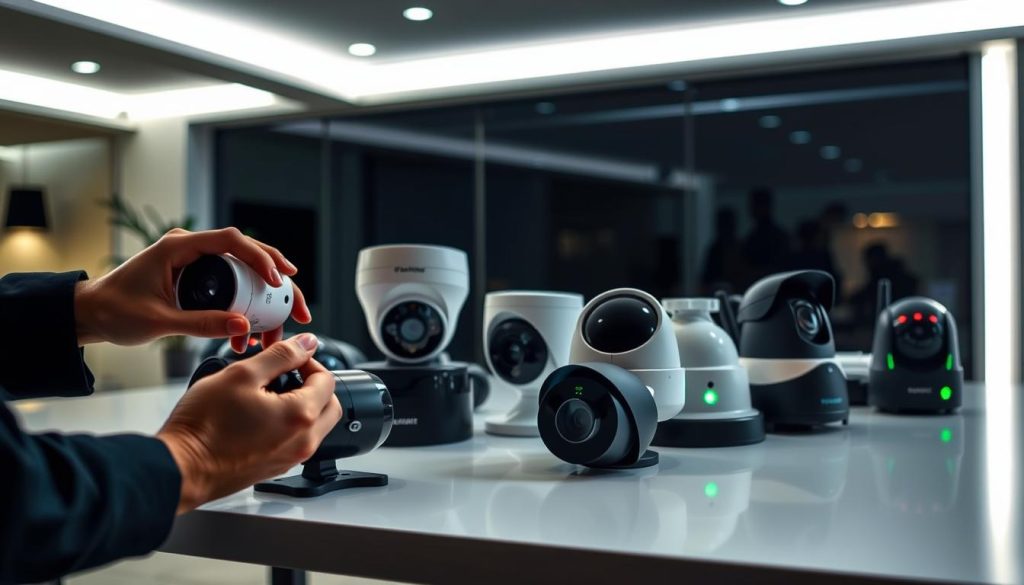
System compatibility matters for long-term security investments. Future expansion capabilities should influence your selection process.
Key Specifications to Evaluate: Lux, IP Rating, and Storage
Technical specifications determine real-world performance. Three metrics are particularly critical for Singapore’s environment.
Lux rating measures light sensitivity. A rating below 0.01 lux ensures performance during heavy rain. This is essential for reliable day-to-night transition.
Ingress protection shields equipment from environmental factors. IP67 minimum rating provides monsoon resistance. It prevents water damage during Singapore’s frequent downpours.
Storage capacity must accommodate high-resolution recording. 4K systems need approximately 2TB monthly per camera. This supports evidentiary quality footage retention.
Consider these additional factors during evaluation:
- Infrared range: 50-meter capability suits most landed properties
- Sensor type: Advanced CMOS performs better in low light conditions
- Frame rate: Minimum 30fps ensures smooth video playback
- Compression technology: H.265 reduces storage requirements by 50%
Professional assessment helps match specifications to actual needs. This prevents over-investment in unnecessary features.
Singapore-Specific Considerations and Compliance
Local regulations and climate conditions shape security system selection. Singapore’s Smart Nation initiatives influence modern deployments.
Approved vendors under GovTech’s framework offer specialized solutions. These include 5G-ready edge computing for real-time analytics. Integration with municipal emergency systems enhances response capabilities.
Solar-powered options support green building initiatives. They provide sustainable security for eco-conscious developments.
Mandatory certifications ensure system reliability. PSB SS 584 compliance is required for public spaces. IMDA certification validates communication capabilities.
Tengah Eco Town’s pilot project demonstrated hybrid thermal/IR systems reduce false alarms by 42% in high-humidity conditions.
Return on investment analysis guides budget planning. Commercial-grade systems typically achieve payback within 32 months. Residential setups break even in approximately 54 months.
Professional installation by CSA-certified contractors ensures compliance. It also optimizes system performance for both day and night surveillance.
Regular maintenance preserves equipment functionality. It extends lifespan in Singapore’s tropical climate.
Troubleshooting Common Night Vision Problems
Technical glitches can compromise security monitoring precisely when reliable coverage is most critical. Even robust surveillance setups may encounter issues after sunset. A systematic approach to diagnosis and repair ensures continuous protection.
Singapore’s tropical climate introduces unique challenges for electronic components. Humidity accelerates corrosion while temperature fluctuations affect performance. Understanding these environmental factors is key to effective troubleshooting.
Addressing Hazy Footage and White-Out Screens
Condensation inside dome housings creates foggy video that obscures important details. This common problem reduces the effectiveness of your surveillance system. Infrared reflection off standard glass compounds the issue.
Sentosa Cove’s marina installation provides a proven solution model. They applied anti-fog silica gel packs inside each housing unit. This simple measure absorbs moisture before it clouds the lens.
Replacing standard glass with AR-coated optics further improves image quality. Anti-reflective coatings minimize internal light bounce. This prevents the white-out effect that washes out critical visual information.
Smart IR intensity calibration offers another effective adjustment. Setting output to approximately 70% of maximum prevents overexposure. This maintains adequate illumination without creating harsh hotspots.
Regular maintenance checks should include housing inspection. Look for seal integrity and proper ventilation. These preventative measures stop problems before they affect nighttime monitoring.
Solving Power and Voltage Drop Issues
Singapore’s humid weather accelerates corrosion in 12V DC power lines. This can cause voltage loss up to 10% in longer installations. Such drops severely compromise infrared illuminator performance.
Cable runs exceeding 50 meters require special consideration. Calculate potential drop using Ohm’s Law: (Current × Resistance) ÷ 1000. This formula helps predict performance issues before they occur.
Proper wire gauge selection prevents excessive voltage reduction. Use 18AWG minimum for runs beyond 75Ω impedance limits. Thicker conductors maintain stable power delivery to all components.
IP68-rated waterproof connectors installed every 30 meters combat corrosion. These specialized fittings protect connections from moisture intrusion. They maintain consistent power flow in challenging tropical conditions.
Regular multimeter testing verifies system health. Check for minimum 11.5V DC output at each unit. Voltage below this threshold indicates problems requiring immediate attention.
Quarterly inspection of all electrical connections prevents gradual degradation. Look for oxidation on terminals and connectors. Clean contacts ensure optimal power transmission throughout the night.
Dealing with No-Signal Events at Night
When surveillance feeds disappear after dark, follow a logical diagnostic sequence. Begin with power supply verification using a multimeter. Confirm adequate voltage reaches each monitoring point.
Next, test infrared activation with an 850nm light meter. This specialized tool measures invisible illumination output. Proper readings confirm night vision features are functioning.
Check BNC and Ethernet connections for oxidation damage. Humid conditions accelerate corrosion at these critical junctions. Regular cleaning maintains signal integrity for reliable operation.
Network Video Recorder compatibility issues frequently cause nighttime failures. Updating to ONVIF Profile S firmware ensures seamless integration. This standardized protocol bridges different manufacturers’ equipment.
Sentosa Cove’s implementation demonstrates comprehensive troubleshooting. Their approach combines environmental protection with technical calibration. This dual strategy delivers consistent performance in challenging conditions.
Establish a maintenance schedule that addresses these common failure points. Document all tests and adjustments for future reference. This proactive approach minimizes unexpected downtime during critical hours.
Securing Your Premises Around the Clock
The ultimate goal of any surveillance investment is consistent protection that never sleeps. Professional installation by CSA-certified contractors maximizes this investment. They follow strict protocols for optimal system deployment.
Residential projects typically require 4-8 hours. Commercial installations may take 2-3 days, depending on complexity. A Marina Bay financial institution achieved 99.8% uptime with professional setup.
Annual health checks maintain this reliability in Singapore’s challenging climate. This approach delivers true peace of mind through every hour of darkness.