
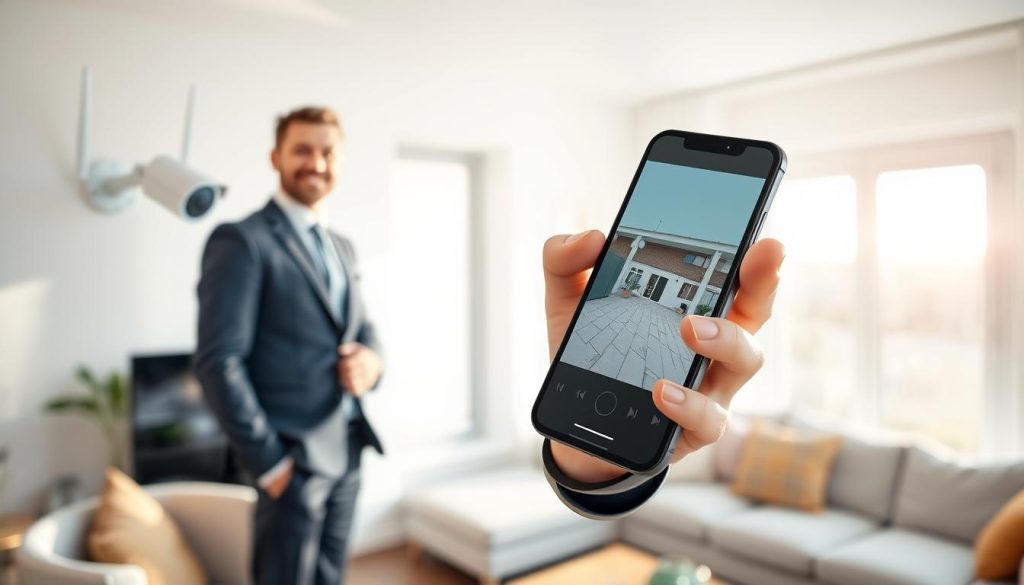
Keeping your property secure has entered a new era. Modern CCTV cameras offer the powerful ability to connect directly to your smartphone. This technology provides a transformative security solution for homes and businesses across Singapore.
You gain unparalleled convenience and peace of mind. Imagine checking on your home or office from anywhere, at any time. This level of control turns your phone into a personal security command center.
The demand for this feature is skyrocketing. Recent data shows over 65% of homeowners in Asia now prefer security systems with mobile connectivity. This trend highlights a major shift towards smarter, more accessible protection.
This comprehensive guide is designed to answer a common question: “How can I watch my CCTV on my phone?” We will walk you through everything you need to know for seamless remote access.
Our article covers the essential technology, key benefits, simple setup steps, basic troubleshooting, and future trends. It is a practical resource built for users in Singapore.
You will find clear, step-by-step instructions. Our goal is to help you achieve reliable and instant monitoring of your property from your mobile device.
Key Takeaways
- Remote CCTV access turns your smartphone into a powerful security monitoring tool.
- It offers significant convenience and provides peace of mind for property owners.
- A majority of homeowners in Asia now prefer security systems with mobile connectivity.
- Setting up remote viewing involves understanding your system’s technology and network.
- This guide provides a practical, step-by-step approach tailored for users in Singapore.
- Reliable remote access allows you to monitor your property from anywhere at any time.
- The future of security is increasingly mobile and integrated with personal devices.
Why Remote CCTV Access is Essential for Modern Security
Gone are the days when surveillance systems were confined to a single monitor in a back room. Modern security demands immediate awareness and control, no matter your location. This shift from localized monitoring to remote-capable systems is fundamental.
Older CCTV setups merely recorded events for later review. Today’s technology transforms passive recording into an active security tool. Remote access turns your smartphone into a live command center.
Mobile connectivity allows users to monitor and control their security systems in real-time. This enables a quick response to potential threats. You gain real-time situational awareness whether you’re at work, traveling, or in another room.
Immediate alerts are a game-changer. Notifications sent directly to your phone allow you to alert authorities or trigger other measures instantly. This capability turns a camera into a proactive guardian for your property.
In Singapore, where property security and smart home adoption are high priorities, this function is critical. Residents value the ability to verify deliveries, monitor domestic helpers, or check on pets remotely. It integrates seamlessly with a connected lifestyle.
Remote viewing is no longer a luxury add-on. It is a standard expectation for any effective CCTV system. The convenience and power it provides are now baseline requirements for homeowners and businesses.
This connectivity also enhances overall home security. It enables the remote control of smart locks, alarms, and lighting systems. A unified mobile app creates a powerful, integrated defense network.
For a comprehensive guide on achieving this, you can learn the detailed setup steps. Understanding the technology behind this access is the next logical step.
Understanding the Technology: From DVRs to Mobile Apps
The backbone of modern remote surveillance lies in a fundamental shift from analog to digital technology. Older systems relied on Digital Video Recorders (DVRs) connected to coaxial cables. Today’s solutions use Internet Protocol (IP) cameras and Network Video Recorders (NVRs).
This evolution is what enables seamless remote access from your mobile device. Understanding the components demystifies the entire process.
Core Components of a CCTV System
Traditional CCTV setups used analog cameras feeding into a DVR. The viewing was confined to a local monitor. Modern IP cameras represent a significant technological leap.
Each IP camera has a built-in network interface. It connects directly to your home network via Wi-Fi or an Ethernet cable. This turns the camera into a smart device on your local network.
Once connected, the camera becomes accessible over the internet. This fundamental connectivity is the first step toward mobile monitoring. The camera processes and transmits video data digitally.
How IP Cameras and Mobile Apps Enable Remote Viewing
The official manufacturer mobile app acts as your remote control and viewing portal. Popular apps, like the VIGI App, are designed for this specific purpose. You download the app to your smartphone from the official store.
This app communicates with your cameras through your network. A key technology called Cloud P2P (Peer-to-Peer) often facilitates the connection. P2P creates a secure tunnel without requiring complex router configuration.
Video streaming protocols then transmit live footage to your phone with minimal delay. This allows for real-time monitoring from anywhere. The process is secure and designed for ease of use.
Through the mobile interface, users can access multiple powerful features. These include live view, playback of recorded footage, two-way audio, and alert management. You receive instant notifications directly to your device.
This integration effectively turns your smartphone into a portable, personal security monitor. The technology works seamlessly to provide reliable remote access and peace of mind.
Key Benefits of Connecting Your CCTV to Your Smartphone
Linking your surveillance cameras to your smartphone unlocks a suite of powerful advantages that extend far beyond simple video viewing. This integration transforms passive observation into active, intelligent property management. The convenience and power delivered directly to your hand redefine modern security.
Real-Time Monitoring and Instant Alerts
Immediate awareness is the cornerstone of effective protection. With your cameras connected, live video streams directly to your mobile app. You see events as they happen, not after the fact.
Instant push notifications alert you to detected motion or other triggers. This allows for swift verification and response. Whether it’s a delivery person at the door or unexpected movement, you’re informed in seconds.
This real-time capability turns your security system into a proactive sentry. You gain peace of mind knowing you won’t miss critical events. The delay between incident and awareness is eliminated.
Remote Accessibility from Anywhere
Geographical constraints vanish with mobile access. Your property’s security feed is available whether you’re at the office, traveling, or simply in another room. All you need is an internet connection on your devices.
This universal accessibility is particularly valuable in Singapore’s fast-paced environment. Busy professionals can check on their homes during the day. Parents can verify children have returned safely from school.
The app serves as a constant window to your property. It ensures you’re never disconnected from what matters most. True security means having eyes on your property, regardless of your physical location.
Enhanced Control and Evidence Management
The mobile interface grants comprehensive administrative power over your entire security setup. It moves far beyond passive viewing into active control.
Directly from your phone, you can adjust camera settings like image quality and night vision modes. Pan-tilt-zoom (PTZ) functions let you scan areas remotely. You can also set custom recording schedules based on your routine.
Managing recorded footage becomes remarkably efficient. The app allows quick search and playback by specific time and date. This is crucial for reviewing incidents or verifying events.
Evidence handling is streamlined for practical use. You can easily clip and export video segments or capture screenshots. These files can be shared directly with authorities or insurance providers from your mobile device.
User access management adds another layer of convenience. You can grant limited viewing permissions to family members or staff. This is done without sharing your primary login credentials, maintaining security while enabling collaboration.
Centralized control of storage and data settings simplifies maintenance. You can manage cloud storage or local device capacity, delete old footage, and ensure continuous recording.
This collection of features effectively turns your smartphone into a comprehensive security command center. It provides not just visibility, but complete authority over your property’s protection.
What You Need Before You Start: A Setup Checklist
Avoid setup frustration by ensuring you have everything on this practical checklist ready. Gathering the correct hardware, software, and information beforehand makes the connection process smooth and fast.
This preparation is the foundation for reliable mobile monitoring. It turns a complex task into a simple series of checks.
https://www.youtube.com/watch?v=u3_CeH2FJDs
Use this list to confirm you have all essential items. Having them at hand prevents interruptions and ensures a successful setup.
- Compatible CCTV Hardware: You need a modern security camera system. This means IP cameras or a DVR/NVR that supports mobile app connectivity. Check your device manual or manufacturer’s website to make sure.
- A Smartphone: Your primary viewing device must be an Android or iOS phone or tablet. Ensure it has a stable internet connection, either via Wi-Fi or mobile data.
- The Official Mobile App: Download the manufacturer’s dedicated app from the Google Play Store or Apple App Store. Never use third-party software for security and compatibility reasons.
- A Stable Home Network: Your router must be powered on. Your cameras and phone need to connect to the same Wi-Fi network during initial setup. A strong, active internet connection is non-negotiable.
- System Login Credentials: Locate the default username and password for your CCTV system. Also find the camera’s serial number or default IP address. This data is usually on a label on the camera or in the user manual.
- Updated Software: Check that your smartphone’s operating system is up to date. An updated OS guarantees optimal app performance and security.
- Physical Access: Keep your security cameras and router within reach. You may need to restart them during the configuration process to establish a solid connection.
With these items checked off, you are fully prepared. The actual process of linking your camera to your phone becomes straightforward. This checklist eliminates guesswork and sets the stage for instant, secure remote access.
Choosing the Right CCTV System for Mobile Access in Singapore
Your choice of surveillance hardware directly determines the quality and reliability of your mobile monitoring experience. Not all systems are created equal for seamless smartphone integration.
Selecting the right setup involves evaluating your property’s needs, network environment, and desired features. This decision is crucial for achieving consistent remote access.
Wired vs. Wireless Systems: Pros and Cons
Wired security cameras connect via Ethernet cables to a Network Video Recorder (NVR). This setup provides a supremely stable connection and continuous power.
It is ideal for permanent installations where drilling and cable runs are acceptable. The video feed is rarely interrupted by network interference.
Wireless cameras transmit video over your Wi-Fi network. They offer much greater installation flexibility and a cleaner look.
Their performance depends entirely on your router’s signal strength at the camera’s location. A weak Wi-Fi signal can cause lag or disconnections.
For rock-solid reliability, choose wired. For easy, flexible placement, wireless is the answer.
Features to Look For: App Compatibility, Resolution, and Storage
First, verify official app compatibility. The manufacturer must offer a dedicated mobile application for remote access. Avoid systems that rely on generic third-party software.
Video resolution defines clarity. For clear identification, 1080p Full HD is a minimum. 4K resolution provides exceptional detail but requires more internet bandwidth.
Storage dictates how much footage you can review. Options include local NVR hard drives, cloud subscriptions, or microSD cards within the camera itself.
Cloud storage allows access to recordings from anywhere, even if the local recorder is damaged. Local storage keeps your data physically on-site. A hybrid approach is often best.
Considering 4G/Cellular Cameras for Areas with Unstable Wi-Fi
For locations without a reliable Wi-Fi network, 4G LTE security cameras provide a specialized solution. Models like the Arlo Go or Reolink Go operate on cellular networks.
These devices use a SIM card and mobile data plan, just like a smartphone, to transmit live footage. They create their own internet connection.
This makes them perfect for construction sites, rural properties, or temporary installations. They also serve as an excellent backup during Wi-Fi outages.
A key consideration is the ongoing cost of the cellular data plan. You must also verify network coverage from providers like Singtel, StarHub, or M1 at the exact camera location.
4G cameras often include built-in batteries or solar panels for complete off-grid operation. This offers total installation freedom.
Singapore users should always test cellular signal strength at the intended mount point before purchase. Strong connectivity is non-negotiable for clear, real-time surveillance.
Step-by-Step Guide: How Can I Watch My CCTV on My Phone?
A successful connection is just the start. Fine-tuning your settings transforms basic viewing into intelligent monitoring. This guide walks you through the final, crucial steps to get your system running perfectly on your mobile device.
Step 1: Installing the Official CCTV Mobile App
Your journey begins on your smartphone’s app store. Search for the official application provided by your camera manufacturer, such as the VIGI App or Reolink App.
Always download directly from the Google Play Store or Apple App Store. This guarantees you get a secure, updated version. Avoid third-party software to prevent compatibility and security risks.
Once installed, open the app and create a new account or log in. Use a strong, unique password for this account. This is your gateway to remote access.
Step 2: Ensuring Proper Camera and Network Setup
Before adding devices in the app, verify your physical setup. Your camera must be powered on and connected to your home Wi-Fi network.
For wired IP cameras, ensure the Ethernet cable is securely plugged into both the camera and your router. Wireless models should be within strong signal range of your router.
Double-check that your smartphone is connected to the same local Wi-Fi network during this setup phase. This is often required for the initial device discovery and pairing process.
Step 3: Adding Your Camera to the App (QR Code, Manual, P2P)
Inside the app, look for an “Add Device” or “+” button. You will typically have three connection methods.
The QR code scan is the easiest. Simply point your phone’s camera at the QR code on your physical security camera or its packaging. The app will automatically read the code and initiate pairing.
For manual setup, you may need to enter the camera’s unique ID (UID) or IP address. This information is found on the device label or in its manual.
Many modern systems use Cloud P2P technology. In this case, the app automatically discovers cameras on your network. You just need to confirm the addition and enter the camera’s verification password.
Step 4: Configuring Settings for Alerts, Quality, and Recording
With your camera now online in the app, the real customization begins. Navigate to the device settings menu to tailor the system.
First, adjust video settings. Select your preferred streaming quality. Choose HD for crystal-clear detail when on Wi-Fi. Select a lower “Fluency” mode to conserve mobile data when you’re away from home. Also, configure night vision modes for optimal low-light performance.
Next, configure your alerts. Enable push notifications for motion detection. To avoid false alerts from busy streets, use the motion zone feature. Draw a box on the live feed to tell the camera to ignore areas with constant movement. Adjust the sensitivity slider until notifications are reliable but not excessive.
Then, set your recording preferences. Choose between continuous recording or event-based recording to save storage space. You can schedule recording to only happen during specific hours, like when you’re away. This smart management prevents your hard drive or cloud storage from filling up with irrelevant footage.
Make sure to label each camera with a clear name like “Front Door” or “Living Room.” This makes identification instant when you receive an alert or want to check a specific view.
Finally, explore other powerful features your app may offer. Test two-way audio to speak through the camera. See if you can activate a built-in siren remotely. Look for privacy masking options to block the lens from viewing private areas.
Taking time to configure these options tailors your security system to your life. It ensures you get the right information at the right time, directly in the palm of your hand.
Connecting via Different Methods: Wi-Fi, Mobile Data, and Alternatives
The path your video footage takes to reach your mobile screen can vary based on your location and network availability. Modern cameras support several connection pathways.
Each method serves a distinct purpose. Your home Wi-Fi network is the primary hub. Cellular data enables true freedom. Alternative solutions exist for areas with no network at all.
Understanding these options ensures you can access your CCTV reliably, no matter the circumstances.
Standard Connection Using Your Home Wi-Fi Network
This is the most common and recommended setup for residential properties. Your camera connects directly to your local Wi-Fi router.
The mobile app then establishes a secure link through this network. It provides a stable, high-bandwidth connection for live viewing.
Streaming quality is typically excellent because you are using your home internet. There are no additional data charges involved. This method is perfect for daily monitoring while you are at home or nearby.
The main limitation is range. Your security cameras must be within strong signal distance of your router. For larger properties, Wi-Fi extenders may be necessary.
Using Mobile Data for True Remote Access On-the-Go
This method unlocks genuine remote access. It uses your smartphone’s cellular network when you are away from home.
Your camera remains connected to your home Wi-Fi. The mobile app streams the footage over the public internet to your device.
You are not limited by geography. Check on your property from the office, a cafe, or while traveling. All you need is a cellular signal on your phone.
Be mindful of your mobile data allowance. Streaming high-definition video can consume significant bandwidth. Most apps offer a “Fluency” or lower-quality stream to conserve data when on cellular networks.
For locations without any Wi-Fi, specialized 4G cameras use a SIM card. They create their own internet connection.
Non-Wi-Fi Solutions: Direct Cables, SD Cards, and Bluetooth
Some environments lack reliable Wi-Fi or cellular coverage. For these scenarios, alternative connectivity methods provide essential functionality.
These are generally considered backup or niche solutions rather than primary remote access methods.
- Direct Cable (Ethernet): A long Ethernet cable can create a physical link between a camera and a router or portable hotspot. This offers a supremely stable wired connection. It is often impractical for permanent installations due to cable length and routing challenges.
- SD Card Storage: Many cameras feature a microSD card slot for local recording. The footage is saved directly onto the card. To view it, you must physically retrieve the card. You then insert it into a computer or phone using an adapter. Some cameras can also create a direct Wi-Fi hotspot for limited local viewing.
- Bluetooth: A few security devices support Bluetooth. This technology is useful for initial system setup or configuration. It may allow for very short-range, low-bandwidth viewing. Bluetooth is not designed for continuous remote monitoring or live video streaming.
These alternatives ensure your security system can still capture evidence, even in offline conditions. They require more manual intervention to access the recorded data.
Configuring Your App for Optimal Performance and Alerts
The true power of mobile security lies in customizing your app‘s performance and alert settings. This fine-tuning transforms basic viewing into an intelligent, efficient monitoring system.
Advanced configuration reduces false alerts and enhances video clarity. It tailors the system to your specific lifestyle and property needs.
Start with video performance adjustments. Your app likely offers controls for resolution, frame rate, and bitrate.
Higher resolution provides sharper detail but consumes more data. A balanced streaming bitrate ensures smooth video without lag. Adjust these settings based on your network strength and data plan.
For crystal-clear viewing on Wi-Fi, use the highest quality. Switch to a lower “Fluency” mode when using mobile data to save bandwidth.

Next, dive into advanced alert customization. This is crucial for minimizing unnecessary notifications.
- Motion Detection Zones: Draw specific areas within the camera’s view. The system will only trigger alerts for movement in these zones. Ignore busy sidewalks or swaying trees.
- Day/Night Sensitivity: Set different detection levels for daylight and darkness. This accounts for changing lighting conditions that cause false triggers.
- Smart Device Integration: Link alerts to other smart home devices. An alert can automatically turn on a porch light or sound an alarm.
Managing your phone‘s specific settings is equally important. You must make sure the app has proper permissions to function reliably.
Enable notification permissions in your smartphone‘s system settings. Allow the app to run in the background. Disable battery optimization features that might stop the app‘s processes.
These steps prevent common issues where alerts are missed or delayed.
Setting up alert schedules adds another layer of control. Configure the system to send notifications only during specific times.
You might want alerts only during working hours when the house is empty. Schedule “quiet times” at night to avoid sleep disturbances. This smart scheduling minimizes unnecessary interruptions.
Explore geofencing features if your app supports them. This technology uses your phone‘s location to arm or disarm the system automatically.
When you leave a defined area, monitoring activates. When you return, it disables alerts. It creates a seamless, hands-free security experience.
Proper configuration solves many common problems before they start. It ensures you receive critical information without noise. Your mobile monitoring becomes both powerful and precise.
Critical Security Practices for Mobile CCTV Access
Mobile access to your security feed is a powerful tool, but its strength depends on robust digital safeguards. Your live video stream contains sensitive information about your property and routines.
Protecting this data is a fundamental responsibility. Implementing a few key practices locks down your digital perimeter. It ensures your convenience does not become a vulnerability.
Using Strong Passwords and Two-Factor Authentication
Your login credentials are the first line of defense. Never use default usernames and passwords like “admin” or “12345”. These are publicly known and exploited by automated bots.
Create a unique, complex password for your surveillance system account. A strong password combines letters, numbers, and symbols. Consider using a trusted password manager to generate and store it securely.
Enable two-factor authentication (2FA) within your mobile app if available. This adds a second verification step, like a code sent to your device. Even if a password is compromised, 2FA blocks unauthorized access.
The Risks of Public Wi-Fi and How to Mitigate Them
Public Wi-Fi networks at cafes or airports are convenient but insecure. Hackers can eavesdrop on data transmitted over these open connections.
If you check your feed on public Wi-Fi, you risk exposing your login details. Your live stream could potentially be intercepted. This compromises your privacy and security.
To mitigate these risks, avoid logging into your surveillance app on public networks. Use your smartphone’s mobile data instead for a more secure connection. For frequent travelers, a reputable VPN (Virtual Private Network) encrypts all data from your device.
Your mobile data plan provides a private tunnel that is much harder to breach. Treat public Wi-Fi as a last resort for monitoring.
Ensuring Firmware and App Updates Are Applied
The technology protecting your property is not static. Software requires regular updates to maintain its integrity and functionality. This includes both your mobile application and your camera‘s internal firmware.
Manufacturers release updates to patch security vulnerabilities discovered by researchers. They also fix bugs, improve connection stability, and sometimes add new features like AI detection.
An outdated app or camera firmware is a known weak point. Hackers actively search for systems running old software. Keeping everything updated is as essential as changing the batteries in a smoke detector.
Here is how to manage this critical maintenance:
- App Updates: These are delivered through the Google Play Store or Apple App Store. Enable automatic updates for your apps in your phone’s settings. This ensures you always have the latest version with security patches.
- Camera/NVR Firmware Updates: This software runs on your physical devices. You typically manage it within your surveillance mobile app or a web interface. Navigate to the device settings menu, often under “Device Information” or “Firmware Update,” to check for new versions.
You should make sure to set a quarterly reminder to manually check for camera firmware updates. While app updates can be automatic, firmware often requires a manual confirmation and a brief reboot of your cameras.
This routine closes security holes and ensures your entire system operates with the latest improvements. It is a simple habit that provides powerful, ongoing protection.
Troubleshooting Common Connection and Viewing Issues
Even the most reliable security systems can occasionally encounter hiccups that disrupt your remote monitoring. When live feeds freeze or alerts fail to arrive, it can create immediate concern.
This guide addresses the most frequent technical problems users face. We provide clear, actionable steps to restore your seamless mobile monitoring. Solving these issues quickly returns control to your hands.
App Can’t Detect Camera: Network and Discovery Checks
When your mobile app fails to find your camera, start with the physical and network basics. This is often a simple connectivity problem.
First, verify all hardware has power. Check that your camera’s LED indicators are on. Ensure your router is functioning and broadcasting a Wi-Fi signal.
Your smartphone and camera must be on the same local network during setup. Confirm your phone is connected to your home Wi-Fi, not cellular data.
If the network is active, try rediscovering the device. Use the app‘s “Add Device” function again. Scan the camera’s QR code carefully or manually enter its unique ID.
A quick restart of your camera, router, and phone can resolve many discovery glitches. This refreshes all network connections and clears temporary errors.
Laggy or Delayed Video Feed: Network Strength and Bandwidth
A choppy or slow video stream usually points to network limitations. Your internet upload speed is critical for sending footage from your camera to the cloud.
Run a speed test on your home network. You need a stable upload speed of at least 2 Mbps per camera for standard definition. HD streams require more.
Other devices on your network can consume bandwidth. Video streaming services or large downloads on other computers can cause congestion. Pause these activities to test your feed.
Inside your surveillance app, check the video settings. Lower the streaming quality from HD to a “Fluency” or standard definition mode. This reduces the data needed and often smoothes the playback.
Finally, assess your Wi-Fi signal strength at the camera’s location. Physical barriers like walls can weaken the connection. Consider adding a Wi-Fi extender to improve coverage for wireless cameras.
Alerts Not Working: App and Device Notification Settings
Missing motion alerts breaks a core function of mobile security. The solution involves checking two areas: your camera’s configuration and your phone‘s system settings.
First, investigate the camera-side settings within your mobile app. Navigate to the motion detection menu for the specific camera.
- Verify that motion detection is toggled ON.
- Adjust the sensitivity slider. A setting that’s too low may not trigger, while one that’s too high causes false alarms from leaves or shadows.
- Check any alert schedules. You may have accidentally set a “quiet time” that disables notifications during certain hours.
If the camera is configured correctly, the problem likely lies with your device. Follow this step-by-step guide for your phone:
- Go to your phone‘s main Settings menu.
- Tap “Apps” or “Notifications,” then select your CCTV application.
- Tap “Notifications” and ensure the permission is set to “Allowed” or “Alerting.”
Make sure to also check for system-wide features that block alerts. “Do Not Disturb” mode silences all notifications. Battery saver modes often restrict background data for apps.
Data saver settings can prevent the app from receiving push notifications when you’re on mobile data. Allow your security app to use background data freely.
After adjusting these settings, test the system. Walk in front of the camera to trigger motion. Keep the app running in the background; force-closing it can delay alerts.
This two-part check resolves the vast majority of alert delivery issues. It restores the instant awareness that defines effective remote security.
The Future of Mobile Surveillance: AI and Smart Integration
Artificial intelligence is transforming mobile surveillance from reactive watching to proactive safeguarding. The next generation of security technology moves beyond simple video feeds. It creates intelligent ecosystems that predict and prevent incidents.
These emerging features make security systems more useful and less intrusive. They reduce false alerts while providing meaningful information. Your smartphone becomes an even more powerful command center.
Artificial Intelligence represents the most significant leap. Modern cameras now distinguish between different types of motion. They can classify objects as people, vehicles, or animals with high accuracy.
This smart classification dramatically cuts down false alarms from pets or passing shadows. You receive notifications only for relevant events. The system learns what normal activity looks like around your property.
AI-powered cameras can even recognize familiar faces versus strangers. This allows for customized responses. The technology turns raw video into structured, actionable data.
Cloud analytics takes this intelligence further. Powerful computing in the cloud analyzes footage for patterns and anomalies. It can detect unusual behavior that might escape human notice.
You can search recorded video using natural language queries. Ask the system to “find all clips with a red car” or “show me when the delivery person arrived.” This eliminates hours of manual monitoring and review.
The cloud can identify loitering, abandoned objects, or crowd formation. These analytics provide deeper insights into security situations. They transform passive recording into active threat detection.
Smart home integration creates automated security responses. Your surveillance camera no longer works in isolation. It communicates with other connected devices in your home.
Imagine a scenario where motion is detected at your front door after dark. The system could automatically turn on porch lights and send a video clip to your smart display. It might also lock smart doors if an intruder is identified.
This level of automation creates a cohesive defense network. Each component works together without manual intervention. Your mobile app remains the central interface for managing these interactions.
5G connectivity will supercharge these capabilities. The next-generation network offers dramatically higher speeds and lower latency. This enables real-time streaming of ultra-high-definition video from multiple cameras.
5G supports more connected security sensors without network congestion. It makes cloud processing and AI analysis nearly instantaneous. For tech-forward cities, this infrastructure upgrade unlocks new possibilities.
The future points toward security that anticipates needs rather than just recording events. Intelligent systems will notify you before incidents escalate.
These advancements create more proactive, automated surveillance ecosystems. Your smartphone evolves from a viewing tool to an intelligent security manager. The integration of AI, cloud analytics, and smart home features delivers unprecedented protection.
Property owners gain not just eyes on their premises, but a cognitive understanding of what’s happening. This represents the true future of mobile-connected security—intelligent, integrated, and instinctively responsive.
Taking Control of Your Security from the Palm of Your Hand
The journey to seamless remote monitoring culminates in a simple, powerful reality: total control from anywhere. Modern security is defined by this accessibility, with your smartphone as the central command tool.
This guide has detailed the core benefits. You gain real-time monitoring, instant access to live feeds, and enhanced control over your property. These features deliver unparalleled convenience and peace of mind for residents in Singapore.
Now is the time to take action. Review your current CCTV setup or consider an upgrade to a mobile-compatible system. The setup process is manageable by following the step-by-step instructions provided.
With proper configuration and adherence to security best practices, you can confidently manage your cameras from anywhere. This technology empowers you with unprecedented oversight. Your phone transforms into a reliable security hub, keeping you connected to what matters most.