

In Singapore, the demand for mobile CCTV viewing is rapidly increasing. Homeowners and business owners alike seek real-time access to their surveillance systems from virtually anywhere. This comprehensive guide will detail the steps necessary to connect CCTV cameras to smartphones, utilizing both WiFi and mobile data methods.
Modern technology has simplified remote property monitoring. User-friendly mobile apps are now available for both iOS and Android devices. This article will answer common questions about setting up remote viewing, required equipment, and troubleshooting connectivity issues.
Security is paramount when streaming CCTV footage to a phone. Best practices for protecting against unauthorized access will be emphasized. Singapore residents can also take advantage of advanced features like push notifications, motion detection alerts, and cloud storage integration, enhancing peace of mind.
By the end of this guide, readers will understand how to securely and efficiently view their CCTV footage on their phones. Expect to explore the two primary connection methods: WiFi for home systems and mobile data for remote cameras. Dive into the latest CCTV solutions and deals available in Singapore to upgrade your security infrastructure.
Key Takeaways
- Growing demand for mobile CCTV viewing in Singapore.
- Guide covers connecting CCTV cameras to smartphones.
- User-friendly apps for iOS and Android enhance accessibility.
- Importance of security in streaming CCTV footage.
- Advanced features like motion detection alerts improve monitoring.
- Understanding connection methods: WiFi and mobile data.
Introduction to Mobile CCTV Viewing in Singapore
Mobile surveillance is transforming the way Singaporeans secure their properties. The convenience of accessing live camera feeds from a phone has made traditional monitoring setups obsolete. Users no longer need to be physically present at a DVR or monitor station to keep an eye on their premises.
Real-time monitoring provides instantaneous awareness of activities on a property. This enables prompt responses to potential security breaches, intrusions, or unusual events. Mobile CCTV viewing empowers users with greater control over their security, whether they are at work, on vacation, or simply away from home running errands.
The adoption of mobile surveillance has been accelerated by the availability of user-friendly mobile apps. These apps simplify the setup process and offer intuitive interfaces for controlling and monitoring cameras. Many CCTV systems now integrate with cloud services, allowing users to store and retrieve footage remotely, enhancing both data accessibility and overall security.
For Singapore residents, the ability to monitor their property in real-time from a smartphone provides invaluable peace of mind in a fast-paced urban environment. High-end smartphones, like the HONOR Magic V2, with impressive display resolutions, ensure users can view their CCTV footage in high quality. This capability captures crucial details for identification or analysis.
The shift towards mobile surveillance has also led to the development of advanced features such as push notifications for motion detection. This makes security management more proactive than reactive. Understanding this shift is essential for anyone looking to upgrade their security setup and take full advantage of modern CCTV technology available in Singapore.
Benefits of Watching Your CCTV on Your Phone
Accessing CCTV footage via mobile devices is reshaping how Singaporeans approach security. The ability to monitor your property from anywhere provides a sense of control and peace of mind.
Remote accessibility anytime, anywhere
One of the primary advantages of mobile CCTV viewing is remote accessibility. Users can check in on their property from anywhere in the world using their phone. This feature eliminates the need to be physically present at the monitoring location.
Instant notification alerts for security events
Real-time monitoring offers immediate awareness of activities on the premises. Instant notification alerts keep users informed of security events, such as motion detection or intrusions. This enables timely intervention, even when not actively watching the feed.
Enhanced convenience and peace of mind
The convenience of having a full surveillance system accessible from a device that fits in your pocket makes security management seamless. Knowing you can check on your home, family, pets, or business at any time reduces anxiety and stress related to property security.
User-friendly mobile apps provided by manufacturers simplify the setup and daily operation of CCTV systems. This encourages broader adoption among users of all technical skill levels. High-resolution smartphone displays, like those on the HONOR Magic V2, ensure footage is viewed with clarity, capturing crucial details for identification.
Furthermore, cloud storage integration enhances data security by allowing footage to be stored off-site and accessed remotely. This protects against local hardware failures or theft of recording equipment.
These combined benefits make mobile CCTV viewing an essential feature for modern security systems in Singapore. Busy lifestyles demand flexible and reliable monitoring solutions, transforming passive surveillance into an active security management tool.
How Can I Watch My CCTV on My Phone?
With advancements in technology, viewing CCTV footage on mobile devices is easier than ever. Many people now expect the ability to monitor their security systems directly from their smartphones. To achieve this, several basic requirements must be met to ensure a smooth setup.
Basic requirements for viewing CCTV footage on mobile devices
First, you need a compatible CCTV camera that supports remote viewing capabilities. Most modern IP cameras and many analog systems with network DVRs now offer this feature. Additionally, a smartphone with either an iOS or Android operating system is necessary. Ensure that your device has enough storage space to install the dedicated mobile app provided by the camera manufacturer.
Another essential factor is a stable internet connection. This can be achieved through a WiFi network at the camera location or via mobile data if the camera supports SIM card connectivity for remote areas.
Common methods to connect your CCTV to your phone
There are two primary methods for connecting your CCTV camera to your phone: via WiFi and mobile data.
The first method involves connecting through WiFi. Ensure that your camera supports WiFi, then install the mobile app and configure the camera settings. Pair the camera with your smartphone by scanning a QR code or entering a secure code provided by the app.
The second method uses mobile data. This requires activating mobile data on the camera, inserting a SIM card with an active data plan, and configuring the APN settings. Pairing is done through the dedicated app, allowing for remote access even in areas without WiFi.
Some users may also connect through a DVR or NVR system that is networked. This setup allows multiple cameras to be accessed through a single app interface on the phone. The setup process typically involves creating an account with the camera manufacturer’s cloud service or configuring local network settings for direct IP access.
It’s crucial to follow the manufacturer’s specific instructions, as the exact steps may vary between brands like Hikvision, Dahua, Reolink, or Google Nest. Understanding these basic requirements and methods lays the groundwork for a successful mobile CCTV viewing experience without unnecessary frustration.
Once the initial setup is complete, accessing live footage and recorded playback becomes a simple, routine process. Enjoy the peace of mind that comes with knowing your property is just a tap away.
Choosing the Right CCTV Camera and Mobile App
Selecting the right CCTV camera and mobile app is crucial for effective surveillance. A well-chosen combination ensures seamless monitoring and enhances security. Both iOS and Android platforms have robust app ecosystems, but not all cameras support both equally.
Before purchasing a camera, it’s important to verify compatibility. Check the manufacturer’s specifications for supported mobile operating systems and app availability on the App Store or Google Play. This step can save time and frustration later.
Compatibility with your smartphone operating system
Compatibility is key when choosing a CCTV camera. Users should confirm that the camera works well with their specific smartphone operating system. Most modern cameras can connect to phones, but not all models are universally compatible.
Key app features to look for
When selecting a mobile app, look for key features that enhance usability. Reliable live streaming capabilities with minimal latency are essential for real-time monitoring. Additionally, customizable alert settings for motion detection ensure that users stay informed about security events.
User-friendly interfaces make navigation intuitive. This allows users to quickly switch between camera views, zoom in on details, and manage settings without technical expertise. Push notification functionality is another important feature, delivering real-time alerts directly to the phone’s lock screen.
Recommended CCTV apps for Singapore users
For Android users, the CCTV Security Pros app is a solid choice. It offers cloud storage integration and real-time alerts. iOS users may prefer the iDVR-PRO Viewer for its reliable performance and easy setup.
Other popular options include AlfredCamera for its free basic service and the Reolink app for its comprehensive feature set. Manufacturer-specific apps like Hik-Connect for Hikvision cameras or DMSS for Dahua systems are also recommended.
Consider apps that offer cloud storage options for remote footage access and backup. This adds an extra layer of security against local data loss. Lastly, customer support quality varies between app developers. Choosing an app with responsive technical support can save significant time when troubleshooting issues.
Before committing to a specific camera and app combination, read reviews from other Singapore-based customers. This can provide insights into real-world performance and reliability.
https://www.youtube.com/watch?v=u3_CeH2FJDs
Connecting Your CCTV Camera to Your Phone via WiFi
Connecting your CCTV camera to your phone via WiFi is a straightforward process that enhances security. With most modern CCTV cameras equipped with WiFi capabilities, users can easily set up their systems for remote monitoring.
Begin by confirming that your CCTV camera supports WiFi connectivity. Approximately 94% of contemporary CCTV cameras come with built-in WiFi features, making this the most common connection method.
Confirming your camera supports WiFi connection
Check the specifications of your camera to ensure it can connect to WiFi. This step is crucial for a successful setup.
Installing and configuring the dedicated mobile app
Next, download and install the dedicated mobile app from the official App Store for iOS devices or Google Play for Android devices. It’s important to use the correct app specific to your camera brand. Once installed, open the app and follow the on-screen instructions.
Typically, this process includes creating a user account, selecting your WiFi network, and entering the network password. Allow the app to detect the camera on your local network for seamless integration.
Pairing the camera with your phone securely
Securely pairing your camera with your phone is essential. This usually involves scanning a QR code displayed on the phone screen with the camera lens or entering a unique secure code generated by the app. This establishes an encrypted connection between your devices.
Ensure that the camera is placed within adequate range of the WiFi router. A strong WiFi connection is vital for uninterrupted access to your CCTV feed. Weak signals can lead to buffering, disconnections, or poor video quality during live streaming.
Once paired, verify the connection by viewing the live feed within the app. Adjust camera settings such as video resolution, frame rate, and motion detection sensitivity to optimize performance. Some cameras may require a firmware update during the initial setup, so allow this to complete fully before attempting to pair the device with your phone.
After the initial pairing, the camera will typically remain connected to the WiFi network. You can access it from your phone whenever you have internet access, even when away from home. Testing the connection from different locations, including outside your home network, ensures remote accessibility is functioning correctly.
In conclusion, a strong and stable WiFi connection is essential for effective monitoring. Consider using WiFi extenders or mesh networks for larger properties to ensure comprehensive coverage.
Connecting Your CCTV Camera Using Mobile Data
When traditional WiFi connections fail, mobile data serves as a reliable backup for CCTV surveillance. This option is particularly useful in areas where WiFi is unavailable, such as construction sites, remote warehouses, or vacation homes. Mobile data allows users to monitor their properties from virtually anywhere, enhancing security and peace of mind.
Many modern CCTV cameras are equipped to utilize mobile data. These include 3G, 4G, and even 5G security cameras with built-in SIM card slots. Such cameras can operate independently of local network infrastructure, making them versatile for various monitoring needs.
Understanding mobile data connectivity for CCTV cameras
Mobile data connectivity enables surveillance in locations lacking WiFi. Users can set up their CCTV systems to operate on mobile networks, ensuring they remain connected at all times. This capability is essential for effective security management, especially in transient or outdoor settings.
Setting up SIM cards and configuring mobile data settings
To connect your CCTV camera via mobile data, start by inserting an active SIM card with a sufficient data plan into the camera. Video streaming can consume a significant amount of data, so an unlimited or high-capacity plan is recommended for continuous monitoring.
Next, access the camera’s settings through the dedicated mobile app. Here, you will need to input the APN information provided by your mobile carrier. This step is crucial for establishing a proper data connection, ensuring that your camera can communicate effectively over the mobile network.
Pairing procedures for uninterrupted mobile data access
The pairing process for mobile data is similar to that of WiFi. Open the dedicated app, add the camera, and follow the on-screen prompts to establish a secure connection. Once paired, you can monitor your premises anytime, anywhere, without relying on WiFi connectivity.
One example of a camera that excels with mobile data is the Reolink Go PT Ultra. This model offers battery options and smart motion detection, making it ideal for deployment in areas without power outlets or WiFi.
While mobile data connectivity offers many advantages, be aware of potential challenges. Data usage costs can add up, especially if you are not monitoring your consumption. Ensure your camera’s firmware is updated to maintain compatibility with mobile network standards.
In conclusion, mobile data connectivity provides a versatile solution for comprehensive security coverage. Users can confidently monitor their CCTV systems on their phones, regardless of location or available infrastructure.
Troubleshooting Common Issues When Viewing CCTV on Your Phone
Troubleshooting common issues with mobile CCTV viewing is essential for effective security management. Many users encounter challenges when accessing their CCTV feeds on mobile devices. Understanding these issues and their solutions can significantly enhance the user experience.
Network connectivity problems and solutions
Network connectivity problems are the most common source of issues. Weak WiFi signals, router malfunctions, or poor mobile data coverage can prevent the phone from establishing a stable connection to the CCTV camera for live viewing.
- Move the camera closer to the router for a stronger signal.
- Restart both the camera and the network equipment.
- Check for interference from other electronic devices.
- Verify that the correct network credentials are being used.
App compatibility and update considerations
App compatibility can also be a concern. Outdated app versions may contain bugs or lack support for newer camera firmware. Approximately 72% of users report significant improvement after updating their apps. Keeping the app updated ensures smoother functionality.
Camera settings and login credential checks
Checking camera settings is crucial. Ensure the camera is connected to the correct network and that remote access is enabled. Confirm that all settings match the requirements specified by the mobile app. Double-checking login credentials is equally important. Incorrect usernames or passwords are frequent causes of connection failures.
Addressing firewall or device compatibility issues
Firewall or security software on the smartphone may block the connection between the CCTV camera and the mobile app. Temporarily disabling such features can help identify if they are causing the problem. Additionally, some older cameras may not support newer smartphone operating systems, requiring users to verify compatibility before troubleshooting further.
Some CCTV systems have user limits for simultaneous access. Exceeding these limits can prevent additional users from viewing the feed, requiring coordination among household or business members. Always check if the camera is powered on and properly connected, as power outages or hardware malfunctions can cause the camera to appear offline in the app.
If all troubleshooting steps fail, contacting customer support for the CCTV camera manufacturer is advisable. Consulting professional CCTV maintenance services in Singapore can also provide expert assistance.
Ensuring Reliable Network Connectivity for Seamless Viewing
A reliable network is essential for seamless mobile viewing of CCTV footage. Without a strong connection, accessing your surveillance system can become frustrating. Here are key steps to ensure your network is set up correctly for optimal performance.
Checking router and network configurations
Start by accessing your router’s administrative interface. You can do this by entering the router’s IP address into a web browser. This address is usually found on a sticker on the router itself.
Once logged in, check the list of connected devices. Ensure that your CCTV camera appears here with a valid IP assignment. This step is crucial for confirming that the camera is connected to the network.
Restarting devices and verifying IP address settings
Restarting both your CCTV camera and router can resolve many connectivity issues. Simply turn off both devices, wait a moment, and then turn them back on. This refreshes the network connection and can clear temporary glitches.
Next, verify the IP address settings in your mobile app. Ensure that the camera’s IP address, subnet mask, and gateway are correctly configured. This will help establish seamless communication between your devices.
Tips for maintaining stable WiFi or mobile data connections
For stable WiFi connections, position your router in a central location. Minimize physical obstructions between the router and camera to improve signal strength. Additionally, avoid interference from other wireless devices, such as microwaves or cordless phones.
If you rely on mobile data, choose cameras that support multiple network bands. Checking carrier coverage maps for your area in Singapore can also help ensure reliable 4G or 5G service.
For larger properties, consider using WiFi extenders, mesh network systems, or powerline adapters. These solutions can enhance coverage and ensure all camera locations are adequately connected.
Regularly test your connection by accessing the live feed from various locations and at different times. This practice helps identify and address any intermittent connectivity issues before they affect your security.
In conclusion, a reliable network is the foundation of effective mobile CCTV viewing. Investing time in optimizing connectivity pays dividends in consistent, high-quality surveillance access.
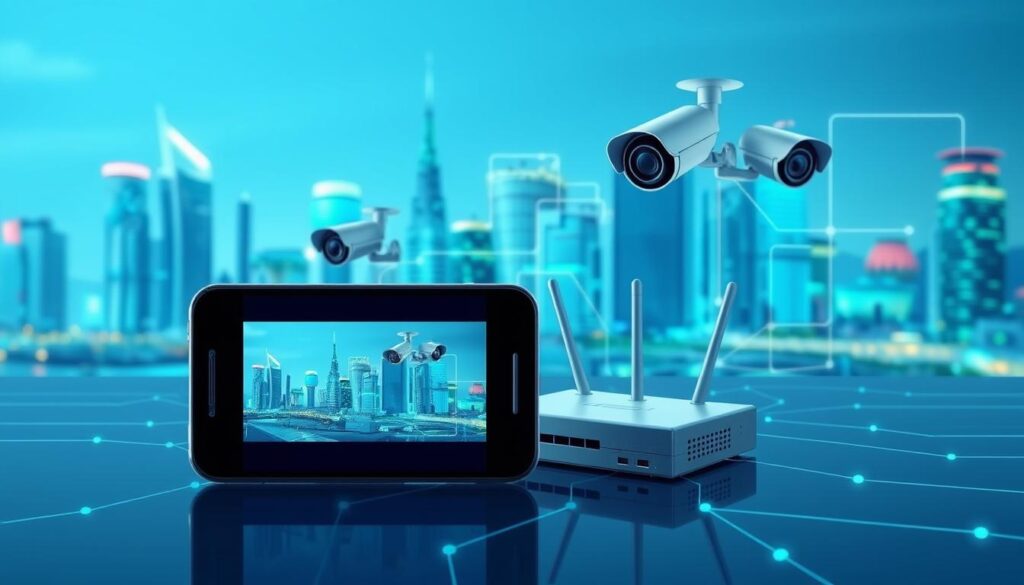
Security Best Practices for Remote CCTV Monitoring
As users increasingly rely on mobile access, securing CCTV systems becomes paramount. While rare, prioritizing security when connecting cameras to phones is essential. Implementing strong security measures helps protect your privacy and prevents unauthorized access to sensitive footage.
First, it is critical to protect CCTV systems from unauthorized access. Compromised cameras can lead to severe privacy breaches, allowing malicious actors to view live feeds or access recorded footage without permission.
Protecting your CCTV system from unauthorized access
Change default login credentials immediately upon setting up your cameras. Factory-set usernames and passwords are widely known and easily exploited by hackers scanning for vulnerable devices. Regularly auditing connected devices and user accounts is also important. Remove any that are no longer needed and monitor access logs for suspicious activity.
Using strong passwords and firmware updates
Strong passwords are a vital line of defense. Combine uppercase and lowercase letters, numbers, and special characters with a minimum length of 12 characters. Avoid easily guessable information like birthdays or addresses. Additionally, keeping camera firmware and mobile apps up to date is crucial. Manufacturers regularly release security patches that address newly discovered vulnerabilities.
Encrypting data and avoiding public WiFi risks
Data encryption is another essential security measure. Modern CCTV systems use protocols like WPA3 for WiFi security and TLS/SSL for data transmission. This encryption should be enabled to prevent interception of video streams. Be cautious when accessing CCTV feeds over public WiFi networks, as they are often unsecured. Using a Virtual Private Network (VPN) service can create encrypted tunnels, protecting data from interception.
Finally, choose reputable CCTV brands with a proven track record of security. Lesser-known manufacturers may not provide timely firmware updates or may have inherent security flaws in their products. Remember, security is an ongoing process, not a one-time setup task. Vigilant maintenance of passwords, firmware, and network settings is essential for safe and secure remote CCTV monitoring.
Advanced Features: Real-Time Alerts and Cloud Storage Integration
The evolution of CCTV technology has introduced advanced features that significantly enhance security. These features, such as real-time alerts and cloud storage integration, empower users to take control of their surveillance systems.
Many CCTV systems linked to smartphones offer push notifications for specific events like motion detection or intrusions. This capability allows users to respond promptly to potential security threats. With these notifications, users are transformed from passive observers into active participants in their security management.
Benefits of push notifications and motion detection
Motion detection technology works within modern CCTV cameras using pixel-change analysis or passive infrared sensors. This technology identifies movement and triggers alerts only when relevant activity occurs, effectively reducing false alarms. Users can customize notification settings, including sensitivity levels and specific detection zones, ensuring they receive alerts tailored to their needs.
Utilizing cloud-based storage for accessibility and backup
Integration with cloud services allows users to store and retrieve footage remotely, enhancing data accessibility and security. Approximately 86% of CCTV users now utilize cloud storage services, appreciating the ability to access recorded footage from any device with internet access. This feature ensures that critical evidence is preserved, even if local recording equipment is damaged or compromised.
Cloud storage also serves as an automatic backup solution. In scenarios involving power outages or hard drive failures, users can rest assured that their footage remains safe. Many cloud services offer tiered storage plans, allowing users to choose the retention period and storage capacity that fits their needs.
The combination of real-time alerts and cloud storage creates a powerful security ecosystem. Users are immediately notified of events and can quickly access and review relevant footage from anywhere. Some advanced systems even use AI-powered analytics to distinguish between different types of motion, such as people or vehicles, further refining alert accuracy.
In conclusion, exploring these advanced features when selecting a CCTV system can significantly enhance the overall security experience. Users gain greater control and peace of mind, knowing they can respond swiftly to any potential security concern.
Enhancing User Experience with Smart Notifications and App Settings
The user experience of mobile CCTV viewing is significantly enhanced by smart notifications and tailored app settings. These features ensure that users receive timely alerts about critical events, such as motion detection or unauthorized access. This allows homeowners to act swiftly in case of a security issue.
To maximize the effectiveness of notifications, users should customize their alert preferences within the CCTV app. Here are some strategies to consider:
- Fine-tune notification settings: Adjust the app settings to receive only the most relevant alerts. This helps avoid notification fatigue from excessive or unnecessary messages.
- Set up different alert profiles: Create profiles for different times of the day. For example, receive all motion alerts at night when the property should be unoccupied, while limiting alerts to specific zones during the day.
- Configure alert delivery methods: Choose between push notifications, email alerts, and in-app messages to find the most effective combination for your lifestyle.
High-resolution smartphone displays, like those on the HONOR Magic V2, significantly enhance the mobile CCTV viewing experience. These displays allow users to zoom in on details within the footage without significant loss of clarity. This is crucial for identifying faces, license plates, and other important details.
Moreover, the quality of the viewing device directly impacts the effectiveness of remote monitoring. Low-resolution screens may obscure vital details that could be essential for identification or evidence purposes. Users should optimize app settings for their specific devices, adjusting streaming quality based on available bandwidth to balance video clarity with data usage.
Some apps even offer picture-in-picture mode or split-screen viewing. This feature allows users to monitor their CCTV feed while using other applications on their phones, enhancing multitasking capabilities. Regularly reviewing and updating notification preferences as security needs evolve ensures that the alert system remains aligned with current priorities.
In conclusion, the combination of smart, customized notifications and high-quality viewing devices creates a superior user experience. This makes mobile CCTV monitoring both effective and convenient, providing users with the peace of mind they need.
Maintaining Your CCTV System for Optimal Mobile Performance
To maximize the efficiency of your CCTV system, regular maintenance is essential. Keeping software up to date is vital for security and functionality. Updates bring necessary security fixes and performance enhancements that can significantly improve your system’s reliability.
Regular software and firmware updates
Regular software and firmware updates for both the CCTV cameras and the mobile app are crucial. Manufacturers continuously release improvements that enhance performance, fix bugs, and patch security vulnerabilities. Users should check for updates through the app’s settings menu or the manufacturer’s website. Enabling automatic updates, where available, ensures that your system always runs the latest version.
Routine hardware inspections and upkeep tips
Routine hardware checks should include inspecting camera lenses for dirt or obstructions. Ensure that the lenses are clean and free from dust, spider webs, or other debris that could degrade image quality. It’s also important to verify that camera orientations are correct. Cameras can shift over time due to wind, vibrations, or accidental contact, potentially leaving blind spots in the surveillance coverage area.
Additionally, checking storage systems is essential. Whether using local DVR/NVR hard drives or cloud storage subscriptions, ensure adequate capacity remains for recording. Verify that footage is being saved correctly without corruption. Periodically test the entire system by accessing live feeds from your phone, triggering motion detection, and reviewing recorded footage to confirm playback functionality.
Creating a maintenance schedule, such as monthly visual inspections and quarterly comprehensive checks, can help establish a routine that prevents neglect. For those who prefer expert handling, professional maintenance services are available in Singapore. Technicians can perform thorough inspections and address any technical issues.
Proper maintenance extends the lifespan of CCTV equipment, protects your investment in the security system, and ensures that the system performs reliably when needed most. A well-maintained CCTV system provides consistent, high-quality mobile viewing and reliable security coverage, making maintenance an essential ongoing responsibility for all system owners.
Elevating Your Security with CCTV on Your Phone
The integration of mobile capabilities in CCTV systems is revolutionizing property surveillance. More people in Singapore are eager to monitor their homes and businesses from anywhere, showcasing a shift towards advanced and user-friendly security solutions.
Setting up cameras correctly and selecting compatible apps are essential steps. Regular maintenance ensures that the system operates smoothly. Users benefit from live viewing and instant alerts, allowing them to respond swiftly to potential threats.
Cloud storage and mobile data enhance security management, making it easier to keep track of footage. As technology progresses, users will discover even better options tailored to their needs.
For the latest CCTV solutions and deals in Singapore, reach out to ED Viston at +65 8313 4578 or Wen Hong at +65 60135960. Your security deserves the best!