
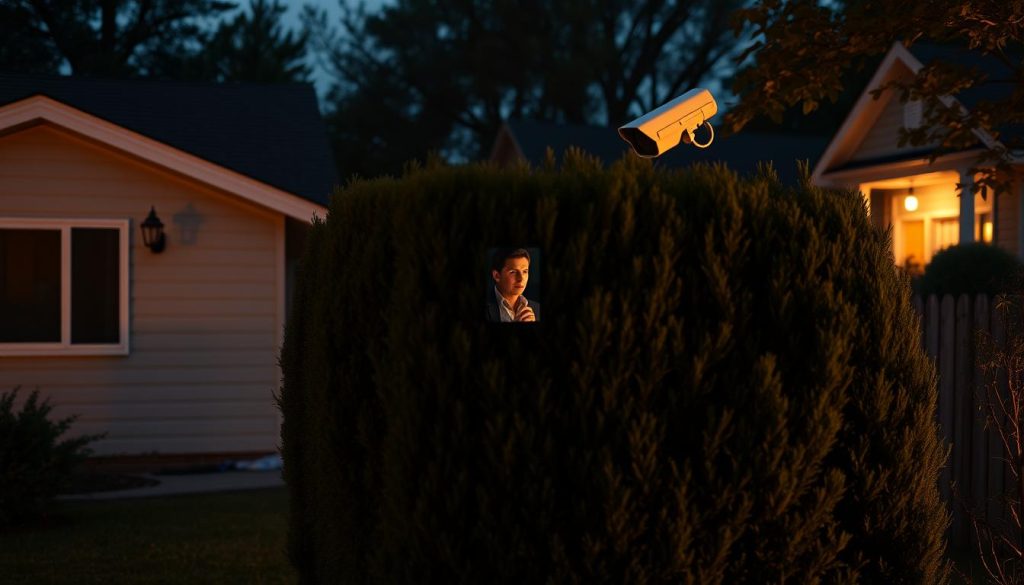
Residential security cameras are more common than ever. Many people install them for safety and peace of mind. However, there is a thin line between legitimate security and unwanted intrusion.
If a nearby device points toward your living space, it’s natural to feel your privacy is compromised. You might wonder about solutions to this modern dilemma.
This guide provides a clear path forward. We focus on effective, lawful, and practical steps you can take. The goal is to help you reclaim your personal space without conflict.
It is crucial to understand that destructive actions are illegal. Tampering with equipment, using jammers, or hacking signals can lead to serious legal trouble. We will not recommend any method that breaks the law.
Instead, we will cover how to assess the situation, understand your rights, and explore communication strategies. You will learn about various physical and natural barriers that are both effective and permissible. For a detailed look at legal methods to address surveillance concerns, our comprehensive resource is available.
The aim is to achieve a respectful outcome. You can protect your property and peace while maintaining good relations with your neighbor. All suggestions align with Singapore’s legal framework.
Key Takeaways
- Residential surveillance is common, but it can cross into privacy invasion.
- Seeking to address a camera pointed at your home is a legitimate concern.
- This guide focuses exclusively on legal and effective solutions.
- Destructive or interfering actions are illegal and carry severe penalties.
- Strategies include assessment, communication, and practical barriers.
- The ultimate goal is restored privacy with maintained neighborly relations.
- All advice is tailored to operate within Singapore’s legal system.
Understanding Your Rights: Security Cameras and Privacy Laws in Singapore
In Singapore, the legality of outdoor surveillance hinges on where a camera is pointed and what it captures. Knowing your rights under local privacy laws provides a solid foundation for any action.
This knowledge helps you distinguish between legitimate security and unacceptable intrusion. It also protects you from legal missteps.
The General Rule: Public vs. Private Spaces
Singaporean law generally permits recording in public areas. This includes spaces like common corridors, public walkways, and the street.
A neighbor security camera capturing a sliver of your driveway or front yard may be permissible. The key is the reasonable expectation of privacy.
You have this expectation inside your home. Private spaces include bedrooms, bathrooms, and enclosed backyards.
- Bedrooms and bathrooms
- Enclosed backyards and pool areas
- Other interior rooms not visible from a public way
Recording these zones without consent is problematic. The legal framework seeks to balance property rights with personal privacy.
When a Camera Crosses the Line into Invasion of Privacy
Not all security cameras are benign. Specific actions can transform a device into an invasive tool.
Zooming directly into windows is a clear red flag. So is a motorized lens that pans to track movement in a private yard.
Audio recording without consent adds another layer of intrusion. Singapore’s privacy laws take a dim view of such practices.
Intent is often inferred from the device’s placement and behavior. A camera fixed solely on your patio suggests a purpose beyond general security.
Systematic monitoring of your family’s daily life creates a strong case for violation. This includes recording children at play in a secluded garden.
Legal Risks of Improperly Blocking a Camera
Taking matters into your own hands can backfire. Illegal actions carry severe penalties under Singapore’s strict laws.
Vandalism charges apply if you damage the equipment. Trespassing occurs if you enter a neighbor‘s property without permission.
Cutting wires or painting the lens constitutes property damage. Using a laser to disable a sensor may lead to additional charges.
Attempting to hack the camera feed enters the realm of cybercrime. These actions are not solutions.
Contrast this with your legal right to erect barriers on your own land. Installing a fence or privacy screen is a lawful way to block neighbor security oversight.
Documentation is your strongest ally. Keep a log with dates, times, and photos of the camera‘s view.
Note any suspicious panning or zooming. This evidence is vital for a calm discussion or a formal complaint.
It shows the neighbors and authorities the specific nature of your concern. A well-documented case is far more compelling than a vague feeling of being watched.
How to Tell If Your Neighbor’s Security Camera Is Watching You
A systematic assessment can clarify if a nearby camera infringes on your personal space. Moving beyond assumption requires factual observation. This process helps you understand the true scope of any surveillance.
Observing Camera Position and Angle
Start by analyzing the device’s field of view. Stand in different parts of your yard and look back toward the camera. Identify exactly which areas of your property are captured.
Check from inside your home as well. Look out of windows and doors to see the lens alignment. A device fixed solely on your patio or balcony suggests a targeted focus.
Consistent pointing at private zones is a strong indication. Note if the line of sight covers spaces like a secluded garden or pool area. This visual check forms the basis of your concerns.
Looking for Visual and Audio Indicators
Active security cameras often have indicator lights. In low-light conditions, look for tiny blinking LEDs. Common colors are red, green, or purple for night vision.
These lights help distinguish real units from dummy models. A dummy camera typically lacks this functionality. It is a crucial step in your assessment.
Watch for physical movement. PTZ (Pan, Tilt, Zoom) cameras can rotate to follow activity. If you see the lens adjusting to track movement on your property, it is a clear sign.
Listen carefully as well. A low humming or buzzing sound may accompany mechanical adjustment. This audio cue, while less common, confirms an operational device.
Documenting Your Privacy Concerns
Thorough documentation turns observations into evidence. Take date-stamped photos from various angles. Capture images that clearly show the camera‘s line of sight into your private areas.
Record a short video if the device exhibits movement. This visual proof is powerful. It demonstrates the issue beyond doubt.
Maintain a detailed log of incidents. Note the date, time, and specific behavior observed. For example: “June 5, 3:15 PM – Camera panned to follow me across the backyard.”
This record is not paranoia. It is essential, factual groundwork. Such documentation supports a calm discussion with your neighbor.
It also strengthens any formal complaint about privacy intrusion. A well-documented case carries far more weight than a general feeling of being watched. Your log provides a clear way to present the facts.
First and Best Step: How to Talk to Your Neighbor About Their Camera
Direct communication stands as the primary and most effective strategy for addressing a problematic security camera. Many situations are resolved with a simple conversation. This approach preserves neighborhood harmony while tackling your concerns.
Real success stories, like one from a resident named Alex, prove this point. A polite chat led to a camera adjustment and restored mutual respect. Starting with dialogue is the least adversarial way forward.
It transforms a potential conflict into a collaborative search for solutions. Your goal is to protect your privacy without creating an enemy next door.
Preparing for a Calm and Productive Conversation
Good preparation sets the tone for a positive outcome. Choose a relaxed time, like a weekend afternoon. Avoid moments when either party is rushed or stressed.
Request a brief chat in a neutral spot, perhaps by the fence. Rehearse your main points beforehand. Focus on how the situation affects you, not on accusing your neighbor.
Adopt a collaborative mindset from the start. Frame the talk as a shared problem to solve. This reduces defensiveness and opens the door to compromise.
Mention that you understand their need for security. Acknowledge their right to feel safe on their property. This builds rapport and shows you are reasonable.
Key Phrases and Approaches to Use
Use non-accusatory language to express your feelings. A phrase like, “I wanted to talk about your security camera. I think my yard might be in its view, and it makes me uncomfortable at home,” is effective.
It states facts without assigning blame. Always practice active listening during their response. They may have valid reasons for the camera’s placement.
Be open to their perspective. Suggest practical compromises that address both sides. You could ask if they can physically adjust the camera angle.
Many modern systems allow for digital privacy zones. These block out specific areas from recording. Proposing this shows you’ve researched helpful solutions.
Another option is requesting limited access to the feed. This alleviates fear of misuse. Such gestures demonstrate trust and a desire for fairness.
Following Up: The Power of a Polite Written Notice
If the conversation goes well, a written follow-up cements the agreement. Send a courteous email summarizing what was discussed. Include any promises made, like an adjustment date.
Attach a photo or diagram for clarity. This creates a formal record of the request. It prevents misunderstandings later on.
Keep the tone calm and appreciative. Thank them for their time and understanding. A written record is crucial if the issue persists.
It demonstrates the seriousness of your privacy concern. Should further steps be needed, this document is invaluable. Always keep a copy for your own records.
What if the initial talk is unsuccessful but not hostile? Allow for a cooling-off period of a few days. Tensions may ease, allowing for a second attempt.
Consider involving a neutral third party. A community mediator can facilitate a more structured discussion. This is often effective within Singapore’s communal culture.
Persistent refusal to address a clear intrusion may require official action. Your documented efforts will support any formal complaint. Always prioritize peaceful resolution to maintain peace of mind.
Using Physical Barriers to Block the Camera’s View
When friendly talks don’t lead to a change, turning to structural solutions on your property offers a clear path. Erecting barriers is a highly effective and permanent solution. Best of all, it’s completely legal when done on your own land.
This approach puts you in control. You can design features that enhance your outdoor living space while shielding your home from unwanted observation. The goal is to interrupt the line of sight.
Installing Privacy Fences and Extension Panels
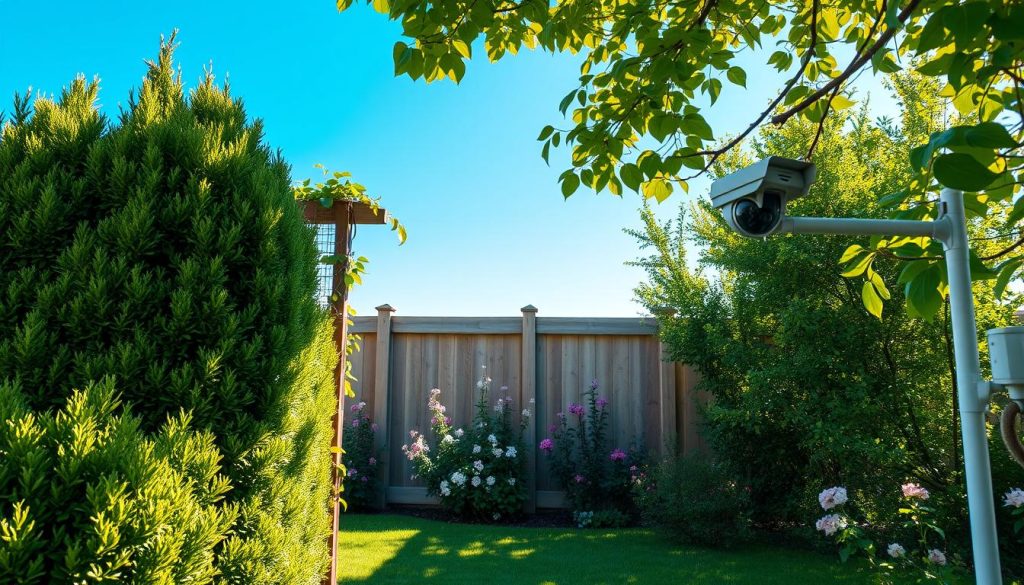
A solid fence is the most definitive barrier. It creates a clear physical and visual boundary for your yard. Popular materials include wood, vinyl, and composite for durability.
In Singapore, check specific height regulations before building. Front boundary fences often have a lower maximum than those at the rear. Always consult your local town council.
If your existing fence is too low, consider adding extension panels or lattice tops. These additions provide extra height without a full rebuild. They are an excellent way to gain more privacy quickly.
- Wood: Classic and natural, but requires maintenance.
- Vinyl: Low-maintenance and weather-resistant.
- Composite: A durable blend of wood and plastic fibers.
A well-built fence not only obstructs a camera but also enhances your sense of seclusion. It marks your private domain clearly.
Erecting Privacy Screens, Shades, and Canopies
For more flexibility, consider semi-permanent screens. Freestanding privacy screens made of fabric, bamboo, or artificial ivy are versatile. They can be moved as needed to address specific view angles.
Shade sails and canopies serve a dual purpose. They provide relief from the sun while blocking an overhead security camera sightline. These are ideal for patios and decks.
Outdoor curtains are another elegant option. Install them on a pergola or porch frame. You can draw them closed to instantly create a secluded nook away from neighbors.
These solutions are often easier to install than a fence. They add texture and aesthetic appeal to your outdoor space. Your yard becomes more beautiful and more private.
Strategic Placement of Decorative Objects and Structures
Think creatively about large garden features. A gazebo, pergola, or garden shed can be positioned to block a specific camera lens. Even a tall basketball hoop can interrupt a sigh line.
Decorative objects work well for targeted coverage. Place a large planter with tall trees or a sculptural water feature in the lens’s path. A dense cluster of shrubs in a decorative pot is very effective.
Strategic outdoor lights can also help at night. Motion-activated floodlights pointed away from your house can create glare on a nearby lens.
Always aim lights downward and shield them to prevent light pollution. Your goal is to protect privacy, not disturb the entire neighborhood.
Before building any permanent structure, verify local zoning laws. This step prevents future disputes and ensures your project is compliant.
For the best results, blend several methods. Combine a solid fence base with movable screens and decorative planters. This layered approach maximizes security and visual interest.
You reclaim your outdoor living area with these physical changes. Your property becomes a true sanctuary, free from external security cameras. It’s a powerful, lasting solution for peace of mind.
Natural Solutions: Planting to Reclaim Your Privacy
Landscaping provides a living, breathing barrier that grows more effective with each passing season. This approach turns your yard into a serene, green sanctuary. It is an eco-friendly and beautiful long-term strategy for privacy.
Unlike static fences, plants offer dynamic beauty and environmental benefits. They absorb sound, provide shade, and support local wildlife. A well-planned garden is a powerful investment in your peace of mind.
Choosing Fast-Growing Trees for Quick Coverage
When you need results within a few seasons, select tall, fast-growing species. These trees establish a high canopy that blocks overlooking security cameras.
Green Giant Arborvitae is a top choice. It can grow over three feet per year, reaching heights of 20-30 feet. Its dense, evergreen foliage provides a solid visual screen year-round.
Leyland Cypress is another excellent fast-grower for Singapore’s climate. It forms a thick, columnar shape perfect for property lines. For a tropical feel, consider clumping varieties of Bamboo.
Clumping bamboo grows quickly but stays contained in a tight cluster. Always verify a species’ suitability for your specific soil and sun conditions.
Opting for Dense Shrubs and Hedges
For lower-height barriers, dense shrubs are incredibly effective. They create an impenetrable green wall at eye level and below.
Emerald Green Arborvitae is a smaller, slower-growing cousin perfect for hedges. It maintains a neat, narrow profile without constant pruning. Skip Laurel offers broad, glossy leaves and thrives in partial shade.
These plants can be shaped and maintained to form a formal or informal hedge. A well-trimmed hedge clearly defines your property boundary. It also adds significant curb appeal and security to your home.
Long-Term Landscaping Strategies for Lasting Privacy
Success requires proper planning from the start. Prepare the soil with compost and ensure good drainage. Follow spacing guidelines to allow plants to fill in densely without competing.
Water and fertilize consistently during the establishment period. Patience is key; full coverage may take several growing seasons. The wait is rewarded with a mature, low-maintenance landscape.
Adopt a layered, or “lasagna,” approach for maximum effect. Plant tall trees in the back, medium shrubs in the middle, and flowering perennials in front. This creates depth, visual interest, and an unbroken green shield.
A private garden is not a luxury, but a necessity for the soul. It is a personal retreat that filters the outside world.
Exercise caution with vigorous plants. Some bamboo species can be invasive. Use root barriers or select certified clumping types to prevent unwanted spread.
This natural solution is a true investment. It enhances your property value, improves the local ecosystem, and provides a lasting haven. You reclaim your outdoor areas with beauty and grace.
Securing Your Home’s Interior from Prying Lenses
Achieving complete privacy requires looking inward as well as outward. Your home‘s interior deserves protection from any lingering camera view.
Apply privacy films to windows. Frosted or tinted varieties let light in while obscuring details. For bedrooms, install quality blackout curtains.
Technology can also shield you. Consider your own security system with customizable privacy zones. Brands like Aqara and aosu offer these features.
If all else fails, legal action is a final solution. Consult a lawyer after documented harassment. File a formal complaint with the police.
Present your evidence clearly. A neighbor’s security should not erase your fundamental rights. A balanced, lawful approach protects everyone’s peace.