
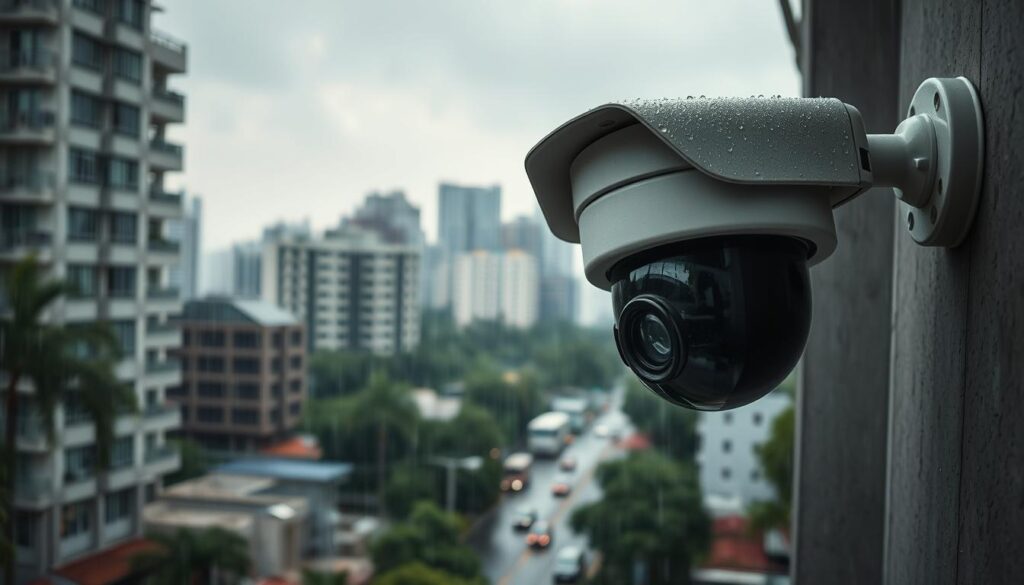
In Singapore’s tropical climate, rain poses a significant challenge for outdoor surveillance systems. The frequent downpours can lead to false motion alerts, causing frustration for users. Security cameras, such as the VIGI C340HPWSM and Tapo C200, often send out unnecessary notifications triggered by raindrops. This issue can escalate during nighttime when infrared sensors are activated, making it even harder to distinguish between genuine movement and rain interference.
Moreover, exposure to moisture can lead to severe water damage, affecting the overall performance and image quality of your security system. It’s essential to address these issues to maintain reliable surveillance during Singapore’s rainy seasons. This guide will provide you with effective solutions to mitigate rain interference and protect your CCTV setup.
From adjusting camera sensitivity settings to exploring protective housing options, you’ll discover practical tips to ensure your security cameras operate effectively, even in challenging weather conditions.
Key Takeaways
- Frequent rain in Singapore can trigger false alerts in outdoor surveillance systems.
- Water exposure may cause significant damage to security cameras.
- Adjusting camera settings can help reduce unnecessary notifications.
- Protective housing options can enhance the durability of CCTV cameras.
- Understanding motion detection technology is crucial for effective surveillance.
Understanding CCTV Motion Detection and Rain Interference
The tropical rains of Singapore can significantly disrupt outdoor security camera operations. Understanding how motion detection works in CCTV cameras is crucial for addressing these challenges.
How Motion Detection Works in CCTV Cameras
CCTV motion detection technology operates by continuously analyzing sequential video frames. It identifies pixel-level changes that indicate movement within the camera’s field of view. When the system detects a significant difference between consecutive frames, it interprets this as motion and triggers an alert or recording.
This fundamental mechanism is essential for automated surveillance monitoring. However, even small movements, like raindrops or insects, can cause these changes. This means that a small movement can sometimes trigger false alarms, complicating the security monitoring process.
Why Rain Triggers False Motion Alerts
Rain presents a particular challenge for CCTV systems. Each falling raindrop creates a distinct visual change as it passes through the camera’s view. This mimics the pixel variations typically associated with genuine movement.
During a downpour, the sheer volume of raindrops means the camera processes hundreds of motion events per minute. This overwhelms the system with false alerts, making it nearly impossible to identify real security threats.
Impact of Infrared Sensors on Rain Detection
Infrared sensors significantly amplify the rain detection problem at night. The IR illumination reflects off water droplets, making them appear brighter and more prominent in the camera’s night vision mode.
The reflective properties of water cause IR light to bounce back toward the camera lens. This creates bright spots that the motion detection algorithm interprets as moving objects within the surveillance area.
This nighttime rain interference is particularly problematic for security. The hours of darkness are when surveillance is most critical, yet the system becomes least reliable during wet weather conditions.
Understanding the pixel-change detection mechanism helps users appreciate why simply lowering sensitivity can reduce false alerts. This adjustment does not completely disable the camera’s ability to detect genuine intruders.
Modern cameras with advanced image processing capabilities are beginning to incorporate algorithms that can distinguish between the random pattern of raindrops and the more deliberate movement of people or vehicles.
Common Issues Caused by Rain on CCTV Performance
Rainfall in Singapore can severely impact the functionality of outdoor surveillance systems. The effects range from immediate image quality issues to long-term hardware damage, making it essential to understand these challenges.
Video Blur and Image Quality Deterioration
One of the most noticeable effects of rain on CCTV cameras is video blur. Water droplets on the lens distort captured footage, leading to a significant reduction in clarity. Rain-streaked lenses can create hazy images that obscure crucial details, such as facial features or license plate numbers.
This deterioration in image quality can render surveillance footage nearly useless for identification purposes. Users may find it challenging to rely on their security systems when rain compromises the clarity of the video.
False Motion Alerts and Unnecessary Notifications
Another major issue is the generation of false motion alerts triggered by rain. During a storm, cameras can send out hundreds of unnecessary notifications, desensitizing users to alerts. This flood of alerts can cause users to overlook genuine security events.
Moreover, the constant barrage of rain-induced notifications drains mobile device batteries and consumes storage space with irrelevant recordings. The frustration from these alerts may lead users to disable them entirely, further jeopardizing their security.
Long-Term Effects of Moisture on Camera Lifespan
Moisture exposure can have serious long-term effects on CCTV cameras. Condensation damage occurs when humid air penetrates camera housings, leading to corrosion of internal components. Over time, this can result in gradual degradation of the camera’s electronics.
Fogging lenses are another common problem, especially in humid environments. When temperature differentials create condensation inside the camera housing, it obscures the lens and impairs visibility.
Additionally, repeated rain exposure can degrade rubber seals and gaskets, allowing water to penetrate and cause internal damage. The cumulative effect of moisture can lead to a significant reduction in the operational lifespan of outdoor cameras, representing a financial loss for users.
In summary, addressing these issues is critical for maintaining effective surveillance in Singapore’s rainy climate. Protecting your CCTV setup from rain interference will ensure reliable performance and longevity.
For more information on how to safeguard your CCTV system from rain, visit this guide.
How do I stop my CCTV camera from raining?
The rainy season in Singapore presents unique obstacles for CCTV camera performance. To effectively minimize rain interference, a multi-layered approach is essential. This includes making adjustments to settings, strategic camera placement, and utilizing protective equipment.
Start by lowering the motion detection sensitivity. This quick fix reduces the camera’s response to minor environmental changes, like falling raindrops, while still allowing it to detect larger moving objects. Adjusting the tilt angle of the camera can also be beneficial. By pointing it slightly downward, raindrops will pass through the frame more quickly, minimizing the chance of triggering false alerts.
Consider repositioning your cameras under eaves, awnings, or other overhead structures. This natural protection helps reduce direct rain exposure and limits the number of raindrops that enter the camera’s field of view. Additionally, installing waterproof protective housings or dedicated camera enclosures creates a barrier that keeps rain away from the camera body and lens.
Defining specific activity zones within the camera’s view is another effective strategy. By excluding areas where rain is most visible, such as open skies or uncovered walkways, you can prevent unnecessary motion alerts. Enabling object classification features on compatible cameras can further help the system distinguish between random rain patterns and actual movement, significantly reducing false alerts.
Upgrading to cameras equipped with PIR sensors is also recommended. These sensors respond to heat signatures rather than visual changes, making them nearly immune to rain interference. Regular maintenance, including lens cleaning and seal inspections, ensures that your protective measures remain effective throughout Singapore’s rainy seasons.
By combining these strategies, you can enhance the performance of your CCTV system and ensure reliable surveillance, even during heavy rain.
Adjusting Camera Sensitivity and Activity Zones
Rain can create unique challenges for the effectiveness of security cameras in Singapore. To address these challenges, adjusting camera sensitivity and setting up activity zones can significantly enhance performance. These steps are essential for reducing false alerts triggered by rain while ensuring genuine movements are detected.
Lowering Motion Detection Sensitivity: Pros and Cons
Adjusting motion detection sensitivity is the most accessible first step for reducing rain-triggered alerts. This adjustment can be done through the camera’s mobile app or web interface, eliminating the need for physical modifications.
Lower sensitivity settings mean the camera requires larger pixel changes between frames to register as motion. This effectively filters out the small, rapid changes caused by individual raindrops. The primary advantage of reducing sensitivity is an immediate decrease in false alerts. Many users report a 70-80% reduction in rain-related notifications after proper adjustment.
However, there are some trade-offs. Very low sensitivity settings may cause the camera to miss subtle but genuine movements, such as someone walking slowly at the edge of the detection area. Finding the optimal sensitivity level requires testing during both dry and rainy conditions. Start from the default setting and gradually decrease until false alerts drop without compromising real motion detection.
Defining and Setting Up Activity Zones
Activity zones allow you to define specific areas within the camera’s field of view where motion detection is active. This creates a custom detection grid that ignores irrelevant regions, helping to minimize false alerts.
To set up an activity zone, access the camera’s configuration menu and select the activity zone or motion detection area option. Draw boundaries that exclude areas prone to rain visibility, like open skies or tree canopies. Properly configured activity zones can reduce false alerts by up to 90%, ensuring that only movement in critical areas like entryways, driveways, or walkways triggers notifications.
It’s important to consider both rain exposure and security coverage when defining activity zones. Ensure that potential intruder pathways remain within the active detection area. Regular review and adjustment of these zones are recommended, as seasonal changes in Singapore’s weather patterns may alter which areas of the camera’s view are most affected by rain.
Leveraging Object Classification Features for Accurate Alerts
CCTV technology has evolved to address the challenges posed by environmental factors, particularly rain. One of the most effective advancements is object classification. This feature enables cameras to identify and categorize moving objects, ensuring that only relevant alerts are sent to users.
What is Object Classification?
Object classification is an advanced AI-powered feature that allows CCTV cameras to analyze moving objects. These systems can differentiate between humans, vehicles, animals, and irrelevant environmental motion like rain. This technology enhances monitoring by sending alerts only when significant activity occurs.
How to Enable and Customize Object Classification
To enable object classification, access your camera settings through the companion app or web interface. Look for options labeled “Object Detection” or “Smart Features.” Once you find the object classification feature, you can customize it to focus on specific objects like people or cars.
Adjusting the sensitivity settings helps improve the camera’s ability to distinguish between different objects. This customization is crucial for filtering out raindrops, swaying branches, and passing shadows, which often trigger false alerts.
- When enabled, object classification dramatically reduces false alerts during rainy weather.
- The system recognizes that the random movement of raindrops does not match any classified object category.
- Most systems allow users to choose which object types trigger alerts, providing tailored notifications.
- Advanced systems can even differentiate between various vehicle types or detect specific behaviors like loitering.
- For optimal performance, ensure cameras are positioned at suitable heights and angles for detecting humans and vehicles.
- Regular firmware updates are essential to maintain object classification accuracy, as manufacturers continuously refine their algorithms.
By leveraging object classification features, users can enhance the performance of their CCTV systems, significantly reducing the impact of rain on surveillance quality.
Optimal CCTV Camera Placement and Angle Adjustment
Effective camera installation requires careful consideration of placement and angle to combat rain challenges. Proper positioning can greatly enhance the performance of security cameras, especially in Singapore’s rainy climate. By following some best practices, you can minimize rain interference and ensure reliable surveillance.
Best Practices for Positioning Cameras to Avoid Rain Exposure
Mounting cameras under eaves, soffits, or purpose-built awnings provides natural overhead protection. This shields the camera body and lens from direct rainfall while maintaining a clear downward viewing angle. The ideal mounting height for outdoor cameras is between 8 and 10 feet. This height places them above most rain splash zones while still allowing for identifiable facial features of individuals approaching the property.
Angling cameras slightly downward at approximately 15-30 degrees from horizontal helps raindrops pass through the frame more quickly. This adjustment prevents water from accumulating on the lens surface. Avoid positioning cameras where they face directly into prevailing wind-driven rain. This maximizes the number of raindrops that strike the lens and enter the camera’s detection zone.
Avoiding Busy or Light-Variable Areas
It’s important to steer clear of highly reflective surfaces like puddles, wet pavement, or glass windows. Rain striking these surfaces creates additional motion triggers and glare that degrade image quality. Busy areas with constant movement from traffic, pedestrians, or swaying vegetation should also be excluded from primary detection zones. These environmental factors can compound with rain to generate excessive false alerts.
Additionally, areas with significant light variation, such as locations near streetlights that turn on at dusk, create extra pixel changes. Motion detection systems may misinterpret these changes during rainy conditions. Corner mounting positions often provide the best combination of coverage and rain protection. They allow cameras to monitor two approaches while the building structure shields them from direct weather exposure.
Using adjustable mounting brackets enables fine-tuning of camera angles after installation. This allows for seasonal adjustments as the angle of rainfall changes with Singapore’s monsoon patterns. Before finalizing any camera placement, conduct a test during actual rainfall. Observe how water interacts with the lens and whether the chosen position effectively minimizes rain interference while maintaining adequate surveillance coverage.
Using PIR Sensors to Reduce False Alarms from Rain
The impact of Singapore’s weather on outdoor surveillance systems necessitates the adoption of specialized technologies. One such technology is the Passive Infrared (PIR) sensor, which offers significant advantages in rain-prone environments.
Advantages of Passive Infrared Technology
PIR sensors detect motion by measuring changes in infrared radiation. They specifically pick up heat signatures emitted by warm-blooded creatures like humans and animals. Unlike traditional cameras, PIR sensors are not fooled by rain or wind. This leads to fewer false alarms, allowing you to focus on real security issues.
Because raindrops have the same temperature as the surrounding air, they produce no detectable heat signature. Thus, PIR technology is virtually immune to rain-triggered false alerts. This feature ensures reliable motion detection regardless of weather conditions.
Additionally, PIR sensors create a detection grid of thermal zones. An alert is only triggered when a warm object moves from one zone to another. This dual-verification system combines PIR technology with traditional video-based motion detection, dramatically reducing false alarms.
Moreover, PIR technology operates effectively in complete darkness without requiring infrared illumination. This eliminates the nighttime rain reflection problem that often affects standard IR-based night vision systems.
Recommended PIR-Enabled CCTV Models Suitable for Singapore
When selecting a security camera for outdoor use in Singapore, consider models equipped with PIR sensors. Hikvision’s Turbo HD series offers reliable rain-resistant motion detection. These cameras are designed to work well in Singapore’s tropical climate and are widely available through local distributors.
Dahua’s PIR camera lineup includes models with integrated smart detection features. These combine thermal sensing with AI-based object classification for maximum accuracy in challenging weather conditions.
For optimal performance, look for cameras with an IP66 or higher weatherproof rating. This ensures that the sensor is protected from moisture damage. Investing in PIR technology pays for itself by reducing false alert fatigue and lowering storage consumption from unnecessary recordings.
Weatherproofing Your CCTV Setup for Singapore’s Climate
To ensure optimal performance, CCTV systems in Singapore require robust protection against the region’s rainy climate. This involves choosing the right protective housing, effective sealing techniques, and installing canopies or overhangs for added security.
Choosing Protective Housing and Waterproof Boxes
Protective housings and waterproof boxes create a sealed environment around your CCTV camera. They shield sensitive electronic components from direct rain exposure, humidity, and wind-driven moisture.
When selecting a protective housing, look for enclosures made from durable materials like aluminum or high-grade polycarbonate. An IP66 or higher rating indicates complete protection against powerful water jets and dust ingress.
The housing should also include cable glands or sealed entry points. These features maintain the waterproof integrity where power and data cables enter the enclosure, which are common sources of moisture intrusion.
Effective Sealing Techniques to Prevent Moisture Intrusion
Effective sealing techniques begin with applying high-quality silicone sealant around all mounting brackets, screw holes, and cable entry points. This creates a flexible, waterproof barrier that accommodates thermal expansion and contraction.
Regular inspection of seals and gaskets is essential in Singapore’s climate. UV exposure and temperature fluctuations can cause rubber components to degrade, crack, or lose their elasticity over time.
Installing Canopies and Overhangs for Additional Protection
Installing canopies or custom overhangs above camera locations provides an additional layer of protection. They deflect rain before it reaches the camera housing, reducing the volume of water the seals must resist.
Canopies should extend at least 6-8 inches beyond the camera on all sides. This coverage is crucial during wind-driven rain, which is common during Singapore’s monsoon seasons.
For cameras mounted on walls without natural eave protection, purpose-built camera rain shields made from UV-stabilized plastic or powder-coated metal offer an affordable and effective weatherproofing solution.
All weatherproofing measures should be installed with slight downward angles to encourage water runoff. This prevents pooling that could eventually penetrate seals or cause corrosion at mounting points.
Combining protective housings, proper sealing, and overhead canopies creates a comprehensive weatherproofing system. This can extend your CCTV camera’s operational lifespan by several years in Singapore’s challenging tropical environment.
Upgrading to Advanced Weather-Resistant CCTV Systems
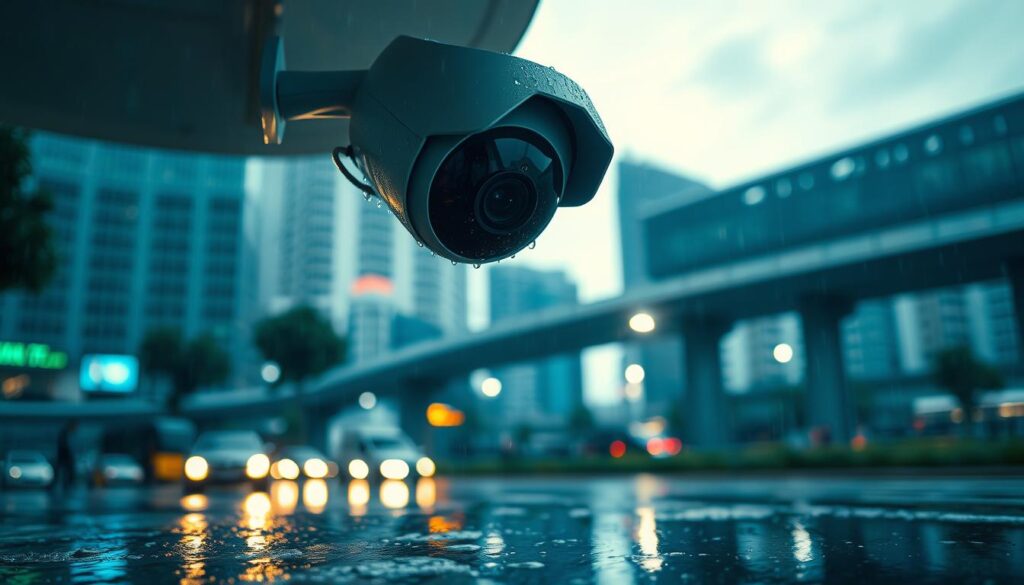
Choosing the right weather-resistant CCTV systems is crucial for reliable surveillance in areas prone to heavy rainfall. The tropical climate in Singapore demands that users invest in cameras designed to withstand challenging weather conditions. Upgrading to advanced models ensures optimal performance and longevity.
When selecting weatherproof cameras, there are several key features to consider. The Ingress Protection (IP) rating is the most important specification. This rating indicates how well a camera can resist dust and water. Look for cameras with an IP66 rating or higher, as they are completely dust-tight and can handle powerful water jets from any direction.
Additionally, consider cameras equipped with built-in heaters or defogging elements. These features help prevent internal condensation, which is a common issue in Singapore’s humid climate. Vandal-resistant housings with IK10 impact ratings also provide extra durability against both weather and tampering.
Key Features to Look for in Weatherproof Cameras
- High IP Ratings: Aim for IP66 or IP67 ratings to ensure protection against heavy rain.
- Built-in Heaters: Prevent fogging and condensation for clear images.
- Vandal-Resistant Housing: Look for IK10 ratings for added durability.
- Smart Detection Features: Cameras with AI capabilities can distinguish between relevant motion and environmental factors.
- Onboard Storage: Cameras with microSD slots ensure critical footage is saved locally.
Comparing Leading Brands and Models
Several brands stand out in the market for weather-resistant CCTV systems. TP-Link’s VIGI series, particularly the VIGI C340HPWSM model, is known for its robust design and weatherproofing. This model offers high-resolution 4MP imaging and smart detection features at a competitive price.
Tapo cameras, such as the Tapo C200, provide user-friendly setups and affordable weather resistance. They are suitable for residential applications, offering features like two-way audio and smart home integration.
Hikvision’s lineup includes models with DarkFighter technology, ensuring superior low-light performance during rainy nights. These cameras also feature IP67-rated housings for enhanced protection.
Reolink offers IP66-rated outdoor cameras with integrated PIR sensors. This allows for wire-free installation, eliminating potential water ingress points. When comparing brands, consider warranty coverage for water damage, as some manufacturers provide better protection against weather-related failures.
Investing in high-quality weather-resistant cameras is essential for effective surveillance in Singapore’s rainy climate. With the right features and reliable brands, users can ensure their security systems perform well and remain protected from water damage.
Maintaining Your CCTV System to Prevent Water Damage
In Singapore’s wet environment, proper maintenance of CCTV systems is key to preventing water-related issues. Regular upkeep enhances reliability and extends the lifespan of your security cameras. It’s essential to check your cameras frequently to catch problems early. This proactive approach helps identify moisture and corrosion issues before they escalate.
Establish a monthly inspection routine. Check all camera housings for cracks and examine cable entry points for seal degradation. Verify that mounting brackets remain secure and properly angled after bad weather. Knowing the signs of water damage is crucial for quick action.
Regular Inspections and Cleaning
Regular cleaning of camera lenses is vital. Use microfiber cloths and lens-safe cleaning solutions. Accumulated dirt and water spots can degrade image quality and create false motion triggers, even if the camera is functioning correctly.
After heavy rain events, conduct additional inspections. Look for water accumulation around mounting points and ensure drainage paths remain clear. Foggy or hazy images that persist after cleaning indicate internal condensation. This requires immediate attention to prevent permanent damage to electronic components.
Detecting and Fixing Signs of Water Damage Early
Visible corrosion on metal parts, such as mounting brackets or screw heads, signals ongoing moisture exposure. This exposure can compromise the camera’s structural integrity and electrical connections. Unstable power behavior, like random reboots, often indicates water has reached internal circuitry.
Humidity Control and Anti-Fog Treatments
Controlling humidity inside camera housings is essential. Place silica gel desiccant packets inside the enclosure, replacing them every 3-6 months as they absorb moisture from Singapore’s humid air. Applying anti-fog treatments to camera lenses creates a hydrophilic coating that prevents water droplets from forming.
For cameras with persistent internal fogging, consider installing small ventilation ports with Gore-Tex membranes. These allow moisture to escape while preventing liquid water from entering the housing. Document all maintenance activities in a log to track patterns of water-related issues.
By following these tips, you can ensure your CCTV system remains effective and protected against the challenges posed by Singapore’s climate.
Minimizing Environmental Noise with Software and AI Solutions
Adverse weather conditions, especially rain, can severely hinder the performance of CCTV systems in Singapore. Fortunately, modern software solutions play a crucial role in enhancing video quality during such challenging conditions. By leveraging advanced technology, security cameras can effectively filter out noise caused by environmental factors.
AI in surveillance has transformed how we manage security. Today’s CCTV systems come equipped with smart software that detects and eliminates video noise. This is particularly important when rain creates visual disturbances that can obscure critical details.
Using AI-Based Video Noise Reduction Features
AI-based video noise reduction features utilize machine learning algorithms to analyze each frame. These systems distinguish between meaningful visual information and environmental noise like rain streaks. As a result, they improve image clarity even in wet conditions.
These intelligent systems can identify the characteristic pattern of falling rain and digitally suppress it in real-time. This leads to clearer footage where important details, such as faces and license plates, remain visible despite heavy precipitation.
Firmware Updates and Smart Alert Filtering
Regular firmware updates are essential for maintaining object classification accuracy and enhancing overall performance. Manufacturers frequently release updates that improve rain detection algorithms and refine noise reduction capabilities. Enabling automatic firmware updates ensures your cameras benefit from the latest advancements without requiring manual intervention.
Smart alert filtering goes beyond simple motion detection. It applies contextual analysis to evaluate whether detected movement matches known patterns of rain interference. This helps in deciding whether to trigger a notification, significantly reducing false alerts.
By integrating AI noise reduction and smart filtering, users can recover usable footage from recordings that would otherwise be compromised by rain. This capability can provide critical evidence that basic motion detection systems might miss or corrupt.
Future Trends in CCTV Technology for Weather Adaptability
The challenges posed by Singapore’s rainy climate are prompting significant advancements in CCTV technology. As the demand for reliable surveillance grows, innovative solutions are emerging to tackle weather-related issues.
Weather-adaptive sensors represent the next frontier in CCTV technology. These advanced cameras can automatically detect environmental conditions, such as rain intensity. They adjust their detection algorithms, sensitivity, and image processing parameters in real-time, ensuring optimal performance.
Weather-Adaptive Sensors and Smart Surveillance Networks
Future cameras will incorporate multi-spectrum sensors that combine traditional visual imaging with thermal, radar, and LiDAR technologies. This creates composite detection systems that remain effective regardless of weather conditions.
Smart surveillance networks will enable cameras to communicate with each other. They will share weather data and coordinate detection responsibilities. This means cameras with better angles during rain can take over primary monitoring duties from those temporarily compromised by weather.
Integration with Smart Home and Security Systems
Integration with smart home ecosystems will allow cameras to receive weather forecasts. This capability enables them to proactively adjust settings before rain begins. For example, they can increase defogger intensity or switch to alternative detection modes optimized for wet conditions.
Self-cleaning camera technologies will also become more common. These use hydrophobic nanocoatings, ultrasonic vibration, or integrated wiper systems to maintain lens clarity during rain without manual intervention.
As artificial intelligence continues to advance, future CCTV systems will learn from historical weather patterns. They will develop customized detection profiles that optimize performance for the specific microclimate conditions of each camera location.
Key Takeaways for Reliable CCTV Surveillance in Rainy Singapore
Maintaining reliable CCTV surveillance in Singapore’s rainy climate requires a strategic approach. Here are some essential tips to enhance your outdoor surveillance system’s performance:
- Combine Strategies: Use a mix of techniques, such as adjusting camera sensitivity and defining activity zones to minimize false alerts.
- Start Simple: Lower the motion detection sensitivity and set activity zones that exclude areas prone to rain visibility.
- Invest in Protection: Choose cameras with IP66 ratings, apply silicone sealants, and consider installing canopies to shield your cameras from rain.
- Upgrade Wisely: If false alerts persist, consider cameras with built-in PIR sensors or advanced object classification features.
- Regular Maintenance: Establish a routine for inspecting seals, cleaning lenses, and replacing desiccant packets to prevent moisture damage.
- Stay Updated: Keep camera firmware current to benefit from improvements in rain detection and noise reduction.
- Choose the Right Models: When purchasing new cameras, prioritize those with high IP ratings and proven performance in tropical climates.
By implementing these strategies, you can ensure your security cameras work well, even during heavy rain. A well-protected and maintained CCTV system not only enhances surveillance quality but also safeguards your investment.