
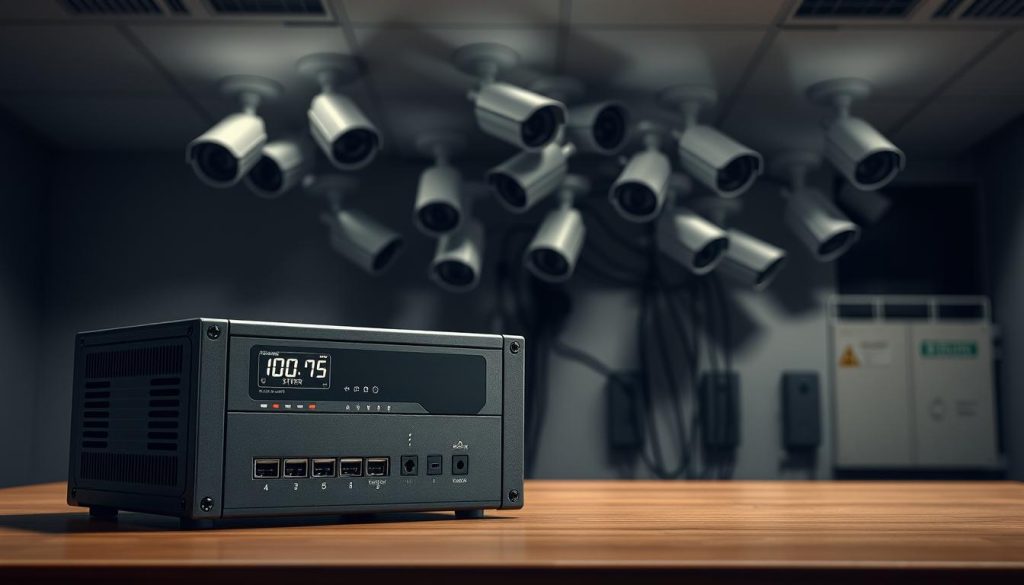
When the lights go out, your property’s security shouldn’t. A common concern is the duration surveillance cameras can operate during a power loss.
In Singapore, where safety is a top priority, continuous monitoring is non-negotiable. Electrical outages, though infrequent, can create critical vulnerabilities.
Many assume all security systems fail instantly without mains electricity. This is a dangerous myth. Modern setups are designed with resilience in mind.
The actual recording time depends on several factors. These include the type of cameras, their battery capacity, and backup power configuration.
Proactively assessing your current setup’s limitations is crucial. Upgrading to a robust system ensures peace of mind and uninterrupted protection. For a detailed guide, learn more about ensuring uninterrupted surveillance.
Key Takeaways
- Not all CCTV systems fail immediately during a power outage.
- Continuous surveillance is vital for property security in Singapore.
- Backup batteries and UPS units can extend recording time significantly.
- The type of camera and its power draw are key factors in duration.
- Proactive assessment of your security system is strongly recommended.
- A reliable setup provides essential peace of mind during electrical failures.
The Critical Role of CCTV During a Blackout
A blackout doesn’t just plunge a building into darkness. It can create a prime opportunity for security breaches.
Standard surveillance systems stop instantly when mains power fails. This leaves your property completely blind at the worst possible time.
Criminal activity often seeks to exploit this exact vulnerability. A complete loss of visibility means a total loss of evidence-gathering capability.
Modern security setups change this equation. With integrated backup power, continuous monitoring acts as a persistent deterrent.
The visual presence of active cameras, even in low light, signals that security remains operational.
Power outages are predictable security gaps. Proactive planning is a necessary part of any comprehensive security strategy.
In many critical locations, maintaining surveillance is non-negotiable. Backup systems are not just an option but a mandate.
- Hospitals require uninterrupted footage for patient and staff safety.
- Shopping malls use generators and UPS units to keep cameras online for public security.
Advanced, autonomous solutions take reliability further. Systems like the eGuard by Microsegur are designed to operate for days without any external power source.
This showcases the pinnacle of preparedness. It transforms a power outage from a critical vulnerability into a managed event.
Your security should never take a break. Ensuring your cctv system can endure a blackout is the foundation of true resilience.
How Long Can CCTV Record Without Electricity?
Surveillance continuity hinges on a system’s ability to function independently of mains power. The answer to this common question varies widely based on your equipment and planning.
Modern security technology offers solutions that keep watching long after the lights go out. Understanding these options is the first step toward true resilience.
Battery-Powered CCTV Systems: The Self-Sufficient Option
Battery-powered CCTV systems are standalone units designed to operate completely off the electrical grid. They are ideal for remote sites or as a dedicated backup solution.
These cameras detect motion and record video autonomously during a grid failure. This makes them a self-sufficient security pillar when you need it most.
Specific models, like the Reolink Go Plus, are engineered to work without electricity or even Wi-Fi. They use cellular networks to transmit data, ensuring operation in almost any scenario.
Another example, the Reolink Argus PT Ultra, demonstrates impressive stamina. It can record for 12 hours daily for up to 8 days on one full charge.
Typical Recording Duration on Backup Power
There is no single answer for how long backup power lasts. Duration is a function of battery size, camera efficiency, and recording settings.
Standard IP cameras with a backup battery typically record for 24 to 48 hours. High-capacity commercial systems can last for multiple days on a single charge.
Consumer-grade battery cameras offer several hours of active recording. More robust commercial setups provide significantly longer uptime for critical surveillance.
Power consumption matters greatly. Cameras using motion-activated recording conserve energy far better than those running continuously.
For indefinite operation, pairing these systems with solar panels creates a truly off-grid solution. This combination ensures your security never sleeps, regardless of utility power status.
Key Factors That Determine Recording Duration During an Outage
A checklist of hardware and software factors determines the operational window of cameras during electrical interruptions. Your system’s performance is a calculated result, not a mystery.
Understanding these elements allows for accurate planning and smarter upgrades. Each component and setting plays a distinct role in overall uptime.
Battery Capacity and Quality: The Foundation of Uptime
Backup runtime is fundamentally anchored to your battery’s specifications. Capacity, measured in milliampere-hours (mAh), is the primary gauge.
A larger mAh rating directly translates to more hours of operation. It’s the fuel tank for your security cameras during a power outage.
Not all batteries are created equal. Quality impacts both longevity and the stability of the power supply.
Security-grade units provide consistent voltage output until depletion. Inferior cells may cause system instability or premature shutdown.
Investing in high-capacity, high-quality batteries is the single most effective way to extend your surveillance window.
Camera Type and Technology: Power Consumption Matters
The type of camera you use dictates its base energy appetite. Older analog systems are simple but often less efficient.
Modern IP cctv cameras offer smarter power management alongside higher capabilities. Their digital nature can lead to better overall efficiency.
Advanced features significantly increase demand. Pan-tilt-zoom (PTZ) mechanics, powerful infrared illuminators, and high-resolution sensors are major consumers.
Each added function draws more from the backup battery, shortening its effective lifespan. A camera’s technology profile is a key variable in the uptime equation.
System Configuration and Recording Settings
User-defined settings have a dramatic impact on how long a system can work without mains electricity. This is where you have direct control.
Recording at 4K resolution consumes far more power than 1080p. Similarly, a frame rate of 30 fps demands more than 15 fps.
The most significant setting is the recording mode. Continuous surveillance drains a battery rapidly.
Motion-activated or event-based recording conserves energy exponentially. This simple change can double or even triple your backup duration.
Optimizing these configurations tailors your cctv power usage to your precise security needs. It ensures every watt is used effectively.
To summarize, the key determinants of your system’s endurance are:
- Battery Capacity & Quality: The size and reliability of your power reserve.
- Camera Technology: The inherent power draw of your chosen hardware and its features.
- System Settings: The configurable parameters that control recording quality and activity.
Evaluating these three areas provides a clear blueprint for assessing and improving your setup’s resilience.
Ensuring Continuity: Backup Power Solutions for Your CCTV
Power interruptions are inevitable, but your surveillance coverage doesn’t have to be. A robust security plan includes dedicated backup power solutions.
These systems keep your cameras and recorders online during grid failures. Selecting the right solution depends on your budget, outage frequency, and required runtime.
You have several reliable options to consider. Each offers a different balance of cost, complexity, and duration.
Uninterruptible Power Supply (UPS): Your First Line of Defense
An uninterruptible power supply (UPS) is essential for any plug-in cctv system. It provides instant emergency power during short outages.
This device bridges gaps lasting from minutes to a couple of hours. It prevents disruptive reboots of your dvr nvr and cameras.
A basic UPS for a single camera costs around $30. Multi-channel units for full systems start above $100.
Sizing a UPS correctly is crucial. Calculate the total wattage of all connected equipment.
Include each camera, the network video recorder, and your network switch. Choose a UPS with a capacity that supports this load for your desired runtime.
This uninterruptible power device is a cost-effective component. It ensures seamless operation during brief utility flickers or blackouts.
Generators: For Extended or Frequent Blackouts
Generators address scenarios involving prolonged loss of electricity. They are suited for areas with frequent or long-term blackouts.
These units automatically start, often with a short delay, using gasoline or diesel fuel. An automatic transfer switch is critical for seamless activation.
A key point is pairing a generator with a UPS. The UPS covers the vital seconds it takes for the generator to start and stabilize.
This combined approach is ideal for critical business applications. It guarantees no interruption in your power supply.
For homes and businesses in Singapore, this layered defense offers maximum reliability. It prepares you for multi-day outages.
Battery and Solar-Powered Camera Systems
Battery and solar-powered units are elegant, all-in-one solutions. They eliminate single points of failure inherent in grid-dependent setups.
These standalone cameras are designed to work without mains power. They often feature built-in batteries and solar power panels.
Products like the Reolink Argus PT Ultra offer continuous, renewable energy. They are engineered for easy consumer installation and minimal maintenance.
This approach provides true energy independence. Your security remains active indefinitely, regardless of the public utility status.
Comparing the primary backup options helps in decision-making:
- UPS Systems: Pros: Immediate response, prevents data loss, affordable. Cons: Limited runtime (typically 1-4 hours).
- Generators: Pros: Extended runtime (days), high power output. Cons: Higher cost, requires fuel, needs maintenance.
- Battery/Solar Systems: Pros: Fully independent, zero fuel costs, low maintenance. Cons: Higher upfront cost, weather-dependent (solar).
The most resilient strategy employs a layered approach. Use a UPS for immediate backup and a generator for long-term support.
Integrating solar-charged battery cameras adds further redundancy. This multi-faceted plan delivers the highest level of power reliability for your cctv systems.
Understanding CCTV System Types and Their Power Needs
Not all security cameras consume power in the same way, making system selection crucial for outage preparedness. The design and technology behind your cctv cameras determine their fundamental energy requirements.
Common form factors include Dome, Bullet, PTZ, and IP models. Each serves a specific purpose with distinct implications for your power strategy.
Dome units are often discreet and used indoors. Bullet cameras are designed for long-range outdoor surveillance.
PTZ (Pan-Tilt-Zoom) models offer remote control but require more electricity for their mechanics. IP cameras provide high-quality, network-based video.
Wired systems, whether analog or IP, rely completely on a centralized power supply. This creates a single point of failure during outages.
The security of your entire setup depends on protecting that source. Your dvr nvr and power injectors must be on a robust backup plan.
For any wired installation, securing the central power source with a UPS or generator is non-negotiable for continuous operation.
Wireless, battery-powered camera units offer inherent flexibility and outage resistance. Some models can last up to six months on a single charge.
This makes them excellent for hard-to-wire areas or as a supplemental layer of security. Their self-contained nature is a major advantage.
A key limitation is their typical use of motion-activated recording to conserve energy. They are less suited for scenarios demanding 24/7 continuous footage.
Power over Ethernet (PoE) streamlines installation for IP systems. It delivers both data and power over a single network cable.
This approach centralizes management but introduces a critical dependency. The PoE switch or injector becomes the lifeline for all connected devices.
If that switch loses its power supply, every camera on the network goes offline. Backing up this central hub is therefore essential.
Many modern properties use hybrid cctv system configurations. These combine wired and wireless technologies to balance coverage, efficiency, and reliability.
Understanding your current setup’s type is the first diagnostic step. It reveals the specific vulnerabilities you must address with a tailored backup solution.
Choosing a CCTV System for Maximum Power Reliability
Investing in a resilient security setup begins with choosing hardware designed for power independence. Your selection criteria must prioritize features that ensure continuous operation during grid failures.
This transforms your surveillance from a vulnerable utility into a standalone guardian. Focus on specifications that guarantee performance without electricity from the mains.
Prioritizing Cameras with Built-in Battery Backups
Cameras with integrated battery systems offer inherent outage resistance. Look beyond marketing claims about runtime and examine the technical specifications.
The key metric is battery capacity, measured in milliampere-hours (mAh). A higher number indicates a larger energy reserve for your security cameras.
Models like the Reolink Argus 4 Pro feature large, built-in batteries that recharge via solar in about 24 hours. The Atlas PT Ultra boasts a substantial 20,000 mAh pack.
For true reliability, prioritize units with high-capacity, removable batteries and clear solar input ports for easy recharging.
This design allows for hot-swapping cells or connecting to a solar power panel. It turns a temporary backup into a sustainable solution.
Evaluating Power Efficiency and Solar Compatibility
Efficiency determines how long a camera can work without electricity. Always check the product datasheet for power consumption, listed in watts.
Lower wattage ratings mean less drain on the battery. Advanced chipsets and adaptive features significantly boost efficiency.
Look for technologies like ColorX, which provides clear night vision without constantly running power-hungry infrared LEDs. Features such as IR cut-off filters and scheduled recording also conserve energy.
There is a direct trade-off between video quality and power use. Recording in 4K resolution offers superior evidential detail but demands more from the power supply.
For most properties, a balance of 2K resolution and motion-activated recording optimizes both evidence quality and backup duration.
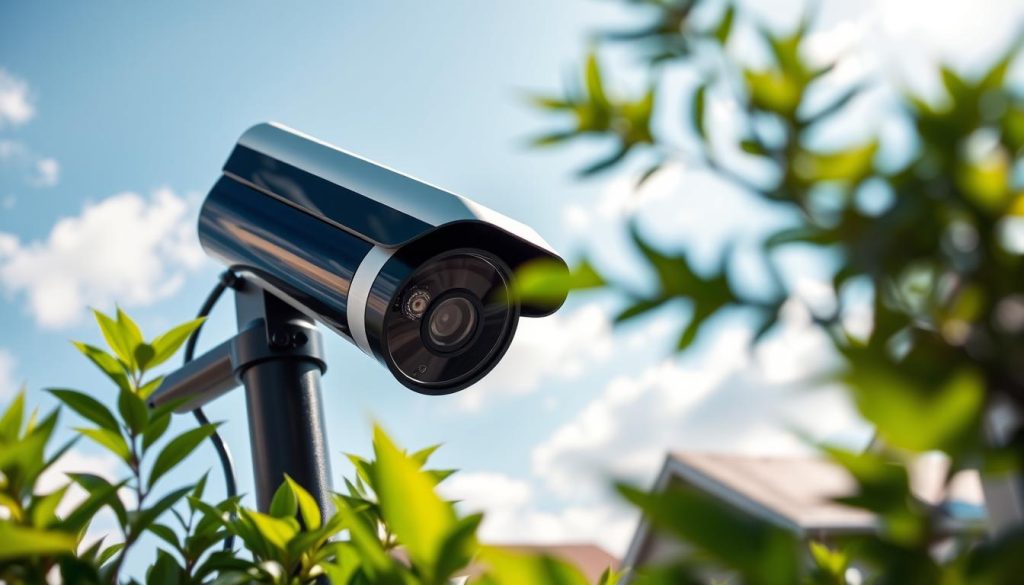
Solar compatibility is a game-changer for long-term reliability. A compatible panel can perpetually recharge the camera’s battery, creating an off-grid security node.
This feature is ideal for locations with frequent power outages or limited wiring access. It ensures your cctv systems remain active through extended disruptions.
When evaluating options, consider consulting a professional security installer in Singapore. They can assess your site’s specific sunlight exposure and recommend the best cctv cameras and solar solutions for your needs.
A well-chosen system delivers peace of mind. It guarantees your property’s monitoring never skips a beat, regardless of the public utility’s status.
Beyond Power: Maintaining Surveillance During an Outage
Even with ample battery life, your surveillance system can still be crippled by ancillary failures. A complete security chain requires both energy and data integrity.
When mains power fails, secondary components often collapse. Your cameras might stay on, but you could lose remote access or recording capability.
This breaks the monitoring chain. Addressing these hidden vulnerabilities is essential for true resilience.
Your security plan must consider data pathways and evidence preservation. These elements ensure monitoring continues and footage survives.
Network and Internet Access: The Remote Monitoring Challenge
Most modern camera setups rely on a local network for remote viewing. During a power outage, your router and modem typically lose electricity.
This severs the critical link between your cctv system and your smartphone app. You may have live cameras, but no way to see them remotely.
Real-time alerts and live views become unavailable. This gap defeats the purpose of remote security for many properties.
A robust alternative exists: 4G/5G cellular cameras. Models like the Reolink Go PT Ultra operate on mobile networks.
They bypass local Wi-Fi entirely. This provides a direct, independent data path during power outages.
For users who must have remote access, providing a small UPS to your router and modem is a critical step. This keeps your home network online.
This approach ensures you maintain real-time alerts and video streams. Your surveillance remains interactive even when the grid is down.
Cellular options are a game-changer for critical sites. They guarantee your oversight never goes blind.
Onboard Storage vs. Cloud: Where is Your Footage Saved?
The location of your recorded video determines its survivability. During an outage, internet connections often drop.
Cloud storage services require a constant online link. If that link breaks, new recordings cannot upload.
This creates a dangerous evidence gap. Events during the blackout may not be saved to the cloud.
Local, onboard storage does not have this dependency. SD cards or internal hard drives in NVRs continue writing.
They operate independently of external networks. This makes them far more dependable when the internet fails.
Data survivability is the core principle. Your evidence must persist through the disruption.
Best practices for reliable evidence preservation include:
- Dual Storage Systems: Use cameras that support both local SD card and cloud backup. This provides redundancy.
- Protect the NVR/DVR: Ensure your video recorder is on a UPS. This safeguards its hard drive from sudden power loss.
- Regular Backups: For critical footage, periodically archive recordings from local storage to an external drive.
Choosing the right type of storage is a strategic decision. For maximum reliability during power loss, prioritize local solutions.
Modern systems often offer hybrid configurations. They provide the convenience of cloud access with the safety of local recording.
Evaluate your needs based on outage frequency and evidence importance. A layered storage strategy ensures your surveillance footage is always retrievable.
The Importance of Proactive System Maintenance
Proactive maintenance is the unsung hero of a reliable surveillance operation during electrical disruptions. The finest hardware is only part of the equation.
Scheduled upkeep transforms your equipment from a theoretical safety net into a proven defense. Without it, components can silently fail.
A backup system is only as good as its last test. Regular checks are non-negotiable for guaranteed performance when a real power crisis hits.
Regular Battery Health and Charge Cycle Checks
Batteries are the heart of any off-grid security plan. Their health naturally degrades with each charge cycle.
Manufacturers typically recommend replacement every three to five years. A simple regimen can catch problems early.
First, check charge levels via your cctv app or control panel. Look for any indicator that full charge isn’t being reached.
Physically inspect batteries for swelling, leakage, or terminal corrosion. These are clear signs of imminent failure.
Most importantly, test under actual load. Do not rely on a status light alone.
Simulate a power outage with your cctv cameras running. Note any reduction in expected runtime—this is the true test of your battery.
This load test reveals the real-world capacity left in your power supply reserve. It ensures your system can truly work without mains electricity.
Testing Your Backup Systems Periodically
Your UPS and generator must activate flawlessly. A quarterly or bi-annual drill verifies this.
For a UPS test, manually disconnect the mains power at the source. Verify that the unit takes over instantly and without error.
All connected devices should remain online. Your surveillance feed must not flicker or reboot.
If you have an automatic standby generator, this drill confirms its start sequence. Listen for it to kick in within the expected seconds.
These practical tests build confidence. They prove your backup solutions are ready for real power outages.
A comprehensive maintenance checklist for your cctv systems covers all bases:
- Physical Inspection: Clean camera lenses and housings. Check for weather damage or pest intrusion. Verify all cable connections are secure and free from corrosion.
- Software & Firmware: Regularly update your camera and NVR firmware. This patches security vulnerabilities and can improve power efficiency.
- Recording Integrity: Periodically review stored footage. Ensure motion events are being captured and that video quality meets your evidentiary standards.
- Power Path: Inspect all power supply units, adapters, and PoE injectors for signs of wear or overheating.
This proactive approach does more than prevent failure. It extends the operational life of your equipment.
For properties in Singapore, it provides the ultimate peace of mind. You gain confidence that your security will perform without question during a crisis.
Securing Your Property Against the Next Power Outage
Preparing for electrical interruptions transforms your CCTV from a vulnerable utility into a steadfast guardian. The core takeaway is clear: recording duration varies, but you control it through informed planning.
Integrate robust backup solutions like UPS units, generators, or solar-powered camera units. Pair them with efficient technology and reliable local storage for your footage.
Do not wait for a crisis to expose flaws. Conduct an audit of your current security setup’s resilience today. Understanding its limits is vital for risk management.
For a tailored assessment and access to the latest reliable CCTV systems, consult a professional. Experts like ED Viston (+65 8313 4578) provide specific advice for Singapore properties.
With the right preparations, your surveillance remains a vigilant shield, regardless of the grid’s status. Achieve true peace of mind.