
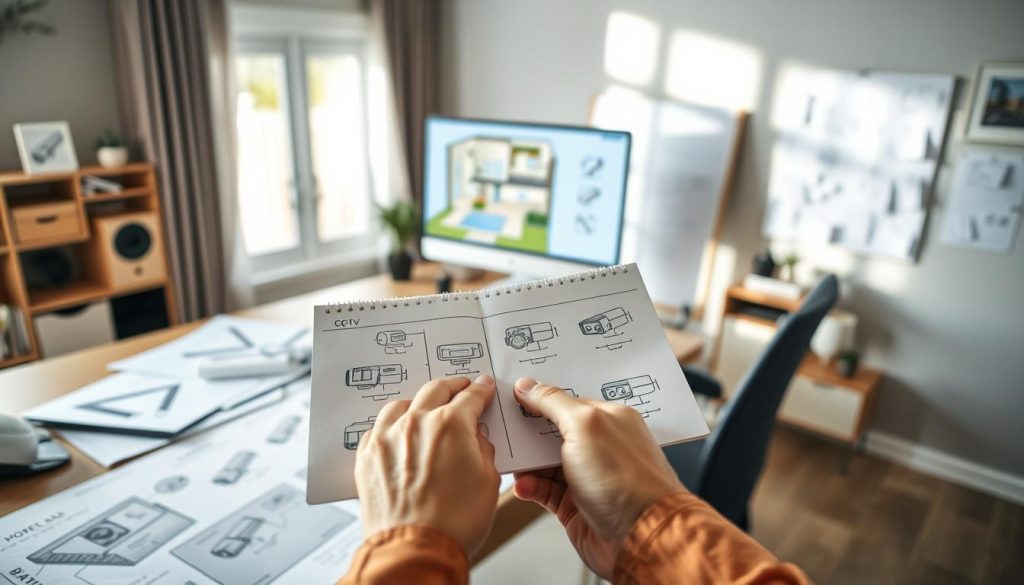
This is a common question for homeowners looking to protect their property. The right number of devices for your residence depends on several key factors.
Singapore is a nation familiar with surveillance. With over a million security cameras in operation, monitoring is a part of the urban landscape.
For residents, the goal is to achieve robust security while respecting privacy laws and community guidelines. It’s a balance between safety and compliance.
Recent changes have made it simpler for HDB dwellers. Approval is no longer required for corridor-facing cameras in HDB flats, offering more flexibility.
Understanding local regulations, like the PDPA and HDB rules, is the essential first step. This ensures your setup is both effective and lawful.
A well-planned home security system does more than just record. It deters crime, provides crucial evidence, and delivers the ultimate peace of mind for your family.
Key Takeaways
- The ideal number of cameras for a house is not one-size-fits-all; it depends on your property’s layout and security needs.
- Singapore has a high density of surveillance infrastructure, making security systems a normal consideration for residents.
- Modern home security involves balancing enhanced protection with legal and ethical responsibilities.
- HDB residents now have more freedom to install cameras facing common corridors without seeking prior approval.
- Familiarity with the Personal Data Protection Act (PDPA) and HDB guidelines is crucial for a compliant installation.
- A strategic camera system serves three main purposes: deterrence, evidence collection, and providing peace of mind.
- This guide will help you determine the right setup for your specific home and situation.
Understanding Singapore’s CCTV Regulations for Homeowners
Before mounting a single device, understanding the rules that govern home monitoring is essential. Singapore’s framework is designed to protect both your property and your neighbors’ privacy.
Two primary sets of guidelines shape what you can do. These are the national Personal Data Protection Act (PDPA) and the specific Housing & Development Board (HDB) rules for public housing.
Key Laws: PDPA and HDB Guidelines
The PDPA is a broad law governing data collection. While it mainly applies to organizations, its principles are vital for residents.
It emphasizes consent, notification, and reasonable use. When your surveillance captures public or neighboring spaces, you must consider these ethical guidelines.
For HDB dwellers, the board’s specific guidelines are paramount. They detail where you can place devices on your flat’s exterior.
Violating these rules can lead to complaints, fines, or legal disputes. Compliance is the best way to ensure your security system operates without issue.
Indoor vs. Outdoor Installation Rules
A simple rule of thumb applies. Installing security cameras inside your private dwelling typically does not require any permit.
The critical distinction comes with outdoor placement. Permission is necessary if your device will capture common property or adjacent private spaces.
This includes corridors, lift lobbies, or a neighbor’s doorway. The goal is to achieve safety without infringing on others’ rights.
Here is a quick summary of the general rules:
- Indoor Installation: Usually no approval needed. Your living room, kitchen, and interior hallways are your private domain.
- Outdoor Installation (Private Landed Home): More flexibility exists, but pointing a device at a neighbor’s home or a public walkway may require consideration and communication.
- Outdoor Installation (HDB Flat): Cameras facing the common corridor now often do not need prior HDB approval. However, they must not obstruct the walkway or invade others’ privacy.
- Always Require Permission: Any installation that involves drilling into structural walls or capturing footage of common areas not immediately outside your door.
Respecting these distinctions keeps your security setup effective and lawful. It balances your need for monitoring with community harmony.
Factors Determining Your Ideal Camera Count
Moving beyond regulations, the actual count of monitoring devices hinges on several physical and situational factors. Your specific needs dictate the final number, not a universal rule.
Most residences function well with a range of two to six devices. A compact studio apartment might only need two, while a two-story landed home could require six to eight for full coverage.
The goal is to create a security system that leaves no vulnerable point unseen. This requires a careful evaluation of your unique property.
Property Size and Layout: HDB Flat vs. Landed Home
The size and layout of your home are the most obvious starting points. Different housing types present distinct challenges for security.
An HDB flat typically has a single main access point—the front door facing the common corridor. This centralized entry simplifies coverage needs. One or two well-placed devices can monitor this crucial choke point effectively.
In contrast, a landed property has a larger perimeter. Multiple doors, ground-floor windows, a driveway, and possibly a garden create numerous potential entry points. Covering all these areas demands a higher quantity of outdoor cameras.
The architectural flow inside your home also matters. Open floor plans may need fewer devices than layouts with many separate rooms and hallways.
Identifying High-Risk Areas and Entry Points
Conduct a walk-through of your property to identify its weak spots. High-risk areas are any locations where unauthorized access is most likely or would cause the most harm.
These always include ground-floor doors and windows. Also consider main staircases, driveways, and secluded corners where someone could hide. Valuables stored in specific rooms might warrant extra attention.
Strategic placement is key to eliminating blind spots. Position cameras so their fields of view overlap. This ensures continuous monitoring and leaves no gap for crime to go unnoticed.
A device at the front door should also capture part of the porch or walkway. This creates a layered defensive view.
Balancing Security Needs with Privacy Concerns
A robust home security plan must respect personal privacy. This applies both inside your home and with your neighbors.
Ensure cameras are focused on security zones, not private living spaces. Avoid pointing devices into bedrooms or bathrooms. The same principle applies outdoors.
Angle your outdoor cameras to capture only your own yard and entryways. Be mindful not to surveil a neighbor’s windows or their private garden area.
This balance is not just ethical; it prevents disputes and ensures your security system enhances safety without creating tension.
Ultimately, your ideal camera count is a custom solution. It is derived from analyzing your home’s physical blueprint, its vulnerability points, and the necessary privacy boundaries for everyone’s peace of mind.
How Many CCTV Cameras Can I Have on My House? Legal Limits Explained
The question of legal quantity is answered not with a number, but with a set of clear, situation-dependent rules. Singapore’s framework focuses on where you place devices and what they record, not an arbitrary cap.
Your specific property type and the scope of your surveillance define the boundaries. A compliant setup always respects these operational limits.
The Shift in HDB Corridor Camera Approvals
A significant policy change has simplified the process for many residents. The Housing & Development Board (HDB) removed the mandatory approval requirement for corridor-facing devices.
This means you can generally install a device at your front door without seeking prior HDB permission. The goal was to streamline home security for residents while maintaining order.
Important conditions still apply rigorously. Your cameras must not capture the interior of a neighboring flat through its door or windows.
The installation cannot pose a safety hazard or obstruct the common corridor. Devices should be fixed on your own doorframe or wall.
Respecting Neighbor Privacy and Common Property
Understanding “common property” is crucial for legal monitoring. This includes shared spaces like corridors, lift lobbies, staircases, and void decks.
While you may film the area directly outside your unit for access coverage, extensively recording common areas may require permission. The line is drawn at privacy intrusion.
An intrusive angle points a lens at a neighbor’s living room window. An acceptable angle focuses solely on your own doorstep and package drop-off point.
Best practice involves angling your security cameras downward to monitor your entry without overshooting into private zones.
Ignoring these guidelines has serious consequences. Affected neighbors can request mediation or complain to the Town Council.
The council can issue a directive to remove the offending device. In cases of severe privacy violation, the Personal Data Protection Act (PDPA) can lead to fines of up to S$5,000.
Your system’s legality depends entirely on mindful placement. Respecting these boundaries ensures your security enhances safety without creating conflict.
Common Misconceptions About CCTV Rules in Singapore
Before finalizing your security plan, it’s crucial to separate widespread fiction from legal fact. Misinformation about surveillance laws can lead to ineffective setups or even legal trouble.
Clearing up these myths ensures your system is robust and fully compliant.
Debunking Myths on Camera Quantity Limits
A persistent myth suggests a strict legal cap on the number of devices you can install. This is false.
Singaporean law does not set a universal maximum for residential security cameras. Your limit is defined by practical and ethical factors, not a government quota.
The real focus is on where you place each device and its privacy impact. A system with two poorly placed cameras can cause more problems than one with six thoughtfully positioned units.
The goal is effective, lawful coverage of your properties, not hitting an arbitrary count.
What You Are (And Aren’t) Allowed to Record
The core rule is simple: you may record your own private space. The violation occurs when your monitoring captures areas where others have a reasonable expectation of privacy.
Your neighbor’s home, balcony, or yard is off-limits. Recording public common areas extensively may also require permission from the managing authority.
Understanding this distinction protects you from disputes.
Here is a clear breakdown of typical permissions:
- You CAN Record: Your own front doorway, porch, driveway, and private garden. Interior spaces like your living room or hallway are also within your rights.
- You CANNOT Record: A neighbor’s windows, balcony, or the interior of their home. Pointing a device down a shared corridor to capture every neighbor’s comings and goings is also problematic.
Audio recording is a related area with stricter rules. Laws governing audio surveillance are often more stringent than for video.
Many consumer cameras have microphones. It’s wise to disable this feature unless you fully understand the legal implications of recording conversations.
Replacing myths with accurate facts is empowering. It leads to a better security setup and prevents unnecessary conflict with your community.
Recent Changes to CCTV Laws and What They Mean for You
Regulations governing home surveillance in Singapore have undergone notable updates, directly impacting residents’ installation freedoms. Staying informed about these changes is crucial for a lawful and effective setup.
The evolving landscape reflects a balance between empowering homeowners and protecting community privacy. Understanding the latest rules helps you leverage new conveniences while avoiding pitfalls.
Updated HDB Approval Requirements for 2024
A significant policy shift has removed a major hurdle for many residents. The Housing & Development Board (HDB) no longer requires pre-approval for corridor-facing devices installed at your flat’s entrance.
This change streamlines the process for enhancing your home’s security. You can now proceed with installing a security camera to monitor your doorstep without first seeking official permission.
Important conditions still apply to ensure responsible use. Your device must be fixed securely on your own doorframe or adjacent wall.
The installation cannot obstruct the common corridor or create a safety hazard. Most critically, the lens must not peer into a neighbor’s home through their door or windows.
This policy adjustment has led to a reported rise in demand for surveillance devices. Residents are quickly adopting this new flexibility to protect their property.
Your post-installation responsibilities remain. You are accountable for ensuring your system complies with all guidelines on an ongoing basis.
Consequences of Non-Compliance and Privacy Violations
Easier installation does not mean a free-for-all. Serious penalties exist for violating privacy rules or misusing your monitoring equipment.
Enforcement typically begins with a complaint. Your Town Council or neighbors may raise concerns if your cameras capture areas beyond your private space.
Authorities will likely issue an initial warning requesting you to adjust or remove the offending device. Ignoring this directive escalates the matter.
For severe breaches, the Personal Data Protection Act (PDPA) can impose financial penalties. Fines for intrusive surveillance can reach up to S$5,000.
Common violations include:
- Pointing a lens directly at a neighbor’s window or balcony.
- Extensively recording shared common areas like lift lobbies.
- Using audio recording features without understanding strict consent laws.
Proactive communication is your best defense. A simple conversation with neighbors about your security intentions can prevent misunderstandings.
Explain that your cameras are focused solely on your own entry point. This fosters goodwill and community cooperation.
Ultimately, the onus is on you, the homeowner, to install responsibly. The updated laws grant freedom but demand equal respect for others’ rights.
These changes mean you can act faster to secure your home. They also require a heightened sense of ethical security practice to keep your neighborhood harmonious.
Choosing the Right CCTV Camera Types for Your Home
Camera technology offers various designs, each suited to different monitoring tasks and environments. The right choice turns a simple video feed into a powerful security asset.
Your selection should match your specific goals. Consider whether you need a visible deterrent, discreet observation, or active patrol of a large area.
Singapore’s tropical climate adds another layer to your decision. Units must withstand heavy rain, high humidity, and provide clear footage after dark.
Dome, Bullet, and PTZ Cameras: A Comparison
Three primary designs dominate the market. Understanding their strengths guides you to the best tool for each spot on your properties.
Dome Cameras are named for their hemispheric housing. This design makes them vandal-resistant and discreet, as the lens direction is hard to discern.
They are ideal for indoor common areas like living rooms or hallways. Their low profile blends into ceilings, providing unobtrusive security.
Bullet Cameras feature a long, cylindrical shape. They are highly visible and act as a strong psychological deterrent to intruders.
Their design often supports longer-range viewing. This makes them perfect for monitoring a specific gate, driveway, or perimeter fence.
PTZ Cameras (Pan-Tilt-Zoom) offer the most control. You can remotely pivot, tilt, and zoom the lens to actively track movement or inspect details.
They are excellent for covering large, open spaces like a wide driveway or garden. Their flexibility comes at a higher cost and complexity.
- For Discreet Indoor Monitoring: Choose a dome camera. Its compact form is less intrusive in living spaces.
- For a Visible Outdoor Deterrent: Select a bullet camera. Its prominent appearance warns potential trespassers.
- For Active, Large-Area Surveillance: Invest in a PTZ camera. It allows you to patrol a zone without installing multiple fixed units.
Essential Features for Singapore’s Climate: Weatherproofing and Night Vision
Technical specifications ensure your system survives and performs locally. Two features are non-negotiable for reliable operation.
Weatherproofing is critical for any device mounted outside. Look for an IP (Ingress Protection) rating of at least IP66.
This rating guarantees protection against powerful jets of water and dust. For coastal areas, corrosion-resistant materials in the housing are also vital.
Night vision capability is equally important. Most security camera models use Infrared (IR) LEDs to illuminate scenes in total darkness.
IR night vision produces clear black-and-white footage. Newer models offer color night vision, which provides more detail but requires some ambient light.
Lens selection impacts what you see. A wide-angle lens is great for covering a broad corridor or room.
A varifocal lens allows you to adjust the zoom for precise coverage of a specific entry point. Larger image sensors generally capture better quality video, especially in low light. For a deep dive into what makes a camera perform well, consider reading about CCTV camera quality indicators.
Your final choice balances strategy with resilience. A visible bullet camera deters crime at the gate, while discreet indoor cameras keep watch within.
Always ensure your outdoor cameras are built for the environment. This guarantees your investment protects your home day and night, rain or shine.
Strategic Camera Placement for Maximum Coverage
The true power of a residential surveillance system lies not in its quantity, but in the strategic positioning of each unit. Where you install your devices dictates their effectiveness more than any other factor.
Smart camera placement ensures complete coverage of your property. It eliminates vulnerabilities and can even reduce the total number of devices you need. This makes your security setup more cost-effective and less intrusive.
Essential Monitoring Points for Any Singapore Home
Every home has critical zones that demand attention. Prioritizing these points forms the backbone of a solid defense plan for your cameras home.
Start with all primary entry and exit locations. These are the most likely paths for unauthorized access. Do not overlook ground-floor windows, which are common secondary targets.
For landed homes, expand your checklist to include the perimeter. Driveways, side gates, and garden access points need visibility.
- Front and Back Doors: The absolute priority for any security system.
- First-Floor Windows: Especially those hidden from street view.
- Garage and Driveway: Key areas for vehicle and package security.
- High-Value Interior Spaces: Consider a discreet device in a room where valuables are kept.
Covering these essential areas creates a strong baseline of protection. It addresses the most common risks for Singaporean homes.
Maximizing Views While Minimizing Blind Spots
Eliminating blind spots is the art of camera placement. A gap in your surveillance is an open invitation for trouble.
The key technique is overlapping fields of view. Position your cameras so that each lens covers about 30% of another’s scene. This creates a continuous net of coverage with no dead zones.
Mounting height is crucial for capturing usable footage. A height between 8 to 10 feet is often ideal. It allows the lens to capture a clear view of a person’s face without being easily tampered with.
Mind your angles to avoid backlighting from the sun or bright lights. Also, ensure the lens has a clear line of sight. Trim any foliage or move objects that could create hidden spots.
For covering a compound area like a driveway and front steps, angling a single camera at a 115-degree tilt can be very effective. In open spaces, a 360-degree panoramic unit can replace two or three standard devices.
Special Considerations for HDB Corridors and Common Areas
Placement in HDB blocks requires extra finesse. The goal is to monitor your own doorstep without surveying the shared hallway or neighboring units.
Vertical positioning is your best tool. Install the device at a height of 8 to 10 feet on your own doorframe. Angle it downward to focus solely on your entry mat and the immediate area where packages are left.
This downward angle captures faces of visitors while minimizing the view into the corridor at large. It respects neighbor privacy and complies with guidelines.
Using a camera with a wide field of view or the suggested 115-degree tilt can help cover both your door and the approach. This intelligent use of a single device simplifies your living space layout and installation.
Remember, the corridor is common property. Your lens should not actively track movement down its entire length or peer into other flats. A focused, narrow view is both compliant and effective.
Mastering these placement strategies turns your equipment into a powerful shield. It delivers the comprehensive monitoring needed for true peace of mind.
Technical Specs That Impact Your System’s Effectiveness
Beyond choosing where to point a lens, the internal specs of each device determine what you actually see and save. These technical decisions form the foundation of a reliable and functional security system.
Understanding specifications like resolution and storage needs turns a simple video feed into a powerful investigative tool. It ensures your investment delivers clear, usable evidence when it matters most.
Resolution, Field of View, and Storage Requirements
Resolution is measured in megapixels (MP) or terms like 2K and 4K. Higher numbers capture finer details, such as facial features or license plates from a distance.
A 4MP camera provides excellent clarity for most homes. Upgrading to 4K offers superior detail but significantly increases file size and storage demands.
4K footage can consume three times more digital space than 2K recordings. This trade-off between detail and storage is a key planning consideration.
The field of view (FoV) defines how much space a lens can see. A wide-angle lens, often 130 degrees or more, is perfect for monitoring a broad corridor or open room.
A narrower FoV focuses on a specific entry point with greater detail. Matching the lens to the layout of the area maximizes your coverage efficiently.
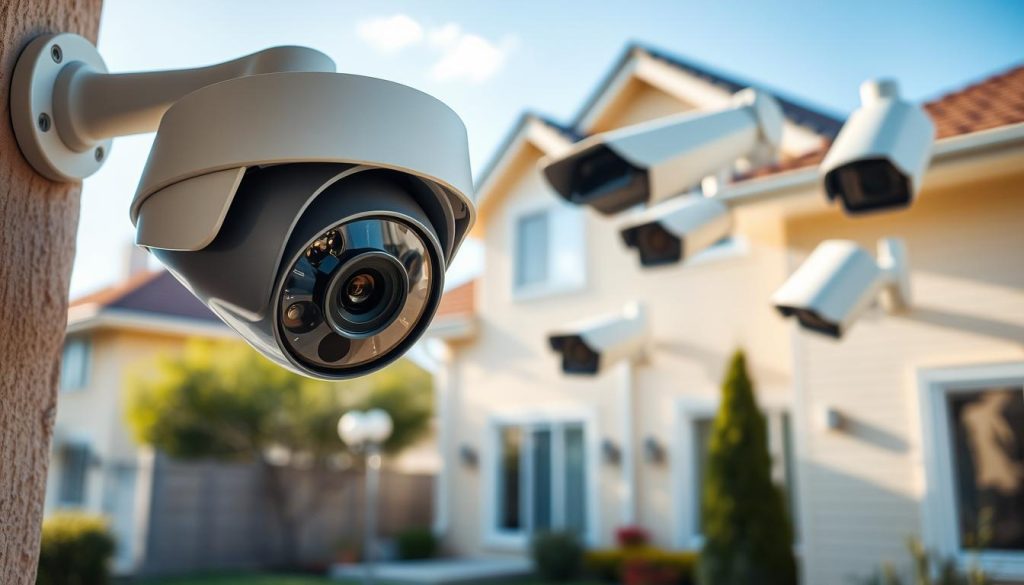
Storage requirements depend on your camera count, resolution, and how long you keep footage. A practical framework helps plan capacity.
For standard 1080p recording, plan for about 1TB of storage for every four cameras to retain 30 days of video. Higher resolutions require proportionally more drive space.
Modern network video recorders (NVRs) support large hard drives. Cloud storage offers an alternative without physical hardware but relies on a stable internet connection.
Wired vs. Wireless Systems: Pros and Cons for Singapore Homes
The connection method impacts reliability and installation complexity. Wired and wireless surveillance system designs each have distinct advantages.
Wired systems, often using Power over Ethernet (PoE), provide exceptional stability. A single cable delivers both power and data, ensuring a constant connection unaffected by signal interference.
This makes PoE ideal for permanent outdoor installations. The initial setup requires running cables, which can be more invasive but results in a rock-solid network.
Wireless security camera systems offer easier do-it-yourself installation. They connect to your home Wi-Fi, eliminating the need for extensive cabling through walls.
This flexibility is great for renters or temporary setups. However, wireless signals can be weakened by thick walls or disrupted by other electronic devices.
Singapore’s dense urban environment, with many Wi-Fi networks in close proximity, can sometimes cause interference. For critical outdoor coverage, a wired connection is often the more reliable choice.
Consider your home’s layout when deciding. A landed property with long distances may benefit from PoE’s reliability. An HDB flat might accommodate a well-placed wireless system.
Power backup is another technical factor. A system with an uninterruptible power supply (UPS) keeps cameras recording during a brief outage, maintaining your security.
Finally, ensure your home network has sufficient bandwidth for remote viewing. Streaming multiple high-definition feeds simultaneously requires a robust router.
Night vision capability is non-negotiable. Infrared (IR) illuminators allow surveillance to continue in total darkness, capturing clear black-and-white footage.
By weighing these technical specs, you build a system that performs reliably day and night. It delivers peace of mind through consistent, high-quality monitoring.
Steps to Legally Install Your CCTV System
Your journey from planning to a live system is guided by specific legal steps and practical decisions. This final phase transforms your blueprint into a functional layer of protection for your residence.
Following a clear action plan ensures your security setup is both compliant and effective. It addresses official requirements and fosters positive community relations from day one.
Checking with Your Town Council and Managing Neighbor Relations
Even with relaxed rules, verifying permissions is a smart first move. For outdoor devices that capture common areas, your Town Council may still require notification or approval.
HDB residents should contact their specific Town Council office. Condominium dwellers must check with their management corporation. This proactive check prevents future compliance issues.
Building trust with your neighbors is equally crucial. A simple conversation can prevent most disputes.
Studies show proactive communication builds trust and can prevent 80% of conflicts. Inform adjacent households about your installation plans before work begins.
Be transparent about your goals. Explain that your cameras are focused solely on your own entry points to enhance family safety.
Offer to show them the camera view to demonstrate its limited scope. This openness respects their privacy and turns potential critics into allies.
A brief, friendly script works well: “Hi, I’m installing a security device at my front door for package safety. It will only point at my own doorstep. I wanted to let you know directly.”
Professional Installation vs. DIY: Making the Right Choice
The next decision is who will handle the physical setup. Both professional services and do-it-yourself approaches have distinct advantages.
Professional installation offers expertise and peace of mind. Technicians optimize camera angles for maximum coverage and calibrate motion sensors to reduce false alarms.
They ensure wiring is secure and compliant with building codes. This minimizes errors—a significant 56% of DIY failures stem from cabling issues.
Most professional packages include a warranty on both labor and equipment. This is valuable for long-term system reliability.
The DIY route can significantly reduce upfront costs, potentially slashing expenses by 60%. It grants full control over the installation timeline and process.
This option requires technical confidence. You must be comfortable drilling, running cables, and configuring network settings. Quality online tutorials can guide you.
Consider your property type. A complex landed home with multiple stories might benefit from a professional’s skill. A straightforward HDB door camera could be a manageable DIY project.
Before activating any system, run through this essential checklist:
- Stable Power: Ensure all devices have a consistent power source. Use surge protectors for wired systems.
- Secure Wiring: Check that all cables are neatly tucked away and protected from weather or tampering.
- Motion Zone Settings: Configure detection zones to focus on key access areas. This avoids unnecessary recordings from passing cars or trees.
- Full System Test: Record sample footage day and night. Verify remote viewing works on your phone or computer.
Completing these steps methodically leads to a robust and lawful home security solution. Your monitoring will operate smoothly, providing the safety you designed without unintended complications.
Integrating Cameras with a Complete Home Security Plan
Security evolves from a collection of devices into an intelligent ecosystem through strategic integration. Your monitoring equipment becomes far more powerful when it works in harmony with other protective layers.
This holistic approach transforms reactive recording into proactive defense. It creates a unified shield that enhances family safety and delivers deeper peace of mind.
Linking CCTV with Alarms, Sensors, and Smart Home Devices
Modern security systems are designed to communicate. Connecting your cameras to intrusion alarms and motion sensors creates automated responses that multiply your protection.
Imagine a motion sensor detecting movement at your side gate. It can instantly trigger specific outdoor cameras to begin recording and send an alert to your phone.
This integration ensures you capture crucial footage the moment a potential threat is detected. It turns your surveillance network into an active participant in your home security.
Smart home compatibility takes convenience further. Many modern security camera systems sync with platforms like Amazon Alexa or Google Home.
You can use voice commands to view live feeds on your TV. Your smart door locks and motion-activated lights can also be part of this automated chain.
Centralized control via a single mobile app is a major benefit. You can arm your alarm, check camera feeds, and review night vision recordings from one interface.
This seamless connectivity simplifies daily management. It makes comprehensive security a natural part of your living routine.
Cost-Effective Security Solutions for Different Budgets
Building a robust defense does not require a massive upfront investment. Smart, phased strategies allow you to prioritize protection based on risk and resources.
A highly effective approach is to start with a basic setup for critical points. A two-camera system covering your main door and a key ground-floor window addresses the most common access points.
You can expand this system over time as your budget allows. This method ensures vital areas are covered immediately without delay.
Value bundles offered by reputable providers are another excellent option. These packages often include multiple indoor cameras, an NVR, and necessary cables at a discounted rate.
Investing in quality equipment from the start can be cost-effective. Higher-resolution cameras with better coverage may reduce the total number of devices you need.
Choosing systems with open APIs or standard protocols future-proofs your investment. This allows you to add new sensors or compatible smart devices later without replacing your entire surveillance system.
Beyond technology, a comprehensive plan includes simple, low-cost measures. Visible signage indicating video surveillance acts as a powerful deterrent to crime.
Engaging with a neighborhood watch program enhances community-wide safety. These layers work alongside your technical system to create a secure environment.
For some homeowners, professional-grade installations may even qualify for insurance discounts. Check with your provider, as this can offset a portion of the initial cost.
Ultimately, a well-integrated plan is about building intelligent layers. It combines technology, strategy, and community awareness to safeguard your spaces and provide lasting peace of mind.
The Proactive Benefits of a Well-Planned CCTV System
Investing in residential surveillance delivers profound advantages that extend far beyond simple video recording. A thoughtfully designed system acts as a powerful shield, offering both prevention and resolution.
These benefits are fully realized when your setup is compliant and strategically installed. The result is a tangible upgrade to your property‘s defense and your family’s well-being.
Deterring Crime and Providing Critical Evidence
Visible monitoring devices are a proven deterrent to criminal activity. The mere presence of a security camera can make a home a less attractive target.
Research indicates that visible security cameras can reduce burglary risks by up to 31%.
This preventive power is a key return on investment. It stops trouble before it starts, protecting your assets and peace.
Should an incident occur, recorded footage becomes invaluable. Clear video provides critical evidence for police investigations and insurance claims.
In Singapore, such systems play a vital role in public safety. Official data shows these devices helped solve approximately 4,095 crimes in a recent year.
This evidence can expedite reports and resolve disputes over property damage. It turns your surveillance into a reliable witness for your home security.
Gaining Peace of Mind and Enhancing Family Safety
The psychological benefit of peace of mind is perhaps the most valued. Knowing your living spaces are monitored reduces anxiety when you are away.
Remote viewing capabilities allow you to check on your security from anywhere. This creates a sense of control and connection to your household.
Effective coverage that minimizes blind spots directly enhances day-to-day safety. It ensures all critical entry points are watched.
This comprehensive monitoring protects all household members. It fosters a secure environment where families can thrive without undue worry.
A well-planned system integrates seamlessly into your life. It provides quiet confidence rather than being an obtrusive presence.
Ultimately, these proactive benefits hinge on proper planning and maintenance. A compliant, well-installed security setup delivers lasting value and true peace of mind.
Your Roadmap to a Secure and Compliant Home
Empowered with the right information, you can now transform your home into a secure haven with confidence. Your journey involves understanding local regulations, assessing your property layout and entry points, choosing suitable equipment, and executing strategic camera placement.
The ideal number of devices is a personal equation. It balances your security needs with privacy considerations and the physical size of your living space. Effective coverage eliminates blind spots at all critical access areas.
Remember that a security system requires ongoing attention. Periodically review camera angles and monitoring zones. Stay informed about any regulatory updates to ensure your setup remains compliant.
You now possess the knowledge to make informed decisions for your property. A well-executed plan delivers long-term safety and profound peace of mind. For a custom solution tailored to your specific homes, consulting a security professional is a wise final step.