
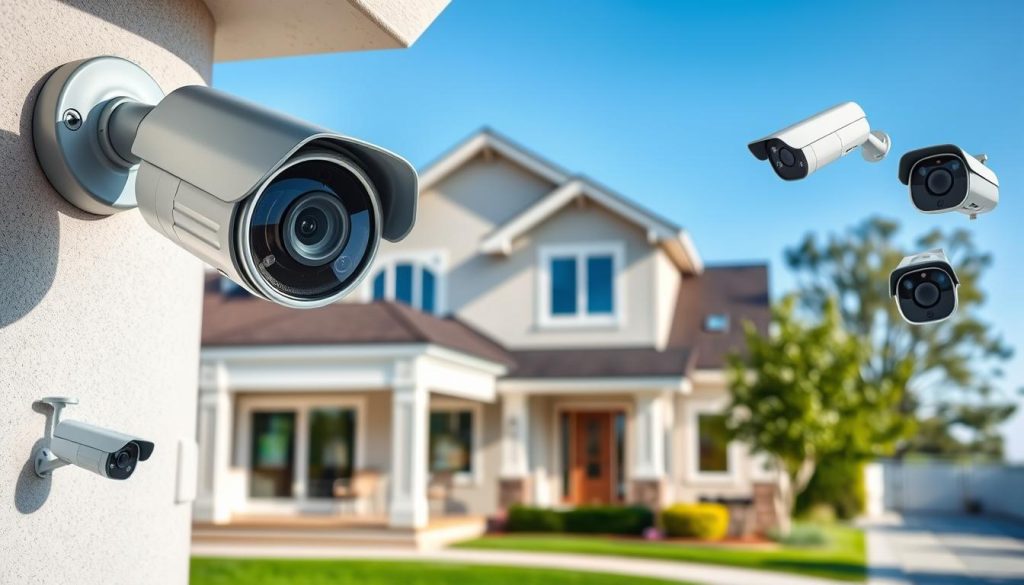
Choosing the right number of security cameras is a common challenge for property owners in Singapore. The goal is to protect your home or business effectively. You want to feel safe and secure without spending too much.
There is no single correct number that works for everyone. Your perfect setup depends on your property’s unique layout and your specific security needs. A small apartment has different requirements than a large warehouse.
This guide will help you find the right balance. We will walk you through the key factors that determine proper coverage. You will learn how to plan a surveillance system that fits your space and budget.
For a general idea, a typical house might need between two and six units. A commercial property often requires a much larger system. The right planning prevents blind spots and gives you true peace of mind.
By the end of this article, you will know how to assess your property. You can create a tailored security plan. For personalized advice, you can also speak with an expert like Wen Hong at +65 60135960 for current deals.
Key Takeaways
- The right number of cameras is not a one-size-fits-all answer.
- Your property’s size, layout, and specific risks determine your needs.
- Effective planning prevents security gaps and avoids unnecessary cost.
- Residential properties often start with 2 to 6 units for basic coverage.
- Commercial sites may need a more extensive system for complete surveillance.
- A balanced approach considers both full coverage and your budget.
- Expert consultation can provide a custom solution for your situation.
Why CCTV Cameras Are Essential for Modern Security
The evolution of security needs has made visual monitoring systems indispensable for contemporary safety. These devices do more than just record events. They create a proactive shield around your property.
Research reveals a compelling statistic. Visible security cameras can cut burglary risks by up to 31%. This fact alone highlights their power as a deterrent. A comprehensive surveillance setup addresses multiple layers of protection.
Deterring Crime and Providing Evidence
The presence of a CCTV system acts as a powerful psychological barrier. Potential intruders often seek easy targets. When they spot monitoring devices, they typically move on to less protected areas.
This preventive function is invaluable for both homes and businesses across Singapore. For instance, shops in HDB neighborhoods use visible units to discourage shoplifting. The mere sight of a dome or bullet camera changes behavior.
When incidents do occur, recorded footage becomes crucial evidence. High-quality video helps police identify suspects quickly. It also supports insurance claims with undeniable proof of events.
Modern systems capture clear details, even at night. This capability is vital for resolving disputes or investigating accidents. The evidential value extends beyond criminal acts to include safety monitoring.
Gaining Peace of Mind in Your Home or Business
Remote access technology transforms how we protect our spaces. You can check on your home security from anywhere using a smartphone. This constant connectivity alleviates worry when you’re away.
Families gain tremendous peace of mind while on vacation. They can verify that their residence remains secure. Business owners monitor operations after hours with equal ease.
For commercial settings, the benefits multiply. You can oversee staff performance and customer service interactions. The same system helps ensure employee safety during late shifts.
In Singapore’s context, this means checking on your shophouse from the office. Or viewing your condo’s entrance while traveling abroad. This operational awareness is a game-changer for modern living.
Proper installation of these systems creates a seamless security network. It connects physical protection with digital oversight. The result is a smarter, more responsive approach to safety.
First Step: Assessing Your Property’s Unique Security Needs
Mapping your unique security landscape is the critical first step toward a tailored solution. A generic approach often leaves dangerous gaps. Your security needs are as individual as your property itself.
This phase involves a detailed audit. You examine the physical space and potential risks. The goal is to create a blueprint for effective surveillance.
Evaluating Your Property Layout and Size
Begin with a simple sketch of your property. Note the size, shape, and all structural features. This map is your planning foundation.
For homes, mark every potential access point. This includes:
- All exterior doors (front, back, side)
- Ground-floor windows
- The garage and its entry door
- Gates or openings in perimeter fences
Inside, consider key rooms and hallways. Think about where family members gather or where valuables are kept. The layout dictates sightlines and potential blind spots.
Commercial properties require a more complex map. Outline large outdoor areas, parking lots, and loading docks. Indicate primary customer entrances and staff-only entry points.
A detailed property map transforms a vague idea into a clear, actionable security plan. It visually answers the question of coverage.
Identifying High-Risk and Vulnerable Areas
Not all areas carry equal risk. Focus on zones that are attractive to intruders or prone to accidents. These are your priority monitoring locations.
Common residential vulnerabilities include secluded back entrances, dark pathways, and windows hidden by landscaping. A side gate or a basement window can be a weak point.
For a business, high-traffic cash registers, stockrooms, and secluded storage areas are critical. Also assess dimly lit alleyways or perimeter fences that are easy to climb.
Ask yourself: “Where would an intruder try to enter unseen?” and “Where are my most valuable assets located?” The answers highlight your true security needs.
Understanding Residential vs. Commercial Priorities
The core priorities differ between a home and a business. This shapes the entire surveillance strategy.
Residential security focuses on personal safety and privacy. The goal is to protect loved ones and personal belongings. Coverage often concentrates on entry points and common living spaces.
Commercial security must balance asset protection with operational oversight and public safety. It safeguards inventory, deters theft, and can monitor employee and customer interactions. A retail shop in an HDB hub, for example, needs to watch both the sales floor and the back office.
This initial assessment is non-negotiable. It forms the solid foundation for every decision that follows, including the core calculation for your specific camera count. Skipping this step can lead to an ineffective system full of costly blind spots.
How Many CCTV Cameras Should I Have? The Core Calculation
Translating your property’s security blueprint into actual equipment numbers is the next essential step. This calculation transforms your risk assessment into a tangible surveillance plan. The goal is achieving optimal visual coverage without overspending.
There is no universal formula that fits every situation. Your specific count depends on multiple interconnected variables. A thoughtful approach balances protection needs with practical constraints.
Key Factors That Determine Your Camera Count
Several concrete elements shape your final equipment tally. Consider each factor carefully during your planning phase.
Property dimensions and layout provide the foundation. Larger spaces naturally require more monitoring devices. The configuration of rooms and outdoor zones also matters greatly.
Count all potential access points thoroughly. Each door, window, and gate represents a possible entry vector. These vulnerable locations often demand dedicated surveillance units.
Identify high-traffic and high-value areas precisely. These zones include main entrances, cash handling spots, and storage rooms. Strategic placement here delivers maximum security value.
Modern camera capabilities influence your total number needed. Wide-angle lenses cover broader views than standard models. Higher resolution units may reduce the quantity required for clear identification.
A detailed checklist helps quantify abstract security concepts. Measure your square footage, count entry points, and map priority zones before deciding on equipment numbers.
Typical Recommendations: From Basic to Comprehensive Coverage
General guidelines offer a helpful starting point for most properties. These ranges adapt to your unique circumstances.
For residential security in Singapore, most setups use between two and six surveillance units. A basic HDB flat might begin with just two well-placed devices. A spacious landed property often benefits from four to six units for complete perimeter monitoring.
Commercial properties require significantly more extensive systems. A small shopfront may need eight to sixteen monitoring points. Larger warehouses or industrial sites might deploy systems with thirty-two to sixty-four cameras.
Consider these common configuration levels:
- Light Coverage: One trusty front door camera plus one driveway unit. This setup monitors primary entry and vehicle access.
- Average Coverage: Add an indoor camera to the light setup. This expands monitoring to common living or working spaces.
- Full Coverage: Incorporate backyard or rear entrance surveillance. This completes perimeter protection for most properties.
Singaporean condominiums present unique planning opportunities. Focus on the main door and balcony access points. Shared facilities may already have building-wide security in place.
Budgeting for Your System: Initial Cost vs. Long-Term Value
Financial considerations play a crucial role in your final decision. A balanced approach respects both immediate constraints and future benefits.
The initial investment includes equipment, installation, and setup costs. Higher-quality components often carry larger price tags. Professional installation services ensure optimal performance from day one.
Long-term value extends far beyond the purchase price. A comprehensive surveillance system can lower insurance premiums significantly. It also provides invaluable evidence during incidents, potentially saving thousands in losses.
Scalability represents a smart financial strategy. Begin with a core system that addresses your highest-priority risks. Choose equipment that allows easy expansion as needs evolve or budget increases.
Consider total cost of ownership over five to ten years. Reliable systems require minimal maintenance and provide continuous protection. This perspective often justifies investing in slightly better equipment initially.
For business owners, the calculation includes operational benefits. Monitoring can improve efficiency and customer service alongside security. These additional returns enhance the overall investment value.
Strategic Camera Placement for Maximum Effectiveness
Proper positioning of your surveillance equipment determines the real-world effectiveness of your security investment. The best devices in the world offer little protection if they cannot see critical zones. Intelligent deployment transforms your calculated count into a functional protective network.
Every property has unique sightlines and vulnerabilities. Strategic placement addresses these specific challenges directly. It ensures your monitoring resources work together for complete visual coverage.
Critical Areas Every System Should Monitor
Certain locations demand constant visual monitoring for basic security. These zones represent the highest risk for unauthorized entry or valuable asset exposure. A systematic approach ensures no critical spot goes unwatched.
For residential properties, focus begins at all ground-floor access points. This includes every exterior door and accessible window. The main hallway or staircase also requires consistent observation.
Inside the home, prioritize common living spaces where family gathers. These areas often contain electronics and personal items. A clear view here helps document any internal incidents.
Commercial sites have additional priority zones. Cash registers and transaction points need unambiguous coverage. Stockrooms, loading docks, and secluded storage areas also rank as essential.
Create a monitoring checklist for your property:
- All primary doors (front, back, side, and garage entries)
- Main corridors and stairwells connecting different levels
- Driveways, parking lots, and vehicle access routes
- Common areas like living rooms, lobbies, or retail floors
- Any secluded exterior spot hidden from street view
Mounting height matters for both security and perspective. Install devices 8 to 10 feet above ground level. This position discourages tampering while providing a comprehensive viewing angle.
Using Camera Technology to Minimize Blind Spots
Advanced visual technology can dramatically reduce the number of devices needed. Modern units offer features that expand their observational capacity. Smart selection helps eliminate dangerous gaps in your coverage.
Pan-Tilt-Zoom (PTZ) cameras provide remarkable flexibility. Operators can remotely control the direction and magnification. A single PTZ unit can monitor what would normally require multiple fixed devices.
Fisheye lenses offer another powerful solution. These provide extremely wide fields of view, sometimes up to 360 degrees. They are perfect for covering large open areas like warehouses or parking lots.
Strategic positioning enhances any camera’s effectiveness. Angle devices to cover multiple approaches to a door. Create overlapping fields of view between adjacent units for redundancy.
For backyard monitoring, seek a field of view of 130 degrees or more. This wide perspective captures more activity with fewer blind spots. Proper positioning avoids obstructions like tree branches or decorative elements.
Outdoor vs. Indoor Placement Considerations
Environmental requirements differ significantly between exterior and interior installations. The right specifications ensure reliable performance in each location. Thoughtful selection prevents premature failure and maintenance issues.
Outdoor devices need robust weatherproof housing. Singapore’s tropical climate demands protection from heavy rain and high humidity. Look for units with proper IP ratings indicating resistance to water and dust.
Indoor cameras prioritize discreet design and aesthetic integration. They should monitor effectively without feeling intrusive in living or working spaces. Smaller dome models often work well for interior applications.
Avoid common placement mistakes that compromise your system. Never install units too low where they become vulnerable to tampering. Avoid pointing lenses directly at light sources which causes glare and washes out footage.
Respect privacy boundaries during installation. Keep devices out of bedrooms and bathrooms in homes. Ensure your cameras do not inadvertently monitor your neighbor’s property or private spaces.
Test each camera’s view after installation. Verify there are no obstructions in the sightline. Make small adjustments to optimize the perspective before finalizing the position.
Choosing the Right Cameras: Types, Features, and Specs
Understanding camera specifications and types is crucial for matching equipment to your specific security goals. The right hardware transforms your coverage plan into a powerful surveillance network.
Technical details determine what your security system can see and record. This knowledge helps you invest wisely. You avoid buying overpriced features you don’t need or underpowered units that fail in critical moments.
Resolution, Field of View, and Night Vision Capabilities
Three core specifications define a camera’s observational power. These are resolution, field of view, and night vision. Balancing these specs is key to effective monitoring.
Resolution measures image clarity, typically in megapixels (MP). Higher numbers like 4K (8MP) capture fine details. This clarity is vital for identifying faces or reading license plates from a distance.
Field of View (FOV) describes how wide an area a lens can see. A wide 130-degree lens can cover a large living room or backyard with one unit. A narrower view is better for focusing on a specific entry point like a front door.
Modern night vision uses infrared (IR) LEDs to illuminate darkness. Basic IR provides black-and-white footage. Newer color night vision technology uses advanced sensors to capture details in very low light, offering clearer evidence.
Consider your priorities for each area. A driveway camera needs high resolution and good night vision. An indoor unit in a hallway might prioritize a wide field of view over extreme resolution.
Comparing Dome, Bullet, PTZ, and Fisheye Cameras
Different housing designs serve distinct purposes in a security system. The four main types are dome, bullet, PTZ, and fisheye. Each excels in specific scenarios.
- Dome Cameras: These feature a compact, discreet housing. They are often vandal-resistant and blend into ceilings. Ideal for indoor cameras in shops, offices, or common rooms where a low profile is desired.
- Bullet Cameras: Recognizable by their cylindrical shape, these are highly visible deterrents. They are designed for long-range viewing. Perfect for monitoring driveways, fences, or parking lots across a distance.
- PTZ Cameras: Pan-Tilt-Zoom units can be controlled remotely to follow movement. They cover vast areas dynamically. Best for large, open commercial properties where active monitoring is needed.
- Fisheye Cameras: These use a special lens to deliver a 180 or 360-degree view. A single fisheye can eliminate blind spots in a room. Excellent for retail floors, lobbies, or warehouse centers.
Your property’s layout dictates the ideal camera mix. Use dome cameras for discreet indoor coverage, bullet cameras for long outdoor sightlines, and consider a PTZ or fisheye for large, critical zones.
Essential Features for Singapore’s Climate and Environment
Singapore’s tropical weather demands specific hardware features. Humidity, heavy rain, and consistent heat can degrade equipment. Choosing the right specs ensures long-term reliability.
Look for a high Ingress Protection (IP) rating. An IP66 or IP67 rating guarantees protection against dust and powerful water jets. This is non-negotiable for any outdoor installation.
Heat resistance is equally important. Ensure the operating temperature range suits our climate. Built-in sunshades can prevent overheating and lens glare during bright days.
Advanced features enhance your system’s intelligence. Motion detection with customizable zones reduces false alerts from passing cars. Two-way audio allows you to speak through the camera, useful for greeting visitors or warning intruders.
Smart alerts can notify your phone when unusual activity is detected. These features make your security camera system more proactive. They help you respond quickly to potential incidents.
Invest in higher-end features for critical, high-risk areas. Standard models often suffice for general monitoring. This balanced approach maximizes your coverage and budget.
Developing a Cohesive and Scalable Surveillance Plan
A truly effective security approach connects multiple protective layers into a unified defense network. Individual devices offer limited protection when operating in isolation. Your complete strategy should consider how all components interact.
This final planning phase synthesizes everything discussed previously. It creates a holistic blueprint for your property’s safety. The goal is building a responsive security system that grows with your needs.
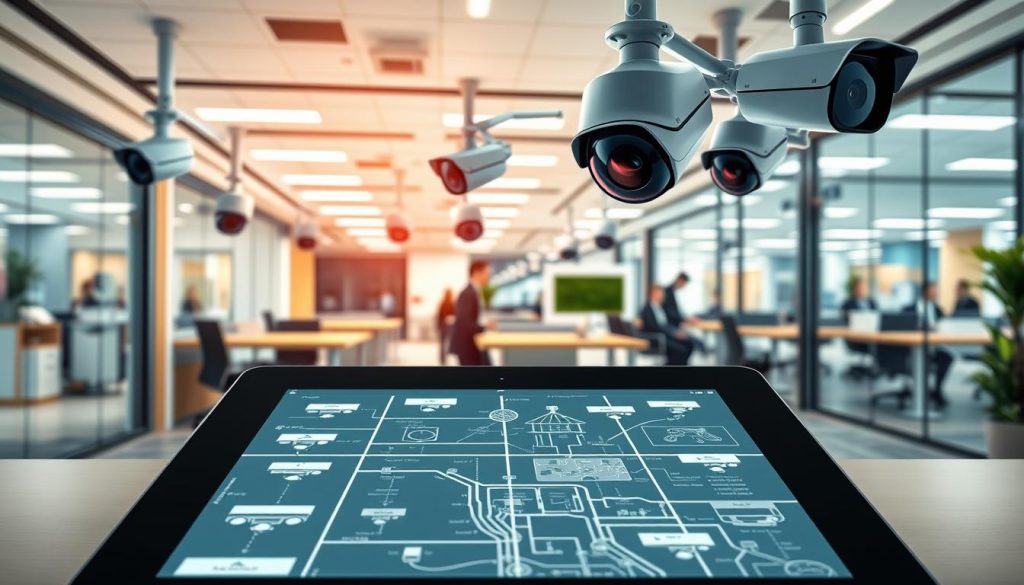
Consider both immediate requirements and long-term flexibility. A well-designed plan delivers comprehensive coverage today. It also accommodates future changes without requiring complete replacement.
Integrating Cameras with Alarms and Other Security Devices
Modern surveillance achieves its full potential through integration. Connecting your visual monitoring with other devices creates a powerful security multiplier. Each component enhances the others’ effectiveness.
Start by linking CCTV with burglar alarm systems. When a door sensor triggers, nearby cameras can automatically begin recording. This captures crucial video evidence of the event as it unfolds.
Motion-activated lighting provides another valuable partnership. Lights deter intruders while improving camera image quality. Smart locks can be integrated to monitor entry and exit patterns.
Consider these automated sequences for enhanced protection:
- A camera records and sends a phone alert when perimeter motion is detected after hours.
- Access control systems log employee entries while cameras verify identity visually.
- Smoke detectors trigger cameras to assess the situation remotely.
Integrated systems transform reactive monitoring into proactive protection. They create intelligent responses that address threats before they escalate.
Planning for Storage, Connectivity, and Future Expansion
Your recording infrastructure determines how much history you retain. Storage planning involves balancing capacity, quality, and retention time. Different properties have varying requirements.
Network Video Recorders (NVRs) offer local storage with high capacity. They typically use hard drives measured in terabytes (TB). Calculate your storage needs based on camera number, resolution, and desired retention period.
Cloud storage provides off-site backup and remote access. Subscription services ensure footage survives even if local equipment is damaged. Many modern systems offer hybrid solutions.
Connectivity choices impact reliability and performance. Power over Ethernet (PoE) delivers both power and data through one cable. This creates stable, professional-grade installations.
Wi-Fi offers flexibility for difficult wiring situations. It’s ideal for rental properties or temporary setups. Consider bandwidth requirements when planning wireless networks.
Future-proofing is essential for scalable security. Choose recorders with extra channels for additional cameras. Ensure your network infrastructure can handle increased data traffic.
Cost-Effective Solutions for Different Property Sizes
Tailored approaches maximize protection within budget constraints. Your property’s size and layout determine the most efficient solution. Smart planning delivers value without compromising safety.
Small HDB flats benefit from focused monitoring. Concentrate on main entry points and common living areas. A basic 2-4 camera setup with a compact NVR often suffices.
Medium-sized condos require slightly more extensive coverage. Include balconies and secondary access points. Consider a 4-8 camera system with motion detection features.
Landed properties need comprehensive perimeter monitoring. Plan for 6-12 units to cover all exterior walls and gates. Include both wide-angle and zoom-capable devices.
Small-to-medium enterprises have unique commercial requirements. Retail spaces need coverage of sales floors, stockrooms, and cash handling areas. Office environments prioritize entry control and common spaces.
A phased installation approach spreads costs effectively. Begin with the most critical high-risk areas. Expand coverage gradually as budget allows.
Pre-configured bundles offer excellent starting points for many properties. They include compatible cameras, recorders, and necessary cables. This simplifies the planning process while ensuring component compatibility.
Professional consultation helps identify the most efficient configuration for your specific situation. Experts can recommend solutions that provide complete peace of mind without unnecessary expense.
Ensuring Long-Term Performance: Maintenance and Pitfalls to Avoid
A security system’s reliability over time depends as much on consistent upkeep as on initial installation quality. Your visual monitoring network represents a significant investment in protection. Proper care ensures it continues performing effectively for years.
Neglecting regular maintenance can create dangerous blind spots in your coverage. Common planning errors made during setup can also compromise your entire surveillance operation. This section provides a practical guide to preserving your system’s value.
Routine Checks and Upkeep for Your CCTV System
Establishing a simple maintenance schedule prevents small issues from becoming major failures. Both homeowners and business managers should perform these basic tasks. Consistency is more important than complexity.
Start with weekly visual inspections. Verify all cameras remain properly aligned and unobstructed. Check that recording indicators are active on your network video recorder.
Monthly tasks include testing remote viewing applications on your smartphone or computer. Ensure you can access live feeds and recorded footage without issues. Review recent video clips to confirm image quality remains sharp.
Every three months, perform thorough physical cleaning. Gently wipe camera lenses with a microfiber cloth to remove dust, pollen, and Singapore’s urban grime. Clean housing exteriors to prevent dirt buildup that could obscure the view.
Inspect mounting brackets for signs of loosening or corrosion. Check cable connections for weather damage, especially on outdoor units. Verify that infrared LEDs for night vision are functioning properly.
Update your system’s firmware when manufacturers release new versions. These updates often improve performance and patch security vulnerabilities. Backup your configuration settings before updating.
Common Installation and Planning Mistakes
Even well-designed surveillance networks can fail due to avoidable errors. Professional installers report consistent patterns in problematic setups. Understanding these pitfalls helps you prevent them.
Poor placement accounts for nearly half of all performance issues. Installing units where direct sunlight causes lens glare creates unusable footage during parts of the day. Positioning cameras too high or too low limits their effective coverage.
Ignoring lighting conditions leads to 55% of nighttime recording failures. Relying solely on built-in infrared without considering ambient light sources creates dark areas. Ensure critical zones have adequate illumination for clear identification.
“The most expensive security camera cannot compensate for fundamental placement errors. Proper positioning considers both day and night visibility throughout all seasons.”
Insecure mounting invites tampering and vandalism. Use sturdy brackets and tamper-resistant screws for all exterior installations. Conceal cables within conduits to prevent cutting or disconnection.
Underestimating storage needs affects 37% of users. High-resolution footage consumes significant space. Calculate requirements based on camera count, recording quality, and desired retention period before purchasing your recorder.
Weak network security exposes your surveillance feed to unauthorized access. Always change default passwords on all devices. Enable encryption on wireless networks and consider a virtual private network for remote viewing.
Choosing the wrong camera type for specific areas represents 63% of equipment mistakes. Bullet cameras work best for long-distance viewing of driveways or perimeters. Dome units provide discreet monitoring for indoor rooms like living spaces or retail floors.
For complex tasks like running cables through walls or configuring network settings, professional assistance proves valuable. Experts ensure proper installation that maximizes your equipment’s capabilities. They can also advise on scalable solutions for future expansion.
Proactive maintenance extends the operational lifespan of your security cameras. It preserves your initial investment while ensuring continuous protection for your home or business properties. Regular attention delivers peace of mind that your surveillance network remains vigilant.
Securing Your Property with Expert Guidance and Installation
Professional expertise transforms your security planning from theory into reliable, real-world protection. This guide has walked you through assessing needs and planning coverage.
Expert installation brings your plan to life correctly. Specialists ensure optimal placement and avoid common mistakes. They handle complex wiring and network setup for you.
For a custom security solution in Singapore, contact Wen Hong at +65 60135960. Discuss your property’s specific needs and current deals on surveillance equipment.
With the right planning and professional help, achieving complete security for your home or business is within reach. This brings true peace of mind for years to come.