
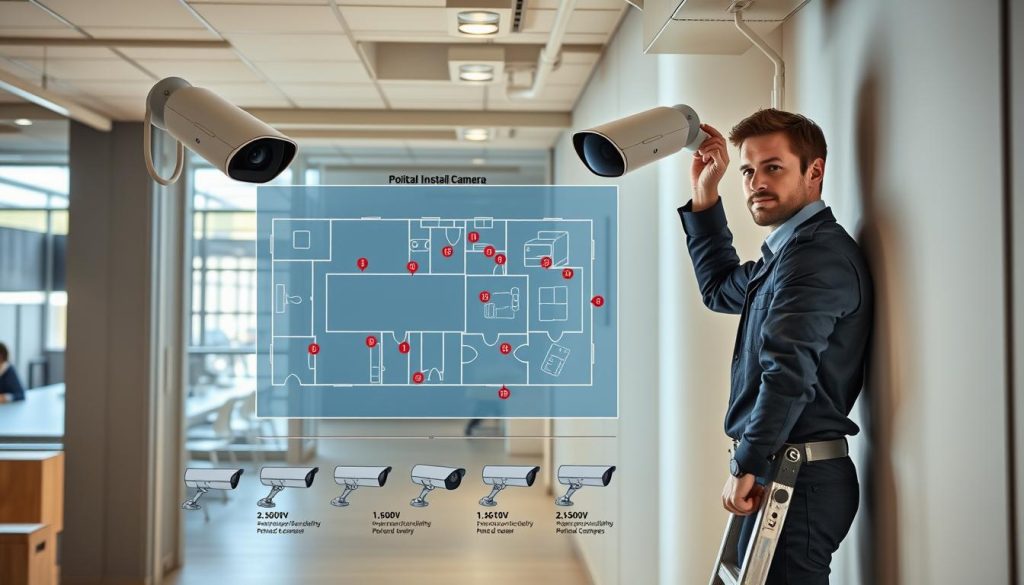
Planning a security system for your Singapore property starts with one fundamental question. How many CCTV cameras should I have? The answer shapes your entire surveillance setup.
A well-designed system provides peace of mind. It deters potential threats and records important events. Getting the camera count right is the first critical step.
This buyer’s guide helps you find that perfect number. We focus on achieving complete coverage for your specific space. You’ll balance security needs with practical limits like budget and layout.
The solution is never one-size-fits-all. A small apartment needs a different approach than a landed house or business. Your personal security goals are unique.
By following our methodology, you can create a strategic plan. Avoid common installation mistakes and wasted resources. Let’s build a foundation for your property’s protection.
Key Takeaways
- The right number of security cameras depends entirely on your specific property layout and security objectives.
- Effective planning balances complete visual coverage with practical constraints like budget and wiring.
- Residential and commercial properties have vastly different requirements for surveillance systems.
- A strategic camera placement map is essential before any installation begins.
- This guide provides a step-by-step approach tailored for property owners in Singapore.
- Industry data shows typical ranges, but your final count will be personalized.
- Proper planning prevents common pitfalls and ensures your investment delivers maximum security value.
Why CCTV Cameras Are Essential for Modern Security
The evolution of urban living and commerce has elevated electronic monitoring from an optional extra to a core component of risk management. A visible surveillance system acts as the cornerstone of a proactive defense strategy for any property.
Their most powerful function is deterrence. Studies confirm that visible security cameras can reduce burglary risks by up to 31%. The mere presence of these devices makes a property a less attractive target for criminal activity.
This visual warning is particularly effective in commercial settings like retail shops and banks. It signals that actions are being recorded, which discourages theft, vandalism, and unauthorized entry before they happen.
When prevention isn’t enough, these systems provide critical evidence. Clear video footage becomes an invaluable asset for law enforcement investigations. It also supports insurance claims by providing an objective record of events.
Modern technology transforms passive recording into an active security tool. Features like motion-triggered alerts notify you of suspicious movement in real time. This allows for immediate response, even from a remote location.
Remote monitoring offers unparalleled peace of mind. Homeowners and business managers can check on their property from anywhere. This constant connection is a fundamental benefit of a modern surveillance setup.
In commercial environments, the value extends beyond pure loss prevention. Surveillance can enhance operational oversight and improve customer service. It also provides a fair method for monitoring staff performance and safety.
The presence of a robust system can lead to tangible financial benefits. Many insurers view monitored properties as lower risk. This can result in potential discounts on property insurance premiums.
In a high-density place like Singapore, a recorded log is especially important. Properties are often in close proximity. Having an objective account of perimeter activity helps resolve disputes and clarifies incidents.
For maximum effectiveness, cameras should integrate with other devices. Alarms and access control systems create a layered defense strategy. This integrated approach is more effective than any single component.
Ultimately, the psychological sense of safety for inhabitants is a key benefit. Knowing a space is monitored contributes significantly to overall well-being. Understanding this essential role is the first step in planning a system that meets your specific security objectives.
Assessing Your Property’s Unique Security Needs
Security is not generic. Your camera system must be built upon a clear understanding of your space’s individual blueprint. This phase moves you from abstract concepts to a concrete, personalized plan.
A thorough assessment identifies exactly what you need to protect. It maps the unique challenges of your property. This factual groundwork prevents guesswork later.
Analyzing Your Property’s Layout and Size
Begin with a simple floor plan. Sketch all indoor and outdoor spaces that need visibility. This visual map is your most important tool.
Measure the total square footage. A common industry baseline considers one device per 500 square feet for initial estimation. Your actual layout dictates the final number.
Note the number of floors and room configurations. Long hallways or open-plan areas require strategic viewing angles. The physical size and shape are primary determinants.
Identifying High-Risk and Vulnerable Areas
These are locations attractive to intruders or prone to incidents. Systematically mark every potential weak point on your plan.
Key vulnerable spots often include:
- All ground-floor doors and windows
- Secluded back entrances and side gates
- Dark alleyways and perimeter fences
- Parking lots and storage areas for valuables
Consider the crime rate in your specific Singapore neighborhood. High-risk locations may need more intensive coverage.
Do not overlook external structures. Garden sheds and utility boxes can be targets hidden from the main building’s view.
Defining Your Security Objectives: Deterrence vs. Monitoring
Clarify your primary goal. Is it deterrence, using visible units to scare off intruders? Or is it covert monitoring to discreetly capture evidence?
Most effective home security systems use a blend. Obvious devices at main entry points act as a powerful deterrent. More discreet ones allow for internal observation.
For residences, high-traffic zones like living rooms are priorities. Businesses must secure points-of-sale and stock rooms. Your security objectives shape the approach for each zone.
Think about natural movement patterns. Where do people congregate or pass through? These are key areas for coverage.
This entire assessment is not about counting devices yet. It is about creating a comprehensive “target list” of zones. The goal is complete coverage without blind spots.
A thorough needs assessment forms the factual foundation. All subsequent decisions about device count, type, and placement rely on this crucial step.
How Many CCTV Cameras Should I Have? A Buyer’s Guide
A strategic surveillance plan translates your property’s unique blueprint into a precise device count. This guide provides the framework to calculate that figure yourself.
You will move from general estimates to a personalized total. The process balances comprehensive visibility with smart resource allocation.
Key Factors That Determine Your Camera Count
Your final tally is a sum of several variables. No single metric gives the answer, but together they paint a clear picture.
Key factors include the total square footage and physical layout of your property. The number of doors, windows, and other access points is critical.
You must also account for vulnerable or high-value zones identified in your assessment. Desired image quality and field of view influence the plan.
Of course, your financial budget sets a practical boundary for the entire project.
Camera technology itself is a major factor. A single wide-angle or 360-degree unit can cover a large living room or parking lot.
This capability can potentially replace multiple standard devices. It directly reduces the total number cameras you need.
A common industry starting point is one device per 500 square feet. Treat this as a preliminary guideline, not a strict rule.
Your unique layout and risk areas from the earlier assessment are far more important.
Typical Camera Numbers: Residential vs. Commercial Properties
For a typical home like an HDB flat or small landed house, 2 to 6 well-placed devices often suffice. This range provides comprehensive coverage for most residential setups.
A common configuration includes one for the main door, another for the back door or service yard. A third might cover the living area, and a fourth watches the car porch.
Commercial properties have needs that scale significantly. A small retail shop might start with 4 to 8 units.
Large facilities like warehouses or office complexes can require 16, 32, or even 64+ devices. They must monitor entrances, exits, aisles, cash registers, and the full perimeter.
Always consider future scalability during planning. Opting for a network video recorder (NVR) with more channels than you initially need allows for cost-effective expansion.
For a precise plan, consulting a local security expert is wise. They account for Singapore’s specific architectural styles, like common corridors and void decks.
The goal is to find the minimum number required to achieve your security objectives. It must eliminate critical blind spots without straining your budget or storage capacity.
That is the true definition of the right quantity of security cameras for your space.
Strategic Camera Placement for Maximum Coverage
Your surveillance system’s power lies in seeing everything important, which depends on where you look from. Intelligent placement is arguably more critical than the total quantity of devices. A single, well-positioned unit can provide the coverage of two poorly located ones. This phase turns your equipment list into an effective network. For a detailed methodology on building your comprehensive surveillance plan, our guide offers further insights.
Essential Areas to Monitor: Entry Points and Critical Zones
Prioritize all primary entry points. This includes the front door, back door, side gates, and any ground-floor windows. These are the most common access routes for unauthorized activity.
Internally, focus on main hallways, staircases, and common areas like the living room or kitchen. Externally, ensure your driveway, car porch, and secluded backyard corners are in view.
Less-visited spots like basements or storage rooms also need attention. The goal is to eliminate paths where someone could move unseen.
Maximizing Views with Wide-Angle and PTZ Cameras
Deploy wide-angle or 360-degree units in large, open space. A living room, retail floor, or warehouse can often be covered by one such device.
This strategy minimizes the total number of units needed. PTZ (Pan-Tilt-Zoom) cameras are ideal for monitoring large perimeters.
They can be controlled to pan across an area and zoom in on specific activity. This provides flexible views and enhances detailed monitoring of parking lots or long fences.
Avoiding Common Placement Errors and Blind Spots
The most frequent error is installing devices too high or at the wrong angle. This creates critical blind spots.
The optimal height is between 8 to 10 feet. Position them pointing slightly downward for the best field of view. Avoid locations where foliage, furniture, or signage can cause obstructions.
Never point a lens directly at the sun or bright lights. It washes out the image. For night coverage, use ambient light or position built-in IR illuminators effectively.
In Singapore, respect privacy laws and neighborly etiquette. Angle your devices to capture activity only within your property’s boundaries.
Think in terms of overlapping fields of view. If one unit is tampered with, another should capture the incident. Avoid excessive overlap, however, as it wastes resources.
Always test the placement before final mounting. Use a temporary setup or a live feed on your phone to check for blind spots and ensure all key areas and entry points are covered.
Calculating the Optimal Number of Cameras for Your Budget
A practical budget transforms your surveillance blueprint from an ideal plan into an actionable installation. This phase is about finding your optimal number—the point where robust security meets financial reality.
Your calculating process must be both strategic and flexible. It merges your property’s specific needs with the hard numbers of cost.
Using Property Layout to Map Camera Positions
Begin with the property layout sketch from your assessment. This is your canvas for visually placing each unit. Start by marking non-negotiable, high-risk zones.
These include main entrances, cash points, and secluded access areas. Each marked zone typically requires at least one device.
Now, look for consolidation opportunities. A single wide-angle camera can often cover multiple adjacent zones. For example, one unit might monitor both a living room and dining area.
This mapping exercise visually reveals the minimum number cameras needed for basic coverage. It shifts the question from “how many?” to “where exactly?”
Balancing Coverage Quality with Financial Constraints
Your budget dictates a critical trade-off between quality and quantity. Prioritize high-resolution devices for critical identification points like front doors.
For general monitoring of less critical areas, more affordable models can suffice. This tiered approach maximizes your security value per dollar.
Consider the total cost of ownership for your entire system. Key components include:
- The camera units themselves
- A network video recorder (NVR)
- Storage hard drives and cabling
- Power supplies and professional installation
In Singapore, professional setup costs vary. Getting quotes from local providers is essential for accurate financial planning.
A phased installation can be highly effective. Install a core system covering the most critical areas first. Expand to secondary zones as your budget allows.
Allocate your funds wisely. Sometimes, investing in a better recorder with more channels is smarter than buying the cheapest cameras. It allows for easier future upgrades.
Explore cost-effective solutions like camera bundles or kits. Brands like Dahua, Reolink, and TP-Link offer complete systems at a lower per-unit cost.
Remember to factor in ongoing expenses. These include cloud storage subscriptions and increased electricity usage.
The calculating process is iterative. Map your ideal coverage quality, tally the estimated cost, and adjust until a feasible plan emerges.
The true optimal number delivers the most essential security within your financial constraints. It never compromises the reliability of your core system.
Understanding CCTV Camera Types and Key Features
Not all surveillance devices are created equal. Understanding their differences is key to building a reliable system.
Your security plan specifies where to watch. Now you must choose what to watch with. The right technology ensures your system performs effectively in your property’s specific conditions.
This knowledge lets you match the perfect tool to each job on your plan.
Resolution, Night Vision, and Frame Rate: What Matters Most
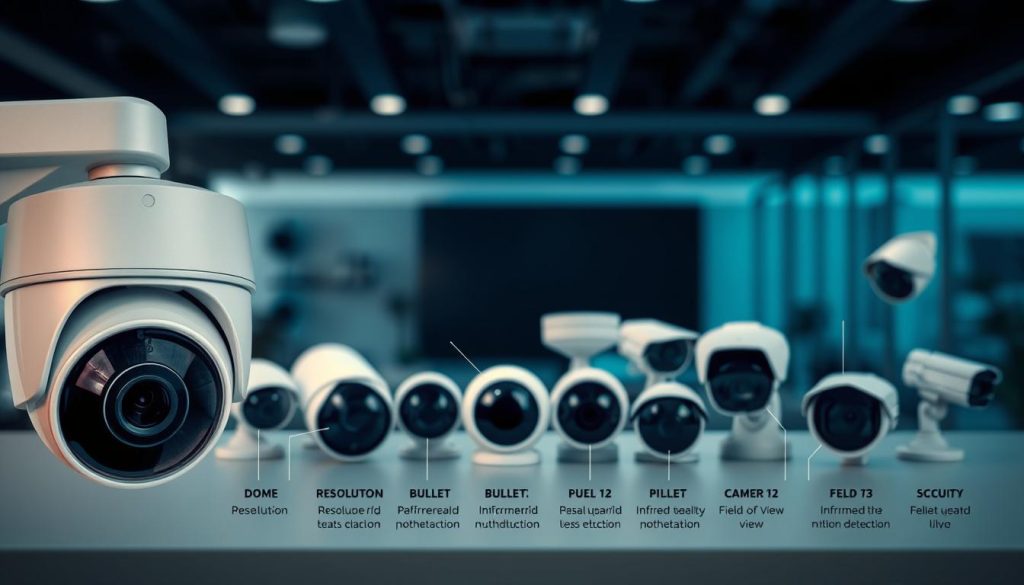
Three core features define the quality of your recorded evidence. They are resolution, night vision, and frame rate.
Resolution determines image clarity. Measured in pixels (e.g., 1080p, 2K, 4K), higher resolution is essential for identifying details like faces or license plates from a distance.
Night vision capability is non-negotiable for 24/7 security. Most models use infrared LEDs to illuminate darkness. Advanced units, like the SwitchBot Outdoor Spotlight Cam, use built-in spotlights for full-color night vision.
Frame rate affects video smoothness. A higher rate, such as 30 frames per second, is better for capturing fast motion without blur. This ensures your footage is usable for review.
Choosing Between Indoor, Outdoor, and Specialized Cameras
The installation environment dictates your primary choice. You must select between indoor, outdoor, and specialized camera types.
Outdoor cameras need robust protection. Look for a high Ingress Protection (IP) rating, like IP66 or IP67. This seals them against Singapore’s tropical rain and humidity.
They also require strong infrared illumination for long-range night vision. Their housing is built to withstand temperature swings and potential tampering.
Indoor cameras, like dome models, prioritize discreet placement. They may not need weatherproofing but can offer useful features like two-way audio. This allows communication through the device.
Specialized models serve unique purposes. Varifocal lenses let you customize the zoom for a specific area. Thermal imaging cameras detect heat signatures in total darkness.
Vandal-proof domes are designed for high-traffic or public areas where equipment might be abused.
Also consider connectivity. PoE (Power over Ethernet) models simplify setup by using one cable for power and data. Wireless outdoor cameras offer placement flexibility but depend on your Wi-Fi signal strength.
Your final selection should be driven by the coverage needs mapped in your plan. A PTZ (Pan-Tilt-Zoom) unit, for example, offers remote control to follow activity across a large area.
Understanding these features and categories ensures every device you purchase contributes effectively to your security goals.
Implementing your cameras is a major milestone, but the journey toward optimal security continues with regular evaluation and refinement. A static setup can develop weaknesses over time.
Your property and its risks are not frozen in time. New furniture, growing plants, or even seasonal changes can alter sightlines. A proactive review process ensures your investment remains effective.
Evaluating and Improving Your Camera System’s Coverage
Effective security is an ongoing process, not a one-time event. A periodic coverage assessment is essential for maintaining a robust defense.
This evaluation checks if your system still sees everything it needs to. It identifies weaknesses before an incident reveals them. Think of it as a health check for your property’s eyes.
Conducting a Coverage Assessment to Find Blind Spots
Schedule a walk-through of your property every few months. Review both live feeds and recorded video from each device’s perspective.
Look for zones that are poorly lit or partially obscured. These are potential blind spots where activity could go unseen. Check if new décor or foliage blocks any camera’s view.
The most revealing test is a practical simulation. Walk the paths an intruder might take. Can someone approach a side window or back gate without being recorded?
This hands-on approach finds gaps that a theoretical plan might miss. It confirms whether your monitoring network truly covers all critical areas.
Leveraging Technology for Smarter Surveillance
Modern technology offers powerful tools to enhance your surveillance. These features move your setup beyond simple recording.
Use motion-activated recording to conserve storage space. Focus on relevant events instead of hours of empty footage.
Configure intelligent motion detection zones. Ignore uninteresting movement, like a busy public sidewalk. Alert only for activity in sensitive spots, such as your rear fence line.
Explore AI-powered analytics. Features like person or vehicle detection filter out false alarms from pets or shadows. You receive accurate, actionable alerts directly on your phone.
Integration creates a smarter ecosystem. Connect cameras to other devices via a smart hub. A motion sensor in a hallway can trigger a nearby camera to record and turn on lights.
Utilize mobile apps for remote management. Conduct virtual assessments of your property from anywhere. Check live views to ensure all angles are clear.
For complex layouts, consider a professional audit. Experts use software to model camera fields of view. They provide data-driven recommendations for adjustments or additions.
The goal is continuous improvement. A proactive approach ensures your system adapts and remains a powerful deterrent. Don’t let your security investment become a “set and forget” installation with diminishing returns.
Common Mistakes to Avoid When Planning Your CCTV System
The difference between a reliable security network and a flawed one often lies in avoiding simple mistakes. Awareness of frequent pitfalls saves you from costly rework and frustration.
Data shows these errors are common. For example, using the wrong camera type accounts for 63% of mistakes. Poor lighting consideration leads to 55% of failures.
Steering clear of these issues ensures your investment is sound. Your system will be effective from day one.
Errors in Camera Selection and Placement
The most frequent blunder is a mismatch between gear and environment. Using an indoor unit outdoors is a classic selection error.
This quickly leads to weather damage and failure. Always check the IP rating for outdoor use.
Placement is equally critical. Installing devices too high creates useless video. A bad angle misses crucial activity.
Positioning a lens where there is constant backlight washes out the footage. You cannot identify people or objects.
Avoid creating obvious blind spots. Do not assume one device can see around corners. Cover all secondary entrances and access points.
Also, avoid mounting where units are easily reachable. Insecure mounting carries a 42% tampering risk. It invites vandalism.
Underestimating Storage, Power, and Future Needs
A critical oversight is not calculating required storage. Your storage needs depend on resolution, frame rate, and retention period.
Running out of space means older footage is overwritten. You could lose vital evidence. This affects 37% of system owners.
Neglecting power supply and cable management causes unreliable performance. For wired setup, plan clean conduit routes.
For wireless models, ensure strong Wi-Fi at each camera location. A weak signal drops the video feed.
Failing to plan for future needs is a budget mistake. Choosing a recorder with no extra channels locks you in.
Your system becomes obsolete. Select a setup that can integrate new technology later.
Overlooking network security is a major risk. IP cameras left with default passwords are vulnerable. Hacking is a 33% breach risk.
Always change default credentials. Keep camera firmware updated for protection.
Skipping professional installation for complex layouts hurts performance. DIY errors in wiring are common. Even high-end gear needs proper configuration.
Ignoring regular maintenance causes gradual failure. Cleaning lenses every few months is essential. Check connections to prevent power issues.
Data shows neglecting maintenance leads to 51% of malfunctions. A simple schedule keeps your system sharp.
Understanding requirements for continuous operation is key. For insights on ensuring your devices record reliably, learn more about power and recording fundamentals.
By addressing storage, power, and future needs upfront, you build a resilient security solution. It will serve your property for years to come.
Taking the Next Step: Implementing Your CCTV Plan
Execution transforms your carefully crafted plan into tangible protection for your property. Compile your final device count, placement map, and budget. Now, decide on the installation approach.
For a simple home setup, DIY might work. For complex systems, engage a professional. In Singapore, expert installers like Scutum South East ensure optimal placement and neat wiring.
They provide custom security plans, ongoing maintenance, and integration. A professionally installed security system may qualify for insurance discounts of up to 20%.
Once installed, test each camera’s view and monitoring features. Get trained on using the system and managing storage. Establish a maintenance schedule for lens cleaning and updates.
For expert advice and custom solutions, contact Wen Hong at +65 60135960. This informed approach ensures your security investment delivers maximum value and peace of mind.