
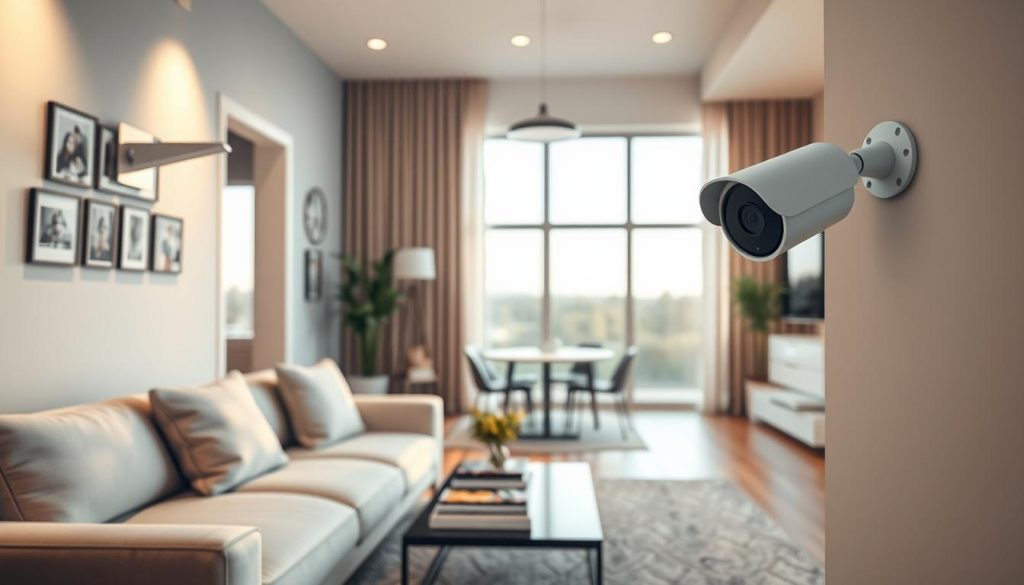
More homeowners in Singapore are considering security cameras for their property. Rising concerns about safety have made modern surveillance a key topic for families.
This trend is part of a global shift. Over 770 million surveillance cameras operate worldwide. In Singapore, public areas already feature over a million of these devices.
Our guide offers a clear, balanced analysis. We examine the advantages and disadvantages of residential monitoring systems. The discussion includes legal aspects like the Personal Data Protection Act (PDPA).
You will learn about practical steps, costs, and technical features. Modern CCTV systems can integrate with smart home setups for enhanced protection. A well-planned installation can be a powerful security solution.
Key Takeaways
- Residential surveillance systems provide real-time monitoring and can deter criminal activity.
- Understanding local privacy laws, such as Singapore’s PDPA, is a critical responsibility.
- Today’s security cameras often work seamlessly with broader smart home ecosystems.
- Evaluating costs against potential security benefits is essential for any homeowner.
- Remote access features offer significant peace of mind by allowing you to check on your property from anywhere.
- A balanced decision requires weighing both the pros and cons of installation.
- Proper planning and correct execution are vital for an effective security enhancement.
Introduction: The Rising Demand for Home Security in Singapore
A noticeable shift toward residential surveillance is unfolding across Singaporean neighborhoods. Urban safety concerns and evolving lifestyles are primary drivers. More families now view security solutions as essential for their property.
Reported crime statistics and heightened public awareness feed this trend. Modern life often means empty homes during the day. Dual-income households and frequent travel create a strong need for remote monitoring capabilities.
Singapore’s landscape already normalizes surveillance. Over a million cameras operate in public areas. This established culture makes private security systems a logical next step for many people.
The psychological benefit is significant. A visible security setup provides immense peace of mind. Homeowners feel more in control, knowing their space is watched.
Effective protection involves more than just hardware. It requires a strategic blend of technology, placement, and legal knowledge. Understanding local regulations ensures your surveillance is both powerful and compliant.
The market offers a wide variety of systems. Options range from basic CCTV setups to fully integrated smart home networks. These advanced solutions allow for real-time alerts and remote access via smartphones.
This growing demand leads to a core dilemma. Does the value of enhanced safety outweigh potential concerns about privacy and intrusion? It’s a question every resident must ponder.
Recognizing why home security is in such high demand is the crucial first step. It paves the way for a rational, informed decision about protecting what matters most.
Is It Worth Installing CCTV at Home? Weighing the Core Question
Arriving at a personal verdict on property cameras means scrutinizing both their powerful benefits and their inherent costs. This evaluation goes beyond a simple product purchase.
There is no universal answer. The value of a security setup depends entirely on your circumstances. Your property layout, lifestyle, and personal safety priorities define its worth.
Every homeowner faces a fundamental balance. On one side are tangible advantages. On the other are financial and ethical considerations.
Think of your decision as a scale. Key factors sit on each side, influencing the final balance.
- Value Propositions: Strong deterrence against crime and theft. Reliable video footage for evidence and insurance claims. The ability for remote monitoring of your property and family members.
- Primary Concerns: The initial financial investment and ongoing maintenance. Technical limits like blind spots or unreliable feeds. Ethical questions about privacy for everyone on camera.
A thorough self-assessment is crucial. You must honestly evaluate your specific needs, available budget, and comfort with technology. This step separates a thoughtful security enhancement from an impulsive buy.
For many in Singapore, the scale often tips favorably. When installation is done legally and thoughtfully, the proven reduction in burglary risk offers significant value. A compliant system integrates safety with respect.
The following sections will dissect each pro and con in detail. This deeper analysis provides the evidence you need to answer the core question for yourself.
Moving beyond fear or trends leads to the best outcome. An informed decision is a powerful one. It empowers you to choose a rational path for your home’s protection.
The Advantages of a Home CCTV System
The core value of property cameras lies in their ability to actively prevent, monitor, and document. Modern security systems offer a multi-layered defense that brings tangible benefits to any household. These advantages transform a simple recording device into a powerful tool for safety and management.
Deterrence of Crime and Theft
A visible security camera is a powerful psychological barrier. This concept is known as “target hardening.” It makes a property appear more difficult and risky for criminals to approach.
Studies consistently show that the mere presence of CCTV cameras can reduce burglary risks by up to 50%. Potential intruders are far less likely to target a home they know is under watch. This proactive prevention is often the most significant benefit for homeowners.
Remote Monitoring for Peace of Mind
Modern CCTV systems provide incredible convenience. Over 80% of new cameras connect directly to smartphone apps. This allows for live viewing from anywhere in the world.
Working parents can check in after school. Frequent travelers can verify their property is secure. Caregivers can ensure elderly family members are safe. This constant connection offers profound peace of mind.
Many smart home-compatible devices include two-way audio. You can speak to delivery people or greet family directly through the camera.
Evidence Collection for Investigations and Insurance
Clear, time-stamped video footage is invaluable after an incident. It serves as objective evidence for police investigations. This can dramatically increase the chances of identifying and apprehending suspects.
The same high-quality footage is crucial for insurance claims. It provides undeniable proof of loss or damage. Submitting this video can streamline the claims process.
Some insurance providers recognize the reduced risk. They may offer premium discounts for homes with professionally installed security systems. This can help offset the initial investment over time.
Monitoring Family and Domestic Helpers
Surveillance systems have a sensitive but practical use inside the home. They help ensure the well-being of vulnerable occupants. This includes young children, elderly relatives, or domestic helpers.
Transparency and consent are paramount in these scenarios. Openly discussing camera placement and purpose maintains trust. It also ensures compliance with local privacy guidelines.
This internal monitoring provides an extra layer of safety and accountability. It allows homeowners to verify daily routines and respond quickly if assistance is needed.
Collectively, these advantages create a more secure, manageable, and connected living environment. They empower people with information and control over their personal space.
The Disadvantages and Privacy Concerns of Home CCTV
Understanding the full picture of property surveillance requires a frank look at its potential downsides. A balanced security plan acknowledges these challenges upfront.
Responsible ownership means weighing every factor. The privacy of your family members and the total financial cost are just as critical as the benefits.
Ignoring these aspects can lead to conflict, wasted money, or inadequate protection. Let’s explore the key drawbacks every homeowner should consider.
Invasion of Privacy for Household Members and Visitors
Constant recording inside a home creates legitimate ethical tension. People deserve spaces where they feel free from observation, even by family.
This is especially sensitive for domestic helpers and regular guests. Monitoring people without their explicit, informed consent violates trust and local laws.
Singapore has seen real disputes arise from hidden cameras. These cases highlight the severe relational and legal consequences of covert surveillance.
Transparency is non-negotiable. Discuss camera placement and use with everyone in the household. Clear boundaries respect the privacy rights of all members.
Costs: Initial Investment and Ongoing Maintenance
The financial commitment for a reliable system is often underestimated. Costs extend far beyond the price of a single camera.
The initial outlay includes several components:
- High-quality cameras and a Network Video Recorder (NVR).
- Adequate storage, either local hard drives or cloud subscriptions.
- Professional installation fees for complex wiring and setup.
Ongoing maintenance is a perpetual part of the budget. You must account for electricity to power the system and internet data for remote streaming.
Software updates, potential repairs, and subscription fees for advanced features add up. A full financial picture prevents surprise expenses later.
Technical Limitations and Blind Spots
No CCTV setup can monitor every square inch. Physical obstructions, camera placement, and lens type inevitably create blind spots.
Savvy intruders can identify and exploit these uncovered areas. Poor lighting at night can also render even high-quality video footage useless.
The technology itself is not infallible. Common failures include Wi-Fi dropouts, hard drive corruption, and power outages.
These events can render your entire security system temporarily blind. Regular system checks are essential to ensure it’s actually recording.
Potential for a False Sense of Security
A major risk is over-reliance on cameras as a standalone solution. Surveillance systems are primarily deterrents and recording tools.
They do not actively prevent crime. An intruder determined to enter may simply cover their face or disable a camera.
True security requires a layered approach. CCTV should complement other solutions like robust physical locks, alarm systems, and good relationships with neighbors.
Community vigilance and strong doors are often more effective than footage of a crime in progress.
Acknowledging these drawbacks is not an argument against home security cameras. It is the foundation of responsible ownership.
Setting realistic expectations ensures your monitoring solutions are effective, ethical, and financially sustainable in the long term.
Navigating the Legal Landscape: CCTV Laws in Singapore
Before mounting a single camera, understanding Singapore’s regulatory framework is a non-negotiable step. Your security solutions must operate within clear laws designed to protect everyone’s privacy.
Ignoring these rules can lead to serious penalties. It can also create tension with neighbors and family members. A lawful setup is the only kind that provides true, lasting peace of mind.
This section breaks down the key regulations you must follow. We cover national data protection laws, housing-specific rules, and essential etiquette for your household.
Complying with the Personal Data Protection Act (PDPA)
Singapore’s PDPA is the cornerstone of surveillance regulation. It treats recorded video footage of identifiable people as personal data.
This means you have specific obligations as a data collector. The act requires you to notify individuals they are being recorded. A simple verbal notice usually suffices for home occupants.
For tenants or domestic helpers, a written agreement is strongly advised. You must also state the purpose of collection, such as for security.
Footage retention is another critical rule. You should not keep recordings longer than necessary. For most homes, 30 days is a common and reasonable period.
You are also responsible for securing the stored data. Use password protection for your systems and encrypted cloud storage if applicable.
Non-compliance can result in significant fines from the Personal Data Protection Commission (PDPC). Staying updated with their guidelines is a smart practice for all homeowners.
HDB and Condominium Rules on Camera Installation
Your housing type dictates specific installation protocols. Rules differ between HDB flats and private condominiums.
For HDB homes, a key change took effect in May 2023. Residents no longer need a permit for cameras placed entirely inside their flat.
Installing CCTV cameras that face common corridors or other public areas still requires approval. You must apply to your local Town Council and await written permission.
The rule is simple: never point your camera at a neighbor’s window or private balcony. This is a major privacy intrusion.
In private condominiums, the Management Corporation (MCST) sets the rules. Many have by-laws governing exterior modifications.
Always check with your MCST or management office before any CCTV installation. They may require approval from an architectural committee to maintain the building’s facade.
Notifying Household Members and Respecting Boundaries
Legal compliance starts with consent inside your own home. Open communication with all household members is essential.
Have a clear conversation about why surveillance is being used. Discuss specific camera placement and what areas will be monitored.
Absolute boundaries must be respected. Cameras must never be placed in bathrooms, bedrooms, or changing rooms. These spaces have the highest expectation of privacy.
Modern CCTV systems offer a helpful feature called privacy masking. You can digitally block out portions of the video feed, such as a neighbor’s door.
For added legal protection, consider posting a small sign. A notice stating “video surveillance in use” demonstrates your intent to comply with notification laws.
By following these steps, you transform your security setup from a potential liability into a responsible, community-friendly solution. You protect your property while respecting the rights of others.
Choosing the Right CCTV System for Your Home
Navigating the market for residential monitoring equipment involves comparing features, coverage types, and strategic positioning. The correct choice transforms a collection of devices into a cohesive, intelligent defense network.
Your selection directly impacts the security and clarity of your recorded evidence. A tailored plan considers your property layout, lifestyle, and specific safety concerns.

Key Features: Resolution, Night Vision, and Storage
Technical specifications form the foundation of any capable system. Video resolution determines how much detail your cameras can capture.
For clear identification of faces and license plates, a minimum of 1080p (Full HD) is essential. Higher resolutions like 4K provide even greater detail for large areas.
Effective surveillance does not stop at sunset. Infrared (IR) night vision uses invisible LEDs to illuminate dark spaces.
This technology allows modern CCTV cameras to capture clear black-and-white footage in total darkness. Check the product specifications for its effective IR range.
Where your video is stored is equally critical. Local storage uses a Digital or Network Video Recorder (DVR/NVR) with an internal hard drive.
This option offers a one-time cost and full physical control over your data. Cloud storage uploads footage to a remote server via the internet.
Cloud solutions provide off-site backup and easy remote access. They typically involve a recurring subscription fee and depend on a stable internet connection.
Fixed vs. PTZ Cameras: Understanding Your Coverage Needs
Camera mobility defines how you monitor your space. Fixed cameras, like dome or bullet styles, provide constant coverage of a specific zone.
They are ideal for monitoring fixed chokepoints. Your main door, gate, or driveway are perfect examples. These security systems components are reliable and generally more affordable.
Pan-Tilt-Zoom (PTZ) cameras offer remote control over their movement. You can pan side-to-side, tilt up and down, and zoom in on details from an app.
This makes them suited for large, open areas where active tracking of movement is beneficial. A backyard or long driveway might justify a PTZ unit.
For most homeowners, a network of fixed CCTV cameras provides excellent coverage. It offers lower complexity and cost while meeting typical residential needs.
Strategic Placement for Maximum Effectiveness
Even the best equipment fails if positioned poorly. Optimal placement ensures your system captures usable evidence.
Mount cameras at a height of 7 to 9 feet. Angle them slightly downward to capture clear facial images. This height also helps prevent easy tampering.
Focus your installation on all primary entry points. This includes front and back doors, ground-floor windows, and garage entries.
High-traffic common areas, like living rooms or hallways, are also key interior zones. Do not forget to cover the main approaches to your property.
Aim for a 30% overlap between camera fields of view. This practice eliminates blind spots where activity could go unrecorded.
Before finalizing placement, test the coverage. Use a laser pointer or the preview function in your camera‘s mobile app. This confirms the actual scene each unit will record.
Leading brands like Hikvision and Reolink offer distinct advantages in quality and features. The final step is often consulting with professionals.
Companies like expert security camera installers can provide a tailored system design. They ensure your smart home security solutions are installed correctly for maximum peace of mind.
Practical Steps: Installation and Ongoing Maintenance
Effective home surveillance is not a one-time event. It is an ongoing process that begins with precise installation and continues with regular maintenance.
Getting these steps right transforms equipment into a reliable security asset. A haphazard setup can create blind spots and technical failures.
This guide walks you through the two major phases. We compare professional and do-it-yourself installation methods.
You will also learn a schedule for essential system care. Proper data management protects your footage and keeps you compliant with laws.
Professional vs. DIY Installation: Pros and Cons
Your first major decision is who will handle the setup. Each path offers distinct benefits and trade-offs.
Professional installation services bring expertise and peace of mind. Technicians ensure optimal camera placement, proper wiring, and correct network configuration.
This service often includes a labor and equipment warranty. The primary downside is cost. Professional CCTV installation typically costs three to five times more than a DIY attempt.
DIY installation can save significant money. It offers flexibility in timing and component choice. Success requires technical skill, the right tools, and ample time.
Statistics show a high chance of error. Approximately 40% of DIY attempts later require professional corrections. Common mistakes lead to subpar performance.
Use this pre-installation checklist to prepare:
- Gather necessary tools: drill, screwdrivers, cable clips, and a ladder.
- Test Wi-Fi signal strength at each planned camera location.
- Acquire any required permits from your Town Council or MCST.
- Document your planned placement with a simple sketch.
Ignoring lighting conditions or using poor cable management are frequent pitfalls. Always document your final setup for future reference or insurance needs.
Essential Maintenance and Data Management Best Practices
A surveillance system demands consistent care. Monthly diagnostics prevent most common failures.
Follow this routine maintenance schedule to keep your cameras sharp:
- Monthly: Clean camera lenses with a soft cloth. Verify camera angles haven’t shifted. Check motion sensor sensitivity.
- Quarterly: Apply all available firmware updates for your CCTV systems. This patches security vulnerabilities.
- Annually: Perform a full system health check. Inspect cables for wear and test backup power supplies.
Data management is equally critical. Your recorded video footage is valuable evidence.
Secure storage is non-negotiable. Use solutions with 256-bit AES encryption for local and cloud data. This protects against unauthorized access.
Follow the 3-2-1 backup rule: keep three total copies of your data, on two different media types, with one copy stored offsite.
Regularly review and archive important footage. Establish a clear data retention and deletion policy aligned with Singapore’s PDPA. Most homeowners find 30 days to be a practical retention period.
For complex security systems, establish a relationship with a reliable technician or company. This provides expert support for troubleshooting and future upgrades.
Adopting these maintenance and data practices ensures your investment delivers long-term quality protection. It gives people true confidence in their home security.
Final Verdict: Making an Informed Decision for Your Home
Determining the right security approach for your residence requires balancing several critical factors. The value of a domestic surveillance setup is highly personal.
It depends on your specific property layout and lifestyle. Key advantages like crime deterrence and remote monitoring offer real benefits.
Potential concerns over privacy and costs can be mitigated. Careful planning and adherence to local laws are essential.
Conduct a personal risk assessment for your home. Start with a clear budget and research reputable options. Explore best CCTV camera brands for reliable performance.
An informed, balanced decision enhances your security effectively. This thoughtful approach delivers lasting peace of mind for your entire family.