
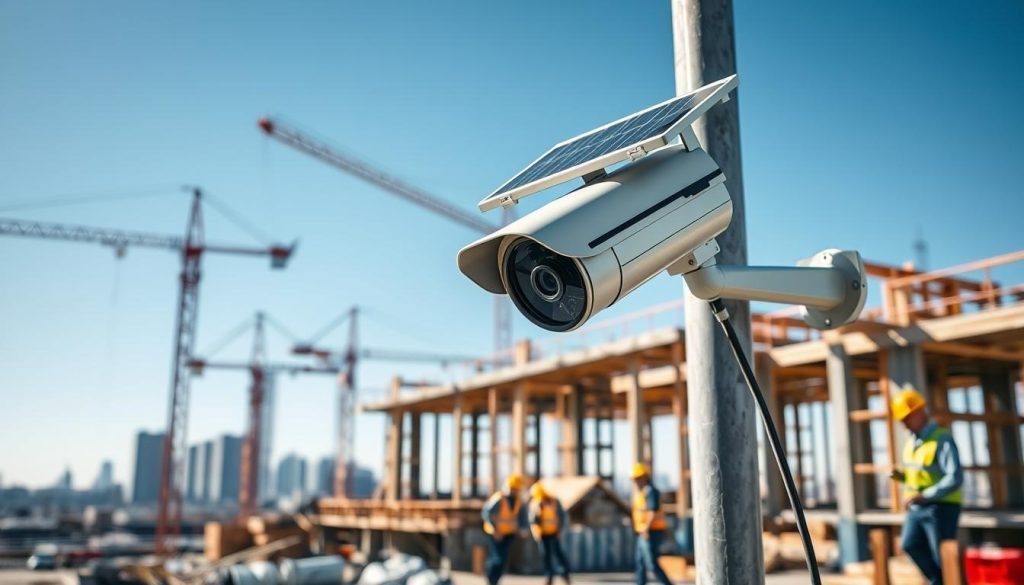
Securing a temporary construction site presents unique challenges. Reliable WiFi infrastructure is often absent in these remote or newly established locations.
Traditional surveillance systems that depend on a constant internet connection frequently fail here. This leaves valuable equipment and materials vulnerable.
Standalone monitoring solutions offer a powerful alternative. These devices operate independently from local networks.
They are ideal for Singapore’s dynamic construction industry. The demand for robust, off-grid security is growing rapidly.
The benefits are clear. You gain independence from unstable internet connections. Your data remains secure on local storage. Operational flexibility increases dramatically.
Choosing the right system requires careful thought. Key factors include power sources, video quality, and storage methods. Modern units can use cellular networks for remote access.
This buyer’s guide provides a comprehensive, step-by-step framework. It will help you select the ideal surveillance setup for your specific site conditions.
Key Takeaways
- Temporary construction sites often lack reliable WiFi, creating a security gap.
- Traditional internet-dependent surveillance systems are not suitable for these environments.
- Standalone monitoring solutions operate without a constant network connection.
- These systems offer enhanced data security and operational flexibility.
- Critical selection factors include power source, video resolution, and data storage type.
- Modern options provide remote monitoring via cellular networks or local recording.
- This guide offers a clear framework for choosing the right system for your project.
Introduction to Jobsite Surveillance Without WiFi
Forget the assumption that effective monitoring requires a stable broadband connection. A new class of security devices thrives without it. These security cameras without WiFi are built for environments where traditional networks fail.
Their core function is local independence. They capture video, process it, and save the footage directly on the device or a connected recorder. This means continuous operation, even with zero internet access.
How do these cameras work? Two main paradigms exist. The first uses cellular data networks, like 4G LTE, to transmit encrypted video for remote viewing. The second relies entirely on local storage, such as SD cards or a dedicated DVR system.
Why avoid standard wireless setups on a dynamic site? Building materials like metal and concrete block signals. Permanent power for routers is often unavailable. Open internet connections also pose a significant security risk.
Understanding a few key terms is helpful. Local storage means video is saved physically on-site. Cellular connectivity provides coverage via mobile data plans. Power-over-Ethernet (PoE) delivers both data and power through a single cable, simplifying wired cctv installations.
In practice, these units are highly capable. They either send alerts and clips over a cellular network or record high-resolution footage locally. Many are true wireless cameras, powered by long-lasting batteries or solar panels.
Some systems offer a hybrid approach. Local recording is the primary, reliable function. Optional cloud storage can then be used only for critical alert backups. This balances security with cost-effectiveness.
It’s crucial to note that “without WiFi” doesn’t mean without intelligence. Modern models feature AI for detecting people and vehicles. They offer night vision and send push notifications directly to your phone, all using cellular data. This proves that advanced security cameras work perfectly well work without a local wireless network.
Why Construction Sites in Singapore Need WiFi-Free Cameras
High-value materials and equipment on construction sites are tempting targets. This demands a surveillance solution that adapts to the site’s limitations.
Projects across Singapore face unique challenges. Dense urban redevelopments and large-scale infrastructure works are common. These environments are high-risk for theft and vandalism.
Continuous, reliable security acts as a powerful deterrent. The visible presence of security cameras significantly reduces incidents. It protects tools, copper wiring, and machinery.
Installing a stable wireless network is often impossible. Site layouts change constantly. Structural obstructions like concrete walls block signals.
There is also no dedicated IT infrastructure. This makes traditional internet-dependent systems wholly unsuitable. They simply cannot provide the required coverage.
Singapore’s tropical climate adds another layer. Frequent rain and high humidity are the norm. Security equipment must withstand these conditions.
Superior weatherproofing, like IP65 or IP67 ratings, is essential. Many modern cameras designed for standalone operation offer this. They are built for harsh outdoor environments.
Regulatory and insurance considerations are crucial. Authorities and insurers often require a verifiable record of site activity. Recorded video provides undeniable proof for compliance and claims.
Operational flexibility is a major advantage. These security cameras can be deployed rapidly. They are easily relocated or scaled up as the project progresses.
This portability is perfect for different construction phases. You are not locked into a fixed connection point. Your monitoring setup moves with the work.
Cost-effectiveness is a final, compelling reason. You eliminate the expense of installing temporary internet services. The long-term savings from preventing losses can be substantial.
Advanced models offer smart detection and instant notifications. They send alerts directly to a manager’s phone. This happens without any local wireless network.
Exploring the best options means looking at systems built for independence. They secure your site using cellular data or local storage. This is the smart choice for modern project security.
Understanding the Types of Cameras That Work Without WiFi
Three distinct technological paths lead to effective monitoring where traditional networks cannot reach. Each offers a unique balance of remote access, installation ease, and data security.
Your choice depends on site-specific needs like cellular signal strength and desired oversight level. The right security camera provides peace of mind through reliable operation.
4G LTE Cellular Cameras for Remote Connectivity
These cameras work by using a mobile data network. A sim card inside the unit provides the necessary connectivity.
They transmit live video and alerts over the 4G LTE networks. This allows for full remote viewing via a smartphone app from anywhere.
This setup is perfect for locations with decent mobile coverage. It delivers true off-site oversight without any local internet access.
- Pros: True real-time remote access. Relatively easy, wire-free installation. Instant push notifications for alerts.
- Cons: Requires an ongoing cellular data plan subscription. Performance is entirely dependent on local signal strength. Can have higher long-term operational costs.
Popular models like the Reolink Go series exemplify this category. They are designed as standalone, solar-powered wireless cameras.
Local Storage Cameras with DVR/NVR Systems
These are classic wired cctv systems built for independence. They use Ethernet or coaxial cables to connect to a central recorder.
The recorder, either a DVR or NVR, houses a large internal hard drive. All footage is saved directly to this local storage.
Operation is completely self-contained. There is zero dependency on any external connection for basic 24/7 recording.
- Pros: Extremely robust and reliable. Offers massive storage capacity for continuous recording. No monthly fees for data or cloud services.
- Cons: Installation is more complex, requiring cable runs. Does not provide remote alerts or viewing unless set up as a hybrid system. Footage review typically requires physical access to the site.
Brands like Lorex specialize in these dependable security cameras without Wi-Fi needs. Their systems are a staple for permanent or long-term site security.
Battery-Powered Cameras with Onboard SD Card Storage
This category represents the ultimate in deployment flexibility. These units are completely wire-free for both power and data.
They run on long-life rechargeable batteries, often supplemented by solar panels. Video is saved directly to a microSD card inside the security camera.
You get a simple, self-contained unit. It’s perfect for temporary monitoring points or rapid deployment across a large area.
- Pros: Maximum portability and ease of setup. No wiring or cabling of any kind is needed. Highly adaptable to changing site layouts.
- Cons: Requires manual battery recharging or optimal sunlight for solar models. Footage must be retrieved physically by accessing the card. Typically lacks live remote viewing capabilities.
These cameras without complex infrastructure are ideal for spot-checking specific zones. They are a tactical tool within a broader security plan.
Essential Features to Evaluate in a Jobsite Camera
The true effectiveness of any standalone security system hinges on a handful of essential hardware and software capabilities. Not all security cameras without a local network are created equal.
Your evaluation must go beyond basic specs. Focus on features that deliver reliable performance in tough conditions.
Power Options: Battery, Solar, and PoE for Uninterrupted Operation
Continuous power is the foundation of any surveillance system. You have three primary paths for off-grid sites.
High-capacity batteries offer great flexibility. The eufy 4G LTE Cam S330, for example, uses a 9,400 mAh battery. Some models claim up to 180 days of life on a single charge.
Pairing batteries with solar panels creates a sustainable loop. The Reolink Go series and eufyCam S220 support this. In Singapore’s sunny climate, this can mean near-perpetual operation.
For fixed locations with cabling access, Power-over-Ethernet (PoE) is the most reliable choice. It delivers both data and power through one cable. This eliminates battery anxiety entirely.
Video Resolution, Night Vision, and Field of View
Clear video is non-negotiable for identifying crucial details. Resolution like 2K or 4K captures faces and license plates.
Brands like eufy and Reolink deliver 4K clarity. This ensures your recorded footage is evidentiary quality.
Night vision transforms dark sites into visible zones. Look for color night vision or starlight sensors. These technologies provide colorful, detailed footage after sunset.
A wide field of view covers more ground with fewer units. It reduces blind spots in your monitoring plan.
Storage Solutions: Local vs. Cloud and Data Management
Where your data lives impacts cost, security, and access. The choice between local storage and cloud storage is critical.
Local storage means footage stays on-site. This includes microSD cards inside wireless cameras or large hard drives in DVR/NVR systems.
It eliminates monthly fees and keeps data under your physical control. Lorex systems offer 1TB+ drives, expandable up to 32TB.

Cloud storage uses internet connectivity to save clips online. It provides off-site backup but often requires a subscription.
Smart data management conserves space. Use motion-activated recording instead of 24/7 capture. Calculate needed storage based on resolution, frame rate, and camera count.
Durability, Weatherproofing, and Smart Detection Capabilities
Outdoor security gear must withstand the elements. An IP65 or IP67 weatherproof rating is a minimum for rain and dust.
Vandal-resistant housings (IK10 rating) add physical protection. Brands like eufy and Lorex build their cameras for harsh environments.
Smart detection is what makes modern security cameras work intelligently. AI-powered filtering distinguishes people from vehicles and objects.
eufy’s BionicMind AI claims 99.9% accuracy for person detection. Reolink models also feature person/vehicle alerts.
This drastically reduces false notifications from animals or moving trees. You only get alerts that matter.
Additional features add convenience. Two-way audio lets you communicate through the unit. Smart home integration allows voice control via assistants.
Evaluating these features ensures your chosen security camera will work without fail. It turns a simple device into a robust security asset.
Top Jobsite Camera No WiFi Options for Singapore
The market offers several standout models engineered to deliver robust security in environments devoid of conventional internet. Choosing the right unit depends on your site’s specific needs for power, connectivity, and intelligence.
This curated list evaluates leading security cameras and systems proven in demanding conditions. For a deeper analysis of reliable security solutions, explore our guide on the best jobsite camera no wifi options.
Reolink Go Series: 4G LTE and Solar-Powered Flexibility
Reolink’s Go series, including the Go PT Ultra and Go Ranger PT, is built for complete off-grid operation. These models deliver 4K UHD video and transmit it over 4G LTE networks.
They are true wireless cameras, often paired with solar panels for sustainable power. This makes them ideal for Singapore’s sunny climate, enabling near-perpetual monitoring.
A key consideration is the need for a local SIM card and a mobile data plan. You must ensure adequate cellular coverage at your specific location.
Ideal for: Remote sites with good sun exposure where solar-powered, high-definition remote access is a priority.
eufy 4G LTE Cam S330 with BionicMind AI and Pan-and-Tilt
The eufy 4G LTE Cam S330 stands out for its advanced artificial intelligence. Its BionicMind AI boasts 99.9% accuracy for person detection, minimizing false notifications.
This unit provides 4K clarity and features a motorized pan-and-tilt function. It can track movement across a wide area, covering more ground with a single device.
It operates on a large 9,400 mAh battery and stores all footage locally via the HomeBase 3 hub. This setup requires no monthly cloud subscription fees.
Ideal for: Dynamic sites requiring intelligent threat discrimination, wide-area coverage, and a preference for local data storage.
Arlo Go 2 with Multi-Carrier Cellular Support
The Arlo Go 2 offers a unique advantage in connectivity. It supports multiple cellular carriers, allowing you to choose the strongest network signal for your site.
This flexibility is valuable in areas where one provider’s coverage may be spotty. You can record video to a microSD card or to optional cloud storage.
It is important to budget for an ongoing data plan, typically costing between $10 to $15 monthly. The user-friendly app provides reliable remote access.
Ideal for: Locations where cellular signal strength varies, and the ability to switch providers ensures consistent monitoring.
Lorex Wired Systems for Continuous Local Recording
For larger, fixed-site projects, Lorex wired systems offer unmatched reliability. These professional CCTV setups provide 24/7 recording directly to a DVR or NVR.
They come with large internal hard drives—1TB standard, expandable up to 32TB. This allows for massive amounts of continuous footage storage with zero monthly fees.
Installation is more complex, requiring Ethernet or coaxial cable runs. However, the result is a rock-solid security solution that work without any dependency on internet access.
Ideal for: Long-term construction projects where permanent cameras can be installed and maximum recording uptime is non-negotiable.
Making the Smart Choice for Your Jobsite Security
Selecting the right surveillance solution for your off-grid site is a strategic decision. It directly impacts your security posture and long-term budget.
First, weigh the core trade-offs. Remote accessibility via cellular networks offers real-time alerts. Wired local storage systems provide unmatched reliability with zero recurring fees.
Conduct a thorough site assessment. Verify cellular coverage strength and identify available power sources. Consider your project’s duration and how critical instant notifications are.
Match your priority features to the specific models discussed. Solar panels are ideal for locations without electrical access. A motorized pan-and-tilt function efficiently covers large, open plots.
Perform a complete budget analysis. Account for upfront hardware costs, potential installation labor, and any monthly data or cloud subscription charges.
Finally, consider scalability to future-proof your investment. Ensure your chosen setup can expand, whether adding units to a network recorder or growing a fleet of standalone devices.
Taking action with a properly selected system is a cost-effective and essential step. It mitigates risk, protects valuable assets, and delivers definitive peace of mind for any project in Singapore.