
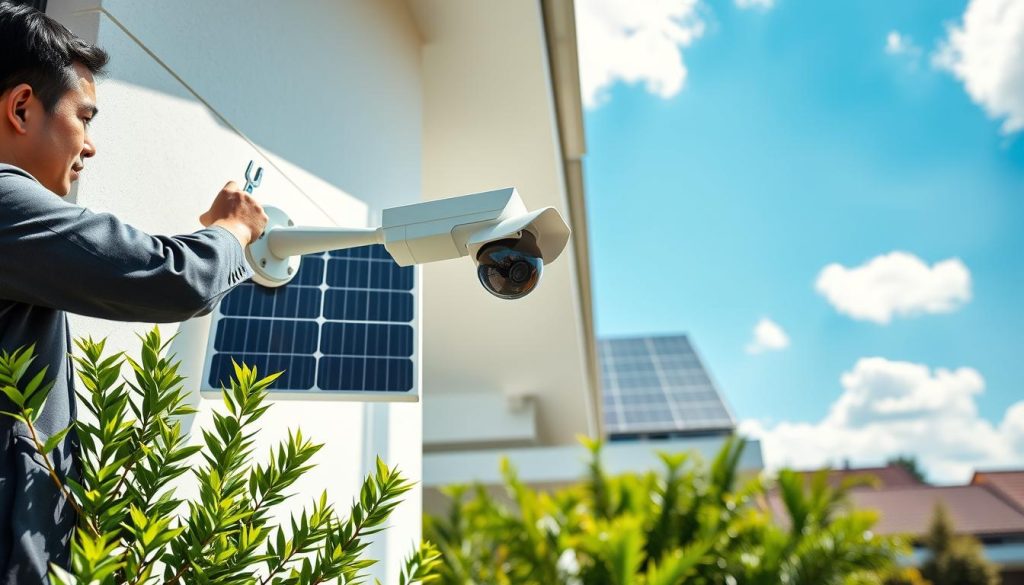
Keeping your Singapore property safe requires reliable outdoor surveillance. Modern solutions now offer sustainable power and strong wireless connectivity. This guide explores the best options for monitoring your space effectively.
These innovative devices can operate for up to seven days without direct sunlight. This ensures continuous monitoring even during cloudy periods. You get peace of mind knowing your security system stays active.
Singapore’s abundant sunshine makes it perfect for energy-harvesting technology. The climate supports consistent performance year-round. This natural advantage helps these systems thrive in our local environment.
The eco-friendly nature of these units reduces your carbon footprint. They provide robust protection while using renewable energy. This combination delivers excellent long-term value for your investment.
Our comprehensive buyer’s guide helps Singapore homeowners select the right equipment. We examine essential features, advanced technology, and trusted brands. Find the perfect match for your specific needs and budget.
Key Takeaways
- Solar-powered surveillance offers reliable operation for up to a week without sunlight.
- Singapore’s sunny climate is ideal for energy-harvesting security systems.
- These eco-friendly cameras reduce environmental impact while protecting your property.
- Proper maintenance can extend the lifespan of these devices to approximately ten years.
- This guide helps you compare features, technology, and brands for informed decisions.
- Wire-free installation provides flexibility for various property types across Singapore.
- Advanced options include 4G connectivity and weather-resistant designs for durability.
Why Solar Security Cameras Are Ideal for Singapore Homes
Homeowners in this city-state benefit from geographical advantages that support innovative protection technology. Singapore’s position near the equator delivers consistent, strong sunlight throughout the year. This natural resource transforms how we approach property monitoring.
Harnessing Abundant Sunshine for Reliable Power
The island receives over 2,500 hours of sunlight annually. This creates exceptional conditions for photovoltaic energy generation. Modern panels can achieve up to 21% efficiency in converting light to electricity.
This consistent energy supply means batteries can maintain charge for extended periods. With sufficient exposure, some units operate for up to three months without requiring grid electricity. Even during brief cloudy spells, well-designed systems continue functioning.
Certain models, like those from Hikvision, demonstrate impressive resilience. They can run for seven consecutive days without direct sunlight. This reliability ensures your surveillance remains active during less sunny periods.
The operational advantage is clear. You gain continuous monitoring capability independent of weather variations. This consistent performance provides genuine peace of mind for your property.
Overcoming Singapore’s Tropical Weather Challenges
The local climate presents specific tests for outdoor equipment. High humidity, frequent rain showers, and intense heat can degrade lesser products. Modern protection systems are engineered specifically for these conditions.
Manufacturers incorporate robust weatherproof designs with IP66 or IP67 ratings. These standards guarantee resistance against heavy rain and dust ingress. For example, the MaxRanger4K features IP66-rated panels perfect for Singapore’s frequent downpours.
Energy independence represents another significant benefit. By eliminating reliance on the electrical grid, these devices avoid vulnerability to power outages. Your monitoring continues uninterrupted during infrastructure issues.
Monsoon seasons raise valid concerns about photovoltaic performance. Efficient panels coupled with substantial battery storage address this directly. They harvest ample energy during sunny intervals to maintain operation through rainy days.
Performance varies between urban and rural settings. Urban installations may face shading from buildings, requiring careful placement. Rural locations typically offer unobstructed exposure but need durable construction.
Singapore’s solar energy potential translates directly to reliable surveillance operation year-round. The technology leverages natural advantages for consistent, sustainable protection.
Strategic placement maximizes energy capture regardless of location. Proper positioning ensures your system delivers optimal performance. For comprehensive guidance on achieving 24/7 operation, explore our detailed resource on solar-powered surveillance solutions.
The statistics confirm the viability. Abundant sunlight combined with advanced engineering creates a perfect match for local needs. This synergy makes photovoltaic-powered protection an intelligent choice for Singapore homes.
How Long Range WiFi Solar Security Cameras Work
These innovative protection units operate through a clever integration of energy harvesting and wireless technology. The system captures Singapore’s abundant sunlight and transforms it into reliable operation. This dual approach ensures consistent monitoring without traditional power constraints.
The Solar Charging and Battery Storage System
Photovoltaic panels form the heart of these sustainable surveillance solutions. They contain special cells that convert sunlight directly into electrical energy. This process happens continuously during daylight hours across the island.
Modern panels designed for tropical applications achieve impressive efficiency rates. They perform well even in humid conditions common in Singapore. The generated electricity powers the device immediately during the day.
Excess energy doesn’t go to waste. It flows into integrated battery storage for later use. This reserve powers the unit throughout the night and during cloudy periods.
Hikvision’s modular battery system exemplifies this smart approach. It stores substantial energy for uninterrupted operation. Some models like the WUUK Wireless Cam Pro can function for seven full days without direct sunlight.
A charge controller manages this entire energy flow. This crucial component optimizes battery health and lifespan. It prevents overcharging during peak sunlight and avoids deep discharge.
The integrated system intelligently distributes power between immediate use and storage. This balanced approach maximizes operational reliability. Your surveillance remains active through various weather conditions.
Wireless Connectivity for Remote Monitoring
These devices transmit footage using modern wireless protocols. WiFi connectivity allows integration with your home network. This enables real-time viewing from smartphones, tablets, or computers.
For locations with limited network access, 4G LTE options provide excellent alternatives. They use cellular data networks for transmission. This ensures coverage even in remote areas of Singapore.
The wireless transmission happens seamlessly in the background. Recorded video travels to storage devices or cloud services. You can access this footage from anywhere with internet connectivity.
Advanced systems maintain stable connections despite network variations. They feature strong antennas and signal optimization technology. This reliability is crucial for consistent monitoring performance.
These protection systems offer significant economic advantages. Compared to wired alternatives, they reduce energy costs by approximately sixty percent. They completely eliminate dependency on traditional power sources.
The combination of sustainable power and smart connectivity creates a robust solution. It delivers reliable surveillance while minimizing environmental impact. This makes photovoltaic-powered protection an intelligent choice for Singapore properties.
Key Benefits of Choosing a Solar-Powered Surveillance System
Sustainable surveillance technology offers compelling benefits beyond basic protection. For Singapore residents, photovoltaic-powered monitoring delivers advantages in three key areas. These include financial savings, environmental responsibility, and installation flexibility.
Each benefit addresses specific local concerns. They make these systems particularly suitable for Singapore’s unique housing landscape.
Significant Energy and Cost Savings
Photovoltaic protection units dramatically reduce electricity consumption. They operate independently from the traditional grid. This autonomy translates directly into lower utility bills.
Specific models demonstrate impressive savings. Swann’s energy-harvesting devices cut energy costs by an average of $580 annually. This represents substantial financial relief for homeowners.
The Singapore government encourages sustainable technology adoption. Various incentives support residential photovoltaic installations. These can further reduce your initial investment.
Long-term financial analysis reveals clear advantages. Over five to ten years, total ownership costs favor sustainable systems. They avoid recurring electricity expenses entirely.
Traditional wired alternatives incur continuous operational costs. Photovoltaic options eliminate this financial burden. The savings accumulate significantly over time.
Eco-Friendly Security with a Reduced Carbon Footprint
Energy-harvesting protection aligns with global sustainability goals. It significantly lowers your household’s environmental impact. Each unit contributes to a cleaner future.
Quantifiable data highlights this benefit. These systems reduce CO₂ emissions by approximately 1.2 tons yearly. This equals the carbon absorption of planting fifty mature trees.
Singapore’s Green Plan 2030 emphasizes sustainable living. Adopting photovoltaic monitoring supports national environmental objectives. Your choice contributes to broader ecological targets.
The renewable energy aspect cannot be overstated. It utilizes abundant local sunlight instead of fossil fuels. This represents a responsible approach to residential protection.
Every photovoltaic surveillance unit installed moves Singapore closer to its sustainability targets while providing reliable property monitoring.
Simplified Installation Without Extensive Wiring
Wire-free setup represents a major advantage for local homes. It eliminates complex electrical work and associated permits. This simplifies the entire implementation process.
HDB flats benefit particularly from this feature. Traditional wired installations often require cable trenching permits. These can cost over $1,800 in Singapore.
Photovoltaic units bypass this regulatory hurdle entirely. They install quickly without structural modifications. Placement flexibility increases dramatically.
You can position devices where they provide optimal coverage. Proximity to power outlets becomes irrelevant. This enables comprehensive monitoring of entire properties.
Maintenance requirements decrease substantially. Electrical repairs and wiring issues are eliminated. The systems prove more reliable during grid outages.
For detailed guidance on implementing these advantages, explore our resource on outdoor photovoltaic monitoring solutions. It provides practical installation insights for Singapore properties.
Overall reliability improves with energy independence. Grid failures don’t interrupt your surveillance. Continuous operation provides genuine peace of mind.
Essential Features to Look for in Your Solar Camera
The effectiveness of your property’s protection hinges on specific equipment characteristics. Not all photovoltaic surveillance units perform equally in Singapore’s unique environment. You need to evaluate several technical aspects before making your investment.
Focusing on the right specifications ensures reliable monitoring year-round. This section breaks down the most critical attributes for your consideration. Each feature contributes to overall system performance and durability.
Extended Battery Life and Solar Panel Efficiency
Energy storage capacity directly impacts operational consistency. Look for batteries with at least 10,000mAh capacity for reliable performance. The MaxRanger4K model exemplifies this standard with weeks of operation on one charge.
Photovoltaic cell efficiency determines how quickly batteries recharge. Panels should convert at least 21% of sunlight into usable energy. This rating ensures sufficient charging even during Singapore’s occasional cloudy days.
Efficient energy harvesting maintains system operation through varied weather patterns. Superior panels continue generating power in diffused light conditions. This reliability is essential for uninterrupted surveillance.
Consider the battery’s deep-cycle capability for long-term durability. Quality units withstand repeated charging and discharging without degradation. This extends the overall lifespan of your monitoring equipment.
High-Resolution Day and Night Imaging Capabilities
Image clarity is paramount for identifying subjects accurately. Modern devices should offer 1080p resolution as an absolute minimum. For superior detail, 4K capability is strongly recommended.
Low-light performance separates adequate units from exceptional ones. Advanced starlight sensors capture clear footage in near-darkness. These outperform standard infrared technology significantly.
Premium models provide infrared illumination reaching 260 feet. This extended coverage ensures comprehensive monitoring of larger properties. The technology activates automatically as daylight fades.
Artificial intelligence enhances detection accuracy dramatically. Smart algorithms distinguish between people, vehicles, and animals. This reduces false alerts and focuses attention on genuine threats.
Color night vision represents the latest advancement in low-light imaging. It maintains color information even in minimal lighting conditions. This feature aids significantly in identification and evidence collection.
Robust Weatherproof and Durable Design
Singapore’s tropical climate demands exceptional equipment resilience. Ingress Protection ratings indicate defense against environmental elements. Seek units with IP66 or higher certification for reliable operation.
IP67-rated housings offer superior protection against heavy rainfall and humidity. They withstand temporary immersion in water, unlike IP66 models. This difference matters during Singapore’s intense monsoon seasons.
Material construction should include UV-resistant components. Singapore’s intense sunlight can degrade plastics and coatings over time. Quality materials maintain integrity despite constant exposure.
Coastal properties require additional corrosion resistance. Salt spray accelerates metal deterioration in marine environments. Stainless steel fittings and protective coatings address this concern effectively.
Integration capabilities with existing smart home ecosystems add convenience. Many units connect seamlessly with popular platforms used in Singaporean homes. This allows centralized control of your entire property management system.
Superior specifications in energy storage, imaging clarity, and environmental resistance create a surveillance solution that performs reliably through Singapore’s diverse conditions.
Use this checklist when comparing different photovoltaic monitoring models:
- Battery capacity exceeding 10,000mAh for extended operation
- Photovoltaic panel efficiency of 21% or higher
- Minimum 1080p resolution with 4K capability preferred
- Advanced low-light imaging with starlight or color night technology
- IP66 or IP67 weatherproof rating for tropical climate resilience
- UV-resistant materials and corrosion-protected components
- AI-powered detection for accurate person and vehicle alerts
- Compatibility with your existing smart home ecosystem
Evaluating these characteristics ensures you select equipment matching Singapore’s specific requirements. Each feature contributes to reliable, year-round property monitoring without constant maintenance concerns.
Understanding Camera Resolution: From 1080p to 4K
Selecting the right resolution for your outdoor monitoring system involves balancing detail with practical considerations. The term “resolution” refers to the number of pixels that make up your video image. More pixels mean a sharper, clearer picture.
Common standards for modern security cameras are 1080p (Full HD), 2K, and 4K (Ultra HD). 1080p offers good clarity for general monitoring of a porch or driveway. 2K provides a noticeable boost in detail, useful for medium-sized yards.
4K resolution delivers four times the pixels of 1080p. This creates exceptionally fine detail. It allows you to identify critical elements from much farther away.
Why Image Clarity Matters for Identification
Superior image quality transforms your footage from a simple recording into actionable evidence. High-resolution cameras capture defining details like facial features, clothing patterns, and license plate numbers.
This is vital for providing useful information to authorities. A blurry image may only confirm movement occurred. A clear 4K frame can provide identification.
Models like the MaxRanger4K demonstrate this capability with 4K/30fps video and powerful 256x digital zoom. Hikvision’s Advanced Series offers similar high-performance imaging. Digital zoom works best when paired with a high native resolution.
In Singapore’s varied lighting, from bright sun to shaded areas, higher resolution maintains more detail. It ensures you can see clearly across different parts of your property throughout the day.
Balancing Resolution with Storage and Power Needs
Higher resolution comes with trade-offs. The main considerations are data storage and system power consumption. You must balance your need for detail with these practical limits.
More detailed video creates larger files. A unit streaming 4K footage continuously can consume about 30GB of data per month. This impacts both local SD card capacity and cloud subscription costs.
Recording only during motion events helps manage this. It drastically reduces storage needs compared to 24/7 recording.
Generating ultra-high-definition video also requires more processing power. This can draw more energy from the system’s battery. For photovoltaic-powered units, efficient energy management is key.
Choosing the optimal resolution means matching the camera’s capability to your specific monitoring goal—whether it’s watching a wide area or identifying specific details.
For most Singaporean homes, a mixed approach works well:
- For primary entry points (gates, front doors): Use 4K or 2K cameras for identification.
- For general perimeter watch: 1080p resolution is often sufficient and saves on resources.
- For large properties or farms: Prioritize high-resolution units with strong zoom for covering long distances.
Always consider your connectivity and energy harvesting setup. Ensure your system’s design supports the resolution you choose without compromising reliability.
Night Vision Technology: Infrared vs. Color Night Vision
When the sun sets in Singapore, effective property monitoring depends on advanced low-light imaging technology. Modern systems primarily use two methods: traditional infrared and newer color night vision. Understanding their differences helps you choose the right tool for your specific needs.
This capability ensures your surveillance doesn’t stop at dusk. It provides continuous protection through the night.
Range and Clarity in Low-Light Conditions
Infrared technology uses invisible light to illuminate a scene. Special LEDs emit light that the sensor can detect, creating a monochrome image. This method excels in total darkness.
Hikvision’s systems demonstrate this with powerful 260ft IR illumination. They use a wide 120° pattern for better coverage than standard 90° systems. This provides extensive monitoring for large, dark areas.
Color night vision works differently. It uses advanced sensors to capture available ambient light. This results in full-color footage, even in very dim conditions.
Models like the MaxRanger4K capture 4K video at an impressive 0.005 lux. This sensitivity is equivalent to moonlight. It allows for clear, detailed imaging without artificial IR spots.
Singapore’s urban environment affects performance. Well-lit HDB corridors and streets provide ample ambient light for color imaging. Dark perimeters of landed properties often need the extended reach of infrared.
Tests in local settings show clear advantages for identification. Color technology identifies vehicle plates 83% faster than IR at 30-meter distances. This speed can be crucial for gathering evidence.
Choosing the Right Night Vision for Your Property
Your selection should match your environment and priorities. Consider the typical lighting around your home after dark. Also, think about what details you need to capture.
For identification and evidence, color night vision is superior. Seeing colors of clothing, vehicles, and other objects provides critical information. It makes footage immediately more useful.
“Color imaging transforms nighttime monitoring from simple detection to positive identification, providing actionable details that monochrome video cannot.”
For maximum range in pitch-black conditions, infrared remains the best choice. Its dedicated illumination reaches farther than ambient light alone. This is ideal for monitoring large, unlit gardens or storage areas.
In challenging areas, supplemental lighting can enhance any system. A small, motion-activated light can provide enough illumination for color sensors to work perfectly. This is a simple upgrade for dark corners.
Evaluate quality using specific metrics. Look for the lux rating—lower numbers mean better low-light sensitivity. Also, check the illumination pattern width for broader coverage.
Here are tailored recommendations for Singapore properties:
- HDB Flats & Well-Lit Condos: Prioritize color night vision. Ample street and corridor lighting supports it, delivering superior identification details.
- Landed Homes with Dark Gardens: Consider a dual approach. Use color cameras near entrances with some light, and IR models for long, dark perimeter views.
- Farms & Remote Sites: Infrared systems with long-range illumination are often essential. They cover vast, unlit areas effectively where color sensors may struggle.
Your final choice balances the need for detailed identification with the requirement for wide-area coverage. The right technology keeps your property secure, day and night.
The Importance of Weather Resistance (IP Ratings Explained)
Weather resistance isn’t just a feature—it’s a necessity for equipment exposed to Singapore’s elements. Your monitoring system faces constant environmental challenges that can degrade lesser products. Understanding protection standards ensures your investment lasts through tropical conditions.
The Ingress Protection (IP) code provides a universal rating system. It tells you exactly how well a device withstands solids and liquids. This standardization helps compare different models objectively.
For outdoor security applications, these ratings are critical. They determine whether your equipment survives monsoon rains or intense humidity. Choosing the right level prevents premature failure and costly replacements.
IP66 vs. IP67: What You Need for Singapore’s Climate
Both IP66 and IP67 ratings offer substantial protection for local use. However, they address different levels of water exposure. Your choice depends on specific installation locations and expected conditions.
IP66 ensures complete dust protection and resistance to powerful water jets. This rating handles heavy rainfall and occasional splashing effectively. It’s suitable for most covered outdoor placements around homes.
IP67-rated models survive temporary immersion in one meter of water. This provides an extra safety margin during flash floods or extreme downpours. Coastal properties benefit particularly from this enhanced protection.
Independent tests reveal impressive durability data. IP67 housings withstand 200-hour salt spray tests without corrosion. This equals approximately 200 days in Sentosa’s coastal climate.
Consider these practical differences for Singaporean installations:
- Covered balconies and eaves: IP66 provides adequate defense against driven rain.
- Ground-level installations: IP67 offers better protection from pooling water during storms.
- Coastal properties: IP67’s corrosion resistance is essential near marine environments.
- Industrial areas: Both ratings handle particulate matter, but IP67 adds immersion protection.
Ensuring Durability Against Rain, Humidity, and Heat
Beyond IP ratings, several factors contribute to long-term resilience. Singapore’s unique climate requires comprehensive engineering solutions. Manufacturers address these through material science and design.
Polymer blends with UV inhibitors prevent housing degradation. Singapore’s intense sunlight can weaken standard plastics over time. These specialized materials maintain structural integrity for years.
Thermal management systems regulate internal temperatures. Electronic components perform best within specific operating ranges. Effective heat dissipation prevents performance issues during hot afternoons.
Sealed gaskets and O-rings combat constant high humidity. They prevent moisture ingress that causes circuit board corrosion. Quality seals maintain protection throughout the device’s lifespan.
“The true test of weather resistance isn’t laboratory certification—it’s performance through consecutive monsoon seasons in Singapore’s challenging environment.”
Different locations present unique challenges across the island:
Urban settings face less direct rainfall but more airborne pollutants. HDB corridors need protection from occasional wind-driven rain. Condensation from air conditioning units can also affect nearby units.
Coastal areas like East Coast Park demand corrosion-resistant materials. Salt spray accelerates metal deterioration significantly. Stainless steel fittings and marine-grade coatings provide essential defense.
Industrial zones expose equipment to chemical particulates and temperature variations. Enhanced sealing protects sensitive electronics in these demanding environments.
Maintaining weather resistance requires simple but consistent care. Regular inspection of seals and housings prevents minor issues from becoming major problems. Cleaning lenses and sensors monthly ensures optimal performance.
Most manufacturers offer specific warranties covering weather-related damage. These typically range from one to three years for outdoor models. Review terms carefully to understand what protections apply to your climate.
When selecting equipment, match the protection level to your exact placement. Consider not just today’s conditions but potential future exposure changes. This forward-thinking approach maximizes your system’s longevity.
Proper installation completes the durability equation. Follow manufacturer guidelines for mounting angles and sealing recommendations. These details ensure your security cameras deliver reliable service through Singapore’s diverse weather patterns.
Smart Detection and Alert Features for Proactive Security
The true power of contemporary monitoring lies in its ability to distinguish between ordinary movement and genuine threats. Modern units analyze scenes intelligently rather than just recording them. This transforms your surveillance from passive observation into active protection.
Sophisticated algorithms filter out distractions while highlighting important events. You receive notifications only for what truly matters. This prevents alert fatigue and ensures you respond promptly to real concerns.
These intelligent features adapt to Singapore’s unique residential environments. They handle everything from bustling HDB corridors to quiet landed property gardens. The technology works continuously to keep your space secure.
Advanced Motion Detection with Person/Vehicle Alerts
Traditional motion sensors trigger for any movement, causing constant false alarms. Modern systems use artificial intelligence to recognize specific objects. They achieve remarkable accuracy in identifying people and vehicles.
Swann’s TrueDetect+ technology demonstrates this advancement effectively. It reduces unnecessary alerts by an impressive eighty-nine percent. This means you get notified about genuine events, not just passing shadows or animals.
Hikvision’s AcuSense provides similar intelligent filtering. It distinguishes human movement from other activity with precision. The system focuses attention where it matters most for your property’s security.
Independent testing reveals impressive performance metrics. AI algorithms achieve 98.6% accuracy in identifying humans. This reliability ensures you trust the alerts you receive through your monitoring systems.
Response times have improved dramatically with these technologies. Swann’s equipment sends push notifications in just 2.8 seconds. This near-instant alert gives you time to react appropriately to any situation.
The technology analyzes multiple data points simultaneously. It considers shape, size, movement patterns, and heat signatures. This comprehensive approach delivers reliable identification in various conditions.
Customizable Zones and Integration with Mobile Apps
Every Singapore property has unique monitoring needs. Customizable detection zones address this perfectly. You define specific areas where the system should pay attention.
For HDB flats, you might focus on your main door and corridor approach. Landed properties often need coverage for gates, driveways, and garden perimeters. The flexibility ensures optimal protection for your specific layout.
Sensitivity adjustments range from five to twenty-five feet. This lets you fine-tune how close someone must be to trigger an alert. You avoid notifications for distant activity that doesn’t concern your home.
Modern apps provide complete control from your smartphone. You receive push notifications with screenshot previews immediately. Some systems also offer SMS and email alerts as backup options.
The interface shows exactly what triggered each alert. You can view live footage or recorded clips directly. This instant access lets you assess situations from anywhere in Singapore.
“Intelligent detection transforms surveillance from constant monitoring to strategic notification, ensuring homeowners only engage when genuine events occur.”
Advanced capabilities include facial recognition for familiar visitors. Package detection alerts you when deliveries arrive at your doorstep. Loitering alerts notify you if someone remains in a defined area too long.
Reducing false alarms in high-traffic areas requires specific strategies. Schedule different sensitivity levels for daytime versus nighttime. Create exclusion zones for areas with constant movement like public walkways.
Time-based scheduling offers additional control. You might increase sensitivity during nighttime hours when any movement is unusual. Weekends might have different settings than weekdays based on your family’s routine.
Follow these setup recommendations for optimal performance:
- For HDB corridors: Set narrower detection zones focused on your immediate doorway area. Adjust sensitivity to avoid capturing distant elevator traffic.
- For landed property gates: Create a primary zone covering the entrance itself. Add a secondary zone for the driveway approach.
- For garden areas: Use broader coverage but implement pet immunity if you have animals. Schedule higher sensitivity during nighttime hours.
- For commercial spaces: Implement loitering detection for after-hours monitoring. Use vehicle-specific alerts for parking areas.
Regular calibration maintains accuracy over time. Review your zone settings seasonally as lighting conditions change. Test different sensitivity levels to find the perfect balance for your property.
The integration extends beyond basic alerts. Many systems connect with smart home platforms used in Singapore. This creates a unified ecosystem for managing your entire property.
WiFi vs. 4G LTE: Choosing the Right Connectivity
Connectivity forms the critical link between your outdoor equipment and your smartphone. It determines how quickly you receive alerts and view footage. Selecting the optimal transmission method requires understanding both wireless and cellular technologies.
Each approach serves different needs across Singapore’s varied landscapes. Your choice impacts reliability, cost, and installation complexity. This comparison helps you match the right technology to your specific situation.
Reliable Monitoring for Urban and Rural Properties
Wireless networks excel in urban environments with stable infrastructure. Condominiums and HDB estates typically offer strong signal coverage. This makes WiFi a practical choice for most city dwellings.
Cellular connectivity ensures coverage in remote spots without network access. Rural farms and off-grid locations benefit from 4G LTE capability. Hikvision’s models support SIM cards for these challenging areas.
Coverage considerations vary across different Singapore locations. HDB corridors may experience signal interference from concrete structures. Landed properties often have more consistent wireless access throughout gardens.
Rural farms present unique challenges for data transmission. Distance from network towers can affect cellular signal strength. Strategic placement of equipment optimizes performance in these settings.
Independent tests reveal performance differences between the two technologies. Wireless networks respond approximately 1.2 seconds faster for alerts. Cellular systems maintain 98% uptime during local network outages.
Ensuring Uptime During Network Variations
Network reliability matters during Singapore’s occasional service variations. Cellular options provide consistent operation when local internet experiences issues. This backup capability is valuable for critical surveillance applications.
Data requirements influence your connectivity decision. Continuous 4K streaming consumes about 30GB monthly on cellular networks. Motion-activated recording significantly reduces this data usage.
Cost implications vary between the two approaches. Wireless connectivity uses your existing home internet without extra fees. Cellular plans add monthly subscription costs based on data consumption.
Dual-connectivity options offer backup network support for important monitoring. Some advanced systems automatically switch between transmission methods. This ensures uninterrupted footage delivery during disruptions.
“The ideal connectivity solution balances transmission speed, reliability, and operational cost for your specific property type and monitoring priorities.”
Installation considerations include signal strength optimization. For wireless setups, position your equipment within reasonable distance from routers. Cellular installations require checking local carrier coverage maps first.
Recommendations depend on your location and priorities. Urban homeowners typically benefit from wireless connectivity’s speed and cost savings. Rural property owners often need cellular reliability despite higher operational expenses.
Future-proofing considerations involve Singapore’s expanding 5G network infrastructure. Newer equipment may offer compatibility with upcoming faster cellular standards. This forward-thinking approach extends your system’s relevance.
Consider these factors when selecting your transmission method:
- Urban apartments: Prioritize wireless connectivity for its speed and economic advantages.
- Landed homes: Evaluate both options based on property size and existing network coverage.
- Remote sites: Cellular connectivity often becomes the only viable choice for reliable operation.
- Critical applications: Dual-connectivity systems provide essential backup during network issues.
Your final decision should match your monitoring needs with practical realities. Consider both immediate requirements and long-term sustainability. The right choice ensures consistent access to your property’s footage.
Top Solar-Powered Security Camera Brands Compared
The market offers diverse manufacturers, each with unique strengths for Singapore’s residential needs. Selecting the right company impacts your system’s performance and satisfaction.
Different brands cater to various priorities like image quality, ease of setup, or smart integration. Understanding these differences helps you make an informed choice.
This comparison examines leading options available locally. We evaluate their specifications, pricing, and support networks.
Premium High-Resolution Models: Hikvision and Swann
Hikvision delivers professional-grade reliability for demanding applications. Their Advanced Series costs around $499 with modular photovoltaic panels.
This flexibility allows customization based on your property’s sunlight exposure. The systems integrate seamlessly with existing monitoring networks.
Swann’s MaxRanger4K retails for $549.99 and offers exceptional clarity. It captures 4K/30fps video with powerful 260ft infrared range.
Both brands emphasize durability in tropical conditions. Their housings withstand Singapore’s humidity and frequent rainfall.
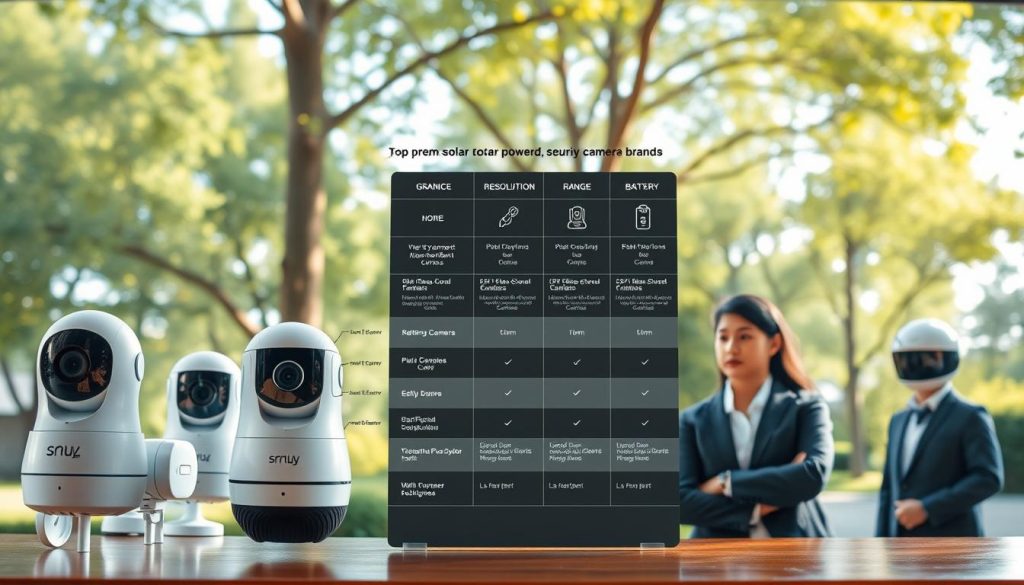
Advanced features include AI-powered detection and color night vision. These options provide superior identification capabilities after dark.
Hikvision maintains strong local support through authorized partners. Swann offers comprehensive warranties covering environmental damage.
Versatile DIY Options: Ring, Arlo, and Reolink
These companies focus on user-friendly installation without professional help. Their products appeal to tech-savvy homeowners seeking control.
Ring excels at ecosystem integration with other smart home devices. Their units connect seamlessly with doorbells, lights, and alarms.
Arlo emphasizes wireless flexibility and mobile app convenience. Their cameras offer reliable cloud storage with subscription plans.
Reolink provides excellent value with the Argus 3 Pro at $329. It delivers 2K resolution at an operational cost of just $0.18 daily.
“DIY brands transform property protection into an accessible project rather than a complex installation, putting control directly in homeowners’ hands.”
Setup typically requires under thirty minutes with basic tools. The systems use intuitive apps for configuration and monitoring.
Singapore availability includes major electronics retailers and online stores. Local customer service handles troubleshooting and warranty claims.
Evaluating Brands on Features, Reliability, and Value
Consider these aspects when comparing different manufacturers. Each factor contributes to long-term satisfaction with your investment.
Pricing structures vary significantly between brands. Equipment costs represent only part of the total expense.
Subscription fees for cloud storage add recurring charges. Some companies include basic plans with equipment purchases.
Accessory expenses like additional panels or mounts should be factored. Complete systems often offer better value than piecemeal purchases.
Warranty coverage differs in duration and comprehensiveness. Premium brands typically offer longer protection periods.
Local support availability matters for timely assistance. Singapore-based service centers provide faster resolution than overseas support.
Compatibility with popular smart home platforms deserves attention. Integration creates a unified management experience.
Consider these brand recommendations for different user profiles:
- Tech-Savvy DIYers: Ring or Arlo for seamless app control and easy installation
- Premium Seekers: Hikvision or Swann for maximum image quality and durability
- Budget-Conscious Homeowners: Reolink for balanced performance at accessible pricing
- Ecosystem Users: Ring for integration with existing smart home devices
Singapore-specific considerations include local distributor relationships. Authorized partners ensure genuine products and proper installation.
Professional installation services are available for complex setups. These services guarantee optimal placement and configuration.
Evaluate all details before making your final selection. The right brand matches your specific needs and property characteristics.
Installation Tips for Maximum Performance in Singapore
Achieving peak performance from your surveillance system requires careful attention to placement and regular upkeep. The right setup ensures your equipment operates reliably through Singapore’s unique climate. This guidance helps you maximize your investment’s potential.
Proper implementation considers local building regulations and environmental factors. Each step contributes to consistent monitoring year-round. Follow these recommendations for optimal results.
Optimal Solar Panel Placement for Sun Exposure
Singapore’s position near the equator demands specific panel angles. A 12° tilt delivers 34% better energy conversion than 25° angles. This precise orientation captures maximum sunlight throughout the day.
East-facing balconies work exceptionally well for HDB flats. They receive strong morning light during peak hours. This positioning supports consistent battery charging.
Seasonal sun path variations require minor adjustments. The sun’s position shifts slightly between December and June. Adjust your panel angle quarterly to maintain efficiency.
Urban settings present unique challenges. Nearby buildings may cast shadows during certain hours. Position panels where they receive at least 4-5 hours of direct sunlight daily.
Landed properties offer more placement flexibility. Roof mounts often provide unobstructed exposure. Ensure panels face true north for optimal performance in Singapore.
Commercial façades need creative solutions. Vertical mounts can still generate sufficient power. Supplemental lighting may enhance performance in shaded areas.
Strategic Camera Positioning for Comprehensive Coverage
Your monitoring devices should cover all vulnerable points. Entryways, windows, and perimeter gates need clear visibility. Create overlapping fields of view for complete protection.
HDB balcony installations require careful planning. Mount units high enough to avoid tampering. Angle them downward to capture approach paths effectively.
Landed property exteriors benefit from multiple units. Position them at corners for wide coverage. Ensure they monitor driveways, gardens, and service entrances.
Height considerations impact detection accuracy. Install devices 8-10 feet above ground level. This prevents easy interference while maintaining clear sightlines.
Avoid pointing lenses directly at light sources. Bright lights can cause glare and reduce image quality. Position units where they face shaded areas during midday.
Test different positions before permanent mounting. Use temporary brackets to evaluate coverage. Check both day and night performance before finalizing placement.
Routine Maintenance for Long-Term Efficiency
Regular care extends your system’s lifespan significantly. Establish a quarterly schedule for essential tasks. Consistent upkeep prevents minor issues from becoming major problems.
Clean photovoltaic surfaces every three months. Use soft microfiber cloths with mild detergent. Remove dust, pollen, and bird droppings that reduce efficiency.
Trim foliage causing seasonal shading. Plants grow quickly in Singapore’s tropical climate. Keep branches at least three feet away from panels and lenses.
Inspect all mounting hardware twice yearly. Singapore’s humidity can accelerate corrosion. Tighten any loose brackets or screws promptly.
Check battery performance every six months. Note any reduction in operational duration. Replace batteries showing significant capacity loss.
“Proactive maintenance preserves equipment performance and prevents unexpected failures, ensuring continuous protection for your property.”
Address common issues in Singapore’s urban landscape. Signal interference from neighboring networks may occur. Reposition your equipment or use signal boosters if needed.
Performance optimization includes sensitivity tuning. Adjust motion detection settings based on seasonal activity patterns. Reduce false alerts during windy monsoon periods.
Make seasonal adjustments for consistent operation. Increase panel angles slightly during December solstice. Clean devices more frequently during dry, dusty periods.
Document all maintenance activities. Keep records of cleaning dates and performance checks. This history helps identify patterns and plan future upkeep.
Your system should deliver reliable service for many years. Proper care ensures it meets your protection needs consistently. Follow these guidelines for peace of mind.
Applications: From HDB Flats to Landed Properties and Farms
Singapore’s diverse property types each present unique challenges that require tailored surveillance approaches. The same equipment performs differently in various environments across the island. Your monitoring setup must match your specific living situation.
Modern solutions offer remarkable flexibility for different residential and commercial needs. They adapt to space constraints, power availability, and coverage requirements. This versatility makes them suitable for nearly any Singapore location.
Understanding these applications helps you design an effective protection strategy. Each property type benefits from specific configurations and features. Let’s explore how to optimize your setup for maximum effectiveness.
Tailoring Your System for Different Property Types
HDB flats demand creative solutions due to space and wiring restrictions. Balcony railings and window ledges become ideal mounting spots. Wire-free installation proves particularly valuable in these compact living spaces.
Focus your cameras on primary entry points like the main door and service balcony. Use compact models that blend with your home’s aesthetics. Motion detection zones should cover the immediate corridor approach without capturing distant elevator traffic.
Landed properties with larger perimeters need comprehensive coverage. Position units at strategic corners to monitor driveways, gardens, and gates. Swann’s equipment provides 300-meter perimeter coverage that effectively deters intruders.
Multiple entry points require coordinated monitoring. Create overlapping fields of view to eliminate blind spots. This approach ensures complete protection for your entire property.
Singapore’s farms and agricultural areas face unique challenges. Vast spaces need extended connectivity and durable construction. The Lim Chu Kang region saw impressive results with specialized setups.
One 50-acre farm deployed 4G-connected units and achieved a 74% reduction in theft incidents. These remote locations benefit from cellular connectivity when traditional networks are unavailable. The technology protects valuable crops and equipment effectively.
Commercial and industrial applications differ significantly from residential needs. Construction sites utilize modular battery packs for extended 90-day autonomy. Business parks integrate monitoring with access control and lighting systems.
Each environment demands specific considerations. Urban settings deal with signal interference from neighboring networks. Rural locations prioritize extended battery life and weather resilience.
Use Cases for Off-Grid and Remote Locations
Singapore’s offshore islands and nature reserves represent challenging monitoring environments. These locations often lack traditional power infrastructure and network access. Photovoltaic-powered units with cellular connectivity provide ideal solutions.
Pulau Ubin’s nature trails benefit from autonomous protection systems. They operate independently without disturbing the natural environment. These setups preserve the area’s tranquility while ensuring visitor safety.
Construction sites throughout Singapore utilize specialized configurations. Temporary installations need quick deployment and reliable operation. Modular designs allow easy relocation as projects progress.
“The adaptability of modern monitoring technology transforms how we protect diverse spaces across Singapore, from urban apartments to remote agricultural lands.”
Successful implementations demonstrate the technology’s versatility. A Sentosa Cove landed home integrated monitoring with smart lighting and gate controls. This created a unified protection ecosystem that residents control through a single app.
An East Coast Park concession stand uses compact units for overnight surveillance. The wire-free installation avoided complex permits and maintained the structure’s appearance. The system provides peace of mind during closed hours.
Scalability considerations become important as your needs evolve. Start with essential coverage at primary entry points. Add additional units gradually to expand your monitoring network.
Most modern security systems support seamless expansion. You can integrate new cameras without replacing existing equipment. This flexibility accommodates changing family needs or property modifications.
Integration with other protection measures enhances overall effectiveness. Combine your monitoring with motion-activated lighting for deterrence. Connect with smart locks for comprehensive access control.
Singapore properties commonly use multiple layers of protection. Your surveillance equipment should complement these existing measures. This coordinated approach creates robust defense for your home.
Consider these application-specific recommendations:
- HDB Flats: Focus on compact, discreet units for balconies and doorways. Prioritize wire-free models to avoid complex installations.
- Landed Properties: Implement multiple units with overlapping coverage. Use extended-range models for large gardens and perimeters.
- Farms & Rural Areas: Choose cellular-connected equipment with extended battery life. Position units to monitor access points and valuable assets.
- Commercial Sites: Select durable models with modular power options. Integrate with existing access control and alarm systems.
Your specific situation determines the optimal configuration. Evaluate your property’s layout, lighting conditions, and access points. This assessment guides your equipment selection and placement strategy.
The right application approach ensures your investment delivers maximum value. Tailored solutions address your unique challenges effectively. This personalized protection provides genuine peace of mind for your Singapore property.
Solar vs. Traditional Security Cameras: A Cost-Benefit Analysis
The choice between energy-harvesting and grid-powered units extends far beyond the initial price tag. For Singapore homeowners, the true value emerges when examining total costs over time and broader impacts.
This analysis breaks down financial and operational differences. We compare both approaches across a realistic five-year period.
Long-Term Cost Savings and Environmental Impact
A detailed five-year total cost analysis reveals stark contrasts. Wired systems for landed properties often require cable trenching permits costing over $1,800.
Photovoltaic installations eliminate ninety-two percent of electrical work costs in HDB retrofits. This represents massive savings during setup.
Operating expenses differ dramatically. Grid-powered cameras consume about 58kWh of electricity each year.
This usage creates roughly 42kg of CO₂ emissions annually. Energy-harvesting models generate net-positive energy after just eighteen months.
The environmental benefit is significant. Each conversion to sustainable power prevents 1.2 tons of emissions.
This equals the carbon output of four hundred smartphone charges. It supports Singapore’s Green Plan 2030 goals directly.
Your security setup can actively reduce your household’s carbon footprint. This dual benefit is a powerful advantage.
Comparing Installation Complexity and Reliability
Setup complexity varies greatly by property type. Traditional wired cameras need professional electrical work and permits.
This process can take several days in landed homes. HDB flats face even stricter regulations on external wiring.
Wire-free options simplify this dramatically. Most homeowners can complete the installation in under an hour.
You avoid the hassle and cost of engaging licensed electricians. Placement flexibility increases without cable length constraints.
“The reliability of a protection system is measured by its performance when you need it most—during power outages or severe weather.”
Grid-dependent systems fail during blackouts. This leaves your property vulnerable at critical moments.
Energy-independent units continue operating seamlessly. Their built-in battery reserves provide uninterrupted monitoring.
Maintenance needs also differ. Wired security setups may suffer from cable degradation or connector issues over years.
Photovoltaic models require periodic panel cleaning and battery checks. This routine upkeep is simpler for most residents.
Durability in Singapore’s climate is crucial. Both camera types need robust weatherproofing.
Sustainable models are engineered for constant outdoor exposure. Their components withstand high humidity and intense heat effectively.
Scalability is another key factor. Expanding a wired network often means more complex cabling.
Adding more wireless units is typically straightforward. You can grow your security systems as your needs change.
Technology refresh cycles favor modular designs. Upgrading individual components is easier with self-contained units.
Consider this decision framework for your Singapore property:
- For HDB Flats & Condos: Prioritize wire-free, sustainable cameras. They avoid permit issues and use balcony sunlight efficiently.
- For Landed Properties: Evaluate both. If avoiding trenching costs is a priority, solar power offers clear savings.
- For Environmental Priorities: Choose energy-harvesting models to reduce your carbon footprint actively.
- For Maximum Reliability: Select units with independent power to ensure operation during outages.
The optimal choice balances your budget, property type, and personal values. This analysis provides the facts for your informed decision.
Making Your Final Decision: A Step-by-Step Selection Guide
Navigating the various options available demands a systematic approach tailored to Singapore’s unique residential landscape. This framework helps you evaluate different products with confidence.
Your choice should balance technical specifications with practical realities. Consider both immediate needs and future expansion possibilities.
Follow this structured process to make an informed investment. Each step builds toward finding your ideal protection solution.
Matching Camera Specifications to Your Security Needs
Begin by assessing your property’s specific vulnerabilities. Identify entry points, blind spots, and high-value areas needing coverage.
Singapore’s climate affects equipment performance significantly. Look for specifications that address local humidity and rainfall patterns.
Premium models offer three to six months of standby time. Actual usage depends on motion activity and video resolution.
Weather conditions also impact battery life. Consider these factors when comparing different options.
Evaluate imaging capabilities based on your identification requirements. Higher resolution provides clearer details for evidence collection.
Low-light performance matters for nighttime monitoring. Ensure the system handles Singapore’s urban lighting variations.
Setting a Realistic Budget for Equipment and Subscriptions
Allocate funds across three main categories: equipment, installation, and ongoing costs. Each requires careful consideration.
Initial equipment expenses include the main unit and accessories. Additional solar panels typically cost between fifty and one hundred dollars.
Most photovoltaic panels require at least a few hours of direct sunlight. Factor this into your placement strategy.
Installation costs vary by property type. DIY setups save money but require technical confidence.
Professional installation ensures optimal performance. Get multiple quotes from Singapore-based providers.
Ongoing expenses include cloud storage subscriptions and maintenance. Some brands offer free basic plans with equipment purchases.
Premium services provide extended video history and advanced features. Evaluate whether these justify the monthly fees.
Singapore retailers often offer trial periods and flexible return policies. Take advantage of these to test equipment in your actual environment.
Negotiate package deals when purchasing multiple units. Many installers provide discounts for complete system setups.
Reading Reviews and Understanding Warranty Coverage
Focus on Singapore-specific feedback when evaluating reviews. Look for comments about performance during monsoon seasons.
Pay attention to remarks about local customer support experiences. Responsive service matters when issues arise.
Technical specifications should be interpreted within our environmental context. What works elsewhere may not suit Singapore’s conditions.
Warranty terms differ significantly between brands. Systems like Swann’s offer three-year coverage on their equipment.
Hikvision provides five-year warranties on premium models. This extended protection adds value to your investment.
Understand what exclusions apply to your coverage. Many warranties don’t cover damage from improper installation.
Natural disasters and accidental damage often require separate protection. Review the claim process before purchasing.
Local distributor relationships affect warranty fulfillment. Authorized Singapore partners typically provide faster resolution.
“A comprehensive warranty provides peace of mind, but understanding its limitations ensures realistic expectations about protection coverage.”
Use this final evaluation checklist before making your purchase:
- Compatibility with your existing smart home ecosystem and network setup
- Scalability for future expansion as your needs evolve
- Local support availability through authorized Singapore distributors
- Clear details about subscription requirements and costs
- Adequate storage options for your recording preferences
- Realistic battery performance expectations for your location
- Weather resilience matching Singapore’s tropical climate conditions
- Return policy that allows testing in your actual environment
Your final decision should reflect both current requirements and future possibilities. The right choice provides reliable protection for years.
Take time to compare different models thoroughly. Consider how each option addresses your specific situation.
This systematic approach leads to confident purchasing decisions. You’ll select equipment that truly meets your Singapore home’s needs.
Future-Proofing Your Home with Sustainable Security
The evolution of home monitoring in Singapore increasingly focuses on energy independence and smart integration. With a 92% satisfaction rate, these protection systems deliver reliable peace of mind in any weather.
They align perfectly with Singapore’s Smart Nation and Green Plan 2030 initiatives. Your investment supports both property safety and environmental responsibility simultaneously.
Modern units offer easy upgrade paths as new technologies emerge. They integrate seamlessly with expanding smart home ecosystems for comprehensive management.
This forward-thinking approach preserves long-term value for your residence. It represents intelligent home management for years to come.