
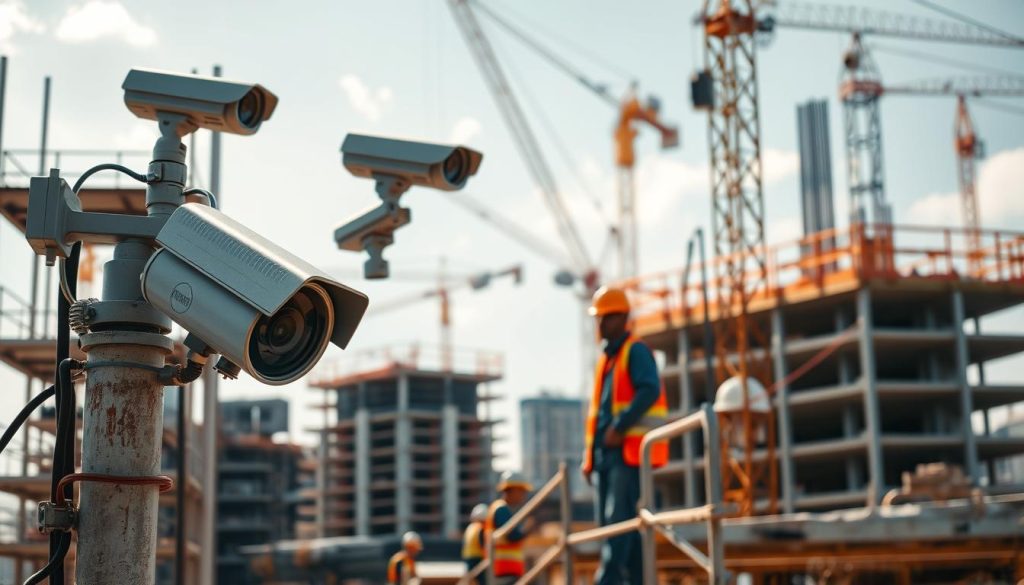
Construction projects face unique risks. Theft, vandalism, and safety incidents can cause major delays and financial loss. A robust, portable monitoring system is no longer a luxury—it’s a necessity for modern jobsite security.
These locations are dynamic. They often lack fixed power and internet connections. This makes traditional video surveillance setups inadequate and expensive to install.
Portable surveillance units offer a flexible solution. They can be deployed quickly and move with the project’s phases. This provides eyes on valuable assets and worker activities 24/7.
This guide is designed for project managers, owners, and safety professionals. It helps you select the best system for your specific needs and budget.
The financial stakes are enormous. Industry reports estimate annual losses from theft between $300 million and $1 billion. Recovery rates for stolen equipment and materials are notoriously low.
Regulations are also evolving. In Singapore, for example, the Ministry of Manpower (MOM) mandates Vehicular Surveillance Systems (VSS) for projects above a $5 million contract value. Proactive compliance is key.
Investing in a modern surveillance strategy is a smart business decision. It protects your assets, enhances worker safety, and creates valuable project documentation.
Key Takeaways
- Construction sites are high-risk environments vulnerable to theft, vandalism, and safety issues.
- Traditional security systems often fail because sites lack permanent power and internet infrastructure.
- Portable, all-in-one surveillance units provide a flexible and deployable monitoring solution.
- Equipment theft costs the industry hundreds of millions annually, with very low recovery rates.
- Regulatory requirements, like Singapore’s MOM VSS mandate, are making advanced surveillance essential.
- A robust system is a strategic investment that protects assets, promotes safety, and aids in documentation.
- Choosing the right system requires understanding your site’s specific needs and challenges.
Why Mobile Security Cameras Are a Must for Modern Construction Sites
Protecting a dynamic work area requires solutions that are as adaptable as the environment itself. Fixed installations simply cannot keep pace with the changing phases of a major project.
These locations are defined by sprawling, open layouts. High-value machinery and materials are often left in the open. There is typically no permanent power or data infrastructure in place.
This combination creates a significant vulnerability. It attracts opportunistic theft and can hinder rapid response to safety incidents.
A visible monitoring presence is a powerful deterrent. When potential intruders see a professional surveillance unit, they are far less likely to attempt unauthorized entry.
This psychological effect alone can prevent most incidents before they occur. It protects your assets without constant human patrols.
The biggest technical hurdle is the lack of utilities. Modern portable units solve this elegantly. They integrate solar panels, high-capacity batteries, and cellular data modems.
This allows for true off-grid operation. Your system stays active day and night, regardless of the project’s stage.
For managers overseeing multiple locations, remote access is transformative. Live feeds and recorded footage are available from a smartphone or office computer.
You gain real-time visibility into gate traffic, material storage yards, and fuel tank levels without being physically present.
This capability also directly supports Workplace Safety and Health (WSH) compliance. Video evidence is crucial for investigating accidents. It also helps deter unsafe behaviors by workers.
Think of the practical applications. Monitoring access points controls who enters the property. Watching fuel storage prevents costly siphoning. Observing high-risk work zones promotes safer practices.
Finally, consider the financial argument. The upfront cost of a robust surveillance system is a fraction of the loss from a single stolen excavator or generator.
It also pales in comparison to the expense of project delays or regulatory fines for non-compliance. This investment isn’t an expense; it’s a strategic safeguard for your entire operation.
Defining Your Needs: Key Questions Before You Buy
Jumping straight to product features can lead to overspending on capabilities you don’t need. A successful monitoring strategy starts with a clear self-assessment of your operation’s unique challenges.
Answering a few fundamental questions will point you toward the right system. This ensures your investment directly addresses your biggest vulnerabilities.
What Are Your Primary Surveillance Objectives?
Start by pinpointing exactly what you need to protect. Common goals include perimeter access control, securing high-value assets, and supporting safety compliance.
For instance, a Texas-based firm with numerous active locations had clear aims. They needed to watch entrance gates and gasoline storage tanks around the clock.
Their key requirement was evidentiary-quality footage. They prioritized the ability to identify individual faces and read vehicle license plates.
This focus on detail dictated their need for high-resolution video surveillance. They also preferred historical review over constant live streaming to manage resources.
How Many Sites Need Coverage and How Often Do You Move?
The scale and dynamism of your operations are critical. A company managing 8 to 15 active projects simultaneously faces different challenges than one with a single, fixed location.
Frequent relocation of equipment between project phases demands true portability. Systems must be easy to deploy, retrieve, and redeploy without extensive re-wiring.
Your answer here decides between highly mobile, all-in-one kits and more semi-permanent tower solutions. It also impacts how you manage and view feeds from multiple locations at once.
What is Your Realistic Budget for Hardware and Data?
Cost considerations extend far beyond the initial purchase price. You must account for both upfront hardware and ongoing operational expenses.
The largest recurring cost is often cellular data plans for remote video surveillance. There’s a direct trade-off between wanting 24/7 live feeds and the practicality of data usage.
Event-based recording or scheduled video uploads can drastically reduce monthly fees. This is a smart strategy when historical review, as used by the Texas company, meets your needs.
Allocate a significant portion of your budget for image quality. Blurry footage is useless for identifying thieves or investigating an incident. Clear evidence requires superior camera resolution and optics.
Finally, audit your site’s infrastructure. Many areas lack grid power and fixed-line internet. Your system must account for this.
We have no internet connection at our locations, but we are open to using cellular hotspots for connectivity.
This reality makes integrated solar power, batteries, and cellular modems essential features, not luxuries. Planning for these constraints upfront prevents costly surprises later.
Essential Features in Mobile Security Cameras for Construction Sites
Once you’ve defined your monitoring objectives, the next step is to evaluate the technical specifications that turn video into actionable evidence. The right features ensure your system captures clear, usable footage under all conditions.
This focus on core capabilities separates a basic recording from a powerful deterrent and investigative tool.
High Resolution and Optical Zoom for Critical Details
Blurry footage is worthless for identification. High resolution, such as 4K or better, is non-negotiable for modern site security.
It allows you to see critical details from a distance. You can read vehicle license plates and distinguish facial features clearly.
Pair high resolution with true optical zoom. Digital zoom merely crops the image, destroying quality.
Optical zoom uses the lens to bring subjects closer without losing pixel detail. This is vital for targeting specific assets or access points across large areas.
Consider the field of view (FoV) trade-off. A wide-angle lens reduces blind spots but may compromise detail on distant objects.
A camera with optical zoom offers flexibility. You can widen the view for general monitoring or zoom in for forensic-level evidence.
Superior Night Vision and Low-Light Performance
Most unauthorized activity occurs after hours. Your system’s after-dark performance is therefore paramount.
Traditional infrared (IR) illuminators create a monochrome image. While functional, they can struggle with identifying colors or details in complete darkness.
Newer sensor technology, like Starlight or AI TrueColor, is a game-changer. These systems provide full-color night vision in extremely low light.
Full-color imaging at night gives us much clearer evidence. We can see the color of a vehicle or clothing, which is crucial for investigations.
This technology often relies on advanced sensors rather than power-hungry IR lights. It delivers clearer, more natural footage that holds up as definitive evidence.
Always check the rated effective range of the night vision. Ensure it covers the critical distances across your monitored zones.
Wide Dynamic Range and Weatherproof Durability
Jobsite lighting is harsh and inconsistent. Glaring sun creates deep shadows, which can hide important details.
Wide Dynamic Range (WDR) technology is essential here. It balances the bright and dark areas within a single frame.
This ensures you can see clearly into shadowy doorways or against a bright sky. No detail is lost to overexposure or underexposure.
The physical environment is equally demanding. Equipment must withstand dust, rain, heat, and potential impacts.
Look for explicit weatherproof ratings. An IP67 rating guarantees complete protection against dust and immersion in water up to 1 meter.
For vandal resistance, an IK10 rating means the housing can withstand a direct impact of 20 joules. This is critical for units placed within easy reach.
Don’t overlook digital image stabilization either. For units mounted on trailers or in windy conditions, it keeps the view steady and usable.
Choosing a camera with these features ensures reliable video surveillance 24/7. Your investment delivers the quality needed for protection and proof.
Powering Your Surveillance: Off-Grid and Renewable Solutions
The biggest challenge for remote video isn’t the camera itself, but keeping it powered and online. Most work areas lack permanent electrical infrastructure. This makes traditional grid-tied setups impossible.
Your monitoring system must generate and store its own energy. A reliable power solution is the foundation of continuous site security.
Modern portable surveillance units solve this with integrated renewable technology. They combine solar panels, large batteries, and smart power management.
This ensures your equipment operates day and night, through any weather. You gain true independence from the grid.
Solar-Powered Systems for Continuous Operation
Solar energy is the leading renewable source for off-grid operation. It provides clean, silent power without fuel costs or generator noise.
High-efficiency panels, like 200-watt models, capture ample sunlight. This energy charges a high-capacity lithium battery pack during the day.
The stored power then runs the surveillance unit through the night and during cloudy periods. This creates a self-sustaining cycle.
Real-world performance is impressive. For example, a leading mobile surveillance kit features a 962Wh battery and 200W solar panels.
This configuration guarantees up to 17 days of battery life on a single full charge, with solar supplementation ensuring indefinite runtime in sunny conditions.
Such reliability is critical for long-term project phases. It eliminates the need for frequent site visits just to refuel or swap batteries.
High-Capacity Battery Packs and Runtime Management
Lithium battery packs are the heart of any wireless system. Their capacity, measured in watt-hours (Wh), dictates how long your equipment runs.
Runtime management is the key to reliability. Smart software and hardware features stretch every charge.
Essential power-saving modes include:
- Event-Based Recording: The camera sleeps until its sensors detect motion, then activates to record.
- Strobe IR Illumination: Infrared lights flash only when needed, instead of staying on all night.
- Timing Schedules: The system operates only during specified high-risk hours.
- Low-Power Design & Sleep Modes: Components draw minimal energy when idle.
These features can extend operational time by several days. Remote power management via a monitoring platform is also vital.
You receive instant alerts for low battery status. This allows you to plan maintenance before a shutdown occurs.
Hybrid Power Systems for Maximum Uptime
Some locations have partial or intermittent grid access. A hybrid approach combines the best of all worlds for maximum uptime.
These solutions intelligently switch between power sources. The primary source is solar charging the battery.
If battery levels drop too low, the system can automatically connect to an available AC outlet. For the most remote construction site phases, a backup generator can be integrated.
This layered strategy ensures your mobile security never goes offline. It is perfect for dynamic projects where infrastructure availability changes weekly.
The cost and complexity are higher than a simple solar kit. However, the guarantee of 100% uptime often justifies the investment.
When evaluating power options, consider the total cost of ownership. A robust solar and battery system has a higher initial price.
Yet, it eliminates ongoing fuel costs and generator maintenance. More importantly, it prevents the massive cost of a surveillance blackout.
Theft or an incident during a power failure can erase any savings from a cheaper, less reliable setup. Investing in proven off-grid technology protects your assets and your peace of mind.
Staying Connected: Cellular and Wireless Data Strategies
Transmitting video from remote locations requires smart connectivity strategies to balance performance with cost. Your monitoring equipment is only as good as its link to your team.
A stable data connection enables real-time alerts and remote oversight. It turns recorded footage into actionable intelligence.
Most work areas lack fixed-line internet. This makes cellular networks the primary solution for modern site remote video.
Choosing the right plan and transmission method is crucial. It ensures continuous oversight without overspending on bandwidth.
4G/LTE Cellular Routers and Data Plan Considerations
4G and LTE networks provide the backbone for off-grid connectivity. A dedicated cellular router is essential for reliable service.
These devices house a SIM card and create a local Wi-Fi network. They connect your entire surveillance system to the web.
Integrated 4G PoE (Power over Ethernet) routers are a popular choice. They combine cellular connectivity and camera power in one rugged unit.
Selecting a data plan demands careful analysis. Continuous high-definition streaming consumes massive amounts of bandwidth.
We considered Verizon hotspots, but continuous streaming would blow through our data cap in days.
This can lead to throttled speeds or exorbitant overage fees. Assess your actual needs based on recording schedules and video quality.
For many operations, an event-based or scheduled upload approach is far more economical. Always verify network coverage at your specific location before committing.
Smart Streaming and Event-Based Recording to Save Data
Advanced video compression technologies are key to managing costs. Codecs like H.265+ drastically reduce file sizes without sacrificing clarity.
They use smart algorithms to transmit only the changing parts of a scene. This slashes bandwidth use by up to 50% compared to older standards.
AI-driven event-based recording is a game-changer. The camera remains in a low-power state until its sensors detect meaningful activity.
It then wakes up to capture and transmit the relevant clip. This means data is used only when there is something important to see.
Strategies for efficient data use include:
- Smart Stream: Dynamically adjusts video bitrate based on scene complexity and motion.
- Snapshot Alerts: Sends a still image to your phone instead of a full video stream for initial notification.
- Lower-Resolution Live View: Allows remote monitoring at a reduced quality, saving the high-res footage for local storage.
These techniques ensure your mobile video surveillance remains cost-effective over the long term.
Local Storage vs. Cloud Backup: Finding the Balance
A hybrid storage approach offers the best of both worlds. It combines the reliability of local recording with the accessibility of the cloud.
Local storage typically involves high-capacity SD cards or an on-site edge server. This stores the original, full-resolution footage directly at the source.
It provides a complete evidentiary record without any data transmission costs. The footage is secure even if the cellular connection drops.
Cloud backup serves a different purpose. It uploads critical event clips or lower-resolution streams to a remote server.
This enables instant remote access from any device. It also creates an off-site copy, protecting evidence if local hardware is stolen or damaged.
The ideal solution uses local storage as the primary archive. The cloud then acts as a notification and remote access portal.
For managers overseeing multiple construction site projects, a unified platform is vital. It centralizes the view of all feeds and data usage.
You can monitor bandwidth consumption per location and adjust settings remotely. This proactive management prevents bill shock and maintains site security.
A well-planned connectivity strategy ensures your surveillance cameras are always online and within budget.
Built for the Job: Ruggedness and Environmental Protection
Industrial ratings are not just marketing terms. They are guarantees of performance under duress. The physical environment of a worksite is the ultimate test for any monitoring equipment.
Your surveillance system must endure what the location throws at it. This resilience ensures continuous operation and protects your investment.
IP67 and IK10 Ratings Explained
Ingress Protection (IP) ratings define defense against solids and liquids. An IP67 rating is a critical benchmark for site equipment.
The “6” means complete protection against dust ingress. The “7” allows immersion in water up to one meter deep for 30 minutes.
This guarantees your unit survives driving rain, dust storms, and accidental exposure. The IK rating measures resistance to physical impacts.
An IK10 is the highest level. It signifies the housing can withstand an impact energy of 20 joules.
Think of a 5kg mass dropped from 400mm directly onto the unit. This level of toughness deters vandalism and survives accidental bumps from machinery.
Withstanding Heat, Dust, and Vibration
Specific hazards define a construction project. Extreme temperatures, pervasive dust, and constant vibration from heavy equipment are relentless.
Units like those from Milesight are engineered for these conditions. They feature wide operational temperature tolerances.
Sealed housings prevent fine particulate matter from damaging internal electronics. Reinforced mounts and internal dampening absorb shocks and vibrations.
Corrosion-resistant materials fight off chemical exposure and humidity. These features are not optional for reliable surveillance cameras.
Key construction-specific design elements include:
- Surge Resistance: Protects circuitry from power fluctuations common on temporary electrical grids.
- Reinforced Lens Housing: Shields the critical optical component from scratches and impacts.
- Advanced Sealing: Uses specialized gaskets and compounds to maintain the IP rating over time and through thermal cycles.
This ruggedness directly enables the unit’s portability. A durable system can be frequently relocated between project phases without suffering damage.
It transforms the equipment from a temporary gadget into a long-term asset. This prevents costly mid-project failures and maintenance headaches.
Ultimately, physical toughness is the foundation of site security. A camera that cannot survive the environment cannot protect it.
The Rise of AI and Smart Detection on the Jobsite
Artificial intelligence is transforming passive video feeds into active guardians for your assets and workforce. This shift moves beyond simple recording to intelligent, automated threat recognition and safety enforcement.
The core of this advancement is on-camera AI, or edge computing. Data is processed directly within the camera itself.
This enables instant analysis and response. It also saves significant bandwidth compared to sending all footage to a cloud server.
Your surveillance system becomes a proactive partner. It filters out irrelevant information and highlights only what matters.
Intrusion Detection and Virtual Perimeter Guarding
Traditional motion detection is notoriously unreliable. It triggers alerts for shifting shadows, rustling leaves, or small animals.
AI-powered intrusion detection creates a virtual tripwire or zone. You digitally map the exact area you need to protect on a monitoring platform.
The system then triggers an alert only when a person or vehicle crosses that specific boundary. This precision is a game-changer.
When an intrusion is confirmed, the AI can trigger an immediate on-site response. This includes activating powerful warning strobes, sounding a built-in siren, and sending a push notification directly to a manager’s phone.
This creates a powerful, automated deterrent. Potential intruders are confronted with light and sound the moment they breach the invisible line.
It turns your surveillance units from silent observers into active guards. This capability is central to modern construction site security.
People and Vehicle Classification with Fewer False Alarms
The intelligence goes deeper than just detecting motion. Advanced algorithms can classify objects in real-time.
The camera can distinguish between a human, a car, a truck, or non-threats like animals. This classification drastically reduces false alarms.
You no longer get alerted for a cat walking through the yard at night. Your team only receives notifications for genuine person or vehicle events.
This accuracy saves countless hours of reviewing irrelevant footage. It makes remote monitoring efficient and trustworthy.
For jobsite security, this means you can set different rules. You might allow vehicle alerts during working hours but treat all person alerts after 6 PM as high-priority intrusions.
The solution provides clear, actionable evidence. Your view of events is precise and reliable.
PPE Compliance Monitoring for Enhanced Safety
AI analytics also serve a critical safety function. Personal Protective Equipment (PPE) compliance monitoring is a prime example.
The technology can be configured to detect whether workers in designated zones are wearing required safety gear. This includes hard hats, high-visibility vests, and safety glasses.
If a worker enters a high-risk area without proper PPE, the system can log the event and send an alert to a safety officer.
This feature serves a dual purpose. It proactively enhances worker safety by encouraging compliance.
It also creates an audit trail that can be vital for Workplace Safety and Health (WSH) investigations. This helps avoid regulatory fines and fosters a stronger safety culture.
Integrating AI-driven video surveillance transforms hours of footage into actionable intelligence. It makes your mobile surveillance investment smarter, more efficient, and fundamentally more powerful.
Understanding Singapore’s VSS Compliance Requirements
Singapore has implemented a landmark regulation that makes video surveillance compulsory for qualifying construction projects. This move by the Ministry of Manpower (MOM) sets a new standard for operational safety and accountability.
From 1 June 2024, all worksites with a contract value of S$5 million and above must install a Video Surveillance System (VSS). This mandate transforms video from an optional tool into a legal requirement.
The regulation outlines four official purposes for the VSS. It is designed for surveillance, identifying workplace safety and health risks, facilitating incident investigation, and deterring unsafe behaviors.
This holistic approach goes beyond simple theft prevention. It integrates monitoring directly into the project’s safety management system.
MOM Mandates for Construction Sites Above $5 Million
Compliance is not a suggestion. The MOM mandate is a clear directive for major developments across the country.
Your chosen system must meet specific technical and operational standards. These ensure the VSS fulfills its intended functions effectively.
Key requirements include comprehensive camera coverage of critical zones. This includes entry points, material storage, and high-risk work areas.
Recorded footage must be retained for a minimum period, often 30 days or more. This provides a historical record for any retrospective investigation.
Remote access capabilities are also essential. Authorized personnel must be able to view live feeds and recordings from off-site locations.
This allows for real-time monitoring and swift response to developing situations. It turns your surveillance investment into an active management tool.
How Your CCTV System Supports WSH Investigations
A properly configured portable CCTV system is a powerful ally for Workplace Safety and Health (WSH) officers. It provides indisputable evidence when incidents occur.
Video footage can reconstruct events leading to an accident with clarity. It removes reliance on conflicting witness statements.
This objective record is crucial for internal reviews and regulatory inquiries. It helps identify root causes and prevent future occurrences.
Working with an experienced local provider is highly advised. Firms like Zectech understand the specific compliance landscape and technical standards.
They can ensure your deployment meets all MOM stipulations for camera placement, data retention, and system integrity.
Compliance is not just about avoiding penalties. It represents a proactive investment in your location’s safety culture.
A visible VSS demonstrates a commitment to worker welfare. It actively deters unsafe practices before they lead to harm.
Similar regulatory trends are emerging in other regions globally. Choosing a compliance-ready system today is a forward-thinking business decision.
It prepares your operations for future mandates elsewhere. This protects your project and enhances your reputation for responsible management.
Types of Mobile Surveillance Units: Trailers, Towers, and Kits
Three primary categories of portable units dominate the market: towable trailers, freestanding towers, and all-in-one kits. Each configuration serves a distinct strategic purpose.
Your choice determines the level of deterrence, coverage area, and deployment speed. Matching the hardware to your location’s specific needs is essential.
Mobile Trailer Units for High-Visibility Deterrence
These are comprehensive, vehicle-towed platforms. They offer the highest level of visible presence.
A trailer unit typically integrates multiple AI-powered cameras, powerful warning strobes, and loudspeakers. This creates an unmistakable statement.
Firms like Milesight partner with trailer manufacturers to deliver these surveillance units. They are designed for large, long-term projects.
The main advantage is psychological. Their sheer size and professional appearance act as a powerful deterrent from a distance.
They are ideal for securing major entry points and central storage yards. Setup involves towing the unit into position and activating the system.
Relocation is straightforward but requires a vehicle. This makes them perfect for phases lasting several months.
Security Towers for Perimeter and Gate Monitoring
Tall, freestanding towers establish a commanding vantage point. They are engineered for perimeter and gate oversight.
These structures elevate the camera to see over fences and across laydown areas. Models often include Passive Infrared (PIR) sensors.
This creates a 360-degree virtual security perimeter. The system detects heat signatures from people or vehicles approaching.
The tower’s height eliminates blind spots and provides a wide field of view essential for monitoring large, open boundaries.
Deployment is faster than a trailer. Towers are anchored securely but can be disassembled and moved as the project evolves.
They are a cost-effective solution for establishing consistent oversight of a construction site‘s outer limits. This focus makes them a cornerstone for site security.
All-in-One and Standalone Camera Kits for Flexibility
For maximum agility, compact kits bundle everything into one portable package. These are the most flexible surveillance units.
A typical kit includes a high-resolution camera, solar panel, battery, and cellular modem. It is a self-contained monitoring node.
Milesight offers both an Enclosure box and a Standalone All-in-One Kit. They are designed for rapid deployment in specific spots.
You can mount one on a pole, a container, or a tripod in minutes. This is perfect for temporary needs or monitoring high-value assets.
Think of securing fuel tanks, tool cribs, or remote material piles. Their smaller footprint allows for precise, targeted oversight.
Relocatability is their greatest strength. A small crew can move and redeploy a kit in under an hour.
This makes them ideal for dynamic projects where needs change weekly. They provide professional-grade video surveillance without permanent infrastructure.
Choosing between these types involves weighing key factors. Consider the coverage area, setup time, cost, and how often you’ll move the unit.
Trailers suit large, stable sites needing maximum deterrence. Towers are best for securing the outer edge of a property.
Compact kits excel at temporary or spot monitoring of critical assets. They offer the fastest deployment and lowest upfront cost.
Your construction site‘s size, layout, and top priorities should guide your decision. A mixed fleet of units often provides the most comprehensive solution.
Investing in the right physical platform ensures your mobile video surveillance strategy is both visible and effective.
Choosing Between PTZ, Fixed, and Panoramic Cameras
Selecting camera hardware involves a fundamental choice between flexibility, constant vigilance, and complete situational awareness.
Each lens type serves a distinct strategic purpose. Your decision shapes what your system sees and how it responds to events.
Forum discussions often highlight the core trade-off. You must balance a wide field of view with the need for detailed evidence.
When to Use Pan-Tilt-Zoom (PTZ) for Dynamic Coverage
PTZ units are the most flexible option for active monitoring. A remote operator can pan, tilt, and zoom the lens to patrol a large area dynamically.
This allows you to follow a person or vehicle across a yard. You can also zoom in to read a license plate from a distance.
The downside is a blind spot when the camera turns away. You might miss activity in another zone during a patrol.
These cameras excel in large, open spaces where the point of interest changes. They are also powerful for forensic review after an event.
You can command the unit to focus on a specific location captured in wider footage. This flexibility comes at a higher cost and requires more complex setup.
The Role of Fixed Bullet and Turret Cameras
Fixed models are the reliable workhorses of video surveillance. They provide unwavering coverage of a critical, fixed point.
Think of a gate, a storage container door, or a main entryway. These are choke points where constant monitoring is non-negotiable.
Their simplicity is a major advantage. Once aimed, they deliver a consistent view without needing operator input.
Bullet and turret styles often feature robust, weatherproof housings. Many also boast excellent low-light performance for reliable night vision.
This makes them a highly cost-effective solution for securing specific assets. They lack the ability to look around, but they never look away.
180° and 360° Panoramic Cameras for Maximum Area View
Panoramic models are powerful tools for eliminating blind spots. They provide a complete, single-image overview of an entire yard or site entrance.
A 180° lens can cover a wide wall or fence line. A full 360° unit sees in every direction from a single pole mount.
This creates unparalleled situational awareness for a construction manager. You get one seamless view instead of stitching together multiple feeds.
The trade-off is a potential lack of fine detail at a distance. While you see everything, identifying a face far across the site may require a different lens.
These cameras are ideal for general oversight of material laydown areas. They ensure nothing happens outside the view of your surveillance.
The most comprehensive strategy often uses a hybrid system. Combine a panoramic unit for wide-area awareness with fixed cameras on critical assets.
Add a PTZ camera for dynamic patrol of open zones. This mix delivers both broad vision and detailed quality where it matters most.
Your choice defines the intelligence your mobile surveillance system gathers. Match the lens to the location’s specific risks.
Installation and Deployment: Fast, Secure, and Relocatable
The true value of a portable monitoring solution is realized not just by its features, but by how quickly and securely it can be put to work. A slow, complex setup leaves assets vulnerable. A fragile installation invites tampering.
Your deployment strategy must achieve two core goals. It needs to get the system operational within hours, not days. It also must physically protect the investment from theft or damage.
This approach transforms hardware into an active guardian. It ensures your oversight begins the moment it’s needed most.
Minimizing On-Site Setup Time and Labor
Every hour a location is unmonitored is an hour of risk. Modern surveillance units are designed for rapid activation by a small crew.
Pre-configured kits are a major time-saver. These arrive with the camera, power source, and connectivity already tested and paired.
On-site, labor is minimized through intelligent mounting. Magnetic bases allow temporary placement on metal surfaces. Heavy-duty bolt-on brackets provide a permanent, secure fix in minutes.
Our goal is to have eyes on the gate and fuel tanks the same day the equipment arrives. Plug-and-play connections and simple pole mounts make that possible.
Always test the entire system at your depot before heading to the project. This verifies all components work seamlessly. It prevents frustrating troubleshooting in the field.
This focus on speed directly protects your bottom line. It reduces labor time and gets your deterrent in place faster.
Securing Cameras Against Theft and Tampering
The equipment protecting your assets can itself become a target. A comprehensive deployment plan addresses this reality head-on.
Physical mounting is your first line of defense. Install units at a significant height, out of easy reach. Use tamper-proof housings with IK10 ratings.
Secure all mounting hardware with unique, proprietary bolts. Standard tools cannot remove them. This simple step is a powerful deterrent.
Do not overlook ancillary gear. Batteries, solar panels, and network routers are valuable. House them within locked, reinforced enclosures or steel cages.
Also, secure all power and data cords. Use conduit or heavy-duty cable ties. Run lines through areas that are difficult to access.
This security philosophy enables the core benefit of mobile surveillance: relocatability. Systems built with quick-disconnect fittings and portable power are easy to move.
They are also inherently more secure. There are no permanent, exposed wires to cut. The entire unit is a self-contained, hardened asset.
A well-executed deployment preserves your capital investment. The same system can secure multiple projects over its lifespan. This makes your monitoring solution a true long-term asset for your business.
Remote Monitoring and Management Platforms
Remote oversight transforms recorded footage from a passive archive into an active management tool. The hardware captures the images, but the software gives them meaning and reach.
Your Video Management Software (VMS) or cloud platform is the command center. It connects your team to the site from anywhere in the world.
This layer turns raw video surveillance into actionable intelligence. It is essential for modern jobsite security and operational control.
Accessing Live Feeds and Recordings from Anywhere
A robust platform provides instant access via smartphone, tablet, or computer. You are no longer tied to a physical monitoring station on the construction site.
Quality software allows you to view live streams in real-time. You can also search through recorded footage by time, date, or specific AI event.
This flexibility caters to different management styles. Some teams need constant live view for immediate response.
Others, like the equipment manager noted earlier, prioritize historical review. They search for evidence after an incident occurs.
The ability to quickly find and download a clear clip is what turns video into court-admissible evidence. It’s the difference between knowing something happened and proving it.
This remote capability is a core benefit of mobile surveillance. It ensures oversight continues even when you cannot be physically present.
Centralized Management for Multiple Sites
For firms managing 8 to 15 active locations, a centralized platform is non-negotiable. It consolidates all feeds onto a single, unified dashboard.
You gain a holistic view of your entire operation from one login. This eliminates the chaos of juggling multiple apps or logins.
Advanced platforms like Nx Witness, which works with Milesight systems, offer powerful features:
- User Permission Levels: Grant different access rights to project managers, safety officers, and clients.
- Interactive Map Views: See all cameras plotted on a site map for intuitive navigation.
- Real-Time Alert Notifications: Get instant push notifications for intrusions or system issues.
- System Health Monitoring: Remotely check battery levels, signal strength, and storage status.
This centralized control is a massive force multiplier. It makes large-scale monitoring efficient and manageable.
Time-Lapse Video for Project Documentation
Beyond security, modern platforms deliver a valuable bonus: time-lapse creation. This feature compiles days or months of footage into a short video.
It provides owners and stakeholders with transparent progress updates. You can visually document each phase of the project from groundbreaking to completion.
This documentation has multiple uses. It aids in client reporting, marketing, and even dispute resolution.
When evaluating platforms, ensure compatibility is a priority. Your chosen surveillance cameras must work seamlessly with a robust, user-friendly VMS.
Many systems use a hybrid access model for reliability. Local edge servers handle primary, high-resolution recording.
Cloud connectivity then provides remote alerts and viewing of critical events. This balances data costs with instant accessibility.
A powerful management platform completes your mobile security investment. It ensures the intelligence gathered on-site translates into informed decisions off-site.
Evaluating Total Cost of Ownership and ROI
Beyond the initial price tag, the true expense of a surveillance system includes ongoing operational costs and potential savings. A comprehensive financial analysis separates a wise investment from a mere expense.
This evaluation covers both capital and recurring outlays. It also measures the return through loss prevention and operational gains.
Understanding this full picture is crucial for any manager. It justifies the budget and aligns technology with business goals.
Upfront Hardware and Installation Costs
Capital expenditure (CapEx) covers all one-time purchases. This includes the monitoring units, power sources, and connectivity hardware.
Professional installation may also be required. This ensures optimal placement and system integrity.
A realistic example comes from industry forums. A user was quoted around $5,700 for a single all-in-one setup.
This investment typically includes a high-resolution camera, solar panel, large-capacity battery, and a 4G cellular router. It’s a complete, deployable kit.
This cost represents a significant initial outlay. However, it buys a professional-grade solution designed for harsh environments.
The hardware is built to last for years across multiple projects. This durability is a key part of the value proposition.
Ongoing Data, Maintenance, and Service Fees
Operational expenses (OpEx) are the recurring charges. They must be factored into the annual operating budget.
The largest line item is often cellular data plans. These enable remote viewing and alert notifications.
Cloud subscription fees for video management platforms are another consideration. Some systems also include service contracts for proactive maintenance.
Periodic upkeep includes cleaning solar panels and checking battery health. These tasks ensure continuous power and system reliability.
Planning for these fees prevents unexpected financial strain. It also guarantees your monitoring remains active and effective.
Calculating Return Through Theft Prevention and Efficiency
The financial argument for a robust system is compelling. Industry reports estimate annual theft losses between $300 million and $1 billion.
Recovery rates for stolen equipment and materials are under 25%. Preventing a single major incident can justify the entire system’s cost.
Return on Investment (ROI) isn’t just about averting theft. Significant gains come from improved operational efficiency.
Surveillance cameras reduce the time managers spend investigating incidents or disputes. Clear video evidence provides quick answers.
Worker productivity often improves under a visible monitoring presence. It encourages adherence to safety protocols and deters unauthorized breaks.
Regulatory compliance, such as meeting Singapore’s VSS mandate, avoids potential fines. This is another form of financial protection.
A major advantage of mobile surveillance is residual value. The same system can be redeployed on future project phases or new locations.
This spreads the initial capital outlay over many years. It transforms the equipment from a consumable into a long-term company asset.
View the construction site monitoring solution holistically. It functions as both an insurance policy and a productivity tool.
The investment safeguards your assets, your people, and your project’s timeline. This comprehensive protection is its ultimate return.
Leading Solutions and Brands to Consider
Your final purchasing decision hinges on evaluating the brands and solution providers that serve the industrial monitoring sector. The market offers a wide range, from specialized turnkey experts to major manufacturers with rugged product lines.
Choosing the right partner impacts long-term reliability and support. It ensures your investment meets the harsh demands of a dynamic work zone.
Specialized Construction Security Providers
Some firms focus exclusively on the built environment. Providers like ECAMSECURE, TrueLook, and Stealth Monitoring offer complete, turnkey solutions.
Their value lies in deep industry knowledge. They design systems specifically for temporary locations and phased projects.
These vendors often bundle hardware with professional monitoring services. A remote team watches your feeds and can dispatch authorities.
This hands-off approach is ideal for managers overseeing multiple projects. It transfers operational responsibility to the experts.
Milesight is another notable specialized provider. Their OpenVision line of surveillance cameras is engineered for challenging conditions.
They partner with trailer manufacturers to deliver highly visible, integrated surveillance units. This specialization often translates to better after-sales support.
Major CCTV Brands with Rugged Mobile Options
Established giants like Axis, Hikvision, Dahua, and Vivotek dominate the broader video surveillance market. They all produce ruggedized camera models suitable for off-grid use.
Their strength is proven technology and vast product portfolios. You can find cameras with exceptional low-light performance and weatherproof ratings.
These brands are a solid choice if you plan to integrate with existing infrastructure. They offer wide compatibility with various video management platforms.
Always request a demo and a site visit from the vendor. Seeing the equipment perform in conditions similar to yours is invaluable.
Newer entrants and DIY-friendly brands have also emerged. Reolink and Amcrest offer cellular and solar camera kits at accessible price points.
Amcrest’s 4K PTZ models, for example, provide high quality imagery. These options can be attractive for cost-conscious or tech-savvy teams.
Critical brand selection considerations include:
- Cybersecurity Posture: Prioritize brands with a strong track record of regular firmware updates and vulnerability management.
- Firmware Support Lifecycle: Ensure the manufacturer will support the hardware with updates for several years.
- Third-Party Compatibility: Verify the equipment works with popular VMS software for flexible management.
- Local Distributor Support: In Singapore, having a local partner like Zectech for brands such as Milesight ensures prompt service.
Avoid choosing based on price alone. The lowest upfront cost often leads to higher long-term expenses from failures or inadequate support.
In the demanding context of construction site security, reliability and durability are paramount. Your provider should be a strategic partner, not just a hardware supplier.
Investing in a reputable brand with proven solutions safeguards your assets and ensures continuous monitoring. This partnership is foundational to effective jobsite security.
Integrating Surveillance with Other Site Systems
Think of your video system not as a watchman, but as a translator that makes all other site technologies speak the same language. Isolated tools create data silos. An integrated approach creates a unified operational picture.
This connectivity transforms basic recording into a proactive management layer. Your oversight becomes part of a broader technology ecosystem.
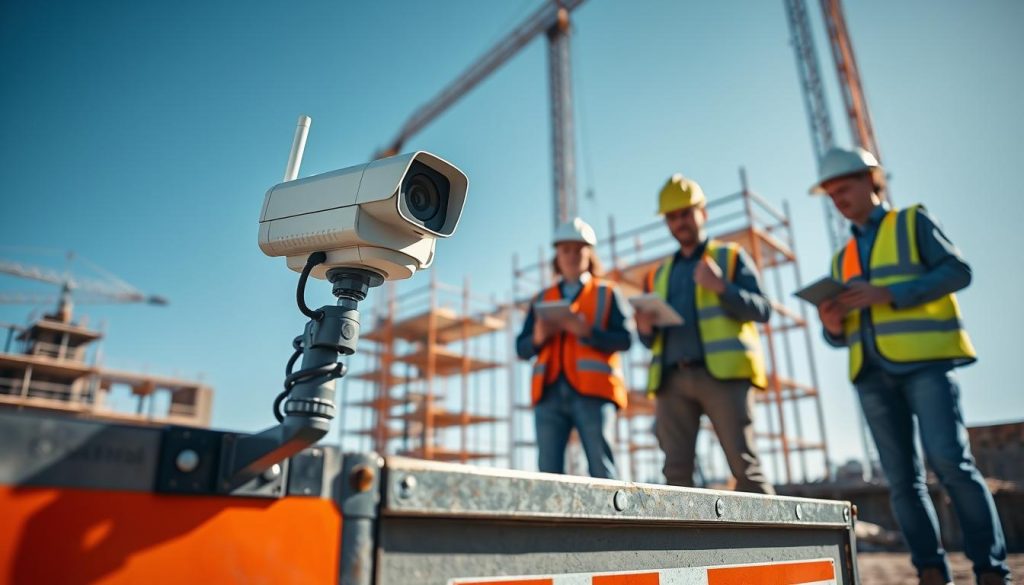
Start with access control. Link your surveillance cameras to gate readers or turnstiles. Every badge swipe or code entry can trigger a recording.
This provides visual verification of who entered or exited. It creates a powerful audit trail for your site.
Perimeter protection gains new intelligence. Connect video analytics to fence sensors or intrusion detection systems.
When a vibration sensor triggers, the nearest PTZ camera can automatically pan to the exact location. This delivers instant visual confirmation of the alarm.
This layered approach eliminates guesswork. Your team sees the threat immediately, whether it’s a person or an animal.
Project management software is a critical hub. Platforms like Procore or BIM 360 can embed your system’s data.
Time-lapse videos show progress. Security alerts log directly into the project diary. This gives managers a complete view of timelines and risks.
Environmental monitoring is another key link. Connect smoke, heat, or flood sensors to your surveillance setup.
An alarm can trigger a preset camera view. You get visual proof of a fire or water leak the moment it happens. This speeds emergency response.
Two-way audio integration adds a communication channel. Supervisors can speak directly to personnel through the camera’s speaker.
This allows for remote instructions or warnings. It enhances both safety and daily coordination on the lot.
Each connection makes the whole system smarter. Data from one sensor informs the action of another.
The result is a cohesive technology fabric. It improves both site security and overall management efficiency.
Your investment in mobile surveillance becomes a central nervous system for the project. It unifies disparate tools into a single source of truth.
This strategic integration is the final step in building a modern, intelligent construction site. It turns reactive monitoring into proactive control.
Your Next Steps to a More Secure Construction Site
Taking the first step towards a fortified project begins with a clear action plan. Review the key factors: your monitoring goals, required features, power needs, and connectivity.
Start with a pilot on one or two high-risk locations. This tests system performance and return on investment before a full rollout.
Assemble a vendor shortlist prioritizing firms with industry experience. Request detailed quotes that break down all hardware, data, and support costs.
Clarify compliance requirements early, especially for regulated markets like Singapore. Choose a scalable solution that grows with your company and adapts to new technologies.
Investing in robust mobile security cameras is a proactive move. It protects assets, ensures safety, and safeguards your project’s bottom line.