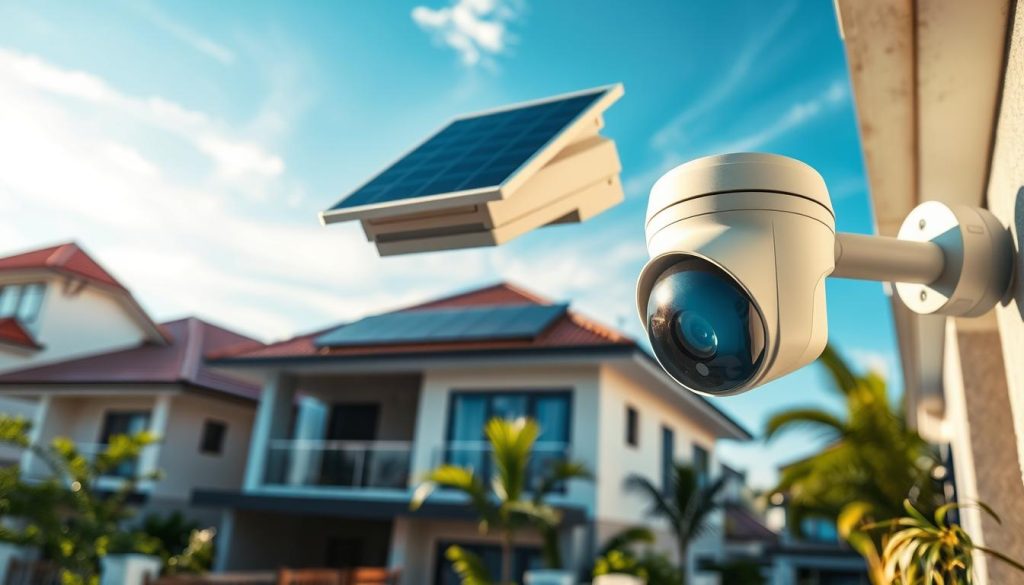
Keeping your property safe is a top priority. A new wave of security technology is rising in popularity across Singapore. These innovative devices offer a sustainable and efficient way to monitor your home or business.
This guide is designed to help you make a smart choice. We provide clear, factual information for anyone considering this modern protection solution. You are likely looking for reliable details before making a purchase.
Singaporeans have shown strong trust in these products. Over 640 local reviews give them an average rating of 4.5 out of 5 stars. Options are available for every budget, from basic setups at $59.99 to advanced professional systems near $799.99.
Brands like Reolink and Eufy lead the market here. They are known for their reliable performance and strong features. Choosing a sustainable security option also supports Singapore’s national Green Plan 2030 goals.
We will cover everything from installation and key features to after-sales support. Use this guide to make an informed investment in your peace of mind.
Key Takeaways
- Sustainable security systems powered by the sun are becoming very popular in Singapore.
- This buyer’s guide provides comprehensive information for your purchase decision.
- Local consumer satisfaction is very high, with excellent ratings from hundreds of users.
- Prices range widely, offering solutions for both modest and larger budgets.
- Specific brands dominate the local market due to their reliability and innovation.
- This technology aligns with Singapore’s broader sustainability and environmental goals.
- Key factors like installation, features, and support are covered in detail ahead.
Understanding Solar-Powered WiFi CCTV Cameras
Photovoltaic technology has revolutionized how we think about persistent, wire-free property oversight. These standalone devices harness energy directly from the sun. They then use your home’s WiFi network to send video and data.
This creates a fully integrated monitoring system. You gain remote access and control without the hassle of cables.
The core of this technology is the photovoltaic cell. These special panels convert sunlight into electrical power. The energy is stored in a high-capacity battery for 24/7 operation.
Modern solar panels are highly efficient. They typically convert 15% to 22% of captured sunlight into usable electricity. Under good conditions, a full recharge takes just 6 to 8 hours.
This efficiency translates into remarkable reliability. Many units can run for up to seven days without any sunlight. A great example is the Sentosa Cove development, where a solar-powered security setup operated non-stop for 300 days.
Wireless connectivity is the other key component. Your unit connects to your home WiFi. This allows for live viewing and playback from your smartphone or computer from anywhere.
This setup is a stark contrast to traditional wired systems. There are no power cords to route through walls. Installation becomes much simpler and more flexible.
Smart features are standard in these modern devices. Advanced motion detection minimizes false alerts. You receive real-time notifications directly to your phone when activity is sensed.
This independence makes them perfect for various locations. They are ideal for remote areas, construction sites, or gardens where mains power is unavailable. They provide consistent protection where it was once difficult to install.
Some options, like professional kits from brands such as Hikvision, offer a modular design. You can customize the setup with different storage and viewing options. This allows for easy deployment and scaling.
In essence, a solar-powered WiFi security camera offers true independence. It is a reliable, modern solution for continuous property monitoring.
Why Singapore is Ideal for Solar Security Solutions
Two powerful forces align in Singapore to make photovoltaic security exceptionally viable: abundant natural resources and proactive government strategy. This synergy creates an environment where sustainable property protection isn’t just possible—it’s highly efficient and supported.
Singapore’s Climate: A Natural Power Source
Singapore’s tropical climate provides a consistent and powerful natural energy source. The island nation enjoys over 2,500 hours of bright sunlight every year.
This translates to a high average solar irradiance of 1,582 kWh/m² annually. Such intense light offers tremendous potential for generating clean energy.
Even during the monsoon seasons, modern photovoltaic systems demonstrate remarkable resilience. They can maintain up to 85% efficiency despite heavy rain and cloud cover.
This reliability ensures continuous operation for security devices. Your monitoring remains active through various weather conditions.
Government Initiatives and Support for Solar Energy
National policy strongly backs the adoption of renewable energy. The Singapore Green Plan 2030 sets an ambitious target of 2GW of installed solar power capacity by 2030.
Specific financial support makes these products more accessible. Subsidies of up to 30% are available for ECO-certified security systems, reducing the upfront cost for homeowners.
The large-scale HDB panels rollout is a prime example. This program often integrates security features directly into the building’s sustainable infrastructure.
Urban Redevelopment Authority (URA) guidelines further facilitate adoption. They simplify the process for installing related equipment in private estates, removing bureaucratic hurdles.
Large-scale projects like the Sembcorp Tengeh Floating Solar Farm showcase national commitment. This leadership in innovation builds public trust and a mature market for the technology.
These initiatives create a favorable ecosystem for adopting sun-powered surveillance. They lower costs, improve accessibility, and signal long-term stability for this solution.
For integrated and professional setups, exploring established professional solar CCTV camera solutions can be a logical next step, leveraging this supportive landscape.
In summary, Singapore’s climate provides the perfect natural battery. Coupled with robust policy support, it makes the country an ideal market for efficient, off-grid security.
Top Benefits of Solar-Powered Outdoor Security Cameras
Today’s outdoor protection solutions provide resilience, savings, and a reduced ecological footprint. Moving to a photovoltaic system is a smart upgrade with multiple advantages.
These benefits make a strong case for choosing this modern solution. They impact your budget, your property’s safety, and the environment.
Eco-Friendly and Sustainable Surveillance
Choosing a sun-powered unit is a direct investment in sustainability. Each device can offset approximately 2,000 lbs of CO² every year.
This reduction is equal to the carbon processing work of 45 mature trees. It turns your property oversight into a positive environmental action.
This aligns perfectly with national green initiatives. Owners may also qualify for Solar Renewable Energy Certificates (SREC).
These certificates can provide additional financial support. It’s a solution that protects your property and the planet.
Significant Long-Term Cost Savings and Energy Independence
The financial case for this technology is very compelling. Reports from the SP Group show dramatic results.
Condo security systems using this method saw energy bills drop by 75%. The savings accumulate significantly over time.
Compared to traditional wired setups, users save between $1,500 and $2,000 over a decade. Maintenance costs are also much lower.
You can expect to pay about $50 per year. Conventional systems often cost $300 annually for upkeep.
This energy independence is a key performance benefit. Your monitoring continues without interruption during a power outage.
This is crucial for critical infrastructure and remote areas. A reliable battery ensures operation for multiple days.
Real-world applications prove its value. Jurong Island Industrial Park installed 200 units.
They achieved reliable surveillance and cut operational expenses. The products met compliance needs while saving money.
Durability is engineered for local conditions. Outdoor units have excellent weather resistance.
They withstand Singapore’s high humidity and heavy rain. This ensures long-term reliability in any location.
In summary, solar-powered security offers a powerful mix. You get eco-friendliness, major cost savings, and unwavering reliability for your property.
Key Features to Look for in a Solar Camera CCTV
Beyond the power source, the critical elements that determine performance are found in the feature set. Selecting the right security device requires a close look at its technical specifications.
These features directly impact how well the system protects your property. They ensure clear identification, reliable alerts, and long-term durability.
High-Definition Video Quality and Resolution
Clear evidence starts with crystal-clear video. For modern surveillance, 4K Ultra HD resolution is becoming the standard.
This high level of detail is crucial for forensic review. It allows you to identify faces, license plates, and other small details from a distance.
An optical zoom capability, such as 8x, is a powerful companion to high resolution. It lets you capture close-up views of specific areas without moving the unit or losing image clarity.
Live streaming latency is another key metric. Look for a delay of under 300 milliseconds. This near real-time feed is vital for proactive monitoring and immediate response.
Advanced Night Vision Capabilities
Effective protection does not stop at sunset. Advanced night vision technology is essential for 24/7 coverage.
Infrared LEDs are common, but starlight sensors represent a significant upgrade. These sensors excel in extremely low-light conditions, capturing clearer, less grainy images.
The effective range is a critical specification. Many quality devices offer clear night vision up to 33 feet (about 10 meters). This ensures your perimeter is visible even in complete darkness.
Smart Motion Detection and Alerts
Intelligent detection separates useful alerts from constant noise. AI-powered motion analysis is now a must-have feature.
This technology can distinguish between a human, a passing animal, and a moving vehicle. By filtering out irrelevant motion, it can reduce false alarms by up to 90%.
You only get notifications for events that truly matter. This saves you time and ensures you pay attention when it’s important.
Customizable alert zones allow you to focus on specific areas, like a gate or driveway. This further refines the system’s accuracy.
Weather Resistance and Durability for Outdoor Use
Singapore’s tropical climate demands robust construction. Weather resistance is non-negotiable for any outdoor installation.
An IP67 rating is a strong benchmark. It certifies the unit is fully protected against dust ingress and can withstand immersion in water up to 1 meter for 30 minutes.
This level of resistance guarantees operation during heavy rainstorms and in high-humidity environments. The housing should also resist corrosion from salty air.
For added security, consider models with anti-vandal designs. A tough, tamper-resistant casing is wise for both residential and commercial use.
When evaluating products, also consider storage options. Local SD card storage keeps data on-site, while cloud services offer remote backup and access.
Features like two-way audio, integrated sirens, and smart home integration add layers of control. Always verify the device complies with local regulations like Singapore’s PDPA for data handling.
Ultimately, prioritize the features that match your specific environment and security goals. A clear night view might be paramount for a dark garden, while superior weather resistance is key for a coastal property.
How Solar Camera CCTV Technology Works
A self-sufficient monitoring setup operates as a miniature, intelligent power grid dedicated to your safety. It seamlessly merges three core systems: energy harvesting, intelligent storage, and secure data transmission.
This integration is what grants true independence from mains electricity and cables. Let’s break down how each component contributes to reliable, around-the-clock protection.
The Role of Solar Panels and Photovoltaic Cells
Everything begins with light. Photovoltaic (PV) cells within the solar panel are the primary energy harvesters. They convert sunlight directly into direct current (DC) electricity.
Not all panels are created equal. Monocrystalline silicon cells are highly efficient, often reaching up to 22% conversion rates. Polycrystalline panels are a more affordable option and perform well in Singapore’s bright conditions.
Maintenance directly impacts efficiency. A simple monthly cleaning can boost a panel‘s output by 25%. Conversely, seasonal haze can temporarily reduce energy capture by about 15%.
This harvested power is the lifeblood of the entire security camera system. Consistent light ensures the unit never runs out of energy.
Battery Systems: Life, Storage, and Management
The harvested electricity needs a home. This is where the battery comes in. Modern units almost exclusively use lithium-ion technology.
These batteries are built for the long haul. They typically offer over 3,000 full charge cycles. This translates to many years of daily use.
Different chemistries serve different needs. LiFePO4 (Lithium Iron Phosphate) batteries are prized for superior safety and durability. NMC (Nickel Manganese Cobalt) types provide higher energy density in a smaller package.
A smart charge controller is the essential brain for battery management. It prevents overcharging on very sunny days and protects against deep discharge. This careful stewardship is key to maximizing the battery‘s lifespan.
With a well-sized storage unit, these devices can operate for multiple days without any sunlight. This guarantees continuous monitoring through prolonged cloudy weather.
WiFi and Cellular Connectivity for Remote Access
Captured footage is only useful if you can see it. This is the role of the connectivity network. Most solar powered products use your home WiFi for primary communication.
Smooth remote viewing depends on your internet upload speed. For clear 1080p video streaming, a minimum of 5Mbps upload speed is recommended. This ensures your live feed is stable and responsive.
What happens if your WiFi fails? Premium systems include a 4G cellular fallback. This feature automatically switches to a mobile network during an outage or in remote areas.
It maintains your remote access without interruption. Your data and privacy are protected during transmission by strong encryption like AES-256. Multi-user access controls let you securely share viewership with family members.
Together, these three subsystems—solar power generation, intelligent battery storage, and robust network connectivity—create a resilient and autonomous security solution. They work in harmony to deliver peace of mind, regardless of the weather or time of night.
Comparing the Best Solar Security Camera Systems
A smart purchase decision hinges on understanding the trade-offs between budget-friendly and high-end options. This comparison helps you identify which system delivers the right mix of features for your property.
We will break down popular models and their key specifications. This analysis focuses on real-world value and long-term performance.
Entry-Level vs. Premium Systems: Price vs. Performance
Entry-level systems typically cost under $200. They offer solid basic protection with features like 1080p video and standard motion detection.
These devices are a great starting point for covering essential areas. They provide reliable monitoring without a large upfront investment.
Premium systems start around $500 and go higher. They boast advanced capabilities like 4K resolution, AI analytics, and rugged construction.
The higher investment often yields better durability, smarter features, and longer warranties. This tier is for those seeking top-tier performance and future-proofing.
Important Specifications Comparison Chart
Evaluating key specs side-by-side is crucial. Here is a look at three leading products in Singapore.
- Reolink Argus 3 Pro ($199): Known for excellent motion detection and a versatile design. It offers good battery life and clear 2K video.
- EufyCam 3 ($179): Features strong local storage and vandal resistance. Its solar panel provides consistent power for extended use.
- Lorex 4K ($549): Delivers superior video clarity with 4K resolution. This professional-grade solution often includes robust network connectivity.
Beyond the sticker price, consider hidden costs. Monthly cloud subscriptions, for example, can add $6.99 or more to your budget.
These fees affect the total cost of ownership over time. DIY installation can save you up to $150 in professional fees.
Proper setup is still essential for optimal performance. Some premium systems, like those from Lorex, may contribute points toward sustainability certifications like BCA Green Mark.
This adds value for environmentally conscious buyers. Always check the warranty and after-sales support offered.
Align your final choice with your budget, specific security needs, and long-term expectations. A clear comparison ensures you invest in the best solution for your peace of mind.
Top Solar-Powered Camera Models Available in Singapore
Three standout products have gained significant traction among Singaporean users for their reliability and innovation. Each model offers a unique set of features tailored to different needs and budgets.
Examining these leading devices helps you identify the best fit for your property. We will detail their key specifications and real-world value.
Reolink Argus 3 Pro: Feature-Rich and Reliable
The Reolink Argus 3 Pro is a popular choice for its balanced performance. It delivers sharp 2K video resolution and a wide 122-degree field of view.
This ensures comprehensive coverage of large areas. Its design is tested for robust heat dissipation at 35°C, ideal for Singapore’s climate.
A key advantage is its compatibility with third-party panels. This flexibility allows for easy power source expansion.
Integration with local internet service providers is seamless. Users report reliable network connectivity for consistent remote monitoring.
Local distributors provide strong warranty and support. Convenient payment options like NETS and ShopeePay installments are often available.
EufyCam 3: Local Storage and Strong Performance
The EufyCam 3 stands out by eliminating ongoing costs. It features built-in 16GB local storage, so there are no monthly cloud fees.
Your data remains securely on-site. This is a major benefit for privacy-conscious owners.
Its construction is built to last. The vandal-resistant design withstands harsh industrial environments and attempted tampering.
This makes it a versatile solution for both homes and businesses. Singapore-specific firmware ensures smooth operation with local ISPs.
It also guarantees compliance with regional regulations. You get a durable security camera ready for local use.
Hikvision Solar Kits: Professional-Grade Flexibility
Hikvision systems are designed for demanding applications. These professional-grade kits offer a fully modular design.
You can customize configurations for various security needs. They boast an IP67 weatherproof rating for complete protection against the elements.
The battery performance is impressive. Units can operate for up to seven days without any sunlight.
Deployment options include both 4G cellular and WiFi connectivity. This is perfect for remote sites or areas with unstable internet.
These kits represent a scalable and resilient solution. They are ideal for commercial property or large estate monitoring.
When comparing these models, consider your primary needs. The Argus 3 Pro offers great value and features. The EufyCam 3 provides cost control and local storage.
Hikvision kits deliver professional-grade flexibility and endurance. Always evaluate after-sales support, warranty terms, and compatibility with your existing infrastructure.
This ensures your investment provides lasting peace of mind and effective detection.
Solar Camera Installation: A Step-by-Step Process
A successful deployment hinges on meticulous planning, from site selection to final configuration. Following a clear process ensures your security system operates at peak performance from day one.
This guide walks you through each critical phase. You will learn how to position, mount, and configure your new devices for lasting protection.
Choosing the Optimal Location for Sunlight and Coverage
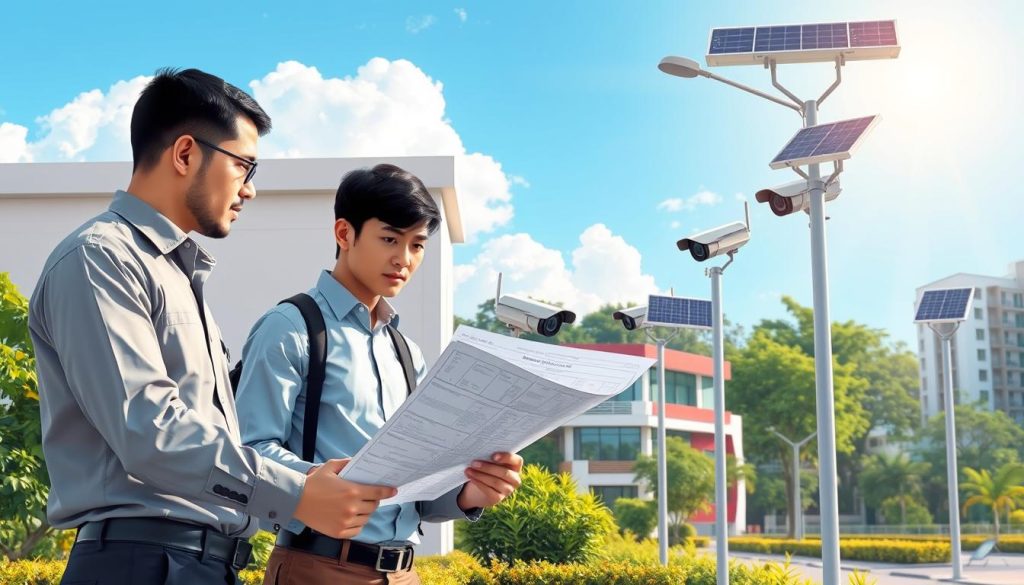
Start by identifying a location with maximum daily sun exposure. The panel needs direct light for at least six to eight hours to charge the battery fully.
Consider the field of view for your security camera. Position it to cover critical areas like entrances, driveways, and blind spots. A clear line of sight is essential for effective detection.
For HDB flats, check regulatory compliance first. You may need approval from the URA or your Town Council before installation. This step avoids potential fines or removal orders.
Landed property owners should consider additional technical options. Implementing a lightning protection system can safeguard your equipment during storms.
Evaluate local weather conditions and potential obstructions. Avoid spots where heavy rain or growing foliage could block the panels over time.
Mounting, Setup, and Initial Configuration Tips
Once the site is chosen, proceed with mounting. Attach the solar panel at a 30-degree angle for optimal energy capture in Singapore’s latitude.
Use the provided brackets to secure the unit to walls, poles, or roofs. Ensure all connections are tight and protected from the elements.
For multi-camera setups, precision is key. A laser alignment tool helps position multiple devices for comprehensive coverage without gaps.
Enhance physical security with anti-theft mounting brackets. These deter vandalism and prevent unauthorized removal of your products.
Initial configuration brings your system online. Follow these steps for a smooth setup:
- Connect the device to your home WiFi network using the manufacturer’s app.
- Set up custom motion detection zones to focus on specific areas.
- Test the night vision and two-way audio features to ensure they work.
- Configure storage options, choosing between local SD card or cloud services for your data.
- Adjust notification settings to receive alerts only for important events.
Proper battery management starts now. Allow the unit to charge fully for two to three days before relying on it for continuous monitoring.
DIY installation has an 85% user satisfaction rate. Most homeowners find the process straightforward with the included guides.
For complex systems or if you lack technical confidence, seek professional support. An expert can ensure optimal performance and address any unique site challenges.
Evaluating Your Market Options in Singapore
A critical, yet often overlooked, step in acquiring a security system is assessing the vendor’s authenticity and post-purchase services. Your choice of where to buy significantly impacts long-term reliability and peace of mind.
Singapore offers a vibrant marketplace with distinct purchasing channels. Understanding the pros and cons of each helps you secure the best value and support.
Where to Buy: Authorized Retailers vs. Online Markets
You have two primary options: official brand stores and certified dealers, or large online platforms. Each channel serves different buyer needs.
Authorized retailers provide guaranteed genuine products. They come with full local warranties and compliance with Singapore’s standards. This is crucial for a hassle-free installation and future support.
Online marketplaces like Lazada and Shopee often feature attractive prices. However, they can be a source for grey market goods. These items may lack proper local warranty or IMDA Type Approval.
Grey market devices pose real risks. You might face compatibility issues with local network providers. Getting repairs or firmware updates can become very difficult.
Always prioritize buying from an authorized seller. This ensures you are eligible for the manufacturer’s warranty. It also guarantees access to reliable technical assistance.
For larger projects, consider group purchase options. Many condominiums organize bulk buys for residents. This strategy can secure significant discounts on multiple units.
Another smart option is certified refurbished equipment. Reputable sources offer these systems at lower costs. They often include a shortened but valid warranty for added peace of mind.
Understanding Warranties and After-Sales Support
The warranty is your safety net against defects. Typical terms cover materials and workmanship for one to three years. Always read the fine print to understand what is included.
Reliable after-sales support is invaluable. It typically includes troubleshooting help, regular firmware updates, and repair services. Some companies may even offer a replacement unit during lengthy repairs.
To make a truly informed choice, look beyond the sticker price. Use a total cost of ownership calculator. Factor in any monthly cloud storage fees, potential maintenance, and battery replacement costs over several years.
A key compliance check is the IMDA Type Approval label. This confirms the device meets Singapore’s telecommunications standards. It ensures smooth operation on local networks and avoids legal issues.
Your property‘s specific conditions matter. If your location experiences heavy rain, verify the product’s weather resistance rating is adequate. Proper management of your data, whether on a local SD card or cloud, is also part of a good solution.
In conclusion, prioritize reliable warranty coverage and strong vendor support over finding the absolute lowest price. This approach safeguards your investment and ensures your security solution delivers lasting performance and protection.
Assessing Your Property’s Specific Security Needs
Before selecting any equipment, a detailed evaluation of your site’s layout and vulnerabilities is essential. A generic, one-size-fits-all approach often misses critical weak points. Your security plan must be as unique as your property itself.
Start by conducting a thorough visual risk assessment. Walk the perimeter during both day and night. Identify all potential entry points and hidden areas.
Key vulnerabilities to look for include:
- Primary entryways: Main doors, gates, and garage access points.
- Blind spots: Corners obscured by walls, dense foliage, or structures.
- Unlit zones: Dark pathways, rear alleys, or garden sections.
- Perimeter boundaries: Fence lines, walls, or property edges that are easily scalable.
For large estates or commercial sites, consider advanced planning methods. Heat mapping is a powerful tool. It helps visualize high-traffic or high-risk zones that demand focused surveillance coverage.
Environmental factors heavily influence your solution‘s performance. Assess existing lighting conditions. Note how shadows fall at different times.
Overgrown vegetation can create new blind spots over time. Architectural features like pillars or decorative walls may also obstruct views. Plan for these potential obstructions from the start.
Determining the scale of your system is a logical next step. The number of devices needed depends directly on your property size and layout. Consider these common scenarios:
- Monitoring a single gate or driveway entrance.
- Covering a large garden or backyard recreational space.
- Securing common areas in a condominium, like pools or car parks.
- Providing comprehensive coverage for a multi-building landed estate.
Match specific features to each location. A wide-angle lens is perfect for covering open areas. A unit with optical zoom is better for keeping watch on a distant gate or street access point.
Privacy and legal compliance are non-negotiable in Singapore. Always ensure your setup adheres to the Personal Data Protection Act (PDPA). Position your monitoring equipment to focus solely on your own property.
Avoid angling lenses toward neighbors’ windows, public sidewalks, or common spaces where people have a reasonable expectation of privacy.
For complex properties or if you’re unsure, consulting a security professional is a wise investment. They can provide expert advice on optimal placement and system design.
Think about future-proofing your investment. Consider potential expansions, like adding more units later. Also, evaluate how the system might integrate with other smart home devices for a unified management experience.
In conclusion, a tailored plan based on your specific needs is the only path to effective protection. It ensures you utilize your resources optimally, covering every vulnerability without waste. This careful assessment is the true foundation of your peace of mind.
Choosing the Best WiFi Security Camera with Solar Panel
Your final decision on a surveillance unit should be guided by a clear checklist of essential capabilities. This ensures your investment delivers reliable performance and meets your specific security needs.
Focus on core technical specifications that impact daily use. Key factors include video clarity, connectivity, and durability.
Start with video resolution. For clear identification, aim for 2K or 4K quality. High definition captures fine details like faces or license plates from a distance.
Effective night vision is equally critical. Look for a range of at least 10 meters. Advanced starlight sensors provide clearer images in low-light conditions.
Smart motion detection reduces false alarms. AI-powered analytics can distinguish between people, animals, and vehicles. This feature ensures you only get alerts for relevant activity.
Weather resistance is non-negotiable in Singapore’s climate. An IP67 rating guarantees protection against dust and heavy rain. It ensures year-round operation outdoors.
Compatibility with your home network is fundamental. Verify the device supports both 2.4GHz and 5GHz WiFi bands. Strong signal reception prevents dropouts in live monitoring.
Consider models with 4G cellular fallback. This feature maintains connectivity during internet outages. It’s crucial for uninterrupted surveillance, especially in remote areas.
Storage options affect cost and control. Local storage via SD cards keeps your data on-site with no monthly fees. Cloud services offer easy remote access but often require a subscription.
Integration with smart home platforms adds convenience. Check for compatibility with Google Home, Apple HomeKit, or Samsung SmartThings. Centralized control simplifies management.
Durable construction is vital for long-term reliability. The housing should resist corrosion from humidity and salt air. A robust design withstands Singapore’s tropical environment.
Research real-world performance in the local market. Read user reviews and expert opinions specific to Singapore. This feedback reveals practical reliability and common issues.
Always compare warranty terms and after-sales support. A comprehensive warranty covers defects for at least two years. Reliable support ensures help is available if problems arise.
Balance your desire for advanced features with your budget constraints. The best value often lies in a model that excels in your priority areas without unnecessary extras.
Summarize your key decision factors. Prioritize high resolution, smart detection, strong weather resistance, and reliable connectivity. Ensure your choice aligns with the property needs you assessed earlier.
For a detailed look at a solution designed for constant operation, explore our guide on solar WiFi security camera options. This resource can help finalize your selection.
Making an informed choice guarantees effective protection and peace of mind for years to come.
Making an Informed Investment in Solar-Powered Security
Modern surveillance technology offers a powerful blend of reliability, savings, and environmental care. This guide has shown how sustainable security systems provide strong protection while cutting long-term costs. They offer true energy independence, ideal for Singapore’s climate.
National goals like the Green Plan 2030 align with this choice. Available subsidies help with initial investment. Today’s advanced features rival traditional systems in performance and durability.
Use this guide to evaluate your specific property needs. Always choose authorized retailers for valid warranties and reliable after-sales support. Proper setup ensures optimal monitoring and system lifespan.
Take action now to invest in a smart, sustainable solution. We wish you enhanced security and lasting peace of mind.