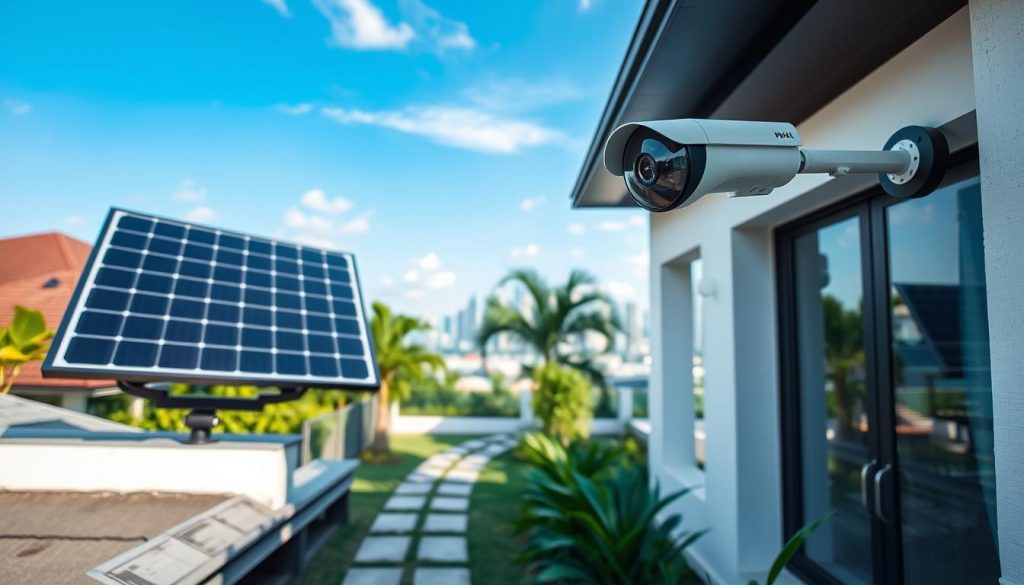
Homeowners in Singapore are increasingly looking for smart ways to protect their property. Many are choosing solutions that are both effective and kind to the environment. This shift reflects a broader move toward sustainable living and energy independence.
Technological progress has made this possible. Modern panels are smaller and capture energy more efficiently than ever. Singapore’s sunny climate is perfect for harnessing this clean power throughout the year.
This guide is your 2024 resource for navigating this exciting market. We provide clear, factual information to help you make a confident choice. Our goal is to simplify the process of finding the right equipment for your needs.
The right choice offers reliable protection without monthly power bills. It also gives you the freedom of wire-free installation. You can place devices exactly where you need them most for complete coverage.
In the following sections, we’ll break down the benefits, key features to look for, and top brands available locally. We’ll also share practical tips for setup and considerations unique to living in Singapore. Let’s explore how to build a safer, greener home.
Key Takeaways
- Eco-friendly home protection is a growing trend among Singaporean homeowners.
- Advancements in technology make modern solar panels highly efficient and compact.
- Singapore’s climate is ideal for consistent solar energy generation year-round.
- These systems offer potential savings on electricity costs over time.
- Wire-free installation provides maximum flexibility for optimal device placement.
- Making an informed decision ensures uninterrupted monitoring and peace of mind.
- This guide covers benefits, features, brands, and local installation tips.
Why Singapore Homeowners Are Switching to Solar Security
The landscape of residential safety in Singapore is evolving, driven by a combination of economic and environmental factors.
Rising electricity costs make the prospect of free operational power highly appealing. By harnessing abundant sunlight, these setups eliminate a recurring expense, offering tangible long-term savings.
This aligns perfectly with a strong national push towards sustainability. Adopting green technology is seen as a responsible step for eco-conscious households.
Traditional setups often involve complex and unsightly electrical wiring. A completely wire-free alternative simplifies installation. It allows for placement in areas previously considered impractical.
Concerns about reliability in a tropical climate are addressed by modern technology. Efficient panels paired with robust battery reserves ensure continuous operation, even during prolonged rainy spells.
Visible monitoring devices act as a powerful deterrent. Having a consistently active sentinel provides proactive protection and greater peace of mind.
Several key drivers are converging to fuel this shift:
- Economic Incentive: Direct reduction in household energy bills.
- Environmental Alignment: Supporting Singapore’s green initiatives.
- Installation Freedom: No need for disruptive wiring work.
- Climatic Resilience: Designed for year-round operation locally.
- Enhanced Deterrence: Providing always-on, visible monitoring.
A significant advantage is energy independence. Your protection remains online during a grid outage, a feature standard wired options cannot match.
The market for these products has matured considerably. Homeowners can now choose from reliable brands with proven performance. Many models offer seamless integration with popular smart home ecosystems, appealing to Singapore’s tech-savvy population.
This isn’t just about adding a device; it’s about investing in a smarter, more resilient, and cost-effective approach to home safety.
Key Benefits of a Solar-Powered Security Camera System
Adopting a solar-powered security setup brings a suite of practical advantages that extend far beyond simple surveillance. These benefits collectively create a solution that is not only effective but also smartly adapted to modern living. They focus on sustainability, convenience, and unwavering reliability.
Let’s break down the three core areas where this technology delivers exceptional value for homeowners.
Eco-Friendly Operation and Lower Energy Bills
Harnessing sunlight for power directly reduces your household’s carbon footprint. This move away from fossil fuel-generated electricity supports Singapore’s national sustainability vision. It’s a responsible choice for the environmentally conscious.
The financial benefit is equally clear. Once installed, the sun’s energy is free. This eliminates the ongoing power cost associated with traditional wired units.
Your monthly electricity bills see a direct reduction. Over the long term, this makes comprehensive home monitoring significantly more affordable.
Wire-Free Installation and Maximum Placement Flexibility
One of the most appreciated perks is the complete absence of wiring. There’s no need to hire an electrician or create unsightly cable runs through your walls. Setup time and complexity drop dramatically.
This liberation allows for optimal device placement. You are no longer tethered to a power outlet.
Position a wire-free security camera in the far corner of your garden, high on a perimeter wall, or under an eave for the best vantage point. Maximum placement flexibility ensures you cover blind spots effectively.
You gain more options to deter intruders and monitor property lines without compromise.
Uninterrupted Protection with Reliable Battery Backup
The heart of a reliable setup is its energy resilience. An efficient solar panel works to extend charge life exponentially during the day. The onboard battery is the critical component that takes over when needed.
It ensures your security cameras remain operational at night, during storms, or on consecutive cloudy days. This synergy provides true 24/7 protection.
Modern units feature smart power management for impressive longevity. For example, brands like Hikvision engineer their products to offer up to seven days of continuous use without any direct sunlight.
This is achieved through robust, weather-resistant designs and intelligent systems that conserve energy.
Together, these benefits form a powerful proposition. You get a cost-effective, convenient, and resilient monitoring system. It adapts seamlessly to various home layouts and needs, powered by clean, abundant solar power.
Understanding the Core Components of a Solar Security Camera System
A typical solar security camera system is more than just a lens; it’s an integrated energy-harvesting machine. To work reliably, several key hardware parts must function together seamlessly.
Knowing what each piece does helps you evaluate products and understand your investment. Let’s break down the essential components.
The solar panel is the primary energy source. It converts sunlight into electrical power. This keeps the unit running without plugging into your home’s grid.
Modern panels are compact and highly efficient. They can generate ample energy even in Singapore’s tropical weather.
Harvested energy is stored in a modular battery, usually lithium-ion. This unit provides power at night and during cloudy periods.
Battery capacity determines how long the device can operate without direct sun. High-quality cells offer a lifespan of several years.
The camera body houses the critical imaging technology. It contains an image sensor and a lens, which can be fixed or varifocal.
The housing is built from durable, weather-resistant materials. Inside, you’ll often find a microphone and speaker for two-way audio.
Many models offer optional local storage. This includes a slot for a microSD card or even an internal SSD for video recording.
A versatile mounting bracket is crucial. It allows you to angle the device for the best field of view.
You can also adjust the panel to achieve optimal sun exposure throughout the day. This ensures consistent energy collection.
Connectivity options are vital for a smart security camera. Most units have Wi-Fi for data transmission. Some include an Ethernet port for a wired network backup.
For areas with poor internet, a 4G SIM card slot provides cellular data access. This keeps your alerts and live feed online.
Intelligent power management circuitry operates behind the scenes. It regulates charging cycles to protect the battery and maximize efficiency.
This smart system conserves energy during low activity. It ensures all features are ready when needed.
Some brands, like Hikvision, integrate these parts into sleek, all-in-one designs. These streamline deployment and reduce the number of separate pieces.
Understanding these core parts empowers you to compare models effectively. You can assess specifications like motion detection zones, night vision range, and expected use time.
You’ll see how the solar-powered security camera works as a cohesive unit. This knowledge leads to a smarter purchase and more reliable home security.
Top 7 Solar-Powered Security Camera Brands for Your Home
With several top manufacturers now offering sun-powered options, identifying the best fit for your needs requires careful comparison. Each brand brings distinct strengths to the table.
This curated review evaluates seven leaders on key criteria like video quality, smart features, and ease of use. We include practical details on panel compatibility and costs to guide your research.
ADT with Google Nest: Best for Integrated Professional Monitoring
ADT combines its renowned professional monitoring service with Google Nest Cams. This creates a robust home security solution with expert oversight.
You get 24/7 alert response from a dedicated center. The setup uses Google’s intelligent devices for motion detection and clear video.
A compatible solar panel must be sourced separately, typically from the Google Store. This adds an extra step but ensures continuous power.
It’s ideal for homeowners who want maximum protection and are willing to invest in a full-service system.
Lorex: Best for High Resolution and Advanced Features
Lorex is a standout for users who prioritize exceptional image quality. Their equipment often delivers up to 4K resolution.
A key advanced feature is color night vision. This provides detailed, full-color footage in low-light conditions, far beyond standard infrared.
The brand offers a robust solar panel accessory for around $79.99. This dedicated panel is designed to keep their high-performance units running indefinitely.
If crystal-clear footage and advanced imaging features are your top priority, Lorex deserves a close look.
Ring: Best for DIY Users and Smart Home Ecosystems
Ring is the go-to choice for the hands-on homeowner. Its DIY installation is famously straightforward, guided by a user-friendly app.
It offers deep integration with the Amazon Alexa ecosystem. You can view feeds on Echo Shows and control devices by voice.
Affordable solar panels are available at $49.99 and $99.99. They provide reliable energy to keep your security cameras charged.
For a seamless alexa google smart home experience and total installation control, Ring is a top contender.
Google Nest (Standalone): Best for Smart AI Features and Design
Google Nest devices, purchased separately, excel in intelligent software. They offer sophisticated AI like familiar face detection.
The sleek, minimalist design blends discreetly into any home exterior. Performance is reliable when paired with a third-party panel.
The Wasserstein solar panel, priced around $59.99, is a popular and compatible choice. It delivers the necessary hours direct sunlight conversion.
If you value smart alerts and a polished look, the standalone Google Nest option is compelling.
Arlo: Best for DIY Flexibility and High-Quality Video
Arlo strikes an excellent balance between DIY flexibility and high-quality output. Its Pro series is known for sharp, detailed footage.
Installation is simple, with magnetic mounts and wireless design. The brand offers an easy-to-attach solar panel for about $59.99.
This accessory is tailored for their Pro series models. It helps maintain a consistent charge for extended use.
For users who want professional-grade video without professional installation, Arlo is a strong candidate.
SimpliSafe: Best for Simple Setup and Reliable Monitoring
SimpliSafe lives up to its name with a reputation for simple, reliable setup. Its ecosystem is designed for no-fuss security.
The monitoring service is highly regarded for its responsiveness. For outdoor coverage, a dedicated solar-powered security camera accessory exists.
This panel, costing approximately $79.99, is made specifically for their outdoor camera. It ensures the device stays powered through sunny and cloudy days.
Homeowners seeking a straightforward, dependable solution with minimal complexity should consider SimpliSafe.
Hikvision: Best for All-in-One Kits and Rugged Scenarios
Hikvision specializes in comprehensive, all-in-one solar-powered security kits. These integrate the panel and unit into a single, streamlined package.
Construction is rugged, with an IP67 waterproof rating. This makes it perfectly suited for Singapore’s tropical weather and challenging areas.
The brand also offers customizable solar power kits for specific scenarios. Storage options often include robust local storage alongside cloud backups.
For demanding installations where durability and a complete out-of-the-box system are key, Hikvision is an excellent fit.
Essential Features to Compare Before You Buy
Before making a purchase, savvy shoppers should evaluate several critical specifications. This ensures their investment delivers reliable protection. Think of this as your detailed checklist for comparing different models.
Focusing on the right features helps you prioritize what matters most. It also ensures the device fits your specific needs and local environment.
Video Resolution and Day/Night Vision Capability
Image clarity is paramount for identification. Higher resolution means more detail in every frame.
Look for terms like 1080p, 2K, or 4K. Brands like Lorex and Ring offer up to 4K video. This level of detail can be crucial for recognizing faces or license plates.
Equally important is performance after dark. Standard infrared night vision provides grayscale images.
Advanced color night vision, like Hikvision’s 24/7 color imaging, offers clearer pictures in low light. This vision technology provides more useful evidence.
Motion Detection Accuracy and Smart Alerts
Not all motion is a threat. Basic sensors can trigger false alarms from leaves or pets.
Superior detection uses AI to distinguish people and vehicles. This smart analysis drastically reduces nuisance alerts.
When real activity occurs, you want to know instantly. Smart alert systems send push notifications to your phone.
They can also integrate with smart speakers for voice announcements. This creates a seamless smart home experience.
Integration with platforms like Alexa Google assistants allows for hands-free monitoring. You can ask for a live feed on compatible displays.
Video Storage Options: Cloud vs. Local
Where your footage is saved is a key decision. The two main options are cloud and local storage.
Cloud services offer easy remote access from anywhere. They typically involve a monthly subscription fee.
Local recording uses a microSD card or a network video recorder (NVR). This is a one-time cost and keeps your data private on-site.
Some homeowners use a hybrid approach for redundancy. This ensures footage is preserved even if one method fails.
Battery Life and Solar Panel Efficiency
A device’s independence hinges on its energy setup. The battery capacity determines how long it runs without sun.
The solar panel efficiency dictates how quickly it recharges. Higher wattage panels capture more power in fewer hours of direct sunlight.
In Singapore’s climate, a well-matched panel should keep the unit consistently charged. Check manufacturer estimates for hours direct sunlight needed.
This synergy means your solar-powered security cameras require minimal manual intervention. They maintain protection through various weather conditions.
Weather Resistance and Durability
Singapore’s humid, rainy climate demands rugged hardware. Weather resistance is non-negotiable for reliable outdoor use.
Look for an IP (Ingress Protection) rating on the product specs. A rating like IP67, as seen with Hikvision, means the unit is dust-tight and can withstand temporary immersion.
This ensures your security cameras can handle heavy tropical downpours. Also, verify the operating temperature range.
Durable construction protects your investment from the elements year-round. It guarantees uninterrupted service for your peace of mind.
By understanding these essential features, you can cut through the marketing noise. You’ll be equipped to select solar-powered security cameras that offer true value and dependable performance for your home.
Installation and Placement Tips for Optimal Performance
To ensure year-round reliability, focus on three key areas: sun exposure, network strength, and camera angle. A thoughtful setup prevents common headaches and guarantees your equipment works as intended.
This practical guide walks you through each critical step. Follow these recommendations to achieve seamless, uninterrupted monitoring for your property.
Finding the Perfect Spot for Sunlight Exposure
Your solar panel is the heart of the operation. It needs consistent sunlight to generate enough power.
Most units require at least a few hours direct sunlight daily. Observe your property at different times to map the sun’s path.
Avoid spots with shadows from trees, neighboring buildings, or overhangs. Even partial shading can drastically reduce energy harvest.
Use an adjustable mount to angle the panel correctly. Aim it towards the north in Singapore for optimal exposure throughout the day.
For areas with limited light, consider specialized panels. Brands like Ring offer a “Super Solar Panel” designed for partial sun conditions.
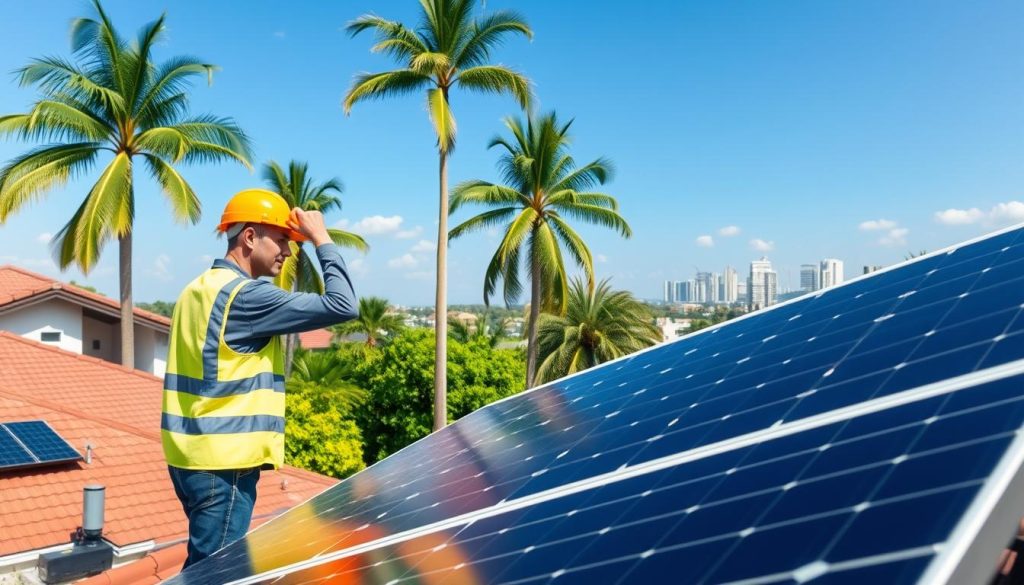
This ensures your battery stays charged, even in less-than-ideal locations.
Ensuring Strong Wi-Fi Connectivity
A robust wireless signal is non-negotiable for smart features and live feeds. Weak Wi-Fi leads to frustrating delays and missed alerts.
Always test the signal at your intended mounting spot before drilling any holes. Use your smartphone or a Wi-Fi analyzer app.
If the signal is weak, don’t despair. Effective solutions are readily available.
- Wi-Fi Mesh Extenders: These devices create a seamless network blanket across your home.
- Powerline Adapters: They use your home’s electrical wiring to carry a stable internet connection.
Positioning your router centrally or upgrading to a modern model can also help. A strong connection keeps your security camera responsive and reliable.
Mounting Your Camera for the Best Field of View
Position the unit itself with both deterrence and coverage in mind. Height is your first consideration.
Mount it on a wall or post at 2 to 3 meters high. This deters tampering while providing a wide, commanding view.
Angle the lens to cover primary entry points. Focus on doors, gates, driveways, and first-floor windows.
Secure all mounting hardware tightly with the provided screws and anchors. Singapore’s occasional strong winds demand a firm installation.
Use anti-theft cages or security screws if available. This extra step protects your investment from physical removal.
If your setup has a cable between the panel and the device, plan a neat run. Use waterproof conduits or clips to keep it tidy and protected from the weather.
Test before you fix. Place the unit and its solar panel in the desired spot for a full day. Confirm it charges properly and maintains a stable connection.
Only then should you make the installation permanent. This simple verification saves time and ensures your security cameras perform flawlessly from day one.
Following these tips helps you avoid common pitfalls. You’ll create a resilient, self-sufficient monitoring solution tailored to your home.
Singapore-Specific Considerations: Weather, Regulations, and More
Singapore’s urban environment and tropical weather create unique conditions that influence the performance of outdoor surveillance technology. A successful setup must be designed to handle local challenges.
You need equipment that thrives in humidity, withstands heavy rain, and respects community guidelines. Ignoring these factors can lead to poor performance or legal issues.
Let’s explore the key local considerations every homeowner should evaluate.
The tropical climate demands rugged hardware. Your equipment will face intense heat, high humidity, and frequent downpours.
Look for a high IP (Ingress Protection) rating. A rating of IP65 or IP67 ensures the unit is dust-tight and waterproof.
This protects against driving rain and moisture ingress. Brands like Hikvision build their products with an IP67 rating.
This means they are wind resistant, waterproof, and anti-corrosion. Such durability is non-negotiable for reliable outdoor use here.
Frequent cloud cover and rain can limit direct sunlight. This makes the efficiency of your solar panel critically important.
Choose a panel with high conversion rates to maximize energy harvest on a cloudy day. Pair it with a robust battery backup system.
A strong battery ensures your device maintains power during prolonged rainy spells. This synergy guarantees uninterrupted monitoring.
Local regulations are just as crucial as weatherproofing. Singapore’s Personal Data Protection Act (PDPA) sets clear guidelines.
Your security camera should not record public spaces or your neighbors’ private areas. Angle the lens to focus solely on your property.
This respects privacy and keeps you compliant. It’s a key step in responsible home monitoring.
If you live in an HDB flat or condominium, check with management before installation. Many have rules about exterior modifications.
You may need approval to mount external equipment on walls or common areas. Securing permission upfront avoids costly rework later.
It ensures your setup is both effective and compliant with building policies.
Singapore’s high-density urban landscape presents another hurdle: Wi-Fi congestion. Many networks operate in close proximity.
This can cause interference, leading to weak signals and dropped connections. Ensure your chosen device supports modern Wi-Fi standards.
Using a dual-band router can help. Position your router centrally and consider a mesh network for stronger coverage.
A stable connection is vital for live feeds and smart alerts to function properly.
Always verify the availability of local technical support and warranty service for your chosen brand. Having a reliable distributor in Singapore provides long-term peace of mind.
This practical information is often overlooked during purchase. It ensures you can get help if needed.
Look for brands with established local partners. This support is invaluable for troubleshooting and maintenance.
When evaluating options, consider night vision capability and video resolution. Clear footage is essential for identification.
Also, think about your preferred storage method. Cloud services offer convenience, while local storage keeps data on-site.
By addressing these Singapore-specific factors, you select a solar-powered security solution that is technically capable and contextually smart.
Your security cameras will be durable, compliant, and perfectly adapted to local life. This leads to true, worry-free protection for your home.
Making Your Final Choice: How to Select the Right System for You
Bringing it all together, your choice should deliver both dependable performance and environmental responsibility. Start by defining your specific needs. Consider your property’s size, key entry points, and budget.
Decide between a DIY setup and a professional system like ADT. Weigh the cost against your technical comfort and desired support level.
Prioritize features based on your situation. For shaded areas, focus on batteries and panel efficiency. For clear identification, choose high resolution and color night vision.
Ensure compatibility with your smart home security ecosystem, like Alexa or Google. This creates a seamless smart experience.
Remember the total cost. Factor in any mandatory cloud storage fees for video or advanced alerts.
Create a final checklist. Compare your shortlisted solar-powered security cameras against the essential specs and Singapore-specific factors we’ve discussed. For a detailed comparison of top models, explore our guide on the best solar-powered wireless security cameras.
Ultimately, you want reliable, uninterrupted protection that embraces sustainable technology. This investment provides lasting peace of mind for your home.