
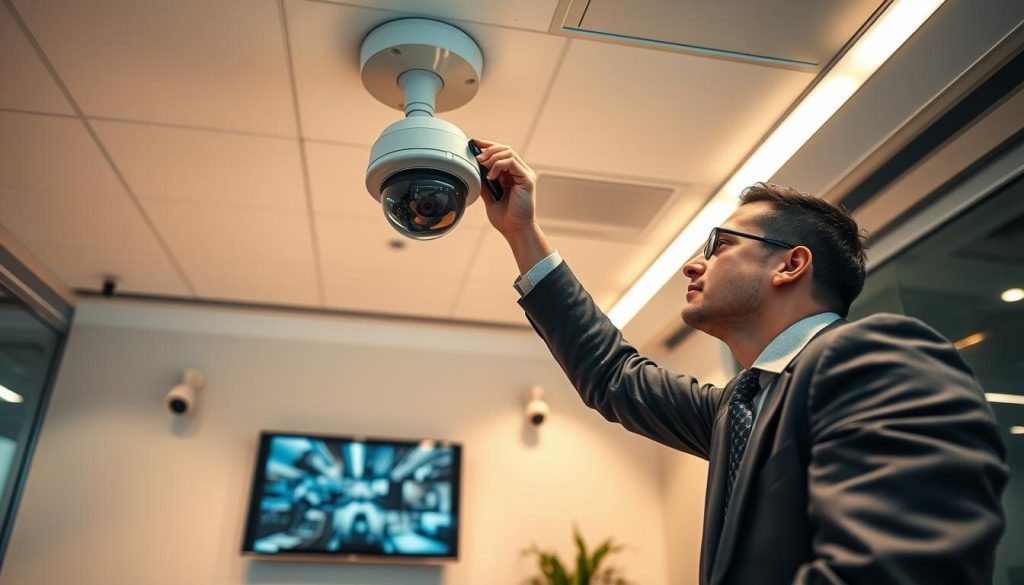
Security systems form a critical layer of protection for Singapore’s businesses and public areas. From shopping malls to corporate offices, these setups help prevent incidents and ensure public safety.
Closed-circuit television technology serves as the backbone of modern security infrastructure. Cameras and monitoring equipment provide constant visual oversight across various sectors.
Two specialized positions maintain these surveillance networks. While both professionals work with the same technology, their daily responsibilities and skill sets diverge significantly.
Demand for qualified personnel continues growing alongside Singapore’s Smart Nation initiatives. Increasing security concerns and technological advancements create more opportunities in this field.
This article provides a clear comparison between these two essential security careers. We’ll examine their distinct duties, required qualifications, and growth prospects within Singapore’s market.
Key Takeaways
- Security systems are essential for protecting Singaporean businesses and public spaces.
- CCTV technology forms the foundation of modern surveillance infrastructure.
- Technicians and operators play different but complementary roles in security.
- Singapore’s Smart Nation drive increases demand for both professions.
- Understanding role distinctions helps when considering security industry careers.
- Both positions require specific training and certification in Singapore.
- Effective security solutions need both technical installation and operational monitoring.
Defining the Two Pillars of Modern Security
A robust surveillance setup depends on both the hands-on builder and the vigilant observer. These professionals form the essential pillars supporting any comprehensive protection plan.
One role focuses on the physical and digital architecture of the network. The other specializes in the live analysis and response to the data it produces.
Together, they ensure a security system is not only installed correctly but is also monitored effectively. This dual-layer approach is standard for businesses and public areas across Singapore.
Who is a CCTV Technician?
A CCTV technician is a certified professional specializing in the physical and technical aspects of surveillance systems. Their core expertise lies in electrical systems, structured cabling, and IP networking.
This role is fundamentally about hardware and infrastructure. Technicians are responsible for the installation, maintenance, and repair of all physical cctv equipment.
Their daily tasks are hands-on and varied. They mount cameras in optimal locations, configure recording devices like DVRs and NVRs, and manage power supplies for entire systems.
Possessing deep knowledge of various cctv systems is a must. Their work ensures the hardware functions flawlessly, providing a reliable feed for monitoring.
Key skills for a successful technician include:
- Expertise in network configuration and troubleshooting.
- Proficiency with tools for mounting and securing equipment.
- Ability to read and interpret technical schematics and building plans.
- Strong problem-solving skills for on-site technical issues.
In Singapore, certification validates a technician’s competency. This formal recognition is often required for professionals working on commercial and government security projects.
Who is a CCTV Operator?
A CCTV operator is a professional responsible for the live monitoring and analysis of surveillance footage. They are the human eyes behind the camera network, specializing in real-time threat detection.
This job centers on vigilance and detailed observation. Operators watch multiple live camera feeds, looking for unusual activity or potential security breaches.
Their primary tool is specialized monitoring software. They use it to manage feeds, review recorded video, and maintain precise incident logs.
When an anomaly is spotted, the operator’s ability to act is critical. They may alert on-site guards, contact law enforcement, or notify a supervisor following strict protocols.
Unlike technicians, operators typically work from a centralized control room. This environment is designed for focused monitoring, with multiple screens displaying feeds from various areas.
Their contribution is vital for proactive security. While technicians build the system, operators ensure its output is used effectively to prevent incidents and protect assets.
These two roles represent complementary pillars. One ensures the system’s technical integrity; the other ensures its operational effectiveness, creating a complete security solution.
What is the Difference Between CCTV Technician and CCTV Operator?
Singapore’s security landscape features two critical roles that approach surveillance from opposite ends of the operational spectrum. One builds the physical and digital framework, while the other provides the human analysis layer.
Their collaboration creates a complete protection cycle. Understanding their distinct functions clarifies career options within this growing industry.
Core Focus: Hardware vs. Live Monitoring
A cctv technician dedicates their workday to tangible components. They install cameras, run cables, and configure recording devices like DVRs and NVRs.
This professional ensures all physical equipment functions correctly. Their goal is system reliability and technical integrity.
In contrast, a cctv operator focuses on the output of that hardware. They watch live video streams and recorded footage on specialized monitoring software.
Their primary job is real-time threat detection and incident reporting. Vigilance and analytical attention are their main tools.
Problem-solving approaches also diverge sharply. Technicians troubleshoot connectivity issues, power failures, or camera malfunctions.
Operators analyze behavioral patterns and environmental anomalies. They decide if a situation requires alerting on-site personnel or contacting authorities.
This fundamental difference cctv technician roles embody is mindset. One requires logical, technical thinking. The other demands sharp observational ability and quick judgment.
Work Environment: On-Site vs. Control Room
The daily settings for these professionals could not be more different. A technician cctv specialist travels to various client locations.
They work in retail stores, office buildings, and industrial facilities. Each site presents unique installation challenges and physical demands.
Cctv operators typically work from a centralized security control room. This fixed location is designed for optimal monitoring with multiple display screens.
Shift patterns reflect these environmental contrasts. Technicians often follow standard business hours or project-based schedules.
Operators must staff control rooms 24/7. They work rotating shifts, including nights and weekends, to ensure constant coverage.
Emergency responses highlight another key distinction. When a system fails, technicians are dispatched to repair it.
When a security incident occurs, operators coordinate the real-time response. They communicate with guards and emergency services.
Interaction patterns complete the picture. Technicians primarily engage with tools and technical systems. Their communication is often with project managers or clients.
Operators interact continuously with other security personnel. They are the communication hub during any incident, relaying critical information for safety.
Both roles are essential pillars of modern security in Singapore. One ensures the surveillance infrastructure is physically sound. The other ensures it delivers on its promise of protection and safety.
A Day in the Life: Contrasting Core Responsibilities
From morning checklists to emergency responses, the workday patterns of these specialists highlight their divergent responsibilities. Their daily agendas follow distinct rhythms shaped by different priorities and environments.
One professional moves between locations solving technical puzzles. The other maintains a fixed watchpost analyzing live streams. Both contribute vital layers to organizational security.
Daily Duties of a CCTV Technician
A technician’s day often begins with a site survey. They assess building layouts to determine optimal camera placement for maximum coverage.
This requires understanding blind spots and lighting conditions. Technicians test night vision capabilities during these assessments.
Installation work follows the planning phase. Professionals mount various cameras and run structured cabling through walls and ceilings.
They configure recording devices like DVRs and NVRs. Installing uninterruptible power supply backups ensures system reliability during outages.
Routine maintenance forms another critical duty. Technicians clean camera lenses to maintain image clarity.
They update firmware on cctv equipment to patch vulnerabilities. Regular testing of all components prevents unexpected failures.
When issues arise, troubleshooting begins immediately. Technicians use multimeters to check power supplies.
Cable testers help identify connection problems. This hands-on knowledge keeps surveillance networks operational.
Their work is project-based rather than shift-based. Each installation or repair job has a clear beginning and end point.
Daily Duties of a CCTV Operator
An cctv operator starts each shift with comprehensive system checks. They verify all cameras feed properly into the monitoring station.
Adjusting image settings optimizes visibility across different areas. This ensures surveillance footage remains usable for identification purposes.
Monitoring multiple feeds demands intense attention. Operators watch several screens simultaneously using video management software.
They look for unusual movement or potential security breaches. Sharp observational ability helps spot subtle anomalies.
When motion detection triggers an alert, response protocols activate immediately. Operators contact on-site security teams via radio communication.
They document incidents with precise timestamps and descriptions. This data becomes crucial for investigations.
Footage management represents another key responsibility. Operators archive video of security incidents following retention policies.
They retrieve recorded material when requested by authorities. Proper organization ensures quick access to needed footage.
Unlike technicians, operators work fixed shifts around the clock. Control rooms require 24/7 staffing for continuous monitoring.
This constant vigilance addresses real-time safety concerns. Swift decision-making during emergencies defines their job effectiveness.
The contrast in schedules reflects their different functions. Technicians complete specific installation or repair tasks.
Operators maintain perpetual watch over secured premises. Both approaches serve Singapore’s comprehensive protection needs.
Essential Skill Sets: Technical Prowess vs. Observational Acuity
Success in security surveillance careers hinges on mastering distinct skill sets tailored to each role’s unique demands. While both positions protect assets and people, their required competencies diverge sharply.
One profession demands hands-on technical mastery with tools and hardware. The other requires sharp cognitive abilities for analysis and rapid decision-making.
Understanding these skill profiles helps aspiring professionals choose their ideal career path. It also helps employers build balanced security teams.
Critical Technical Skills for the Technician
A cctv technician needs comprehensive electrical systems knowledge. They must understand power requirements, grounding protocols, and safety standards for all installations.
IP networking expertise forms another core competency. Modern cctv systems rely on network configurations for camera connectivity and remote access.
Specific technical competencies include structured cable installation. Professionals run wires through buildings while maintaining signal integrity.
Camera configuration involves adjusting focus, field of view, and motion detection settings. Technicians optimize each device for its specific environment.
System troubleshooting requires logical problem-solving ability. When a camera fails, technicians diagnose issues from power supply to network connectivity.
Safety protocols are non-negotiable in this job. Compliance with Singapore’s electrical standards prevents accidents during installation and maintenance.
Advanced skills include thermal camera calibration for temperature readings. Technicians also calculate storage needs based on resolution, frame rate, and retention periods.
These key skills ensure reliable operation of all cctv equipment. Technical proficiency transforms components into a cohesive surveillance network.
Vital Monitoring and Reporting Skills for the Operator
A cctv operator develops sharp behavioral pattern recognition. They identify unusual activities that might indicate security threats.
Attention to detail is paramount when watching multiple screens. Operators spot subtle anomalies in crowded or complex areas.
Incident documentation requires precision and consistency. Professionals create timestamped logs that meet legal evidence standards for investigations.
Communication skills enable effective coordination with security teams. Clear, concise reporting ensures swift response to developing situations.
Legal knowledge is essential regarding evidence handling. Operators in Singapore must apply PDPA guidelines during surveillance footage review.
Report writing for law enforcement collaboration demands clarity. Documents must include relevant video timestamps and objective observations.
Software proficiency with video management systems is fundamental. Operators navigate interfaces to review live feeds and archived data.
Rapid response coordination during perimeter breaches tests an operator’s composure. Following protocols to alert authorities can prevent escalation.
“The best operators see what others miss and communicate what matters most.”
Emerging technologies create demand for new skills in both roles. AI analytics and smart city integration require continuous training.
While technicians master hardware, operators excel with cognitive and communication skills. Both approaches solve different security challenges effectively.
Paths to Qualification: Training and Certifications
Certification pathways distinguish qualified professionals in Singapore’s regulated security sector. Formal credentials validate technical competency and operational readiness for specific roles.
These programs ensure personnel meet industry standards for installation and monitoring. Employers prioritize certified individuals for critical security positions.
CCTV Technician Courses and Specialized Certifications
Aspiring technicians pursue rigorous training through Singapore’s Workforce Skills Qualifications system. The WSQ Security Systems Integration course provides comprehensive foundational knowledge.
This program covers electrical systems, network configurations, and hardware installation. Participants learn to design and implement complete surveillance networks.
Technical curriculum includes IP camera configuration and digital video recorder setup. Fiber optic cabling and power management form essential skills.
Hands-on components simulate real-world installation scenarios. Trainees practice mounting cameras and troubleshooting equipment failures.
Recognized institutions like Singapore Polytechnic offer advanced certifications. Their IP Surveillance Specialist program emphasizes modern network-based systems.
Temasek Polytechnic provides courses in security technology integration. These programs include live site assessments and practical installation projects.
- Structured cabling and connectivity testing
- Camera placement for optimal coverage
- System configuration for remote access
- Maintenance protocols for sustained operation
These credentials significantly enhance employability within Singapore’s security sector. Certified technicians command higher salaries and project responsibilities.
CCTV Operator Training Programs and SIA Licensing
Cctv operator training focuses on monitoring proficiency and threat response. Programs like Security Operations Centre management develop observational ability.
This three-month curriculum emphasizes real-time analysis of surveillance footage. Trainees learn to identify suspicious activities across multiple video feeds.
Critical training components include crisis communication and legal compliance. Operators study Singapore’s Personal Data Protection Act for proper data handling.
Threat analysis modules teach pattern recognition in various environments. These skills prepare operators for high-pressure monitoring jobs.
For contexts involving public surveillance, licensing requirements apply. The Security Industry Authority mandates sia cctv licence for monitoring public spaces.
This sia cctv credential ensures operators understand legal boundaries. It covers privacy regulations and evidence handling for law enforcement collaboration.
Operator certification pathways contrast sharply with technical training. Where technicians master hardware, operators develop cognitive and response key skills.
Program duration varies from intensive workshops to extended courses. Security operations training typically includes simulated emergency scenarios.
Certified operators demonstrate competency in several vital areas:
- Incident documentation and report writing
- Coordination with on-site authorities
- Operation of monitoring software platforms
- Protocol execution during security breaches
These qualifications validate an operator’s readiness for control room responsibilities. They ensure effective use of surveillance system outputs for enhanced security.
Career Trajectories and Growth Opportunities
Career development in Singapore’s surveillance sector follows distinct trajectories based on role specialization. Both technical and monitoring professionals enjoy structured advancement routes with increasing responsibility.
Growth potential remains strong due to expanding security needs across commercial and public sectors. Professionals can expect clear promotion milestones throughout their careers.
Advancement Pathways for CCTV Technicians
Entry-level installers typically handle basic camera mounting and cable runs. After gaining field experience, they progress to system configuration and troubleshooting roles.
Within three to five years, many technicians advance to project management positions. They oversee complete installation projects from planning to final testing.
Senior technical roles offer significant salary increases in Singapore’s market. Lead technicians can earn between S$4,500 and S$6,000 monthly.
Specialization opens additional career doors. Emerging areas like AI-integrated cctv systems demand advanced technical knowledge.
Government security installations represent another lucrative specialization path. These projects require additional clearance and specialized training.
Entrepreneurial technicians often launch their own security installation businesses. This path cctv professionals choose offers independence and higher earning potential.
Consultancy roles provide another advancement option. Experienced technicians advise organizations on optimal surveillance infrastructure design.
Career Progression for CCTV Operators
Control room staff begin with basic monitoring duties across multiple video feeds. They develop sharp observational ability through daily practice.
Most operators advance to supervisor roles within two years of consistent performance. These positions involve training new staff and managing shift schedules.
Top performers often transition into Security Operations Centre management. SOC managers coordinate monitoring networks across multiple sites.
This security operations role requires strong communication skills and strategic thinking. Managers ensure all monitoring protocols remain effective.
Operators with cybersecurity certifications frequently move into digital forensics. They analyze surveillance footage for legal investigations and security audits.
Some professionals transition into training roles for new cctv operator staff. They develop curriculum and conduct practical monitoring exercises.
Organizational advancement typically follows a clear hierarchy. Operators progress from monitoring to team leadership and eventually to operations management.
Salary progression for operators reflects their increasing responsibility. Senior monitoring supervisors earn substantially more than entry-level staff.
Cross-training accelerates career advancement in both professional path cctv tracks. Technicians who understand monitoring software can design better systems.
Operators with technical knowledge provide more insightful incident analysis. This combination of key skills creates valuable hybrid professionals.
Emerging technologies create new specialization opportunities. Smart city integration and IoT connectivity require updated technical and analytical skills.
Continuous learning remains essential for career growth in this dynamic field. Professionals who pursue additional certifications often secure the best advancement opportunities.
Industry Demand and Job Outlook in Singapore
Singapore’s job market for security monitoring and installation experts demonstrates robust growth driven by public and private initiatives. Employment prospects remain strong across both technical and operational roles within the surveillance sector.
Recent data reveals a 38% surge in security technology positions from 2020 to 2023. Platforms like MyCareersFuture consistently list over 200 active openings for qualified technicians.
This expansion reflects Singapore’s comprehensive approach to public and organizational protection. Both established companies and new enterprises contribute to sustained hiring momentum.
Current Employment Trends for Security Professionals
Private sector hiring shows particular strength in retail chains and healthcare providers. These organizations prioritize advanced surveillance to protect assets, patients, and sensitive areas.
Public infrastructure projects fueled by the SG Secure program create additional opportunities. Government initiatives mandate enhanced monitoring capabilities for transportation hubs and public spaces.
The security operations sector now values professionals with combined technical and observational skills. Employers increasingly seek hybrid specialists who understand both installation and monitoring protocols.
Current employment statistics highlight several key patterns:
- Retail environments lead private sector demand for both technicians and operators
- Healthcare facilities require specialized cctv systems for patient safety
- Commercial buildings integrate surveillance with access control and fire systems
- Educational institutions enhance campus protection with modern monitoring solutions
Salary packages remain competitive within Singapore’s technology sector. Experienced professionals command premium compensation for their specialized knowledge.
Future Projections and Emerging Skill Requirements
Industry analysts project continued expansion through 2026 and beyond. Technological advancements will reshape required competencies for surveillance professionals.
By 2026, approximately 60% of new installations will demand certification in smart city technologies. This creates a significant skills gap that trained individuals can leverage.
Cloud-based surveillance platforms represent a major shift in system architecture. Professionals must understand remote access, data encryption, and scalable storage solutions.
IoT integration connects cameras with other building management equipment. This convergence requires broader technical knowledge beyond traditional surveillance hardware.
Emerging competency requirements include:
- AI analytics software operation for automated threat detection
- Cybersecurity protocols for protecting video streams and recorded footage
- Integration ability with access control and alarm systems
- Advanced communication techniques for coordinating with authorities
Global security trends directly influence Singapore’s local market demands. International best practices shape training curricula and certification standards.
The path cctv professionals choose will increasingly involve continuous learning. Regular training updates ensure relevance in this rapidly evolving field.
Compensation packages reflect these emerging requirements. Specialists with smart city certifications typically earn 20-30% more than their conventionally trained counterparts.
Law enforcement collaboration creates additional career pathways. Professionals who understand evidence handling procedures find opportunities in investigative support roles.
This dynamic landscape offers substantial opportunities for properly credentialed individuals. The combination of technical evolution and sustained demand ensures long-term career stability.
The Impact of Emerging Technologies on Both Roles
Singapore’s commitment to a Smart Nation is accelerating the integration of advanced technologies into everyday security. These innovations are transforming both the infrastructure and the human elements of surveillance.
Artificial intelligence and interconnected networks create new operational paradigms. Professionals in both technical and monitoring roles must adapt to stay relevant.
This evolution impacts daily tasks, required skills, and career trajectories. Understanding these changes is crucial for anyone in Singapore’s security sector.
AI, Analytics, and the Evolution of Surveillance
Artificial intelligence is revolutionizing surveillance through powerful analytics. Features like facial recognition and behavioral analysis are now commonplace.
Adoption of facial recognition in Singaporean commercial properties has surged by 65%. Modern software can analyze crowd behavior at MRT stations.
These systems automatically flag unusual movements for review. This transforms the cctv operator role from passive monitoring to active alert management.
Operators now oversee predictive alerts generated by AI systems. Their focus shifts to verifying automated detections and initiating appropriate responses.
This requires enhanced analytical ability and judgment. Operators must distinguish between genuine threats and false positives from the software.
For technicians, AI integration means installing and calibrating smarter equipment. Cameras with built-in analytics require precise configuration during setup.
They need knowledge of network bandwidth requirements for streaming analytical data. Cloud-based surveillance platforms add another layer of complexity.
These platforms store and process surveillance footage remotely. Technicians must ensure secure and reliable connections to cloud servers.
Integration with Smart City and IoT Initiatives
Singapore’s Smart Nation program drives deep integration of cctv systems with urban infrastructure. Cameras are no longer isolated security devices.
They connect to broader networks like the HDB’s Smart Hub. This allows sharing of traffic flow data with municipal planners in real-time.
Internet of Things technology creates interconnected security networks. Cctv cameras communicate with access control, lighting, and environmental systems.
This convergence creates new responsibilities for the cctv technician. They require skills in cloud configurations and API connections.
“The modern security professional must understand both the camera lens and the data packet.”
Technicians maintain these complex, integrated systems. Their work ensures different technologies communicate seamlessly across a unified platform.
For security operations centers, IoT integration provides a holistic view of protected areas. Operators monitor not just video feeds but also sensor data from connected devices.
This technological shift creates new career specializations. Roles like IoT Security Integrator and AI Surveillance Analyst are emerging.
Privacy considerations evolve alongside these advancements. Singapore’s regulatory frameworks ensure responsible use of surveillance data.
Professionals must stay informed about Personal Data Protection Act updates. Ethical handling of footage and analytics remains paramount.
Effective communication about these technologies with the public builds trust. The future of security in Singapore is intelligent, connected, and responsible.
Choosing Your Path in the CCTV and Security Industry
Embarking on a career in Singapore’s security industry requires careful consideration of your natural aptitudes and professional interests. Both technical and monitoring roles offer rewarding opportunities with reported 84% job satisfaction.
Monthly salaries range from S$2,800 to S$4,500 for installation specialists. Monitoring professionals typically earn between S$2,500 and S$3,800. Your choice should align with your personality and long-term goals.
Self-Assessment: Technician or Operator?
Begin your career journey with honest self-reflection. Evaluate whether you enjoy hands-on physical work or prefer analytical screen-based tasks.
Successful cctv technician professionals often possess these traits:
- Mechanical aptitude and comfort with tools
- Problem-solving mindset for technical challenges
- Physical stamina for installation work
- Patience for detailed system configuration
Thriving cctv operators typically demonstrate different qualities:
- Exceptional attention to detail during prolonged monitoring
- Strong observational ability to spot anomalies
- Calm demeanor during emergency situations
- Effective communication skills for incident reporting
Ask yourself key questions before committing to a path cctv career. Do you prefer building physical systems or analyzing their output?
Consider your tolerance for varied work environments versus control room settings. Your answers will guide your professional direction.

Steps to Launching Your Security Career
Begin with foundational education in electronics or information technology. Singapore’s polytechnics offer relevant diploma programs that provide essential knowledge.
For aspiring installation specialists, pursue training through recognized institutions. The WSQ Security Systems Integration course provides comprehensive technical preparation.
This certification covers installation of various cctv systems and equipment. Hands-on practice develops practical skills for real-world projects.
Future monitoring professionals should enroll in cctv operator training programs. These develop observational ability and incident response protocols.
For public space monitoring, obtain your sia cctv licence from the Security Industry Authority. This credential validates your understanding of legal boundaries.
Consider pursuing combined certifications for maximum flexibility. Professionals with both technical and operational qualifications enjoy enhanced marketability.
Build industry connections through strategic networking. Attend Security & Safety Industry Dialogue events to meet potential employers.
Join professional associations like the Security Association Singapore. These platforms provide access to job openings and industry insights.
Gain practical experience through internships or apprenticeships. Many companies offer entry-level positions that provide on-the-job learning.
Seek opportunities to work with different surveillance technologies. Exposure to various software platforms expands your technical repertoire.
Commit to continuous learning in this evolving field. New technologies like AI analytics require regular training updates.
Develop key skills in cybersecurity and data protection. Understanding how to maintain confidentiality with sensitive video data is crucial.
Learn proper procedures to alert authorities during security incidents. Collaboration with law enforcement requires specific protocols.
Prepare thoroughly for interview questions common in security hiring. Employers often ask about handling illegal activities observed on camera.
Practice describing how you would address various safety concerns. Demonstrate your understanding of monitoring different areas effectively.
Research companies before interviews to understand their specific security operations. Tailor your responses to their organizational needs.
Utilize available resources for ongoing professional development. Singapore’s SkillsFuture program offers subsidies for relevant courses.
Subscribe to industry publications like Security Technology magazine. Stay informed about emerging trends in cctv technology.
Participate in workshops offered by equipment manufacturers. These sessions provide hands-on experience with latest system innovations.
“The most successful security professionals build careers that align with their innate strengths while continuously expanding their capabilities.”
Your journey in Singapore’s security sector begins with thoughtful self-assessment. Follow structured pathways to develop the skills employers value.
With proper preparation and strategic networking, you can build a rewarding career protecting people and assets. Both technical and operational paths offer stable, meaningful work.
Navigating Your Future in Security Surveillance
Choosing between technical installation and operational monitoring depends on your natural inclinations and career aspirations. Both paths offer stable, rewarding work protecting Singapore’s people and assets.
Installation experts and monitoring professionals form complementary pillars of modern security. Their combined efforts create comprehensive surveillance solutions for businesses and public spaces.
Singapore’s growing security sector provides excellent opportunities. Proper training and certification ensure success in either specialized career.
Evaluate your strengths honestly before selecting your professional direction. Both roles contribute meaningfully to public safety and require specific skills.
Take proactive steps toward your chosen path with confidence. A fulfilling career in surveillance awaits those who prepare properly.