
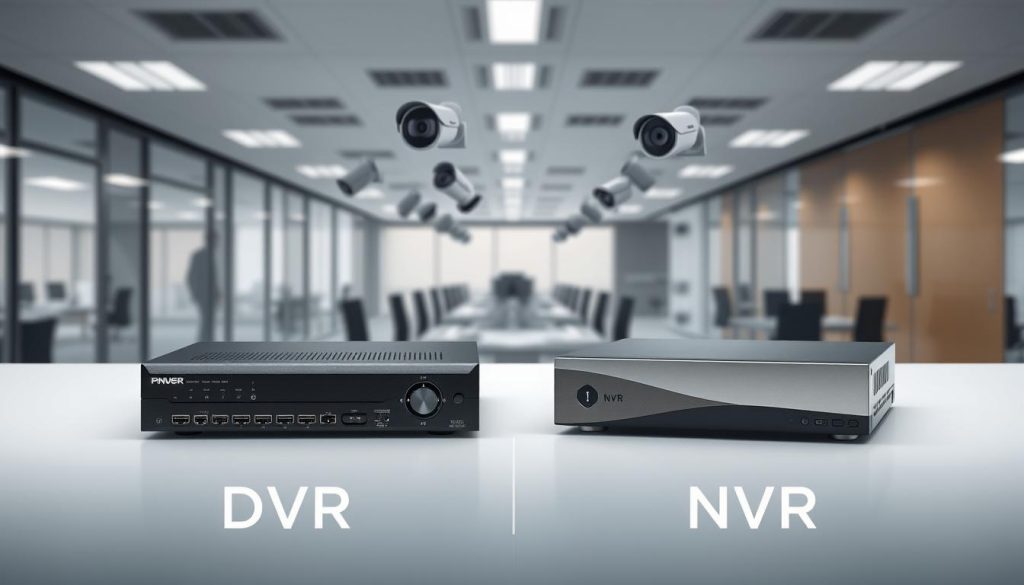
Selecting the right surveillance setup is a common challenge for Singapore homeowners and businesses. You face a critical decision between two main types of security recorders. Both dvr and nvr systems capture and store video footage to protect your property.
Their core technologies, however, create significant practical differences. Understanding these distinctions is essential for a smart investment in modern surveillance technology. This knowledge directly impacts your property’s protection and value.
We will break down each system component by component. Our analysis covers cameras, cabling requirements, and advanced features available today. The goal is to give you clear, actionable information for your Singapore property.
Recent advancements have narrowed some performance gaps. Yet, fundamental distinctions in compatibility and installation remain crucial. Your choice affects initial cost, long-term flexibility, image quality, and expansion potential.
This decision ultimately balances your budget, existing infrastructure, and future security needs. Let’s explore what sets these recorder systems apart to find your perfect match.
Key Takeaways
- Both DVR and NVR systems record video for security, but they use different technologies.
- The core differences involve the types of cameras each system supports and how they connect.
- Your choice impacts installation complexity, initial cost, and long-term system flexibility.
- Modern features are available for both, but compatibility with existing equipment varies.
- Understanding these distinctions is key to selecting the right surveillance solution for your needs.
- The decision should balance your current budget with future expansion plans.
- Proper system selection enhances property protection and provides better value over time.
Understanding Surveillance Recorders: DVR and NVR Defined
Modern property protection in Singapore relies on understanding two fundamental recording technologies. These devices form the backbone of any comprehensive security setup. Each handles video footage through distinct methods.
Knowing how they function helps you make informed decisions. Your choice affects installation, performance, and future expansion.
What is a DVR (Digital Video Recorder)?
A digital video recorder represents traditional analog surveillance technology. This system has been securing properties for decades. It forms the cornerstone of conventional CCTV installations.
DVR systems consist of three main components. First are analog CCTV cameras that capture visual information. Second, coaxial BNC cables transmit signals. Third, the DVR recorder unit processes and stores everything.
Here’s how the signal flows in this setup. Analog cameras send raw, unprocessed video signals. These travel through coaxial cables to the central recorder. The DVR system then digitizes and compresses this data.
All processing happens at the recorder unit itself. This approach defines traditional security architecture. It’s a proven method for reliable video recording.
What is an NVR (Network Video Recorder)?
A network video recorder serves as the modern standard for digital surveillance. This technology leverages Internet Protocol for smarter operation. It represents the evolution beyond analog limitations.
NVR systems feature more advanced components. IP cameras replace their analog counterparts. Network infrastructure, like Ethernet cables or WiFi, handles connectivity. The NVR recorder manages storage and access.
Operation differs fundamentally from older systems. IP cameras contain built-in processors. They encode video into digital format right at the source. This processed data then streams over the network.
This “processing at the edge” architecture enables significant advantages. Wireless capabilities become practical. Advanced camera features integrate seamlessly. The recorder focuses on storage rather than processing.
These definitions establish why signal paths matter. Analog versus digital approaches impact every aspect of your security solution. Image quality, installation complexity, and scalability all depend on this core distinction.
Understanding these foundations prepares you for detailed comparison. Next, we’ll explore how these differences manifest in practical applications.
What is the Difference Between DVR and NVR? The Core Distinction
At the heart of the DVR versus NVR debate lies a critical technical divergence: where footage gets processed. This single distinction shapes every component of your security setup. It determines compatible cameras, required cabling, and overall system architecture.
DVR systems employ centralized processing. Analog cameras capture raw visual signals. These travel via coaxial cable to the main recorder unit.
The DVR houses specialized hardware called an Analog-to-Digital encoder. This chipset converts incoming analog signals into storable digital video format. All processing occurs at this central point.
NVR systems utilize decentralized, edge-based processing. Each IP camera contains its own processing chip. It encodes video into digital format right at the source.
Processed data packets then stream over a network. The NVR primarily manages storage and access. This distributed approach defines modern network video architecture.
This core difference dictates camera compatibility. DVR setups require analog CCTV cameras. These devices are simple sensors without processing capability.
NVR configurations need Internet Protocol cameras. Each unit functions as an intelligent network node. This enables advanced features like onboard analytics.
Cabling infrastructure follows directly from this distinction. DVR systems need coaxial BNC cables for each camera. These carry raw analog signals from sensor to recorder.
NVR systems use Ethernet cables or WiFi connections. These transport digital data packets across your local network. Power-over-Ethernet simplifies installation further.
System design implications are significant. DVR installations demand direct cable runs from each camera to the recorder. This creates physical constraints during setup.
NVR configurations only require cameras on the same network. Placement flexibility increases substantially. Wireless options become practical for challenging locations.
Both pathways achieve the same goal: recorded video footage for property security. Their technological approaches, however, remain fundamentally different. Understanding this architectural split is essential.
This knowledge forms the foundation for evaluating image quality, installation complexity, and feature sets. Singapore property owners can apply this concept when assessing their surveillance needs. The processing location influences long-term flexibility and expansion potential.
Camera Comparison: Analog CCTV vs. IP Cameras
Your surveillance system’s eyes and ears come in two distinct technological forms with different capabilities. The cameras you select determine more than just image quality. They define your entire system’s potential for growth and intelligence.
This choice between analog and digital vision creates lasting impacts. It affects everything from initial investment to future feature upgrades. Understanding each camera type helps Singapore property owners make informed security decisions.
DVR Camera Type: Analog CCTV
DVR systems operate exclusively with traditional analog CCTV cameras. These devices function as simple visual sensors without processing capability. Their design prioritizes reliability and cost-effectiveness.
Analog cameras transmit raw video signals through coaxial cables. All encoding happens at the central DVR recorder unit. This architecture keeps individual camera costs relatively low.
Several limitations characterize this approach. Maximum resolution typically caps below modern digital standards, though HD analog options exist. Most analog cameras lack built-in audio support without additional hardware.
The ecosystem remains largely closed. Mixing brands or integrating IP cameras usually requires signal converters. This limitation affects long-term flexibility for property owners.
“Analog CCTV represents proven, straightforward surveillance technology. It delivers reliable performance within defined parameters.”
NVR Camera Type: Internet Protocol (IP) Cameras
NVR systems require intelligent Internet Protocol cameras. Each unit contains its own processing chipset for onboard encoding. This distributed intelligence enables significant advantages.
Modern IP cameras support substantially higher resolutions. Options include 4K, 8MP, and beyond for crystal-clear footage. Built-in microphones provide native audio recording capabilities.
Power-over-Ethernet (PoE) simplifies installation dramatically. A single Ethernet cable delivers both power and data transmission. This reduces wiring complexity throughout Singapore properties.
The onboard intelligence unlocks advanced security features:
- Smart motion detection with object filtering
- Tampering alerts and vandalism detection
- People and vehicle classification analytics
- Facial recognition capabilities
Placement flexibility increases substantially with NVR configurations. Wireless cameras connect to your existing network infrastructure. Ethernet-connected units can be positioned anywhere with cable access.
Compatibility requires attention when building NVR systems. Some manufacturers use proprietary protocols. Checking for ONVIF compliance ensures smoother integration of different brands.
This camera technology fundamentally changes surveillance capabilities. Intelligent video analysis happens at the edge rather than centrally. The cameras network becomes an active participant in security monitoring.
Your camera selection directs your entire surveillance journey. DVR with analog cameras offers cost-saving simplicity for basic monitoring needs. NVR with IP cameras delivers high-performance features for comprehensive property protection.
Consider your required number cameras alongside desired capabilities. This balance between current budget and future needs determines the optimal path. Singapore homeowners and businesses should evaluate both visual monitoring approaches carefully.
Cabling and Installation: Coaxial vs. Ethernet
The physical wiring connecting your cameras forms the nervous system of any surveillance setup. Your choice between coaxial and Ethernet cables determines more than just signal quality. It affects installation time, long-term maintenance, and overall system reliability.
Singapore properties face unique wiring challenges. Older buildings might have existing infrastructure you can leverage. New constructions offer opportunities for modern network integration. Understanding both cable types helps you plan effectively.
DVR Cabling: Coaxial BNC Cables
DVR systems rely on traditional coaxial BNC cables for connectivity. These thick, rigid wires carry analog video signals from each camera to the central recorder. Their design hasn’t changed much in decades.
Installation presents several practical challenges. Coaxial cables are difficult to route through tight spaces. Their bulk requires larger conduits and more intrusive drilling. Each run needs careful planning to avoid sharp bends.
Power delivery adds another layer of complexity. Coaxial cables transmit only video signals natively. You must run separate power cables to each camera location. Alternatively, installers use combined “siamese” cables.
Signal degradation becomes noticeable beyond 90 meters (300 feet). This limits camera placement in larger Singapore properties. Audio support typically requires extra RCA cables or specialized technology.
“Existing coaxial wiring from older CCTV installations can sometimes be repurposed. This potential cost savings makes DVR upgrades appealing for budget-conscious property owners.”
NVR Cabling: Ethernet (Cat5e/Cat6) and PoE
NVR systems utilize standard Ethernet cables like Cat5e or Cat6. These thin, flexible wires represent modern networking standards. They’re commonly available and easier to handle during installation.
Power-over-Ethernet (PoE) technology revolutionizes camera deployment. A single Ethernet cable delivers both power and data transmission. This eliminates the need for separate electrical runs to each camera.
Installation benefits are substantial. Ethernet cables pull smoothly through walls and conduits. Their flexibility allows for tighter bends without signal loss. Standard network switches can extend the 100-meter (328-foot) limit indefinitely.
Audio transmission happens natively through the same cable. Digital video footage maintains consistent quality regardless of distance. The entire system integrates with existing network infrastructure.
Modern Singapore properties often have Ethernet infrastructure already in place. This simplifies NVR installation significantly. Wireless options provide flexibility for challenging locations where cables can’t reach.
Your cabling choice impacts the entire surveillance experience. Coaxial means dedicated runs with power considerations. Ethernet offers streamlined deployment with future-proof capabilities. Consider your property’s layout and existing infrastructure carefully.
For a comprehensive look at how these cabling differences fit into the bigger picture of security systems, explore our detailed guide on DVR versus NVR technology.
Recorder Function: Processing Video Data
At the functional heart of every security system lies the critical task of video data management. The central recorder unit determines how effectively your surveillance footage gets preserved and accessed.
This component serves as the command center for your entire operation. Its technical approach directly impacts storage efficiency and playback reliability.
Understanding these mechanisms helps Singapore property owners evaluate their options. The processing methodology defines each system’s fundamental character.
How a DVR Recorder Processes Video
DVR systems concentrate all intelligence within the main recorder unit. This device functions as the surveillance system’s centralized brain.
Its primary hardware component is the Analog-to-Digital encoder chipset. This specialized processor converts incoming signals into storable format.
The processing follows a specific sequence. First, analog cameras transmit raw visual feeds through coaxial cables.
These unprocessed signals arrive at the DVR unit’s dedicated input ports. Each camera connects directly to its corresponding physical interface.
The encoder chipset then performs two crucial operations. It digitizes the incoming analog streams into digital video format.
Simultaneously, it applies compression algorithms like H.264. This reduces file sizes while maintaining viewable footage quality.
Finally, the processed data gets written to internal hard drives. This centralized approach creates inherent limitations for the entire setup.
The DVR recorder’s capabilities determine maximum resolution and supported codecs. All connected cameras must operate within these technical boundaries.
How an NVR Recorder Handles Video
NVR systems distribute intelligence across the surveillance network. The NVR recorder itself serves primarily as a sophisticated storage hub.
Its role focuses on aggregation and management rather than processing. This architectural distinction enables greater flexibility.
Each IP camera contains its own encoding hardware. These intelligent devices convert visual information into digital streams at the source.
Pre-compressed video packets then travel across your local network. Modern codecs like H.265 ensure efficient data transmission.
The NVR receives these ready-to-store digital video streams. Its main function involves writing these packets to storage devices.
Connectivity occurs through standard network switches rather than direct ports. This eliminates physical constraints associated with dedicated cable runs.
A significant advantage emerges from this distributed approach. The NVR can support various resolutions and codecs simultaneously.
Different cameras on the same system may utilize distinct technical specifications. This flexibility proves valuable during gradual upgrades.
Reliability considerations differ substantially between architectures. A DVR failure typically halts all recording functions completely.
Many NVR systems offer enhanced resilience through camera-side storage. IP cameras often include local SD card slots for backup recording.
This capability maintains security coverage during network interruptions. The distributed design provides inherent redundancy advantages.
These functional distinctions directly result from the core technological divergence. Centralized versus distributed processing defines each recorder’s operational paradigm.
Singapore property owners should consider these technical realities. Your video recorder’s methodology impacts long-term system performance and adaptability.
Image Quality, Audio, and System Flexibility
Evaluating surveillance technology requires careful consideration of both visual performance and system adaptability. These factors determine how effectively your security investment protects Singapore properties over time.
Clear footage provides reliable evidence when incidents occur. Flexible systems accommodate changing needs without complete replacement.
This analysis examines three critical performance areas. We’ll explore resolution capabilities, audio integration, and expansion potential.
Video Resolution and Audio Capabilities
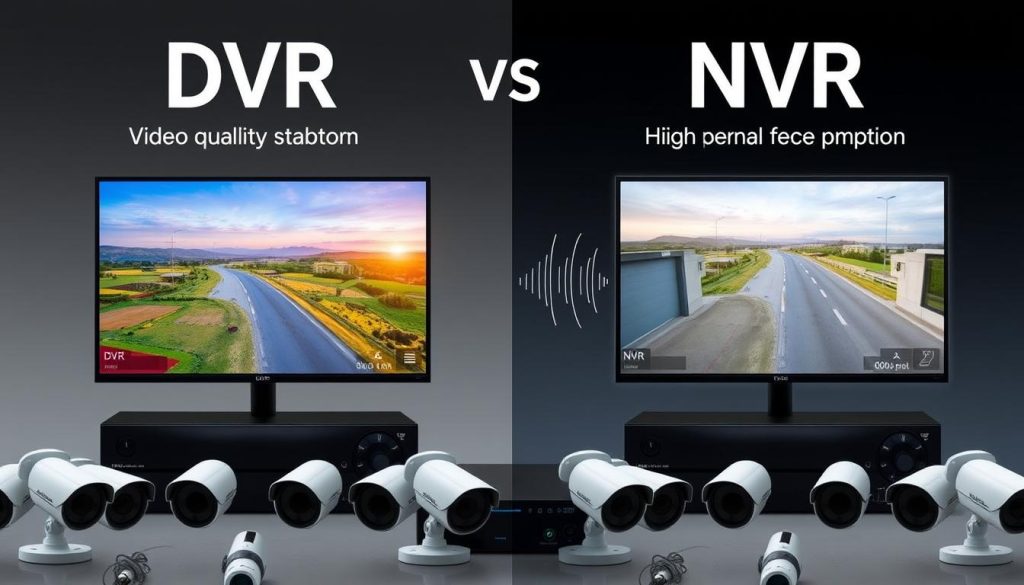
Visual clarity varies significantly between recording technologies. Modern HD-over-coax has improved analog cameras, but limitations remain.
DVR systems typically support resolutions up to 1080p with compatible cameras. The signal path affects final video quality substantially.
Analog transmission through coaxial cables introduces potential interference. The central recorder’s compression chipset determines final output quality.
NVR systems with IP cameras achieve superior maximum resolution. Options include 4K, 8MP, and beyond for exceptional detail.
The fully digital signal path maintains integrity from capture to storage. Onboard encoding in each camera optimizes data compression efficiently.
Audio integration presents another significant distinction. Traditional setups face historical challenges with sound recording.
DVR configurations often have limited audio input ports on the recorder unit. This restricts how many cameras can capture synchronized sound.
Additional RCA cables or proprietary Audio-over-Coax technology becomes necessary. These requirements increase installation complexity and material costs.
NVR configurations handle audio natively through Ethernet connections. Every IP camera with a built-in microphone records sound automatically.
The network transports both video and audio data in synchronized streams. This streamlined approach simplifies viewing and playback experiences.
Scalability and Ease of Expansion
System flexibility determines long-term value for Singapore property owners. Growing businesses and evolving homes need adaptable security solutions.
DVR systems face inherent scalability limitations. Each additional camera requires direct coaxial cable runs to the recorder.
The physical number of BNC ports on the unit creates hard boundaries. Expanding beyond these limits means purchasing entirely new equipment.
Camera placement options remain restricted to wired analog devices. Wireless integration proves challenging without signal converters.
NVR systems offer dramatically different expansion potential. Adding cameras typically involves connecting them to the existing local network.
Network switches can support substantially higher channel counts than physical recorder ports. This architecture enables gradual growth as needs evolve.
Placement flexibility represents another key advantage. NVR configurations integrate various camera types seamlessly:
- Wired Power-over-Ethernet units for reliable performance
- Wireless WiFi cameras for challenging locations
- Panoramic models for comprehensive area coverage
- Specialized devices with advanced analytics capabilities
Future-proofing considerations favor network-based architectures. Upgrading individual components becomes straightforward with NVR systems.
Singapore businesses planning expansion benefit from this adaptability. Homeowners anticipating property modifications appreciate the flexibility.
“The trade-off balances simplicity against adaptability. Fixed DVR solutions work well for stable, defined surveillance needs. Network-based NVR platforms accommodate evolving security requirements over time.”
Your decision should account for anticipated changes in coverage areas. Consider potential increases in number cameras needed for complete protection.
Evaluate whether your property layout might require different camera types eventually. These forward-looking assessments ensure lasting satisfaction with your security investment.
Advanced Features: Video Analytics and Cloud Integration
Today’s security technology extends far beyond basic recording to intelligent analysis and remote accessibility. Modern systems now transform passive monitoring into proactive protection.
This evolution represents a significant leap forward for property security. Singapore homeowners and businesses gain powerful tools for threat detection and response.
Enhancing Systems with AI and Analytics
Intelligent video analytics represent the cutting edge of surveillance technology. These features move systems from simple recording to smart interpretation.
IP cameras and NVR platforms excel in this domain. Their onboard processing enables real-time analysis of video footage.
Advanced AI capabilities include several powerful functions. Smart motion detection distinguishes between relevant events and false alarms.
It ignores moving shadows, leaves, or small animals. This reduces notification fatigue for property owners.
Facial recognition technology enables sophisticated access control. Authorized individuals gain entry while unknown persons trigger alerts.
Vehicle license plate recognition (LPR) automates parking management. It also helps track vehicles of interest around Singapore properties.
People counting and heat mapping provide valuable business intelligence. Retailers optimize store layouts while venues manage crowd density.
These analytics dramatically reduce investigation time. Security personnel filter footage to relevant events quickly.
Targeted alerts focus attention where it’s needed most. The system becomes an active partner in property protection.
Some DVR configurations offer basic software-based analytics. These solutions face inherent limitations compared to edge processing.
Centralized analysis strains the recorder’s processing power. Real-time performance often suffers as channel counts increase.
Cloud NVR and IVR: The Modern Evolution
Cloud-based solutions represent the next evolution in surveillance technology. Intelligent Video Recorders (IVRs) store video on remote servers.
This architecture eliminates the need for on-site recorder hardware. Video encoding happens locally while management occurs in the cloud.
Several significant benefits characterize these systems. Effortless remote access enables viewing from anywhere with internet connection.
Off-site data backup provides protection against local hardware failure. Physical damage or theft doesn’t compromise your security records.
Scalability becomes remarkably straightforward. Adding cameras typically involves software configuration rather than hardware installation.
Regular, automatic software updates ensure your system remains current. New features and security patches deploy seamlessly.
Advanced capabilities often include natural language search. Users can query footage with phrases like “find a person in a red shirt.”
Singapore property owners should consider several practical factors. Ongoing subscription fees replace upfront hardware costs.
A stable internet connection becomes essential for reliable operation. Data security and privacy policies require careful review.
Traditional on-premise NVR and DVR systems maintain different advantages. Users retain full physical control over hardware and recorded data.
This approach may suit organizations with strict data governance requirements. It also avoids recurring subscription expenses.
Evaluating these options requires aligning features with specific needs. Consider your security objectives and operational style carefully.
Assess available IT resources for managing network infrastructure. Cloud solutions simplify technical maintenance but introduce dependency.
Traditional systems demand more hands-on management expertise. They offer complete independence from external service providers.
Your choice should balance convenience with control requirements. Modern technology provides multiple pathways to enhanced property protection.
DVR vs NVR: Pros and Cons at a Glance
Every surveillance system presents trade-offs between performance, cost, and installation complexity. Understanding these pros cons helps Singapore property owners make informed decisions.
This balanced overview highlights key advantages and disadvantages for each platform. Your perfect security solution matches your specific priorities.
Advantages and Disadvantages of DVR Systems
DVR systems offer compelling benefits for certain situations. Their advantages focus on simplicity and initial budget management.
Key pros include:
- Lower upfront costs for equipment compared to digital alternatives
- Cost-effective upgrades when reusing existing coaxial wiring
- Enhanced cybersecurity through physical signal isolation
- Broad compatibility with various analog cameras
These systems work well for basic monitoring needs. They provide reliable video recording without network complexity.
However, DVR platforms have notable disadvantages. These cons affect long-term flexibility.
- Limited maximum image quality compared to modern IP cameras
- Restricted audio support requiring additional cables
- Cumbersome installation with bulky coaxial wiring
- Challenging expansion due to physical port limitations
Singapore homeowners face specific challenges with analog setups. Dense housing estates complicate cable routing.
Existing infrastructure might reduce installation costs. Yet expansion often requires complete system replacement.
Advantages and Disadvantages of NVR Systems
NVR systems represent modern surveillance technology. Their advantages focus on performance and flexibility.
Significant pros include:
- Superior image and audio quality with high-resolution options
- Cleaner installation using single Power-over-Ethernet cables
- Greater scalability for future expansion needs
- Native support for advanced analytics and wireless options
These platforms suit growing Singapore businesses. They adapt to changing security requirements seamlessly.
NVR configurations also present certain disadvantages. These cons involve initial investment and setup.
- Higher equipment costs for IP cameras and recorders
- Network dependency requiring stable internet connections
- Potential compatibility issues between different brands
- Perceived complexity for users unfamiliar with network setup
Older Singapore buildings may need network upgrades. This adds to the initial budget consideration.
Yet the long-term value often justifies the investment. Flexible placement saves on future modification costs.
Consider total cost of ownership carefully. DVR offers lower entry prices but limited growth potential.
NVR requires higher initial investment but reduces expansion expenses. Future camera additions become straightforward.
“Frame these pros and cons as different pathways, not superior solutions. Each serves specific property protection scenarios effectively.”
Create your personal priority list before deciding. Separate must-have features from nice-to-have capabilities.
Essential factors might include strict budget limits or required video clarity. Secondary considerations could involve analytics or remote access.
Your final choice should align with both current needs and future plans. Singapore properties benefit from this thoughtful approach.
Choosing the Right Security System for Your Needs in Singapore
Singapore property owners face a personalized selection process when securing their homes and businesses. Start by assessing your primary security goals and practical constraints.
Ask key questions about your budget, existing wiring, and required image quality. Consider future expansion plans and interest in smart features like remote viewing.
For cost-conscious homeowners with existing coaxial points, a modern HD DVR system often works well. New offices or those wanting easy expansion benefit from NVR technology with IP cameras.
Professional installation in Singapore ensures optimal placement and compliance. Choose systems with local support for our humid climate. Your perfect choice aligns with unique property needs.
Security solutions continue evolving toward smarter, integrated platforms. Make an informed decision that protects your Singapore property today and adapts for tomorrow.