
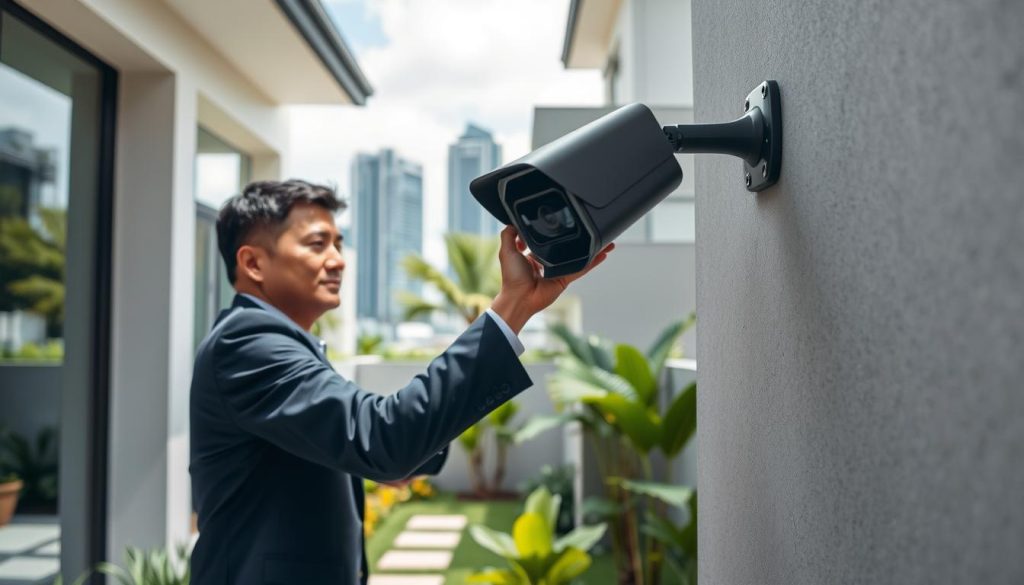
Singapore is a city under watch, with nearly one million surveillance cameras in operation. This network plays a vital role in public and private security. For homeowners and business operators, a personal CCTV system is a powerful tool for safety.
These cameras actively deter criminal activity and provide crucial evidence if an incident occurs. Modern digital systems offer superior image clarity and simpler setup than old analog models. A successful setup requires careful forethought.
This guide walks you through the essential planning steps. You will learn how to assess your property’s unique security needs. We cover Singapore’s legal rules, like the PDPA, for handling recorded data.
The right equipment choice depends on features like resolution and night vision. Strategic placement ensures full coverage of key rooms and entry points. We also discuss long-term storage and system maintenance for lasting performance.
Key Takeaways
- This guide provides a complete overview for evaluating a CCTV purchase in Singapore.
- Surveillance cameras are a proven deterrent to crime and aid in investigations.
- Digital CCTV systems deliver better image quality and easier installation.
- The first critical step is a thorough assessment of your specific security needs.
- Compliance with Singapore’s Personal Data Protection Act (PDPA) is mandatory.
- Choosing cameras involves matching features like resolution to your environment.
- Effective installation and planning prevent blind spots and ensure reliable coverage.
Assessing Your Security Needs and Property Layout
Before picking a single camera, you must first define exactly what you need to protect. This initial assessment forms the blueprint for your entire CCTV system. It directly determines how many devices you require, where they should go, and what specific features they need.
Start with a thorough walkthrough of your property. Look at it from a potential intruder’s viewpoint. Identify every vulnerable access point that demands surveillance.
Identifying Key Areas for Coverage
Common critical zones include main entry doors, ground-floor windows, and secluded gates. Your garage, garden, and driveway are also prime spots for monitoring. The goal is to eliminate blind spots where activity could go unseen.
Decide if you need indoor cameras for private spaces like living rooms and hallways. Outdoor units are essential for securing the perimeter. Your property’s layout, like multiple stories or a large yard, dictates the number of cameras for full coverage.
Also, think about each camera’s purpose. A visible unit on the front porch acts as a strong deterrent. A more discreet model might be better for recording activity without drawing attention.
Determining the Appropriate Camera Types
Once you know the areas to watch, match the right technology to each task. Different camera types excel in different roles.
Bullet cameras are ideal for long-distance outdoor monitoring. They have a robust housing and point in one fixed direction. Dome cameras offer a more discreet look, perfect for indoor hallways or retail spaces.
For active monitoring, PTZ (Pan-Tilt-Zoom) cameras allow you to control the view remotely. Fixed cameras provide reliable, stationary coverage of a specific choke point.
Your choice between wireless and wired systems matters too. Wireless systems offer easier setup and flexibility. Wired connections often provide more reliable power and data transmission, crucial for 24/7 security.
Smart planning includes future expansion. Choosing a scalable system lets you add more cameras later as your needs change.
This assessment phase is absolutely foundational. It informs your legal compliance, equipment purchase, and installation strategy. For complex property layouts, consulting with expert security camera installers can ensure your plan is both effective and efficient.
Navigating Singapore’s Legal Framework for CCTV
Operating a CCTV system in Singapore involves more than just mounting cameras. It requires navigating a clear legal landscape designed to protect personal privacy. Understanding these rules is essential for lawful and effective security.
Failure to comply can lead to serious penalties. More importantly, it can erode trust with those you monitor. Your setup must balance safety with respect for individual rights.
Adhering to the Personal Data Protection Act (PDPA)
The Personal Data Protection Act (PDPA) is the cornerstone of surveillance law here. It applies to both businesses and individuals collecting personal data via CCTV. The law mandates transparency and consent.
You must provide clear notification that recording is happening. The standard method is through conspicuous signage. Placing signs at entrances typically satisfies the requirement for implied consent.
Individuals also have the right to request access to footage of themselves. You must be prepared to provide it within a reasonable time. This is a key PDPA obligation.
There are absolute no-go zones. It is illegal to place cameras in private areas like bathrooms or bedrooms. Such acts are serious privacy violations.
Even within your own home, you have duties. Inform all household members, domestic helpers, and regular visitors about the cameras. Verbal notification is sufficient but should be clear.
For businesses, PDPA compliance is non-negotiable. Proper signage and data handling policies are critical. This fosters customer trust and avoids substantial fines.

Understanding HDB and Condominium Regulations
Your housing type adds another layer of rules. For HDB flat owners, regulations have recently simplified. As of May 2023, you do not need prior HDB approval for installation inside your unit.
However, ethical placement remains paramount. Your camera must not point at your neighbors’ doors or windows. Respecting their privacy is a legal and community expectation.
Condominium and private apartment residents face different guidelines. You will likely need permission from the Management Corporation (MCST) or residents’ committee. This is especially true for cameras mounted on common property or that capture shared areas.
Always submit your plans to the management before starting work. They may have specific bylaws about wiring and camera aesthetics. Getting approval upfront prevents costly rework.
Outdoor systems that cover public walkways or adjacent properties may need permits. The Singapore Police Force or local town council could be involved. Checking jurisdiction-specific rules is a vital step.
Navigating these frameworks ensures your security measures are robust and respectful. For a complete overview of all key considerations for CCTV installation, thorough planning is your best defense.
Choosing the Right CCTV Equipment for Your Needs
The effectiveness of your security setup hinges on the hardware you select. This phase translates your property assessment into a physical system. It involves comparing different camera types and evaluating critical technical features.
Your choices here determine the clarity of your video, reliability in darkness, and how long you can review footage. A well-matched system provides peace of mind for years.
Comparing Camera Types: Dome, Bullet, PTZ, and More
Each camera style serves a distinct purpose. Your property’s layout and your monitoring goals dictate the best fit.
Dome cameras are discreet and often vandal-resistant. Their low-profile design blends into indoor ceilings or aesthetic-sensitive areas. They are a top choice for home hallways, living rooms, and retail spaces.
Bullet cameras have an elongated, cylindrical shape. They are built for long-range outdoor monitoring and weather resistance. You often see them mounted under eaves, pointing down driveways or across large yards.
For active surveillance of expansive areas, PTZ (Pan-Tilt-Zoom) cameras are invaluable. Security personnel can control them remotely to pan, tilt, and zoom. This makes them ideal for large business premises or properties with wide sightlines.
Fixed cameras are stationary and cost-effective. They provide a constant watch over a single chokepoint like a front door or a cash register. Their simplicity makes them a reliable workhorse.
Modern systems frequently use IP cameras. These devices connect to your home network. This enables remote viewing and control through smartphone apps from anywhere.
Key Features: Resolution, Night Vision, and Storage Solutions
Beyond the housing, the internal features define a camera’s capability. Three elements are non-negotiable for a robust security solution.
Resolution dictates image quality. High-definition (HD) 1080p is a modern standard. For capturing fine details like faces or license plates, 4K cameras are superior. Clearer footage is crucial for identifying people after an event.
Effective night vision is essential in Singapore. It ensures your property stays monitored in complete darkness. This capability is typically provided by infrared LEDs, with their range measured in meters. Check this specification for your outdoor areas.
“The right storage solution balances accessibility, cost, and how long you need to keep evidence.”
Storage is a major long-term consideration. Local storage uses a Network Video Recorder (NVR) with a hard drive. It offers direct control and no monthly fees. The hard disks are designed for continuous operation but require replacement over time.
Cloud storage keeps video online via subscription services. It provides off-site backup and easy accessibility from any device. This is a strong option for businesses needing secure, redundant footage.
Required capacity depends on several points: the number of cameras, recording quality, frame rate, and your desired retention period. Evaluating these features against your assessed needs leads to a capable and cost-effective system.
Planning for Effective Installation and Long-Term Performance
Professional setup and ongoing care are the cornerstones of a CCTV system that performs for years. Engaging a qualified installer ensures optimal placement of your cameras. They eliminate blind spots and secure all key entry points for complete coverage.
A reliable power and internet connection is crucial for continuous operation. Plan for backup solutions to keep your security active during outages. Implementing a regular maintenance schedule preserves video quality and system health.
Your storage strategy should include a backup plan to protect crucial footage. Smart budget planning accounts for both initial installation and long-term running costs. This final phase turns your equipment into a durable asset for peace of mind.