
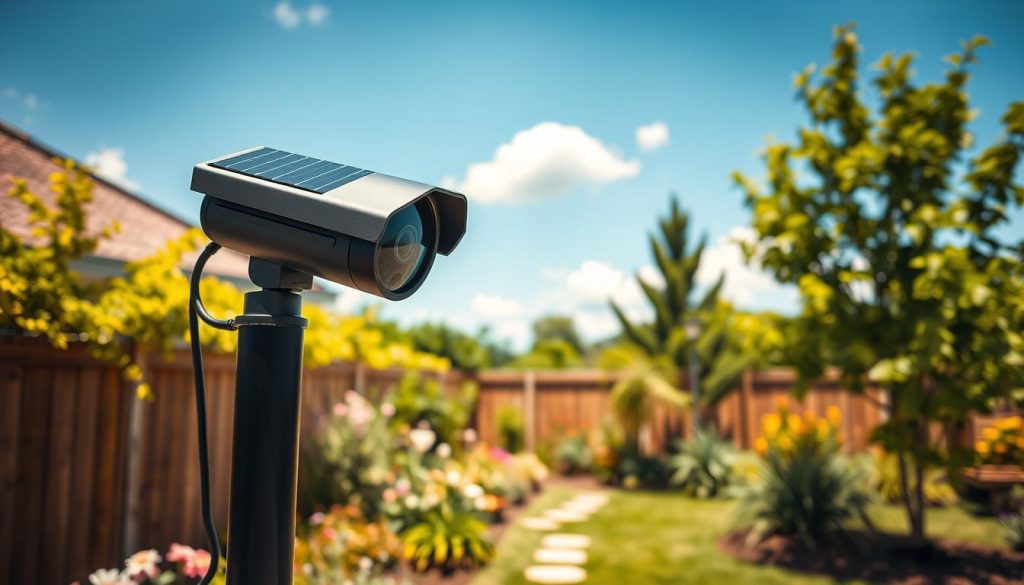
Welcome to our detailed exploration of modern property protection. This guide examines a revolutionary technology that merges sustainable power with cutting-edge surveillance.
Our purpose is to deliver a complete 2023 analysis and purchasing guide. This resource is highly relevant for residents in Singapore and interested buyers worldwide.
Demand for reliable, off-grid, and eco-conscious monitoring solutions is growing fast. People seek resilient systems that operate independently of traditional power sources.
We will break down the advantages, essential specifications, leading products, and direct comparisons. The article also covers local considerations for Singapore, setup advice, and final recommendations.
Selecting the appropriate setup is vital for uninterrupted safety, significant cost savings over time, and a reduced ecological footprint.
This review assists homeowners, business operators, and property managers. You can enhance your premises’ safety without the hassle of extensive wiring.
We maintain an informational and factual tone. Our goal is to help you make a confident and informed investment.
Key Takeaways
- This technology combines renewable energy with advanced property monitoring.
- The 2023 market presents expanded options for off-grid and eco-friendly protection.
- A proper choice ensures constant vigilance and improved long-term value.
- Our guide is crafted with the specific needs of Singaporean consumers in mind.
- Correct installation is key to achieving optimal system performance and reliability.
- An informed decision balances critical features, price, and sustainability benefits.
- These systems remove the need for complex electrical infrastructure.
Why Wireless Solar Security Cameras Are a Game-Changer
The defining feature of contemporary safety systems is their seamless integration of sustainable energy and autonomous operation. This shift moves property monitoring beyond simple video recording. It creates a resilient, self-sufficient shield for your home or business.
These innovative devices solve long-standing problems with traditional setups. They eliminate dependency on the electrical grid and complex wiring. The result is a new standard for reliable, eco-conscious protection.
True Wireless Freedom and Installation Flexibility
Placement is no longer restricted by the location of an electrical outlet. You can install a unit anywhere it receives adequate sunlight. This is perfect for monitoring sheds, gates, or remote sections of a farm.
There’s no need for expensive trenching to run cables. This flexibility makes the initial setup remarkably simple and cost-effective. You can also relocate the device with minimal effort as your needs change.
Maintenance is equally straightforward. An occasional wipe of the photovoltaic cell is typically all that’s required. This hassle-free approach is a major advantage for busy homeowners.
Uninterrupted Protection During Power Outages
Grid failures and storms are when reliable surveillance matters most. A system with an integrated rechargeable battery and panel keeps working. Your property remains watched even when the neighborhood goes dark.
This continuous operation during blackouts is a critical feature for any serious security plan.
The built-in energy storage acts as a dedicated backup. It ensures the device’s operational life extends through prolonged adverse weather. This reliability provides immense peace of mind for residents in areas prone to power instability.
Cost Savings and Environmental Benefits
The financial case is compelling. After the initial purchase, the energy source—sunlight—is completely free. This can lead to noticeable reductions in your monthly electricity bills.
While the upfront cost may be higher, the long-term savings are significant. You avoid ongoing costs for power and frequent battery swaps. Over several years, the system often pays for itself.
The environmental impact is equally positive. Using renewable energy directly reduces your household’s carbon footprint. Furthermore, a high-quality, solar-powered model requires far fewer battery replacements over its lifespan compared to standard battery-only units.
Real-world applications highlight these benefits. They are ideal for:
- Vacation homes where grid connection is unreliable or too costly.
- Construction sites that need temporary, off-grid monitoring.
- Agricultural land for keeping an eye on equipment and livestock.
Ultimately, the greatest value may be psychological. You gain confidence knowing your protection system is self-sustaining and resilient against external disruptions.
Key Features to Evaluate Before You Buy
Before making a purchase, savvy buyers should assess several critical specifications. The right combination of these elements determines how well your monitoring system will perform in real-world conditions.
Focusing on these core aspects ensures you get a reliable and effective solution. It also prevents future disappointments from underperforming equipment.
Solar Panel Efficiency & Battery Capacity
The heart of any off-grid surveillance unit is its energy system. Solar panel efficiency dictates how quickly the battery recharges. It is often measured in watts per square inch.
Higher efficiency is crucial for locations with limited direct sunlight. It ensures the device keeps operating even during overcast days. For tropical settings like Singapore, with frequent cloud cover, this spec is vital.
Battery capacity, measured in milliamp-hours (mAh), is equally important. A larger battery provides more reserve power. This determines how many days the unit can run without a significant solar charge.
Look for models with smart power management. These systems extend operational life by adjusting recording modes based on motion or a schedule. They conserve energy during quiet periods.
Video Resolution and Night Vision Capabilities
Image clarity is non-negotiable for proper identification. Modern options offer resolutions from 3MP up to 8MP, which is 4K quality. Higher resolution provides finer details like license plates or facial features.
“The jump from 1080p to 4K video is like switching from standard definition to high definition—it transforms what you can see and identify,” note industry experts.
However, sharper video consumes more storage space and bandwidth. You must balance your need for detail with your data plan and storage budget.
Night vision turns a unit into a 24/7 guardian. Basic Infrared (IR) provides black-and-white footage. Color night vision and advanced technologies like ColorX deliver full-color images in very low light.
This capability is essential for capturing usable evidence after dark. It greatly enhances the overall effectiveness of your property protection.
Connectivity: Wi-Fi, 4G LTE, and Network Reliability
Your footage needs a path to your smartphone or computer. For most urban and suburban homes, a strong Wi-Fi connection is the standard. Dual-band Wi-Fi (2.4GHz and 5GHz) offers better performance and less interference.
In truly remote locations without internet access, a 4G LTE model is the answer. These use a cellular data SIM card to transmit video. They are perfect for construction sites or rural farmland.
Network reliability is paramount for continuous streaming and instant alerts. A weak signal can cause frustrating delays or missed events. Always check the supported frequency bands for your local cellular providers if choosing a 4G path.
Weatherproofing and Durability for Outdoor Use
Since these devices live outside, they must withstand the elements. An Ingress Protection (IP) rating tells you how well the housing resists dust and water.
Look for a rating of IP66 or higher. IP66 means the unit is dust-tight and can handle powerful water jets. IP67 allows for temporary immersion.
This is critical in Singapore’s tropical climate. Heavy rain, high humidity, and consistent heat are everyday challenges. A robust build ensures the system lasts for years without failure.
The housing material also matters. Metal or high-quality ABS plastic offers better protection against physical impact and UV degradation.
Smart Detection, Alerts, and Audio Features
Modern technology does more than just record video. Intelligent features filter out false alarms and focus on what matters. Person and vehicle detection are now common in better models.
This smart analysis distinguishes a passing cat from a human intruder. It saves you from reviewing hours of irrelevant motion clips. You can often define specific motion zones to monitor.
When an event occurs, instant push alerts are sent to your phone. Many systems also include two-way audio. This allows you to speak through the unit to a visitor or deter a trespasser.
Integrated sirens add another layer of active deterrence. Some high-end models feature auto-tracking, where the lens physically follows movement across its field of view.
For storing footage, you have several choices:
- Local storage on a microSD card (supporting up to 512GB).
- Cloud storage via a subscription service for off-site backup.
- Network Video Recorder (NVR) systems for multi-camera setups with centralized recording.
Evaluating these smart features helps you move from simple recording to an interactive, responsive security solution. Choose based on the level of control and automation you desire.
Top Wireless Solar Security Cameras for 2023
Navigating the current landscape of self-powered outdoor monitoring solutions reveals several standout product families. This year’s offerings provide distinct advantages for different property types and user needs.
From versatile residential units to professional-grade kits, the options have expanded significantly. We examine four leading categories that represent the best of 2023’s technology.
Reolink Argus Series: Versatile All-Rounders
The Argus line balances high-resolution video with reliable renewable energy charging. Models like the Argus 4 Pro and Argus 3 Pro are ideal for typical home protection.
These devices feature 4K resolution and 180-degree coverage. True full-color night vision ensures clear identification after dark.
Dual-band Wi-Fi 6 connectivity provides stable network performance. Smart person and vehicle detection reduces false alerts significantly.
The integrated photovoltaic panel keeps the built-in power cell charged. This makes them perfect for continuous residential surveillance without wiring hassles.
Key advantages include:
- Easy do-it-yourself installation with flexible placement
- Consistent operation during brief cloudy periods
- Multiple storage options including local microSD cards
- Weather-resistant construction for outdoor durability
Hikvision Solar-Powered Kits: Professional-Grade Flexibility
For commercial or large-scale deployments, Hikvision offers modular systems. These kits provide extended operational life and robust construction.
The professional-grade equipment can operate up to seven days without direct sunlight. An IP67 rating ensures protection against heavy rain and dust ingress.
Wind-resistant design and substantial 14 kg weight provide stability in exposed locations. Customizable configurations support various advanced applications.
Options include Automatic Number Plate Recognition (ANPR) and AcuSense intelligent detection. Radar-enhanced models offer additional perimeter monitoring capabilities.
These systems suit farmlands, highway monitoring, and government projects. The modular approach allows scaling protection across large areas efficiently.
Reolink Go Series: For Truly Remote Locations
When Wi-Fi connectivity isn’t available, the Go series provides a complete solution. These units utilize 4G LTE cellular networks for data transmission.
The Reolink Go PT Ultra represents this category’s capabilities. It combines 4K video with full pan-tilt-zoom mechanical control.
Color night vision operates without external lighting sources. This makes it perfect for construction sites and rural properties.
“Cellular-connected monitoring devices eliminate location restrictions, bringing surveillance to areas without traditional infrastructure,” according to industry analysts.
The built-in energy system ensures autonomous operation for extended periods. Users simply insert a local SIM card with a data plan for immediate functionality.
Feature-Packed Models with Pan, Tilt, and Zoom
Advanced mechanical control takes property monitoring to another level. Devices like the Reolink TrackMix offer dual-view displays and auto-zoom tracking.
One lens provides a wide overview while another zooms automatically on moving subjects. This combination ensures comprehensive coverage of large areas.
The Argus PT Ultra features 355-degree pan and 140-degree tilt capabilities. This creates an exceptionally wide monitoring field from a single installation point.
Auto-tracking technology follows movement across the entire visible area. These intelligent features minimize blind spots around your property.
Comparing key specifications across series helps identify the best fit:
- Resolution: Most premium models now offer 4K, while value options provide 5MP clarity
- Field of View: Ranges from 100 degrees to full 360-degree coverage with PTZ models
- Battery Life: Varies from several days to weeks depending on usage patterns and panel efficiency
- Connectivity: Choices include Wi-Fi, 4G LTE, or hybrid solutions for maximum reliability
- Special Features: Animal recognition, built-in storage, and integration with Network Video Recorder (NVR) systems
Understanding use-case scenarios simplifies the selection process. The Argus series suits most residential applications with its balance of features.
Hikvision kits address business or institutional needs requiring scalability. The Go series serves completely off-grid locations without local network access.
PTZ models excel at covering large properties where active tracking provides added value. Each category has seen 2023 updates improving performance and efficiency.
Current pricing trends show competitive bundle offers on manufacturer websites. Many products include installation accessories and extended warranty options.
The overall value proposition continues to improve as technology advances. Smart shoppers can find capable systems at various budget levels.
Side-by-Side Comparison of Leading Models
A detailed side-by-side examination cuts through marketing claims to reveal genuine performance differences. We analyze top product families like the Reolink Argus series, Hikvision kits, and the Reolink Go line.
This breakdown helps you match technical specifications with your specific property needs.
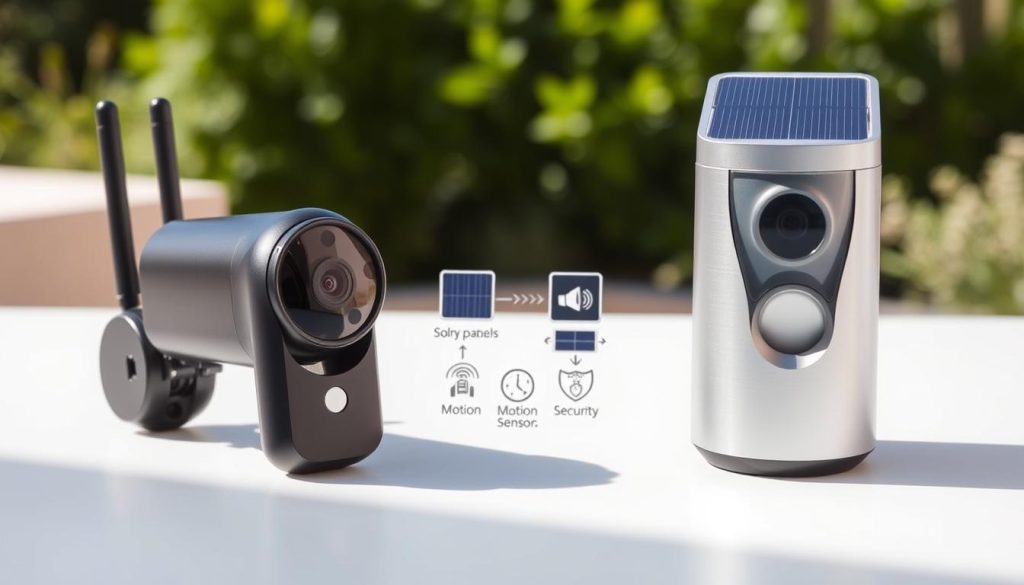
Resolution, Field of View, and Power Specs
Image clarity is a primary differentiator. High-end models offer 4K resolution, which is 8MP. This level captures fine details like license plates from a distance.
Mid-range options often provide 5MP (2K) video. It’s a strong balance of detail and efficient data use. Entry-level 3MP (1080p) units offer basic clarity suitable for general monitoring.
Higher resolution demands more storage space. A 4K stream fills a memory card much faster than a 1080p feed.
The field of view determines coverage area. Wide-angle lenses, often 180 degrees, reduce blind spots along a wall. Full 360-degree coverage requires a pan-tilt device.
Standard views around 110 degrees may leave gaps. Consider your property’s layout when choosing this spec.
Autonomous operation hinges on energy specs. Battery capacity, measured in mAh, is crucial. A 7800mAh cell provides more reserve power than a 5000mAh one.
The attached photovoltaic panel wattage affects recharge speed. Higher wattage panels perform better in low-light conditions.
Manufacturers claim operation for several days without sun. This depends heavily on usage, like motion-triggered versus continuous recording.
Smart Features and Storage Options Compared
Intelligent detection separates advanced units from basic ones. Accurate person and vehicle recognition minimizes false alarms from pets or shadows.
“Smart detection accuracy is the difference between getting a useful alert and notification fatigue,” observe tech reviewers.
Customizable alert zones let you focus on critical areas. Two-way audio quality varies; some systems include noise cancellation.
Additional deterrents like built-in sirens or spotlights add active protection. These features can scare off intruders before an incident occurs.
Your footage needs a home. Local storage uses a microSD card. Capacities range from 128GB to 512GB, affecting how much video history you keep.
Cloud storage offers off-site backup but often requires a subscription. Some brands provide limited free cloud plans.
For multi-unit setups, compatibility with a Network Video Recorder (NVR) is key. An NVR provides centralized, expandable storage for all your cameras.
Price Analysis and Value for Money
Current market prices show a wide range. Basic models start around $75. Full-featured kits with multiple units can reach $355 or more.
Brand reputation influences cost. Established brands often command a premium for proven reliability and software support.
Assess the total cost of ownership. The initial price is just one part. Factor in potential extras like a higher-wattage solar panel, spare battery packs, or monthly cloud fees.
Cellular-connected products add ongoing data plan costs. A durable unit with a high IP rating may cost more upfront but lasts longer in harsh weather.
Here are recommendations for different budgets:
- Best Budget Option: Look for a 1080p model with a reliable battery and person detection. It covers essential needs without complex features.
- Best Mid-Range Value: A 2K resolution unit with color night vision and a generous microSD slot offers excellent balance. Smart alerts and two-way audio are typically included.
- Best Premium System: Invest in a 4K kit with pan-tilt-zoom, advanced tracking, and robust construction. These systems offer the highest clarity, widest coverage, and professional-grade durability.
Your final choice should align the price with the features you truly need for effective, long-term property monitoring.
Optimizing for the Singapore Environment
Singapore’s specific conditions present both opportunities and challenges for off-grid video surveillance systems. To ensure your investment delivers reliable, long-term protection, you must adapt its setup and management to local realities.
This section provides targeted advice for homeowners and business operators in the Lion City. We’ll cover climate adaptation, network stability, and crucial data handling practices.
Considering Sunlight Exposure and Tropical Weather
Singapore’s equatorial location is a major advantage. It provides consistent, year-round sunlight to keep your system’s battery charged.
You must still consider shading from nearby buildings or lush foliage. For optimal charging, position the photovoltaic panel facing south with a slight 10 to 15-degree tilt.
This angle helps rainwater run off and maximizes daily energy capture.
The tropical climate also brings intense challenges. Heavy rainfall, high humidity, and persistent heat can degrade equipment.
Choose products built for this environment. Look for an Ingress Protection (IP) rating of IP66 or IP67.
This rating ensures the housing is dust-tight and can withstand powerful water jets. Brands like Hikvision design products with wind-resistant and waterproof builds specifically for such climates.
Corrosion-resistant materials are equally important. They prevent damage from salty air and constant moisture.
Regular maintenance is simple but vital. Wipe the solar panels every few months to remove dust, pollen, or bird droppings. Check seals periodically for any signs of water ingress.
Ensuring Strong Wi-Fi Coverage in Urban Settings
Dense urban landscapes with many concrete structures can weaken Wi-Fi signals. Your security system needs a stable connection for live streaming and instant alerts.
Interference from neighboring networks is common in HDB estates and condominiums. To combat this, select a camera that supports dual-band Wi-Fi (2.4GHz and 5GHz).
The 5GHz band is often less congested and offers faster data rates.
If the signal is weak at your desired installation point, consider a Wi-Fi extender or a mesh network system. These devices boost coverage to garages, gates, or garden sheds.
For areas with no reliable internet access, a 4G LTE model is a practical alternative. It uses a cellular data SIM card from local providers like Singtel, StarHub, or M1.
“In Singapore’s connected yet dense environment, ensuring a stable data pathway is as critical as the hardware itself for uninterrupted monitoring,” note local tech installers.
Factor in the ongoing cost of a data plan when choosing this path. Most events use little data, but continuous streaming will consume more.
Data Privacy and Cloud Storage Considerations
Any internet-connected device requires careful privacy management. Your footage is sensitive data that needs protection.
Always enable encryption on your device and home network. Use strong, unique passwords and enable two-factor authentication if the app supports it.
Choose brands with a strong reputation for software security and regular updates.
For storing footage, you have two main choices: local microSD cards or cloud storage. Cloud services offer off-site backup, so footage survives even if the camera is stolen.
In Singapore, consider using a local cloud provider. This can ensure compliance with the Personal Data Protection Act (PDPA) regarding data sovereignty and transfer.
International services are convenient but review their data handling policies. Be aware of any subscription fees for extended video history.
If your solar-powered security setup records public areas or shared spaces, PDPA compliance is mandatory. Inform individuals if they are being recorded where they have a reasonable expectation of privacy.
Finally, make a habit of updating your device’s firmware. Manufacturers release these updates to patch vulnerabilities and improve features, keeping your system secure over time.
By addressing these environmental, connectivity, and privacy factors, you build a resilient monitoring solution tailored for Singapore. It will perform reliably through rain or shine, delivering the peace of mind you expect.
A Step-by-Step Guide to Installation and Setup
The performance of your new monitoring system hinges on a careful, methodical setup process. Doing it right ensures your equipment operates reliably from day one. This guide walks you through each critical phase.
Proper installation maximizes the value of your investment in solar-powered outdoor monitoring solutions. Let’s begin with planning.
Site Survey and Optimal Camera Placement
Start by walking your property around noon. Note the sun’s path and identify high-traffic zones. Look for potential blind spots near entry points.
Use a sun path app on your phone. It helps determine the best orientation for the photovoltaic component later. Mark areas with maximum, unobstructed sunlight.
For the recording unit itself, height is key. Install it 2 to 3 meters above the ground. This deters tampering and provides a wide field of view.
Avoid pointing the lens directly at bright light sources. Position it to cover critical areas like doors, gates, and driveways. The goal is clear identification, not just motion detection.
Mounting the Solar Panel for Maximum Sun Exposure
Your system’s energy independence relies on this step. Secure the mounting bracket on a sturdy wall, pole, or eave. Ensure it faces true south for Singapore’s location.
Angle the panel appropriately. For Singapore’s latitude of about 1 degree north, a shallow 10 to 15-degree tilt is often sufficient. This promotes rainwater runoff and year-round efficiency.
Double-check for shading during peak sun hours. Even a small shadow can drastically reduce charging. Weatherproof any cable connections using the provided seals.
This prevents moisture ingress, which is vital in our tropical climate. A firmly attached setup withstands strong winds and lasts for years.
Connecting to Your Network and Configuring Settings
First, download the manufacturer’s official app. For Wi-Fi models, connect the device to your home network during setup. Choose the 5GHz band if available for less interference.
For 4G LTE models, insert a local data SIM card. Follow the app’s prompts to establish the cellular connection.
Next, configure the smart features that matter most to you:
- Set motion detection zones: Draw areas on the live feed to focus on important spots. This reduces false alerts from passing traffic.
- Adjust alert schedules: You might only want notifications at night or when you’re away.
- Choose video quality: Balance clarity with storage needs. Higher resolution uses more space.
- Integrate with smart home platforms: If supported, link to Google Home or Alexa for voice control.
Now, set up your storage. Format a new microSD card directly in the app. Or, activate a free cloud trial for off-site backup.
For multi-unit systems, connect them to a Network Video Recorder (NVR) for centralized, continuous recording.
“Testing is not optional. Verify the live feed, trigger a motion alert yourself, and check the night vision in darkness. Also, confirm the battery indicator shows a charging status from the panel,” advise installers.
Finally, secure your remote access. Use a strong, unique password for your account. Enable two-factor authentication if the app offers it. This protects your data.
For ongoing care, wipe the solar panels clean every few months. Check the battery health percentage in the app periodically. Install software updates promptly for new features and critical security patches.
Following these steps gives you a robust, self-sufficient solar security system. It will provide peace of mind for a long time.
Choosing Your Perfect Solar-Powered Security Solution
Selecting the ideal self-powered monitoring system requires aligning its capabilities with your unique property and lifestyle. Assess your specific needs based on property size, location, and desired features like resolution.
For reliable performance in Singapore, prioritize panel efficiency and ample battery capacity. Match models to use cases: Argus series for typical homes, Hikvision kits for commercial properties, and Go models for truly off-grid sites.
Balance the initial purchase price with long-term savings on electricity. Check for current promotions and bundled kits from authorized retailers for better value.
Before finalizing your choice, read user reviews and verify the warranty. Consider starting with a single unit to test performance.
This approach leads to a future-proof, sustainable solution that enhances protection. Explore the products discussed to make a confident, informed purchase for your property.