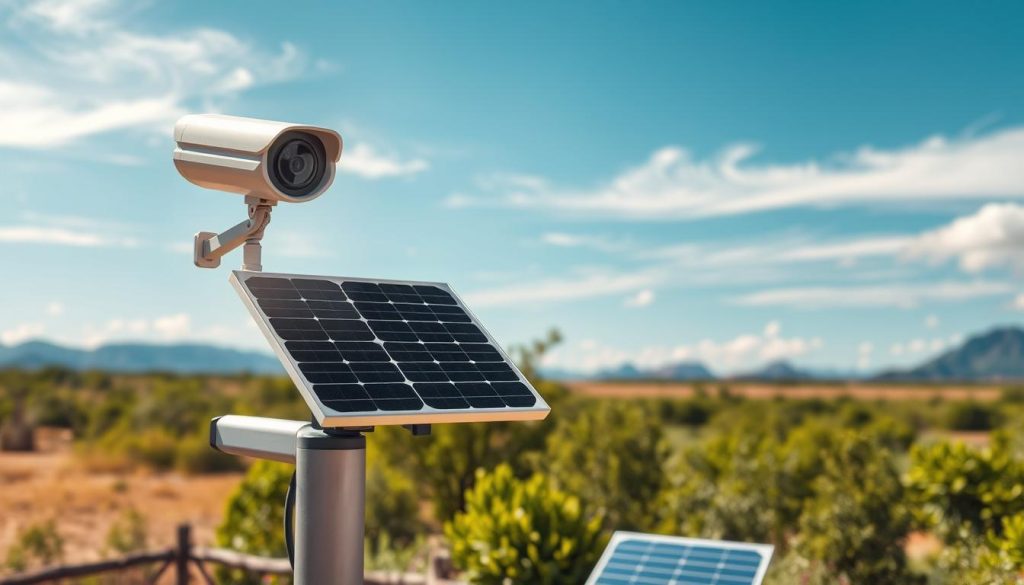
Singapore’s commitment to renewable energy is transforming property protection. The nation aims for 2 gigawatt-peak solar capacity by 2030. This push makes self-powered security solutions increasingly relevant for homeowners and businesses.
These innovative systems provide continuous monitoring, even during blackouts. They ensure your property remains protected when traditional power fails. This creates a robust safety net for both urban condominiums and remote sites.
While initial setup may exceed $4,000, the long-term savings are significant. Real-world applications show approximately 72% fewer break-ins. The technology aligns perfectly with Singapore’s green initiatives.
This guide will help you navigate features, brands, and installation. We cover everything from technology basics to maintenance tips. Make an informed decision for your unique security needs.
Key Takeaways
- Self-powered surveillance systems offer uninterrupted protection during power outages.
- Singapore’s solar energy goals make these solutions increasingly practical and sustainable.
- Initial investment can be substantial but leads to long-term electricity savings.
- These cameras have demonstrated significant effectiveness in reducing property crimes.
- The technology suits both dense urban environments and isolated locations.
- Proper selection requires understanding power requirements, camera types, and storage options.
- Regular maintenance ensures optimal performance of your independent security setup.
Why Off-Grid Security is a Smart Choice for Singaporean Properties
Singapore’s unique urban landscape makes autonomous security systems an increasingly practical investment. These independent solutions address specific challenges faced by property owners across the island. They provide reliable protection without depending on traditional power infrastructure.
Aligning with Singapore’s Solar Energy and Sustainability Goals
The nation has committed to reaching 2 gigawatt-peak solar capacity by 2030. This ambitious target creates a perfect environment for solar-powered protection devices. Adopting these units directly supports Singapore’s green initiatives.
Self-powered surveillance operates completely independently from the conventional electrical network. This freedom eliminates vulnerability to blackouts and grid failures. Your property remains monitored even during widespread power disruptions.
Environmental benefits are equally significant. Solar energy systems produce zero emissions during operation. They offer a cleaner alternative to constantly plugged-in security cameras.
Securing Urban Condos and Remote Sites Alike
Urban high-rises face unique risks during power outages. Traditional monitoring often fails when electricity is cut. Independent security cameras maintain continuous operation through these events.
Remote locations like construction sites lack basic electrical connections. Offshore facilities and nature reserves also need reliable monitoring. Self-powered units deliver essential safety coverage where infrastructure is absent.
Modern systems use 4G LTE cellular connectivity. This technology ensures stable video transmission without Wi-Fi networks. Coverage becomes truly comprehensive across all property types.
Real-world effectiveness is proven. A trial in Aberdeen demonstrated a 72% reduction in burglary rates using solar-powered units. This compelling result shows the practical impact of these systems.
Financial advantages extend beyond crime prevention. Property owners save significantly on electricity bills over time. Maintenance requirements are minimal compared to wired alternatives.
Independent security represents forward-thinking property protection. It adapts to Singapore’s evolving urban and rural environments. This technology provides a robust, sustainable safety solution for today’s challenges.
Key Advantages of Implementing an Off-Grid CCTV System
The value proposition of autonomous security systems is built on three core pillars: sustainability, resilience, and financial efficiency. These benefits make a strong case for property owners seeking a modern and reliable safety solution.
Eco-Friendly Operation and Reduced Carbon Footprint
Solar-powered security represents a clean energy choice. These cameras operate by converting sunlight directly into electricity.
This process creates zero emissions during use. It significantly reduces the carbon footprint of your property’s safety systems.
You support Singapore’s green initiatives directly. Your surveillance setup aligns with national sustainability goals for a cleaner future.
Uninterrupted Protection During Power Outages and Grid Failures
Resilience is a critical advantage. A self-powered system with a robust battery backup ensures cameras never go dark.
They continue recording during storms, blackouts, or even if an intruder cuts the main power. This guarantees continuous surveillance when you need it most.
Remote monitoring remains active. You receive instant alerts and can view live footage regardless of local power status.
Real-world data proves its effectiveness. A notable trial demonstrated a 72% reduction in break-ins on properties using these solutions.
There are documented cases where thieves were apprehended because the autonomous cameras kept recording without fail.
Long-Term Cost Savings on Electricity and Installation
The financial benefits are clear and substantial. After the initial investment, your ongoing operating costs plummet.
Monthly expenses for a solar-powered unit can average around $10. This is a major saving compared to traditional wired cameras on your electricity bill.
Initial costs vary based on your approach. A basic DIY setup can start from $100, while comprehensive professional installation for larger properties may exceed $4,000.
This higher initial outlay buys superior performance and durability. It leads to reduced long-term replacement expenses.
Scaling your security is also more affordable. You can add cameras without major new wiring or infrastructure costs.
The combination of solar power and battery storage creates a truly independent security system. It delivers a compelling return on investment that blends enhanced safety, financial prudence, and environmental responsibility.
How Off-Grid CCTV Systems Work: Power and Connectivity Explained
At the heart of every autonomous monitoring solution is a sophisticated dance between energy harvesting and data transmission. These independent security cameras work by combining renewable power sources with wireless communication. The result is a surveillance system that operates completely free from traditional infrastructure constraints.
Understanding this technology helps you appreciate its reliability. It also informs better purchasing decisions for your property’s protection needs.
The Solar Power Mechanism: From Sunlight to Surveillance
Photovoltaic panels form the foundation of these self-powered units. They capture sunlight and convert it directly into electrical energy. This process happens continuously during daylight hours.
The generated electricity powers surveillance cameras immediately. Any excess energy flows to integrated batteries for storage. Modern solar panels maintain efficient conversion even on overcast days.
A critical component called a charge controller manages this energy flow. These devices typically feature 10A ratings for optimal performance. They prevent battery damage from overcharging or excessive discharge.
This solar power setup creates a sustainable loop. Daylight fuels daytime operation while charging reserves for night. The system achieves true energy independence through smart design.
Battery Life and Energy Storage for 24/7 Operation
Energy storage systems provide crucial backup during limited sunlight periods. They ensure your security cameras work around the clock. Different battery types offer varying performance characteristics.
Lithium-ion batteries typically deliver 5-9 years of service with proper care. Deep-cycle lead-acid options provide 2-5 years of reliable operation. Capacities like 24Ah determine how long the system runs without fresh solar input.
Weatherproof battery boxes protect these vital components. They shield against Singapore’s tropical humidity and rain. This protection extends battery life and maintains consistent power supply.
The system intelligently manages stored energy. During prolonged cloudy weather, it prioritizes essential functions. This approach can maintain basic surveillance for multiple days.
Regular maintenance optimizes battery performance. Simple checks ensure your power sources remain reliable year after year.
4G LTE Connectivity: The Key to Truly Wireless Monitoring
Cellular technology completes the independence equation. SIM cards transmit video data over 4G LTE networks. This eliminates any need for Wi-Fi connections.
Your security camera systems gain complete location freedom. They install anywhere with cellular coverage. Remote access becomes simple and dependable.
Mobile apps and web interfaces provide real-time viewing. You control settings and review footage from any location. The connection remains stable regardless of local internet status.
Data consumption averages around 1GB monthly for standard use. Live viewing habits and alert frequencies affect this amount. Most cellular plans easily accommodate this traffic.
Video storage options include local SD cards and cloud services. This dual approach preserves evidence even during temporary network interruptions. Your surveillance data remains secure and accessible.
For professional installation of these advanced systems, consider expert services in Singapore. They ensure optimal placement and configuration for your specific property.
Critical Features to Look for in an Off-Grid Security Camera
Selecting the right autonomous security camera requires careful evaluation of several critical specifications. These features ensure reliable performance in Singapore’s challenging environment. They transform basic equipment into a robust, long-term safety asset for your property.
Understanding what makes a surveillance system effective helps you make informed choices. The right combination of durability, clarity, and intelligence creates comprehensive protection. Let’s explore the essential characteristics that define top-performing independent security solutions.
Weatherproof and Durable Design for Tropical Climates
Singapore’s environment presents unique challenges for outdoor equipment. Heavy rainfall, high humidity, and salty coastal air demand exceptional construction. Your security camera must withstand these elements year after year.
Look for an IP65 rating or higher for complete weatherproofing. This certification guarantees protection against dust ingress and low-pressure water jets. It means your device can handle intense tropical downpours without failure.
Corrosion-resistant housing materials are equally important. Aluminum alloys and high-grade plastics maintain integrity in humid conditions. They prevent degradation that could compromise the unit’s internal electronics.
Proper sealing around lens openings and cable ports is crucial. These vulnerable points often allow moisture penetration in inferior products. Quality manufacturing ensures every seam remains secure against Singapore’s climate.
High-Definition Video Resolution and Night Vision Capabilities
Clear video evidence is fundamental for any security system. Blurry footage cannot identify faces or license plates during investigations. Modern standards require significantly better quality than older analog cameras.
Prioritize devices offering 2K Super HD or 4K UHD resolution. These specifications capture fine details like facial features and vehicle markings. They provide the clarity needed for proper identification and evidence collection.
Night vision extends your protection into darkness. Two main technologies deliver this capability. Infrared illumination provides black-and-white imagery effective up to 30 meters.
Full-color night vision uses advanced sensors and supplemental lighting. It maintains color information for more accurate identification after sunset. This technology typically works within a 25-meter range.
Consider both the type and effective distance when evaluating options. Longer ranges suit larger properties, while color accuracy aids in detailed recognition.
Advanced Motion Detection and Smart Alert Systems
Intelligent monitoring separates modern security cameras from basic recording devices. Traditional motion sensors trigger alerts for any movement, including leaves or animals. This creates notification fatigue that causes users to ignore genuine threats.
AI-powered analytics solve this problem effectively. These systems distinguish between people, vehicles, and animals using sophisticated algorithms. They significantly reduce false alarms from irrelevant environmental movement.
You receive notifications only for meaningful security events. This focused approach ensures you pay attention when it matters most. Your response time improves dramatically with relevant, timely information.
Smart alert systems deliver instant updates directly to your mobile device. Push notifications include snapshots or short video clips of the detected activity. You can assess situations immediately without accessing full recordings.
Wireless design complements these intelligent features perfectly. It enables flexible installation and easy repositioning as your security needs evolve. You’re not locked into initial placement decisions.
Integrated storage solutions preserve your video evidence reliably. Local SD card slots offer immediate backup without monthly fees. Cloud subscription services provide off-site protection and convenient remote access.
These features work together to create a responsive, intelligent security ecosystem. They ensure your autonomous system delivers both prevention and evidence collection capabilities.
Top Off-Grid CCTV Brands and Models Available in Singapore
The local market offers excellent choices for autonomous monitoring. Brands range from consumer-friendly to professional-grade. Your selection should align with property type, budget, and desired features.
Reolink: Feature-Rich and User-Friendly Options for Homeowners
Reolink stands out for balancing advanced capabilities with accessibility. Their cameras deliver professional features at consumer prices. This makes them popular among homeowners and small businesses.
The Argus 3 Pro model exemplifies this approach. It provides exceptional 2K resolution video quality. Integrated solar panels ensure continuous power without wiring.
Reolink’s product line includes the Argus 4 Pro with 4K capabilities. Both models offer strong value in the $100 to $500 range. They represent smart investments for residential protection.
These security cameras feature straightforward mobile apps. Setup requires minimal technical knowledge. The brand excels at making advanced surveillance approachable for everyone.
Hikvision & Dahua: Professional-Grade Solutions for Commercial Sites
Hikvision delivers industrial-strength surveillance equipment. Their products feature robust construction for challenging environments. These systems excel on construction sites and remote facilities.
4G-enabled models maintain connectivity without Wi-Fi dependency. This ensures reliable operation where internet infrastructure is absent. The cameras withstand Singapore’s tropical climate exceptionally well.
Dahua complements this offering with sophisticated analytics. Their motion detection technology distinguishes between people and vehicles. This reduces false alarms significantly.
Both brands command higher price points than consumer options. The investment buys unparalleled durability and advanced features. They’re ideal for commercial, industrial, and high-security applications.
Arlo & Eufy: Leading Choices for Seamless Residential Integration
Arlo focuses on elegant residential integration. Their designs blend discreetly with home aesthetics. The Pro 4 model features 2K video and a 160-degree viewing angle.
User experience receives top priority in Arlo’s ecosystem. The intuitive app simplifies daily monitoring and review. Setup typically completes within minutes.
Eufy offers affordable reliability with minimal maintenance. The EufyCam 3 provides 1080p resolution and solar charging options. It represents excellent value for basic home security needs.
Both brands prioritize seamless operation within smart home environments. They integrate smoothly with other connected devices. This creates cohesive residential protection systems.
Selecting the right brand depends on your property type. Consider these guidelines for optimal matching:
- Residential homes and condos: Reolink, Arlo, or Eufy provide excellent balance of features and simplicity.
- Commercial and industrial sites: Hikvision or Dahua offer the durability and analytics needed for business protection.
- Remote or temporary locations: 4G-enabled professional systems ensure connectivity without local infrastructure.
Always purchase from local Singapore suppliers. They understand regional climate challenges and provide appropriate support. Local warranty and service make long-term ownership more manageable.
Popular models available locally include Reolink’s Argus series, Hikvision’s 4G cameras, Arlo Pro 4, and EufyCam 3. These provide concrete starting points for your research. Evaluate each against your specific security needs before deciding.
A Detailed Comparison of Popular Off-Grid CCTV Systems
A side-by-side evaluation of leading self-powered surveillance systems reveals significant differences in capability and cost. This comparison helps you move beyond brand names to understand real-world performance.
We analyze critical metrics like operational endurance and image clarity. The goal is to match technical specifications with your property’s specific security needs.
Performance Analysis: Battery Life, Video Quality, and Connectivity Range
Battery performance varies dramatically between different security camera systems. Some models offer basic independence, while others achieve near-perpetual operation.
The Reolink Argus 3 Pro provides up to seven days of operation on a single charge. This is suitable for areas with regular sunlight for recharging.
Professional units like Hikvision 4G models are designed for continuous duty. Their efficient solar integration and larger batteries aim for indefinite runtime.
Video quality directly determines a system’s effectiveness for identification. Blurry footage fails as evidence during investigations.
Budget options typically deliver 1080p resolution. Mid-range models from Reolink and Arlo offer crisp 2K detail. Premium systems now feature 4K Ultra HD for unparalleled clarity.
Higher resolution captures critical details like facial features and license plates. This clarity is essential for both deterrence and post-event analysis.
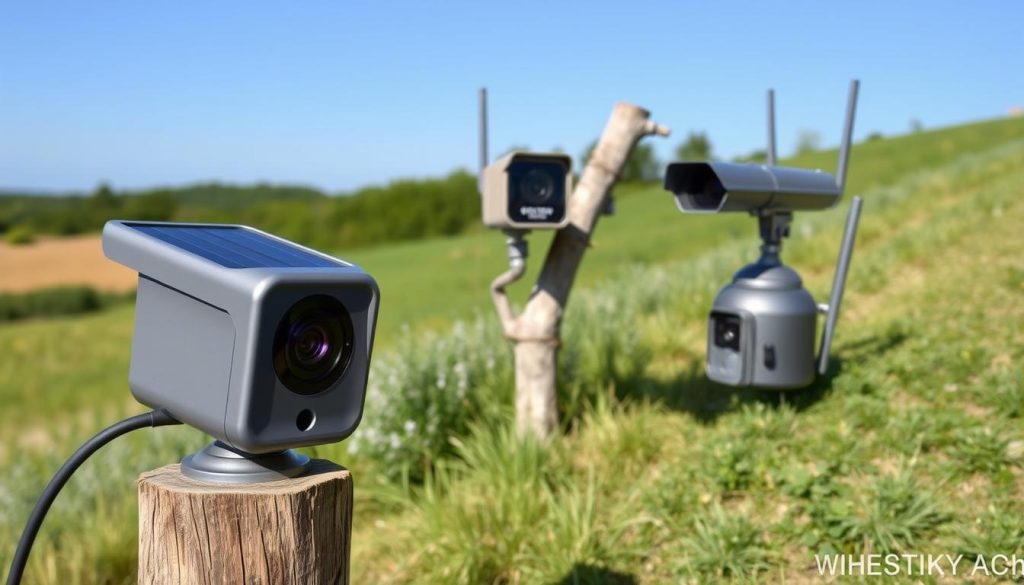
Connectivity defines where these cameras work effectively. This is a major differentiator for installation locations.
4G LTE models operate anywhere with cellular coverage. They are perfect for remote sites without any internet infrastructure.
Wi-Fi dependent systems require proximity to a strong wireless signal. Their range is limited by your router’s reach and building materials.
The right connection ensures reliable data transmission for alerts and live viewing. It is a cornerstone of any functional independent monitoring setup.
Value Assessment: Balancing Features, Durability, and Price Point
True value is found where price meets practical longevity and capability. Initial cost is just one part of the ownership equation.
Reolink and Eufy deliver excellent value in the $100 to $500 range. They balance user-friendly features with reliable performance for homes.
Professional brands like Hikvision and Dahua command higher prices. They justify this with superior build quality and enterprise-level analytics.
Long-term cost includes battery lifespan and maintenance. Lithium-ion batteries last 5-9 years, while lead-acid may need replacement sooner.
Solar panel durability also affects total cost of ownership. High-quality panels withstand years of tropical sun and rain.
User experience differs greatly between consumer and professional systems. Reolink and Eufy prioritize simple, intuitive mobile apps.
Hikvision and Dahua offer powerful software with advanced configuration. This suits commercial operators who need detailed management tools.
Weatherproof design is non-negotiable in Singapore’s climate. An IP65 rating or higher guarantees protection against heavy rain and dust.
Corrosion-resistant materials prevent premature failure in humid, salty air. This durability directly translates to better long-term value.
The table below summarizes key factors for a quick visual comparison:
| Model / Factor | Price Range (SGD) | Video Resolution | Primary Connectivity | Battery Type & Goal |
|---|---|---|---|---|
| Reolink Argus 3 Pro | $200 – $350 | 2K Super HD | Wi-Fi / Optional 4G | Lithium; 7-day charge |
| Arlo Pro 4 | $300 – $500 | 2K HDR | Wi-Fi | Rechargeable; Solar compatible |
| EufyCam 3 | $100 – $300 | 1080p HD | Wi-Fi | Integrated Solar; Long-life |
| Hikvision 4G Model | $500+ | 4MP to 4K | 4G LTE | Solar + Large Battery; Continuous |
| Dahua Solar Model | $450+ | 4K UHD | 4G LTE / Wi-Fi | Deep-Cycle; Professional duty |
This comparison highlights the trade-offs between cost, performance, and intended use. The best system aligns its strengths with your property’s specific security demands.
The Installation Process for Your Off-Grid CCTV System
The effectiveness of your independent surveillance setup depends heavily on correct placement and setup procedures. A meticulous approach ensures reliable operation and maximum coverage for your property. This section guides you through optimal positioning and assembly techniques.
Proper installation transforms components into a cohesive safety solution. Each step contributes to long-term performance in Singapore’s climate. Follow these guidelines to create a robust security foundation.
Choosing the Optimal Location for Sunlight and Security Coverage
Solar panel positioning directly impacts your system’s energy independence. In Singapore, south-facing orientation captures maximum sunlight throughout the day. Avoid shadows from buildings, trees, or other obstructions.
Clear lines of sight ensure consistent power supply for continuous monitoring. Panels should receive direct exposure for at least six hours daily. This harvests sufficient energy for your surveillance needs.
Camera placement requires strategic thinking about viewing angles. Elevated positions provide broader coverage of entry points and perimeter areas. Consider all potential blind spots around your property.
Focus on primary access routes and vulnerable zones. Each camera should complement others for comprehensive security coverage. This layered approach eliminates unprotected areas.
Step-by-Step Guide to Mounting and Connecting Components
Begin by gathering essential tools and hardware. You’ll need drills, screws, mounting brackets, and weatherproof sealant. Protective battery enclosures like NEMA boxes safeguard power sources.
Follow this sequence for reliable assembly:
- Mount the camera using appropriate brackets and hardware. Ensure a sturdy installation that withstands Singapore’s occasional strong winds.
- Position the solar panel for optimal sunlight exposure. Secure it firmly to prevent movement or displacement.
- Connect the panel to the charge controller using provided cables. Follow manufacturer diagrams for correct polarity.
- Install the battery in its protective enclosure. This safeguards your power source from environmental elements and tampering.
- Link all components according to system specifications. Double-check each connection before proceeding.
Weatherproofing is critical in Singapore’s tropical climate. Use silicone sealant around all cable entry points for moisture protection. This prevents corrosion and electrical failures during heavy rain.
Consider your installation options based on complexity. DIY approaches work well for simpler single-camera setups. Professional installation is recommended for complex or multi-camera security systems.
Temporary installations require different considerations. Construction sites and events need mobile, quick-setup solutions. Use portable mounting options that allow easy relocation.
Post-installation testing verifies everything works correctly. Check these key functions:
- Camera functionality and video quality
- Mobile app connectivity and remote access
- Motion detection alerts and notification systems
- Solar charging performance and battery status
This comprehensive testing ensures your independent security system meets all safety needs. It confirms reliable operation before relying on the setup for property protection.
Maintaining Your System for Peak Performance and Longevity
Consistent care ensures your surveillance equipment delivers maximum protection year after year. A well-maintained setup prevents unexpected failures during critical moments. This proactive approach safeguards your investment and maintains reliable security coverage.
Regular attention addresses Singapore’s challenging tropical environment. Humidity, rain, and dust can impact performance over time. Simple maintenance routines keep everything operating at peak efficiency.
Routine Cleaning and Physical Inspection Checks
Solar panels need regular cleaning to maintain optimal energy capture. Dust, pollen, and debris reduce their ability to convert sunlight effectively. This directly impacts your system’s power supply.
Wipe panels every few months using a soft, damp cloth. Avoid abrasive materials that could scratch the surface. Clean camera lenses after significant weather events for clear video footage.
Monthly physical inspections catch minor issues before they become major problems. Develop a simple checklist for consistent evaluation. This habit prevents unexpected system downtime.
Check all mounting hardware for corrosion or looseness. Singapore’s humid climate accelerates metal degradation. Tighten any bolts that have worked loose over time.
Verify weatherproof seals around cable entry points remain intact. Look for cracks in housing materials that could allow moisture inside. These small checks preserve your equipment’s durability.
Ensure solar panels remain unobstructed by new vegetation growth. Trim branches that cast shadows during peak sunlight hours. Maximum exposure maintains consistent energy production.
Monitor battery health as part of your regular inspection routine. Most lithium-ion batteries provide 5-9 years of reliable service. Understanding this lifespan helps you plan for replacements.
Check battery terminals for corrosion and ensure connections remain secure. Note any swelling or leakage that indicates replacement time. Proper care extends their operational life significantly.
Managing Firmware Updates and Software Settings
Regular firmware updates enhance your security camera features and protection. Manufacturers release improvements that fix bugs and add new capabilities. These updates often address security vulnerabilities too.
Most manufacturer apps simplify this update process significantly. Enable automatic updates when available for convenience. Manual checks ensure you don’t miss important enhancements.
Review and optimize software settings periodically for efficiency. Adjust motion detection sensitivity based on your property’s needs. This reduces false alerts from non-threatening movement.
Configure alert schedules to match your daily routines. Set different sensitivity levels for day versus night operation. These adjustments conserve both energy and data usage.
Optimize video recording modes based on your surveillance requirements. Continuous recording offers complete coverage but uses more storage. Event-based recording conserves resources while capturing important activity.
Implement best practices for data management within your systems. Regularly back up important footage from local SD cards or cloud storage. Understand your storage capacity limits to avoid losing critical evidence.
Schedule seasonal checks around Singapore’s monsoon periods. Inspect equipment before heavy rains arrive each year. Address any weather-related wear immediately after storms pass.
These maintenance practices create a reliable security solution for your property. They ensure continuous operation through changing environmental conditions. Your investment remains protected through consistent, simple care.
Making an Informed Decision for Your Property’s Future Security
The decision to implement independent surveillance represents both a practical safety measure and a commitment to sustainability. Your choice should balance Singapore’s green goals with reliable protection and long-term savings.
Select features that withstand local climate and match your property’s specific needs. Weigh different brands and models against your budget and monitoring requirements.
Proper installation and maintenance are crucial for realizing full benefits. This technology offers a future-proof solution for enhanced safety and peace of mind.
Consult local security experts for complex commercial or remote site installations. Research specific models or contact professionals for tailored advice.
Adopting solar-powered security contributes to both personal protection and Singapore’s environmental sustainability. Take the next step toward smarter property safety today.