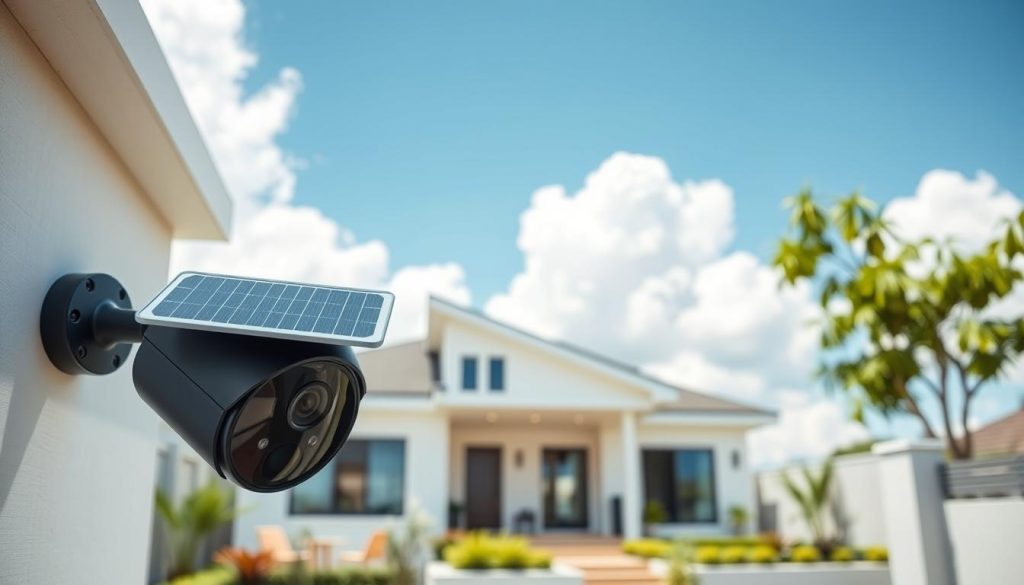
Singapore’s tropical climate offers a perfect setting for innovative home technology. With over 2,500 hours of sunshine each year, harnessing the sun’s energy makes practical sense for many homeowners. This has led to growing interest in surveillance systems that operate independently from the electrical grid.
These innovative devices provide reliable monitoring while cutting energy expenses significantly. Compared to traditional wired systems, they can reduce electricity costs by up to 75%. This guide will help you navigate the available options in the local market.
We’ll explore top models like the Reolink Argus 3 Pro and Wyze Battery Cam Pro. Prices typically range from SGD 200 to SGD 600. You’ll learn what features matter most for your specific needs.
Choosing the right equipment involves understanding battery performance, video quality, and weather resistance. Our comprehensive review covers everything from basic technology to installation tips. We focus on solutions that work well in Singapore’s unique environment.
Beyond cost savings, these systems offer environmental advantages. They help reduce your carbon footprint while providing peace of mind. Whether you need to watch over your home or business, we have the information you need.
Key Takeaways
- Singapore’s abundant sunshine makes it ideal for solar-powered surveillance technology
- These systems can reduce energy costs by up to 75% compared to wired alternatives
- Popular models available locally range from SGD 200 to SGD 600
- Key considerations include battery life, video quality, and weather resistance
- Proper installation and maintenance ensure long-term reliable performance
- Choosing the right system depends on your specific monitoring needs and budget
- Solar options provide environmental benefits alongside reliable home protection
Understanding Solar Powered Security Cameras
Modern photovoltaic systems transform daylight into electrical power for continuous property monitoring. This technology eliminates the need for complex wiring or nearby outlets. It represents a significant advancement in autonomous surveillance solutions available today.
How Solar Technology Powers Modern Surveillance
Photovoltaic cells within the panels capture photons from sunlight. These cells then generate a flow of electrical current. This process happens silently and efficiently throughout daylight hours.
Today’s panels achieve approximately 21% efficiency ratings. This means they perform reliably even during overcast conditions. Singapore’s occasional cloudy weather poses little challenge to these advanced systems.
Excess energy produced during sunny periods charges integrated batteries. These batteries serve as the primary power source after dark. They also provide backup during extended periods of limited sunshine.
Many models offer impressive autonomy, operating up to seven consecutive days without direct sunlight. This reliability stems from intelligent energy management systems. They prioritize essential functions to extend operational duration.
A full charge typically requires just five to eight hours of good sun exposure. Morning sunlight often provides sufficient energy for a full day’s operation. This quick charging capability ensures nearly uninterrupted monitoring.
The integration of photovoltaic technology with modern surveillance creates a sustainable, efficient protection solution for Singaporean properties.
Compared to traditional wired setups, these systems remove electrical dependency. There are no cords to trip over or outlets to locate. Installation flexibility increases dramatically with this wireless approach.
Some people question the reliability of sun-dependent equipment. Technological advancements have addressed historical concerns about consistency. Today’s systems deliver performance comparable to grid-connected alternatives.
Combining renewable energy with advanced monitoring features creates a smart solution. It reduces environmental impact while providing robust property protection. This synergy makes photovoltaic surveillance an excellent choice for local homes and businesses.
Top Benefits of Choosing a Solar Security Camera
Property owners gain several distinct benefits when they choose renewable energy-based protection systems. These advantages extend well beyond basic monitoring functions.
They create value through financial savings, environmental responsibility, and installation flexibility. Each aspect contributes to a smarter approach to home safety.
Significant Reduction in Electricity Costs
One major advantage is the direct impact on utility expenses. Systems that harness daylight can cut energy bills by up to 30%.
This compares favorably to traditional wired surveillance. The savings accumulate significantly over the equipment’s lifespan.
These units operate on minimal energy—about 2 watts daily. Intelligent power management extends operational duration dramatically.
Some models function for 300 days on a single full charge. This efficiency translates to consistent performance with negligible running costs.
An Eco-Friendly Security Solution
Choosing this technology supports environmental sustainability. It reduces greenhouse gas emissions by approximately 60%.
This reduction comes from eliminating grid electricity dependence. Each unit contributes to a smaller carbon footprint for the property.
Environmentally-conscious buyers appreciate this feature. It can enhance property appeal in Singapore’s real estate market.
The system represents a practical step toward greener living. It aligns with global sustainability goals without compromising protection quality.
Integrating renewable energy with monitoring creates a responsible protection strategy that benefits both homeowners and the environment.
Wireless Freedom and Easy Installation
The absence of wires transforms setup possibilities. Placement depends only on sunlight access, not outlet proximity.
Complete installation typically takes just 20 minutes. This contrasts sharply with hours needed for complex wired alternatives.
You can mount equipment anywhere with adequate daylight exposure. There are no cords to trip over or conceal.
This wireless nature also improves reliability during power outages. The system continues operating when traditional options fail.
Adding more units to your network is straightforward. There’s no need for electrical permits or complicated rewiring.
For comprehensive guidance on selecting the right equipment, explore our detailed review of the best solar-powered wireless security cameras available locally.
Why Singapore is Perfect for Solar Powered Security
Singapore’s equatorial position creates exceptional conditions for harnessing solar energy in surveillance applications. The nation’s consistent climate provides a natural advantage for equipment that operates independently from the electrical grid. This geographical benefit translates directly to more reliable and cost-effective monitoring solutions for local properties.
Local homeowners enjoy superior performance from photovoltaic systems compared to residents in temperate regions. The island’s location near the equator ensures minimal seasonal variation in daylight availability. This consistency maximizes energy generation throughout the entire year.
Harnessing Over 2,500 Annual Sunshine Hours
Singapore receives more than 2,500 hours of bright sunlight each year. This abundant resource creates ideal parameters for renewable-powered surveillance technology. Systems can generate sufficient power even during shorter daylight periods.
The equatorial positioning guarantees consistent solar exposure across all months. Unlike countries with distinct seasons, local conditions remain favorable year-round. This stability ensures continuous operation without winter performance drops.
Economic advantages become apparent when examining long-term costs. Abundant sunlight translates to faster return on investment for photovoltaic installations. Homeowners recoup their initial expenditure more quickly than in cloudier climates.
Singapore’s unique geographical location provides an almost perfect environment for solar-dependent surveillance systems, offering reliability that temperate regions cannot match.
This technology aligns seamlessly with national sustainability initiatives. Green building standards for residential and commercial properties increasingly favor renewable solutions. Choosing photovoltaic monitoring supports both personal safety and environmental responsibility.
Reliable Performance Even on Cloudy Days
Modern photovoltaic panels maintain approximately 21% efficiency during Singapore’s occasional cloudy periods. Advanced technology captures diffuse light that penetrates cloud cover. This ensures continuous energy production despite less-than-ideal weather.
Lithium-ion batteries in these systems provide impressive backup capacity. A single charge can support up to three months of operation in local conditions. This extended duration covers extended rainy periods without performance compromise.
Equipment is specifically designed for tropical weather resilience. Robust construction protects internal components during monsoon seasons. Manufacturers test products to withstand high humidity and heavy rainfall common in the region.
When comparing performance to temperate climates, Singapore’s advantage becomes clear. Tropical regions generate 30-40% more annual energy from identical photovoltaic setups. This superior output guarantees more consistent surveillance coverage.
Battery performance excels in the local warm environment. Lithium-ion cells operate optimally within Singapore’s temperature range. This results in longer functional life and more reliable power storage.
Maintenance requirements remain minimal due to the consistent climate. Solar panels need less frequent cleaning than in dustier regions. The system’s durability reduces long-term servicing costs for property owners.
Key Features to Evaluate Before You Buy
Before making a purchase, smart buyers compare the essential functions that determine a system’s effectiveness in real-world conditions. Not all models are created equal. Focusing on a few critical specs will guide you to the best choice for your home.
These components work together to provide reliable monitoring. We’ll break down what each one means for your daily use.
Video Resolution and Image Quality
Clarity is paramount for useful footage. Higher resolution means you can see details like faces or license plates clearly.
Common standards include:
- 1080p Full HD: A good baseline for general monitoring and identification.
- 2K or 4K Ultra HD: Provides exceptional detail, crucial for covering large areas or identifying specifics at a distance.
Look for features like wide dynamic range (WDR). This helps balance light in scenes with both bright and dark areas. It ensures the image isn’t washed out by Singapore’s strong midday sun.
Battery Life and Solar Charging Efficiency
This is the heart of an off-grid system. Performance depends on both the battery’s capacity and the panel’s ability to recharge it.
Battery metrics to check include standby time and recording duration on a single charge. Some units can last for months with minimal activity. Others may need more frequent sun exposure.
The attached solar panel specifications matter greatly. A higher wattage and efficiency rating harvests more energy. This keeps the battery topped up even on less sunny days, ensuring the unit never runs out of power.
Prioritize models with high-efficiency panels and large-capacity batteries for the most reliable, maintenance-free operation in our local climate.
Weather Resistance and Durability (IP Rating)
Singapore’s tropical environment demands robust protection. The Ingress Protection (IP) rating tells you how well the housing seals out dust and water.
For reliable performance here, an IP66 rating or higher is recommended. This means the device is totally dust-tight and can withstand powerful jets of water. It will survive heavy monsoon rains and high humidity without failure.
Night Vision Capabilities
Effective surveillance doesn’t stop at sunset. Different technologies offer various advantages after dark.
- Infrared (IR) Night Vision: Uses invisible IR LEDs to illuminate scenes in black and white. Effective range varies, with some models seeing up to 30 meters or more.
- Color Night Vision: Uses advanced sensors or supplemental lighting to capture footage in color at night. This provides more contextual details than standard IR.
Consider the range and clarity of the night mode. It should cover the entire area you need to monitor in complete darkness.
Motion Detection and Alert Systems
A smart detection system minimizes false alarms from passing animals or shifting shadows. This saves battery life and ensures you only get notified about important events.
Advanced features include:
- Human/Vehicle Detection: AI can distinguish between people, cars, and other motion, sending specific alerts.
- Customizable Zones & Sensitivity: Draw areas in the app where you want detection active. Adjust sensitivity to ignore minor movements.
- Real-Time Notifications: Get instant alerts on your phone with snapshot previews when motion is detected.
Beyond these core features, also consider storage options like local SD card or cloud subscriptions for saving footage. Connectivity is another key point—reliable Wi-Fi is essential for most, while 4G LTE models offer a solution for areas without a strong network signal.
Solar Camera Connectivity: Wi-Fi vs. 4G LTE
Wireless monitoring devices offer two primary connectivity paths: local Wi-Fi networks or cellular data services. Each option serves different property types and user needs. Understanding their differences helps you select the right equipment.
Wi-Fi models connect to your home or office internet router. They’re ideal for locations with strong, stable wireless signals. Setup involves linking the device to your network through a mobile app.
Cellular alternatives use 4G LTE networks like those from mobile providers. They operate independently of local internet infrastructure. This makes them perfect for areas without reliable broadband access.
When to Choose a 4G Solar Powered Camera
Certain situations clearly favor cellular-connected equipment. Remote properties often lack consistent Wi-Fi coverage. Construction sites typically don’t have established internet connections.
Vacation homes benefit from 4G models during extended absences. You maintain surveillance without depending on neighbors’ networks. Farms and large estates also gain from wider cellular coverage areas.
These units shine during local network outages. When storms disrupt power and internet, cellular service often remains active. Your monitoring continues uninterrupted through mobile data networks.
Cellular connectivity transforms surveillance possibilities for properties beyond reliable Wi-Fi range, offering consistent performance where traditional options fail.
Setup differs significantly from Wi-Fi models. You activate a SIM card within the device instead of configuring wireless settings. Many manufacturers offer prepaid data plans or support local carrier SIMs.
Popular 4G options available in Singapore include the Reolink Go and ieGeek’s ZY-G1. The Dahua Imou Cruiser 4G and Hikvision’s sun-powered models also offer reliable cellular performance. Each provides distinct features for different monitoring needs.
The Advantage of Cellular Connectivity in Remote Areas
Cellular networks deliver consistent signal strength across broader regions. Mobile providers maintain extensive coverage throughout Singapore and neighboring areas. This ensures reliable transmission from almost any location.
Data transmission security often exceeds public Wi-Fi standards. 4G networks employ strong encryption protocols for video feeds. This reduces vulnerability compared to potentially compromised local wireless networks.
Monthly costs for cellular plans vary based on data requirements. Basic plans start around SGD 7 monthly for limited footage. High-definition continuous streaming can exceed SGD 100 monthly.
Video quality settings directly impact data consumption. Lower resolution extends data allowance duration. Adjusting these settings helps manage monthly expenses effectively.
Hybrid models offer both Wi-Fi and 4G capabilities. They automatically switch between connection types based on availability. This flexibility suits properties with intermittent internet access.
Battery performance remains impressive with cellular models. Many operate up to seven consecutive days without direct sunlight. Advanced night vision extends up to 150 meters in complete darkness.
Installation simplicity represents another cellular advantage. There’s no need to extend Wi-Fi range or troubleshoot router compatibility. Placement depends solely on sunlight access and cellular signal strength.
Smart Home Integration and Remote Access
Beyond standalone protection, contemporary security devices offer comprehensive control through smartphone applications and voice commands. This connectivity transforms basic monitoring into an intelligent, responsive system. You gain real-time awareness and management capabilities from anywhere.
Compatibility with Alexa, Google Home, and Mobile Apps
Modern units seamlessly connect with popular smart platforms. Amazon Alexa and Google Home integration allows voice-controlled viewing. You can ask your assistant to show specific feeds on compatible displays.
Apple HomeKit support provides another ecosystem option for iOS users. This creates unified control alongside other smart devices. Setup typically involves scanning a code within the manufacturer’s application.
Mobile applications deliver extensive functionality directly to your phone. Live viewing lets you check any feed instantly. Playback controls enable reviewing recorded events with simple timeline navigation.
Notification management allows customizing alert types and schedules. You can mute alerts during certain hours or for specific detection zones. System configuration changes happen through intuitive app interfaces.
Automation possibilities expand your system’s intelligence. Motion detection can trigger smart lights or audible alarms. This creates deterrent effects and enhances overall safety.
Multi-user access features permit family sharing of monitoring privileges. Each person receives appropriate permission levels. Security personnel can also access feeds during designated periods.
The Ring Stick Up Cam Solar demonstrates this integration excellence, earning 4.6 stars from over 71,000 reviews for its seamless smart home capabilities.
Privacy considerations remain paramount in connected systems. Reputable manufacturers implement strong data encryption protocols. User authentication ensures only authorized individuals access your footage.
Advanced features elevate basic monitoring through integration. AI-powered person detection distinguishes humans from animals or vehicles. Package recognition alerts you when deliveries arrive at your doorstep.
Customized activity zones focus attention on critical areas. You draw these zones directly within the mobile application. This reduces false alerts from unimportant motion sources.
The Importance of Cloud and Local Storage Options
Storage solutions determine how you preserve and access recorded footage. Each approach offers distinct advantages for different user needs. Understanding both helps you select the right configuration.
Cloud storage provides convenient remote access to your video history. Subscription costs vary by provider and retention period requirements. Basic plans typically start around SGD 5 monthly.
Retention periods range from 7 to 30 days for most standard packages. Extended options are available for business or legal needs. Accessibility features include timeline scrubbing and event filtering.
Reviewing security footage remotely happens through dedicated apps or web portals. You can download clips for sharing or evidence purposes. This eliminates dependence on physical storage devices.
Local storage alternatives offer cost-effective long-term solutions. SD card capacities now reach 512GB in compatible devices. This stores weeks or months of continuous recording.
Recording modes include continuous, scheduled, or motion-activated options. Motion-activated recording conserves storage space significantly. It captures only relevant events rather than empty footage.
Offline storage provides enhanced data security and privacy control. Your footage remains physically within your possession. There are no monthly fees beyond the initial hardware purchase.
Hybrid systems combine both storage methods for maximum flexibility. Critical events upload to the cloud while full archives remain locally. This balances accessibility with cost management effectively.
Choosing between storage types depends on your specific monitoring needs. Frequent travelers benefit from cloud accessibility during absences. Budget-conscious users appreciate local storage’s one-time expense.
Finding the Best Solar Powered Security Cameras for Sale in Singapore
Navigating Singapore’s market for sun-powered surveillance equipment requires understanding where to shop and what to expect in terms of pricing. Local buyers can choose from various retailers, each offering different advantages for their specific needs.
Physical electronics stores in Sim Lim Square and major shopping centers provide hands-on experience. Online platforms like Lazada, Shopee, and Amazon.sg offer extensive selections with competitive pricing. Specialized security equipment suppliers focus on professional-grade solutions for businesses.
Each channel serves different customer segments with distinct value propositions. Understanding these options helps you make informed purchasing decisions.
Expected Price Ranges: From Budget to Premium
The local market offers three main price categories for photovoltaic monitoring devices. Each tier corresponds to specific capabilities and intended use cases.
Budget options typically cost under SGD 200. These basic models provide essential functions like motion detection and standard-definition video. The SEHMUA model, priced around SGD 80, represents this category with its 4.3-star rating from thousands of users.
Such devices work well for small areas like apartment doorways. They offer reliable performance without advanced features.
Mid-range systems fall between SGD 200 and SGD 400. This popular category includes most consumer-grade equipment with balanced features. You’ll find better video resolution, improved battery performance, and enhanced weather resistance here.
These devices suit typical residential properties needing comprehensive coverage. They balance cost with functionality effectively.
Premium solutions start at SGD 400 and can exceed SGD 1,000 for multi-camera setups. The eufyCam Pro 4-Cam Kit at approximately SGD 800 exemplifies this tier with 4K capabilities. Professional-grade equipment for commercial applications also resides in this range.
High-end models include advanced analytics, extended warranty coverage, and superior construction materials. They’re designed for demanding environments and critical monitoring needs.
Price alone doesn’t determine value—consider how features align with your specific surveillance requirements and the long-term savings from reduced energy consumption.
Seasonal promotions significantly affect local pricing throughout the year. Major IT shows like Sitex and Comex offer bundle deals and discounts. Online sales events during Singles’ Day, Black Friday, and year-end clearance provide additional savings opportunities.
Retailers often package multiple units with complementary accessories. These bundles can reduce per-unit costs by 15-20% compared to individual purchases.
Purchasing channels present different considerations for warranty and support. Authorized dealers provide local warranty registration and direct technical assistance. They typically stock current models with manufacturer-approved configurations.
Online marketplaces offer price advantages but may involve international sellers. Verify warranty terms and return policies before purchasing from these platforms. Some brands require local dealer installation for full warranty coverage.
Hidden costs extend beyond the initial equipment price. Professional installation services add SGD 100-300 depending on complexity. Cloud storage subscriptions for video retention represent recurring expenses starting around SGD 5 monthly.
Additional accessories like mounting brackets, extended cables, or supplementary batteries may be necessary. Factor these into your total budget planning.
Evaluating value requires considering operational savings alongside upfront costs. Photovoltaic systems eliminate monthly electricity expenses for surveillance. This creates long-term financial benefits that offset higher initial investments.
Calculate potential savings over three to five years when comparing options. Higher-quality equipment often proves more economical through extended lifespan and reduced maintenance needs.
Budget allocation should match your property’s specific monitoring requirements. Small apartments may find SGD 200-300 systems perfectly adequate. Larger landed properties might benefit from SGD 500-800 investments for comprehensive coverage.
Business premises often justify premium expenditures for advanced features and reliability. For comprehensive wireless solutions, explore our guide to solar-powered wireless CCTV cameras in Singapore.
Prioritize features that address your unique security concerns. Allocate more budget to critical areas like entry points and valuable asset locations. A strategic approach ensures optimal protection within your financial parameters.
Top Solar Security Camera Brands and Models Available Locally
Several reputable manufacturers now offer photovoltaic monitoring devices specifically designed for Singapore’s market. Each brand brings unique strengths to address different homeowner needs. Understanding these options helps you make an informed choice.
Local availability varies across electronics retailers and online platforms. Some companies focus on premium features while others prioritize affordability. We’ll examine the leading contenders and their standout models.
Lorex Solar Cameras: High-Definition Surveillance
Lorex has built a reputation for delivering crisp, detailed video quality. Their equipment often features 24/7 color recording capabilities. This provides superior footage compared to standard black-and-white alternatives.
The brand’s user rating of 8.8 reflects consistent satisfaction among local buyers. Their product lineup includes models with advanced detection algorithms. These systems can distinguish between people, vehicles, and general motion.
Key advantages include robust weather sealing and reliable performance. Lorex devices withstand Singapore’s high humidity and frequent rainfall. Their local support network ensures prompt assistance when needed.
Installation remains straightforward with clear mounting instructions. The integrated photovoltaic panels efficiently harvest daylight. This keeps batteries charged for extended operation.
Ring Spotlight Cam Solar: Seamless Smart Home Integration
Ring excels at creating cohesive home automation ecosystems. Their Spotlight model connects effortlessly with Amazon Alexa and other platforms. This allows voice commands and automated routines.
The device receives excellent reviews for its intuitive mobile application. Users appreciate real-time alerts with snapshot previews. Two-way audio enables communication with visitors at your door.
Built-in LED spotlights activate upon detecting movement. This provides both illumination and a deterrent effect. The bright lights can be customized through scheduling.
Ring’s subscription service offers cloud storage for recorded events. Local backup options are also available for cost-conscious users. This flexibility caters to different preference.
Choosing between brands often comes down to prioritizing either seamless smart home connectivity or standalone reliability with superior video clarity.
Eufy Security Cameras: Feature-Rich and Affordable
Eufy strikes an appealing balance between advanced capabilities and competitive pricing. Their devices offer high-definition recording without monthly fees. This makes them popular among budget-conscious Singaporean buyers.
The brand incorporates sophisticated motion detection technology. AI-powered analysis reduces false alarms from pets or foliage movement. You receive alerts only for relevant activity.
Local storage options include expandable microSD cards. Some models support up to 512GB capacity. This provides months of event recording without cloud dependency.
Battery performance impresses many users in real-world conditions. Efficient energy management extends operational duration. The equipment functions reliably during extended cloudy periods.
Reolink and Wyze: Popular Wireless Options
Reolink’s Argus 3 Pro stands out for outdoor durability. Its sturdy construction handles tropical weather conditions effectively. The device maintains consistent connectivity in various locations.
Users report strong performance in both day and night monitoring. Infrared illumination provides clear footage after dark. The wide viewing angle covers substantial property areas.
Wyze takes a different approach with frequent software updates. Their Battery Cam Pro receives regular feature enhancements. This extends the product’s capabilities over time.
Affordable pricing makes Wyze accessible to first-time buyers. The company focuses on essential functions without unnecessary complexity. Setup requires minimal technical knowledge.
Additional manufacturers compete in Singapore’s surveillance market. Hikvision and Dahua offer professional-grade solutions for commercial applications. Their equipment often includes advanced analytics and integration capabilities.
Specialized photovoltaic manufacturers like LS VISION focus exclusively on sun-powered systems. These companies optimize every component for autonomous operation. Their products typically excel in energy efficiency.
Model-specific advantages vary across the available selection. Some units prioritize extended battery life for remote locations. Others emphasize video quality for identification purposes.
Weather resistance remains crucial for reliable tropical performance. Look for IP66 or higher ratings on any equipment you consider. This ensures protection against heavy rain and dust.
Brand reliability depends on warranty terms and local support. Most reputable companies offer at least one year of coverage. Authorized Singapore dealers provide faster service than international channels.
Long-term performance data from local users offers valuable insights. Community forums and review platforms reveal real-world experiences. This information helps predict how equipment will perform in your specific environment.
In-Depth Reviews: Balancing Performance and Value
Our comprehensive analysis compares leading options to identify which units offer superior value for specific homeowner needs. Beyond basic specifications, we examine how devices perform in Singapore’s unique tropical setting. This review focuses on three critical areas where models differentiate themselves.
Each category represents a distinct priority for property owners. Some prioritize crystal-clear footage, while others need extended operation without maintenance. Ease of setup matters greatly for those without technical expertise.
We’ve tested multiple popular devices available locally. Our findings help you match equipment capabilities with your surveillance requirements. The right choice depends on your property layout and monitoring goals.
Best for High-Resolution Video Quality
Clarity remains paramount for effective property monitoring. Higher resolution enables identification of details like faces or license plates. Advanced image processing enhances footage in various lighting conditions.
The Eufy SoloCam S230 delivers impressive 2K resolution at approximately SGD 130. This device stores footage locally without monthly fees. Its wide dynamic range handles Singapore’s bright midday sun effectively.
For more budget-conscious buyers, the Blink Outdoor 3 provides reliable 1080p clarity around SGD 70. It includes two-way audio for communicating with visitors. The system integrates smoothly with Amazon Alexa for voice control.
Recent innovations make color night vision more accessible. Traditional infrared illumination shows scenes in black and white. Newer sensors capture color details after dark using advanced technology.
Wide viewing angles cover more area with fewer devices. Some models offer 140-degree fields of view. This reduces blind spots around your property’s perimeter.
Google’s Nest Cam includes free AI object recognition. This feature distinguishes between people, packages, and animals. It reduces false alerts from irrelevant motion sources.
For 2024, models combining color night vision with wide angles represent top choices. They provide comprehensive monitoring from dusk until dawn. This technology ensures consistent footage quality throughout all hours.
Best for Long Battery Life and Off-Grid Use
Autonomous operation defines truly wireless monitoring solutions. Extended battery performance minimizes maintenance requirements. Efficient energy harvesting keeps devices functioning reliably.
Standby times vary significantly between different models. Some units operate for months on a single full charge. Others require more frequent exposure to sunlight for consistent performance.
Recording duration depends on activity levels in monitored areas. Motion-activated systems conserve energy compared to continuous recording. Smart detection algorithms further optimize power consumption.
Photovoltaic panel efficiency determines recharging speed. Higher wattage panels harvest more energy during daylight hours. This keeps integrated batteries adequately charged even during cloudy periods.
Devices with large-capacity batteries and high-efficiency panels offer the most reliable off-grid performance, requiring minimal intervention from homeowners.
Operation without direct sunlight tests true energy independence. Advanced units function for weeks using stored power alone. This capability proves valuable during Singapore’s extended rainy seasons.
Energy management systems prioritize essential functions during low-power situations. They ensure critical monitoring continues when reserves diminish. This intelligent approach extends operational duration significantly.
Battery technology continues improving with each generation. Lithium-ion cells now offer greater capacity in smaller packages. Their performance remains stable in tropical temperature ranges.
Best for Easy DIY Installation
Simplified setup appeals to homeowners without technical expertise. Straightforward mounting processes reduce installation time dramatically. Clear instructions guide users through each step.
Many modern devices require just twenty minutes for complete setup. Tool-free mounting brackets attach to various surfaces. Adjustable angles help achieve optimal viewing positions.
Configuration happens through intuitive mobile applications. Step-by-step guides connect devices to home networks. Visual indicators confirm successful setup completion.
User interface design focuses on simplicity for non-technical users. Clear menus organize settings logically. Help sections address common questions during initial configuration.
Wire-free designs eliminate complex cable management. There’s no need to drill through walls or conceal wires. Placement depends only on sunlight access and viewing angles.
Some manufacturers include augmented reality tools in their apps. These show exactly how the device will view your space before mounting. This virtual preview prevents placement mistakes.
Modular systems allow gradual expansion over time. Adding additional units follows the same simple process. There’s no need for professional assistance as your needs grow.
Value propositions differ across price segments. Budget models under SGD 200 provide basic functions for simple applications. Mid-range options between SGD 200-400 offer balanced features for most homes.
Premium systems above SGD 400 include advanced analytics and superior construction. Their long-term reliability often justifies higher initial investment. Consider total cost of ownership rather than just purchase price.
Specialized devices excel in particular applications. Perimeter monitoring benefits from wide-angle views and extended battery life. Entryway surveillance prioritizes facial recognition and instant alerts.
Large property coverage requires multiple units with seamless integration. Mesh network capabilities ensure reliable communication between devices. Centralized management simplifies monitoring extensive areas.
Technological innovations appear in recent model releases. AI-powered detection reduces false notifications dramatically. Enhanced photovoltaic panels harvest more energy from limited sunlight.
Improved energy management systems extend operational duration. They intelligently balance recording quality with power conservation. This optimization maximizes performance between charging cycles.
Singapore-specific considerations include heat tolerance and humidity resistance. Equipment must withstand temperatures exceeding 35°C regularly. Sealed housings prevent moisture damage during heavy rainfall.
Performance during seasonal variations matters in tropical climates. Northeast monsoon periods bring extended cloud cover. Reliable devices maintain operation throughout these weather patterns.
Comparative ratings help identify optimal matches for specific priorities. We evaluate devices across multiple criteria including:
- Video clarity in various lighting conditions
- Energy efficiency and battery longevity
- Weather resistance for tropical environments
- Detection accuracy and alert reliability
- Setup simplicity for DIY installation
- Long-term durability and maintenance needs
The ideal choice depends on your property’s unique characteristics and monitoring requirements. Balance performance features with practical considerations for daily use. This approach ensures you select equipment delivering genuine value for your investment.
What Singaporean Customers Are Saying: User Ratings and Reviews
Beyond technical specifications, the experiences of local users reveal the true strengths and weaknesses of photovoltaic surveillance equipment. Aggregating feedback from platforms like Lazada, Shopee, and hardwarezone.com.sg provides a clear picture of real-world performance.
High ratings are common. The Ring Stick Up Cam Solar boasts an impressive 4.6 stars from over 71,000 global reviews. Budget options also fare well, with the SEHMUA model holding a 4.3-star rating from 5,200 users.
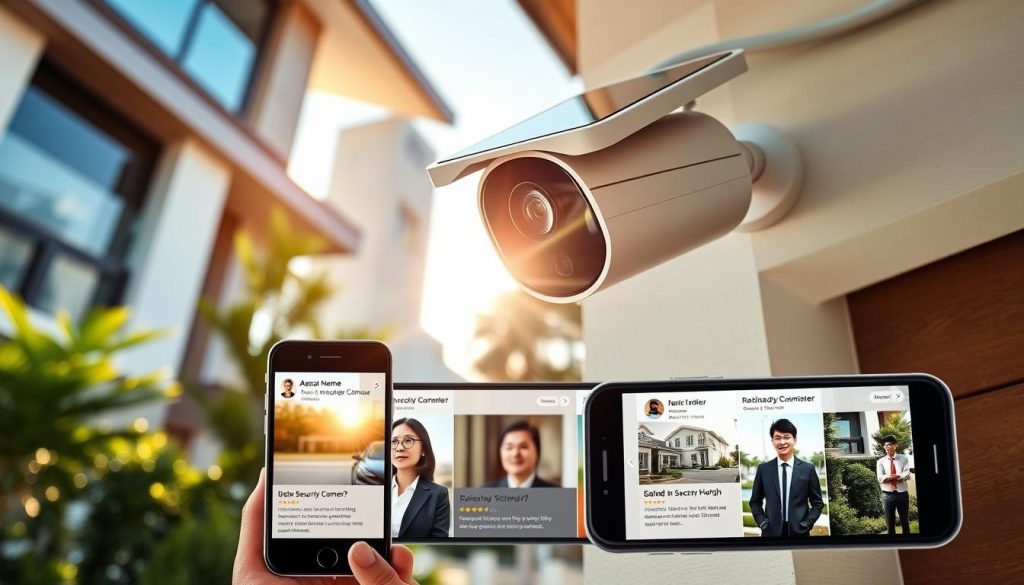
Singaporean commentary, however, adds crucial local context. It highlights how these devices handle our specific environmental challenges.
Feedback on Reliability in Local Weather
Durability during the monsoon season is a top concern. Many homeowners report pleasant surprises. Their units continue functioning through heavy downpours without issue.
Common praise points include:
- Consistent operation in high humidity: Sealed housings effectively prevent internal moisture damage.
- Resilience to intense heat: Electronics and batteries maintain stability even in direct afternoon sun.
- Clear footage despite rain: Water-resistant lenses and casings keep the view unobstructed.
Some complaints do surface. A few users note occasional fogging inside the lens during rapid temperature changes. Others mention that mounting brackets for certain brands may rust over time if not properly treated.
Customer service experiences vary by brand. Local distributors for major names typically offer faster support. International purchases can lead to longer wait times for replacements.
Insights on Real-World Battery Performance
Advertised battery life often differs from actual use. In Singapore’s climate, performance frequently exceeds manufacturer claims. Efficient panels harvest ample energy from our abundant sunlight.
User data shows a typical unit can run for several weeks on a full charge with standard motion-activated recording. During the December monsoon, some systems operated for 10-12 days without direct sun.
“The key is panel placement. Even on cloudy days, diffuse light provides enough charge to keep the system going. We rarely see a well-positioned unit fully deplete.”
Installation experiences are mostly positive. Most DIY setups take under 30 minutes. The biggest challenge users report is finding the perfect spot that balances optimal sun exposure with the desired viewing angle.
Long-term reliability reports are encouraging. Devices used for over two years show minimal performance degradation. The main maintenance required is occasional cleaning of the photovoltaic panel surface to remove dust or pollen.
Satisfaction varies by price. Budget models under SGD 200 receive praise for value but may lack advanced detection. Mid-range systems (SGD 200-400) deliver the best balance of features and durability for most homes.
Premium kits justify their cost through superior video analytics and integration. For users, the ultimate choice hinges on proven reliability in our tropical environment and hassle-free, long-term operation.
A Step-by-Step Guide to Installing Your Solar Camera
A successful DIY installation begins with careful planning and understanding of both sunlight patterns and surveillance needs. With the right approach, you can complete the setup in about twenty minutes. This process ensures your equipment operates at peak efficiency in Singapore’s environment.
Proper placement and mounting are essential for reliable performance. Follow this systematic guide to avoid common mistakes. You’ll create a robust protection system that requires minimal maintenance.
Choosing the Optimal Location for Sun Exposure
Start by assessing your property’s sunlight patterns throughout the day. Identify areas that receive direct light for at least five hours. Morning sun is particularly valuable for consistent energy harvesting.
Map potential shadows from trees, buildings, or other structures. These can significantly reduce photovoltaic panel efficiency. Aim for locations with clear southern exposure whenever possible.
Simultaneously, evaluate your surveillance coverage requirements. Determine which entry points and valuable areas need monitoring. Balance sunlight access with optimal viewing angles for the lens.
For most homes, mounting at 8 to 10 feet high provides the best perspective. This height deters tampering while capturing useful footage. Ensure the chosen spot has a solid mounting surface like concrete or brick.
“The perfect installation spot satisfies three criteria: maximum sun exposure, comprehensive area coverage, and structural integrity for mounting.”
Consider Singapore’s specific challenges during planning. Concrete walls may require special drill bits. Limited eaves or overhangs might affect panel positioning.
Create a simple sketch of your planned setup. Mark sunlight hours, viewing angles, and potential obstacles. This visual plan prevents positioning errors during physical installation.
Mounting the Camera and Solar Panel Correctly
Gather your tools before starting: a drill, screwdriver, ladder, and the provided mounting hardware. Check that all components are present in your kit. Read the manufacturer’s instructions thoroughly.
Begin with the camera unit itself. Mark drill holes using the mounting bracket as a template. Ensure the bracket is level before making any permanent marks.
Drill pilot holes for the anchor screws if mounting on concrete. Use appropriate wall plugs for a secure fit. Tighten all fasteners firmly but avoid over-tightening.
Attach the device to the bracket according to the manual. Adjust the viewing angle to cover your target area. Lock the position once you achieve the desired coverage.
Now position the photovoltaic panel. Keep it within three feet of the main unit for efficient energy transfer. This proximity minimizes power loss through the connecting cable.
Orient the panel toward the south for maximum sunlight capture in Singapore. Adjust the tilt angle between 10 to 15 degrees from horizontal. This optimizes performance in our equatorial location.
Secure the panel using its dedicated mounting bracket. Ensure all electrical connections are weatherproof and protected from rain. Use provided gaskets and seals to prevent moisture ingress.
Check that no shadows fall on the panel during peak sunlight hours. Even small shadows can dramatically reduce energy production. Trim foliage if necessary to maintain clear exposure.
Initial Setup and App Configuration
Connect the panel’s cable to your camera’s power input port. Listen for a click to confirm proper connection. Weatherproof this junction using the supplied silicone cover or rubber cap.
Power on the device and wait for initialization signals. Most units emit a sound or flash lights when ready. Check the indicator lights match your manual’s description.
Download the manufacturer’s mobile application from your app store. Create an account using your email address. This account manages your devices and stores preferences.
Follow the in-app guide to add your new equipment. Typically, you’ll scan a QR code on the device or its packaging. The app will prompt you through network connection steps.
Connect to your home Wi-Fi network when prompted. Ensure you’re within range during this configuration phase. Strong signal strength is crucial for reliable operation.
Customize your settings based on your monitoring needs:
- Motion detection zones: Draw areas where you want alerts
- Sensitivity levels: Adjust to avoid false alarms from small animals
- Notification preferences: Choose which events trigger phone alerts
- Recording schedules: Set continuous or motion-activated recording
- User access: Add family members with appropriate permissions
Test each feature after configuration. Walk through detection zones to verify alerts. Check live viewing at different times of day.
Address common installation issues promptly. If charging seems slow, reposition the panel for better sun exposure. For connectivity problems, consider a Wi-Fi extender.
Safety remains paramount throughout the process. Use a stable ladder with someone assisting if working at height. Wear eye protection when drilling into concrete walls.
Keep electrical components dry during installation. Avoid working in rainy conditions. Wait for clear weather to complete outdoor setup steps.
Your system should now provide reliable surveillance with minimal intervention. Regular checks during the first week ensure everything operates correctly. Enjoy the peace of mind that comes with properly installed protection.
Essential Maintenance for Long-Term Performance
A consistent care routine maximizes the lifespan and effectiveness of your property protection gear. Proper upkeep prevents common issues before they affect your monitoring capabilities. It ensures your investment continues delivering reliable service through Singapore’s challenging climate.
Establishing a simple schedule makes maintenance effortless. Weekly visual checks take just minutes. Monthly cleaning and quarterly system reviews keep everything functioning optimally.
Regular Cleaning of Solar Panels and Lenses
Dust and grime accumulate quickly in our urban environment. This buildup reduces energy harvesting efficiency. It also obscures camera lenses, compromising video clarity.
Clean photovoltaic surfaces every two to three months. Increase frequency during dry seasons or near construction sites. Use a soft cloth and mild soap solution for best results.
Avoid abrasive materials that scratch delicate surfaces. Never use high-pressure water jets on electrical components. Rinse gently with clean water after washing.
For lens maintenance, check for condensation after heavy rains. Wipe carefully with a microfiber cloth designed for optics. Ensure the protective housing remains sealed against moisture.
Create a simple cleaning checklist:
- Visual inspection for dirt buildup on panels
- Gentle wiping with appropriate cleaning tools
- Lens clarity verification through the mobile app
- Weather seal integrity check around edges
“Regular cleaning maintains up to 95% of original efficiency in photovoltaic panels. Neglected units can lose 20-30% of their energy harvesting capability within six months.”
Monitoring Battery Health and System Checks
Batteries naturally degrade over two to three years of use. Monitoring their performance prevents unexpected failures. Most mobile applications display current charge levels and health status.
Check these indicators monthly. Note any rapid discharge patterns. Compare current performance against baseline measurements from installation.
Signs of battery issues include:
- Frequent low-power alerts despite sunny days
- Reduced operational time between charges
- System resets or unexpected shutdowns
- Swollen battery casing (visible during replacement)
Brands like LS VISION design their systems for straightforward battery replacement. This extends your equipment’s useful life significantly. Replacement typically takes under fifteen minutes with basic tools.
Perform quarterly system diagnostics to verify all functions. Test motion detection by walking through monitored zones. Review recorded footage for clarity and consistency.
Verify Wi-Fi connectivity strength at the device location. Check that firmware updates install successfully. Ensure night vision illuminates areas properly after dark.
Singapore’s seasonal changes require specific preparations. Before monsoon periods, ensure all weather seals remain intact. During extreme heat, verify components aren’t overheating.
Humidity management involves checking for internal condensation. Look for moisture beads inside lens housings. Address any seal failures immediately to prevent corrosion.
Firmware updates deliver crucial improvements and security patches. Enable automatic updates when available. Manual checks every month ensure you have the latest versions.
These updates often enhance:
- Motion detection accuracy
- Energy management algorithms
- Video compression efficiency
- Security protocols against potential threats
Troubleshoot common issues systematically. Reduced charging efficiency often means dirty panels. False motion alerts may require sensitivity adjustment.
Connectivity problems might need Wi-Fi extender installation. Always consult manufacturer guidelines before attempting repairs. Professional assistance remains available for complex situations.
Your maintenance efforts guarantee reliable protection throughout the equipment’s lifespan. Consistent care delivers peace of mind alongside optimal performance. The small time investment pays dividends in long-term reliability.
Common Concerns About Solar Security Cameras Addressed
Potential buyers frequently wonder how well these autonomous systems handle Singapore’s unique challenges. Many questions center on weather resilience, operational limits, and data protection. Let’s examine the facts behind common apprehensions.
Modern equipment has evolved to meet demanding tropical conditions. Manufacturers design specifically for environments like ours. Understanding these advancements builds confidence in your investment.
Do They Work During the Rainy Season?
Singapore’s monsoon periods test any outdoor technology. Quality units thrive through heavy downpours thanks to robust engineering. Their performance remains consistent when you need it most.
Waterproof ratings provide clear guidance on durability. Look for IP66 or higher certification on any device. This means complete protection against powerful water jets and dust ingress.
Proper installation prevents common weather-related issues. Mount panels at a slight angle to shed rainwater quickly. Ensure all cable connections use waterproof seals provided in the kit.
Battery reserves handle extended cloudy periods. Most systems store enough energy for seven to ten days of operation. This covers typical monsoon sequences without sunlight.
“Our installations continue recording through the heaviest December rains. The key is choosing equipment with proper IP ratings and positioning panels correctly.”
How Long Can They Operate Without Sunlight?
Energy independence varies by model and usage patterns. Standard motion-activated devices last longest. Continuous recording consumes more power from the battery.
Most consumer-grade options provide five to seven days on a full charge. Premium models with larger capacity extend this to two weeks. Your actual experience depends on detection activity levels.
Lithium-ion technology stores energy efficiently. These batteries lose minimal charge when idle. Smart management systems prioritize essential functions during low-power situations.
Consider these factors affecting operation duration:
- Battery capacity: Measured in watt-hours, with higher numbers meaning longer runtime
- Panel efficiency: More efficient photovoltaic surfaces recharge faster when sun returns
- Recording mode: Motion-activated uses far less energy than continuous capture
- Detection frequency: Fewer alerts mean less power consumption overall
Are They Secure from Hacking and Interference?
Data protection receives serious attention from reputable brands. Multiple layers safeguard your footage and privacy. These measures meet or exceed traditional wired alternatives.
Encryption standards like WPA3 secure wireless transmissions. End-to-end protection prevents interception of video streams. Authentication requires unique credentials for each user session.
Regular firmware updates address emerging vulnerabilities. Manufacturers release patches as new threats are identified. Automatic installation ensures your system stays current.
Physical security features deter tampering attempts:
- Tamper detection: Alerts trigger if someone tries to remove or disable the unit
- Secure mounting: Specialized brackets and anti-theft screws prevent easy removal
- Protective housing: Durable materials resist impact and vandalism
Privacy considerations align with Singapore’s PDPA regulations. You control who accesses your footage through user management settings. Local storage options keep data within your physical possession.
During power outages, these systems maintain full operation. They don’t depend on grid electricity like traditional CCTV. This reliability proves valuable during storms or maintenance interruptions.
Longevity expectations are realistic for tropical use. Photovoltaic surfaces typically last eight to ten years before efficiency declines noticeably. Batteries require replacement every two to three years with regular use.
Camera components withstand our climate for five years or more. Proper maintenance extends these timelines significantly. Regular cleaning and firmware updates preserve performance.
Common misconceptions often stem from outdated information. Today’s technology delivers consistent performance that matches wired alternatives. The autonomy provides advantages rather than limitations for most applications.
Choosing reputable brands with local support ensures ongoing protection. They understand our specific environmental challenges. Your peace of mind comes from proven reliability in conditions like ours.
Comparing Solar vs. Traditional Wired Security Cameras
The decision between self-sufficient monitoring gear and traditional grid-dependent systems involves weighing distinct financial and practical considerations. Each approach offers different advantages for Singaporean properties. Understanding these differences helps homeowners make informed choices.
Autonomous units that harvest sunlight provide unique benefits. Conventional wired alternatives have their own strengths. We’ll examine both options to clarify which suits your needs best.
Upfront Cost vs. Long-Term Savings Analysis
Initial purchase prices often favor traditional equipment. Basic wired models start around SGD 150 locally. Self-powered alternatives typically begin at SGD 200 for comparable features.
Installation expenses reveal a clearer picture. Professional wiring for conventional systems costs SGD 300-600. This covers conduit installation and electrical work throughout your property.
Sun-harvesting units require minimal setup investment. DIY installation takes about twenty minutes with basic tools. There’s no need for electrical permits or complex wiring.
Operational costs show the most dramatic difference. Grid-dependent surveillance adds SGD 5-15 monthly to electricity bills. Autonomous devices eliminate this recurring expense completely.
Maintenance presents another cost consideration. Wired systems need occasional cable checks and outlet repairs. Self-powered gear requires panel cleaning and battery replacement every few years.
Long-term calculations prove revealing. Over five years, traditional monitoring costs SGD 800-1,200 in electricity alone. Autonomous alternatives save this entire amount after the initial purchase.
“While sun-harvesting units have higher upfront prices, their operational savings of up to 75% on energy costs make them more economical within two to three years for most Singaporean homes.”
Total cost of ownership often favors autonomous technology. The break-even point typically occurs within 24-36 months. After this period, savings accumulate significantly each year.
Flexibility and Scalability of Solar Systems
Installation complexity differs substantially between the two approaches. Wired configurations demand careful planning for conduit routes. Electricians must drill through walls and conceal cables properly.
Self-powered devices offer placement freedom. You position them based on sunlight access and viewing angles. There are no wiring constraints limiting your options.
Relocation possibilities highlight another advantage. Moving a wired unit requires electrical rework at the new location. Autonomous gear simply unmounts and reinstalls elsewhere in minutes.
Temporary deployment suits sun-harvesting technology perfectly. Construction sites or event monitoring benefit from this mobility. You deploy units exactly where needed without infrastructure investment.
Property layout changes become simpler with autonomous systems. Renovations or additions don’t affect your monitoring network. Wired installations often need complete rewiring during remodeling projects.
Scalability differences are significant. Expanding wired surveillance requires additional conduit runs and outlet installations. Each new unit needs connection to the electrical grid.
Self-powered networks grow effortlessly. You add devices where sunlight reaches without wiring concerns. The system scales to cover larger areas or additional entry points.
Reliability comparisons address common concerns. Grid-dependent equipment fails during power outages. Autonomous units continue operating using stored energy reserves.
Weather resilience is comparable in quality models. Both types feature robust IP66-rated housings for tropical conditions. They withstand Singapore’s humidity and heavy rainfall equally well.
Performance parity has improved dramatically. Modern autonomous devices match wired alternatives in video quality. Both offer 2K or 4K resolution with advanced detection features.
Night vision capabilities are now equivalent. Each technology provides clear footage after dark. Detection ranges and accuracy show minimal difference in current models.
Decision-making guidance considers property characteristics. Landed homes with ample sunlight benefit most from autonomous technology. Apartments with limited sun exposure might prefer wired alternatives.
Budget considerations should include long-term savings. Higher initial investment in self-powered gear pays dividends over time. Traditional systems have lower upfront costs but higher ongoing expenses.
Specific monitoring needs influence the final choice. Large properties needing flexible coverage favor autonomous networks. Fixed locations with reliable power access might opt for wired configurations.
Singaporean homeowners should evaluate their unique situation. Consider sunlight availability, property layout, and expansion plans. The right choice balances immediate needs with future flexibility.
Enhancing Your Security System with Solar Add-Ons
The true potential of autonomous surveillance emerges when individual components work together in a coordinated ecosystem. Standalone monitoring gear provides valuable footage. Integrated enhancements transform passive observation into active deterrence.
Supplementary devices amplify your property’s protective capabilities. They create layered defenses that respond intelligently to potential threats. This approach delivers comprehensive coverage beyond basic video capture.
Strategic additions include illumination sources and audible alerts. These elements work alongside your primary monitoring equipment. Together, they form a cohesive defense network for any Singaporean home.
Integrating Solar-Powered Spotlights and Sirens
Motion-activated illumination serves multiple protective functions. Bright lights startle potential intruders upon detection. They also improve video quality during nighttime recording.
Many sun-harvesting spotlight models connect wirelessly to your existing setup. They trigger automatically when your monitoring device senses movement. This coordinated response creates a powerful deterrent effect.
Audible warning systems add another layer of protection. Integrated sirens can emit loud alarms when unauthorized activity occurs. Some models feature pre-recorded verbal warnings or customizable sounds.
Wireless connectivity enables seamless integration between components. Most systems use Wi-Fi or proprietary mesh networks. This allows centralized control through a single mobile application.
Automated response configurations save valuable reaction time. You can program specific sequences for different scenarios. For example, detection could first trigger lights, then activate recording, followed by an audible alert.
“Integrated sun-harvesting systems create intelligent defense networks that respond proactively to threats rather than merely recording them for later review.”
Power management becomes crucial with multiple devices. A single photovoltaic panel can often support several components. Proper load balancing ensures reliable operation for all connected gear.
Calculate energy requirements by adding each device’s consumption. Consider peak usage during simultaneous activation. Choose photovoltaic surfaces with sufficient wattage to meet these demands.
Advanced features elevate basic integration. Some systems offer coordinated responses across the entire property. Centralized monitoring provides a unified view of all connected components.
Automated protocols can include escalating responses. Initial detection might trigger subtle lighting. Continued presence could activate louder alarms and notification escalations.
Creating a Comprehensive Solar-Powered Surveillance Network
Designing an extensive monitoring ecosystem begins with thorough property assessment. Map all entry points, vulnerable areas, and valuable assets. Identify sunlight patterns across different locations.
Component selection should address specific coverage needs. Different areas may require varied equipment types. Entryways benefit from combined video and illumination, while perimeter zones might need extended detection range.
System architecture planning determines how components communicate. Mesh networks provide reliable connectivity across larger properties. They create self-healing pathways that maintain operation even if one node fails.
Power distribution requires careful consideration in multi-device setups. Centralized photovoltaic arrays can feed multiple units through distribution hubs. Alternatively, individual panels for each device offer simpler installation.
Load balancing algorithms in smart controllers optimize energy usage. They prioritize essential functions during low-power situations. This ensures critical monitoring continues when reserves diminish.
Singaporean property types present unique configuration opportunities:
- HDB flats: Focus on entryway coverage with compact, discreet components that respect shared space regulations
- Landed properties: Implement perimeter monitoring with overlapping coverage zones and graduated response protocols
- Commercial premises: Deploy high-density monitoring with redundant systems and centralized management consoles
Scalability pathways allow gradual expansion over time. Start with basic video monitoring at primary entry points. Add illumination and audible alerts as your budget permits.
Further enhancements might include environmental sensors or access control integration. This modular approach spreads investment while building comprehensive protection.
Compatibility considerations are vital when mixing brands. Some ecosystems operate within closed proprietary networks. Others support open standards for broader component integration.
Creating cohesive monitoring ecosystems often favors sticking with one manufacturer’s product line. This ensures seamless communication between all devices. It also simplifies management through a unified application interface.
For mixed-brand setups, investigate bridge devices or third-party integration platforms. Some home automation hubs can unify equipment from different manufacturers. This approach offers greater flexibility at the cost of increased complexity.
Future-proofing your investment involves selecting systems with expansion capabilities. Look for product lines that regularly introduce compatible new components. This ensures your network can evolve alongside technological advancements.
Regular system audits help maintain optimal performance. Review coverage gaps, component functionality, and energy efficiency quarterly. This proactive approach keeps your protective network operating at peak effectiveness.
Making Your Final Decision: A Buyer’s Checklist
Creating a personalized checklist transforms the complex decision process into manageable, logical steps. This systematic approach ensures you select equipment that matches your specific surveillance requirements perfectly.
Begin by assessing your property’s monitoring needs and coverage areas. Consider essential features like battery performance and video quality. Evaluate how each option handles Singapore’s unique environment.
Compare technical specifications across your shortlisted models. Balance advanced capabilities with your established budget constraints. Verify compatibility with any existing smart home platforms.
Finally, review user feedback and professional ratings for reliability insights. A thorough evaluation guarantees your investment delivers lasting value and peace of mind.